Here’s How Your Diet Can Help You Have An Easier Period

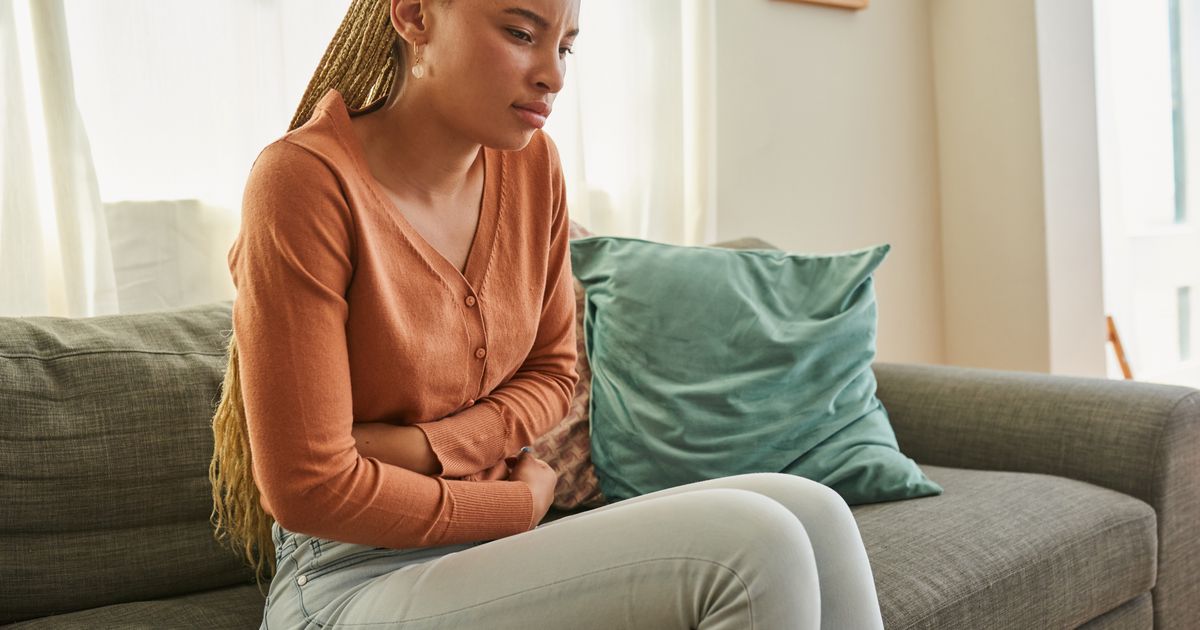
Our menstrual cycle affects so much of our life. From hormonal acne and serious mood swings to generally feeling quite crappy, I’m sure if some of us had the option to skip our periods we would. And f, like me, you’re someone who has always had bad period pain, it can leave you feel a bit helpless.

There are lifestyle adjustments we can adopt that can help towards making our periods easier to deal with, though – and one of them is the food we eat at different stages of our cycle.

Lifesum, a nutrition app that aims to help users improve their baseline health through what they’re eating, has found that small changes to your diet can improve your symptoms during each phase of your menstrual cycle.

“What you eat plays a huge role in overall health creation, including how you feel throughout your cycle,” says Dr Alona Pulde, star of the Forks Over Knives documentary and member of the Lifesum health advisory board.

“Most people think of periods as just a week-long occurrence, but in reality, it’s a month-long cycle and nutrient-dense foods can help replenish your body and balance your hormones throughout.”
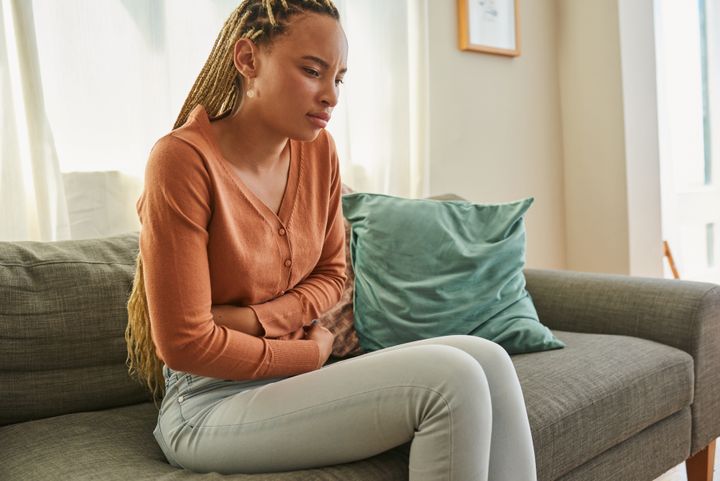
Roxane Bakker who is a registered dietician and head of nutrition at Vitl agrees that it’s important to look after yourself when you’re menstruating, particularly when it comes to your diet. “Choosing foods that can help restore balance to your hormones are always a good option,” she says. “Vitamin B6 specifically is a key player in balancing your hormones. What you eat can sometimes help to relieve some of the uncomfortable symptoms you experience on your period”

There are four different stages to the menstrual cycle: the menstrual phase, the follicular phase, the ovulation phase, and the luteal phase. Each phase of our cycle requires different care and dietary needs, Dr Pulde suggests.

While dietary tweaks can help you ease your period pains, they aren’t solutions to medical conditions such as endometriosis, PCOS, or dysmenorrhoea. If your periods are so painful they’re affecting day-to-day life, speak to your doctor.

“Remember, everyone’s body works differently, and our needs vary,” adds Dr Pulde. “Focusing on a balanced, varied nutrient-dense diet that provides enough energy is key – not only for performance, but for our overall wellbeing.”

The Menstrual Phase

This first phase of the menstrual cycle is the time where our oestrogen and progesterone levels are lowest; you shed your uterine lining, and bleeding occurs. This usually lasts between three and seven days. During this time you can experience cramping, fatigue, low back pain, and mood swings.

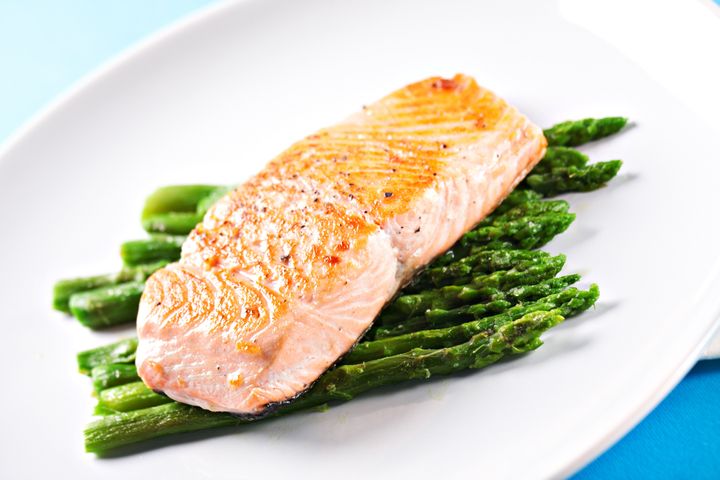
This is a time when you’re losing a lot of blood so it’s important to stock up on iron-rich foods. Animal products such as red meat, poultry, and fish (heme iron) or plant-based products, including leafy greens, beetroot, and legumes (non-heme iron) are essential during this time.
“As you can imagine, fruit and vegetables are a staple when it comes to any healthy diet,” Bakker adds, “but they’re essential when it comes to managing period cramps. They’re a vital source of fibre which in some cases can help to relieve the stomach pains associated with menstruating.”

Be sure to avoid foods that are highly processed during this time, such as sweetened breakfast cereals. “They can make period symptoms worse, causing inflammation and bloating,” says Bakker. “Caffeine and alcohol also impact inflammation. And studies show that they can worsen PMS symptoms.”

The Follicular Phase
During this phase, which can last anything from 11 to over 20 days, depending on the length of your cycle, oestrogen levels start to rise again. Your energy should increase and you may notice you have greater motivation.

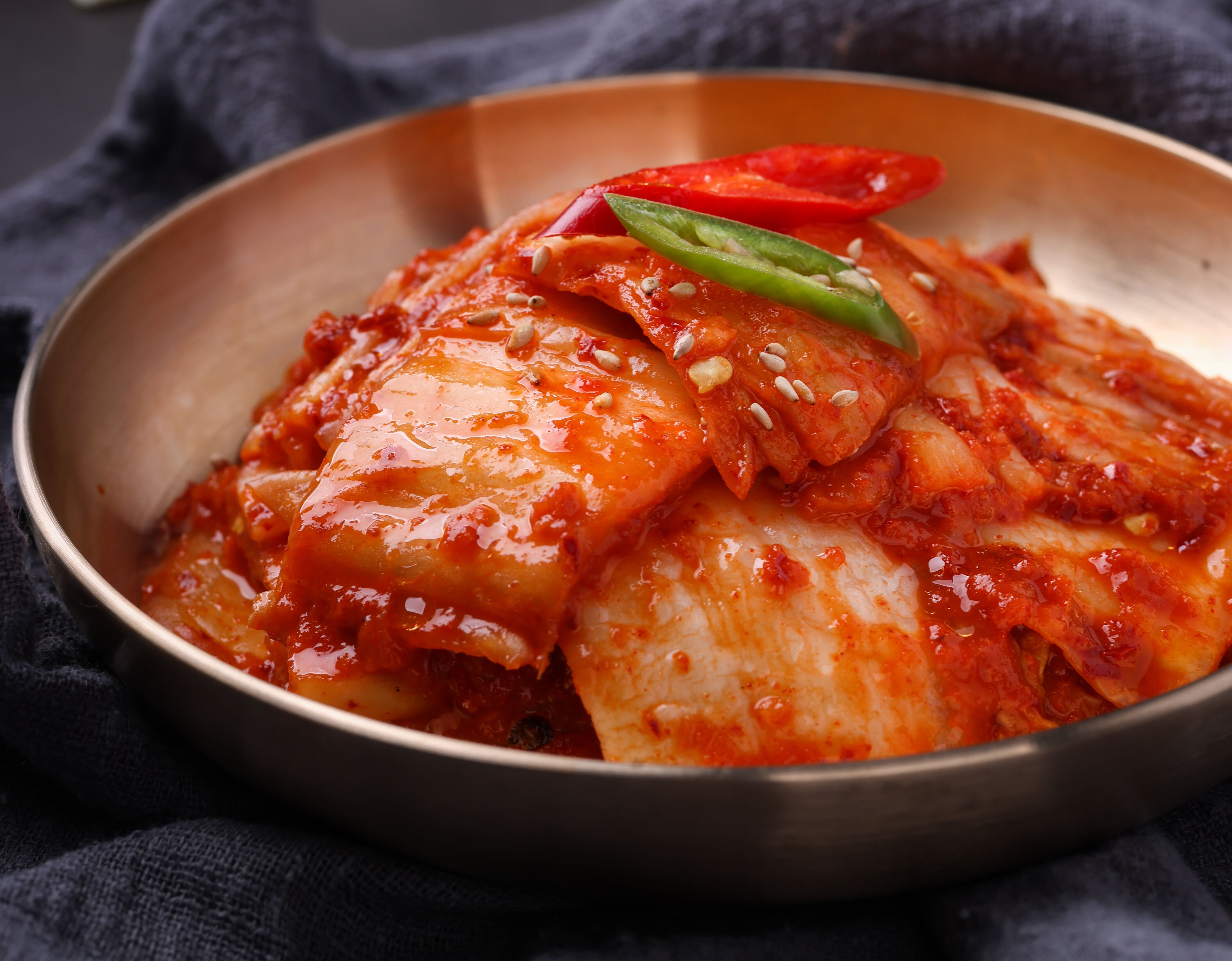
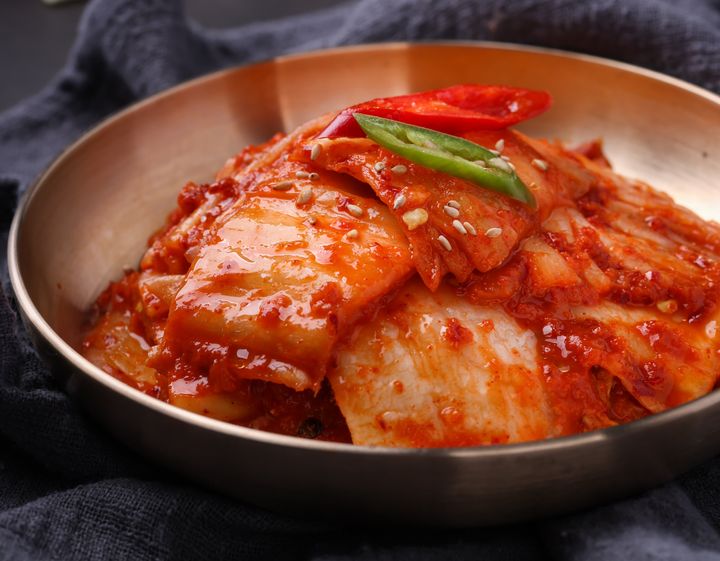
Eating fibre-rich foods (fruits, vegetables, whole grains, and legumes) and fermented foods (kombucha, kimchi, sauerkraut) will help to metabolise and clear excess oestrogen.

The Ovulation Phase
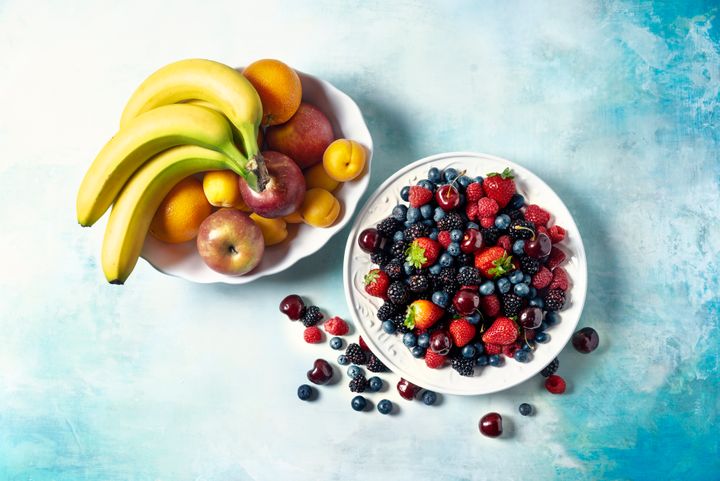
You may experience some cravings at the time of ovulation, around day 12 to 14 of your cycle, so you should be eating foods that are rich in fibre and high in nutrients and consuming enough of these food types to fill you up.

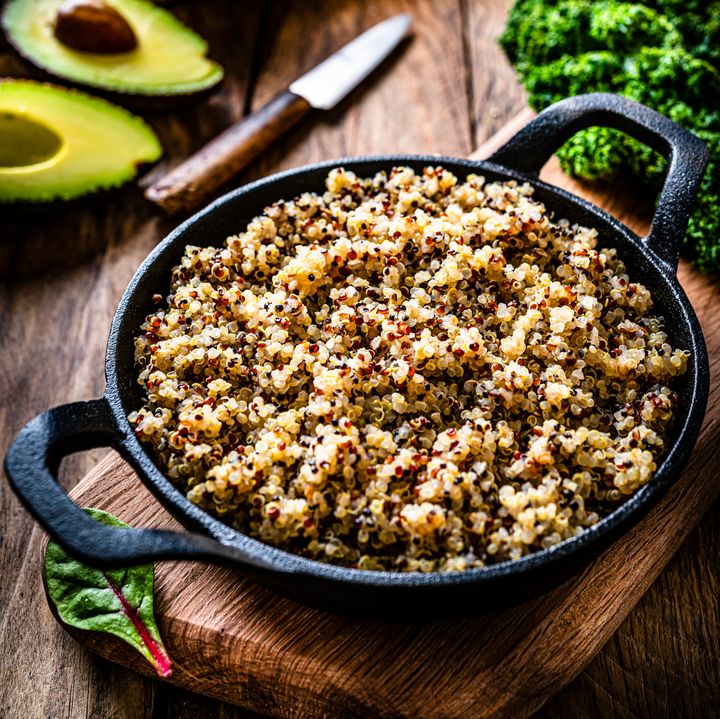
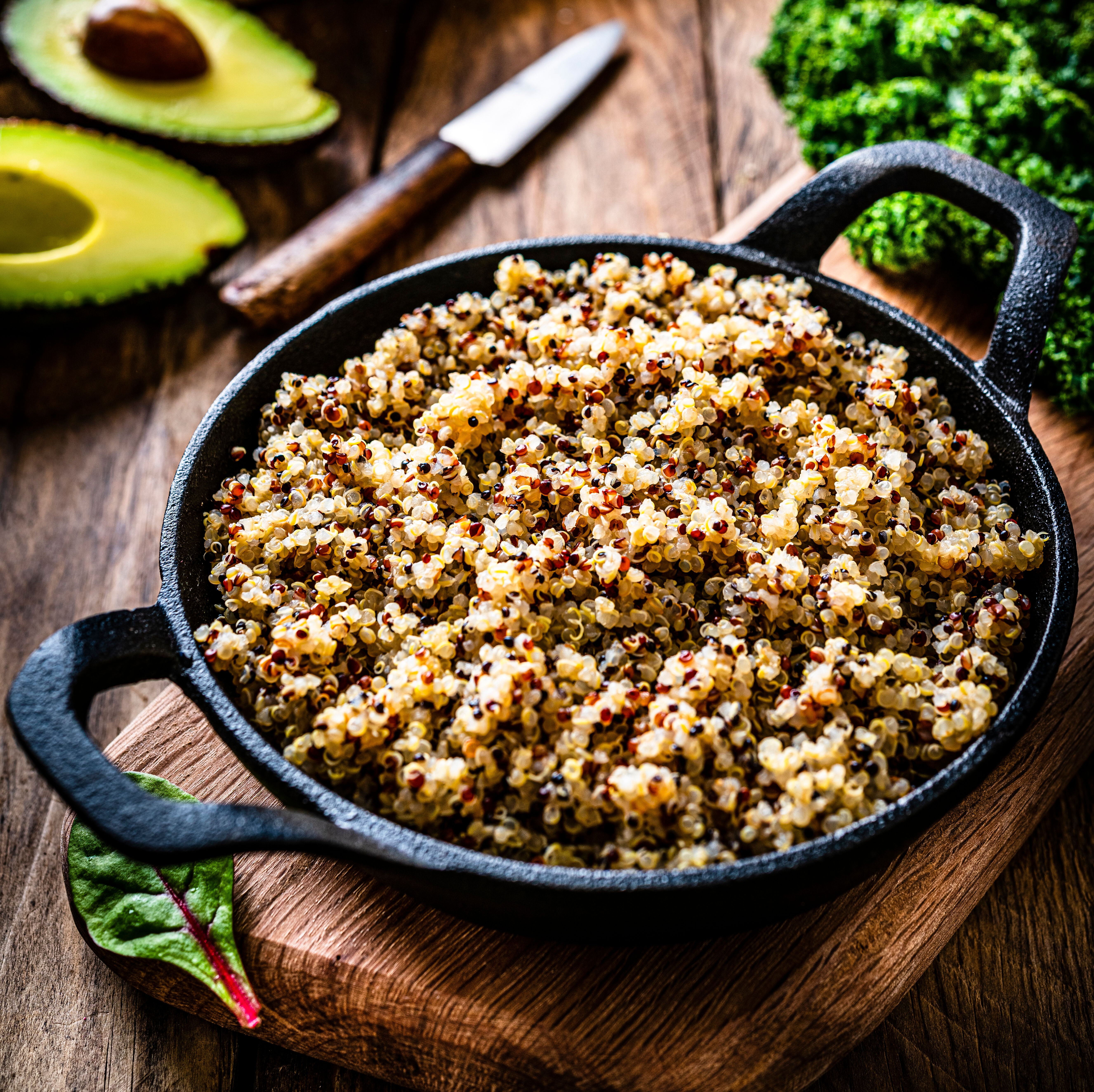
These include fruits (berries, apples, pears, bananas); vegetables (broccoli, Brussels Sprouts, artichoke, kale, sweet potatoes); legumes (beans, lentils, peas); whole grains (quinoa, oats, whole wheat pasta, barley); and nuts and seeds (almonds, pistachios, and sesame/pumpkin/sunflower seeds).

The Luteal Phase

The luteal stage of our cycle begins after ovulation, when both oestrogen and progesterone levels rise. During this time, pain can feel a bit more intense as large amounts of prostaglandins, a chemical that stimulates contractions, is released.

To help experience less cramping and lesson the physical symptoms of PMS, tuck into anti-inflammatory nutrients such as omega 3 (walnuts, flaxseed, chia seeds), antioxidants like vitamin C (found in fruit – particularly berries – and vegetables) and vitamin E (found in leafy greens, avocado, and whole grains).

“In this phase, it’s common to feel tired,” says Dr Pulde. “Eat complex carbs that provide fibre and vitamins to balance moods and curb cravings.”

Avoid or cut back on caffeine and alcohol if you can, she adds, and if you find your energy levels dropping, reach for the healthy snacks, such as hummus and veg sticks or homemade fruit and nut bars.
Share Button

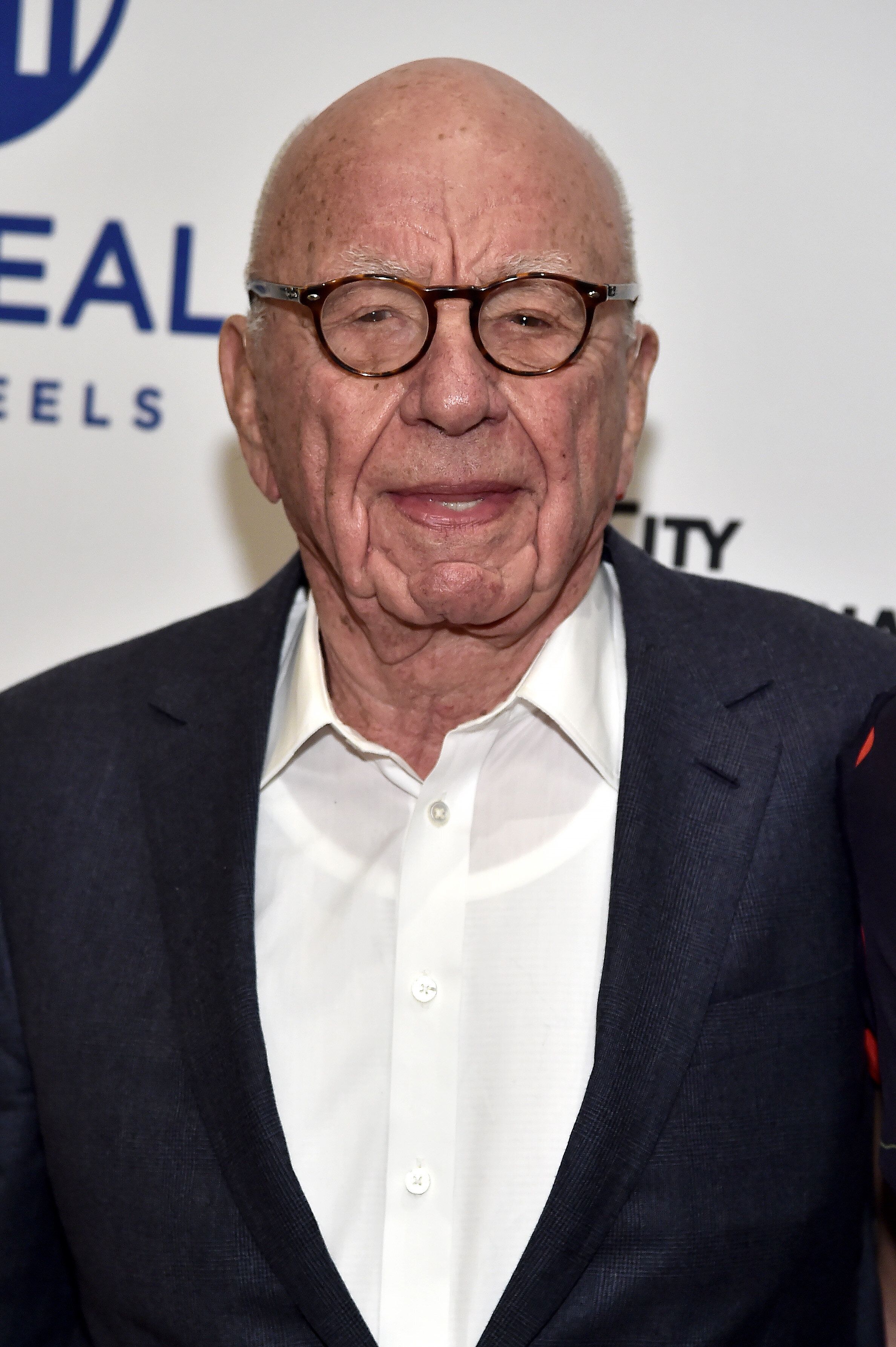
Rupert Murdoch’s NY Post Reportedly Demands Workers Mask Up As It Slams Mask Mandates

Workers at the New York Post have been ordered to mask up even while the newspaper slams masks and mask mandates to its readers and the public, CNN Business reported Monday.

It’s the latest searing case of hypocrisy to emerge this month in media mogul Rupert Murdoch’s News Corp world. While Fox News personalities Sean Hannity and Tucker Carlson rage against vaccines and masks, Fox last week demanded that all staff disclose their vaccination status. 

The same Fox memo also encouraged even fully vaccinated people to mask up in public spaces, and it’s mandated for all in “small, confined spaces.”

New York Post workers were told in an August 12 memo from Sean Giancola, publisher and chief executive of the tabloid, that “masks are required while walking the floor/not at your desk,” CNN reported.

Employees must “mask up” and “cover” their face when “away from their desk or chatting with colleagues,” according to CNN, which obtained a copy of the memo. Workers may remove masks when sitting alone at their desks.

Workers are also required to submit to a daily health screening “every day before entering the office,” so they don’t come to work sick.

Yet despite that standard for its own workers, the Post has railed against calls to mask up, incredibly blasting it as “madness” when the Centers for Disease Control and Prevention recommended in July that even the vaccinated wear masks in communities with high transmission rates of COVID-19. The Post’s editorial also called the CDC recommendation “nonsense” and “pernicious.”

An earlier Post editorial even called for scrapping mask mandates on trains and buses because it claimed the health safety measure was “pointless.”

There was reportedly no mention of a vaccine requirement in the Post memo, unlike the demand from Fox News.

A disgusted Malcolm Turnbull, former prime minister of Australia, last month accused Murdoch of using his media properties to peddle lies about Covid-19 that he himself doesn’t believe just to make money by pandering to his gullible consumers.

“Rupert got himself vaccinated as quickly as he could; he’s not a fool. He  knows the vaccines work,” Turnbull said in an interview.

Murdoch is “making billions of dollars out of a news channel, a news platform, Fox News, which is promoting and enabling all of this vaccine hesitancy,” Turnbull warned.

“Anybody who is “promoting these conspiracy theories about vaccines, and anyone who is discouraging people from getting vaccinated is contributing to death and disease. There’s no question about that,” Turnbull said.

Share Button

Love Island Crowns Millie Court And Liam Reardon As 2021 Winners

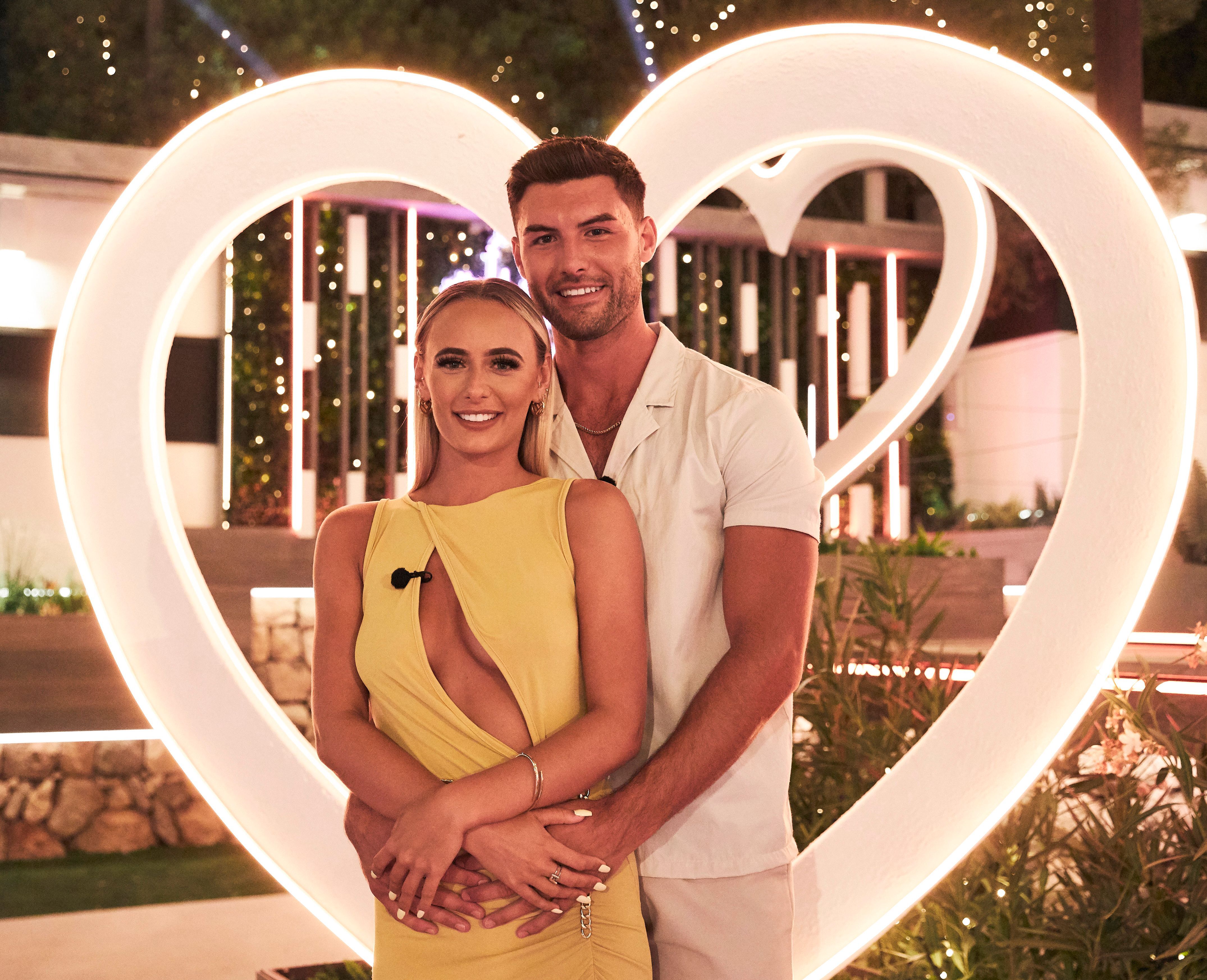
Millie Court and Liam Reardon have been crowned the winners of this year’s Love Island. 

The couple beat Chloe Burrows and Toby Aromolaran in the final two to win the £50,000 prize money.

Teddy Soares and Faye Winter also came third, while Kaz Kamwi and Tyler Cruickshank placed fourth during Monday’s live final of the ITV2 reality show. 

Matt Frost/ITV/Shutterstock

Millie Court and Liam Reardon have won this year’s Love Island

After the result of the public vote was announced, Millie and Liam had to decide whether to stick or split the cash prize.

Millie received the envelope with the money but decided to split it with Liam. meaning they took home £25,000 each.

Speaking after their win, she said: “I cannot believe we have just been crowned the winners of Love Island. We have literally had the summer of our lives and we are going to leave here and now explore our future together.”

During an interview with host Laura Whitmore, Liam also asked Millie to officially be his girlfriend. 

The couple had a rocky journey in the Love Island villa, with Millie previously calling things off with Liam when she discovered he had been unfaithful to her with Lillie Haynes during the Casa Amor twist. 

Meanwhile, during their final interviews, Toby joked that describing his relationship with Chloe as a “massive journey” was an “understatement” after the pair also broke up and then got back together during the series.

Matt Frost/ITV/Shutterstock

Love Island finalists Faye Winter and Teddy Soares, Chloe Burrows and Toby Aromolaran, Kaz Kamwi and Tyler Cruickshank and Millie Court and Liam Reardon

Last week, Liberty Poole and Jake Cornish, who had been coupled up since the first episode of the show, gave up a place in the final when they called time on their romance and left the villa.

This year’s contestants will next be seen during a special Love Island reunion, which airs on Sunday 5 September on ITV2. 

Share Button

Conservative, Vaccine-Skeptic Talk Radio Host Dead After Contracting Covid-19

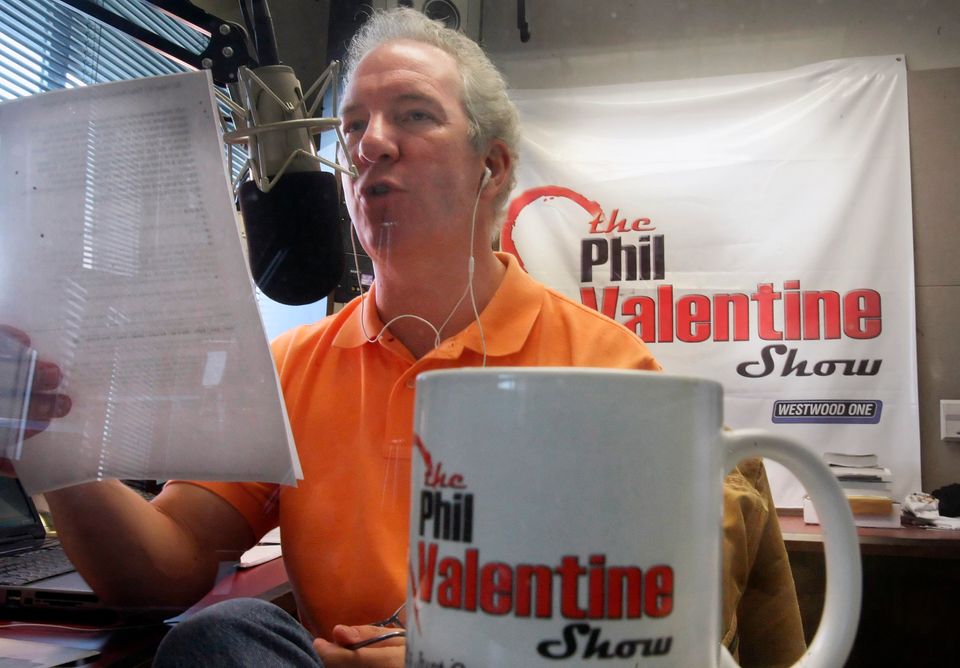
A US conservative radio host and vaccine skeptic, who said he wouldn’t get vaccinated because he had a “low risk” of getting Covid-19 and dying from it, has died after being hospitalised with the virus, his employer said.

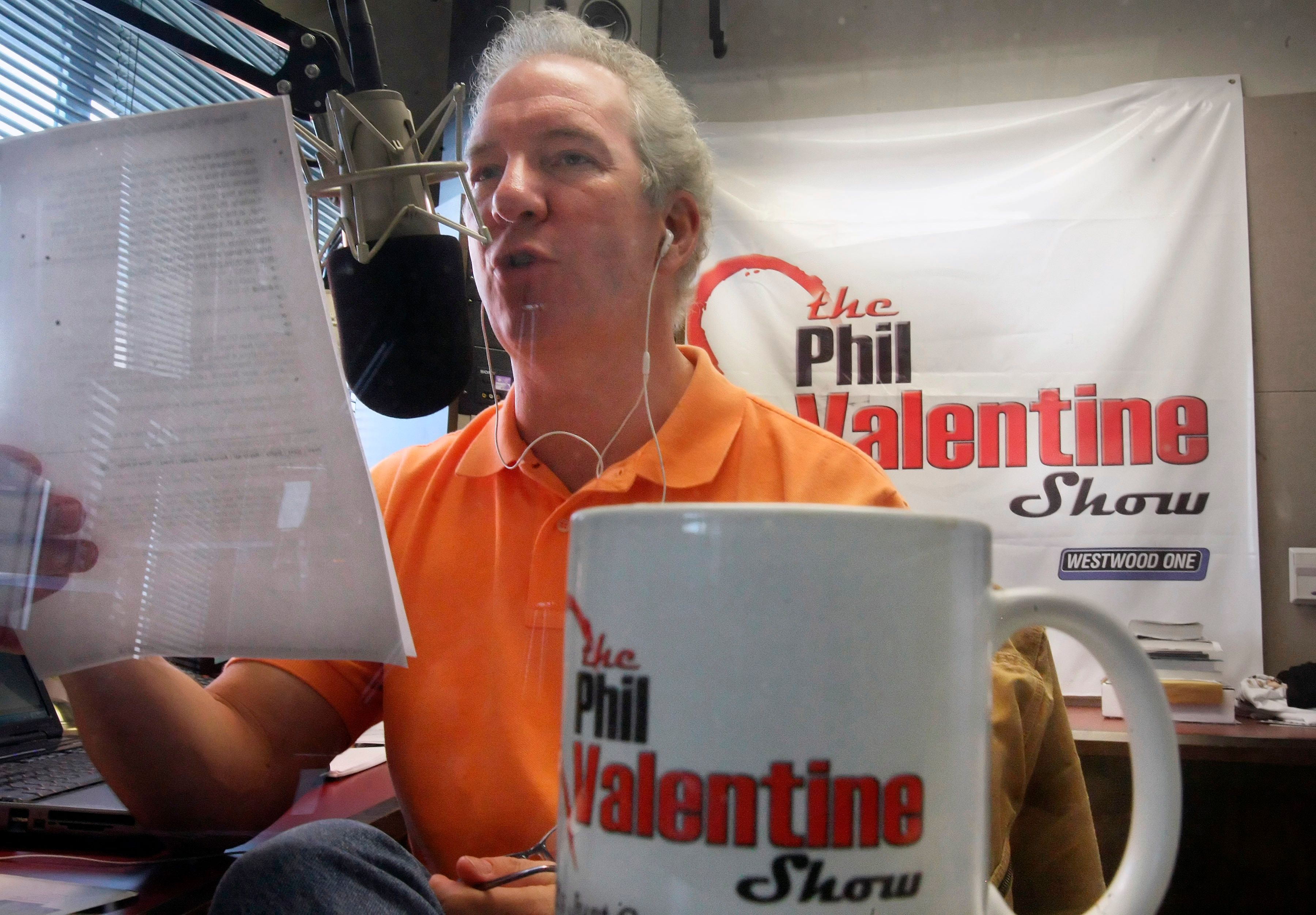
Phil Valentine’s death at age 61 was announced Saturday by Nashville radio station SuperTalk 99.7 WTN. The Tennessee-based talk radio host was first hospitalised in late July with the virus.

A statement from his family at the time of his hospitalisation said his illness led him to have second thoughts and regrets about the vaccines’ significance and encouraged people to “go get vaccinated.”

John Partipilo via AP

Conservative talk show host Phil Valentine, seen in 2009, has died after being hospitalised with Covid-19, his employer announced.

“Phil would like for his listeners to know that while he has never been an ‘anti-vaxer’ he regrets not being more vehemently ‘Pro-Vaccine’, and looks forward to being able to more vigorously advocate that position as soon as he is back on the air, which we all hope will be soon,” his family said in a statement posted to Facebook by the radio station.

Valentine had expressed his skepticism of the coronavirus vaccines and masks on his radio program and social media, with one of his last tweets on July 15 questioning the safety of the Johnson & Johnson vaccine.

Back in December, he tweeted that people should do a “risk assessment” on whether they should get vaccinated.

“I have a very low risk of A) Getting COVID and B) dying of it if I do. Why would I risk getting a heart attack or paralysis by getting the vaccine?” he posted.

He also recorded a Beatles parody song, “Vaxman,” that mocked the vaccine.

Share Button

Joe Biden Warns ‘A Lot Could Still Go Wrong’ With Afghanistan Evacuations

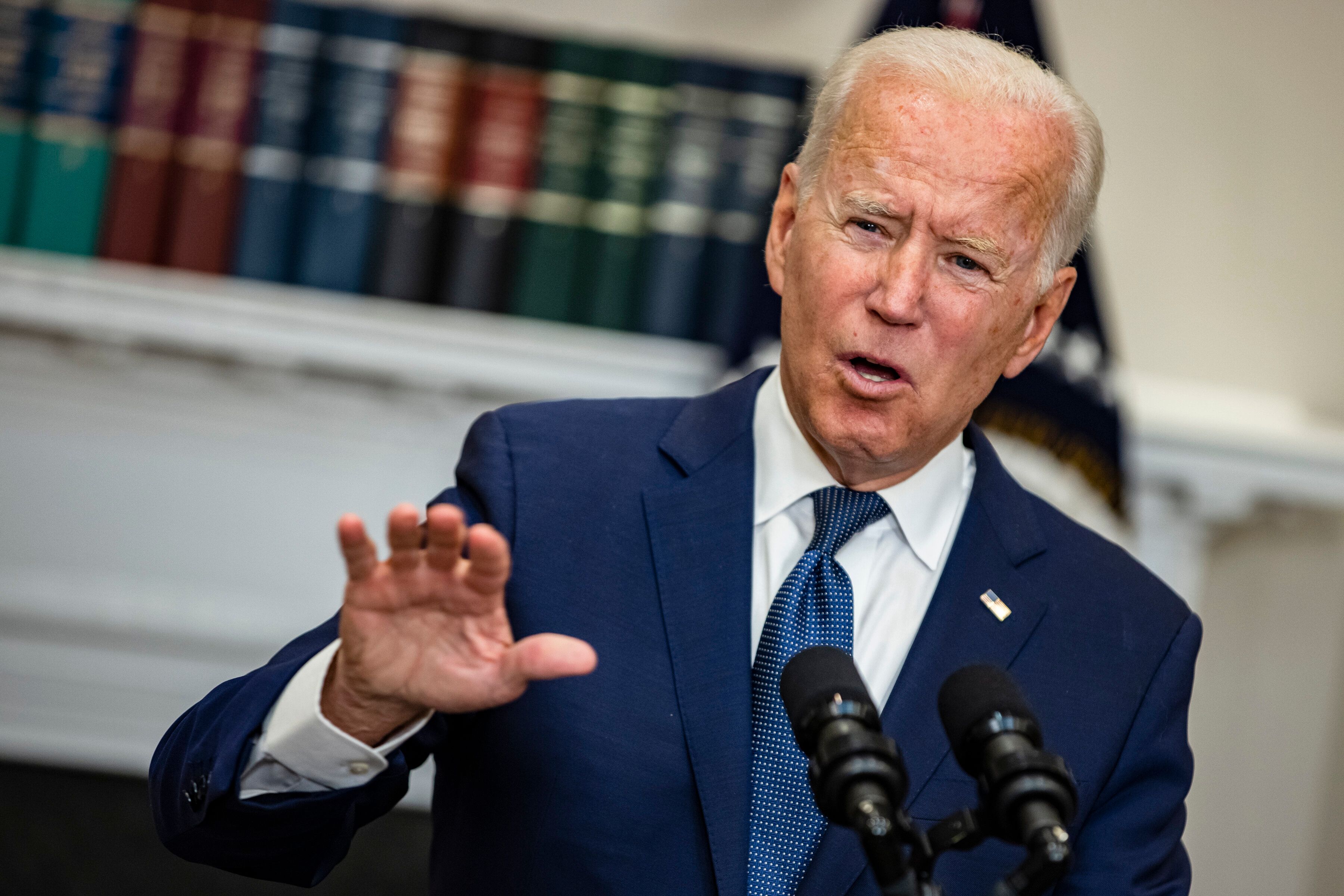
US President Joe Biden touted on Sunday the surging number of Afghanistan evacuations carried out so far by the United States, but acknowledged that such a massive operation does not come “without pain and loss.”

The White House said that the US has evacuated 30,300 people out of Afghanistan since August 14, including more than 13,000 people over the weekend. That brings the total evacuated by the US to about 35,500 since July, though the president stressed in a televised address that “we have a long way to go, and a lot could still go wrong.”

“Let me be clear, the evacuation of thousands of people from Kabul is going to be hard and painful no matter when it started, when we began,” Biden said. “It would have been true if we had started a month ago, or a month from now. There is no way to evacuate this many people without pain and loss, [like] those heartbreaking images you see on television. It’s just a fact.”

The British military said earlier Sunday that at least seven Afghans died in a panicked crush of thousands of people trying to flee the country at Kabul’s international airport, in an attempted exodus resulting from the Taliban taking over just a week ago. Others may have been trampled, suffocated or experienced heart attacks as Taliban fighters fired shots into the air to try and drive back crowds from the airport ― the last spot still held by the US military.

Some of the seven who were killed had plunged to their deaths after clinging on to a US plane as it took off on August 16, while thousands of others poured on to the tarmac in a desperate attempt to escape life under Taliban rule. Photos and video showed Afghans passing babies and small children above their heads so Western soldiers could raise them over walls and ensure their safety.

“My heart aches for those people you see,” Biden said on Sunday. “We are proving, though, that we can move thousands of people a day out of Kabul. We’re bringing out citizens, NATO allies, Afghanis who in fact have helped us in the war effort ― but we have a long way to go, and a lot could still go wrong. But to move out 30,000 people in just over a week, that’s a great testament to the men and women on the ground in Kabul.”

Earlier on Sunday, national security adviser Jake Sullivan told CNN that 23 US military flights had evacuated about 3,900 people from Afghanistan, with an additional 3,900 airlifted by 35 non-US military flights, in the past 24 hours. Defence Secretary Lloyd Austin activated the Civil Reserve Air Fleet program, requesting 18 aircraft from US carriers to assist in transporting Afghan refugees after they’ve been evacuated to other countries.

To help continue the evacuations safely, the US has extended the “safe zone” perimeter around the Kabul airport to expand access to people trying to flee the country. This change includes changing the gate operations, which Biden explained is why the military has been able to increase the number of evacuees. 

The president said that the Taliban “have been cooperative with regard to changing the perimeter” during discussions, but when asked by a reporter if he trusts Taliban promises, Biden said: “I don’t trust anybody, including you.”

Biden did say that the Taliban have not taken action against US forces so far during the evacuation, and “by and large” have followed through on allowing Americans to pass through. But the president also emphasised that US troops and Afghans still face danger at the airport, such as terrorists like ISIS and its Afghan affiliate ISIS-K who may “seek to exploit the situation ― including trying to strike from a distance.”

The president said he still hopes to meet the August 31 evacuation deadline out of Kabul, but is currently having discussions for the potential of extending the timeline to make sure the US can evacuate as many people as possible.

The chaotic rollout of Biden’s evacuation plan has unleashed bipartisan anger, though many officials and experts stress that this is not on one administration, but on decades of government and military officials. Still, with the evacuation occurring under the current White House that has a lackluster record on refugee issues, advocates are blasting Biden for not moving fast enough and claiming the president is more focused on avoiding political attacks than on helping vulnerable people abroad.

“I had a basic decision to make. I either withdraw America from a 20-year war ― that depending whose analysis you accept cost us $150 million a day for 20 years or $300 million a day for 20 years ― where we lost 2,248 Americans dead and 20,722 wounded,” Biden said, pulling out a card he says he always carries that tells him the war’s casualty count. 

“I either increase the number of forces we keep there, and keep that going, or I end the war. And I decided to end the war.”

Share Button

Help, My Kid Is A ‘Whiteatarian’ Who Only Eats Beige Food

It was parents’ weekend at my daughter’s college, and we were treating her to dinner at an off-campus bistro. The waitress arrived, and she gave her order: “I’ll have the baked salmon with a side of sauteed spinach, please.”

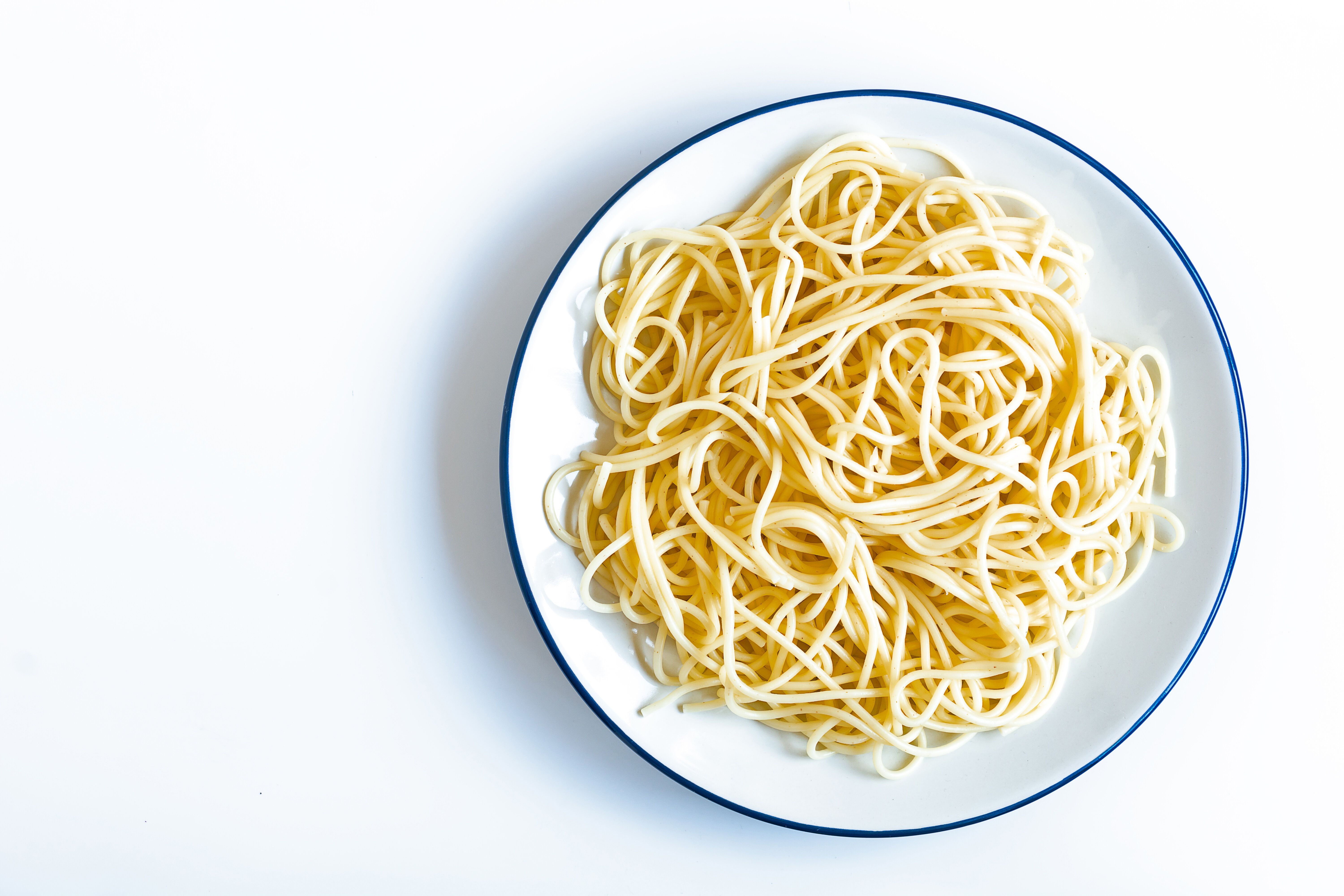
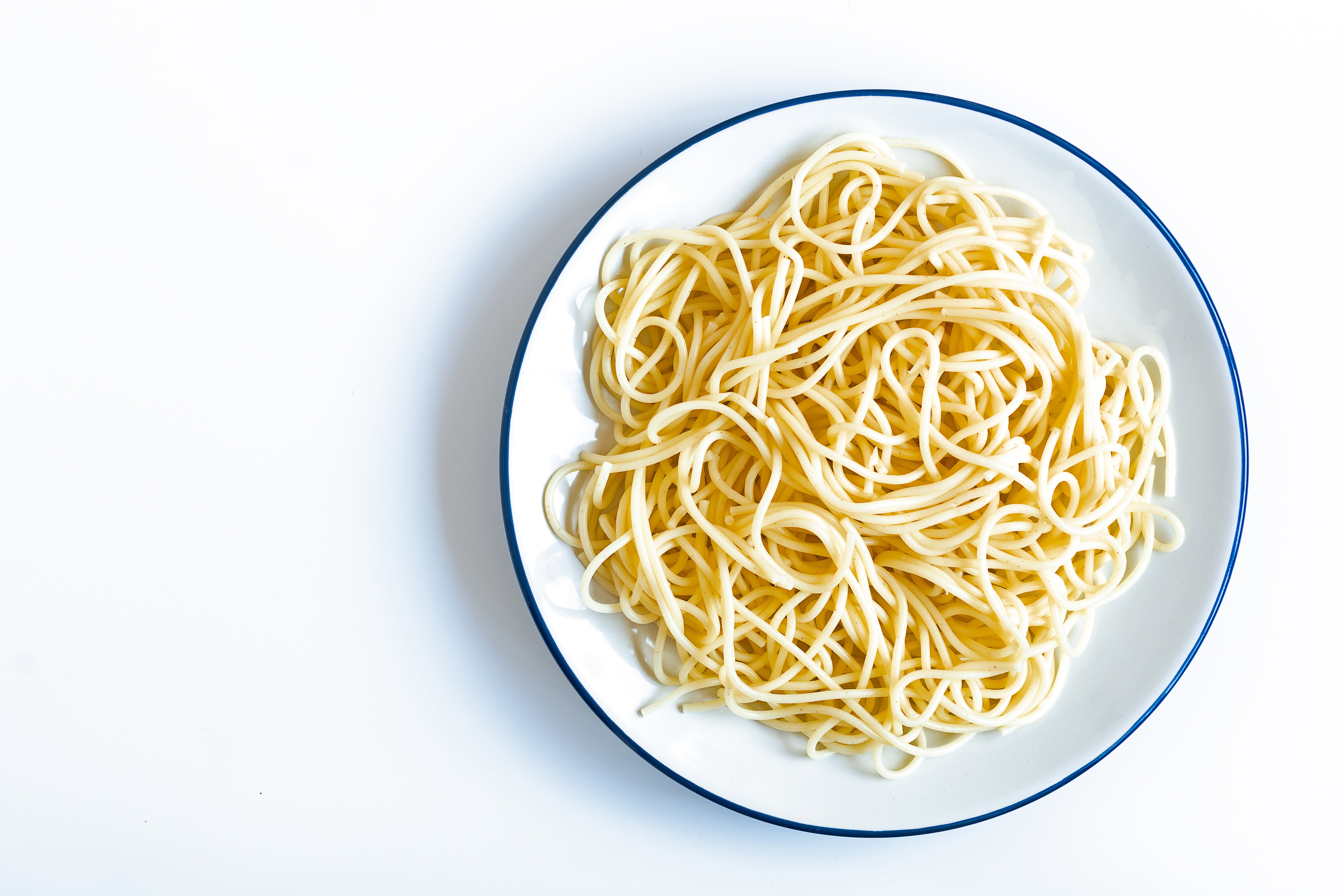
I dropped my menu, my jaw and the mistaken notion that I knew what this kid had been up to since we’d dropped her off a couple of months ago. I had spent most of the past 18 years trying to nudge her – sometimes gently, sometimes with growing desperation º into eating something, anything, other than noodles with butter and salt, half a bagel with plain cream cheese or – her true love –Rold Gold Tiny Twist pretzels.

The idea of fish had always made her shudder. The mere mention of “green things” like spinach could lead to tears. So what was up with her dinner order tonight? She shrugged. “They serve salmon in the dining hall sometimes, and my friends all eat it. Everybody at school likes spinach, too.”

I feigned disinterest and changed the subject, but inside I was doing the parental equivalent of a victory dance. I had relinquished my title as mother of the world’s most adamant whiteatarian, all for the low, low cost of tuition at a liberal arts college that was 1,000 miles away from home.

Your kid is hardwired to act like this

Before I do any more gloating about the sight of my beloved progeny actually putting spinach in her mouth, let’s take a step back to those early years, when I was driven to frustration by a girl who refused anything that wasn’t white. What made her act that way, anyhow?

Well, mums and dads, you already know that children are annoying for lots of reasons, including a tendency toward tantrums, a love of pre-dawn wake-up times and, of course, picky eating. Would it help if I told you that their eating preferences are pretty much hard-wired into their sweet-smelling little noggins?

Look familiar?

Look familiar?

The National Institutes of Health says infants have an “innate preference for sweet and salty tastes and tend to reject sour and bitter tastes.”

And, guess what, it gets worse. “After the age of one, vegetables begin to taste very bitter to children,” Alisha Grogan, a paediatric occupational therapist who specialises in picky eating and sensory processing, tells HuffPost.

“When humans had to forage in the wild, children’s sensitive taste buds prevented them from eating anything poisonous.”

Some kids remain loyal passengers of the S.S. Sweet And Salty even as they get older, often to the exclusion of any food that might actually provide, you know, some nourishment. A range of different studies have reported that, by the time they reach age 3, between 6% and 50% of kids are described as picky eaters by their parents.

And if you think they’re doing this just to piss you off, you’re right, at least when it comes to the younger set. “Toddlerhood is when many kids start to exert their autonomy and push boundaries with parents,” paediatrician Dina Kulik tells HuffPost. Not only do they get to remind you who’s boss, they also literally make themselves happy with each bland, beige bite. “Simple sugars are easy to eat, they taste good and they provide a quick dopamine hit, much like other stimulating drugs,” she says.

Can your kid live on beige food alone?

Is a diet of pasta and bread sustainable for health? Kulik said there are concerns. “The risk of iron deficiency, especially, is high on a very starchy diet,” she says. Even though many manufactured grain-based products are supplemented, she said, kids following the whiteatarian plan are often low in iron, vitamin D, calcium and B12.

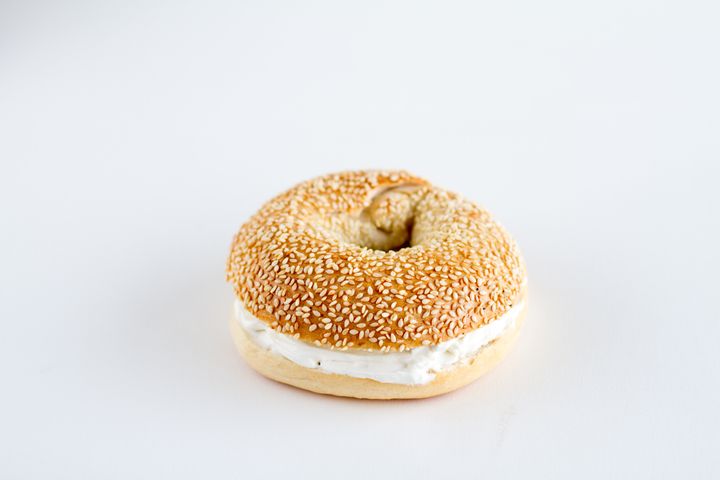
Think this bagel with cream cheese looks plain enough? Think again – those sesame seeds could even be too much for a picky eater.

Think this bagel with cream cheese looks plain enough? Think again – those sesame seeds could even be too much for a picky eater.

In the short term, anyway, the nutritional prognosis is not totally dire. One study said that, while picky eaters did tend to have lower levels of zinc and iron, their overall macronutrient intakes were not severely reduced. And many of us know at least one adult who still lives on a mostly white diet and seems to survive, if not thrive.

“Many kids can survive on white carbs alone, as long as they’re eating enough of them,” Grogan says. “Carbs often are fortified with all sorts of vitamins and nutrition. However, depending on how limited a child’s diet is, they could have some nutritional deficiencies.”

The only thing you have to fear

In the comedy special John Mulaney & the Sack Lunch Bunch, a boy named Orson Hong sings an ode in which he declares that “a plain plate of noodles with a little bit of butter is the only thing I’ll eat.” His heartfelt song is more a lament than an homage, and it’s clear that his character is anxious and fearful about ingesting anything but this classic whiteatarian meal.

Fear is a big part of what’s going on, said Amanda Smith, a programme director at Walden Behavioral Care, and it’s important for both kids and parents to acknowledge that. “Some kids might be afraid of different textures, or they might fear that a food will make them choke or vomit,” she tells HuffPost. “It can be overwhelming, scary and hard, so it’s important for parents to try to understand that.”

“Short-order cooking and pressuring a child to eat during meals can lengthen the time a child is selective about what colour foods they’ll eat.”

– Alisha Grogan, paediatric occupational therapist

Keep in mind that once they’ve passed toddlerhood, this eating pattern is about them, not you. “If an older child is still eating only white foods, they aren’t trying to punish their parents or stress them out,” Grogan says. “Eating is hard for them. One way to help is to neutralise the topic, and to avoid labelling foods as good and bad or healthy and not healthy.”

Here’s what you can do

“I suggest not fighting or negotiating,” Kulik says. She suggested an attitude of: “Here’s the plate of food. If you want it, great.” Then, she advises, “If not, don’t start a battle. There is evidence kids need to try a food more than a dozen times to realise they like it. When you simply give in and offer the carbs, they don’t learn to try anything new, and the fear and pickiness persist.”

“Short-order cooking and pressuring a child to eat during meals can lengthen the time a child is selective about what colour foods they’ll eat,” Grogan adds.

In extreme cases, a child might have what’s known as Avoidant/Restrictive Food Intake Disorder or ARFID. The disorder, Kulik explains, is characterised by “very selective eating habits or disturbed feeding patterns.”

She cites estimates that anywhere between 5% and 14% of children in inpatient eating disorder programs, and up to 22% of children in outpatient programs, have the disorder. “It’s important to note that this is a true mental disorder, and the vast majority of kids who are whiteatarians don’t have it,” she says.

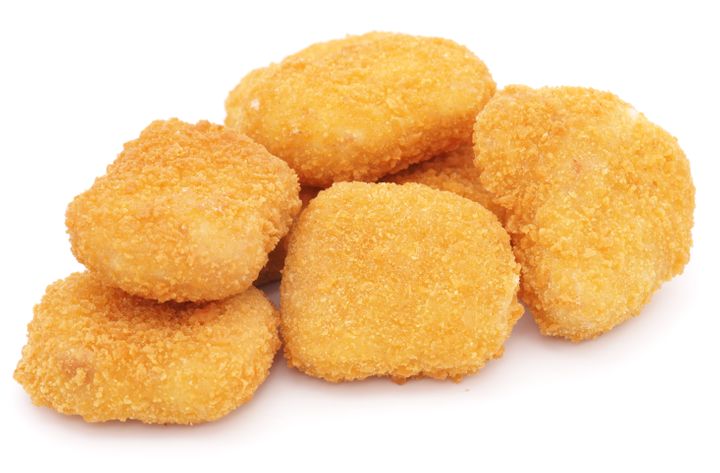
Don't forget about tan foods, the close cousin to white foods.

Don’t forget about tan foods, the close cousin to white foods.

“If you have concerns, start with a visit to your child’s medical provider,” Smith suggests. “They’ll be able to assess any medical factors that could be playing a role, and they can check your child’s growth progress, weight and vital signs, and then run some lab work.”

You’ll also want to pay attention to patterns that develop at mealtimes. “If kids are having emotional tantrums or breakdowns over new foods being near them or on their plate, or if they’re gagging or throwing up when new or other-colored foods are near them, then it could be something more serious,” Grogan says.

“If your child is limiting intake to fewer than 20 foods, or you’re noticing physical symptoms relating to their diet, consulting with a health practitioner is advised,” says Sarah Appleford, a registered clinical nutritionist with an interest in children’s health, including fussy eating and gut issues.

“It’s more than just a phase if they’re refusing food at most meals, exhibiting anxiety or stress, have undeveloped eating skills or sensitivities based on texture, colour, appearance, noise or smell at the table and away from the table. Physical symptoms can include slow growth, fatigue, pallor of the skin or complaints of tummy pain or gastrointestinal upset such as constipation.”

Look to the rainbow

Along with every other awful thing, this issue is on the rise, according to the experts. “We’re seeing a growing number of kids with anxiety disorders, and extreme fussy eating behaviour is often a component,” Appleford says. But there is some good news, she adds: “Most children will naturally grow out of fussy eating as they gain more skills and confidence around food.”

“Parents can find it to be very stressful to have a child who only eats white foods, because it’s difficult to go to parties or even pack a lunch,” Grogan says. “But kids — even the pickiest — can learn to eat a variety of different coloured foods.”

In the meantime, listen to the experts and try to cut yourself (and your child) a little bit of slack. You might also want to start saving for that liberal arts college experience that will liberate their taste buds and turn them into rainbowtarians, just a few long years from now.

Share Button

Love Island: 16 Viral Moments From This Year’s Series That We’re Still Not Quite Over

It’s official, the summer of love is nearly over as the sun sets on Love Island 2021. 

After a somewhat slow start, this series finally lived up to its high expectations and provided us with some much-needed TV gold over the last few weeks. 

From the iconic Casa Amor recoupling, to couples being on-and-off (and on again – we’re looking at you, Chloe and Toby), series seven has brought drama, an abundance of love and one very questionable talent show.

Ahead of Monday night’s grand finale – where one couple will walk away with the £50,000 prize fund – here’s a roundup of our favourite viral moments that we’re still *puts on Lucinda’s voice* reallllllyyyy obsessed with…

1. Hugo’s recoupling speech

One of the most fiery fire pit moments this year was undoubtedly Hugo’s speech after Toby coupled up with Abi instead of Chloe. It marked the turning point of the series, as we saw our first real glimpse of drama.

Throwing a number of shady comments at his fellow islander Toby, Hugo said of Chloe: “She doesn’t deserve to be treated how she has been this past 24 hours.”

His speech was obviously met with some iconic facial reactions from the Islanders, which were immediately turned into memes.

2. Mary and Millie’s talent show efforts 

Picture this – it’s Christmas Day and your cousins are performing their talent show to your family… oh wait, you don’t have to imagine after this particular Love Island moment. 

From a rendition of Grease’s You’re The One That I Want, to two semi-pro footballers showing their (lack of) tricks, the Love Island 2021 Talent Show scene was jam-packed with debatable ‘skills’. 

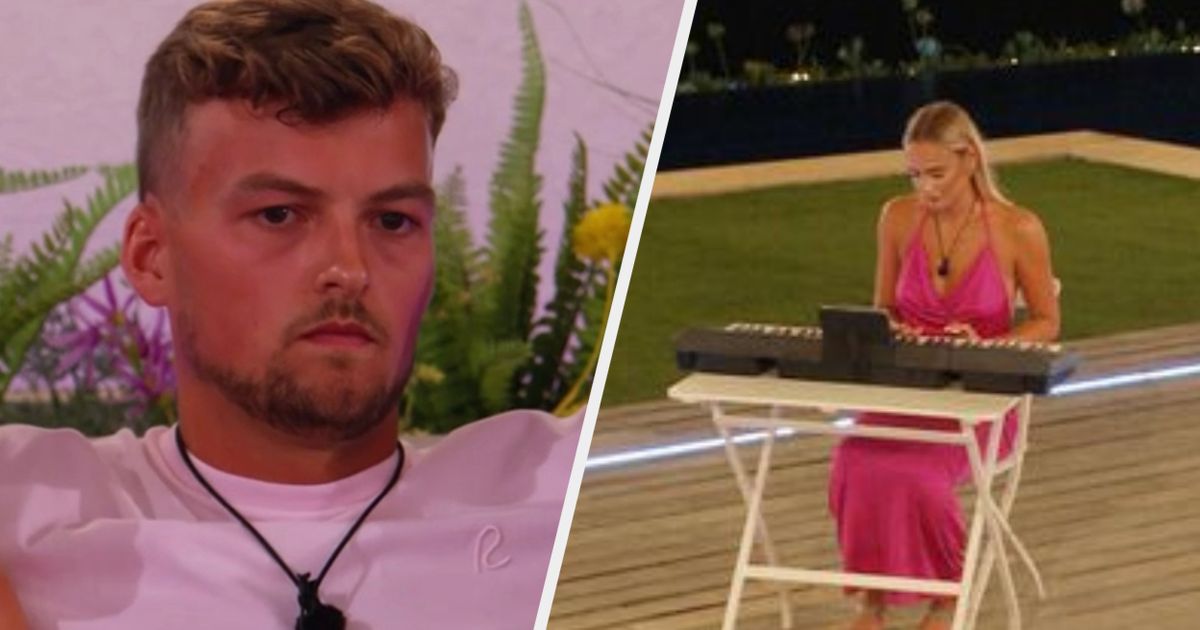
However, the real stand-out acts for us were Millie and her keyboard take on Ed Sheeran’s Perfect, and Mary’s tap dancing, both of which left the fellow Islanders – and indeed viewers – speechless. 

3. Faye trying her hardest to be unbothered at AJ’s arrival

Despite some of Faye’s more fiery moments causing controversy, her unbothered energy when new bombshell AJ entered the villa was a real mood. 

All the other girls were peeking over the terrace to get a first look, but Faye remained the queen of reactions as she filed her nails and emphasised how unbothered she was: “I’m not bothered at all, AT ALL.”

We totally believed her…

4. Rachel slides head-first into a fence

A rare moment of silence fell in the Line of Booty challenge as Rachel was whisked off her feet, but sadly not by Brad.

Coming down the slide at speed, we saw Rachel going head first into the fence and later recalling the event as “tragic”.

Luckily, she was OK, but we can still feel the pain. 

5. Toby’s unusual reaction to losing Sports Day

The internet was left confused when Toby’s immediate reaction to his team losing Sports Day was to start lifting weights. 

However, we weren’t the only ones left baffled as many of his fellow islanders were also unsure as to what was going on. 

6. Priya getting the ick from Brett over… Brie?!

Now we’ve heard of a lot of reasons for getting ‘the ick’ but being put off by thinking your partner’s favourite cheese was Brie? Well that is unheard of. 

Cheese-lover Priya struggled to picture a future with Brett as she thought his choice of favourite cheese was quite boring. Maybe it’s a Gouda idea to start choosing our partner’s based on their favourite cheese from now on?

FYI, Brett later confirmed that he never said that and in fact he isn’t really a fan of cheese at all.

7. Hugo’s job being “done” 

Many of us would probably love to hear some words of encouragement or affection after our first kiss with a new partner. However, Hugo took a slightly different approach after locking lips with Amy in Casa Amor… and we wouldn’t recommend it. 

The PE teacher thought the statement “Job done” was the perfect way to win someone over. Spoiler: it didn’t turn out that way. 

8. Lillie gets her moment

The nation’s jaws collectively dropped when Lillie entered the main villa to deliver some home truths about what Liam had been up to in Casa Amor. 

Never before has an Islander made such an impact in such a short space of time. A Love Island legend. 

9. The record-breaking amount of times Jake called Liberty his GIRLfriend

Some would say that Jake had an obsession with having a girlfriend after the amount of times he’s mentioned the G-word. 

After a rocky few weeks of their relationship, it seemed as though Jake’s preferred method of reassurance was repeatedly stating Liberty was his “GIRLfriend”. 

Sadly, it wasn’t to be for the couple, who ended up leaving the villa after splitting days before the final. 

10. This culinary monstrosity

You know what they say, food is the way to the heart. However, we’re not sure that Aaron’s choice of a Halloween DIY-looking carrots in hummus is quite what is meant by that. 

The carrots in question were unpeeled and wedged vertically into a bowl of the dip, leaving them looking like inedible witches fingers. 
We haven’t seen a Love Island dish look so unappealing since Tommy served up that ketchup and mayo sandwich for Maura.  

11. Speaking of culinary fails…

Rachel made us question our French GCSE after she described Coq au Vin as ‘duck with wine’ to Brad.

The mistake didn’t seem to go unnoticed with viewers, as social media flooded with the correct description for the dish, which is actually chicken braised in wine. 

We have to give Rachel a A+ for confidence though.  

12. Shannon’s brutal dumping 

This year’s contestants were prepped for the summer of a lifetime, but for OG Islander Shannon this was not the case – in fact she was packing her case after just one day in the villa.

After the mandatory two-week quarantine before entering the villa, we can only imagine how it felt being dumped after day one.

13. Georgia. That’s it. 

After Hugo was stuck on ‘Friend Island’ for the majority of his time in the villa, viewers were glad to finally see the arrival of Georgia, who had her sights firmly set on Hugo and Hugo only. 

Despite being the third girl to make Hugo’s rejection list, Georgia’s short stint in the villa consisted of elocution lessons with Lucinda, bringing the sequins and the inspirational message “Never meet your heroes” – and to be honest, we’re not mad about it. 

14. Millie’s comedy timing

You can always count on Millie to keep it 100% real, and let’s be honest her comedic inputs have been up there with the best of them during her time in the villa – case in point, this moment from Unseen Bits. 
Is it a bug? No, Millie simply humbled her Chloe by calling her a mug for taking Toby back after their on-and-off romance. We have to say the timing was 10/10.
15. Hair horror

The Undercover Lover challenge wasn’t only very messy but it also left the girls in need of a trip to the hairdressers, as the vibrant slime and accidentally dyed their hair all the colours of the rainbow. 

16. Chloe’s Beach Hut entries

Chloe has brought many iconic one-liners to the table this series, often from her Beach Hut entries.

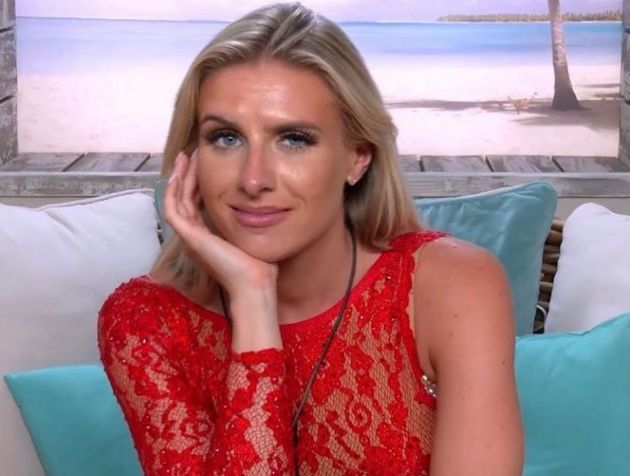
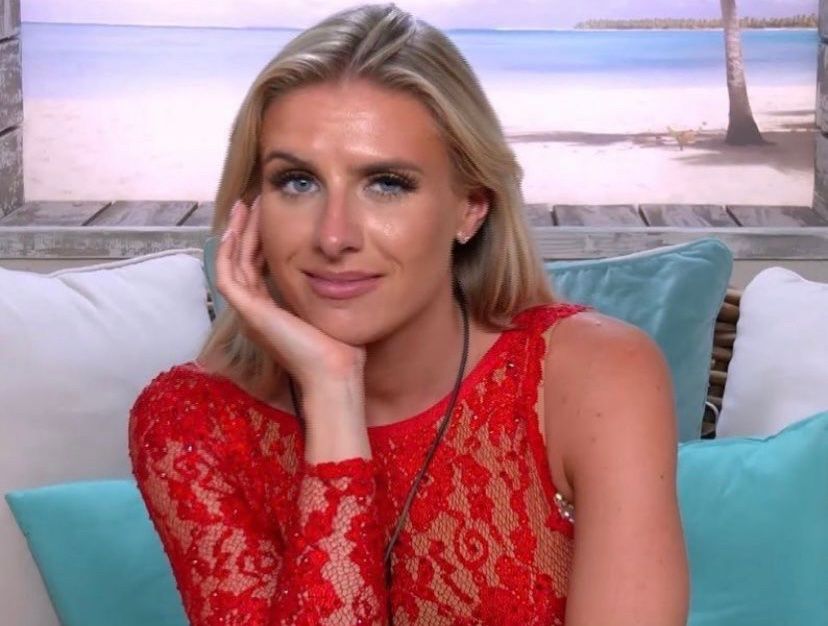
ITV

She has offered hilarious commentary on the day-to-day twists and turns in the villa, and who could forget her “very muggy” speech that came after Toby’s head started to turn?

While she proved to be a slightly Marmite character at the beginning of the series, many of us can now agree that Chloe has carried the humour of the show and we love to see it. 

Love Island continues on Sunday and Monday at 9pm on ITV2. 

Share Button

How To Watch The Tokyo Paralympics – And How Not To, Please

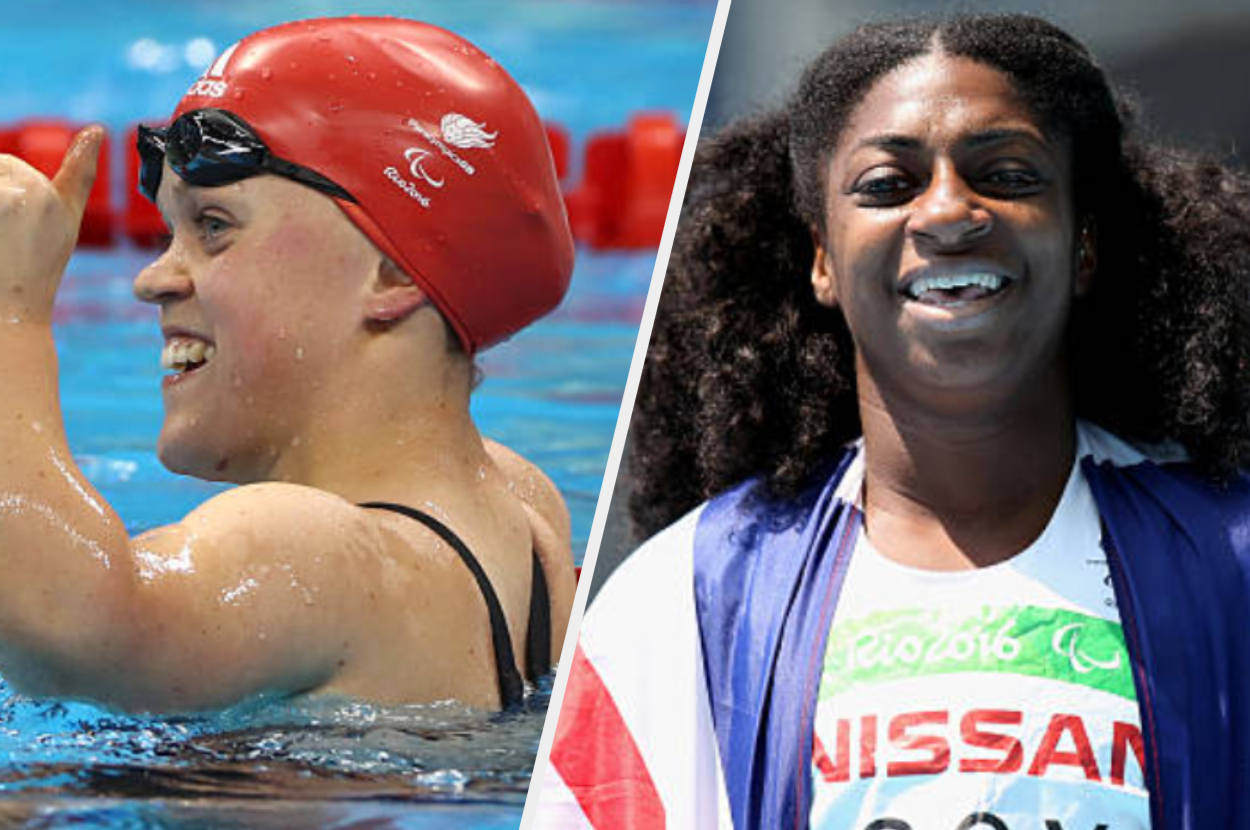
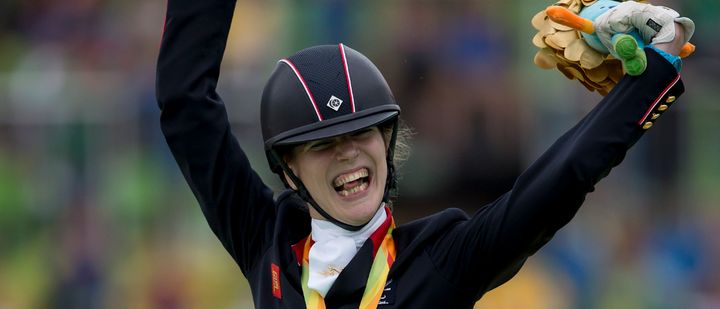
“I love the Paralympics but this time round they need to be more than just a feel-good story.” Sophie Christiansen CBE is a British dressage rider who has competed in four successive Paralympic Games. Already an eight-times gold champion, she hopes to up that medal tally at this year’s games in Japan.

Post-Olympics, the Paralympics light up Tokyo again this week, starting with Tuesday’s opening ceremony. But something about this year’s games feels different. After all, the games, which celebrate the sporting achievements of disabled people, and have been held every four years since Rome in 1960, are taking place a year later than planned due to (and during) a global pandemic. One in which disabled and vulnerable people are among those most affected.

Christiansen is leading a campaign with Scope and the British Paralympic Association with a rallying call to turn cheers into change. “I want to use them as a platform to show the reality of living as a disabled person in the UK,” she says.

This is because, like so many others in the disabled community, she’s concerned interest in the Paralympics does not translate into support for disabled people.

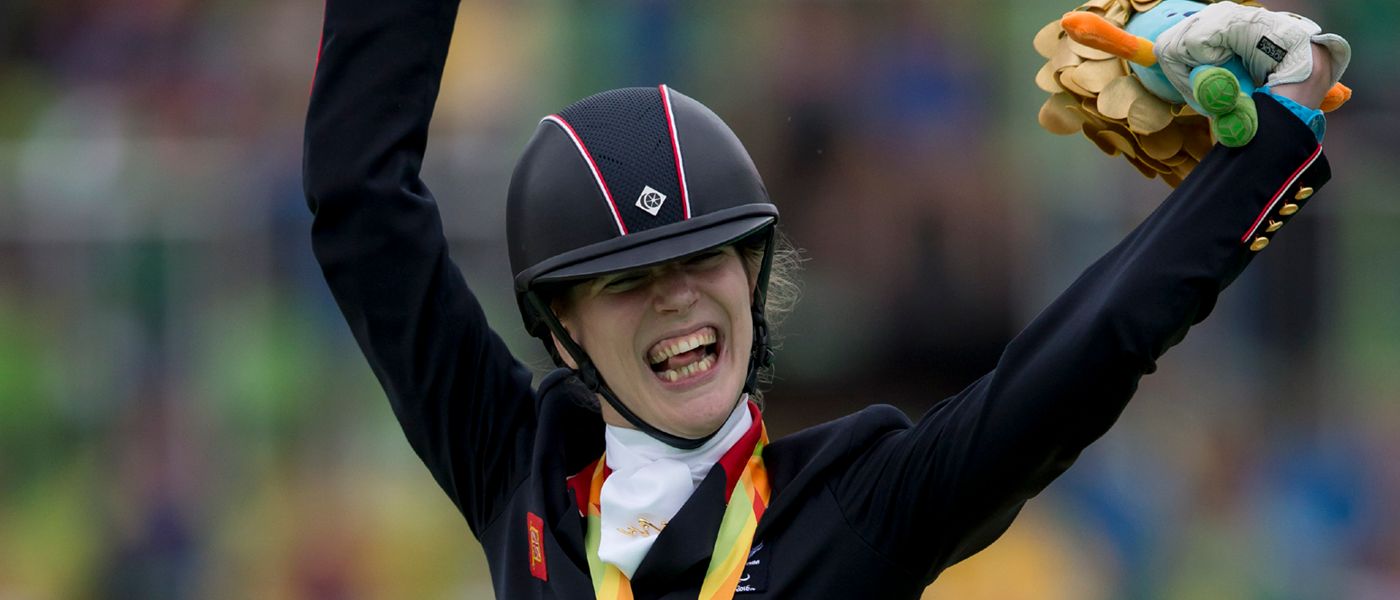
Sophie Christiansen: 'The Paralympics need to be more than a feel-good story'

Sophie Christiansen: ‘The Paralympics need to be more than a feel-good story’

Channel 4 certainly anticipates an audience for the games, having launched its most ambitious Paralympics schedule yet with a high-budget promo. At first glance, the ad seems like any other piece of media selling disabled people’s lives as a sob story or the ultimate bravery, until you focus on the narrative.

Instead of framing Paralympians as “super humans”, a message that saw the broadcaster heavily criticised in 2016, this new campaign shows the everyday struggles of disabled people and, in turn, para-athletes – from making hospital appointments to taking medication, and the general inaccessibility of life, whether at sporting facilities or, for one woman, her local greasy spoon.

“So you might as well quit, if you haven’t got it,” rings out the Bugsy Malone backing track, echoed in a pointed clip of Boris Johnson saying the same – before the “super” in the phrase “super humans” is smashed right through.

Evidently, the broadcaster want us to know it has listened – and that there’ll be no more switching off the comments on YouTube as in 2016. This year, Channel 4 and More 4 will carry live subtitles. The opening ceremony will have live signing and enhanced open AD/commentary simulcast on 4Seven, while the majority of content on the Paralympics microsite will also have subtitles.

<div class="js-react-hydrator" data-component-name="YouTube" data-component-id="6542" data-component-props="{"itemType":"video","index":14,"contentListType":"embed","code":"

","type":"video","meta":{"url":"https://www.youtube.com/watch?v=OjIP9EFbcWY","type":"video","version":"1.0","title":"Super. Human. | Tokyo 2020 Paralympic Games Trailer","author":"Channel 4","author_url":"https://www.youtube.com/channel/UCz1hQ68G3XPVYEBoFDgSjcQ","provider_name":"YouTube","description":"What does it take to be a Paralympian?\n\nThe Tokyo 2020 Paralympic Games begin on the 24th of August 2021, with 537 events from 22 sports to be contested. They are the culmination of five years of blood, sweat and extreme sacrifices made by all the athletes competing.\n\nAudio Described Version: https://youtu.be/Dy0nPCeruVc\nSigned / Subtitled version: https://youtu.be/L0Durb-J2BE \n\n#SuperHuman #Tokyo2020 #Paralympics \n\nAbout #Channel4: \n\nWelcome to Channel 4’s YouTube channel – a page jam-packed with clips from much-loved classics like Peep Show and The Great British Bake Off, and new hits like We Are Lady Parts and It’s A Sin. \n\nWhether you want to investigate the latest Dispatches, laugh your socks off at The Inbetweeners, or snuggle up on the sofa with your favourite Goggleboxers, there’s something for everyone right here. \n \nFollow Channel 4 on: \nFACEBOOK: https://bit.ly/3g1VMpN \nTWITTER: https://bit.ly/2TckydN \nINSTAGRAM: https://bit.ly/3zdl23Q \nTIKTOK: https://bit.ly/3ingVMH \n\nSUBSCRIBE: https://bit.ly/2v2I6SY \n\n📺 👉WATCH MORE ON #All4: https://bit.ly/3ufmZsY","thumbnail_url":"https://i.ytimg.com/vi/OjIP9EFbcWY/maxresdefault.jpg","thumbnail_width":1280,"thumbnail_height":720,"cache_age":86400,"options":{"_cc_load_policy":{"value":false,"label":"Closed captions"},"_end":{"placeholder":"ex.: 11, 1m10s","value":"","label":"End on"},"_start":{"placeholder":"ex.: 11, 1m10s","value":"","label":"Start from"},"click_to_play":{"label":"Hold load & play until clicked","value":false}}},"fullBleed":false,"flags":[],"enhancements":{},"options":{"theme":"life","device":"desktop","editionInfo":{"id":"uk","name":"U.K.","link":"https://www.huffingtonpost.co.uk","locale":"en_GB"},"slideshowAd":{"scriptTags":[],"otherHtml":""},"slideshowEndCard":{"scriptTags":[{"attribs":{},"scriptBody":"\r\n (function(){\r\n var c = document.getElementById(‘taboola-endslate-thumbnails’);\r\n c.id += ‘-‘ + Math.round(Math.random()*1e16);\r\n \r\n var taboolaParams = {\r\n loader: \"//cdn.taboola.com/libtrc/aol-huffingtonpost/loader.js\",\r\n mode: \"thumbnails-b\",\r\n container: c.id,\r\n placement: \"Endslate Thumbnails\",\r\n target_type: \"mix\"\r\n };\r\n \r\n if (typeof window.modulousQueue === \"function\") {\r\n \twindow.modulousQueue.add(function(){ doTaboola(taboolaParams); });\r\n } else {\r\n \tdoTaboola(taboolaParams);\r\n }\r\n }());\r\n"}],"otherHtml":"

"},"isMapi":false,"isAmp":false,"entryId":"611d17d9e4b0caf7ce2bed90","entryTagsList":"health,disability,sport,equality,move,tokyo-paralympics,","sectionSlug":"lifestyle","deptSlug":null,"subcategories":"","isWide":false,"headerOverride":null,"noVideoAds":false,"isNative":false,"commercialVideo":{"provider":"custom","site_and_category":"uk.lifestyle","package":null},"isHighline":false,"vidibleConfigValues":{"cid":"60afc140cf94592c45d7390c","disabledWithMapiEntries":false,"overrides":{"all":"60b8e525cdd90620331baaf4"},"whitelisted":["56c5f12ee4b03a39c93c9439","56c6056ee4b01f2b7e1b5f35","59bfee7f9e451049f87f550b","5acccbaac269d609ef44c529","570278d2e4b070ff77b98217","57027b4be4b070ff77b98d5c","56fe95c4e4b0041c4242016b","570279cfe4b06d08e3629954","5ba9e8821c2e65639162ccf1","5bcd9904821576674bc55ced","5d076ca127f25f504327c72e","5b35266b158f855373e28256","5ebac2e8abddfb04f877dff2","60b8e525cdd90620331baaf4","60b64354b171b7444beaff4d","60d0d8e09340d7032ad0fb1a","60d0d90f9340d7032ad0fbeb","60d0d9949340d7032ad0fed3","60d0d9f99340d7032ad10113","60d0daa69340d7032ad104cf","60d0de02b627221e9d819408"],"playlists":{"default":"57bc306888d2ff1a7f6b5579","news":"56c6dbcee4b04edee8beb49c","politics":"56c6dbcee4b04edee8beb49c","entertainment":"56c6e7f2e4b0983aa64c60fc","tech":"56c6f70ae4b043c5bdcaebf9","parents":"56cc65c2e4b0239099455b42","lifestyle":"56cc66a9e4b01f81ef94e98c"},"playerUpdates":{"56c6056ee4b01f2b7e1b5f35":"60b8e525cdd90620331baaf4","56c5f12ee4b03a39c93c9439":"60d0d8e09340d7032ad0fb1a","59bfee7f9e451049f87f550b":"60d0d90f9340d7032ad0fbeb","5acccbaac269d609ef44c529":"60d0d9949340d7032ad0fed3","5bcd9904821576674bc55ced":"60d0d9f99340d7032ad10113","5d076ca127f25f504327c72e":"60d0daa69340d7032ad104cf","5ebac2e8abddfb04f877dff2":"60d0de02b627221e9d819408"}},"customAmpComponents":[],"ampAssetsUrl":"https://amp.assets.huffpost.com","videoTraits":null}}”>

[embedded content]

Unfortunately, the messaging that accompanies the campaign lets it down: “To be a Paralympian, there’s got to be something wrong with you.” To non-disabled people, that may read as tongue-in-cheek, but for many people with disabilities, it brings back memories of being taunted with “what’s wrong with you?!”

Causing an even bigger uproar online is the accompanying billboard and bus shelter campaign, which uses the slogan: “It’s rude not to stare”.

It’s clear Channel 4 are trying to be subversive here, but when you’ve grown up being told you don’t fit in, that there is something wrong with you, and that if you don’t control your disability, people will stare, these words can still hurt.

There’s also the fact that most people seeing the advert won’t have experienced bias or hate because of their disability, so to them it won’t read as “watch the Paralympics.” It reads as “make disabled people your inspo porn.” Again.

The ads have certainly divided disabled people, and that’s to be expected. Contrary to some reports, we don’t all think the same about things.

Comedian and presenter Rosie Jones is part of The Last Leg team, presenting live from Tokyo. “I really think since the Paralympics have been on Channel 4, it’s a completely different thing,” she says, while acknowledging her possible bias. “Maybe I’m being naive but I don’t think there’s been an ‘inspiration porn’ aspect. It’s all about balance and it’s like, ‘yeah, great, we know how we got disabled, now can we watch then just smash the rowing or the cycling.’”

Inspiration porn, a term widely used by the disability community, was first coined by activist Stella Young to describe a situation where a disabled person is seen as inspirational purely because of their disability – for example, an Instagram post showing a disabled athlete running a race on prosthetic legs with the text: “If they can do it, what’s your excuse.”

These sort of clichés ignore the hard work disabled people put in to get to the top of their game, despite the ableism thrown at them – whether the game in question is sport, as for Paralympians, or in Jones’s case, stand-up comedy.

For her part, Jones attributes a reduction in inspirational imagery to a rise in disabled talent – for the first time, more than 70% of Channel 4′s presenters for the Paralympics have disabilities themselves. “The storytelling comes with a sense of authenticity you wouldn’t get if the entire team were abled bodied.”

Although what Jones says has some truth in it, much Paralympics coverage still leans on sob stories and in-depth personal details from disabled people’s lives in order to get an emotive response from non-disabled viewers. But former Paralympian wheelchair racer Baroness Tanni Grey-Thompson, who will be commentating the games for Channel 4, believes there’s a clear solution.

“They need to show sport, and they need to commentate on it as just sport.”

– Dame Tanni Grey-Thompson

“If we’re in the studio having a discussion about the politics of disability, then that’s the time to educate and talk about someone’s disability, not when they’re getting ready to compete,” she says. “They need to show sport, and they need to commentate on it as just sport.”

In something of a Catch-22, the very fact that disabled people are ignored or overlooked so much of the time is what leads people to pay closer attention when they are doing something out of the ordinary, like competing in the Paralympics, and to hold them to impossible standards.

Something that could be solved, perhaps, if the world was built more for disabled people

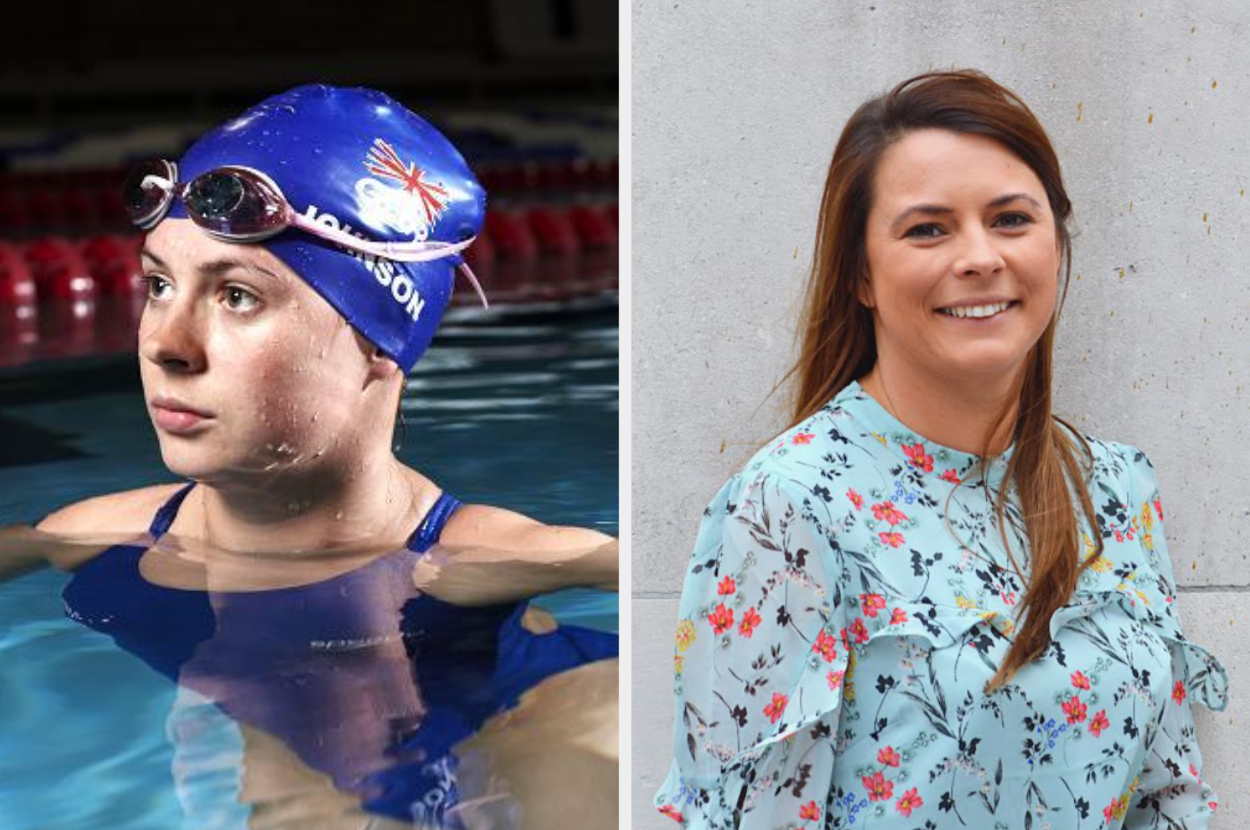
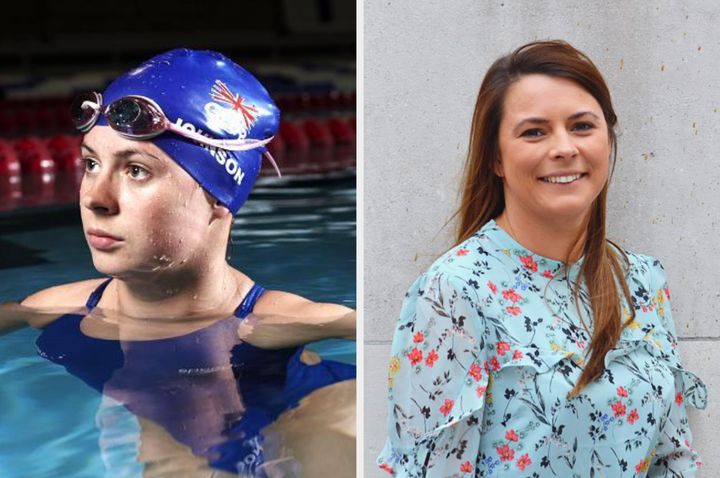
Liz Johnson: 'It&rsquo;s assumed that Paralympians represent all disabled people'

Liz Johnson: ‘It’s assumed that Paralympians represent all disabled people’

“If we invested more attention in creating a world in which everyone was enabled and empowered to get on with their lives, being disabled wouldn’t be seen as something to be ‘pitied’ or dramatised,” says Liz Johnson, former Paralympian swimmer, commentator and co-founder of The Ability People and Podium, a platform for people who are unable to work conventionally, due to disability or impairment, to share and promote their skills and expertise.

“It’s assumed that Paralympians represent all disabled people. But just as not every person wants to be an athlete, nor does everyone with a disability want to be a Paralympian,” says Johnson. “The better representation we give to disabled people from all walks of life, doing all kinds of jobs, the more we’ll level the playing field and stop ‘othering’ people who happen to have a disability.”

Now more than ever, the Paralympics wants to champion sporting excellence while using its legacy to draw attention to the lives of disabled people – but how big a burden is this on an event that happens only once every four years?

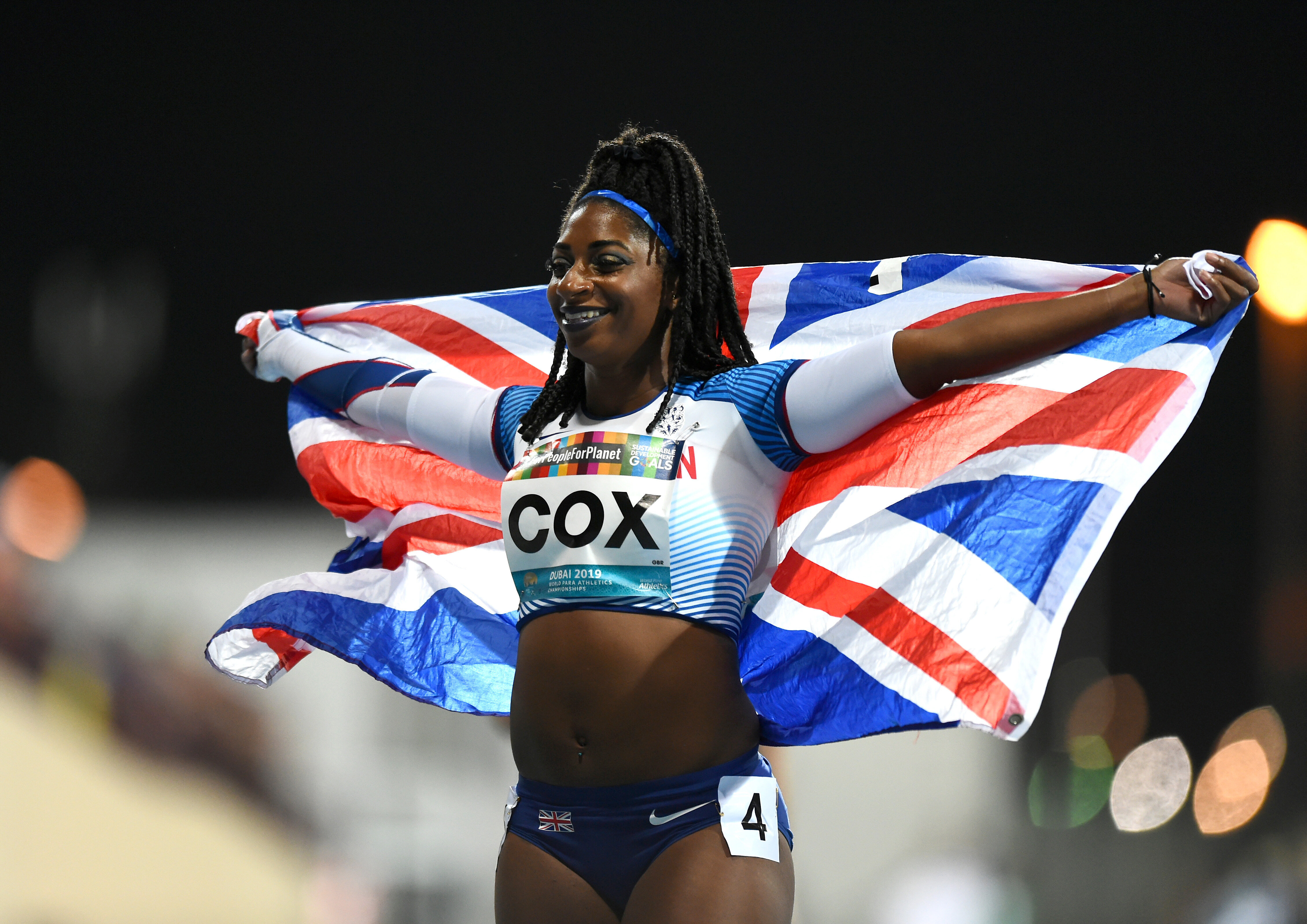
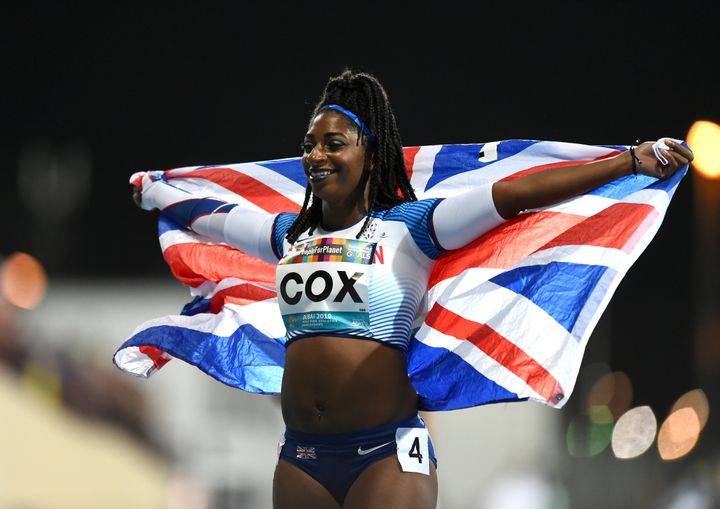
Tokyo hope Kadeena Cox at the IPC World Para Athletics Championships.

Tokyo hope Kadeena Cox at the IPC World Para Athletics Championships.

“We can’t expect the Paralympics to do everything. If we wait for the Paralympic movement to raise the bar, it’s never going to raise,” says Grey-Thompson. “We need government and other people to raise the bar. If you just let the Paralympic movement do it, it means government don’t have to take any responsibility.”

London 2012 was widely seen as a high water mark for disabled visibility, with the Paralympic events as packed as their Olympic equivalents. But by no means was it ‘job done’ for equality.

“Yes, 2012 changed the world for disabled people, but, it didn’t stop, “do not attempt resuscitation” orders being put on 1000s of disabled people last year. It hasn’t changed hate crime doubling against disabled children since 2012. It didn’t change my ability to get on the Northern line,” Grey-Thompson adds.

Mike Sharrock, chief executive of ParalympicsGB, sees the urgency of this moment. “Following the disproportionate impact of Covid-19 on so many disabled people, we now believe more than ever that the success of ParalympicsGB must be a catalyst for meaningful, long-term action,” he says.

“Athletes are powerful advocates to turn the nation’s cheers into change and those medals into a UK-wide movement. The Paralympics might only be four weeks every four years but the message from disabled campaigners and Paralympians alike is clear – we won’t be forgotten when the Paralympics end.”

Ultimately, the International Paralympic Committee, the British Paralympic Association and Channel 4 aren’t the ones in power. We can hold them to account for the ways they portray disabled people, but we can’t expect them to enact meaningful change in our lives. For that, we need to lobby government and, disabled or able-bodied, we can all play our part.

“My concern is the after-care and how quickly people go back to their normal lives and they forget about disabled people,” says Rosie Jones, summing it up. “We’re at a point now as a country where we’re just as excited for the Paralympics as the Olympics, but we shouldn’t be grateful that for four weeks, we’re equal to abled-bodied people. That should be happening all the time.”

Share Button