The Best Makeup Products To Look Awake, Even When You’re Dead Tired

You’re reading First Thing, the HuffPost UK series helping to make your mornings happier and healthier.

If only there existed a wayback machine that could put you in bed at 10 pm last night, getting all the beauty rest you need. Instead, here you are the next morning, checking out a mirror that might as well be lit with a neon sign reading, “Look who’s tired.”

But all hope isn’t lost, especially if you follow these “fake it til you make it” tips from makeup experts who have been there, done that and still managed to look their best.

If you think your face can’t be fixed with mere cosmetics, experts say there’s hope for even the most tired face.

“Looking dull is a result of lack of sleep, lack of hydration or just life in general,” says Jamie Greenberg, makeup artist and founder of Jamie Makeup. “The right makeup, applied correctly, can help push your face toward what it looks like at its healthiest.”

Makeup artist Marco Campos agrees. “If used properly, makeup can really make you look like you’ve had a full week of the best sleep. With the right concealer, you basically can erase the tiredness around the eyes. A little brush up of the brows, a curl on the lash, and a hint of mascara will open and lift your eye right up.”

A full-face plan for looking well-rested

Remember that even though all you want to do is go lie down in the dark, brightness is your mantra for the day.

“The key is to accentuate features without looking heavy, keeping a fresh feeling to the skin and makeup,” says makeup artist Fiona Stiles. “Products with a soft sheen impart light to the face without it looking sparkly and too highlight-y, so the glow feels as though it’s emanating from you.”

Take a look at your palette and act accordingly.

“I stay away from using dark eyeliners and shadows on my eyes, and I lean into fresh colours and extra radiance to compensate for dull skin and puffy eyes,” Stiles says.

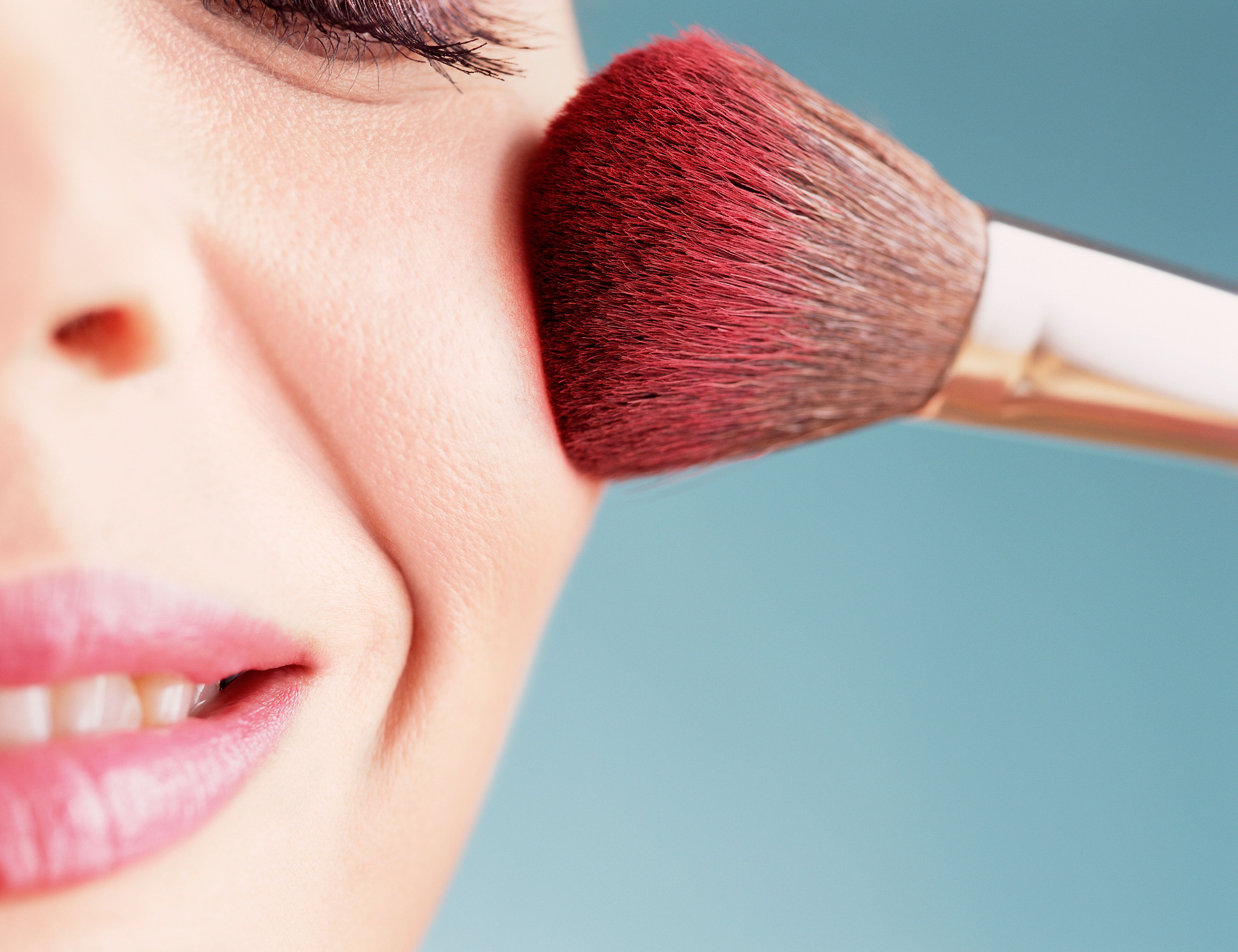
“Warmer colours like peaches and golds give the illusion of health,” says makeup artist Gregory Arlt. He also suggested thinking “upwards” with everything you do: “Applying mascara to just the upper lashes will bring a lift to the eyes, making them look more perky. Next, apply blush to the apples of the cheeks or just above. Adding it lower can drag down the face.”

If you’re running short on time, here’s a quick rundown of the most important areas:

Undereye: Makeup artist Jaleesa Jaikaran suggests starting with a peach-to-orange colour corrector to neutralise darkness.

“A little goes a long way, so use a little at a time, gently tapping the skin with a fluffy brush or fingertips,” Jaikaran says. “Let the colour corrector sit for a second and then go in with a full-coverage concealer to lift and brighten.”

“Don’t over-apply concealer,” says makeup artist Marco Campos. “Apply a small amount on the inner and outer corner of the eye and blend. Add a little more if needed, then gently set with a fine setting powder.”

Makeup artist Jamie Dorman remembered using eye makeup to look more awake in school.

“I used white liner on the inner rim of my eye and concealer that was lighter than my skin all around my eye, so I’d look more attentive,” Dorman says.

Lashes: “I always curl my lashes, because it’s the number one way to make you look more alert and peppy,” says makeup artist Sandy Ganzer. “It opens the eye, giving an instant refresh to your face.”

Colour matters here, too. “A dark mascara like Diorshow Black Out immediately makes dark circles less apparent and helps you look refreshed,” says makeup artist Melissa Murdick.

Cheeks: “Never underestimate the power of blush in the right colour,” Dorman saus. “It can seriously brighten a face and bring out your eyes.”

Lipstick: “Put a drop of bright lipstick on the bridge of the nose to give the face a brighter, more healthy look,” Arlt suggests.

DIY hacks

Even if you don’t have tons of fancy cosmetics, there are ways to energise your look on the cheap.

Ice, baby: “If you don’t have a cool jade roller or face mask to take down puffiness, just rub an ice cube under your eyes with clean hands,” Greenburg says.

Curl with cutlery: “In a pinch, you can heat the curve of a spoon with a blow dryer and very carefully press it gently to your lashes to get a curl,” Ganzer says.

Spoon me: “If you don’t have access to your favourite products, put metal spoons in the freezer for five to 10 minutes, then use them under your eyes to smooth out puffiness,” Jaikaran says.

Coffee (inside and out): “A DIY help for dark circles is to add a touch of water to crushed coffee beans, apply it as a paste, let it sit for seven minutes and then wash it off with cold water,” Jaikaran says.

Take it easy

Finally, remember that as tired as you are, less might be more when it comes to camouflaging fatigue. “The techniques don’t have to be drastic,” Campos says. “Small tweaks can really make you look more alert and ready to take on the day.”

And keep these words from Murdick in mind: “If you look tired, it’s OK. Don’t pick yourself apart or give it too much of your focus. We all have good days and off days, but you’re still beautiful, I promise.”

Below are some of the experts’ favourite makeup picks for your most tired days.

First Thing is a HuffPost UK Life series giving you tips and advice on how to enjoy your mornings. Whether you’re an early bird or night owl, starting your day off right will make for a happier and healthier day. We’ll be sharing exercise advice, nutrition guidance, as well as ideas on forming new habits. (And no, the answer to a productive morning isn’t just setting an alarm for 5am!)

Share Button

For Parents, It’s A Summer Of Hardship And Impossible Choices

We’re at the half way point of the UK summer holidays, a time that is always testing to parents’ patience and bank balances. But when it comes to keeping children happy and occupied amid the escalating cost of living crisis, many families are feeling the pinch like never before this year.

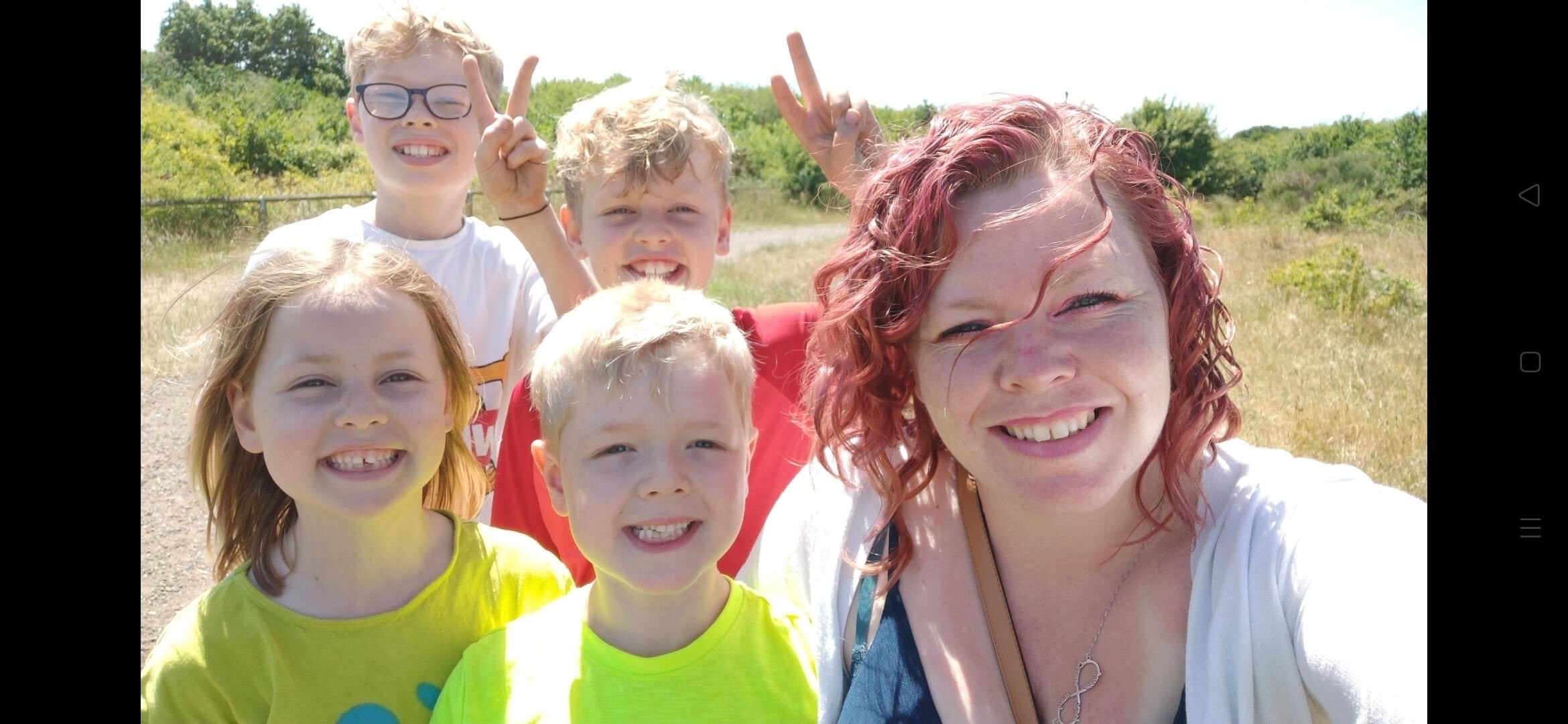
Sally Worrall, 31, has seen a drastic change in her circumstances.

“I can’t get through the month now without borrowing money,” says the Hampshire-based mum of four.

As a single parent to Chester 11, Rory, eight and twins Jenson and Molly, six, the self-employed painter and decorator says that she has to borrow money from her mother each month just to get by.

“I don’t have an extravagant lifestyle, I don’t smoke, drink, or have Sky. I have the cheapest mobile package and the most basic broadband service. But I really struggle,” she tells HuffPost UK.

“Food is especially a big thing. It’s gone up by about £50 a week for me and the children. It’s really difficult. I try not to think about it because the reality is after a shop, I’ve only got about £20 a week to live on,” says Worrall.

Even before schools broke up for the summer this year, the national poverty charity, Turn2US, warned that the financial squeeze was having a stark impact on many families in the UK.

The charity surveyed 2,730 of its service users in June and found that soaring food costs were pushing many into debt as they struggled to put food on the table. Almost half of the charity’s users reported they were left with nothing to live on each week after weekly food costs.

The survey also found that that over half of respondents planned to use the first £326 instalment of the government’s cost-of-living rescue package to help pay a debt for utility bill arrears – and with food and fuel prices only set to rise this autumn and winter, there is concern for how many will be plunged into poverty.

FatCamera via Getty Images

Michael Clarke, head of information programmes at Turn2us, said: “Every day we see more people struggling to afford life’s absolute basics as the cost-of-living continues to push millions of people onto the edge of a financial crisis.”

He added: “We are hearing from parents who are skipping meals to try and keep their children fed, or who are making impossible choices between paying rocketing energy bills or rent. This isn’t right.

“Many people using our services come to us when they are at their most desperate and we fear the worst is yet to come over the coming months.”

These statistics don’t surprise mum of two Kelly Williams, who lives in east London with her husband Marcel and six-year old son Quincy.

“It’s the world in which we now live in,” she tells HuffPost UK. “Everything has gone up and it’s simply not sustainable. I don’t understand how there is such a high rate of inflation and the salaries have not risen to coincide with that.”

Williams, who works as an accountant, added: “It’s creating a huge gap in the cost of living and people have got to find ways to survive.”

“We fear the worst is yet to come over the coming months.”

– Michael Clarke, Turn2Us charity

Certainly, it’s affecting middle-income families, too. “Since the crisis my husband and I are much more conscious of what we do now in terms of managing our money and one of the biggest changes we found was that we don’t go out as often as we used to,” says Williams.

The family are trying to change spending habits with as little impact on their son as possible. “We are both aware of how important it is to our wellbeing that we go out as a family and spend quality time together,” she says.

Williams is focused on giving Quincy a good summer holiday while staying within budget – even if that means a major juggle with work.

“I’m taking advantage of my working from home days. By being at home, I will not have to pay out any extra money to summer camps,” says Williams, who is making the most of free activities and vouchers provided by her local council.


“Picnics and play dates!” she says, citing her summer mantra. “This will just allow me to let my money stretch further.”

SolStock via Getty Images

When it comes to the food shop, Williams freely admits she’s no longer loyal to a particular supermarket and that her main quest is to get value for money.

“I’m loyal to brands, but not to supermarkets,” she tells HuffPost UK, adding that one of her biggest hacks is getting her petrol at supermarkets.

“When filling up, I tend to use supermarket petrol stations that offer loyalty rewards. Here you can transfer the reward points into vouchers for food. I’ve made huge savings by doing this,” she says.

Worrall, meanwhile, has started doing all her shopping at budget stores.

“I started shopping at B&M because it is so much cheaper than the larger supermarkets,” she says. “I’ve also had to shop at the Local Pantry.”

The Local Pantry, which operates in 70 neighbourhoods around the UK, sells on reduced items that supermarkets would normally throw in the bin. Shoppers using a branch pay £5 a trip, and receive £20 worth of food and groceries.

“Being in a single income household makes a hell of a difference to what we do when it comes to the summer holidays.”

– Catherine

“They have a coloured sticker policy,” explains Williams. “You get five red item stickers, which are meat and cheese and frozen fish. Then you get ten blue items, which is your pasta and tins of beans, etc, and toiletries. Then you get three items that are fruit, vegetables and bread.

“It’s a really good thing, but for a first world country nobody should be in this situation.”

Single parent Catherine Gilmore, who is mum to Arthur, six, says she’s been obsessing about how to stay within budget and keep her son occupied for the length of the summer holidays – and the worry starts earlier each year.

“Being in a single income household makes a hell of a difference to what we do when it comes to the summer holidays,” says the publishing assistant from Leyton, east London.

“Because of the financial squeeze, what I have had to do to ensure that Arthur gets to enjoy the summer is to save all year round, because, come July, financially it hits you hard.”

Meanwhile, hybrid worker Catherine, who preferred not to give her surname, says that in order to save money she is splitting the summer between her home in London and Derbyshire, where her mother lives.

“I get six weeks of holiday and I need to find childcare for four weeks of that time. So to keep costs down. I spend three weeks in London and then it’s up to Derbyshire for two weeks.”

Even factoring in travel costs, this hack makes life a lot easier, she says. “It’s cheaper up there, I pay between £35-£55 per week [on summer clubs] in London and in Derbyshire it’s between £20-£25 per week.”

One of the biggest problems Catherine found when looking for clubs in London was how quickly spaces got filled. In applying for cheaper camps and council-run activities, she said her son was often overlooked in favour of families in receipt of Universal Credit.

“It’s definitely is not a bad thing that families on benefits get priority, but there should be more available for middle-income families who are struggling to keep their families occupied during the summer,” she tells HuffPost UK.

Sally Worrall says she has taken advantage of similar provision in Hampshire to keep costs down and her kids occupied and happy throughout the holidays.

Her children’s school offers means-tested pupils the chance to attend a free summer camp, which runs during school hours. Each pupil enrolled on the camp is also given a free lunch and snacks throughout the day.

“I’ll only be using it three times a week to help me with food more than anything,” she says. “It also means I can work and I won’t have to worry about paying for childcare costs.”

Worrall has also been in touch with Gingerbread, a nationwide charity that offers support and help to single parent families. She says their team has been extremely helpful to families like hers, who are also struggling in the crisis.

“They have been great at bringing people together,” she says. “It has been nice to connect with families who are in similar situations. They have really great groups that you can lock in with.”

And despite all the challenges facing her family of five, she’s intent on giving her children a great summer. “I’m lucky because I live near the sea and near woodland. The days that I am not working we will spend them either on the beach or in the woods exploring and enjoying natural resources,” she says.

“We’ve just moved into a house from a flat so we will be spending a lot of time outside and taking advantage of the outdoor space. The garden is definitely a huge plus!”

Gingerbread runs a dedicated support service for single parents families – visit its website or call 0808 802 0925.

For further information on support and resources, visit the Turn2us website.

Share Button

Is It Safe To Barbecue At Home In A Heatwave?

With extreme temperatures sweeping the UK, people have been urged not to use barbecues in parks, dunes and woodland, as well as on balconies, due to the massive fire risk.

A lack of rainfall in July and August means grass is bone dry and all it takes is a single spark from a barbecue to light up entire stretches of land – not to mention neighbourhoods.

During the first week of August alone, London Fire Brigade (LFB) mobilised thousands of firefighters to 340 grass, rubbish and open land fires – an eightfold increase on the 42 during the same week last year.

To try and help ease the burden on fire brigades, some supermarkets have now stopped selling disposable barbecues due to the fire risk they pose in the hot weather. Sainsbury’s and Tesco are the latest stores to remove the items from sale, following in the footsteps of Marks and Spencer, Aldi and Waitrose.

LFB’s assistant commissioner Jonathan Smith has warned against barbecuing in open spaces or balconies. But what about barbecuing in your garden at home – is it safe?

It’s a tough question to answer.

There’s no advice explicitly telling you not to barbecue at home in your garden. Nobody wants to be a party pooper when it comes to people enjoying the nice weather, but realistically you do need to weigh up whether it’s worth the potential risk of setting your garden alight – and annoying your neighbours into the bargain, as the lack of wind means smoke tends to stick around.

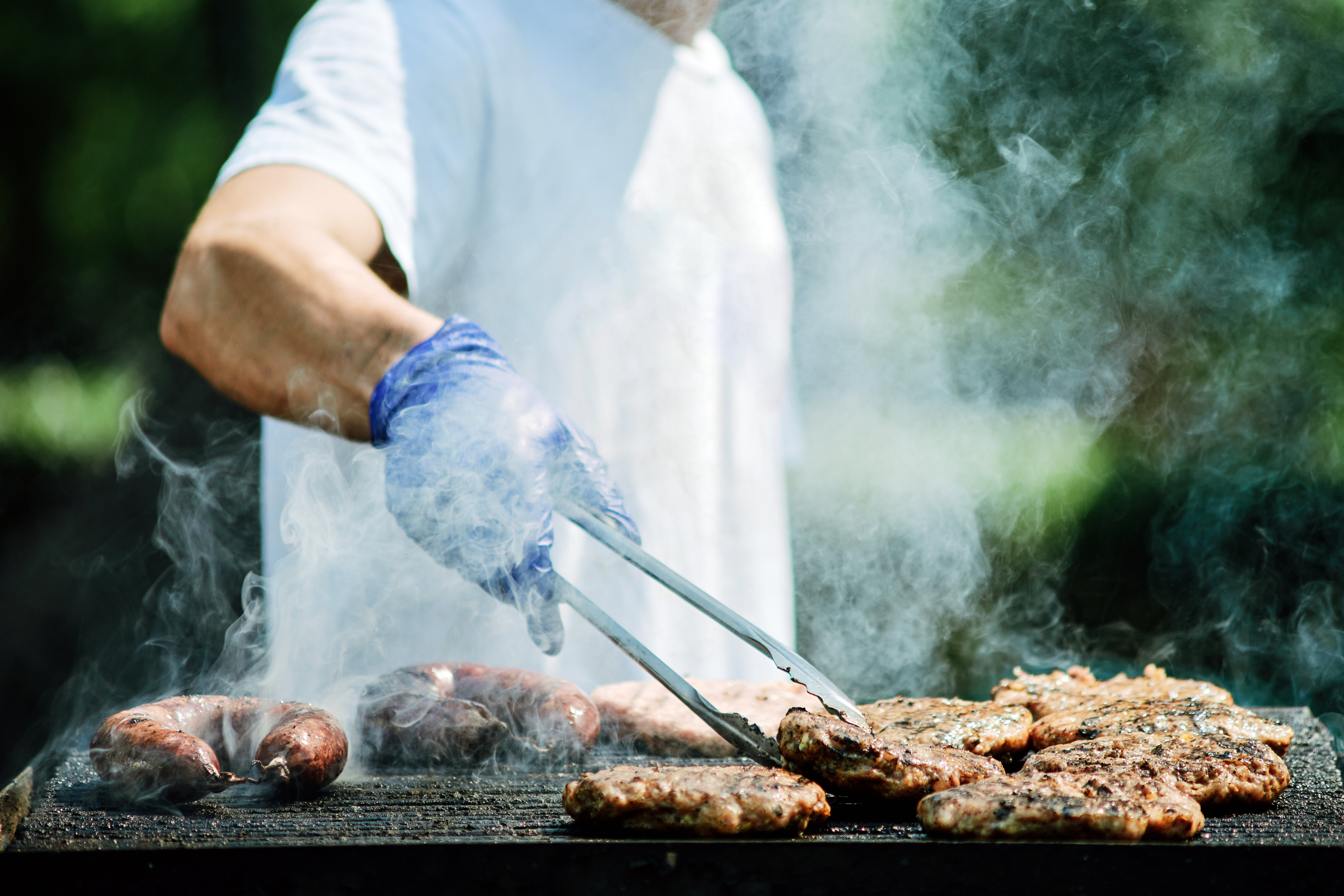
If you are absolutely desperate to get grilling, you should take extra precautions. Your barbecue should be situated well away from your house and away from dry grass, shrubbery, bushes or trees, advises Andrew Chalk, a home insurance specialist at NFU Mutual.

If your barbecue is in need of a clean, make sure you do it. “Hot ashes or sparks are more likely if the barbecue hasn’t been cleaned since it was last used,” says Chalk, “so people should regularly clean their barbecues of ash and old grease.”

Maryna Terletska via Getty Images

Homes with a thatched roof are at particular risk of fire, so make sure any barbecues are positioned as far away as possible to ensure sparks can’t land on the thatch.

When you are cooking outside, Chalk recommends having a bucket of water on hand in case a spark does ignite anything nearby. Also consider wetting the area around the barbecue to make things a little less flammable.

It goes without saying that barbecues should always be operated outdoors, so don’t light one up indoors thinking you’ll reduce the risk of fire. This is incredibly dangerous due to the carbon monoxide fumes.

LFB also warns against using petrol, paraffin or any flammable liquids on your BBQ. Firelighters are a much safer option.

Once you’ve finished cooking, remember that your BBQ can remain hot for hours afterwards. You don’t want to put your still-smouldering-barbecue in your shed, for example, as you could inadvertently cause a blaze.

Share Button

Stillbirths Increased Last Year. Why Is Nobody Talking About It?

After years of progress, the number of stillbirths increased across England and Wales in 2021 – but it’s not the story you’ll read about elsewhere.

When the new ONS data was released this week, most newspapers focused on a jolly little fact: last year, more babies were born out of wedlock than among married couples for the first time since records began.

But the figures also show there were 2,597 stillbirths in 2021, an increase of 226 from 2020.

These statistics were barely a footnote in most national newspapers, something the baby loss charity, Tommy’s, was disappointed by.

Kath Abrahams, chief executive at the charity says the latest figures are “unacceptable”. She believes they reflect the “direct and indirect” impact Covid-19 had on pregnant women and people in 2021.

“Indirectly, the pandemic had a significant impact on maternity services, putting them under greater pressure,” she tells HuffPost UK. “There were higher rates of stillbirth in January 2021, which coincided with the peak of the second wave of Covid-19.”

Throughout the pandemic, HuffPost UK reported on the disproportionate impact on maternity services, with pregnant women saying they felt “forgotten” as lockdown restrictions eased. While pubs reopened, mums-to-be reported having routine antenatal appointments cancelled or conducted over the phone.

Though there’s no research to link these practices directly to stillbirth rates, the individual stories paint a picture of incomplete care, at a time of high-anxiety for pregnant women.

Pregnant women also faced misinformation regarding vaccine safety, with some even mistakingly told not to take the jab at vaccine centres. Data from October 2021 found just 15% of pregnant women were fully vaccinated amidst the fear and confusion.

Because of this, Tommy’s says Covid-19 infection is likely to have had a direct impact on the 2021 stillbirth rate.

“Our research has shown that getting Covid-19 during pregnancy could cause problems in the placenta, increasing the risk of pregnancy complications, which is why it’s important pregnant women and people get vaccinated if they can,” Abrahams says.

“Rates of stillbirth had been following a consistent decline over recent years, and we believe 2021’s increase is unacceptable. It highlights exactly why we need to increase efforts to meet NHS England’s aim of reducing stillbirth rates by 50% by 2025.”

The data also uncovered that stillbirth rates differed across the country last year, with more deprived areas, including the North East and Yorkshire, experiencing higher rates than the most affluent regions.

“It is unacceptable that who you are and where you live continues to have an impact on whether your baby is born healthy – and it’s vital that our government and health services continue to focus on tackling these inequalities,” Abrahams adds.

“Action to reduce stillbirth must be a national priority as health services recover following the Covid-19 pandemic, and more work must be done to understand the reasons for the increase in stillbirths and help improve care for pregnant women and people at risk.”

Commenting on the latest figures, Professor Asma Khalil, spokesperson for the Royal College of Obstetricians and Gynaecologists, said every stillbirth “is a tragedy for the families affected as well as the maternity staff involved”.

“Stillbirth rates are still higher in the UK than many other high-income countries and vary widely across the UK,” she said. “We continue to advise women who have concerns or worries about their or their baby’s health – including the baby’s movements – to seek medical advice from their midwife or hospital as soon as possible. We also advise pregnant women to ensure they are fully vaccinated against Covid as this can increase the risk of stillbirth.”

HuffPost UK contacted the Department of Health and Social Care about the increased stillbirth rates, sharing the concerns raised by Tommy’s about stretched maternity services.

In response, a DHSC spokesperson told us: “We are committed to making the NHS the best place in the world to give birth through personalised, high-quality support.

“Since 2010, the rate of stillbirths has reduced by 20.9%, the rate of neonatal mortality for babies born over 24 weeks has reduced by 36% and maternal mortality has reduced by 17%.

“The NHS is investing £127m into the maternity system in the next year to support the workforce and improve neonatal care – which is on top of £95m to recruit 1,200 more midwives and 100 more consultant obstetricians.”

Share Button

There Are 3 Types Of Female Orgasm, According To A Male Professor

The big ‘O’, the climax also known as an orgasm. Sure you can have fun without one, but, let’s be honest, ut’s the part of sex we all want to experience, which is why we can’t stop talking about how we can get one, especially as women.

The female orgasm has been studied and researched for centuries, but now there’s new research that suggests there are actually three different types.

The study from Charles University in Prague, found that when women have an orgasm, their pelvic floor muscles tend to move in one of three patterns: a wave, a volcano, or an avalanche.

A ‘wave’ is everything you’d expect to feel – waves of tension and release of your pelvic floor muscles.

A ‘volcano’ feels like more of an explosion towards the end of the orgasm, as your pelvic floor explodes into a swift tension and release.

An ‘avalanche’ involves higher pelvic floor tensions in the build up, which drop when you orgasm.

James Pfaus, professor of neuroscience at Charles University in Prague led the study, which invited 54 women to use the ‘Lioness’, a Bluetooth-connected vibrator, to reach orgasm.

Volunteers were asked to masturbate at home using the device over a period of a few days. The vibrator was programmed to measure the force of their pelvic floor contractions via two sensors – which researchers analysed remotely to work out the rhythm and pattern of these movements in the participants.

‘Wave’ orgasms were most common – 26 out of 54 women experienced this type, whilst 17 had ‘avalanche’ orgasms and 11 had a ‘volcano’ orgasm.

Professor Pfaus said: “We are doing a long-term study of women using the Lioness to see how these different patterns are experienced subjectively as orgasms, as levels of pleasure, [and] where the stimulation that induces them largely comes from.”

Many women may have experienced more than one orgasm pattern, while others might say that even one orgasm is better than none, especially with recent studies pointing to a major gender-based orgasm gap.

For every sexual encounter, men orgasm on average 87% of the time, while women experience them 65%.

Orgasm rates also vary depending on your sexuality, with heterosexual men orgasming most regularly, followed by gay men, bisexual men, lesbians, bisexual women – and finally, at the bottom of the list, heterosexual women.

Lisa Williams, co-author of More Orgasms Please: Why Female Pleasure Matters, previously told HuffPost UK that this orgasm gap isn’t down to anatomy, as women are able to orgasm as quickly as men when they masturbate.

“It can take as little as four minutes for a woman, which is the same as men, but there is a perception it’s going to take about 40 minutes during sex,” she said.

No one should feel compelled to have an orgasm – many people have a fulfilling experience without reaching this point – and some people are anorgasmic (or unable to orgasm).

But Williams encourages women to become more familiar with their bodies and what they like. Then, when they get into a sexual situation with a partner, they can be less afraid to say what they do and don’t enjoy.

If this new research isn’t an excuse to start exploring, we don’t know what is. So, wave, volcano or avalanche? Which one will you be having next?

Share Button

A Little Bit Of Good News About The NHS Offers A Glimmer Of Hope About Its Future

The NHS has managed to address its huge Covid backlog in a significant moment of celebration for the struggling service.

NHS England revealed on Tuesday that it had cut the number of patients waiting more than years for a routine operation from 22,500 – the number from the start of the year – to 168.

This includes scans, checks and surgeries, and the 51,000 people who would have passed the two-year mark by the end of July.

Three NHS regions also had no patients waiting two years or longer for this routine treatment, with another three getting it down to single figures.

The stats show remarkable progress although it does exclude more complex cases and those who deferred treatment.

Still, 220,000 patients with Covid have been treated in the last six months, too.

The NHS has pointed to its elective recovery plan, which aimed to take on Covid backlogs back in February, for its success.

The service has been redirecting patients to other hospitals across the country as well, so they could be treated more quickly, while covering travel and accommodation costs “where appropriate”.

NHS chief executive Amanda Pritchard also claimed this achievement was only possible because the NHS continues to reform how it provides care, including using new tech like robot surgery.

It comes after the health service announced it would eliminate the two-year waiting lists by July earlier this year.

There are still worrying signs though

This statistic is only one small portion out of the whole Covid backlog. Only on Monday, there were fears over declining dentistry care across the whole country.

The BBC reported that 6.6 million people were still waiting for hospital treatment in total.

Meanwhile, ambulance response times for the most urgent incidents climbed to nine minutes and six seconds according to the NHS England in June. This is far from the target of seven minutes.

This is just one example where health care is still struggling, as it was even before the pandemic began.

On top of this, fears over its workforce shortage and long-term underfunding mean the future of the NHS still looks precarious, despite this small bit of good news about cutting waiting times.

Those at the top of the NHS still have grand plans for progress, though.

Pritchard said: “The next phase will focus on patients waiting longer than 18 months, building on the fantastic work already done, and, while it is a significant challenge, our remarkable staff have shown that, when we are given the tools and resources we need, the NHS delivers for our patients.”

Health secretary Steve Barclay said: “This is testament to NHS staff who have worked incredibly hard to get us here – despite the significant challenges.”

The government plans to remove the 18-month waiting list by April 2023.

Share Button

We’ve Had Monkeypox. This Is What We Need People To Know

Jake* was having an ordinary family meal with his partner and 15-year-old son when he came down with a fever. For four days he felt exhaustion and had no appetite at all, and after a few days he developed brain fog. Twenty-four hours later, an anal lesion appeared.

It was essentially an open wound for five days which was emitting a clear mucus and then blood,” Jake tells HuffPost UK.

“It was almost impossible to sit down and moving was very painful. Opening my bowels was pure agony and my body was making me do that eight or nine times a day. Each time was a bloodbath.”

It was late July when the World Health Organisation (WHO) declared monkeypox a world health emergency.

The US Centers for Disease Control and Prevention (CDC) has estimated there are more than 25,000 cases worldwidepredominately in Europe, though more than 7,000 in the US, and more emerging in South America, South East Asia, the Western Pacific and the Eastern Mediterranean.

The virus was first reported in humans in 1970 in the Democratic Republic of Congo, having been identified in monkeys in a Danish laboratory in 1958 (thus the name). However, prior to 2021, there had only been seven UK cases.

As of August 4, there are more than 2,700 confirmed monkeypox cases in the UK, according to government figures, most in England and “a significant majority” of those – as many as 75% – in London.

Its prior rarity means knowledge of transmission among health experts is still patchy while we await more research – a period of stasis that echoes the early stages of Covid-19.

But this week, groups from across the political spectrum in Westminster joined forces, signing a letter to health secretary Steve Barclay calling for action on a disease that’s “causing real fear and anxiety” within queer communities.

FG Trade via Getty Images

While it’s possible for anyone, including children, to catch monkeypox, 98% of current cases are in men who identify as gay or bisexual, or men who have sex with men. This was confirmed by Dr Tedros Adhanom Ghebreyesus, director general of WHO, and he advised men to reduce their number of sexual partners while health authorities tackle the outbreak.

For decades, queer men have been subjected to unfair stigma around sexual promiscuity, particularly during the AIDS pandemic, and the lack of knowledge around the rise of monkeypox has obvious parallels with AIDS for those that remember the height of that crisis.

“We need to calmly and responsibly acknowledge that this current monkeypox outbreak is predominantly affecting gay and bisexual men.”

– Greg Owen, PrEP lead at Terrence Higgins Trust

So campaigners says it’s crucial that messaging about monkeypox transmission and vaccination is handled sensitively to avoid spreading further stigma against the LGBTQ+ community.

“We need to calmly and responsibly acknowledge that this current monkeypox outbreak is predominantly affecting gay and bisexual men,” says Greg Owen, PrEP lead at the Terrence Higgins Trust.

“We need to acknowledge that it’s also mainly being spread through the skin to skin contact, which is occurring during sex. There is nothing wrong with stating that. It is very problematic if we don’t.”

Dr Mark Lawton, a sexual health and HIV consultant in Liverpool and chair of the British Association of Sexual Health and HIV (BASHH), adds the following caution: “We believe, in addition to direct skin to skin to contact, monkeypox can be transmitted through contact with contaminated clothing and bedding and by respiratory droplets in close proximity.”

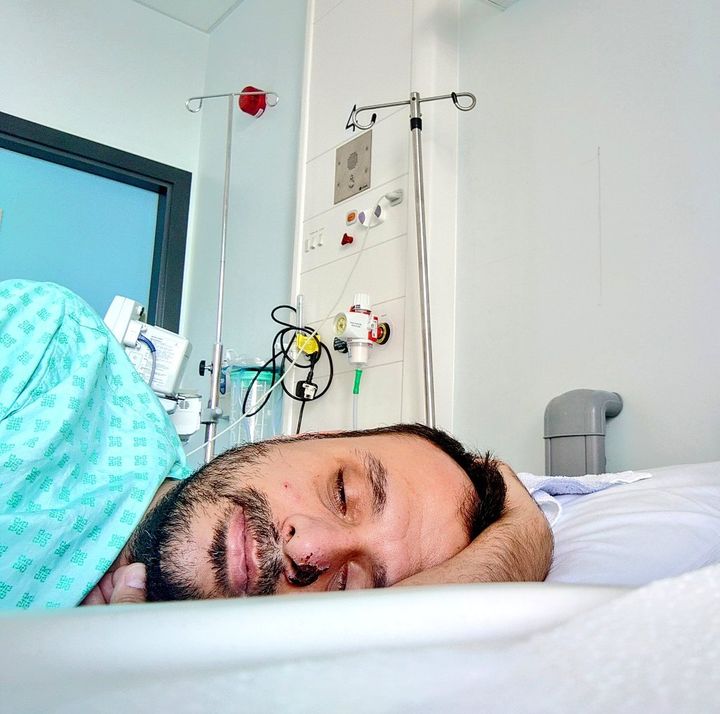
Harun Tulunay, a 35-year-old training coordinator who works with HIV/AIDS charity Positively UK, contracted a serious case of monkeypox in June.

“I was feeling like someone was ripping my flesh out of my bones,” says Tulunay of his experience. The Londoner doesn’t believe he developed monkeypox having sex, but through bodily touch, simply by lying next to a partner.

During his stint in hospital, the pain was so severe that doctors gave him opioids in an attempt to control the discomfort.

Harun Tulunay in hospital with monkeypox.

Harun Tulunay

Harun Tulunay in hospital with monkeypox.

“I wasn’t able to swallow, it was that bad,” he tells HuffPost UK. “The pain was worse than kidney stone pain. When they gave me antibiotics I was crying and kicking my bed and the doctors were holding me.”

While most monkeypox cases are much milder, there can be mental health implications for those who catch the virus.

Jake had been in close contact with his 80-year-old father in the period before his symptoms began and that, after getting a diagnosis, having to tell his family they might be at risk too gave him extra stress.

“Mentally it was very difficult,” says the professional services manager, who is bisexual, in his forties, and based in London.

“It meant my father knowing I’m in an open relationship which was stressful to share. My 80-year-old father has up until now just about managed to deal with my bisexuality by addressing it as little as possible. Now he is being contacted with offers for a vaccine as he may have been exposed.”

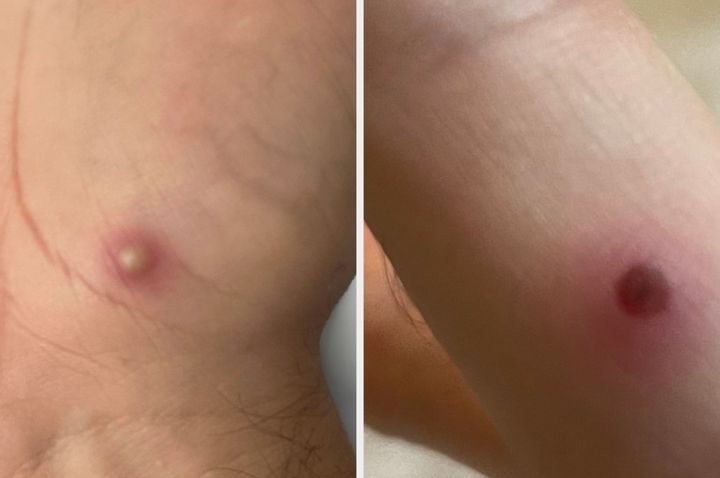
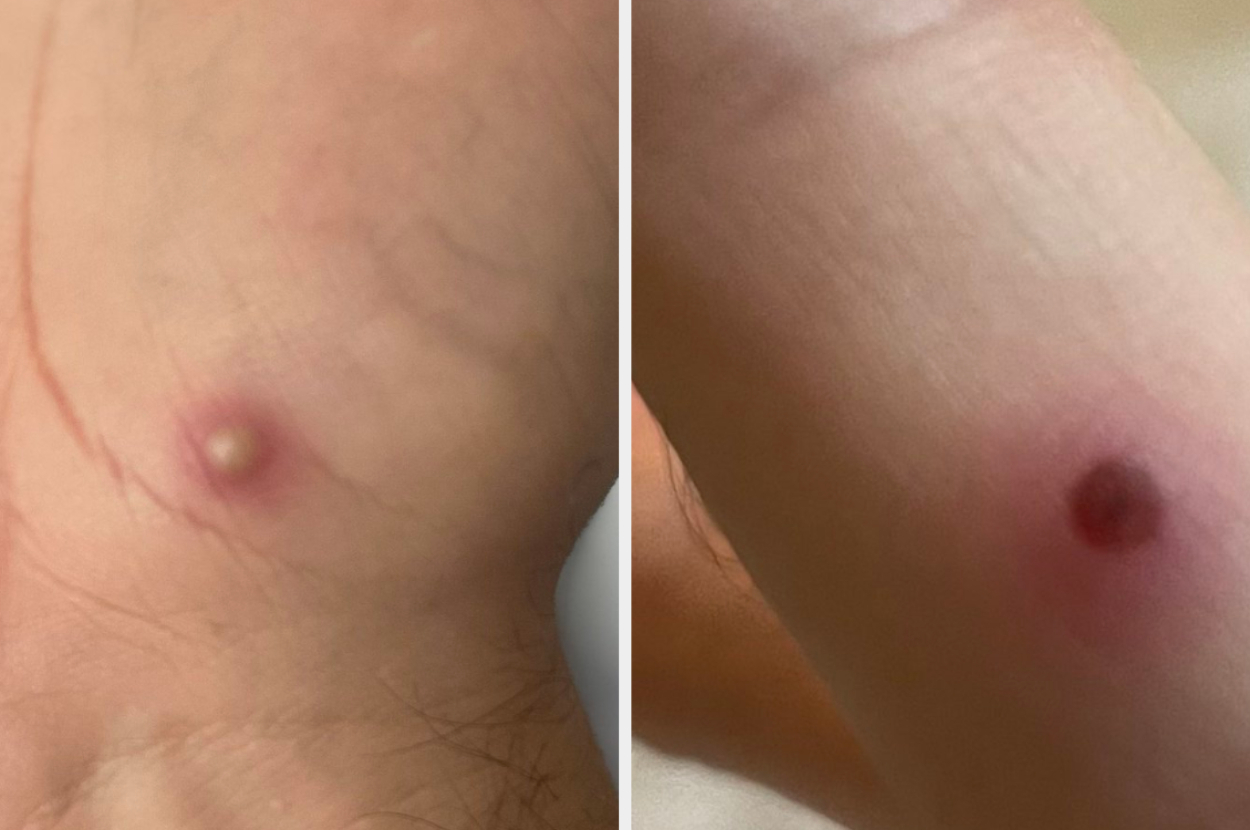
Jake's hand with signs of monkeypox (left) and his arm scabbing over (right).

Twitter/@MonkeyPoxJake

Jake’s hand with signs of monkeypox (left) and his arm scabbing over (right).

The Department of Health & Social Care (DHSC) says it is working “rapidly” to vaccinate those at risk.

Vaccinations began in July, using Imvanex – a vaccine designed for smallpox – and NHS England has confirmed that 14,000 people have already received a jab, although priority is being given to those at higher risk of contracting it.

“It’s important to emphasise that vaccination will not give instant protection against infection or disease, and can take several weeks,” the WHO director-general said on July 27. “That means those vaccinated should continue to take measures to protect themselves, by avoiding close contact, including sex, with others who have or are at risk of having monkeypox.”

The US virus declared the virus a public health emergency on Thursday. For those confirmed to have monkeypox, the US CDC is recommending a two-to-four-week isolation period.

Now campaigners are calling for similar focus in the UK. Greg Owen is among many spokespeople for queer organisations putting pressure on the government to do more to control the spread of the virus and speed up vaccine roll-out.

“We want to see a national lead appointed to hold all of those in the fragmented system to account in terms of tackling the monkeypox outbreak with the ultimate goal of preventing it from becoming endemic in the UK,” he tells HuffPost UK. Owen believes we “urgently” need to double the amount of vaccines with “an injection of cash, quickly” put into sexual health services.

The open letter signed by Conservatives, Labour, Liberal Democrat, Green and Scottish National Party representatives, as well as charities. echoed this: “We are united as LGBT+ groups from across political parties in asking that the government treat the monkeypox outbreak as a public health emergency.”

Alongside the Terrence Higgins Trust and BASSH, the British HIV Association, PrEPster and the National AIDS Trust are also rallying for government action, including £51m funding from the Department of Health and Social Care.

The call is repeated by Dr Lawton: “Crucial to this is immediate mobilisation of resources by the government to ensure sexual health clinics, who are bearing the brunt of this, are funded to deal with the additional workload and sufficient vaccine is made available for all those that need it,” he tells HuffPost UK.

The Terrence Higgins Trust has also expressed concern that access to other vital healthcare support is being stretched due to health workers being overworked and having to focus on an influx of monkeypox patients.

Some [sexual health services are] seeing a 90% reduction in access to the HIV prevention pill PrEP and long-acting reversible contraception,” the charity writes on its website.

Anna Bizon via Getty Images

Similarly to the early days of Covid-19, monkeypox is affecting people that are otherwise fit and healthy.

“I have no underlying health conditions,” says James,* who is 36, and asked to stay anonymous. “I work out six times a week and my fitness and health is my top priority. So for this to floor me the way it did, it was really scary. I also found the isolation really difficult, three weeks from the first sign and symptom is really tough!”

Meanwhile, John Thomas only experienced mild symptoms, but believes one of the major challenges is convincing men who have non-severe cases to isolate for the benefit of others.

“I think mild cases go under reported compared to the horror stories,” he tells HuffPost UK. “If you don’t know you have monkeypox, or if you can get away without people knowing you have it, you’re free to spread the virus to others.”

He adds: “If I hadn’t been looking for symptoms I would have almost certainly gone to a club night on the Friday [around the time of his transmission], and probably on the Saturday night as well.I think enough isn’t known about transmission yet, or if it is, the messaging is confusing.”

Thomas is right to have thought twice about going clubbing, says Dr Lawton, who says it is possible that monkeypox could spread in an intense nightclub environment where people are wearing little clothing.

“This is certainly a potential source of infection,” he says. “It is predominantly transmitted through skin to skin contact, but this does not need to be sexual.”

While we wait for more research, campaigners like Owen are trying to stay pragmatic.

While expressing “huge concerns,” including fears around vaccine equity, he tells HuffPost UK: “I tend not to ‘worry’ – worrying can be really debilitating.”

* Some names have been changed and surnames changed to offer anonymity.

Share Button

This Scottish Athlete’s Commonwealth Win Has Us Tearing Up For The Best Reason

It’s time to forget about the bleak news cycle for a moment and celebrate this athlete’s incredible race.

Not only did Scottish runner Eilish McColgan win the 10,000m at the Commonwealth Games on Wednesday night with a home crowd and make a new record championship time of 30:48:60, her success has sparked a great sense of nostalgia.

Eilish, 31, just won exactly the same Commonwealth Championship race her mum, Liz Nuttall, won 32 years ago, proving it really does run in the family.

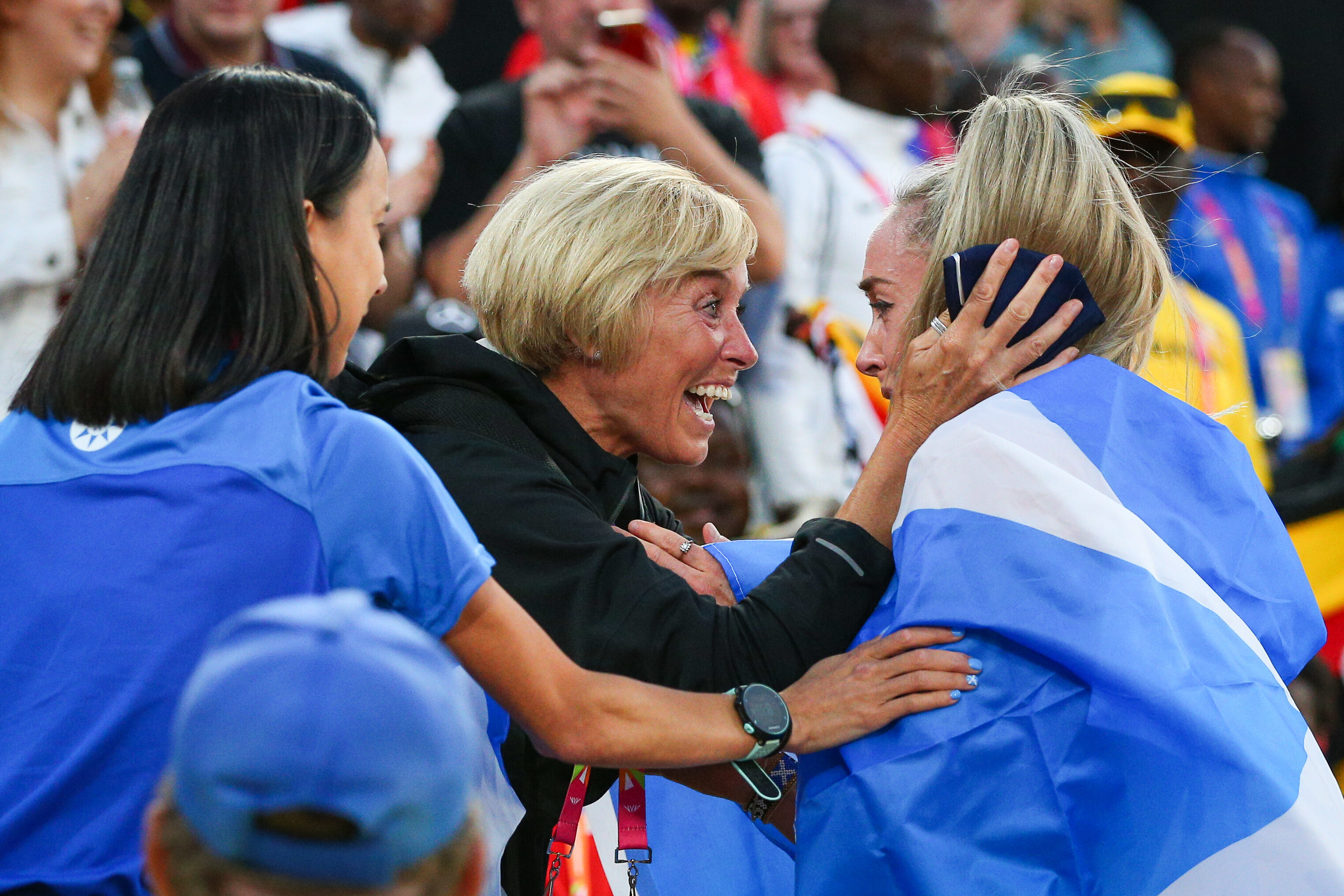
Eilish (left) and her mother Liz McColgan winning their respective races

The athlete, who has struggled with injuries in the past, was not in the lead until the final lap around the track when she suddenly overtook Kenyan rival Irine Cheptai in the home straight.

Unsurprisingly, Eilish sprinted over to her mum in the crowds when she realised she had won the race, and they shared a tender moment.

The following morning, Eilish told BBC Breakfast: “It was just an incredible experience, being in that stadium…the noise over the last 200m honestly just dragged me to that finish line.

“It was just an incredible evening and even more special to have my mum in the crowd, my dad, my partner Michael – it feels surreal to have won that so many years after my mum. I can’t put it into words.”

She said her mum simply told her “you’ve done it” when they had a celebratory hug at the end of the race.

Eilish also said she was “really nervous” before she hit the track, but that she couldn’t believe it when she not only won, but made a record time.

“I’ve actually only seen it once because a journalist sort of forced me to watch it when I was little, but it was never something that… I grew up with my mum allowing me to make my own decisions, my mum never pushed me into athletics and I never saw her medals.

“I was never forced to watch her races or anything like that, I made my own decision to come into this sport and I think that’s why I love it so much, I’m very passionate about it.”

“I don’t think it’s quite sunk in that I’ve literally replicated exactly what she’s done. It’s just very surreal right now.”

Eilish’s mother Liz also told BBC Radio’s Good Morning Scotland of her immense pride for her daughter, whom she still coaches.

Liz won two 10,000m Commonwealth gold medals in 1986 in Edinburgh and again in 1990 Auckland. She also became a world champion in 1991 and an Olympic silver medal in 1988.

She said: “As an athlete myself, you have fond memories of having success and whatever but when it’s your own children it’s like 100 times better.

’It’s just one of those really special moments and I was just thankful I was actually in the stadium and able to experience how the home support helped lift her to that gold medal.”

She also claimed that without the Birmingham crowd, “the last 150m would never have happened” for her daughter.

Share Button

Ofgem Has Changed Its Energy Cap Policy Again. Here’s Why It Matters

Energy regulator Ofgem has confirmed a major policy change today which could impact your bills, yet again.

Now the price cap will be updated quarterly (every three months) instead of every six months, in a bid to prevent large-scale disruption.

The cap was set out in law in 2018, and reflects the maximum suppliers can charge consumers per unit of energy.

It means suppliers can only take 1.9% as profit, but it’s not a cap on the maximum bill a household can be charged, as this is based on their usage.

While it may seem like an insignificant change in policy, it will have a substantial impact on your bills. Here’s what you need to know.

How important is the price cap?

Ofgem made headlines when it raised the price cap in April, meaning every household had to pay more for their annual energy bills.

The average household had to then start paying £700 more for their yearly annual bills, raising them to a record £1,971 (it was previously £1,227).

For many, this is seen as the start of the cost of living crisis.

While the cap stops prices rising and falling dramatically for consumers as wholesale prices go up, it does mean the cost of living is likely to only get harder in the short-term.

However, when wholesale prices fall, the reductions will be passed on the customers as Ofgem should lower the price cap. This will happen more quickly with the quarterly price cap.

The cap was set to rise again come October (to a staggering £3,358 a year according to analysts Cornwall Insight) but this policy change from Ofgem means the next price cap level will be published at the end of August.

Why has this changed?

Ofgem say this change prevents the cost of both gas and electricity lagging behind changes in the market, but admits the market is currently “volatile” so the price cap methodology is to be kept under review.

Ofgem CEO Jonathan Brearley acknowledged that “this situation is deeply worrying for many people”.

He then blamed Moscow’s decision to squeeze its gas supply to mainland Europe, which has a knock-on effect for the UK.

“As a result of Russia’s actions, the volatility in the energy markets we experienced last winter has lasted much longer, with much higher prices than ever before,” he said.

“And that means the cost of supplying electricity and gas to homes has increased considerably.

“The trade-offs we need to make on behalf of consumers are extremely difficult and there are simply no easy answers right now.”

He said this change means consumers will pay the “real cost of the energy”, but added: “We will keep working closely with the government, consumer groups and with energy companies on what further support can be provided to help with these higher prices.”

Why has the change been heavily criticised?

Back in May, MoneySavingExpert Martin Lewis laid into Ofgem’s early proposals to review the price cap every three months, rather than every six.

Explaining how he had lashed out at the regulator over the suggestions in a Twitter thread, he said the changes were “a fucking disgrace that sells consumers down the river”.

He apologised for his outburst, explaining: “I should’ve behaved better. My ire’s institutional not individual, it was inappropriate.”

However, Lewis claimed the changes would bring “dire consequences for consumers”.

Cornwall Insight also predicts that the energy price cap will go up to £3,615 in January. For comparison, it was £1,400 a year in October 2021.

MPs already called on the government at the end of July to take urgent action to help households amid warnings that prices will soar this autumn.

“Once again, the energy crisis is racing ahead of the government,” said Darren Jones, the chair of the business, energy and industrial strategy committee.

“To prevent millions from dropping into unmanageable debt it’s imperative that the support package is updated and implemented before October, when the squeeze will become a full-on throttling of household finances and further tip the economy towards recession.”

With this new policy change confirmed and the new price cap looming at the end of August, this threat of “unmanageable debt” is likely to only creep closer.

Share Button

Don’t Pay: The Campaign Group Calling On Brits To Stop Paying Energy Bills

A campaign group is calling for people to stop paying their energy bills – and it comes as BP reported its biggest quarterly profit for 14 years.

The UK is in the midst of a cost of living crisis, with prices for petrol and gas soaring for British households. Typical household energy bills are expected to be more than £3,600 this winter, with bills set to rise again in October.

Suppliers have blamed the war in Ukraine and surging wholesale prices for the hikes, but on social media, some have dubbed the current situation “the cost of greed crisis”.

BP recorded a profit of $8.45bn (£6.9bn) between April and June, more than triple the amount it made in the same period last year. And it is not the only energy firm to report a staggering profit – both British Gas owner Centrica and rival Shell have recorded huge earnings recently, too.

Rising energy bills are one of the main reasons for the cost of living crisis. The government did introduce a one-off windfall tax on oil and gas companies in July, but it does not apply to profits announced by BP and other energy firms between April and June.

And as more households continue to struggle to pay bills, people aren’t happy – which is why the ‘Don’t Pay’ campaign is demanding action.

The campaign group is trying to get at least one million people to pledge not to pay their energy bills if the government continues with its goal to increase the price cap on October 1.

“We started this campaign because we were worried about how we will pay our energy bills. Everyone around us is struggling and we know it will only get worse with no end in sight,” the campaign group says.

“So far around 1,300 people have expressed an interest to become an organiser in their town, village and city. From there we will fan out the campaign with a local presence.”

Speaking on ITV’s programme Peston, money saving expert Martin Lewis previously warned a bill payment strike could be on the horizon.

“The big movement that I am seeing is an increase of growth in people calling for a non-payment of energy bills, mass non-payment. Effectively a consumer strike on energy bills and getting rid of the legitimacy of paying that,” he said. “It’s small at the moment, there’s a Twitter handle with about 5,000 followers.

“We are getting close to a Poll Tax moment on energy bills coming into October and we need the Government to get a handle on that, because once it starts becoming socially acceptable not to pay energy bills people will stop paying energy bills and you’re not going to cut everyone off.”

‘Don’t Pay UK’ began trending on Twitter following the BP profit release, but there are some things you need to consider before taking part in the protest.

What are the risks of taking part?

Of course, not paying your bills will have some consequences and you’ll need to look at the terms and conditions for your individual energy supplier to see what these may be.

SSE Energy, for example, says it will try to contact customers first regarding unpaid bills, but adds: “In some cases we might also try to visit you at home to work out the best way to pay, but we’ll add the cost of this visit to your account.

“We may take a case to court to obtain a warrant to enter your home. We don’t want to, but sometimes we’re left with no choice.”

Similarly, British Gas says it may do the following when met with unpaid bills:

  • Pass your details to a debt collection agency

  • Apply for a warrant to install a Pay As You Go meter to make it easier to pay back the money you owe

  • If possible, switch your smart meter to a smart Pay As You Go meter remotely.

Utility Bidder says if you haven’t paid a bill for 28 days, you cannot come to a repayment agreement and you refuse to have a prepayment meter installed without good reason, “your provider can disconnect your power supply”.

It’s worth noting that the Don’t Pay campaign is discouraging anyone on prepayment meters who face self-disconnection if their credit runs out to get involved. This also goes for those whose energy bills are included in rent and risk eviction if bills go unpaid. Instead, they want those people to support them online.

If you are struggling to afford your energy bills, you should follow the advice set up by Citizen’s Advice.

Share Button