On the track Heated, which was co-written with Drake, the pop star can be heard singing an ableist and offensive term: “S**zzin’ on that ass, s**z on that ass. Fan me quick, girl, I need my glass.”
Advertisement
It comes just months after singer Lizzo made headlines for using the same derogatory term in a song. Following an uproar, Lizzo listened to feedback, apologised for using it and recorded a new version without it.
Charities championing disabled people called on Beyoncé to edit the lyrics and record a new version.
The term derives from the word ‘spastic’ and is particularly hurtful to those who actually experience spasms, which can be incredibly painful and disruptive to daily life, as Imani Barbarin, who has spastic diplegia (a form of cerebral palsy), explains below.
Ok, so here’s what I have to say about Sp*z as a word: if you’re going to call yourself one, really go all in… pic.twitter.com/9VpwjK2lkT
— Imani Barbarin, MAGC | Crutches&Spice ♿️ (@Imani_Barbarin) June 13, 2022
Advertisement
Words matter. Research by disability equality charity Scope found 72% of disabled people have experienced negative attitudes or behaviour in the last five years – with nine in 10 of these saying it had a negative effect on their daily lives.
Hannah Diviney, from Sydney, was one of the first people to call Lizzo out for her use of the word in a song.
The disability advocate and writer said the same mistake by Beyoncé – who is arguably one of the most famous people on the planet and a role model to many – “feels like a slap in the face to me, the disabled community and the progress we tried to make with Lizzo”.
“Guess I’ll just keep telling the whole industry to ‘do better’ until ableist slurs disappear from music,” she tweeted.
So @Beyonce used the word ‘spaz’ in her new song Heated. Feels like a slap in the face to me, the disabled community & the progress we tried to make with Lizzo. Guess I’ll just keep telling the whole industry to ‘do better’ until ableist slurs disappear from music 💔
In a piece published on Hireup, Diviney wrote: “It’s not very often that I don’t know what to say, rendered speechless by ignorance, sadness and a simmering anger born of bone-deep exhaustion. But that’s how I feel right now.”
She continued: “Beyoncé’s commitment to storytelling musically and visually is unparalleled, as is her power to have the world paying attention to the narratives, struggles and nuanced lived experience of being a black woman – a world I can only ever understand as an ally, and have no desire to overshadow.
“But that doesn’t excuse her use of ableist language – language that gets used and ignored all too often.”
Fans agree that it’s not about getting artists like Beyoncé and Lizzo cancelled, more about educating that the words they use matter.
David Swanson via Reuters
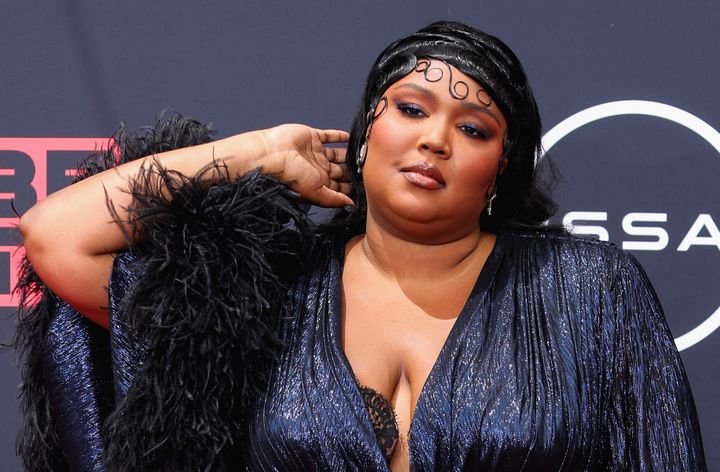
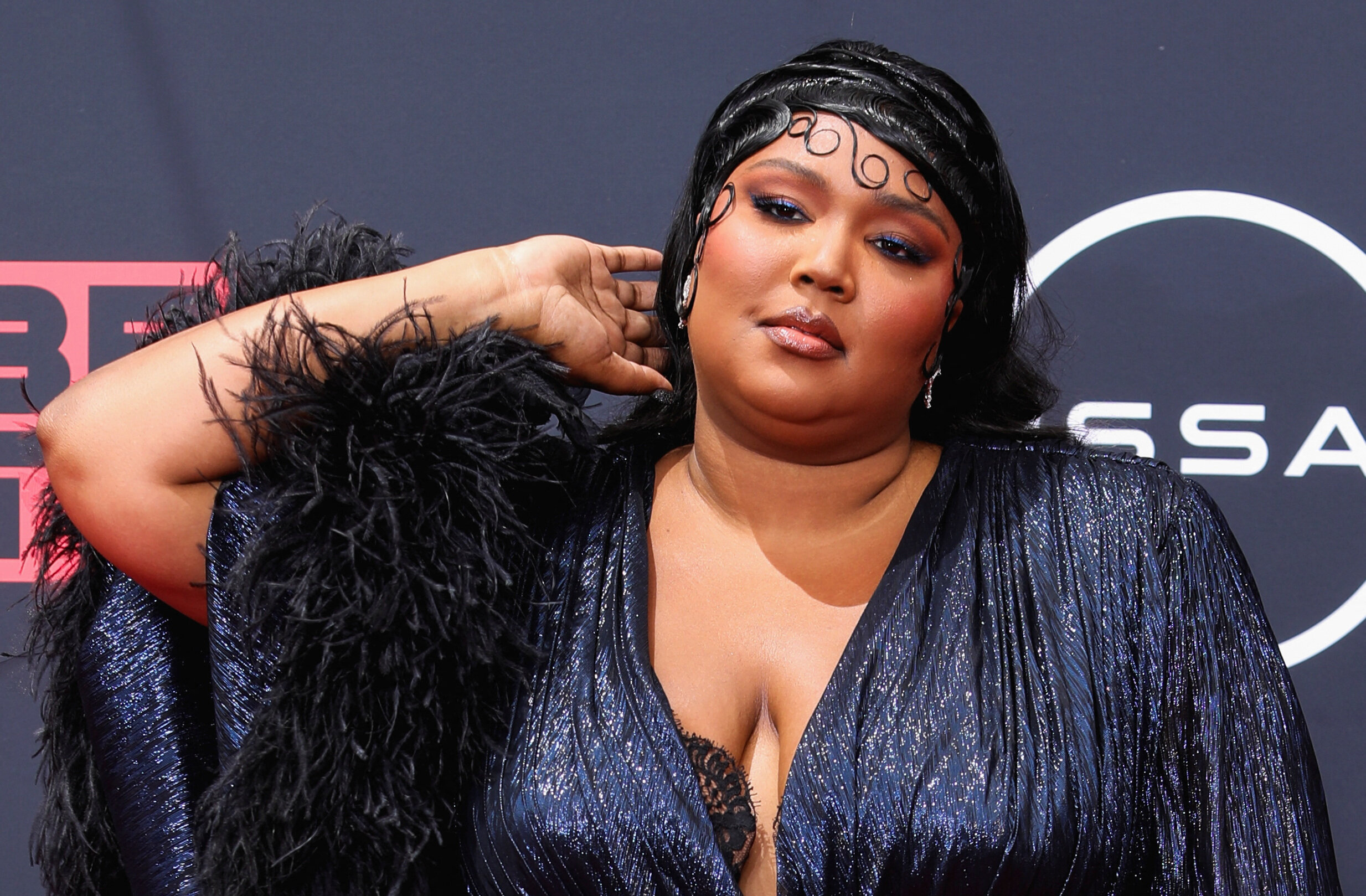
Lizzo poses on the red carpet at the BET Awards 2022.
Advertisement
Journalist and author of Crippled, Frances Ryan, said it was “very hard to believe” neither Beyoncé nor anyone in her team didn’t recognise the ableist slur when Lizzo made the same mistake a month ago “and graciously corrected it”.
Krystal-Bella Shaw, writer and founder of Dyspraxia magazine, branded it “disappointing”.
“Beyoncé has no excuse for using the word sp*z in her new song. Considering how public Lizzo went for the use in her song and for her removing it… this is disappointing,” she tweeted. “Why are disabled people constantly having to fight for ableist slurs to stop being used?”
Charities supporting disabled people also condemned the use of the term.
Ahead of Beyoncé’s statement that she’ll remove the lyric, Bethany Bale, policy and campaigns officer at Disability Rights UK, told HuffPost UK: “Ableist slurs are unacceptable in any context, especially in 2022 when many artists have already publicly learnt from past mistakes and educated others on the power of derogatory language in the process.
“It’s disappointing to see Beyoncé using an ableist slur so soon after Lizzo’s new single ‘Grrrls’ highlighted the hurt this language causes the Disabled community and others.
“We hope that, like Lizzo, Beyoncé will educate herself on the meaning and history behind this language and decide to edit her lyrics.”
Advertisement
Warren Kirwan, media manager at Scope, said it was “appalling” that ”one of the world’s biggest stars has chosen to include this deeply offensive term”. Like Ryan, he said it’s hard to believe that could have gone unnoticed by Beyoncé’s team.
“Words matter because they reinforce the negative attitudes disabled people face every day, and which impact on every aspect of disabled people’s lives,” Kirwan told HuffPost UK.
“Beyoncé has long been a champion of inclusivity and equality, so we’d urge her to remove this offensive lyric.”
In a statement to Insider, a representative for the Grammy award-winning singer confirmed the lyric will be changed.
“The word, not used intentionally in a harmful way, will be replaced,” the statement said.
Let’s hope that’s the last time a global superstar sings it.
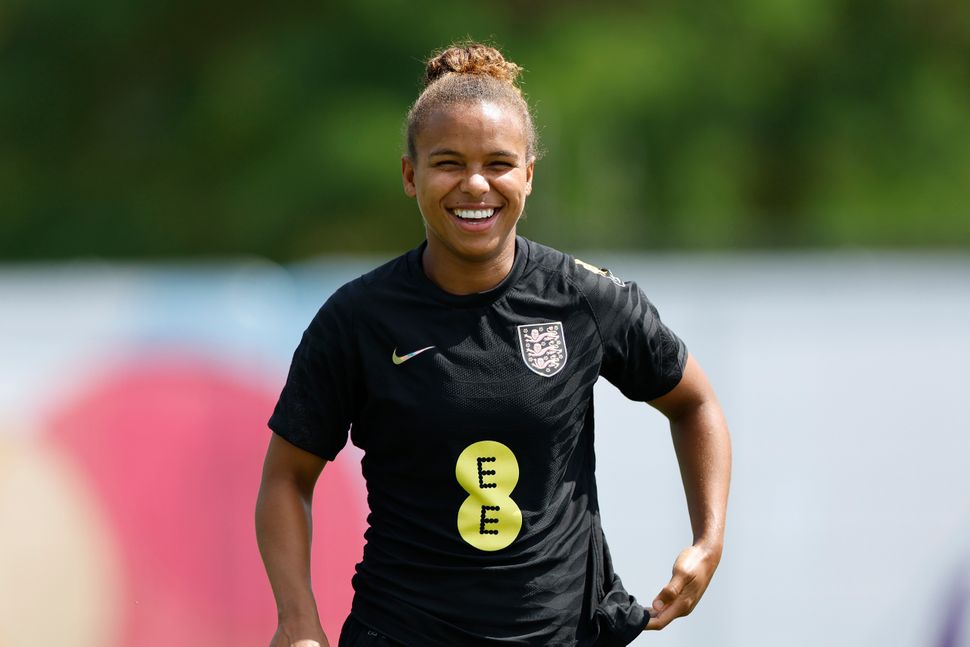
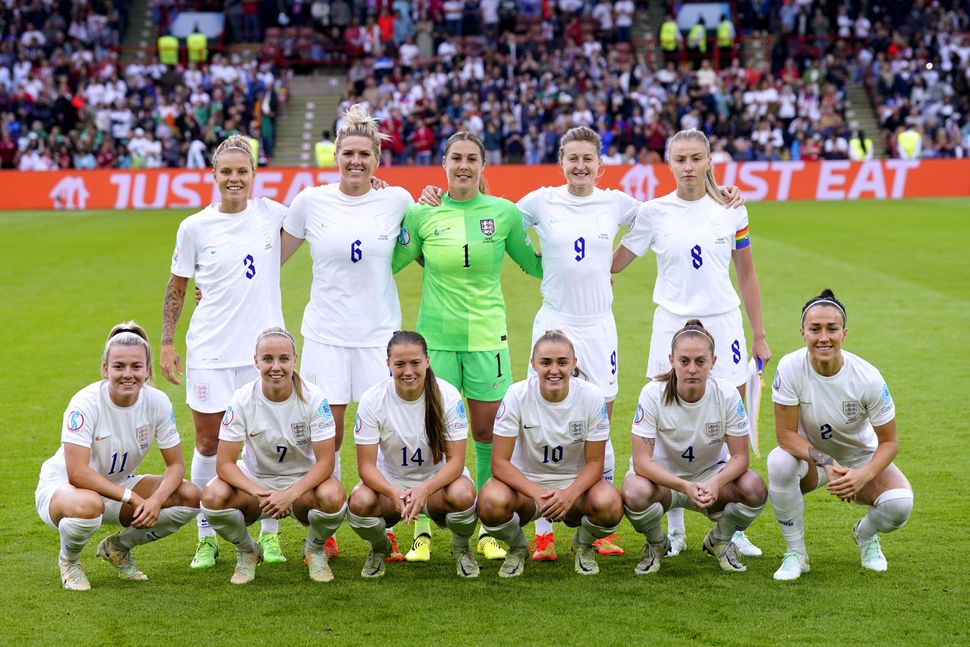
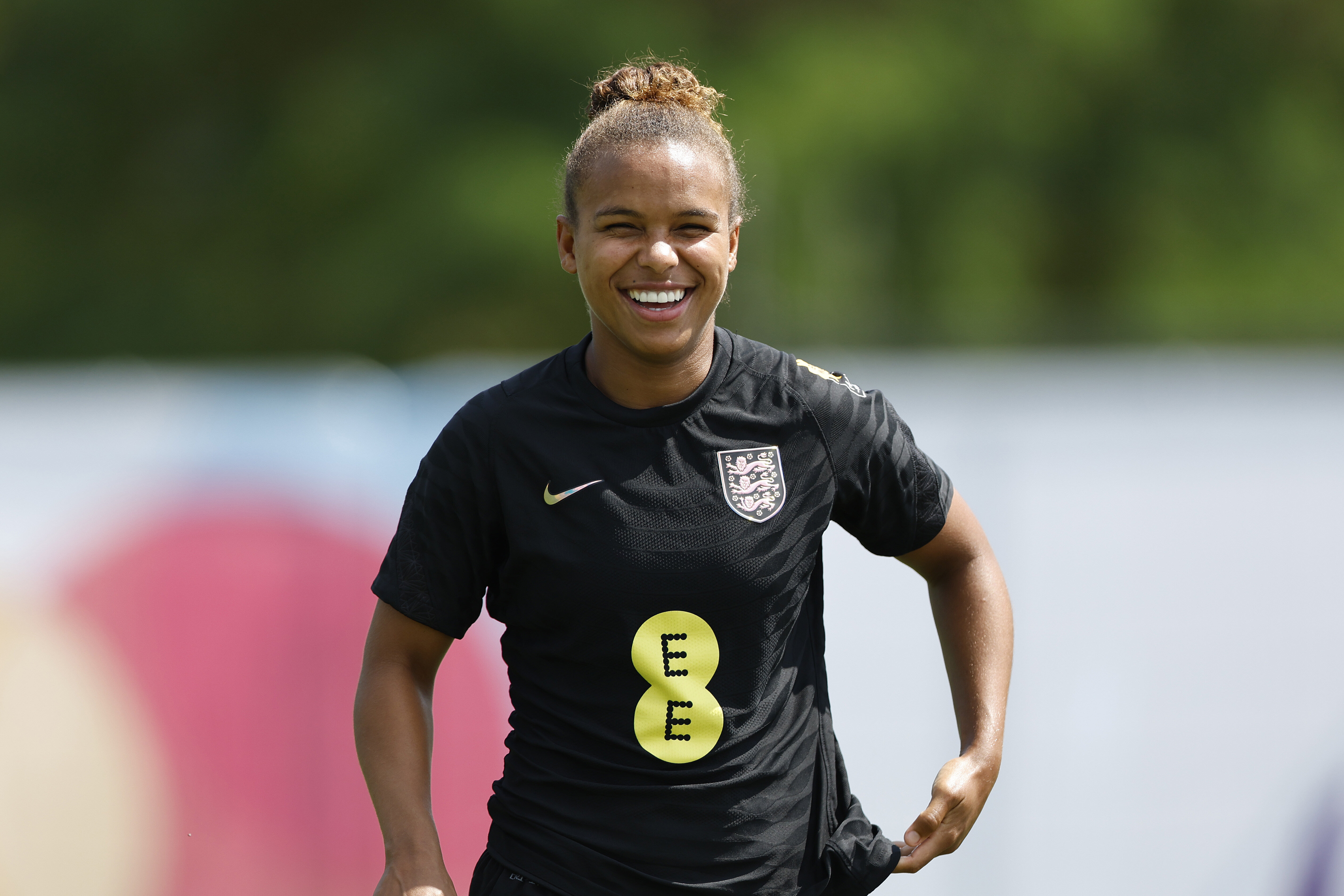
Just like young Tess, eight, who danced her way through their Euro semi-final in Sheffield on Tuesday, we couldn’t be prouder of England’s Lionesses.
Tickets to Sunday’s final against Germany at Wembley Stadium, the largest sports venue in the UK and second-largest stadium in Europe, are completely sold out – all 87,200 of them. It will be the biggest attendance ever for a men’s or women’s Euro final, and the game will closely rival the highest attended women’s football match of all time (when 91,553 watched Barcelona play Real Madrid in the UEFA Women’s Champions League in March).
Advertisement
Three years ago we watched as the Lionesses exceeded all expectations in the 2019 Women’s World Cup, only falling to eventual champions, the USA.
While football didn’t come home that night in Lyon, it certainly felt as though women’s football was here to stay. And so it has proved.
After a pandemic pause, the current Lionesses, led by captain Leah Williamson and cool-as-you-like head coach Sarina Wiegman, have stormed through this Euro tournament, scoring 20 goals between them in front of delighted crowds, and only conceding one – in that nail-biting quarter-final against Spain.
Midfielder Georgia Stanway, who scored the extra-time “stunner” that saw them through that game in Brighton, has said: “I think we need to kind of stop talking about how big women’s football is getting and talk about how big it is.”
England’s comprehensive 4-0 victory against Sweden in the semi-final earlier this week drew 9.3 million viewers across BBC TV and streaming – the largest audience for the tournament so far.
Fans went wild for goals from Beth Mead, Lucy Bronze and Fran Kirby, for the sparkling clean-sheet of goalkeeper, Mary Earps, but most of all for super-sub Alessia Russo’s devilish back-kicked nutmeg in the second half. Even the US Embassy had to give Russo props for it with a cheeky homage on Twitter.
Visionhaus via Getty Images
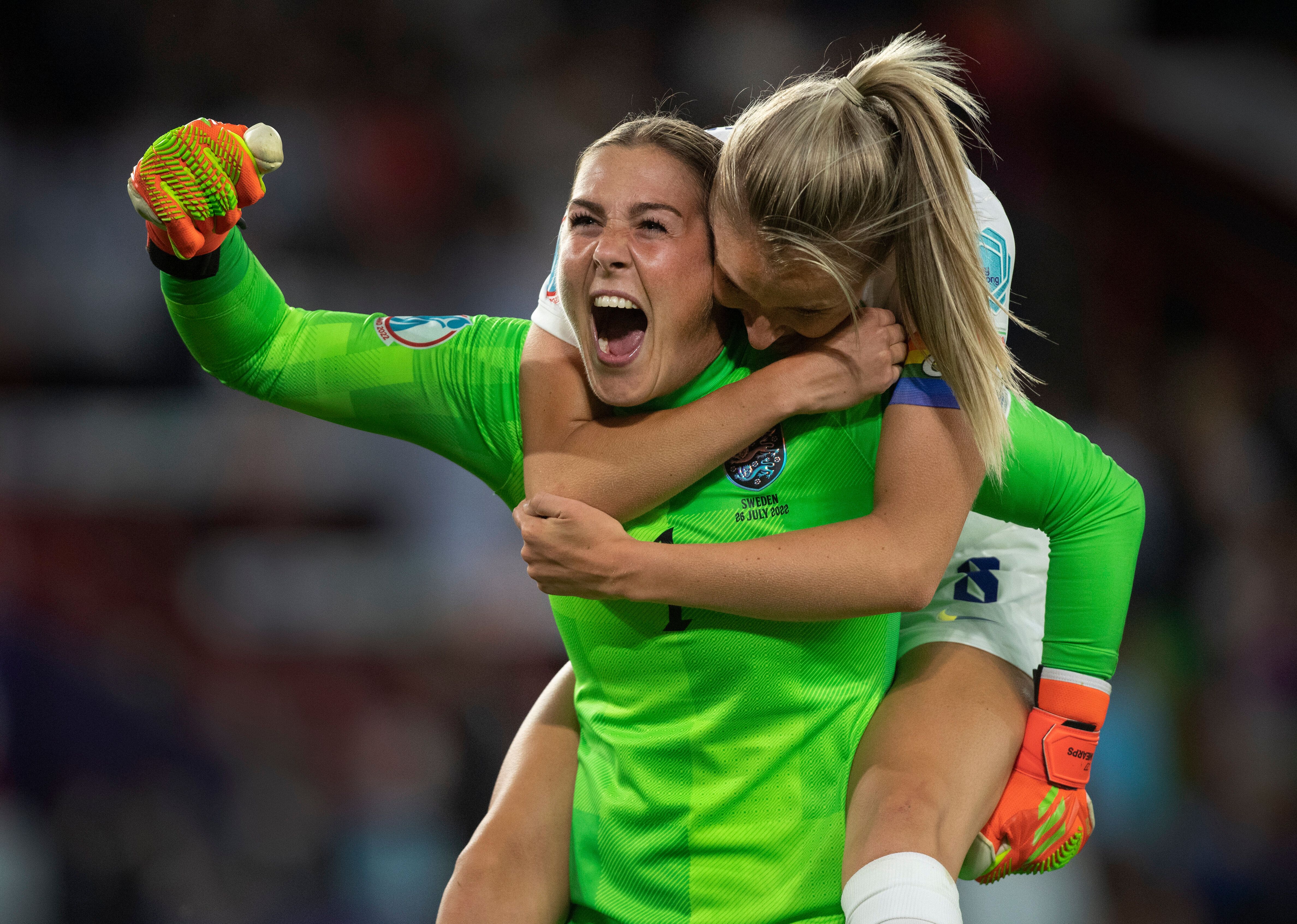
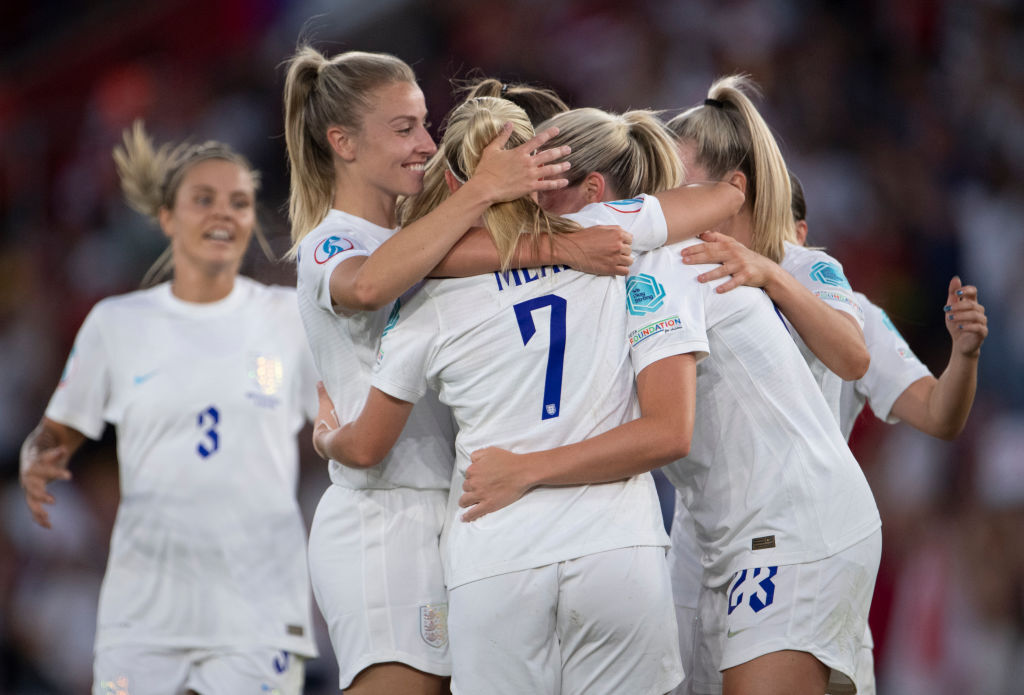
England goalkeeper Mary Earps and captain Leah Williamson celebrate after Alessia Russo’s goal in the semi-finals.
And all this in a sport that the English Football Association effectively banned in 1921, because – and we kid you not here – the FA worried the growing popularity of women’s games was threatening to attract too large a crowd.
“Complaints having been made as to football being played by women, Council felt impelled to express the strong opinion that the game of football is quite unsuitable for females and should not be encouraged,” it ruled at the time.
Advertisement
We’ve come a long way since then, thank goodness, and now around the world, women are matching their male counterparts for passion, drive and visibility. Australian striker Sam Kerr, of Chelsea FC Women, will soon become the first female player to feature on the cover of the football game FIFA for 2023.
So, if there’s a difference between women’s and men’s football, it isn’t down to technique. These Euros have shown that women are more than capable at smashing the sport. It’s more about the way it makes us feel: positive.
Amelia Dimoldenberg, a 28-year-old writer, was at the opening game of the Euros on July 6, when England played against Austria at Old Trafford – and noticed the difference.
As a young woman, going to a men’s game can still feel intimidating, she tells HuffPost UK. “There’s so much testosterone there and so much bravado, and when you go to a women’s game it’s void of most of that” – not just because of the number of families in the stands, she adds. “It’s just exciting to see young girls and young people getting involved with the sport.
Scott and Wright, who formerly played for Arsenal women’s and men’s teams respectively, as well as for their national sides, spoke eloquently in the moment about the journey to this point in football – and the future potential.
“It is hard for me not to get emotional right now,” Scott said, holding back tears, “because the amount of investment which has gone into the women’s game is for a moment like this. For this team to get to Wembley, they are creating something special and deserve every accolade which is coming their way.”
She added: “Everyone who has been involved in women’s football has been waiting for this moment. It’s special.”
Advertisement
Wright agreed, but also had a message to those who run the game. “Whatever happens in the final now, if girls are not allowed to play football in their PE, just like the boys can, what are we doing?” he said passionately post-match.
“We have got to make sure they are able to play and get the opportunity to do so. If there’s no legacy to this – like with the Olympics – then what are we doing as this is as proud as I’ve ever felt of any England side.”
Photographer Jade Keshia Gordon, 28, from London, is a lifelong Arsenal fan who started supporting both the club’s teams when she was eight. She also thinks women’s football should be championed so girls know it’s possible and “okay” to play.
“I played football as a kid and I remember hearing that I should ‘do something that girls do’ from boys my age. I hope that if I was to ever have a daughter they will have no fear of joining their football team,” Gordon tells HuffPost UK.
Catherine Ivill – UEFA via Getty Images
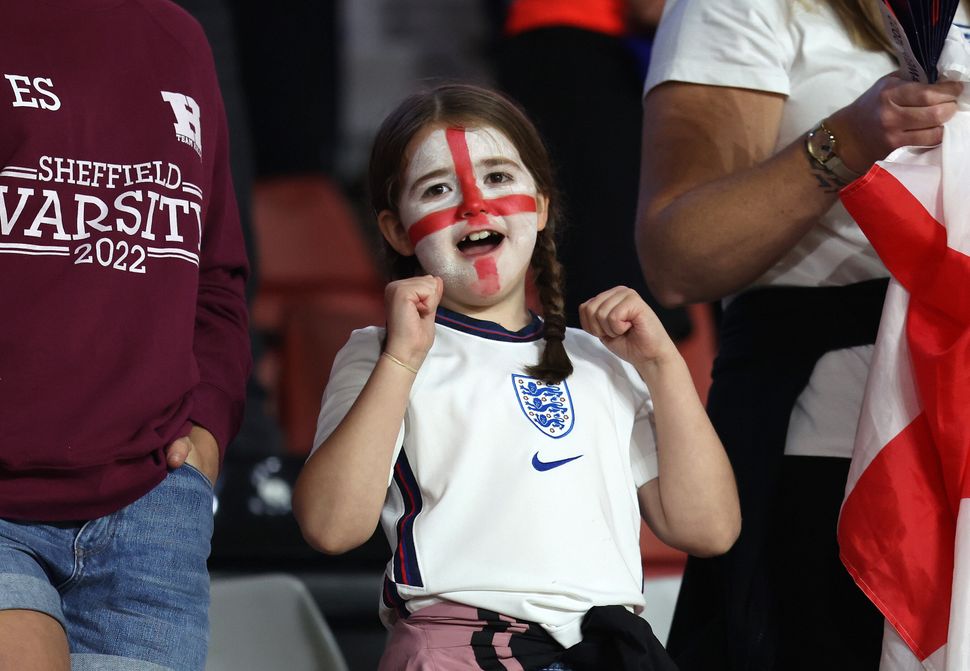
A young England fan cheers on the Lionesses during the England-Sweden game.
Gordon says she enjoys watching women play for the dedication, drive and persistence on show – and of course the sheer skill of it.
Advertisement
“I don’t know if it’s because they’ve felt like they’ve always had to prove themselves, but I feel a sense of strength when they play and it’s just good football, regardless of them being women,” she says. “Football is football regardless of the gender.”
It’s a sentiment that Charlotte Thomson agrees with wholeheartedly. As head of women’s football at Copa 90, a football media company that makes fan-first content, she believes the energy surrounding the Lionesses is built on more than just a successful tournament on the pitch.
“This team is proof that women’s football has well and truly arrived,” she says.
“Iconic moments provided by the likes of Stanway and Russo breaking into the football zeitgeist is testament to the changing perceptions around women’s football,” says Thomson.“At the time of writing, Russo’s goal alone has been viewed 17 times per second, every second (!) since it was scored.”
The conversation has moved on from inspiring young girls to inspiring a nation, Thomson adds, and agrees that the atmosphere at games is something else.
“You don’t have to delve too deeply into women’s football fan culture to get a taste of the positive, inclusive space they occupy,” she says. “Turning up to any of the matches this summer and the atmosphere you are greeted with is more akin to that of a festival than a typical football match.”
Advertisement
Catherine Ivill – UEFA via Getty Images
Lionesses fans celebrating in Sheffield.
This positivity tips over onto social media, she adds, where Copa 90 has seen huge engagement for its match day takeovers, while off the pitch, collectives such as Baller FC, Studs and This Fan Girl have hosted watch parties and events, welcoming “everyone and anyone” to join in, Thomson says.
“However, do not make the mistake in thinking a positive space is one that’s less passionate, quieter and lacking in atmosphere,” she adds. “You just need to hear the hoarse voices of the fans this summer to understand that is most certainly not the case.”
The inclusivity she speaks of also includes the brilliant LGBTQ+ representation in the women’s game, on and off the pitch.
At the last Women’s World Cup, at least 41 players were openly gay or bisexual with individuals like USA’s Megan Rapinoe using the platform to speak out for the community – whereas, over in the male game, this year Jake Daniels was the first professional player to come out publicly since Justin Fashanu in 1990.
Advertisement
“The active allyship among the women football community is to be celebrated, and is something the men’s game can learn a lot from,” Thomson says.
That doesn’t mean that progress isn’t still needed in other areas. Many fans have noticed how white the current national women’s football team is – and Thomson stresses that “a lot of systemic work” must be done.
“The fact that the current Lionesses have only three black players – Jess Carter, Nikita Parris and Demi Stokes – is proof there is clearly a need for change,” she says. Even more so, when the latest figures from Sport England’s Active Lives report show the significant numbers of girls and young women of colour who are participating in the game at a grassroots level.
“Work needs to be done from the bottom up, ensuring centres of excellence are not just in rural locations and offering resources to give a wider group of girls access to key talent pathways, ” says Thomson.
“Additionally, we need to be providing role models from a grassroots perspective, given there’s not much at the top.”
Advertisement
Lynne Cameron – The FA via Getty Images
Nikita Parris during an England training session during the Euros.
Even though Thomson, along with so many of us, has been loving the Euros coverage, she doesn’t think all football fans have to champion women’s football.
“For some people, women’s football just isn’t for them. For others, women playing football is outright offensive. But that’s okay – we don’t need them,” she says.
“The record breaking numbers this tournament has produced almost daily is testament to that. I would, however, like to see people taking heed from Leah Williamson’s quote from a recent BBC documentary: ‘I don’t particularly like watching fencing, but I don’t tweet to say that I don’t like it!’”
Nor is it one-size-fits-all. Sure, it’s heartening to see David Beckham thanking the Lionesses for inspiring his daughter Harper and the Duke of Cambridge appearing on Instagram this morning with Princess Charlotte to wish the team luck in the final. But their reach goes way beyond this demographic.
Advertisement
“Contrary to how the game has been marketed in the past, we know that there is more to women’s football fans than the watered-down ‘daddy and daughters’ parade that is often portrayed,” says Thomson. “Women’s football fans have proven to be wide ranging and highly engaged.”
And one thing’s for sure, they’ll all be tuned into Sunday’s final at Wembley, where, regardless of the score, we’ll be supporting the Lionesses all the way.
New research is offering some actionable steps we can take to protect our minds from memory loss.
A large UK-based study published this week in the American Academy of Neurology’s medical journal found that physical and mental activities – such as doing household chores, exercising or visiting loved ones may help lower the risk of dementia.
The roughly 11-year study followed 501,376 people in the UK who self-reported their physical and mental activities at the beginning of the experiment: how often they visit with friends, their education level, how often they climb stairs, how they commute to work, and more.
Advertisement
The study found certain activities were associated with a lower risk of dementia. People who frequently exercised had a 35% lower risk, people who frequently did household chores had a 21% lower risk and people who visited daily with family and friends had a 15% lower risk.
And while dementia risk factors also include things that are out of our control – like ageing and genetics ― the research underscores that there are behaviours within your power to either reduce your risk of dementia or delay the condition, Dr. Scott Turner, director of the memory disorders program at Georgetown University Medical Centre, tells HuffPost.
The study does come with a few caveats: The findings are a correlation, not necessarily a direct link. Another limitation is that because people reported their own physical and mental activities, there’s always a chance that some people forgot about activities they engaged in or reported them incorrectly.
“More research is needed to confirm our findings. However, our results are encouraging that making these simple lifestyle changes may be beneficial,” study author Dr. Huan Song of Sichuan University in China, said in a statement.
Whether through physical activity, social activity or mental activity, putting your brain to work can help delay dementia onset or reduce the risk altogether.
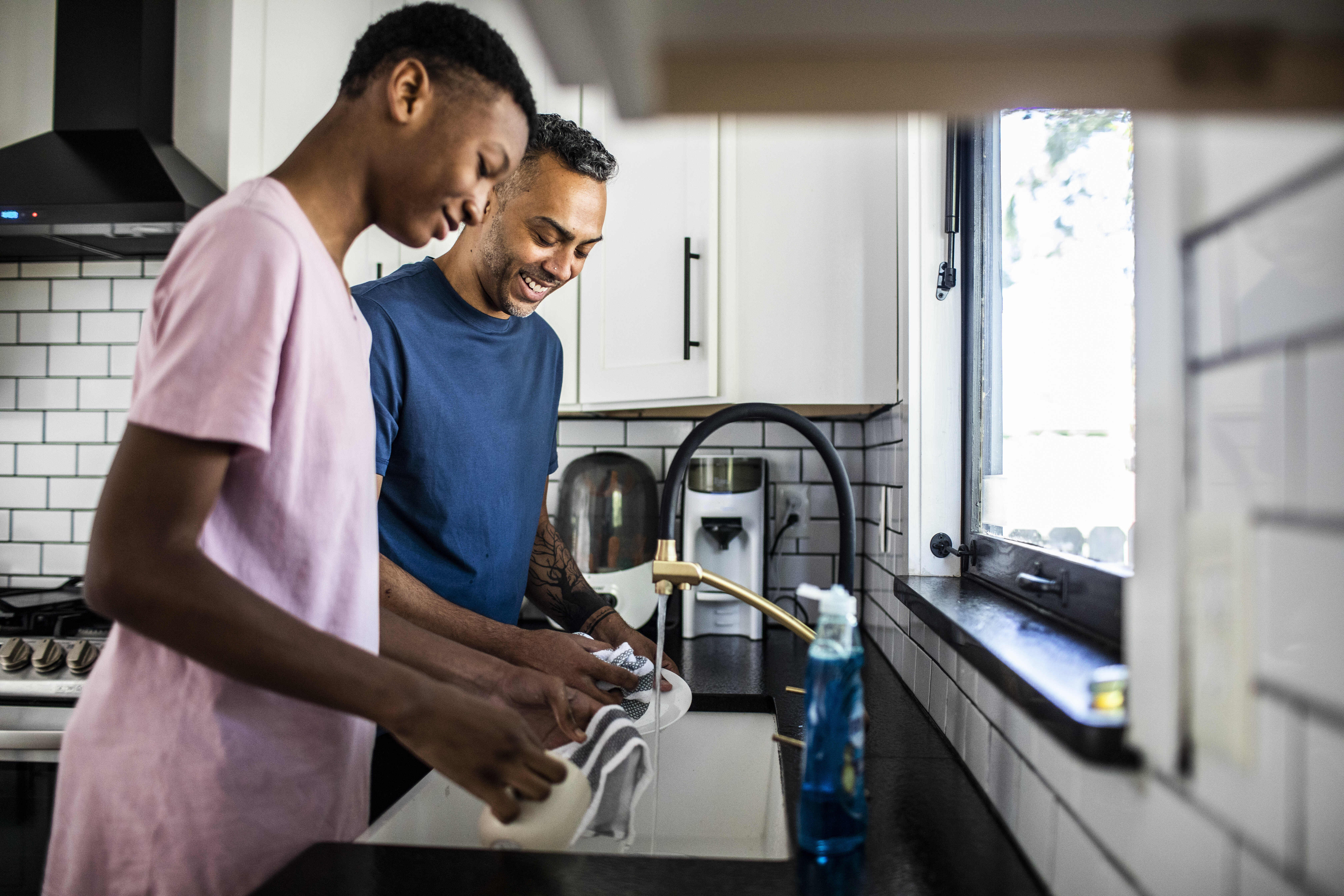
Chores double as both a physical and mental activity (and can even sometimes be considered exercise, Turner noted). Visits with loved ones are a social activity that also requires mental stimulation, and physical activity requires mental dedication, too.
Turner said that people who develop visual or hearing problems could be at a higher risk of dementia if they don’t address the problem by getting glasses or hearing aids. When you can’t hear or see, he explained, “you’re depriving your brain of sensory input, and you need to keep your brain stimulated” to help reduce your risk of dementia.
Morsa Images via Getty Images
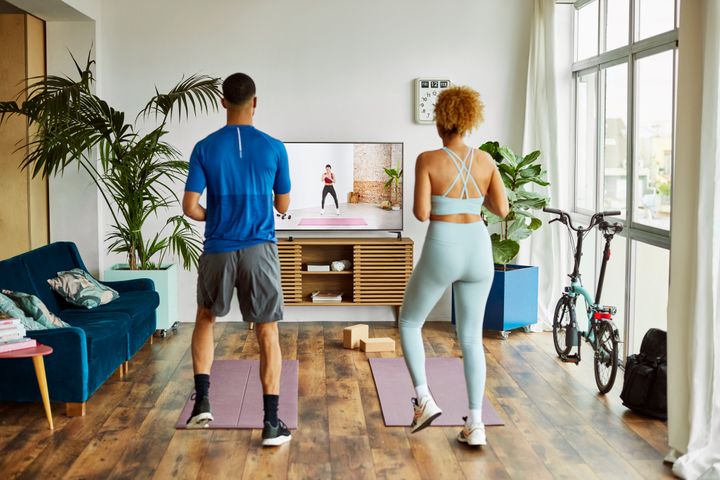
Physical activity is one way to help decrease your risk of dementia.
Advertisement
Physical activity has a double benefit when it comes to dementia risk
Another risk factor for dementia is diabetes, Turner notes, and there are lifestyle patterns you can follow to reduce your risk of diabetes. These include exercising, following a healthy diet and maintaining an ideal body weight throughout your lifetime.
So, not only does exercise help slash your risk of dementia, but it also helps slash your risk of diabetes, which, in itself, puts you at risk for memory loss.
It’s never too late to implement these changes
Turner stresses that no matter your age, it’s never too late to start following some of these lifestyle recommendations. And that can be as simple as doing some extra vacuuming around the house or going for a walk with your neighbour, for example.
“I recommend doing as much as possible with lifestyle [changes] to avoid and prevent dementia,” he says. “And, of course, prevention is better than treatment.”
For those who already have memory problems or dementia, Turner says lifestyle changes that require physical, social or mental activity are still beneficial. You can help slow down the progression of dementia by keeping your brain stimulated. This is why puzzles are a popular activity among people with Alzheimer’s disease.
Advertisement
If you experience any new memory problems, talk to your doctor
“If someone does develop memory problems, then they certainly should seek evaluation starting with their primary care provider,” Turner says.
He stresses that some very treatable things cause memory problems, like sleep apnea and Vitamin B12 deficiency. But any neurological changes should be evaluated so you get the proper treatment plan.
There’s a new Zara dress that’s gone viral and we’re back to playing our favourite fashion game: spotting it in the wild.
First, there was That Coat – a patterned number first produced by Zara in 2016 that inspired its own Instagram account. But soon, it had a rival.
Advertisement
The Dress – the black and white polka dot midi – became unavoidable during pre-pandemic 2019, with hype on yet-unseen levels. Women wore it to brunch, to baby showers and even to their own weddings. It too inspired its very own Instagram account, not to mention countless newspaper articles.
This year on TikTok, younger women said enough of these shapeless, floaty numbers and the Pink Slip Dress became the outfit du jour (#ZaraPinkDress has gained more than 9.7million views since the spring).
But this summer, there’s another mini patterned dress that women can’t get enough of. Because say what you want about Zara, the brand knows how to create designs with unrivalled mass appeal.
Advertisement
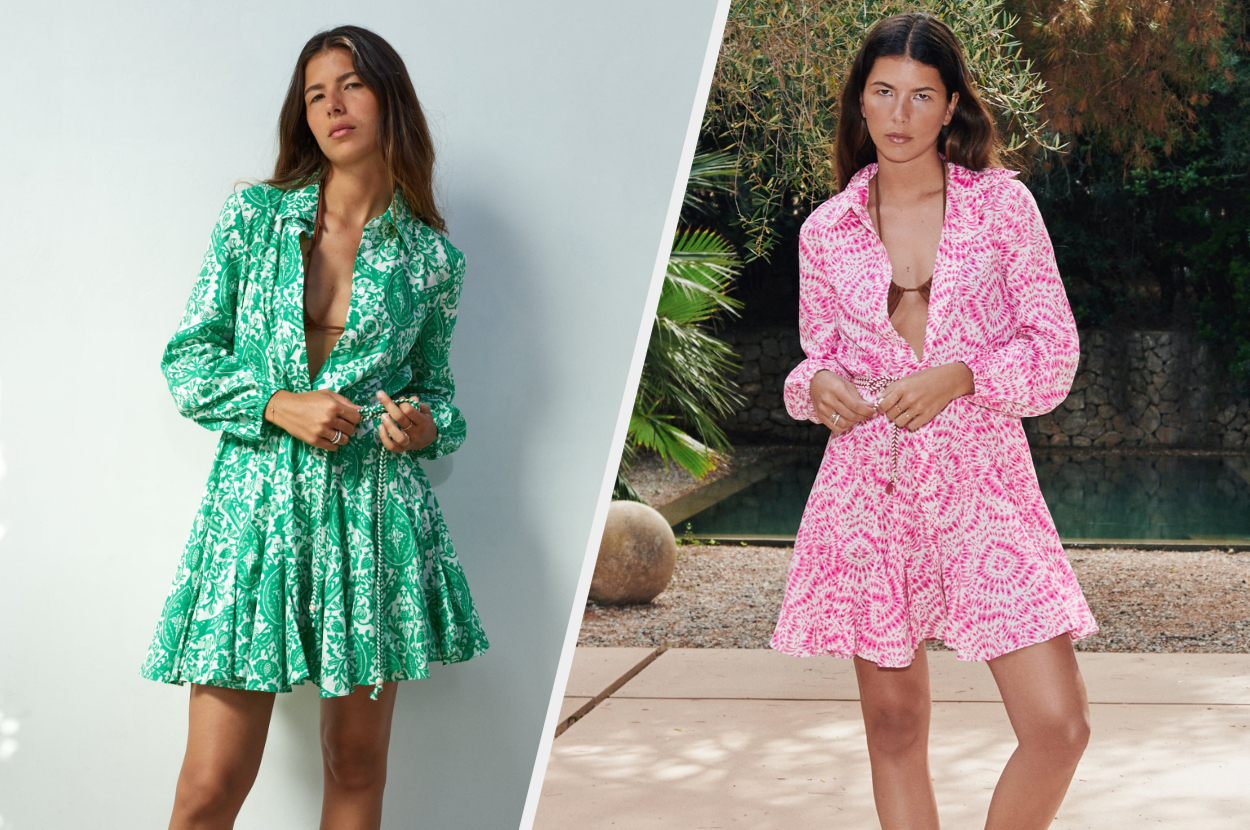
The latest viral dress, retailing at £32.99, comes in a variety of patterns and colours, but the pink and green paisley versions seem to be most popular.
On TikTok, user Sarah Gledhill shared a funny video counting the dresses at York Races.
The video has been liked more than 31,000 times and in the comments, others have been joking about seeing the dress everywhere, too.
“This has made my day,” one person said. “I’ve literally been sending my sister photos around London this last week every time I see this dress. It’s become a game.”
Another added: “Just seen two girls where that dress for at a hen do I went to yesterday.”
And a third joked: “Not me sat here at a staff event in the pink one.”
The dress has even found celeb fans, with Eddie Izzard snapped wearing it on the way to the airport.
Advertisement
And over on Instagram, you don’t have to scroll for long before you’ll find women rocking the look.
Advertisement
We’re yet to spot an Instagram account dedicated to this year’s new It Dress, but just give it time.
And until then, if you’ve nabbed one yourself, we salute you. You’ve clearly got excellent taste.
Then, fashion magazine Vogue put the couple on its cover.
While Zelenska led the shoot – and in one photo was photoshopped into a scene with Ukrainian soldiers – she also posed with her husband in his army clothes for a couple of other images.
And something about the shoot rattled some on Twitter:
Advertisement
However, many Ukrainians on the same platform have been keen to defend Zelenska and remind these critics what war really looks like.
In a Twitter thread, Oleksandra Povoroznyk pointed out: “Most of the English-speaking people on the internet are lucky enough to have no clue what a war actually looks like.”
Through a follow-up exchange with HuffPost UK, she added that she was “genuinely surprised that so many non-Ukrainians saw the photoshoot as something controversial”, and not a “reflection of how strong Ukrainian women actually are”.
Advertisement
“Most Ukrainians I’ve spoke to see the photos and the interview as an important part of what Zelenska’s doing to draw more attention to our country,” Povoroznyk explained.
“In fact, a lot of Ukrainian women are super happy that Zelenska wasn’t portrayed as some kind of dainty and shy tradwife [traditional wife] hiding behind her husband.”
She added that “a lot of Eastern European women are portrayed as very stereotypically feminine”, even though there are still female volunteers in the Ukrainian army right now.
Povoroznyk, who is based in the Ukrainian capital of Kyiv according to her Twitter profile, said, “nothing about the photoshoot is ‘glamourising’ the war”.
Instead, she said it was a “pretty accurate representation of what the war feels and looks like to many Ukrainians who are lucky enough to be in cities controlled by Ukraine”.
Advertisement
She claimed that while it was clear those in occupied cities would face a different reality, people in cities are trying to find “some kind [of] war-life balance”.
The Ukrainian explained that plenty of people still do their best to work, to go out with friends, get their nails done, put makeup on under the “constant threat of air strikes”.
She added: “And yet we keep going, because there’s literally nothing else we can do. And sure, a photoshoot for Vogue might not seem like work for the average lurker on Twitter, but it is part of Zelenska’s duties as First Lady.
“Her job is to keep the world’s attention on Ukraine, and that’s why she ’s giving interviews and speeches and yes, even having her photos taken by huge publications like Vogue.”
She also pointed out in a subsequent tweet that Britain’s Queen – back when she was Princess Elizabeth – also took part in photoshoots during World War 2, to raise awareness of the war effort.
Advertisement
Lots of foreigners are baffled by this amazing digital cover shot by Annie Leibovitz for @voguemagazine and are claiming it’s “tone-deaf” or is “glamorising the war”. Now, I’d like to believe that every insensitive commentator is a bot paid directly from Putin’s piggy bank, but https://t.co/5g3siGMPpg
— Oleksandra Povoroznyk 🇺🇦 (@rynkrynk) July 27, 2022
She was not the only person to defend the images either, both in and out of Ukraine.
Advertisement
Love how nobody questions how russians can go have fun every day and not care how their government kills ukrainians and Syrians on their money, but as soon as ukrainian takes one photo with their face/body not covered in blood the war is fake and ukrainians are hypocrites https://t.co/NkrO71F85B
You’re reading Move, the nudge we need to get active, however makes us happiest and healthiest.
Every football fan will tell you the joy of watching your favourite time play, but a new study goes one step further, detailing how it can even boost your mental health.
And with England’s Lionesses set to face Sweden in the Euro 2022 semi-final, it’s yet another reason to get behind the team, who’ve had a record-breaking run so far.
Advertisement
One in two of all sports fans said watching a match helps them socialise more with friends and family, according to the study conducted by charitable social enterprise, Better. Over a third (35%) said it makes them feel part of a community and 33% said it inspires them to be more active.
The researchers asked 2,000 sports fans across the country questions about their daily exercise regimes, their participation in sports, their sport-viewing habits, their fruit and vegetable intake and their alcohol consumption.
They wanted to determine which sports fans are enjoying engaging in a sport and which ones prefer the comfort of their sofas when watching their favourite athletes compete.
Visionhaus via Visionhaus/Getty Images
The mighty Lionesses will face Sweden in the Euros semi-final.
Advertisement
“Sport and exercise is brilliant for physical, mental and cognitive health. If it was a pill it would make billions!” said Dr Josephine Perry, a sports psychologist who spoke to Better.
“As well as the physical benefits, the exercise we get through sport gives us structure, purpose, energy and motivation.”
Dr Perry explained that sport also positively alters the way we process and respond to our emotions, reducing “how much we overthink” helping to build up “an emotional resilience to stress”.
“These help reduce symptoms of depression and anxiety, make us behave differently, boosts our self-esteem and means we reduce any feelings of loneliness by becoming more social,” she added.
The research also found that football fans were the most active across all sports, with 34% getting over 60 minutes of exercise every day. Footie fans were also found to be the least likely to drink more alcohol while watching sport (45%).
Advertisement
Josh Cheetham, a 30-year-old avid Leeds United fan, was not surprised by the research. “In 2018 I was suffering from depression, I was in a really dark place after a tragic life event, and I didn’t see how I was going to get better. Then I went to a football match, witnessed one of the best matches I’ve ever seen, and I was feeling better as soon as the final whistle blew,” he said.
“When I watch my team at away matches, I am usually on my own, but I don’t see it that way. We all support the same team, we are all one big community and family, you can start talking to anyone around you and immediately feel like you know them and strike up a friendship that lasts for years.”
So, if you haven’t tuned into the Euros yet, what are you waiting for?
England were always a favourite going into this tournament. But whatever the outcome, you’ll get a boost from supporting them.
Move celebrates exercise in all its forms, with accessible features encouraging you to add movement into your day – because it’s not just good for the body, but the mind, too. We get it: workouts can be a bit of a slog, but there are ways you can move more without dreading it. Whether you love hikes, bike rides, YouTube workouts or hula hoop routines, exercise should be something to enjoy.
The UK is baking, and with temperatures set to top 40°C in some parts of the country, an emergency weather warning has been introduced by the government.
Let’s be honest – Brits really aren’t used to temperatures this high at home and work, so everyone is looking for hacks to make our days a bit more bearable.
But what of your windows? Should you be opening them or keeping them shut? And how about your curtains and blinds – should they be closed, too?
We asked the experts to find out.
Windows: open or shut in a heatwave?
When it’s hot, it’s our natural reaction to open the windows to get some fresh air, but is this making us hotter?
If the air is cooler outside, you should open your windows to let the air in. But when temperatures start to rise outside, keep your windows shut to avoid letting hot air in your home and making yourself warmer. If you’re not sure how to check if it’s hotter inside or outside, use a thermometer in both places.
Advertisement
Chris Nye, from Your Overseas Home, says: “It might seem counterintuitive, but if the air outside is hotter than the air in your home, keeping your windows closed could help your home stay a little cooler.”
However, at night, you might want to open them a bit. “After the sun goes down, the outside air will start to cool down,” says Dr Lindsay Browning, sleep expert at, And So To Bed. “At this point, it is a great idea to open the windows to let in a breeze of cool external air into the bedroom, helping cool the room and to provide needed air circulation.”
This works particularly well if you have windows on both sides of your room or home. Just remember to close them first thing the morning again.
Tascha Rassadornyindee / EyeEm via Getty Images
Curtains and blinds: closed or not?
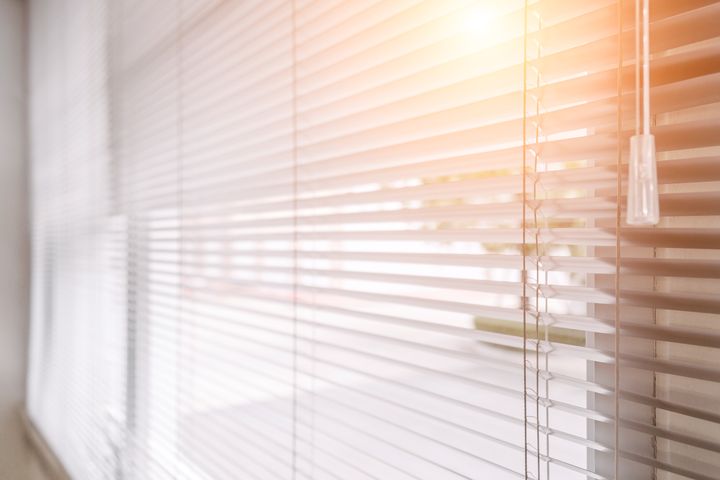
If the sun shines directly into your home, you should close your curtains to try and keep rooms as cool as possible on the hottest days of the year.
“If your house does experience more sunlight throughout the day, it’s recommended you keep your curtains, shutters and blinds shut to stop the sunlight from beaming into your home,” Lucy Askew, a spokesperson for Hillarys blinds previously told HuffPost UK.
“This will keep things marginally cooler and slightly more bearable during heatwaves.”
Nye adds: “You may even want to opt for blackout curtains to keep windows covered and block the sunlight out completely.”
Should you put foil on your windows?
Putting foil on your windows is the latest heatwave hack doing the rounds on TikTok.
Sunlight usually shines through a window which increases the heat of the sun and makes your house warm. But this hack can help you limit the amount of sunlight that get into your home.
Simply roll out some kitchen foil and apply it on your windows to block out direct sunlight.
This hack is popular in America where some states experience high temperatures all year round. In the video below, @americanredcross suggest cutting cardboard and adding it to the window after you applied to the foil.
And if your home has heated up a bit too much? It may actually be cooler to get outdoors for a bit – though do avoid the hottest part of the day. And if you are heading out, stick to shady spots such as under trees or a sun parasol.
Every morning I apply sunscreen, always to my face and usually to any other exposed skin too. Vanity drives my habit more than fear of skin cancer, but that vanity is going far to keeping my skin healthy — especially as a Florida resident.
But the same can’t be said for my husband.
Despite having a partner who writes about skincare and speaks enthusiastically about sunscreen, he doesn’t wear it daily.
Advertisement
But he, along with other men, have good reason to start: males are significantly more likely than females to die of melanoma, according to recent data from the US Centers for Disease Control and Prevention data. Among white people, who experience much higher rates of melanoma than people with other skin tones, males died of the cancer at more than twice the rate of females.
Lian Mack, a board-certified dermatologist and the medical director and owner of Gramercy Laser and Medical Dermatology, sees a disparity firsthand in her offices. “The number of women presenting to our offices for skin checks far exceeds the number of male patients,” she says, noting females in their mid-20s to late 50s make up the predominant demographic.
This same pattern is repeated elsewhere too. “Men seem to need a lot more coaxing to be seen in the office for skin checks,” says Luke Maxfield, a board-certified dermatologist. “Every year I have at least two or three men who are dragged into the office by their spouses only to have me confirm the diagnosis of melanoma. Literally, spouses often save men’s lives,” he says.
Advertisement
Delaying skin checks or forgoing them altogether means that problematic moles or spots may not be caught until later stages when melanoma’s survival rate begins to decrease, which can explain some of the increase in death rates. While skin cancer is more common in light skin, delaying skin checks is problematic for people of colour. Those with darker skin who are diagnosed with skin cancer often have a worse prognosis because it’s caught at a later stage.
Forgoing skin checks isn’t the only factor. Behaviour, lifestyle and even the locations of cancerous lesions make a difference.
“Women are more likely to wear sunscreen, more likely to stay out of the sun, and young women are more likely to have done a self-examination looking for skin cancers and also much more likely see a doctor for anything concerning,” Maxfield says. “These tendencies are extremely important given that more than half of melanomas may be first noticed by people examining their own skin at home.”
Without proper self-examination, those concerning spots can be hard to find and treat, especially in hard-to-see areas. “In males, most melanomas occur in areas that they are unable to monitor, like the shoulders or the back,” Mack explains, and without a partner to point it out, major delays in treatment can occur.
There may be biological factors, as well. Even when comparing melanomas of similar thickness and location between men and women, the men still fared worse. Levels of testosterone may play a role, but the science is still out on why exactly this is. “The story seems much more than just hormones, and there seems to be a biological role we have yet to discover,” he says.
Given the science, why aren’t more men wearing sun cream? When used properly, it has been proven to reduce the risk of both melanomas and other types of skin cancer. But while many people may apply sun cream when heading out to a day at the beach, making it a daily habit is essential since UV exposure is cumulative over time. “Most of my male patients need to be educated on the importance of sunscreen and the role that its use plays in the prevention of skin cancer and early aging. Most men simply do not believe that they need sunscreen if it is cold out or overcast,” Mack says.
Advertisement
It’s also not the easiest product to work with. Some sun creams can leave behind an uncomfortable stickiness or a white cast on the skin. “My skin-of-colour patients often struggle with the cosmetic elegance of sunscreen,” Mack says, explaining that some can leave behind a greyish-blue tone.
Since the effects of UV radiation damage don’t show up right away, it can be hard to connect time in the sun to any serious effects. And unlike women who use sunscreen to prevent premature ageing, men often don’t share the same motivation, Mack explains.
Making sunscreen a daily habit – even if it’s cloudy – comes down to just one thing: choosing a sun cream and applying it. “The best sunscreen is the one you use,” Mack says, repeating a quote oft-given by dermatologists.
Moyo Studio via Getty Images
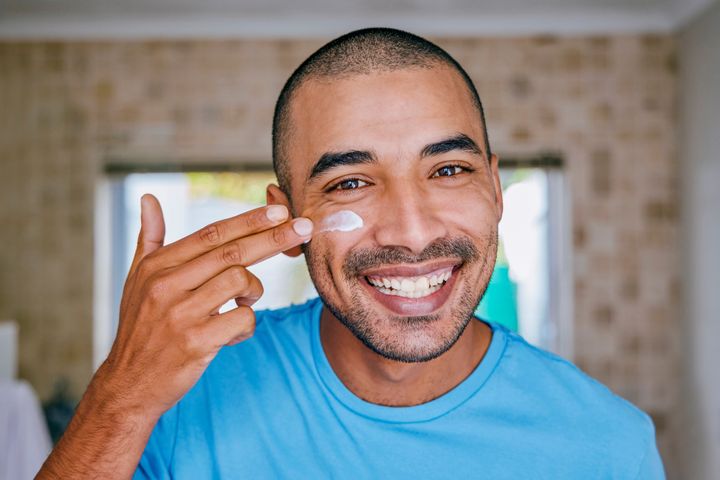
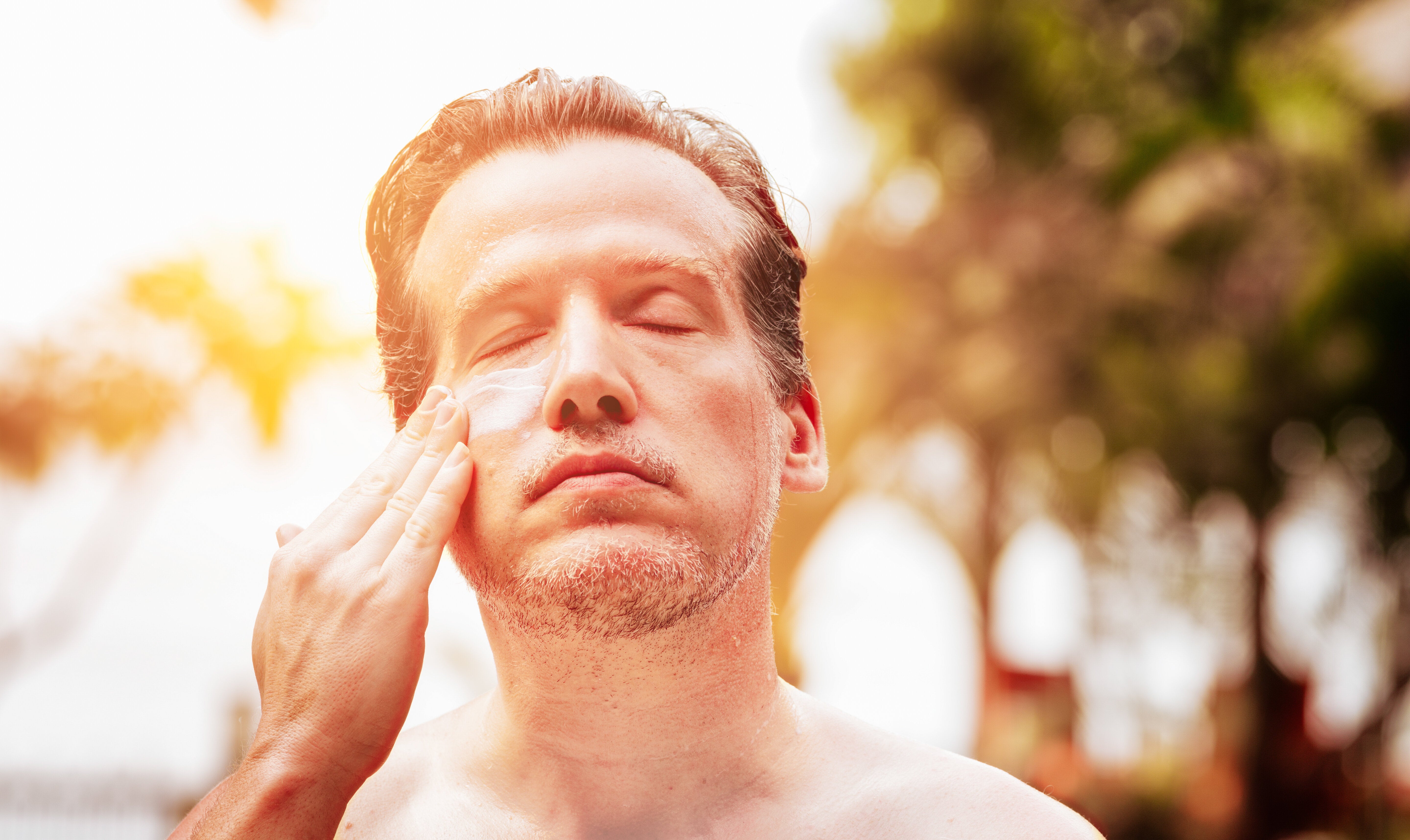
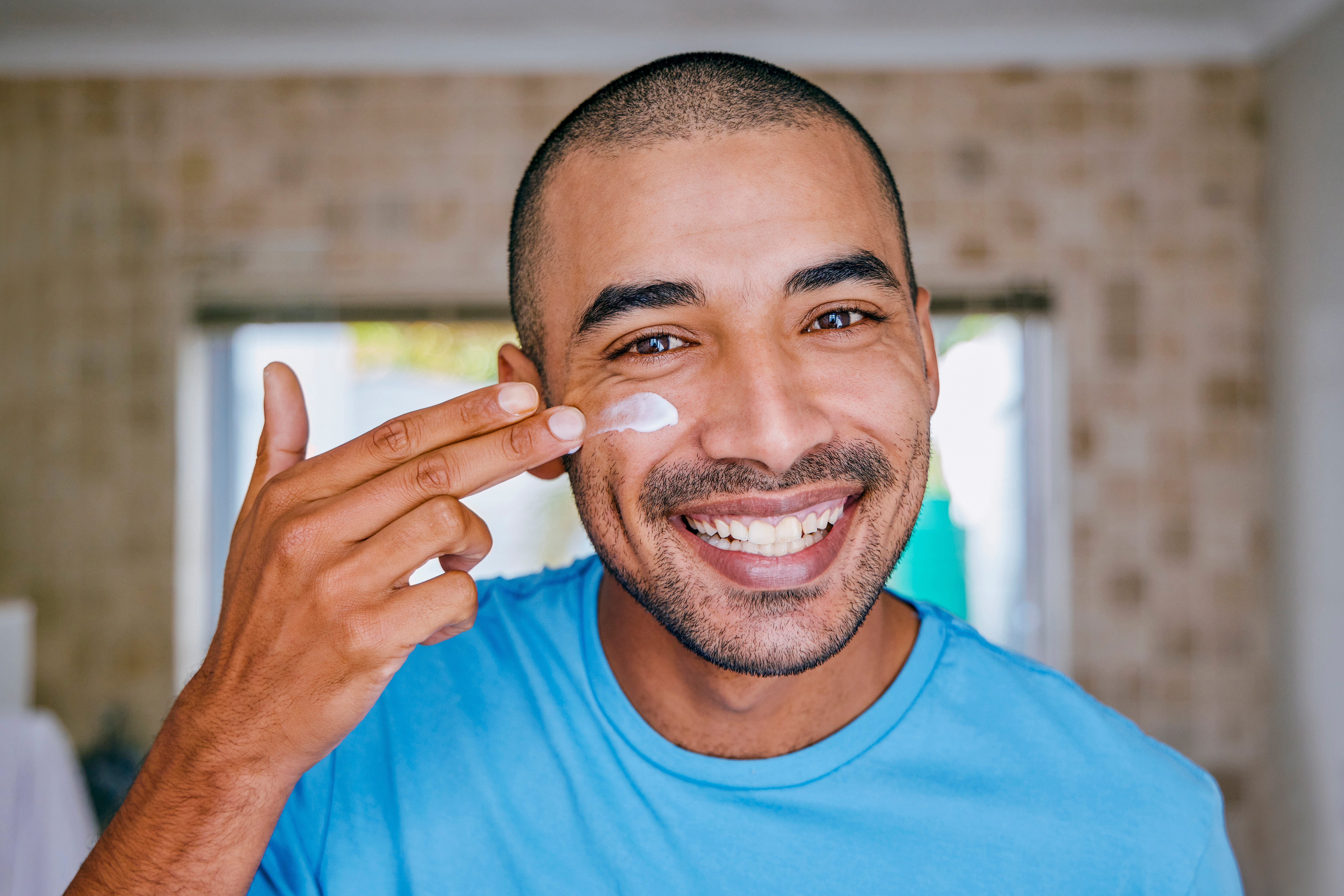
For face, a cream sun cream of SPF 30 or higher is ideal, applied daily after cleansing and moisturising (skipping moisturiser is OK if it’s not needed). Applying enough is important to get full coverage – Mack recommends the two-finger method. Apply a streak of cream to two fingers from base to tip, and apply generously. “I tell my patients to put some of that product on their ears and neck as well,” Mack says.
Advertisement
Don’t forget to apply sun cream to the body, especially if you’ll be in the sun during the day. “If you are going to be at the beach and applying cream to your body, you should apply at least 2 ounces (or the size of a shot glass) to the entire body 20 minutes before sun exposure and reapply every 80 minutes,” Mack says.
Think about your lifestyle when choosing a sun cream. “Moisturisers with SPF do double-duty to hydrate and protect the skin while also providing sun protection. Tinted sun creams can help them blend with darker skin tones as well as protect from visible light and protect skin from dark spots. And if you are an active person, make sure you are getting something water-resistant,” Maxfield says.
There is good news: despite bleaker statistics for men, knowledge and prevention can go a long way. “Take control of what you can,” Maxfield says. “Know your risk factors. These include sun exposure, having multiple moles on your body, or a family history of melanoma,” he says.
Aside from seeing a dermatologist, self skin checks can be lifesaving. “Check yourself for moles that have multiple colours or irregular borders, those larger than a pencil eraser, or any changing moles, and make sure you seek out a dermatologist if there is anything concerning,” Maxfield says.
Even though irritable bowel syndrome affects 5% to 10% of people worldwide, it’s still not taken totally seriously. To someone who doesn’t have it, IBS may seem like no big deal – like a run-of-the-mill stomachache.
But for people with IBS, a condition that may present with symptoms of chronic abdominal pain, bloating, diarrhoea, constipation or some combination of these, it can quickly become what your entire life revolves around.
Advertisement
“People with IBS are often physically and emotionally exhausted by their symptoms and by repeated efforts to get answers and treatments that could help,” Dr. Lauren Tormey, a gastroenterologist at Dartmouth Hitchcock Medical Center in Lebanon, New Hampshire, tells HuffPost. “Not only can it be challenging to make a diagnosis of IBS, but symptoms can change over time, causing confusion and frustration for both patients and doctors.”
This can lead to an all-consuming cycle of avoiding trigger foods, social gatherings that involve food and drinks (so, all of them) and any situations that entail not knowing where the nearest bathroom is – along with the following things only people with IBS would understand:
1. Being so worried you’ll experience gastro symptoms, you make them come true
“I wish I could say having IBS is always in the back of my mind, but truthfully, it’s front and centre – all day, every day,” Lauren Schneider, senior PR and communications manager at Compt, tells HuffPost. “The only time I’m not worried about it is if I know for a fact I won’t be leaving home that day.”
When we’re stressed about our gut health and anticipate a flare-up or a worsening of symptoms, it sends signals from our brain to our gut, which can actually affect our digestive system. The result? Tightened abdominal muscles, colon spasms and an uptick in discomfort.
Advertisement
“The stress associated with the fear of experiencing IBS symptoms can even result in an inability for the body to properly digest food,” Dr. Vanessa Méndez, a board-certified gastroenterologist and founder of Planted Forward, tells HuffPost. “This can lead to bloating and diarrhoea or even a slowing down of the digestive system that triggers constipation.”
2. Eating or drinking something spontaneously – and immediately paying for it
With IBS, because of the hyper-responsiveness of the enteric nervous system (the part of the nervous system located in our digestive tract), symptoms can often be unpredictable. This means turning down the chance to try a new menu item at a restaurant, or cocktails at happy hour, so as to not risk an attack of symptoms.
For people who have never dealt with IBS, these boundaries might seem like overkill. But they can mean the difference between enjoying time spent with others, or being so focused on masking your symptoms you miss out on the experience (or spend the bulk of the experience in the bathroom).
“That one scoop of ice cream is enough to make me feel like I’ve had food poisoning,” Abi Cowell, a vegan food blogger, tells HuffPost. “Will it kill me like a food allergy would? No. But it will cause an awful lot of pain and misery.”
3. Socialising is filled with mental – and intestinal – anguish
“Having IBS and socialising is filled with emotional landmines, especially when meals are involved,” Lindsay Barnes, media relations manager at Evoke Kyne, tells HuffPost.
Advertisement
There’s the frustration of people not understanding that needing to go to the bathroom means you need to go now. The fear of entering the dating world and having to explain why you go so much. The awkwardness when you’re having a good time and suddenly need to make a run to the loo.
“When you just want to sit down and have a normal meal, whether by yourself or with family and friends, these things can be emotionally exhausting,” Tormey says. “The pain experienced by individuals with IBS is in part due to visceral hypersensitivity.”
Visceral hypersensitivity is pain or discomfort coming from internal organs (like those in the abdomen), under circumstances that wouldn’t normally be painful (like eating or during a bowel movement).
The nervous system experiences these sensations and communicates them to the brain for processing via the gut-brain connection.
“Food – eating it, even thinking about it – regardless of the food type, stimulates normal digestive function and can therefore result in pain in IBS,” Tormey says. “Sometimes eating is accompanied by the immediate urge to have a bowel movement because of a heightened stomach-colon reflex.”
Advertisement
Putting food or fluid in the stomach sends a signal via the nervous system to the colon. The colon understands this as a stimulus to empty whatever waste is there – and doesn’t care if you’re mid-sentence on a first date.
10’000 Hours via Getty Images
Social outings, like dates or meals with friends, can cause emotional and physical discomfort.
4. Changing so many ingredients in a recipe or food order, it becomes a different meal
The average person can control the effects of what they put into their body, and can adapt to food-centric situations, because their sensitivities to certain foods remain relatively consistent and clear-cut.
“I don’t have that luxury,” Barnes says. “I have absolutely no control over my body anymore – I can be as mindful as possible and work really hard on my diet, but at the end of the day, my gut controls my body now, and not in a good way.”
Food intolerances are common in IBS, and dietary modifications can help manage symptoms for some people. But for others, “visceral hypersensitivity and abnormal gut-brain communication can cause flare-ups to happen anyway, despite watching what you eat,” Tormey says.
Advertisement
“And who knows how long the flareup will last?” Barnes said. “A half hour? Two hours? The rest of the day?”
5. Mapping out where every public bathroom is before you leave the house
When Schneider leaves her home, she’s always planning – always conscientious of where she can find a restroom if she needs to stop. “If I’m going to be driving somewhere without quick access to a bathroom, I won’t eat before my trip,” she says. “I’ll wait until I get there.”
These coping strategies are actually pretty common, and can be a normal response to a situation that’s outside of our comfort zone, even for people who don’t suffer from IBS.
“When anxiety levels are high in a situation such as traveling, your digestive processes can get dysregulated,” Méndez says. “During stress, the brain sends signals to the gut that influences motility and digestion, which can lead to diarrhoea or constipation.”
Because the gut is constantly at work, the brain typically filters out the nerve signals it sends (paying attention and responding to some in order to regulate gut activity, while not focusing on others). Normal gut-brain communication can go wrong when something disturbs the nervous system or the brain for a long period of time – like when traveling, working a stressful job or rushing to get errands done.
Advertisement
“In these circumstances, the brain perceives stronger signals from the gut, and even the mildest stomach cramp can immediately trigger the brain to start worrying about the potential for worsening pain or a bowel movement coming on,” Tormey says. “The brain subsequently sends inappropriate signals back that disrupt gut function and can worsen symptoms.”
As a result, you might find yourself doing the same as Schneider: scouting bathrooms on your route or delaying meals.
6. Maintaining excuses for why you’re taking so many bathroom breaks
“Something I want others to understand about how IBS impacts my life is the daily secrecy and diversions that surround my use of the bathroom,” Amanda Dexter, 36, tells HuffPost. “There’s a lot of sneaking (multiple) trips to the bathroom or making excuses as to why it took you so long.”
Eating food and having bowel movements are essential to our survival – and across cultures, food is social and often enjoyed and shared with others. But unless you’re potty training a toddler, bowel movements aren’t exactly a typical subject of dinner-table conversation.
“These aspects of daily life pose regular challenges for those with IBS,” Tormey says, and can lead to a loss of enjoyment around food, a fear of eating and even disordered eating habits, such as skipping meals to avoid needing to use the bathroom.
Advertisement
If more people were to open up about their own horror stories, Dexter believes it would help alleviate the unnecessary embarrassment that many people with IBS feel. “Commiseration can go a long way into helping IBS sufferers not feel so alone,” she says.
7. Having flare-ups so exhausting, you need to take the rest of the day off
IBS is a disorder of “dysmotility,” meaning that movement of food, fluid and waste through the gut is altered.
“This leads to irregular bowel habits (diarrhoea, constipation or both),” Tormey says. “You might spend a lot of time in the bathroom, either having bowel movements, trying to have a bowel movement or dealing with pain around the time of bowel movements.”
It’s not uncommon for people with IBS to miss days of work or school because of these exhausting, intrusive symptoms – only to be further stressed out over the resulting lost productivity and wages.
“There have been times where I feel so emotionally drained and frustrated that I’ll just cry in the bathroom,” Barnes says.
Advertisement
PixelsEffect via Getty Images
Flare-ups can be so painful and taxing, it’s hard to motivate yourself to leave the house.
8. The relief of knowing you don’t have anywhere to go that day
For Schneider, being able to work from home has alleviated much of the anxiety associated with her condition. She’s able to eat more intuitively and with a bathroom always nearby.
“Work trips are a little difficult, especially when the whole group goes out to dinner,” Schneider says. “That’s when I just resort to my old ways, and either barely eat or only eat my tried-and-true few things that won’t upset my stomach.”
Because IBS symptoms can be intermittent and unpredictable, varying in both nature and severity, the condition can leave you with a great deal of uncertainty and anxiety about what might happen outside the home.
“To compound matters, there’s a well-established recognition that the central nervous system, or brain, also has a significant role in regulating not only gastrointestinal motility, but sensation – from both an unconscious and a higher emotional level,” Dr. Brooks Cash, professor of gastroenterology at the University of Texas McGovern Medical School, tells HuffPost.
Advertisement
This typically leads to people with IBS becoming hyper-vigilant about their symptoms, and trying to be as ready for them as possible – including doing everything in their power to avoid potential triggers.
“Sometimes these triggers are absolutely accurate, and other times they’re merely innocent bystanders,” Cash says. “Either way, we often see patients changing their lifestyle, daily activities, diet, habits and social activities for the sake of avoiding them.”
9. Losing count of how often you’ve been told your IBS symptoms are all in your head
Schneider has done what’s recommended to treat IBS. She’s seen doctors, done the tests. The endoscopy and colonoscopy didn’t show anything helpful – just that she also has gastro-oesophageal reflux disease.
“I’m on an SSRI, so it isn’t anxiety-related, like one doctor so unhelpfully assumed,” she says. “She literally said to me, ‘Well, nothing’s shown up in your bloodwork or other tests – you have IBS-D but it’s probably all in your head.’ Thanks, super helpful.”
After being poked and prodded enough, Schneider gave up. “I’m tired of advocating [for] myself to doctors who won’t listen and paying co-pays that are essentially a waste of money to hear the same things over and over.”
Advertisement
While doctors don’t have an IBS biomarker to test for, there are formal diagnostic criteria for IBS called the Rome IV criteria.
“To make a diagnosis of IBS, patients should meet Rome IV criteria and not have any other ‘alarming’ signs such as blood in the stool, unintentional weight loss or new onset symptoms over the age of 50 without prior colon cancer screening,” Tormey says.
These criteria must be fulfilled for the past three months, with symptom onset at least six months prior to diagnosis. “IBS should then be sub-classified by the predominant bowel pattern – such as IBS-C, or IBS with constipation – which helps guide treatment,” Tormey says.
A diagnosis of IBS can be made confidently after a detailed history, a complete physical exam and a few thoughtfully selected diagnostic tests to evaluate for conditions that can present with similar symptoms.
So if your doctor implies – or straight-up tells you – your symptoms are all in your head, Méndez encourages you to get a second, third or even fourth opinion. “You know they’re not in your head and that IBS is a very real condition,” she says. “In fact, IBS is the most common functional digestive disorder. If you have symptoms, please keep seeking help until you find a healthcare provider you trust.”
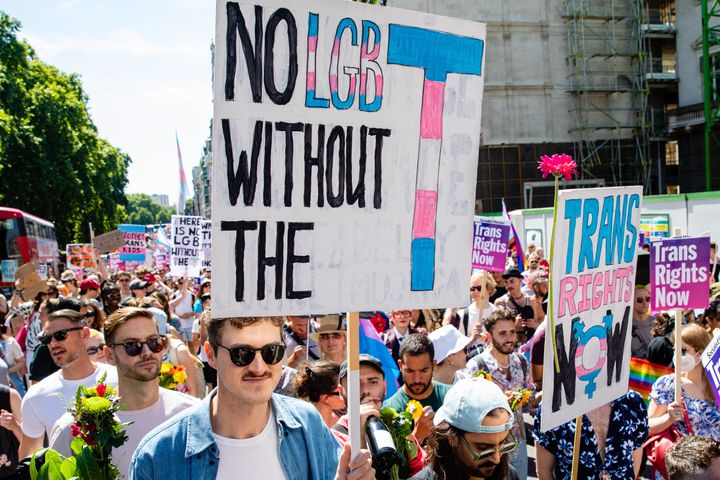
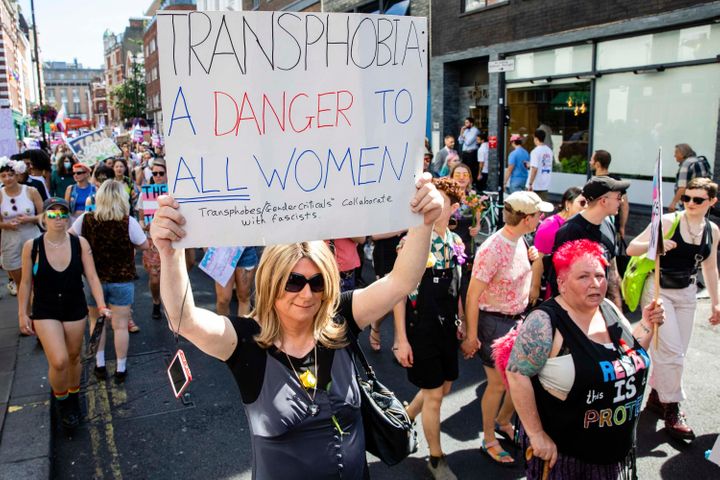
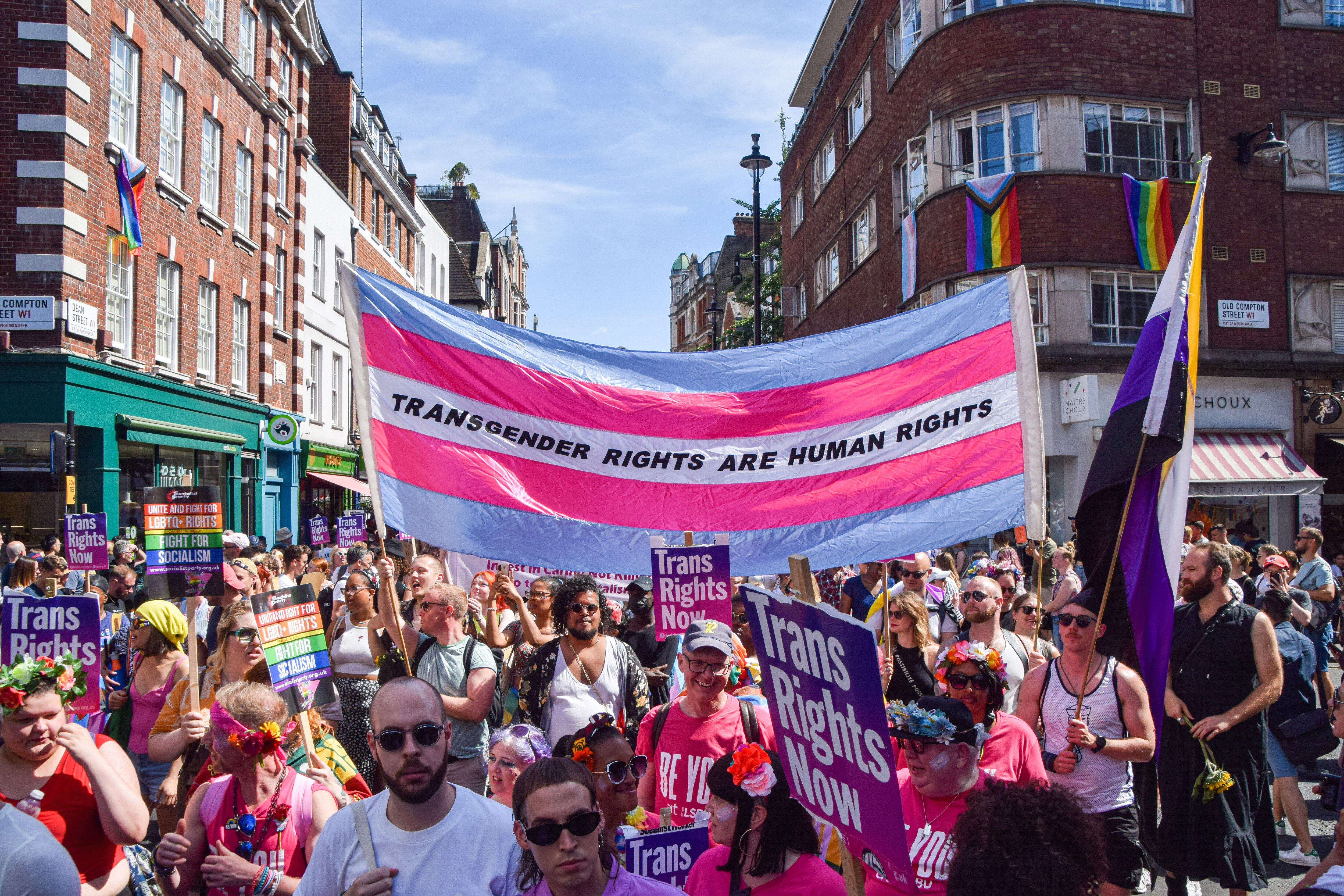
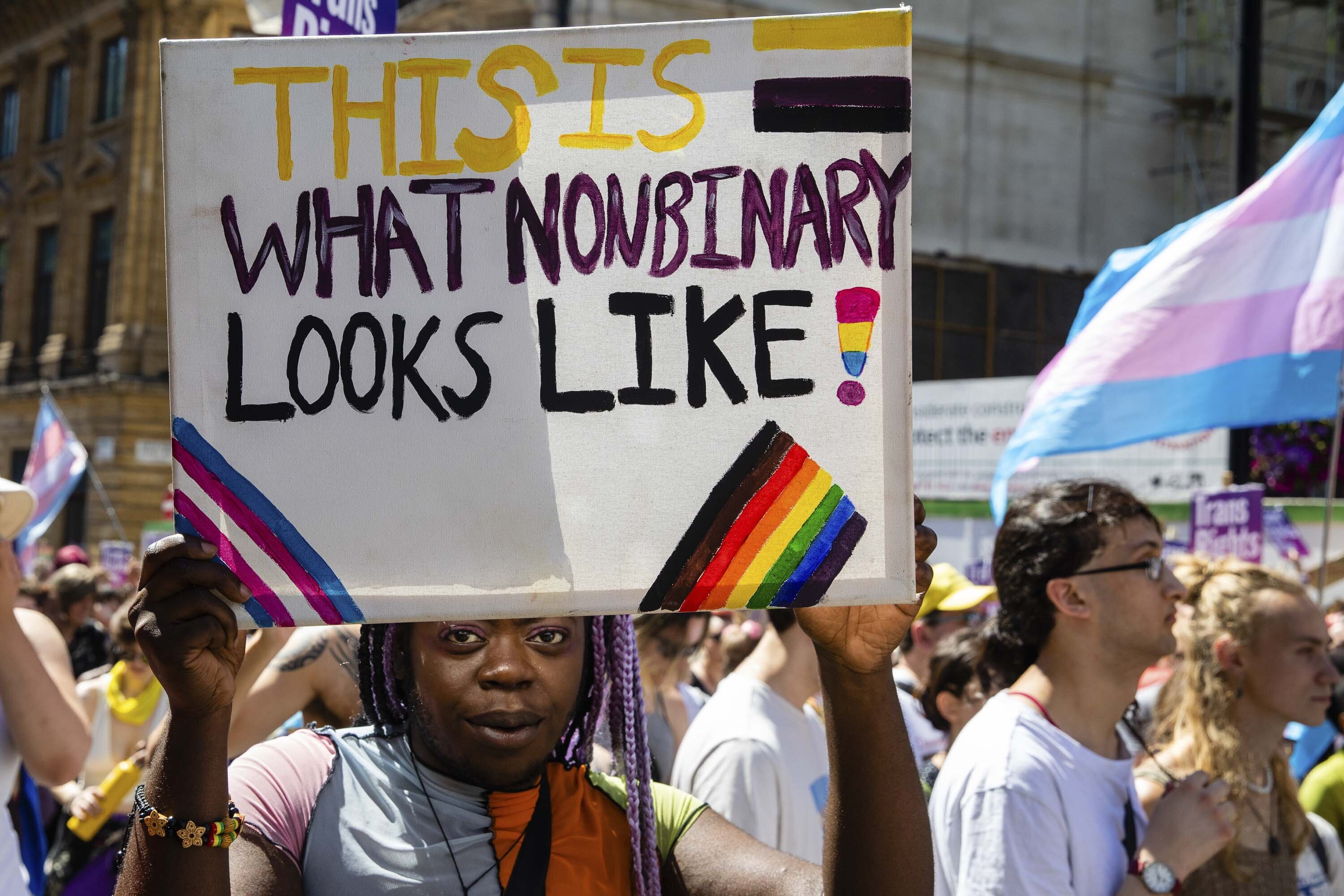
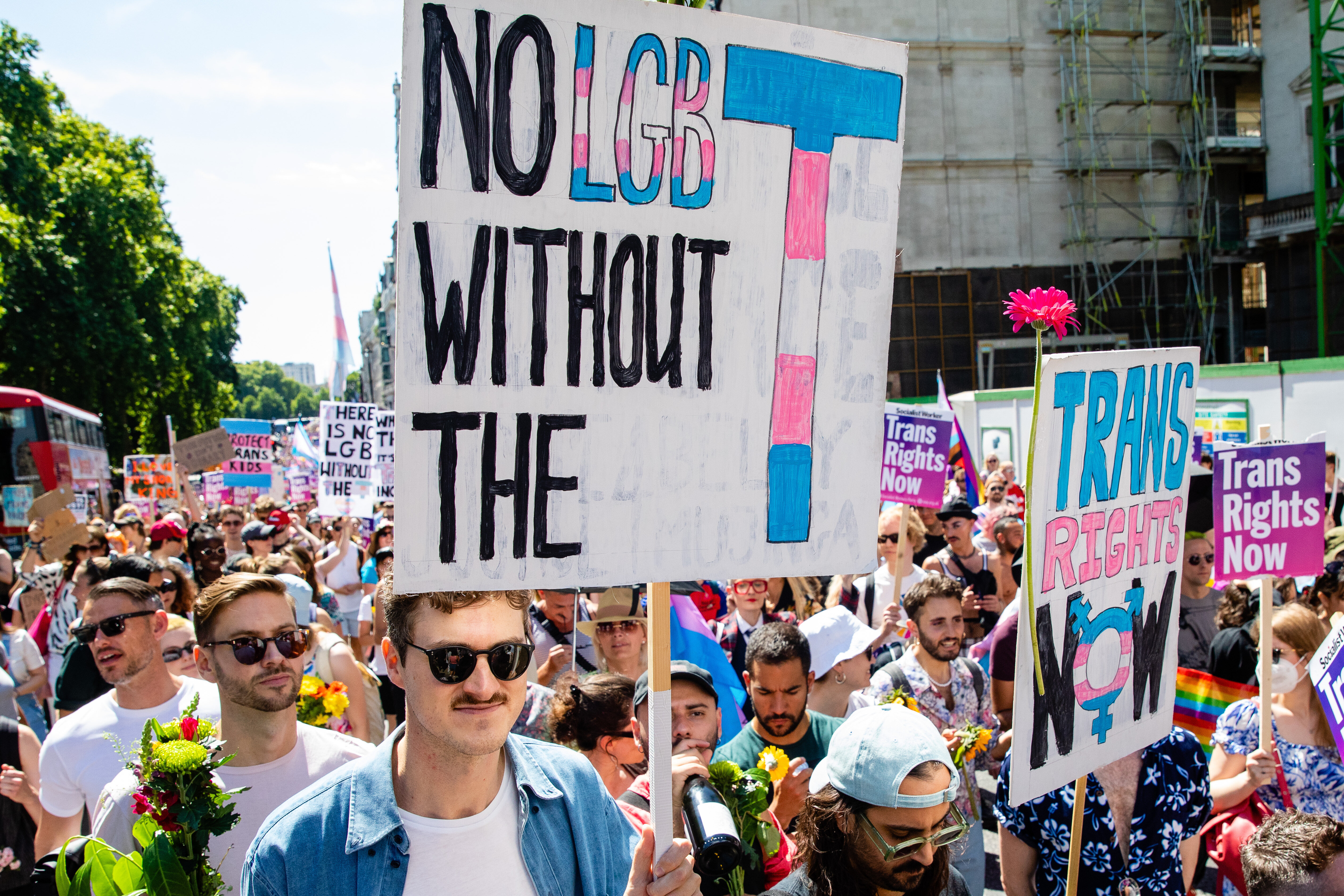
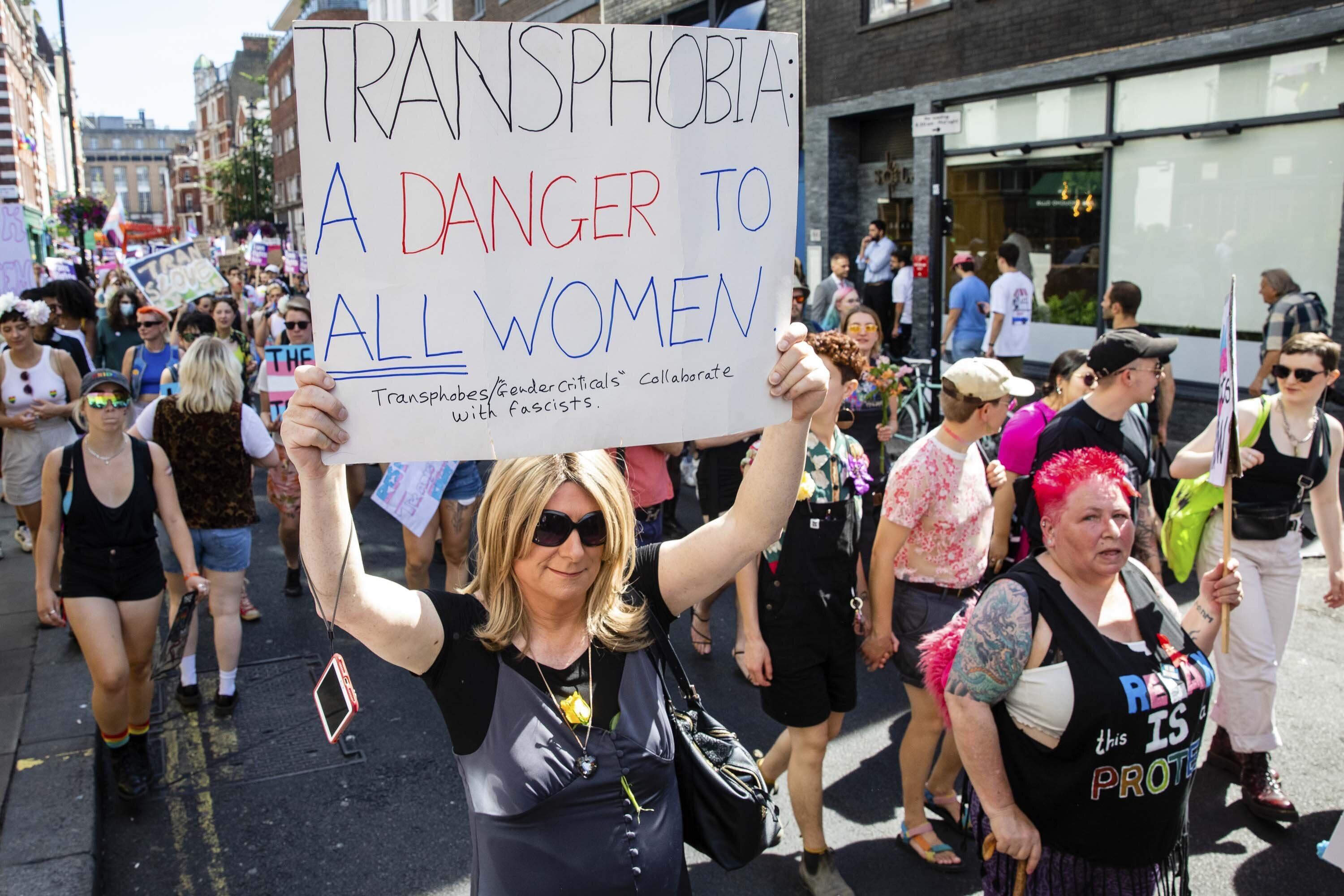
Huge crowds marched together through the centre of the capital on Saturday as part of London Trans Pride.
According to model and activist Munroe Bergdorf, more than 20,000 people joined the march, which went from Wellington Arch by Hyde Park to Soho Square.
Advertisement
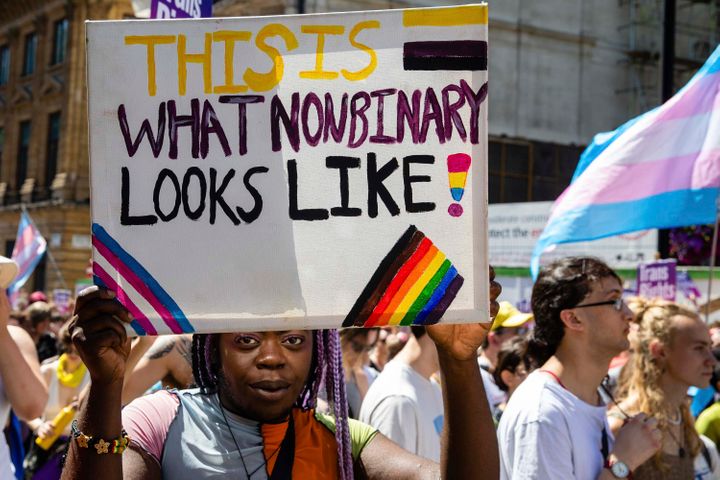
Protesters wrote powerful messages on signs to mark the occasion including “Take Down the Cis-Tem” and “Trans Lives are Sacred”.
The joyous event, which came one week after London Pride, celebrated trans rights after a particularly difficult year which has seen the government – and “gender critical feminists” – put the trans community in the spotlight.
The U-turn was denounced as targeting an already marginalised group, especially as it was announced on Trans Day of Visibility.
The Equality and Human Rights Commission (EHRC) also called for the Scottish government to pause its reforms to the Gender Recognition Act, as well as pushing for Westminster to delay reforms to conversion therapy for trans and intersex people.
A spokesperson for London Trans+ Pride said: “The irony is not lost on us, this is an abhorrent and deliberate attack.”
They added: “The EHRC is actively damaging human rights for trans people.
“We deserve better: London Trans Pride is calling for the EHRC to be abolished. We march to demand the legal recognition of non-binary, intersex and gender nonconforming people.”
Advertisement
’Boris, bye!′
Trans actress Yasmin Finney, known for starring as Elle in Netflix’s Heartstopper and for her upcoming role in Doctor Who, also gave an emotional speech to a large crowd.
She said she felt “so connected to my community” adding: “If the government is trying to eradicate us, we’re all here and we’re just duplicating.”
She continued: “Boris, I hope you see Heartstopper, I hope you see Doctor Who, because I exist. And I know you know I exist. We all exist. And we’re not going anywhere!”
Trans author Charlie Craggs also gave Johnson a shout-out in her speech at Trans Pride, referencing her all-black outfit and saying they were there to celebrate” the end of the political life” of the prime minister.
“When it comes to thinking what I want to say about this man who has been consistently transphobic, homophobic, all the phobics, er it was really hard to summarise it in a few words, but I think I found two words to sum it up and those two words are: ha, ha.”
She continued: “I’m so tired of being fucking sad. Being happy is the biggest finger up to these people, they don’t want you to be happy – they don’t even want you to be alive.
“So being happy and alive is the biggest fuck you to these people. So go home after this Pride and be fucking happy – you deserve it.”
Mark Kerrison via Getty Images
Advertisement
Mark Kerrison via Getty Images
Mark Kerrison via Getty Images
‘Things ARE changing’
Munroe Bergdorf wrote about the march on her Instagram account, asking why there was so little reporting around such a major event.
She pointed out that “it speaks volumes” that this was not covered it in the mainstream media, claiming trans rights only come up when presented as part of a “culture war”.
But, she added: “Things ARE changing, but trans joy doesn’t sell papers. Transphobia sells. Fear sells. Hate sells. Resist.”