The vast majority of respiratory viruses that spread within our population ebb and flow with the seasons.
Influenza spikes in the winter months, as do infections caused by respiratory syncytial virus (RSV), adenoviruses and other coronaviruses. Earlier this year, Rochelle Walensky, director of the US Centers for Disease Control and Prevention, said she expects Covid to also become a seasonal illness – but whether or not that will come to be remains to be seen.
Advertisement
Most scientists agree that Covid isn’t going anywhere, and that we’ll be living with SARS-CoV-2 for decades, if not forever. Though we tend to see the biggest waves in the winter and early spring, Covid isn’t seasonal yet. It doesn’t retreat in the spring-to-summer off-season – it is smoldering throughout the year.
“Covid is steadily burning through the population as we speak. But it is also able to piggy back on top of our ebbs and flows of the typical cold and flu season, so it’s a double whammy,” Mark Cameron, an infectious disease researcher at Case Western Reserve, tells HuffPost.
Advertisement
Will Covid ever become a seasonal illness?
Andrew Noymer, an epidemiologist and demographer who studies infectious diseases at University of California, Irvine, expects Covid to become winter-dominant, like the flu, in the long run. SARS-CoV-2 is already somewhat seasonal and predictable in nature.
Advertisement
“In the United States, all of the largest spikes have been in the winter, so it is kind of seasonal in that respect,” Noymer says.
But, even between those peaks, the virus spreads at pretty significant levels. It hasn’t totally settled into a seasonality. Many epidemiologists thought Covid would have already fallen into much more of a seasonal pattern by now – but it hasn’t.
“A seasonal infectious disease is something that pops up predictably at the start of the cold and flu season and persists throughout that period of time,” Cameron says.
Keep in mind, this is only our third 12-month period with Covid. The illness is still relatively new. Even though over half of the US population and seven in 10 people in the UK have likely already had Covid, others have not and remain susceptible. We’re all antsy for the virus to become predictable, but the virus is still just getting started, Noymer says. He suspects that one day – maybe 10, 15 years from now – we’ll be looking at a very seasonal phenomenon.
Advertisement
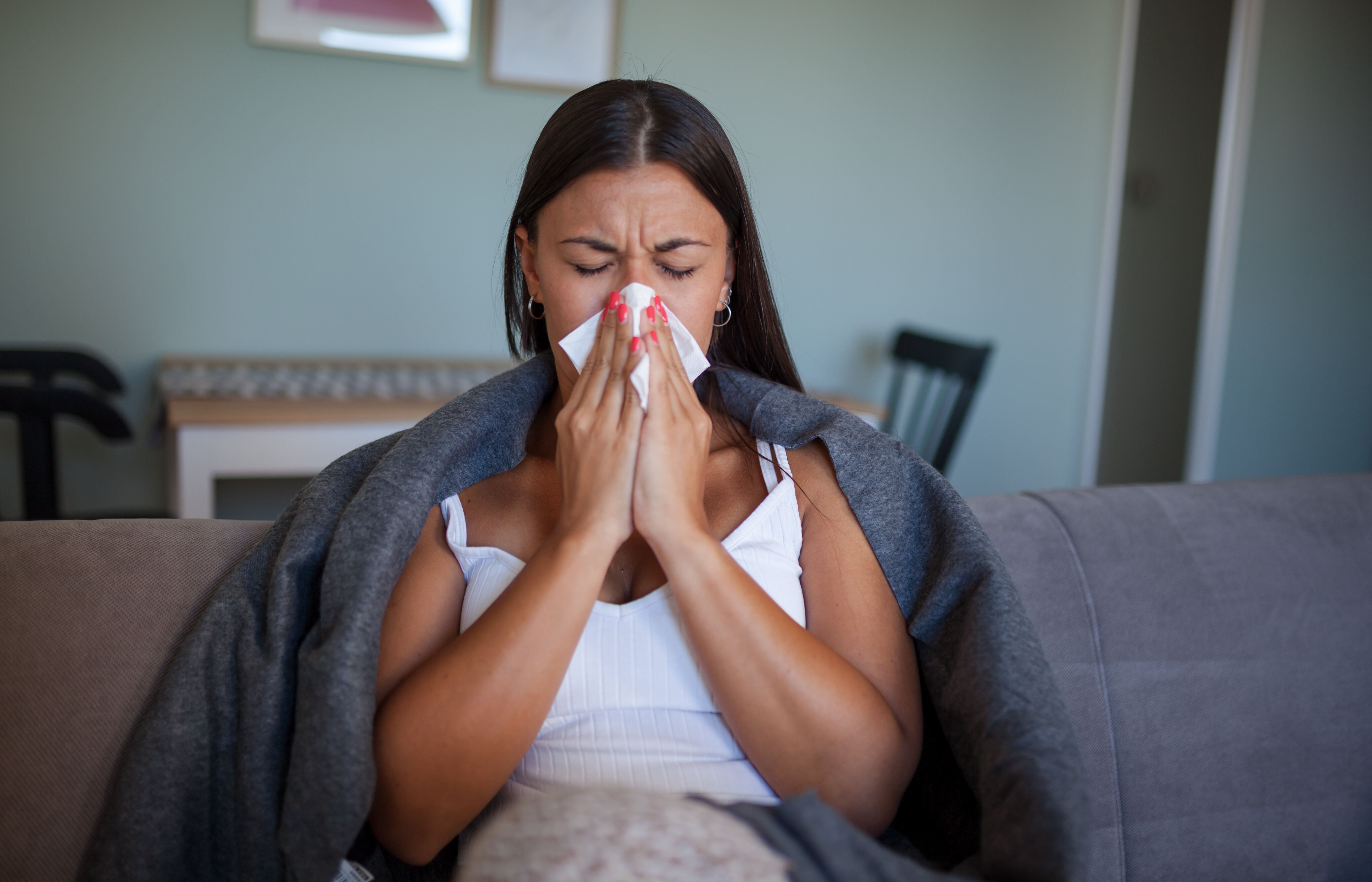
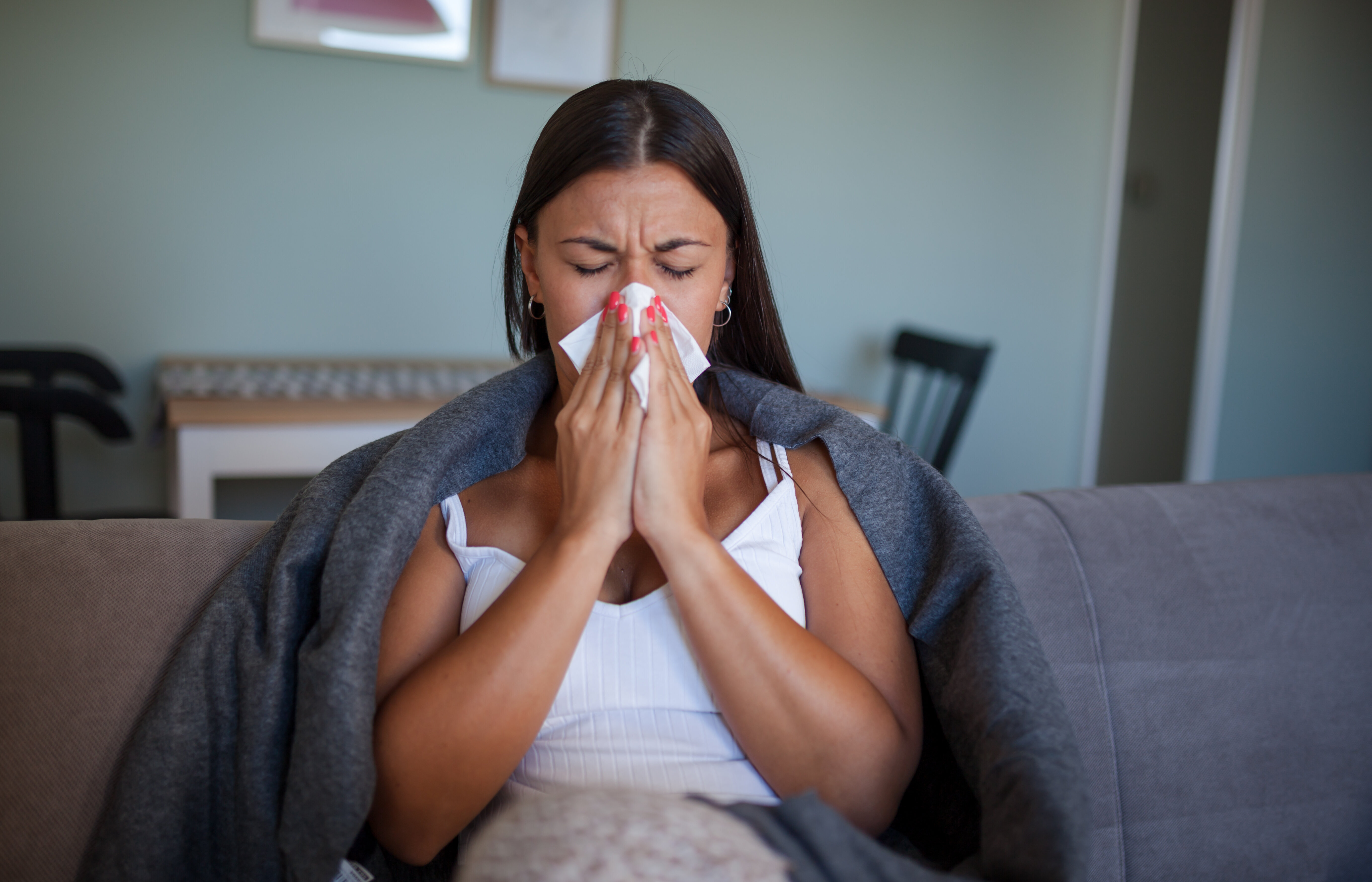
Marija Babic / EyeEm via Getty Images
There’s a chance Covid may not become seasonal for years to come.
Is there a chance Covid may never sync up with the flu and cold season and become a winter-dominant illness? Of course, Noymer says. “I can’t absolutely rule out that it never will – that it will be the one exception that disproves the rule.”
The fact that, one, people can get Covid multiple times, and two, that even vaccinated people can catch and spread Covid, makes the epidemiology of this respiratory infection chaotic. Population-level immunity influences when waves occur. After people recover from Covid, they are typically protected from infection for a few months. As time passes, those recently recovered people can become susceptible again. And, on a greater scale, a population can become susceptible to a wave again.
This isn’t an exact science – people get infected and recover at different times. Their immunity wanes at different speeds. “There’s a lot of wheels turning and it’s very hard to predict,” Noymer says.
Here’s what causes respiratory viruses to become seasonal
It’s not entirely clear why respiratory viruses tend to get more active in the wintertime – but they do. Flu activity surges in the winter as do the common cold coronaviruses. Even measles was winter-dominant when it circulated at higher levels in the US, according to Noymer.
“We see this with respiratory virus after respiratory virus after respiratory virus,” Noymer says.
There are a few hypotheses as to why this happens. The first theory is atmospheric conditions – viruses, including influenza, tend to spread more easily when there’s less humidity. Viruses do better in drier conditions.
Another contributing factor is our behaviour. In winter months, when it’s cold outside, we gather indoors together and create plenty of opportunities for viruses to spread from person to person.
Incidentally, this is also believed to be why the US South experiences summer spikes. Contrary to those in the northeast, people living in southern states head indoors during the summer months when the temperature soars and humidity becomes wet and sticky. Schools are thought to contribute to the seasonal spread of respiratory viruses like flu and RSV, Noymer adds.
The behaviour of the virus plays a role, too. The flu, for example, tends to shoot through the population then burn itself out by “mutating to its demise,” Cameron said. Covid, on the other hand, is evolving to become more fit and more transmissible – it’s not acting like a typical respiratory virus that infects people and goes away before bursting back into the population in a different form months later.
Advertisement
If we look to other circulating coronaviruses that cause the common cold, we can reasonably expect Covid to eventually become endemic and more seasonal in nature, according to Cameron. But we don’t know when those coronaviruses settled in their seasonality. How long that will take with Covid is a mystery. This is wide-open territory that has yet to be studied.
“How can we understand how long Covid will take to become just another garden-variety coronavirus that is circulating and causing sporadic disease?” Cameron said. “It certainly isn’t now.”
Experts are still learning about Covid-19. The information in this story is what was known or available at the time of publication, but guidance could change as scientists discover more about the virus.To keep up to date with health advice and cases in your area, visit gov.uk/coronavirus and nhs.uk.
For parents dating again, figuring out when to introduce a new partner to your kids is a tricky calculus: How many months should you wait? Does the relationship feel stable and safe enough to take that step? Is your child emotionally ready to meet someone new since you split from your co-parent? What will your ex say?
The stress doesn’t end there; once the introductions have been made, you need to check in with your kids to make sure it’s all not too much, too fast, and that they’re comfortable around your new partner.
Advertisement
This common post-divorce dilemma has played out on a very public stage in recent months, since reality star Kim Kardashian has started dating Saturday Night Livekim comedian Pete Davidson.
Things seem to be going swimmingly for the new couple, but Kardashian’s ex, Kanye West, has expressed concern about Davidson’s relationship with his kids. (At one point West even dramatically wrote, “NO YOU WILL NEVER MEET MY CHILDREN” on an Instagram post.)
Advertisement
Still, photos taken recently show that Davidson has met the couple’s kids. And earlier this month, another photo popped up showing what appears to be a new tattoo for the comedian: The ink reads KNSCP, letters many fans believe stand for Kardashian’s four children with West: North, Saint, Chicago, and Psalm.
Family therapists we spoke to wondered just how committed a person could be after roughly six months of dating.
“The tattoo seems more like evidence of his impulsivity rather than his genuine attachment to his girlfriend’s kids, which he could not possibly have in any substantive way after only six months,” says Virginia Gilbert, a Los Angeles-based therapist specialising in high-conflict divorce.
“I think six months is too soon to meet her kids, especially with an in-process messy divorce and Kanye being so opposed to the meeting, but everything Kim does is in the public eye, it would have been hard to keep Pete a secret, so the question is probably moot,” she added.
Kurt Smith, a family therapist in Roseville, California, who mostly works with men, says that the desire to connect deeper with your significant other by showing interest in their kids is understandable.
Advertisement
Ultimately, though, new partners need to recognise that it’s a delicate dance ― one that usually requires a healthy distance.
“Pete should be asking himself why that was so important for him to do at this stage of the relationship,” he says.
Since this co-parenting quandary is top of mind for many right now, we decided to ask family therapists and other experts on blended families to share the advice they’d give to parents newly dating again like Kardashian. Here’s what they say.
First off, when should introductions be made?
For divorced parents, when to introduce and involve a new partner in children’s lives is a complex question, with no “one size fits all” answer.
For some people, six months is enough; for others, a slower approach might be necessary, says Dawn O. Braithwaite, a professor of communication studies at the University of Nebraska-Lincoln.
Braithwaite has spent her career studying how families interact to create, navigate and change relationships, routines and traditions, especially in stepfamilies and chosen families.
According to her, parents need to consider the following six things before making introductions:
What they believe will be the future of their new relationship
The age of the children
How long it’s been since the separation or divorce
How well children have adjusted to changes in their family situation
The relationship with the co-parent
The interest the new partner has in meeting the kids
“While there are exceptions, most scholars have found that new partners can play a positive role in children’s lives, but that they should go slow and act as a friend for children rather than overstepping and acting in ways that are confusing or inappropriate for children,” the professor says.
Advertisement
Johnny Greig via Getty Images
“While there are exceptions, most scholars have found that new partners can play a positive role in children’s lives, but that they should go slow and act as a friend for children,” said Dawn O. Braithwaite, a professor at University of Nebraska-Lincoln who studies stepfamilies.
Meetups should be casual at first
To avoid coming on too strong or overstepping boundaries, keep those early getting-to-know-you meetups as casual as possible: Arrange a park date or meet up for a Marvel movie and pizza.
“The onus needs to be on the new partner to meet the kids where they are ― meaning you need to participate in the kinds of things they like to do,” Gilbert says. “I would also suggest postponing adult sleepovers until the kids become comfortable with the new partner.”
Remember that your relationship is not with your partner’s kids — it’s with your partner only
If you’re the parent, reinforce that you’re not a package deal – not yet, anyway.
“Maintaining this boundary is important for both partners, the health of the new relationship, and, most importantly, for the kids’ health,” Smith says.
Move too quickly and you could quickly incur the annoyance of the kids ― and the potential ire of the other parent.
“I’ve counselled divorcing parents where his new girlfriend posted pics on social media of his kids at a birthday party like they were her own and believe me, it did not go over well with the other parent,” Smith says.
“It’s hard enough bringing in new partners and blending families, so avoiding anything that could cause tension or conflict should be avoided,” he explained.
Be comfortable being an outsider for a while.
Advertisement
Kids in situations like this are usually grappling with competing, confusing concerns, says Amy Begel, a family therapist in private practice in New York City and author of the blog Most Human: “Will they betray their father if they have a relationship with this new guy? Will they betray their mother if they are loyal to their father and want to protect his feelings?”
That’s why it’s important to take a backseat for a bit if you’re the new partner. It may feel like a blow to the ego to be treated as marginal, or worse, an intruder, but patience during this process is crucial, Begel says.
As Jenna Korf, a stepmom and founder of StepmomHelp.com, previously told HuffPost, you’re an outsider joining an already-formed family – even if your partner and their kids eventually move into your home.
“A lot of this is unintentional, but kids automatically go to their parent,” she says. “You might be sitting right next to your partner and they won’t address you, often leaving you out of the conversation.”
If you’re the new partner, take the approach of a new friend or neighbour, not an automatic stepparent.
New partners should try to befriend the kids, but move at a pace determined by the kids, says Ron Deal, the founder of SmartStepfamilies.com and author of a number of popular books on blended families.
“In my book with Dr. Gary Chapman, Building Love Together in Blended Families, I tell stepparents it’s like making friends with a new neighbour,” Deal says. “You don’t just push your way into their house and tell them you’re their new BFF. That makes enemies.”
Instead, the stepdad and author advised, you knock and wait patiently on the doorstep.
“You may even have to talk to them through the door for a while until you find a few things you have in common. Only when they open it can you begin to connect face to face,” Deal says. “Slowly, over time, a friendship is made that stands on its own terms.”
mixetto via Getty Images
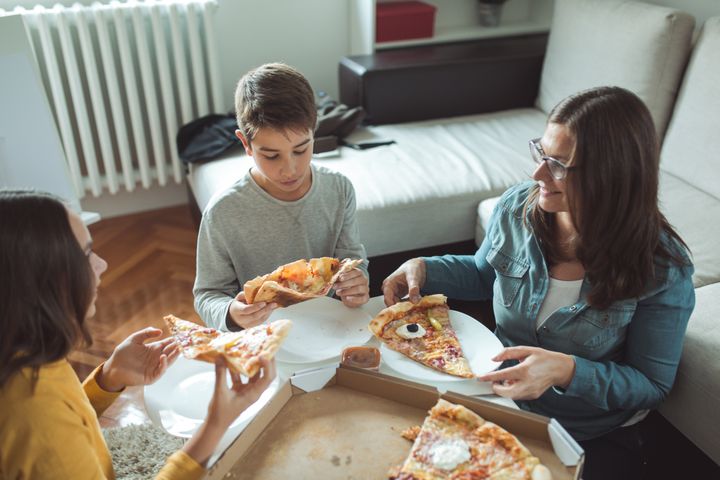
Meeting for the first time? Keep it casual. Think: The new Marvel movie on Disney+ and pizza at home where you get a chance to talk and get to know each other.
Avoid “erase and replace” messages if you’re the new partner
Advertisement
According to Deal, exaggerated gestures like Davidson’s tattoos send the wrong message to kids. The goal for new partners is to come across as additive rather than substitutive. The kids should feel like they’re potentially adding to the family, not getting a substitute dad or mum.
“Pete’s tattoo may sound romantic – that’s the kind of thing people do to win the affections of their dating partner – but to the children it declares, ‘You’re mine.’” Deal says. “Someone might say, but isn’t that great as well? Not necessarily to a child. In their world, it may seem like Pete is trying to ‘erase and replace’ their father.”
A child’s loyalty lies, understandably, with their biological parent, not the new stepparent. A message like that threatens their relationship with their father “may partially explain Kanye’s strong reaction and only escalates the battle between the parents,” Deal tells HuffPost.
“Here’s my rule of thumb: a new partner who tries to erase and replace a biological parent is, in fact, going to be erased and replaced themselves,” he says.
FatCamera via Getty Images
“As a general rule, it takes at least two years before a new partner can assume a traditional parenting role,” said Virginia Gilbert, an LA-based therapist specializing in high-conflict divorce.
Most kids with newly divorced parents are dealing with abandonment issues; don’t add to them
It’s awful for a child to get attached to a new partner who then disappears from their lives. If your partner is coming on too strong with the kids, Gilbert says to acknowledge that this is a tough transition for everyone and tell them you really appreciate their efforts.
Then, shift the conversation: Try to encourage them to see things from the kids’ perspective: Among other things, your kids may be feeling extra loyal to your ex or they may be experiencing grief that their parents are no longer together. They may not want to share you with a new person and they may not want someone to have control over changes in their lives.
“Your new partner needs to understand how overwhelming your relationship might feel to the kids and that their ambivalence is not about them,” Gilbert says. “If the issue is creating conflict between you and your new partner, consider seeing a therapist who can help you both make child-centred decisions.”
The big takeaway here, though, is to take things slow: “As a general rule, it takes at least two years before a new partner can assume any sort of traditional parenting role,” Gilbert says.
You’re reading Move, the nudge we need to get active, however makes us happiest and healthiest.
For many fitness lovers, leg day is often the least favourite of the week. But that’s often because of the misconception that you have to push your body to the point of struggling to walk the next day.
Advertisement
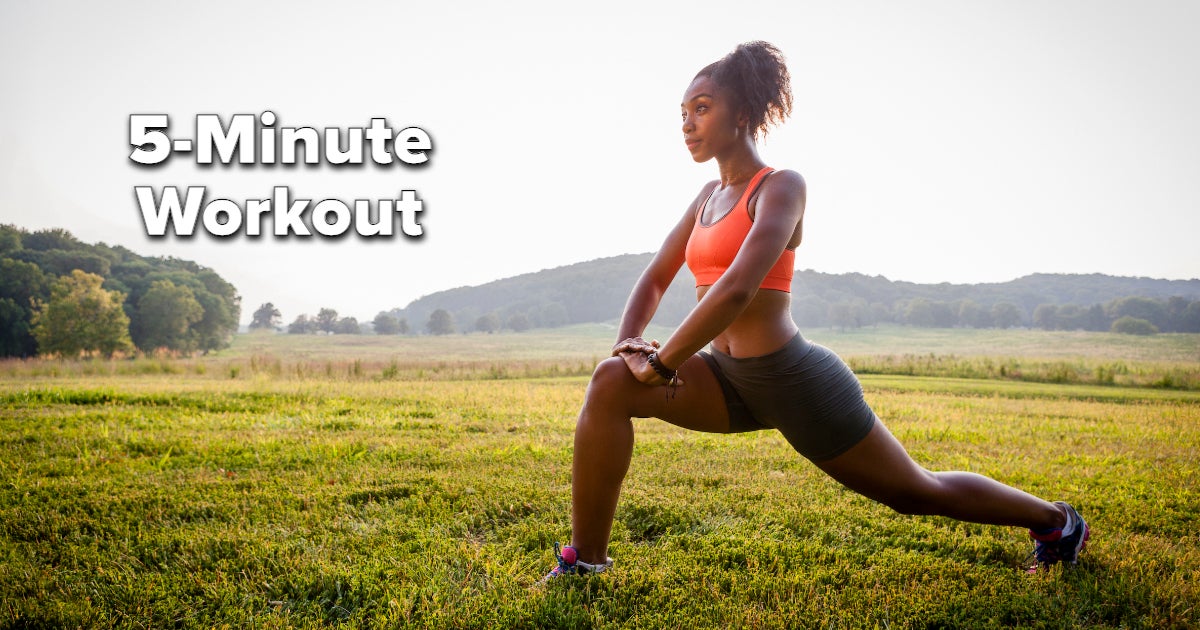
Instead, why not try a short but effective lower body workout?
David Wiener, training and nutrition specialist at Freeletics, has shared a five-minute circuit with HuffPost UK that can be added into your next gym session or practiced during spare moments of the day.
Advertisement
“Lower body exercises are beneficial and vital for making daily tasks, such as walking, easier on us. Performing these exercises not only improves your stability, but it is a chain reaction on the rest of your body for helping improve your strength and posture,” he says.
“Ultimately, improving your lower body workout routine will give you lean muscle and achieve a stronger and more toned lower body, including the calves, thighs, hamstring and glutes.”
Advertisement
Try the “no glutes, no glory” workout today and you’ll never* be tempted to skip leg day again.
(*Well, until next week at least.)
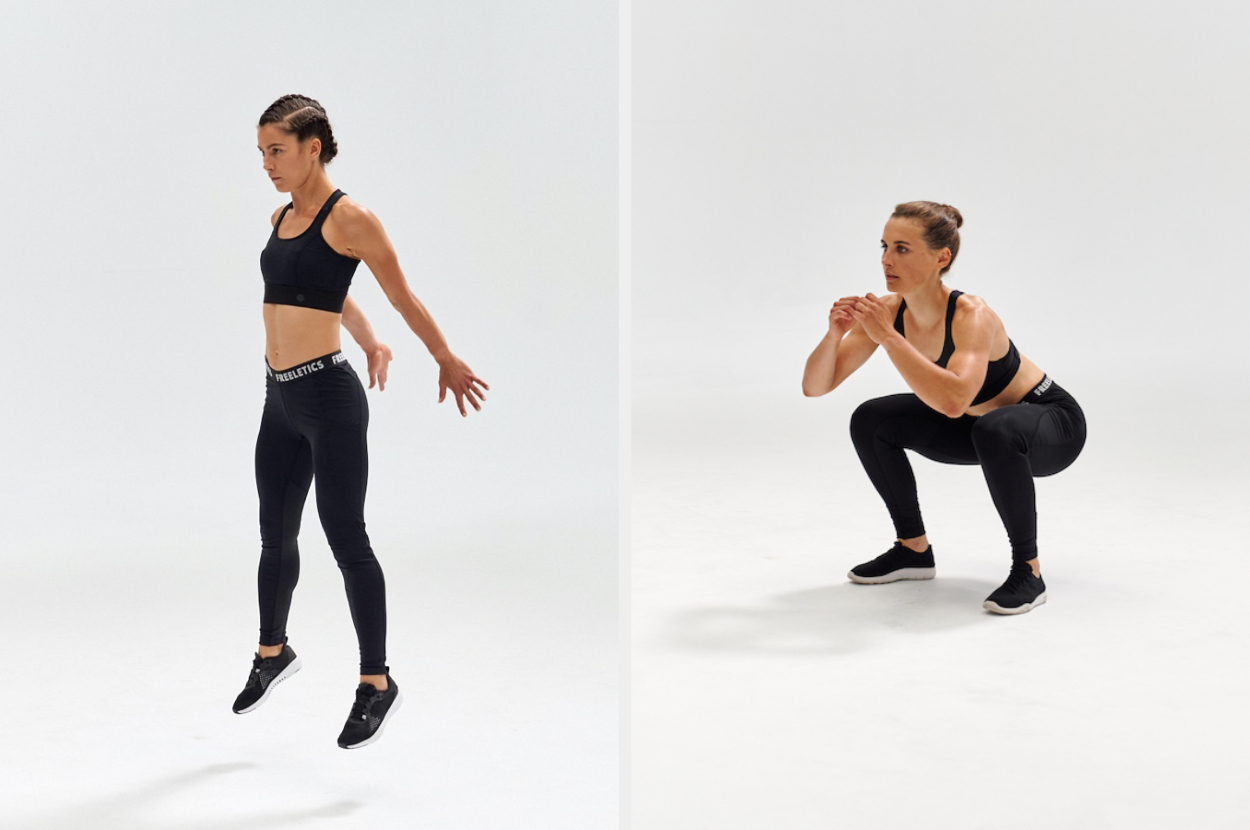
1. Squat Jumps
Freeletics
This exercise is great because it’s an all over body work out, but especially good for the lower body. It can help build your muscle and enhance strength, as well as boost your cardiovascular fitness, tone your lower body, strengthen bones, boost your circulation and burn many calories.
Advertisement
To do one: Start standing with your feet about shoulder-width apart. Point your toes slightly outwards. Always keep your back straight. Always keep hands off your body.
Lower down until your hips are below knees. Jump up so both feet leave ground and then return to the starting position before repeating.
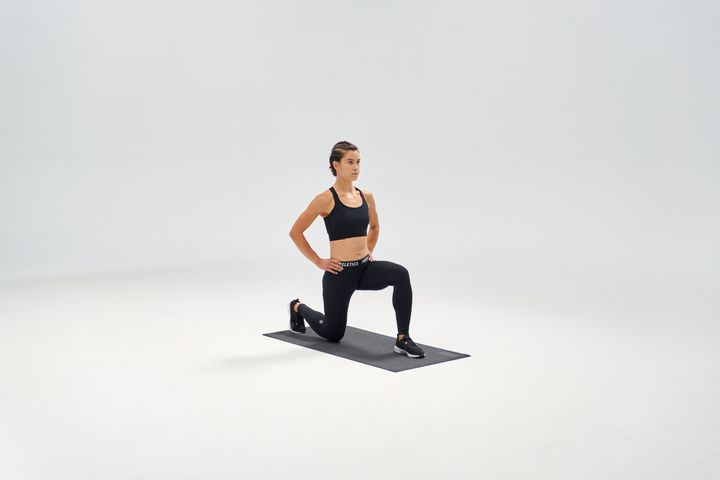

2. Lunges
Freeletics
Freeletics
Lunges are a great exercise to increase the muscle mass in your lower body whilst building up your strength and toning. Not only this, they also help to improve your posture, balance and range of motion. Whilst a lot of exercises put strain on your spine, lunges help give your spine a chance to relax whilst working many of the larger muscles in the lower body.
To do one: Start standing upright, with your hands on your hips. Always keep your shoulders above the hips. Step forward with one foot Keep your front foot flat on the ground. Bend your back knee so it touches the ground below your hip Alternate lunging leg for the desired number of reps.
3. Squats
Freeletics
Much like a jumping squat, a normal squat has similar benefits but not as much cardio. Whilst this exercise will of course not burn as many calories as a jumping squat, it is still a great exercise to put your quadricep group of muscles to work. There’s a misconception that squats put too much pressure and strain on your knees, but squats will actually strengthen your knees and make them less prone to injury as you get older.
To do one: Start standing with your feet about shoulder-width apart. Point your toes slightly outward. Always keep your back straight. Always keep hands off the body. Always keep weight toward your heels. Lower down until your hips sit below your knees and rise back up to the starting position
Advertisement
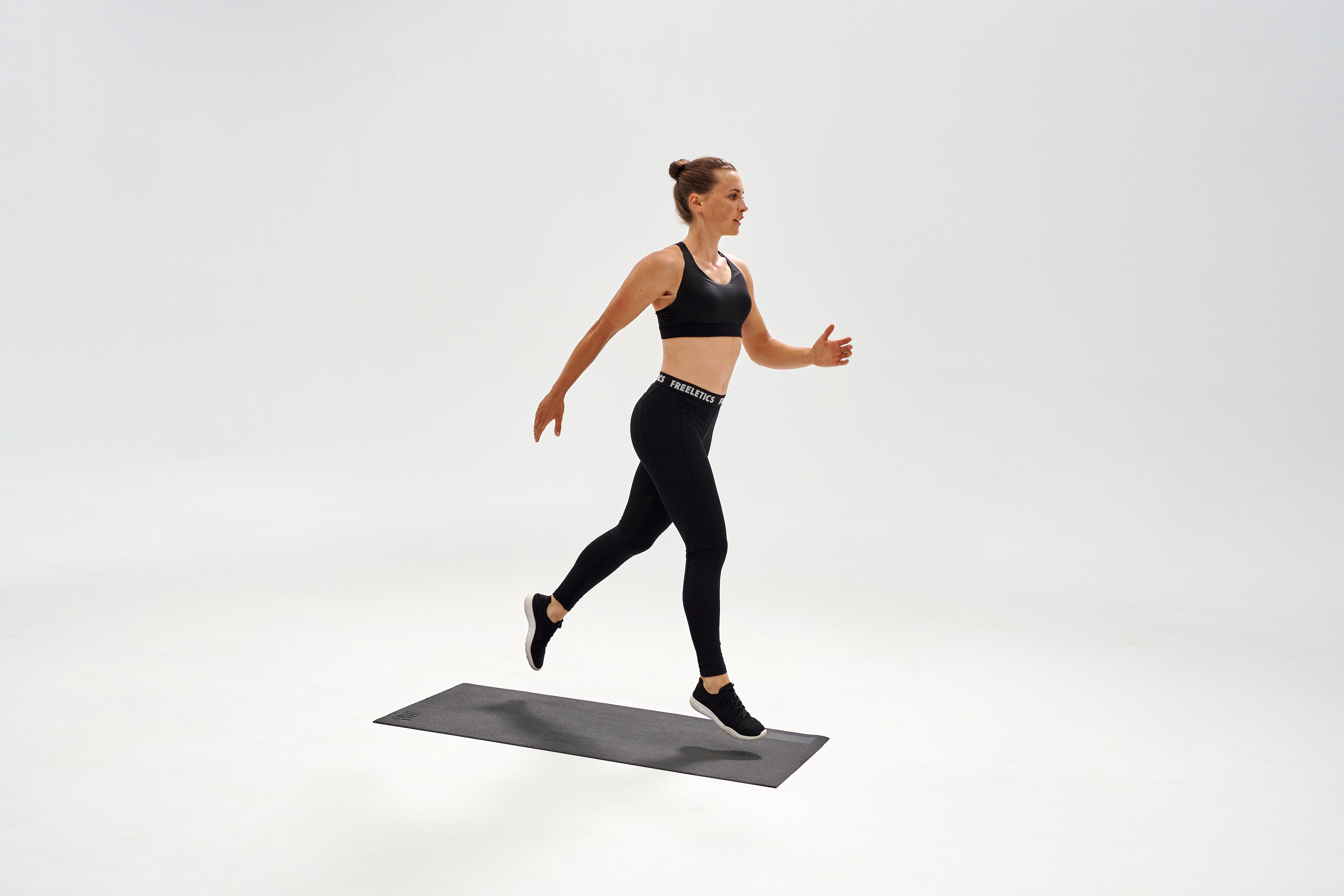
4. Split Lunges
Freeletics
Much like the normal lunge, split lunges are a great way to work your quads, glutes, hips and hamstrings. As they are a unilateral exercise (meaning they only train one side of your body at a time), they are proven to increase your balance and posture too. Not only this, your hip flexor muscles are most commonly tight, but performing split lunges will help you improve the mobility of these muscles.
To do one: Start standing upright. Always keep your shoulders above the hips. Step forward with one foot. Keep your front foot flat on the ground. Bend your back knee to touch the ground below hip. Jump up to switch sides. Make sure your feet leave ground at same time.
Rest.
5. Table Twists
Freeletics
To enhance the flexibility of your lower body and spine, table twists are simple to perform and will stretch out all the major muscle groups in your body, helping to boost flexibility and enhance range of motion.
To do one: Start with your hands below your shoulders, heels below the knees, and hips on ground. Push up until your hips are in line with your shoulders and knees. Reach one hand up and behind you. Return to the starting position. Alternative sides Always keep your arms straight.
Rest and repeat.
Move celebrates exercise in all its forms, with accessible features encouraging you to add movement into your day – because it’s not just good for the body, but the mind, too. We get it: workouts can be a bit of a slog, but there are ways you can move more without dreading it. Whether you love hikes, bike rides, YouTube workouts or hula hoop routines, exercise should be something to enjoy.
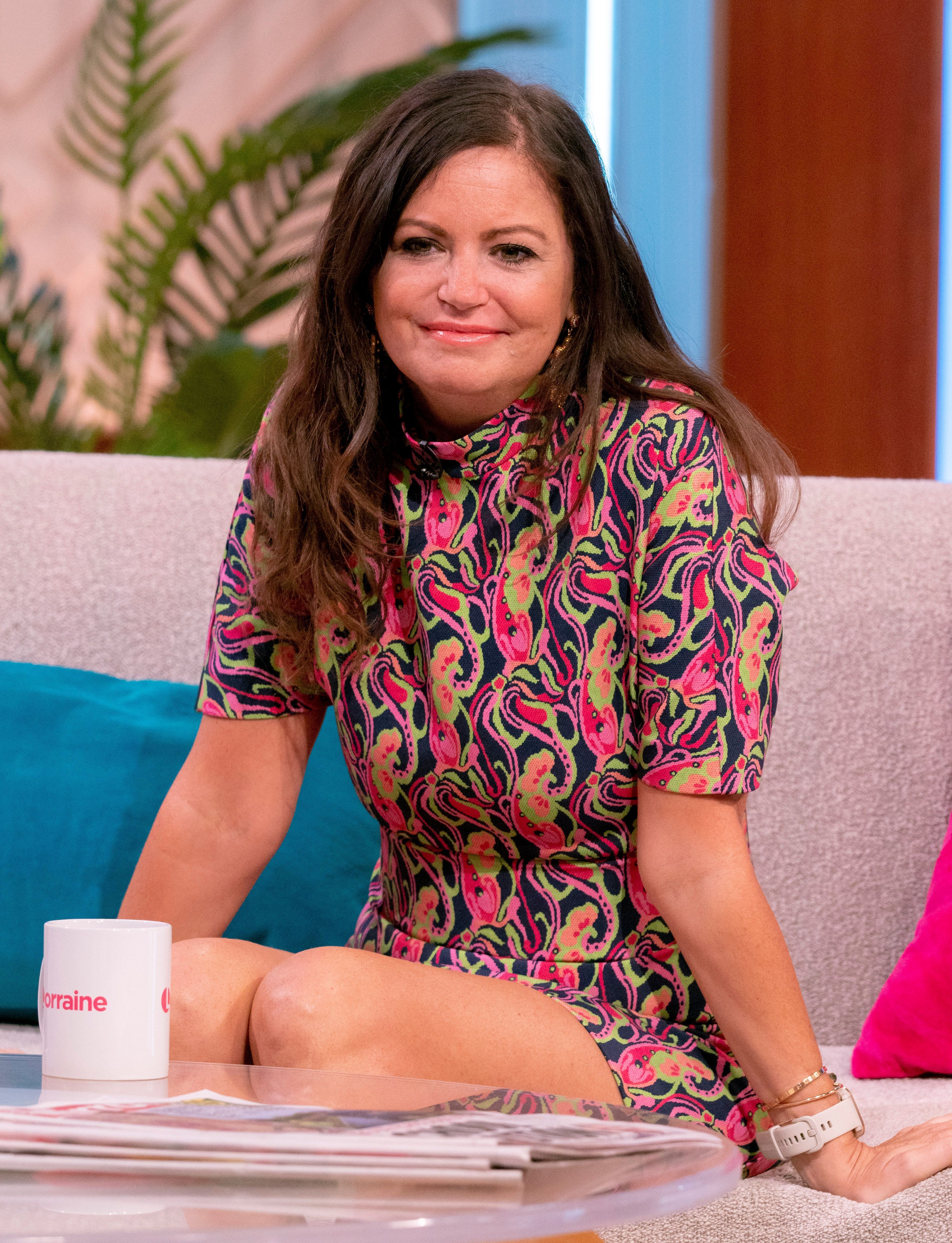
Podcaster Deborah James says she doesn’t know “how long I’ve got left” after being moved to hospice at home care to treat her terminal bowel cancer.
The presenter of the BBC podcast You, Me And The Big C said the last six months have been “heartbreaking” to go through, but that she has been surrounded by “so much love” and has “no regrets”.
Advertisement
Deborah was diagnosed with the condition in 2016 and since then has kept her nearly 300,000 Instagram followers up to date with her treatments, with candid posts about her progress and diagnosis.
On December 14 2021, she marked five years since her diagnosis, writing on Instagram: “I’m fully aware I shouldn’t be alive to write this today.”
Advertisement
But in a new post on Monday, she said: “The message I never wanted to write. We have tried everything, but my body simply isn’t playing ball.
“My active care has stopped and I am now moved to hospice at home care, with my incredible family all around me and the focus is on making sure I’m not in pain and spending time with them.
Advertisement
“Nobody knows how long I’ve got left but I’m not able to walk, I’m sleeping most of the days, and most things I took for granted are pipe dreams.”
She added that she had left “no stone unturned” in search of treatment, but that even a “magic new breakthrough” would not make a difference.
The former deputy headteacher announced in her post that she is setting up the Bowelbabe Fund, and shared links to charities including Cancer Research UK, Bowel Cancer UK and the Royal Marsden Cancer Charity.
Deborah James
Ken McKayKen McKay/ITV/Shutterstock
She wrote: “All I ask, if you ever read a column, followed my Instagram, listened to the podcast or saw me dressed as a poo for no reason, please buy me a drink to see me out this world, by donating the cost to @bowelbabefund which will enable us to raise funds for further lifesaving research into cancer. To give more Deborah’s more time!”.
Advertisement
She added: “Right now for me it’s all about taking it a day at a time, step by step and being grateful for another sunrise.
“My whole family are around me and we will dance through this together, sunbathing and laughing (I’ll cry!!) at every possible moment!
“You are all incredible, thank you for playing your part in my journey.
“No regrets. Enjoy life x Deborah.”
The fund name echoes her social media handle, Bowelbabe, and by early morning on May 10 it had reached nearly £700,000.
We’ve all been there: upon walking into the office, an acquaintance cheerfully greets you by name and you pause, frantically searching your brain for theirs.
You don’t want to disrespect them by saying the wrong name, but just saying “hey” seems so generic. Do you come clean about your memory lapse?
Advertisement
Here’s how experts say you can address the conundrum strategically and still keep your relationships intact.
You may consider a subtle approach first
Advertisement
If you are at an event and you see someone you know but you can’t remember their name, introduce yourself first, because it often prompts that person to say their name too. That’s what Mary Abbajay, president of the leadership development consultancy Careerstone Group, recommends.
“That is a signal for you to say your name back,” Abbajay says. But don’t think you are being sly about your strategy. Many people will recognise that it means you don’t know their name, she says.
Advertisement
One other indirect approach is to discreetly ask someone else to tell you the other person’s name, Abbajay adds.
If you are in a conversation that will continue later, consider asking the person to put their contact information in your phone. Or if the conversation needs to move to email, try asking, “Can you tell me how to spell your name to get the email right?” suggests Perpetua Neo, a psychologist and executive coach.
Better yet, ask them directly and apologise.
Avoiding saying someone’s name every time you see them will only get you so far.
Advertisement
“I think people fake it too long, and then they meet that person three or four times, and then they are too embarrassed to ask their name,” Abbajay says. “The best thing is to nip that in the bud right away. The second time you meet them, say, ‘Remind me of your name again. Thank you so much.’”
Don’t minimise your actions and say, “Oh I do this all the time.” If this is your third or fourth time asking their name, that deserves a bigger mea culpa, Abbajay says.People’s names are important to them, and you want your apology to come across as sincere.
Don’t make it too big a deal, though, either.
“We feel an internal pressure to remember people’s names after they tell us once, but that’s not fair, and truly, most people understand that,” says Lawrese Brown, the founder of C-Track Training, a workplace education company. “Even if it’s a close colleague, some of us are better with names than others and some of us forget things easily in general.”
“The biggest mistake is to be overly apologetic like there is something wrong with you,” Neo says. “Being gracious and pleasant about it can be useful.”
Don’t get discouraged if it happens more than once. Learning names takes time, Brown says, but what pushes her to ask for name reminders is to remember there are worse alternatives: You can make the wrong guess and call that person by an incorrect name, or you can be impersonal and never say their name.
“In the short term, asking may feel embarrassing, but that’s a temporary feeling,” Brown says. “The feeling of letting someone know that you care enough to call them by their name is what they’ll remember.”
Write down names whenever possible and try saying a person’s name when you first meet them.
Brown says that writing down someone’s name is what works best for her as far as remembering them.
Research has shown that writing things down helps our brains really retain what is being said. A 2014 study in Psychological Science, for example, found that students who wrote notes down on paper had better comprehension and retention of what was being taught than students typing on their laptops.
Advertisement
If you don’t have access to a pen or paper, try using your voice. Here’s a pro tip: Use someone’s name within the first minutes of meeting someone.
Abbajay says that in meetings she facilitates, she will ask people to introduce themselves even if some people already know each other as a way to help her remember names. When people introduce themselves, she diagrams where they are sitting and what their names are.
That way, “When I’m in the meeting, I can start using people’s names. If you use somebody’s name quickly when you meet them, chances are you are going to remember their name,” she says.
I’ve always found it endearing the way men pay homage to the mothers and matriarchs in their lives. We love songs like Tupac’s Dear Mama” and Bill Withers’ “Grandma’s Hands.” We witness the robust relationship between Kanye West and his late mother, Donda, who was undoubtedly his biggest fan, in the documentary Jeen-Yuhs: A Kanye Trilogy. We heard the gut-wrenching cries of George Floyd calling out for his mother moments before his death in 2020.
Black motherhood has often been centered in the analysis of the Black family — and for Black men, the maternal connection is vital, political and liberating. These affirmations are dedicated to women whose labor and love are far-reaching and priceless. The vocal appreciation is always welcomed, especially when the work of mothers has often been overlooked.
Advertisement
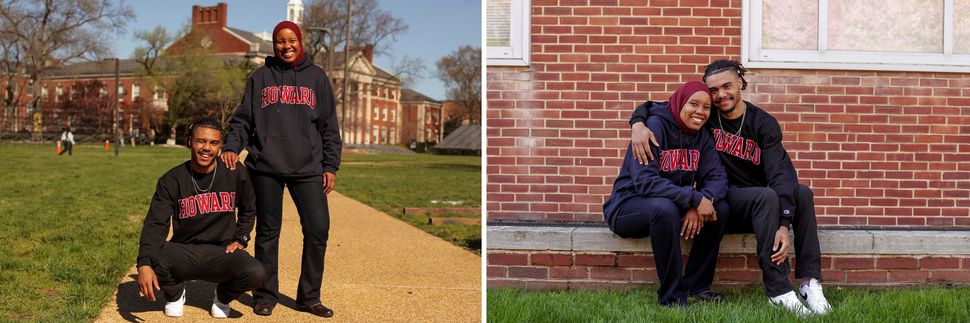
“My mother is a force of nature. If she wants to get something done, it’s getting done. I think that’s been pretty evident in the course of her journey,” said Sulaiman Rashid, a 20-year-old college student in Washington, DC, whose mother raised four kids. “My siblings and I have different career paths, but we are all grounded in the desire to create change, and that stems from my mom’s passion to help and to serve others and to aid in the betterment of the world.”
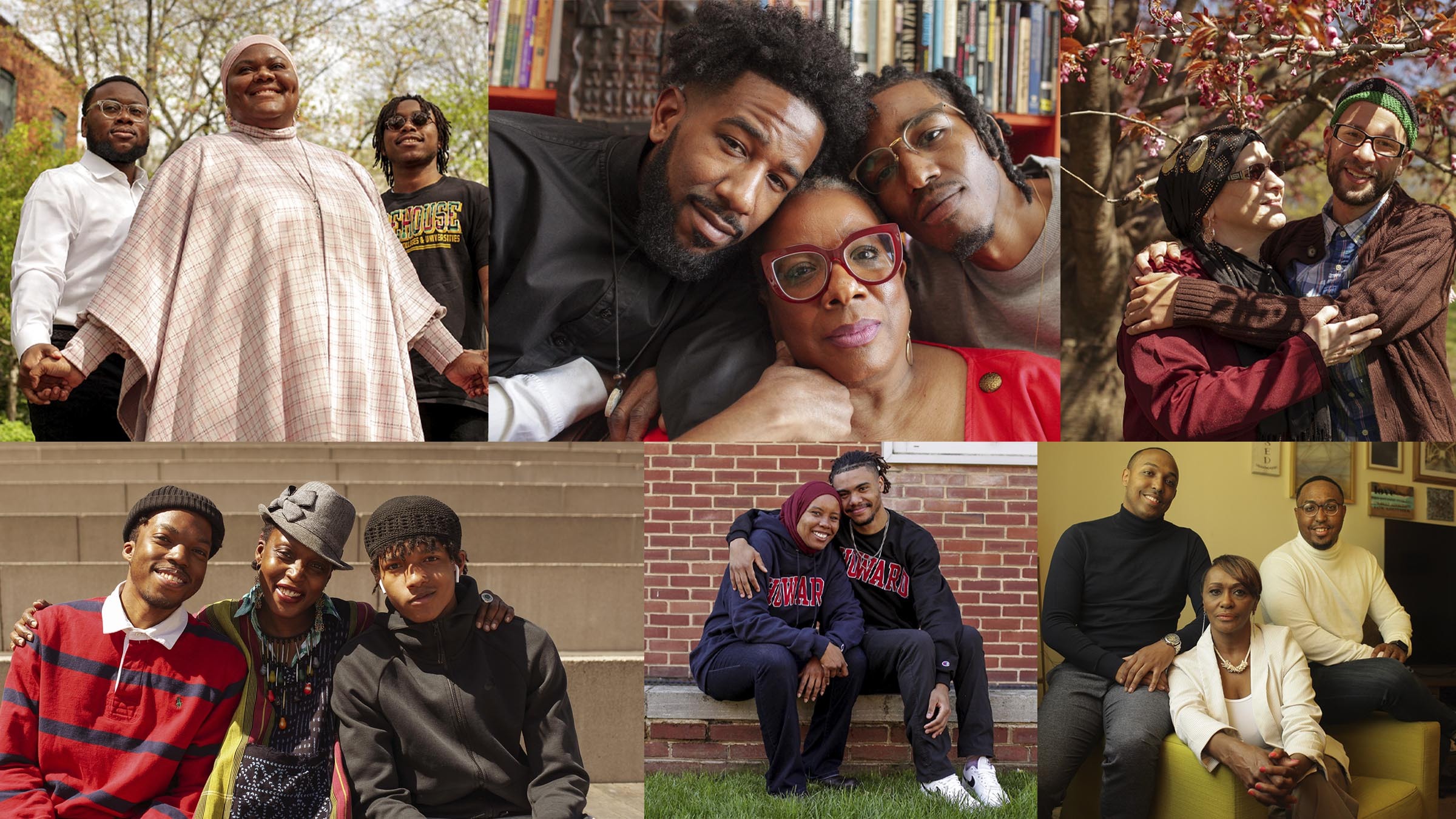
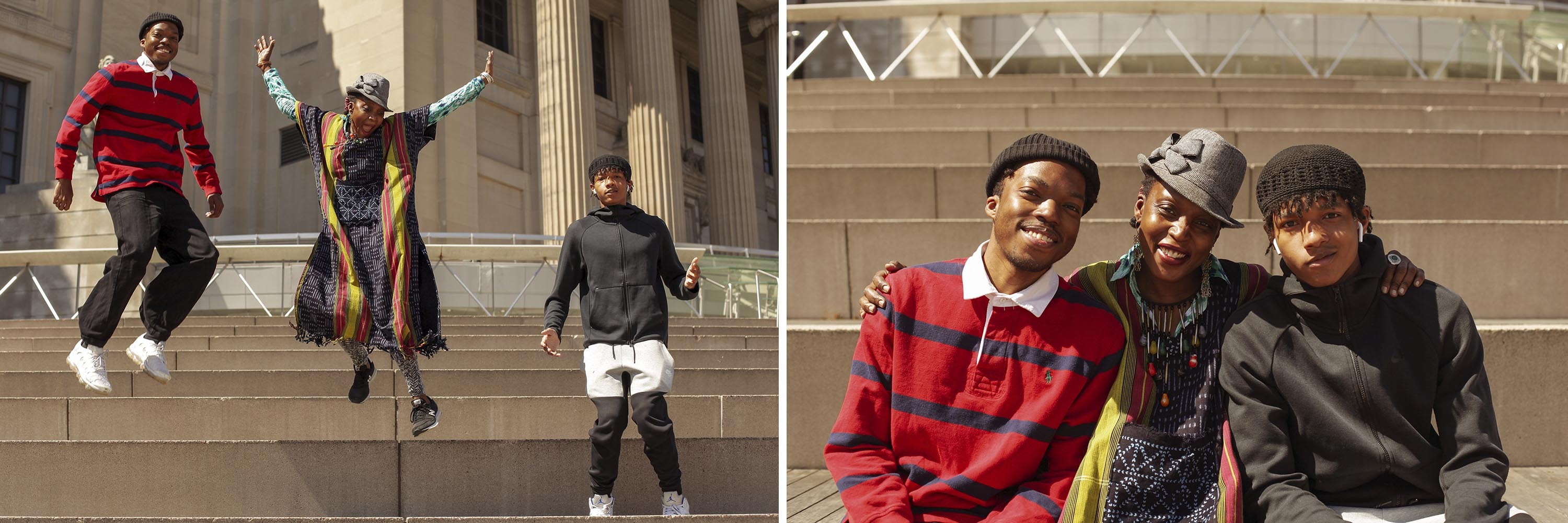
I wanted to explore the relationships between sons and their mothers. In this series of portraits, I photographed families and asked the sons to share some perspectives of the role their mothers had in their lives. From guidance on love, career and education to artistic inspiration and global travel, we see an expansive view of the strong bonds between Black sons and their mothers.
Advertisement
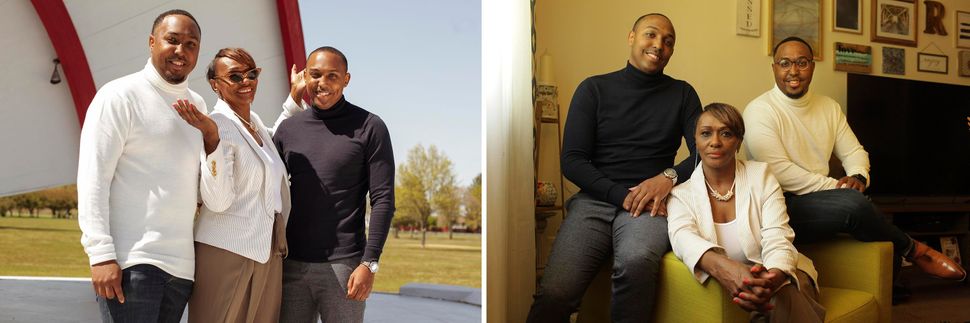
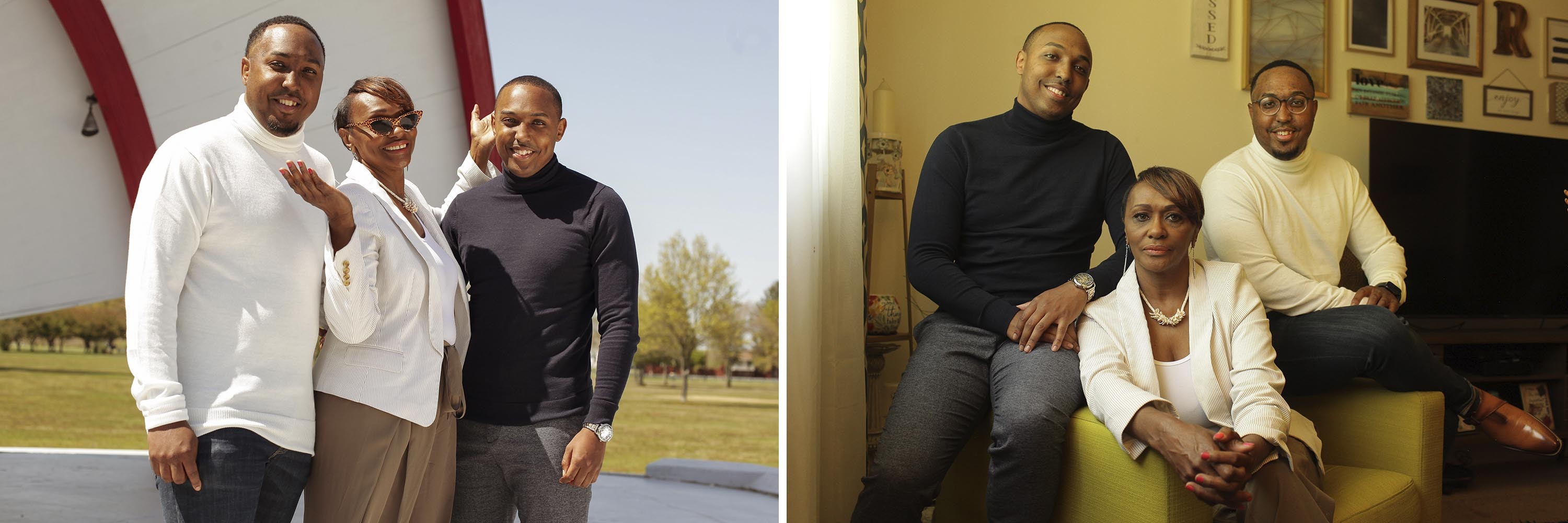
Diane Redfern
Sons: Christopher and Charles Tarpley
Advertisement
Laylah Amatullah Barrayn
My mother, commonly known as Lady D, is a resilient and confident mother. She has a jazzy personality and is a strong woman of faith. She raised my brother and I to become the gentlemen we are today. – Charles
My mother’s favourite saying is “I’m gonna tell you what God loves … the truth.” This is what I admire about my mother the most, her love of God. She has such a strong will to never give up no matter how tough things may be raising twins. – Chris
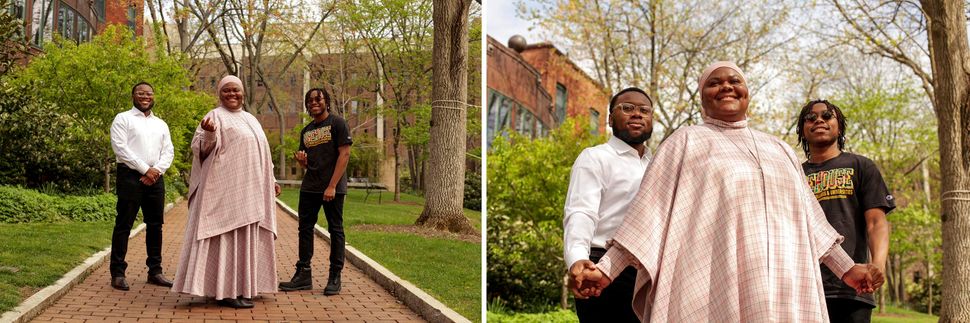
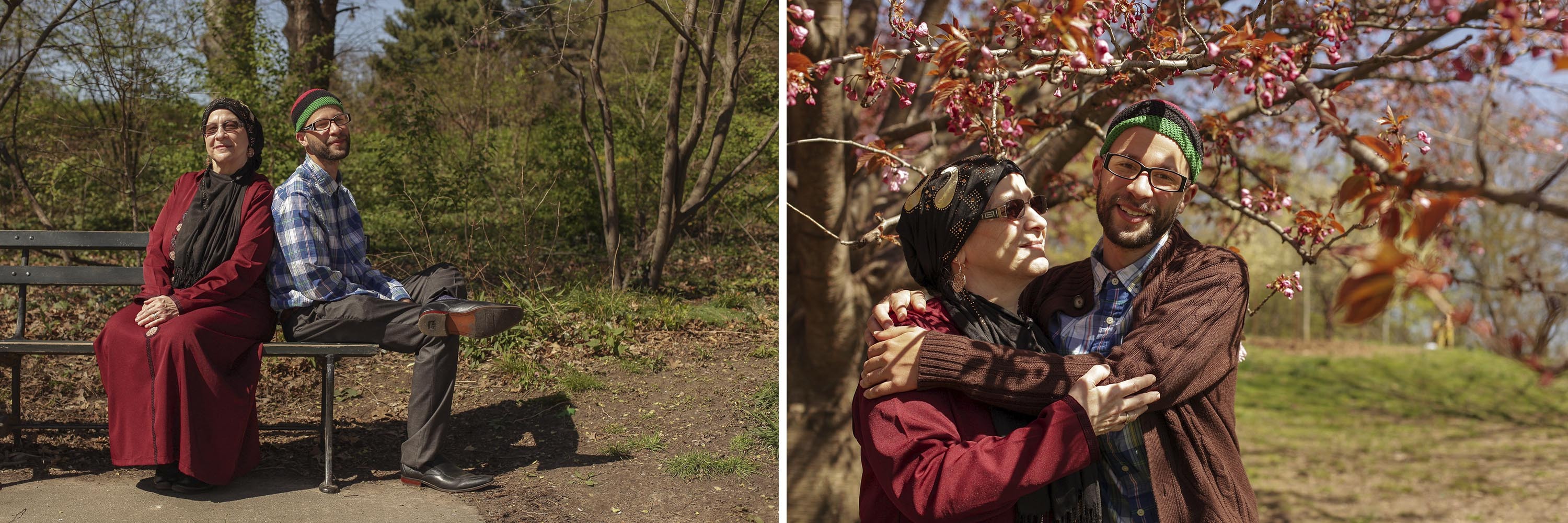
Tamara Redfern
Sons: Yaseen Ellison and Mujahid Ellison
Laylah Amatullah Barrayn
My mother has always been a source of light in my life. Across time and space – from my earliest memories in the US to years later and continents away – this has rung true. The continuum of joy and love surrounding my mother could not be summarised by a discrete moment. How would I describe my mother, who first showed me the magic and vibrancy of life? Who taught me firm confidence in my ability to grow, adapt, achieve and inspire?
I realise I don’t have to isolate any single experience to highlight who she is when everyone who encounters her is liberated by her grace and kindness, and when all spaces she walks through are automatically elevated by her presence. It is no wonder Allah says heaven lies at the feet of the mothers. I love you, Mom. – Yaseen
When I think of my mother, my thoughts often associate her with the moon. Her radiant, smiling face is akin to the light of the moon on a clear night sky. Her sound judgment and listening ear have served as a therapy to the many problems I’ve come to her with over the years. Her belief and willingness to lend a helping hand to me, unwavering, in times when I felt all was lost. Time after time, failure after failure, my mother has always been by my side. The best person to have around when sharing good news, as her pure, bona fide joy for you can be experienced by anyone who has interacted with her. The funny thing is my mother has taught me virtually everything I need to survive and thrive on my own, but hates it when I’m not around. There’s no better feeling than being capable of being alone but still having someone who never wants you to be alone. She’s my light and my guidance; my mother is my moon. I love you, Mom. – Mujahid
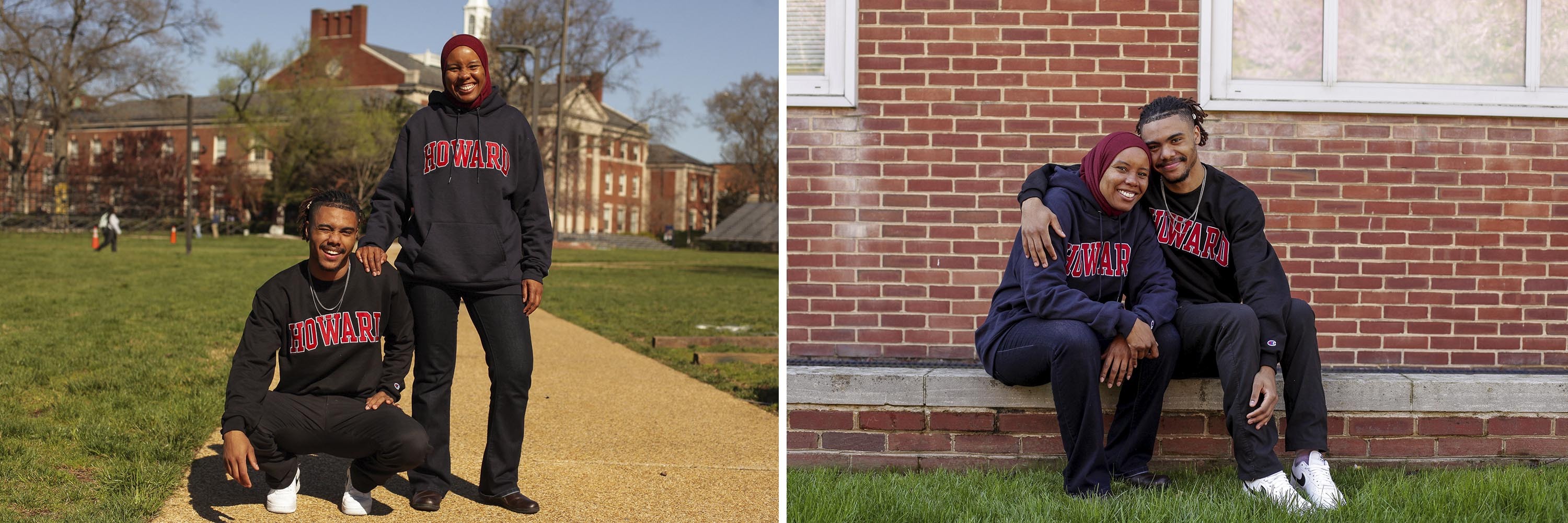
Aisha Hassan
Son: Bilal Hassan
Laylah Amatullah Barrayn
Ummi is very special to me; she means the world to me. She is my friend, travel buddy and confidant. I love being around her. She raised me into the young man that I am today. She is generous, caring, loving and not afraid to speak her mind. She was literally my first teacher. I was homeschooled from kindergarten to sixth grade by her and my father, who has since passed away. Back then, we didn’t have all of the home-schooling resources that exist today. Now, homeschooling is this big thing with programmes that you can do online. She created an amazing curriculum for us. She was extremely resourceful in making sure that we had an optimal learning experience. We did so much with very little. We had so much fun on our extended learning library trips. She is a genius. I could never repay her for how much she has poured into me. – Bilal
Jamilah Rashid
Advertisement
Son: Sulaiman Rashid
Laylah Amatullah Barrayn
My mother is a force of nature. If she wants to get something done, it’s getting done. I think that’s been pretty evident in the course of her journey. My siblings and I have different career paths, but we are all grounded in the desire to create change, and that stems from my mom’s passion to help and to serve others and to aid in the betterment of the world. I love her because she gave that to me. I can’t describe all the ways and reasons why I love her. As I grow into a man, I hope that my need for her doesn’t wane or fade. When I was younger, I needed her to read me bedtime stories, and what I need from her now is guidance in selecting a companion and partner. She did a really great job, and I’d be very blessed to find someone like her. I’m grateful to her every single day for who she is as a mother, wife and a person. – Sulaiman
Adama Delphine Fawundu
Sons: Amal Buford, Kofi Buford and Che Buford (not pictured)
Laylah Amatullah Barrayn
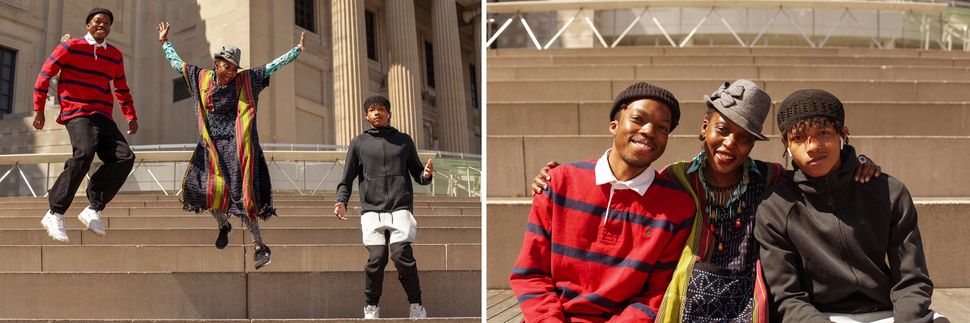
My mom set the standard and laid the foundation. She’s always been so driven and always accomplishes what she sets her mind to. There are so many roles that a mother can fulfil: a provider, a protector, a friend, an inspiration. She does it all. Some of my most fond memories are of us getting up really early and riding the subway to school. Even though it was the crowded subway, it felt like just us; it was so warm. We would have some of the best conversations. We would talk about anything and everything. We would read together; we would do math problems together. I love thinking about those times. It makes me nostalgic. You don’t realise how important that is, and I don’t ever want to take that for granted. It’s never been a question as to whether my brothers and I were her priority. She would drop us off and then have to go work her own job. It’s a job within a job. I’m older and I live on my own; I’m independent, but my mother is still my biggest inspiration. – Amal
My mother introduced me to so much. The knowledge and experiences that she imparted on me shattered the limitations that would otherwise be present in my life. It’s the reason why my creativity flourishes. We’ve traveled together. She took me to Sierra Leone, New Orleans, Phoenix, so many places. When we travel, we have fun, but we also learn about the land, the monuments, the historical connections. Our travels showed me the beauty of different cultures and that there are many ways of living. I love my mother. She always supported me. – Kofi
Karen D. Taylor
Sons: Chenzira Taylor Lewis and Siyaka Taylor Lewis
Laylah Amatullah Barrayn
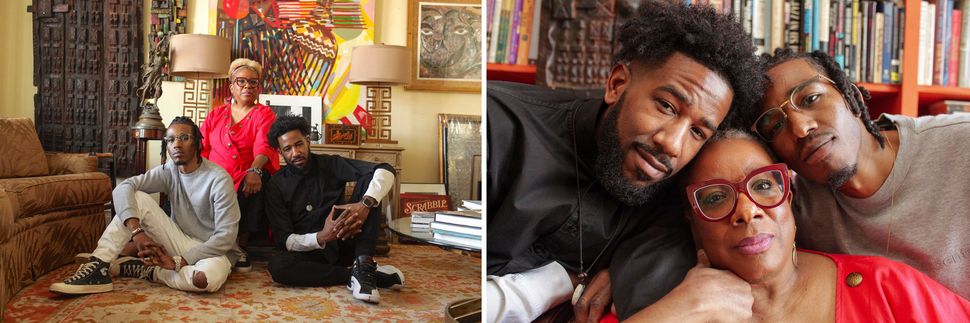
I have always been enamoured by my mother’s unadulterated focus and ability to create as an artist. It’s always helped me to see her not only as a mum, but also as an artist and creative in her own right. And it’s been inspiring to see her flourish throughout my life in her different creative identities. She always encouraged my autonomy and inquisitiveness and aided my creative spirit. Her determination demonstrated that my dreams and creative endeavours are attainable. ― Chenzira
I see my mother as a community pillar, a preservationist of Blackness and Black culture and Black excellence. She is a preserver of the relic, an educator, a nurturer, a policer of integrity. I love the uniqueness of who she is, her quirks, her silliness, her strength and intelligence. She is very New York to the core; she is an intellectual, a scholar with the grit of the jazz nightlife scene. Most definitely a music snob, jazz and blues head, creatively impulsive, loving, laid back and full of big laughs. At the core, she is serene. She is literally the perfect yin and yang of creativity and strong love. – Siyaka
On January 22, 1973, the US Supreme Court affirmed in a 7-2 decision the legality of women’s right to have an abortion under the 14th Amendment.
Today, about one in four pregnancy-capable people in the US have had an abortion, and the risk of complications from an in-clinic procedure is extremely low. But before it was guaranteed as a constitutional right, seeking an abortion was a harrowing, potentially life-threatening endeavour.
Advertisement
While some women saved up the cash and sometimes travelled hundreds of miles to find qualified medical providers willing to risk their livelihood by operating on patients, others settled for providers lacking the qualifications and skills to perform induced abortions. And even more desperate people attempted their own abortions.
The outcome of these back-alley procedures or at-home coat-hanger abortions was often devastating, leading to maternal death or lifelong injury. (Complications from unsafe abortions include infection, incomplete abortions, haemorrhaging, uterine perforation and damage to the genital tract or internal organs, according to the World Health Organisation.)
Advertisement
Because these stories were so traumatic – and because the stigma surrounding abortion was even greater in those pre-Roe v. Wade years – many women remained silent about their experiences.
Now, as the US Supreme Court seems poised to overturn the Roe v. Wade decision, it’s worth revisiting their stories to understand what abortion was like in the decades before it was legalised.
Advertisement
HuffPost US recently spoke to eight people who shared experiences of relatives – great-grandmas, grandmas, mothers and aunts – who sought abortions in pre-Roe v. Wade America. Many were already mothers, struggling to conceptualise raising one more child in poverty or, in some cases, with an abusive spouse.
In one story that differs from the rest, a reader shares how her great-grandma, the wife of a well-to-do dentist, was able to obtain a safe abortion in a doctor’s office with little fuss; the story illustrates how white, middle-class and upper-class women have always had an easier time accessing safer abortion options. (As many have noted, women of colour will be disproportionately affected if Roe v. Wade is overturned.)
Below, read all eight stories, which have been edited lightly for clarity, style and length.
“My maternal grandparents married in 1934.By the time my mother was born, it was clear my grandpa was a monster. Violent and cruel, he beat my grandma with a metal lunchbox. When mom was just a few months old, he threw her against a wall. My grandmother fled.
Advertisement
She discovered she was pregnant again. To induce an abortion, she drank a bottle of Lysol. You can Google ‘Lysol abortion’ and see ads from that time that suggested a woman could use Lysol to ‘correct your mistake.’ The ads are quite chilling, their meaning vague and without instructions.
Was reading the Dec 2019 edition of The Atlantic. Learned that Lysol was marketed as a “feminine hygiene” product and often used by women seeking abortions when they were illegal in the US.
It took my grandma 29 hours to die in her parent’s home; they were helpless to end the agony. Living in a logging village in winter, there was no hospital or way to travel to the city.
My mother always felt responsible for her mother’s so-called ‘suicide,’ as children do. Doing genealogy research, I uncovered the full story when my mother was in her late 60s, but her life was already written and the truth brought no comfort. I sometimes think I should never have done the research. There are four generations impacted by this one attempted abortion. We can never really know how lives would be different if she had lived. But I do know my mother’s life was forged by that event, she was an orphan, hidden from her father, never knowing why she’d been abandoned.” – Chuck M., 62, from Washington state
“My mother was a 16-year-old in 1970when she became pregnant as a result of sexual assault. She was living with my grandparents in Southern California, and abortion was not legal at that time. My grandparents were not in a position to get over the border into Mexico to have the procedure done, and they didn’t have access to a safe place to have the procedure done, either. Rather than risking my mother in a back-alley abortion, my grandmother assisted my mother in inducing a miscarriage. My grandmother had my mother sit in steaming hot baths for hours. My mother ingested medications that were considered dangerous to a fetus. They did everything short of physically harming my mother, though my mother did tell me that she was so desperate to end the pregnancy that she considered throwing herself off a high platform or down the stairs.
They managed to successfully induce a miscarriage, and my mother was taken to the local hospital to deal with the effects of the miscarriage and for a dilation and curettage. That worked, but her young body and mental health were not OK. Though my grandmother’s and mother’s intentions were to do something safer than a back-alley abortion, my mother was still at risk of potential harm from the various medications she took. And the foetus would also have been at risk for birth defects and other issues if the medications had not succeeded in a successful miscarriage. It was still dangerous.
My mother told me once that Roe was the single most important law that passed in her lifetime. That she was relieved that other women and people with a uterus would not have to suffer the same circumstances she did. If she were alive today, she would be absolutely shattered.” – Sara from New York
“My aunt Judith was just 17 in 1964 when she became pregnant after being raped on a study date at a so-called friend’s house. She was horrified to find out she was pregnant; she was on her way to college in the fall, and a baby wasn’t in her plans yet. Her doctor suggested a girls home out of town where she could stay until the baby was born and then give it up for adoption; it was her only choice since abortion was illegal.
Judith had tried all the old wives’ tales, jumping backward a dozen times at dusk and even drinking a tea that made her deathly ill just to lose the pregnancy naturally, but nothing worked. A friend of hers, Arbie, who was two years older, had been in Judith’s shoes and had taken care of her ‘dilemma’ herself.
In that summer of 1964, Judith chose to use a metal coat hanger, thinking it would be over quickly and no one would ever know. Her end result was far more than she had ever anticipated, with excessive bleeding and infection that led to a partial hysterectomy and the inability to ever carry a child. She spent nearly a month in the hospital. Her mother found out and never looked at her the same, although she did keep [Judith’s abortion attempt] from Judith’s father, knowing he would have kicked her out and pulled her college tuition. The family was hush-hush about everything, given the era everything took place.
Judith went on to graduate college top of her class to become the first female doctor of psychology in the family. From the outside looking in, her life was perfect: the house, her own office, nice car, all the material things one could ever hope to have, but she had developed a serious drinking problem and her life behind closed doors was, as she once said, ‘exactly what you’d think hell on earth would be.’
Advertisement
I was born in ’72, her only niece at the time, and she doted over me constantly every chance she had. I never suspected anything was ever wrong, although I did always wonder why Auntie Judy had such sad eyes; it wasn’t until puberty hit for me that she warned me of the dangers of having ‘that time’ and told me her story. She explained there were no real options in ’64 but said that because of Roe v. Wade in ’73, I would have more options than she had ever had.
Her desire to be able to carry a child, to be the mother she had always dreamed of, haunted her every waking hour and her dreams, and she was never able to get away from it. In 1984, just a week shy of her 37th birthday, my Auntie Judy hung herself in her attic; the pain and anguish had finally won the battle. Her note was a short novel, telling her story. I was only 12 and was told I wasn’t old enough to read it or understand it, but I didn’t listen. I sneaked and read it, and now I can remember every word, and her pain, longing and anger still haunt me to this very day.” – AJ, 50, from Louisiana
Jared Milrad/Canva
“Like most kids raised by a single mother, I’ve always thought of my mom, Jan, as courageous, resilient and strong. Growing up, she commuted nearly two hours each day ― every day ― to work a low-paying job as a secretary so that my brother and I could have a better future. Despite all that she went through, my mom never gave up and ensured that my brother and I could get the best education and have more opportunities than she did.
But it wasn’t until I was in my 20s that I realised how truly incredible my mom is. One day, my mom shared that she was around my age when she had two abortions. This was 1968-69, when abortion was still illegal in the U.S. and my mom was 26 or 27 years old.
My mom told me that she had her first abortion during this time while dating a much older man. The pregnancy was very unexpected, and because my mom was struggling to make ends meet and didn’t have much support at all, she made the wrenching decision to abort the pregnancy. Because abortion was illegal in the States, the man found a doctor for her in Puerto Rico and agreed to pay for the procedure, so my mom went with my grandma to have it done. They traveled to San Juan and then traveled a bit outside of the city. My mom expected the procedure to be done with anaesthesia, but – horrifyingly – it wasn’t.
‘The abortion was done by a butcher and my mother heard me screaming,’ my mom recalled. ‘I didn’t know that they weren’t going to give me anaesthesia. It lasted for only 20 or 30 minutes, but it seemed like a lifetime. When we got back to the hotel in San Juan, I was in such pain. Then, when I was back in New York City in A&P Grocery a few days later, I noticed that I was bleeding ― haemorrhaging.’
My grandma immediately called a gynaecologist and arranged to have my mom treated in the ER at Lenox Hill Hospital, where they didn’t tell the doctors that the bleeding was caused by an abortion out of fear because the procedure was still illegal. My mom was lucky to survive.” – Jared Milrad, 38
“Today, the majority of women who seek a legal abortion are already mothers. Let me share a pre-Roe horror story about my Italian, Catholic grandmother Mary, whom I never had the blessing to know.
Apparently, on her deathbed in 1943, Mary asked her sister-in-law Florence, who was childless, to take care of her only daughter, but the shameful secret had to be kept. My mom was forbidden to ask questions about her mother or her death. She learned the truth when she was in her 50s from me after years of research.
I was in my 20s when I first began to put together the pieces of a story that just didn’t make sense: a 34-year-old mother of three young children who is hemorrhaging but refuses to go to the hospital. Even the death certificate corroborates the secret. Cause of death: carcinoma of the cervix. But cervical cancer does not generally cause women to bleed to death.
Advertisement
Then, one day in the mid-’70s, we were talking about the Roe decision, and Florence, the woman I knew as my grandmother, let it slip that she had to lend $250 (an enormity in 1943) to one of her brothers because someone needed an abortion. I was stunned; I finally connected the dots. In a typically large Italian Catholic family, Florence had many sisters but only two brothers. One of them, it turns out, was my biological grandfather.
Grandma Mary already had three children she loved: two boys and the middle child, my mom Nancy. With an unemployed husband, a fourth child would plunge the family into poverty.
So the decision was not made lightly, but something went horribly wrong. Mary was just 34 years old and was more afraid of the law (and the judgment of the Catholic church) than she was of dying and leaving her children motherless.” – Lori Bores from New York
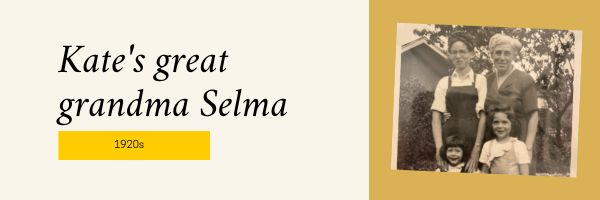
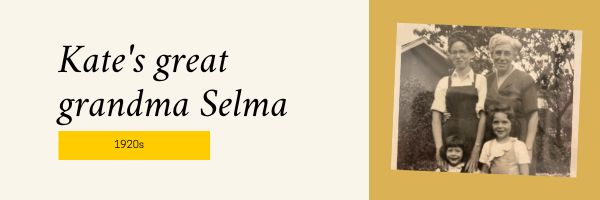
“Great-Grandma Selma Rosenthal (born 1878) was a career woman.Graduating from college in 1901, she was homely and smart, two things that did not make her particularly attractive to suitors of the era. Knowing this, she focused on having a successful career. She was by all accounts very funny, with a wonderful voice and an active circle of friends. She had no expectation that marriage or family were in the cards for her, and she had made peace with that idea.
That all changed when she met Sidney Rauh, a dentist from Cincinnati from a well-off family. It was the 1910s, and she was well into her 30s. Sidney was equally unattractive and clever, and a confirmed bachelor. He had no interest in marrying a girl for her looks but wanted to find someone he could love for her mind. When they met, it was love at first sight, and given their advanced ages, they decided to marry as soon as possible.
Selma quickly became pregnant, only to miscarry the first Christmas they spent together as a married couple. Two daughters quickly followed in 1916 and 1919, but Selma was terribly sick with her second pregnancy and she barely survived childbirth. Her doctor told her, in no uncertain terms, that if she was to get pregnant again and attempt to see it to term, she would die. She promised she would be careful.
A few years later, when she realised she was pregnant, she went to her doctor. The doctor advised her that she had to have an abortion. Sometime later, the doctor performed an abortion in his office, no fuss, no muss. But Selma was a well-off wife of a successful dentist with status in the community. It never occurred to her that what she was doing was illegal or in any way wrong. It was a decision between her, her doctor, and Sidney, and she did what was best for her family and health.
Selma died in 1948 at the age of 62 of a heart attack, having spent time not just with her daughters, but also with her granddaughters, who were five and three at the time of her death.
Great-Grandma was a suffragette and strived for women’s rights. Women’s rights and bodily autonomy were key issues in my family, but I suspect the story would not have been noteworthy had it not been for the fact that abortion became the issue it was later on. My mother and grandmother shared with me how hard things like birth control had been to get in their era, and my mother shared with me the fact that she got a (legal) abortion for family planning reasons. For us, it was just part of normal conversation.” – Kate, 50, from New York
Stephanie Voltolin/Canva
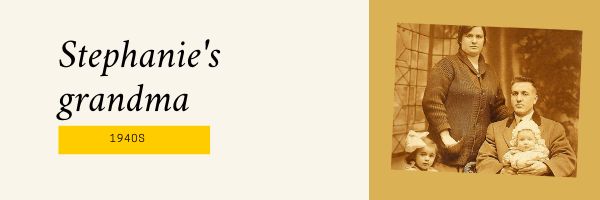
“I was born in the 1960s and grew up in a very conservative Catholic family. Nonetheless, my traditional housewife mother was ardently pro-choice. She even took one of my friends to get an abortion in the 1980s because my friend couldn’t tell her family she was pregnant.
Advertisement
Shortly after my paternal grandmother died, when I was a college freshman, my mother frankly told me during a conversation about choice, ‘Your grandmother had a back-alley abortion and almost bled to death.’
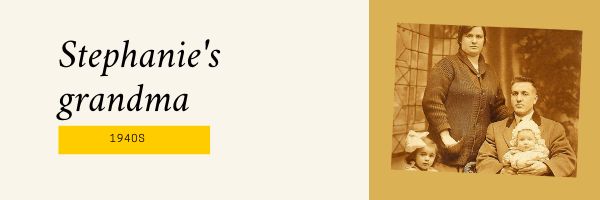
My grandmother found herself – in the early 1940s before birth control or abortion were legal – pregnant and divorced from her second husband, who turned out to be horribly abusive. She decided to leave before he began abusing her three children from her first marriage. Like most women of her day, she had no college education or career to support herself and her children. And, like most women who get abortions, she could barely support the children she had. She ended up having to go live with her parents, who were Italian immigrants.
Faced with being twice divorced and pregnant, my grandmother sought an abortion. Because they were illegal, she had to trust a back-alley ‘doctor,’ who punctured her uterus in the process. She left the procedure, collapsed in the street from the blood loss, and had to be taken to the hospital. An emergency hysterectomy saved her life.
She was an amazing mother and grandmother, and although she died almost 40 years ago, I still become emotional when I think about what a loss I would have suffered had she died from that botched abortion.
The rest of the family never knew. I am telling her story now in the same way that we disclosed our sexual trauma during the Me Too movement to educate others. Legal and safe abortion is critical to women’s reproductive rights as American citizens, and we cannot allow them to expire.” – Stephanie Voltolin
“My great-grandmother died from a botched, illegal abortion in the mid-1930s in Chicago, leaving my grandmother (2 years old) and her sister (4 years old) without a mother. When my great-grandfather remarried, his new wife already had kids of her own and didn’t want to take care of two more. My grandmother and her sister were thrown out of the house and bounced around to different aunts and uncles.
For much of my grandmother’s life, she was told that her mother died of a pregnancy complication due to an ectopic pregnancy. Later, when my grandma was a teenager, her aunt told her the truth: that her mother had died from a botched, illegal abortion.
My grandmother shared her story with me in 2012 when I was 25. We were having an early lunch. I remember she asked me if I wanted a glass of wine, which was odd for her in the middle of the day. We were talking about something else entirely and she said, ‘my mother died of a botched, illegal abortion,’ almost out of the blue, and her story just unfurled from there.
I honestly didn’t think too much about what my grandmother shared. I didn’t think her story was shocking or novel, maybe because abortion had been legal in all 50 states for my whole life. I assumed everyone else in our family knew, so I didn’t think to say anything.
A couple years later, I was catching up with my parents and one of them said, ‘Did you know Great-Grandma Sally died from a botched illegal abortion?’ That’s when I realised my grandma was nervous when she shared her mother’s cause of death with me. She was holding on to this family history and likely carrying with her the shame and stigma or the ‘don’t talk about it’ attitude of her family. It was an ‘aha’ moment for me – a real understanding that likely everyone has a family abortion story, whether they know it or not.
Advertisement
Now our family has a deep understanding that when abortion is legal, abortion is safe. And we know in the decades before Roe v. Wade was decided, people like my great-grandmother were desperate to receive the care they needed.” – Amy Handler, 35, from Oregon
For the third year in a row, Olivia remains the number one name for girls in the US after overtaking Emma in 2019. Meanwhile, Liam holds steady as the most popular name for boys for the fifth straight year.
The SSA compiles the annual list based on the names parents in the US gave their babies born in the previous year. Although the top name rankings usually don’t shift dramatically from year to year, there were a few interesting changes from 2020 to 2021.
James surpassed William for fourth spot. The only other change on the boys top 10 list is that Theodore made the ranking for the first time, coming in at number 10 and bumping Alexander down to number 13.
As for the girls, all of the names in the top 10 are the same ones from 2020, but with a few changes in the order. Charlotte is now the third most popular name choice for girls, continuing a steady rise that began in the 1990s. Amelia also jumped up the list from number six to number four.
Without further ado, here are the top 10 girls’ and boys’ names of 2021 as chosen by US parents.
Since 1973, Roe v. Wade has protected the right of all Americans to access safe and legal abortions. But a leaked document published by Politico on Monday shows that the federal protections conferred by Roe may be struck down by the US Supreme Court this summer.
If Roe falls, the legality of abortion will be determined by each state. And though a handful of states are passing legislation that will protect the right to get an abortion, many others — 26 to be exact — are expected to quickly ban or restrict abortions.
Advertisement
If this happens, millions of people in the US will no longer be able to access safe abortion care within their communities. They’ll have to wait longer and travel farther to access help. The impact on people’s mental and physical health – along with their finances, families and livelihoods – will be astronomical.
Despite the misinformation that swirls around the internet (and beyond), abortions are extremely safe procedures. They’re also incredible common – about one in four women will have an abortion by the time they are 45 – and, in many cases, they are life-saving.
Advertisement
“It is a common procedure, it is very safe, and I can’t emphasise that enough. This draft ruling is egregious, it is a basically a war against women,” Dr. Melissa Simon, a Northwestern Medicine OB/GYN, tells HuffPost.
Here’s what people get wrong about abortion
Advertisement
One of the most common misconceptions about abortions is that the procedure is dangerous or detrimental to one’s health.
A report from 2018 examined the safety of various methods of abortion – medication, aspiration, dilation and evacuation, and induction – and concluded that abortions are safe and effective and that complications from all types of abortions are rare.
It’s the barriers and restrictions that legislators sign to prevent patients from easily and swiftly accessing abortion that jeopardise their health. It’s well known that delaying abortion care increases the risk of complications.
Some US states require doctors to tell their patients that there’s a link between breast cancer and abortion – despite the fact that many high-quality studies have put this question to rest, according to Dr. Jennifer Kerns, an associate professor in the department of obstetrics, gynaecology and reproductive sciences at the University of California, San Francisco.
Advertisement
Others fear that abortions cause infertility, but research hasn’t found a link between abortions and the ability to conceive in the future. There’s also no evidence that abortions increase the risk of complications (ie. preterm birth or low birth weight delivery) in the event of a future pregnancy.
Another long-running mistruth is that abortions increase the risk of developing mental health issues. “There is a huge body of work demonstrating that abortion in and of itself does not cause mental health problems,” Kerns says, noting that people often feel relief after getting an abortion.
What we do know is that unwanted pregnancies can cause significant maternal depression and parenting stress. And those mental health issues don’t clear up with time; they are often long-lasting, afflicting the women who carried the unwanted pregnancies to term well into their 30s, 40s and 50s.
“Even in the setting of using contraception and safe-sex practices, having the option of an abortion is critical to the life and both physical and mental health of the woman.”
– Melissa Simon
Many people falsely believe pregnancy is easy to avoid, but it’s not that straightforward. Kerns sees many people, from all walks of life and phases of reproductive health, seeking an abortion. Contraception – though invaluable – is not foolproof. Birth control is not 100% effective; it can fail and lead to a pregnancy.
“Even in the setting of using contraception and safe-sex practices, having the option of an abortion is critical to the life and both physical and mental health of the woman,” Simon says.
Many anti-abortion bills have been labelled “heartbeat bills” because they ban abortions at the first sign of foetal cardiac activity. This nomenclature is wildly misleading – while primordial electrical activity can be detected around six weeks of pregnancy, this does not mean a foetus has a functioning heart. The heart, valves and vessels do not form until 16-18 weeks of pregnancy.
“Just having cardiac activity does not mean the foetus, if born at that moment, would be able to survive,” Simon says.
Restricting abortion impacts people’s health and livelihoods
Evidence shows that being denied an abortion has a devastating impact on one’s physical health, mental health and overall well-being.
The Turnaway Study, conducted by scientists at the University of California, San Francisco, found that women who carry an unwanted pregnancy to term have a four times greater chance of being below the US federal poverty level.
Advertisement
They’re also more likely to experience serious health complications, such as eclampsia and death, and to develop mental health issues, including anxiety, depression and suicidal ideation. They’re more likely to stick with an abusive partner; their life goals tend to take a back seat, and their families’ livelihoods suffer. Many go on to experience chronic pain.
“The health and welfare of the citizens of this country suffer – we see increased illness, we see increased poverty and we see increased death,” Kerns says.
“The health and welfare of the citizens of this country suffer — we see increased illness, we see increased poverty and we see increased death.”
– Jennifer Kerns
Restricting the right to an abortion does not mean the need for an abortion disappears. A recent study predicted that banning abortion will lead to a 21% increase in pregnancy-related deaths; that jumps to 33% among Black women.
Maternal mortality rates are at an all-time high. The US already has the highest maternal death rate among developed nations — and that crisis would only get worse without access to safe abortion.
“There are some women who get pregnant who could die if they continue with the pregnancy, and, therefore, an abortion is a life-saving procedure in those circumstances,” says Simon, adding that those circumstances are not rare. Abortions, in many cases, can save the life of the mother.
Here’s what the fall of Roe could mean for health care
Kerns said the leaked document demonstrates that the court is no longer a neutral group. “It really lays bare how out of touch their rulings are with people’s lives,” Kerns said.
Much of the language used in abortion restrictions and bans – like “abortionists” – really deeply divides people and shames those who get an abortion or provide an abortion.
Simon says the potential fall of Roe reflects a crisis in women’s health care, specifically when it comes to maternal health. The end of Roe would mark a war against women and people who can get pregnant, who, for the record, comprise over 50% of the US population, she adds.
Simon is exceedingly concerned about what will happen to the growing maternal death rate if Roe falls and safe abortion care becomes harder and harder to access.
Advertisement
“That is what I am very worried about in this country – that we are going to go even more in the wrong direction than we already are with respect to caring for over half of our population: women,” Simon says.
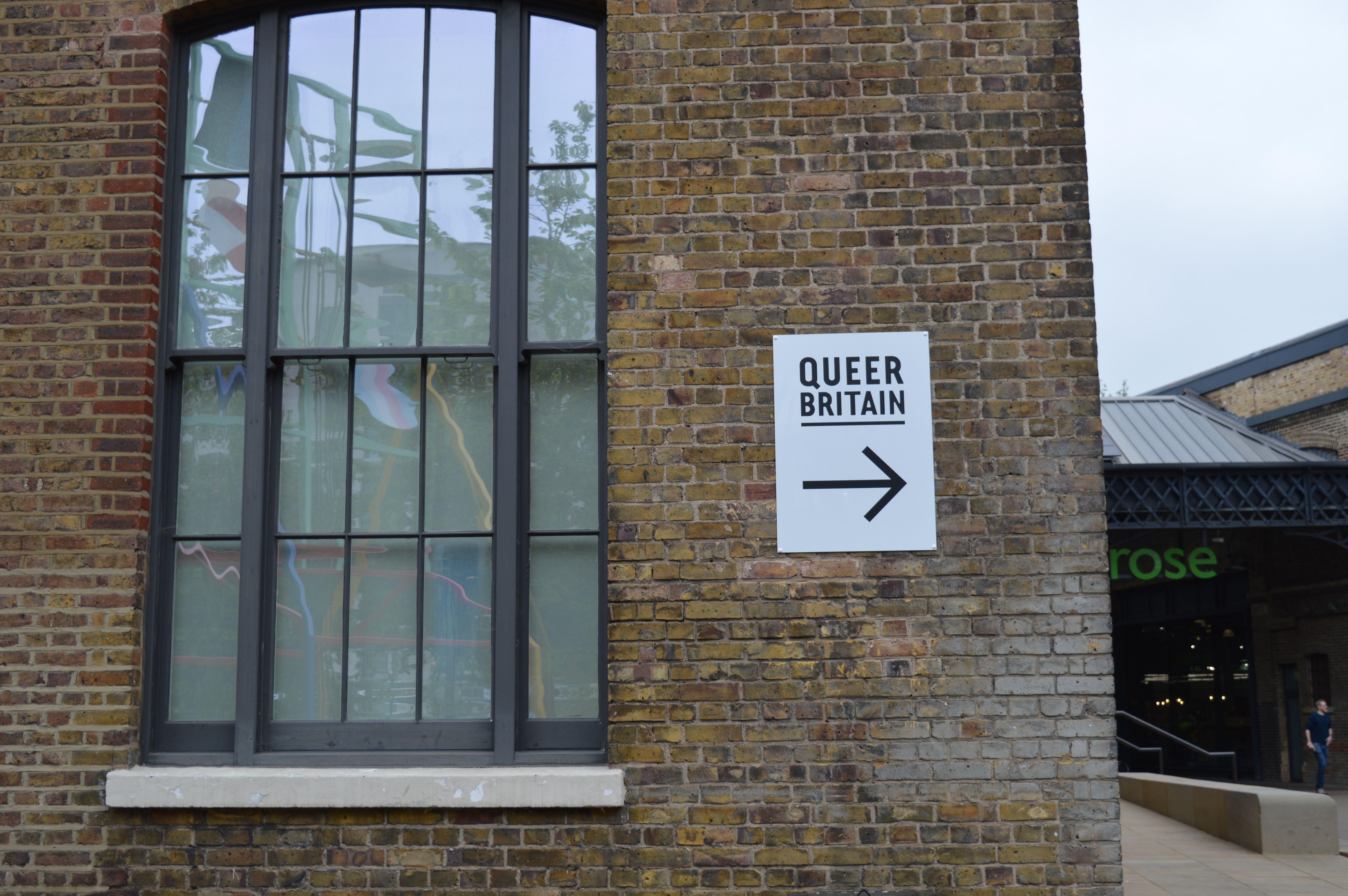
A few students from nearby Central Saint Martins chat on the steps of the Queer Britain Museum, which is tucked away on one side of Granary Square in King’s Cross, London, on the ground floor of a large 19th century building.
After years in the making, this is the UK’s first permanent, national LGBTQ+ museum – and it’s much needed. As the founders point out, queer people have impacted every part of culture, yet all too often their lives have been written in the margins of history books. This is a space for queer history to be “preserved, explored and celebrated”.
Advertisement
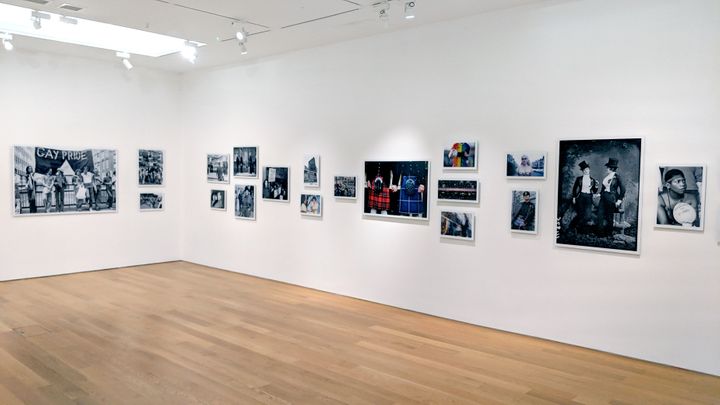
The museum itself is all on one floor, spread across three rooms, and opens with ‘Welcome to Queer Britain’ – a display showcasing artwork from the LGBTQ+ community alongside historical photographs.
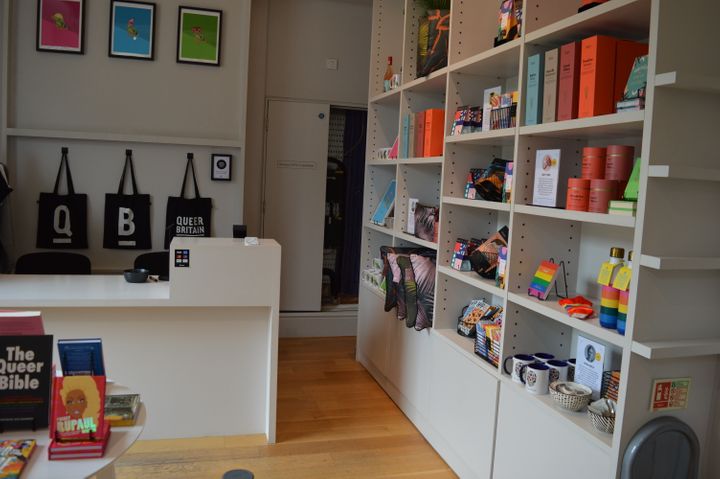
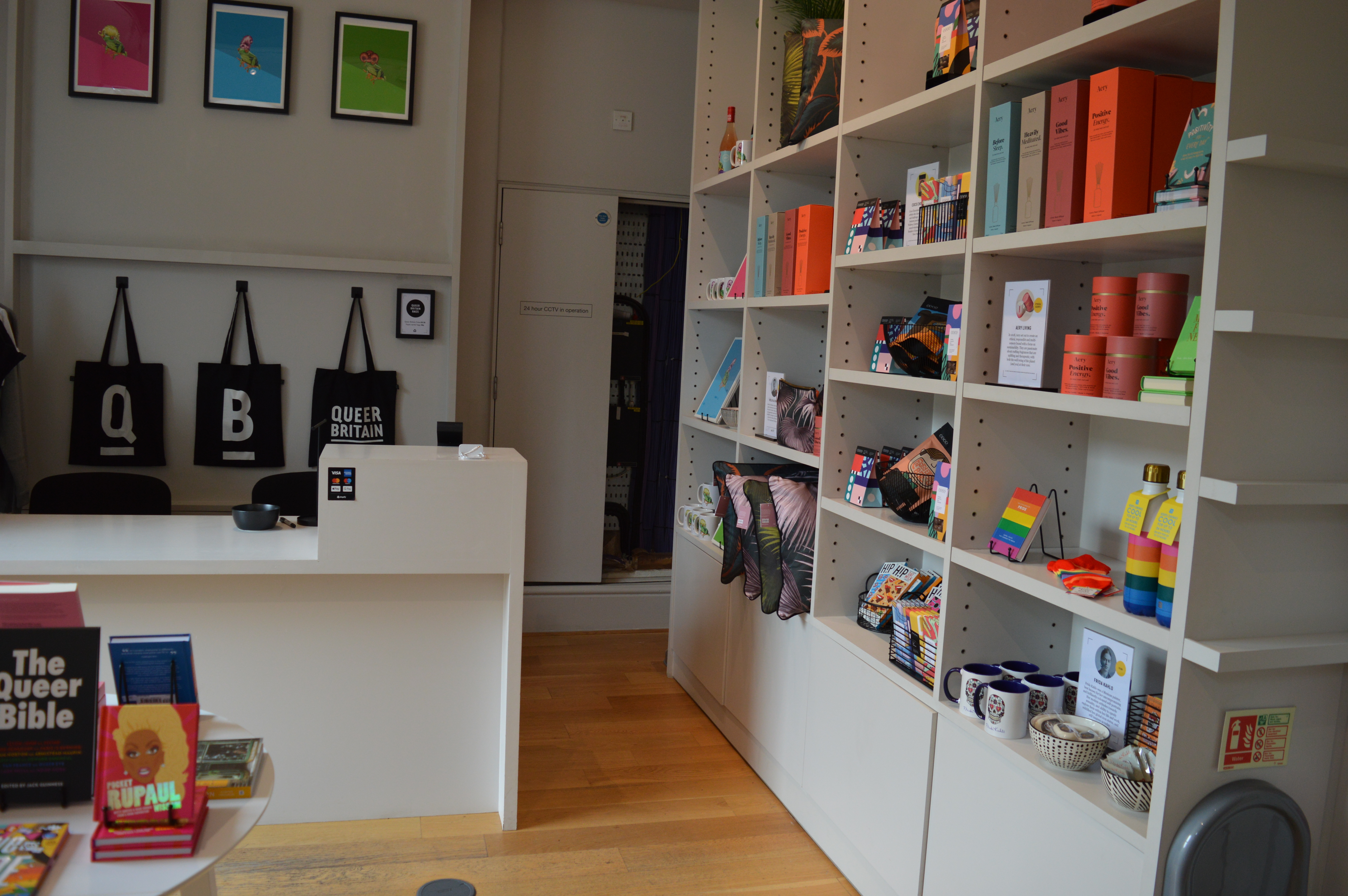
Once inside the step-free threshold, the gift shop to the left is most immediately obvious. Laden with colourful memorabilia, it’s got the usual staples: high-end chocolate, greetings cards and candles. But it’s clear that this is an LGBTQ+ space: a table of books curated by the Gay’s the Word bookshop sits in the centre, and there are plenty of rainbows – on badges, bottles and fridge magnets – plus Queer Britain’s own branded merchandise.
Advertisement
Ella Braidwood
The museum comes after the successes of multiple temporary exhibitions in this area. Earlier this year, the Barbican held its Out and About! installation, exploring LGBTQ+ history in London, while last year, Museums & Galleries Edinburgh launched an online exhibition celebrating young Scottish LGBTQ+ people. Queer Britain will also not be the last: in June, another long-term LGBTQ+ cultural space in London will open, Queercircle in Greenwich.
In fact, Queer’s Britain’s co-founder and director Joseph Galliano explains that it was while at another LGBTQ+ exhibition, the Tate Britain’s Queer British Art, that his vision for a permanent museum really solidified. (Though, he had first had the idea as far back as 2007, when he was editor of Gay Times.) Held in 2017, the exhibit marked the 50th anniversary of the partial decriminalisation of male homosexuality.
Advertisement
“I was struck by the fact that so much momentum had been built up around that anniversary within the museums sector,” says Galliano. He spotted an “opportunity to take that momentum, and broaden it” with his vision of a bricks-and-mortar museum truly reflective of the UK’s LGBTQ+ community, including “women’s stories, people of colour, [and] trans people”.
Ella Braidwood
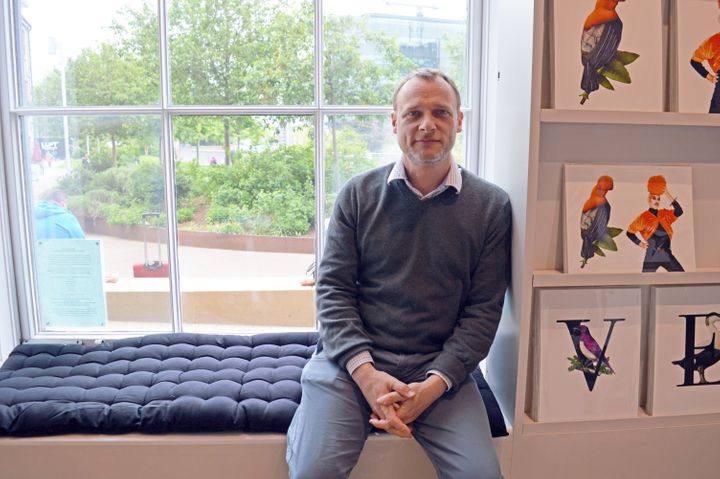
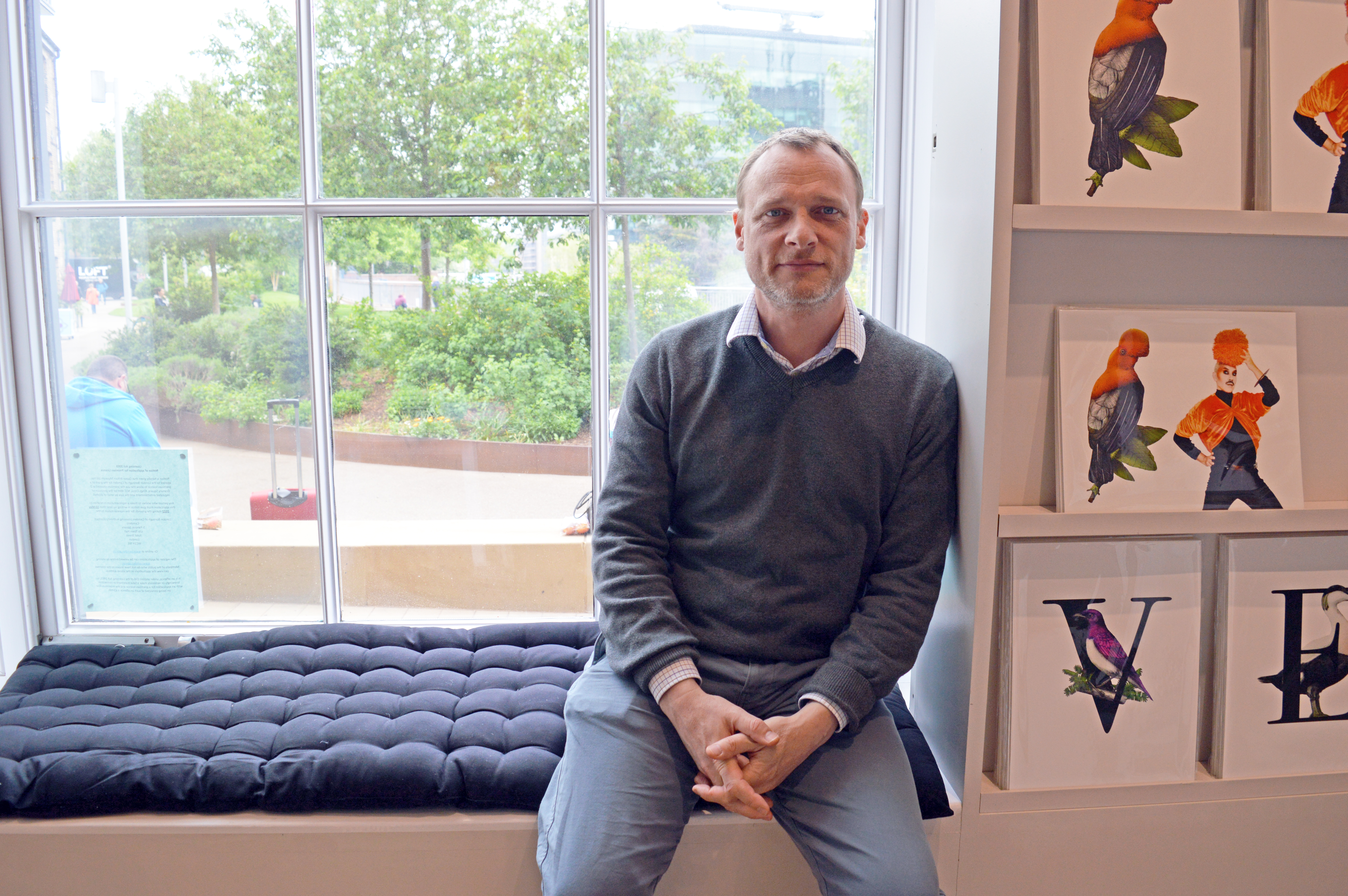
Museum co-founder Joseph Galliano.
With that, Galliano set about putting Queer Britain into action, which he co-founded with Ian Mehrtens alongside a diverse committee of trustees and advisors, including Stonewall co-founder Lisa Power, Trans Britain author Christine Burns, and gal-demfounder Liv Little.
“We made sure that the leadership structures are very diverse,” adds Galliano. Of his hopes for the museum, trustee Krishna Omkarsays in an email: “Our relationship with our past defines our present, and helps direct what is to come. Telling stories that have remained untold, and collating a collective memory of the past is crucial. Representation matters. Remembrance matters.”
In the first room, there are two large images: Sadie Lee’s domineering oil painting of cabaret artist David Hoyle, whose eyes, shrouded in bright make-up, fixate on the viewer, plus Paul Harfleet’s aptly-named Cock of the Rock, named after the South American bird.
Advertisement
The second and largest room is split into two sections, the first dedicated to the topic of “chosen family”, originally shown by Queer Britain as a pop-up in collaboration with Levi’s in 2019. For this, a series of bright images by four artists – Alia Romagnoli, Bex Day, Kuba Ryniewicz and Robert Taylor – show the diversity of the LGBTQ+ community, including people of colour and those of marginalised gender identities.
En Route Solutions Ltd
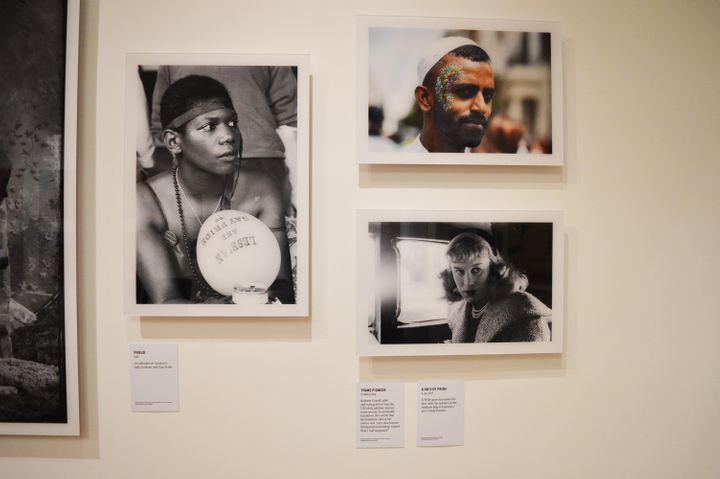
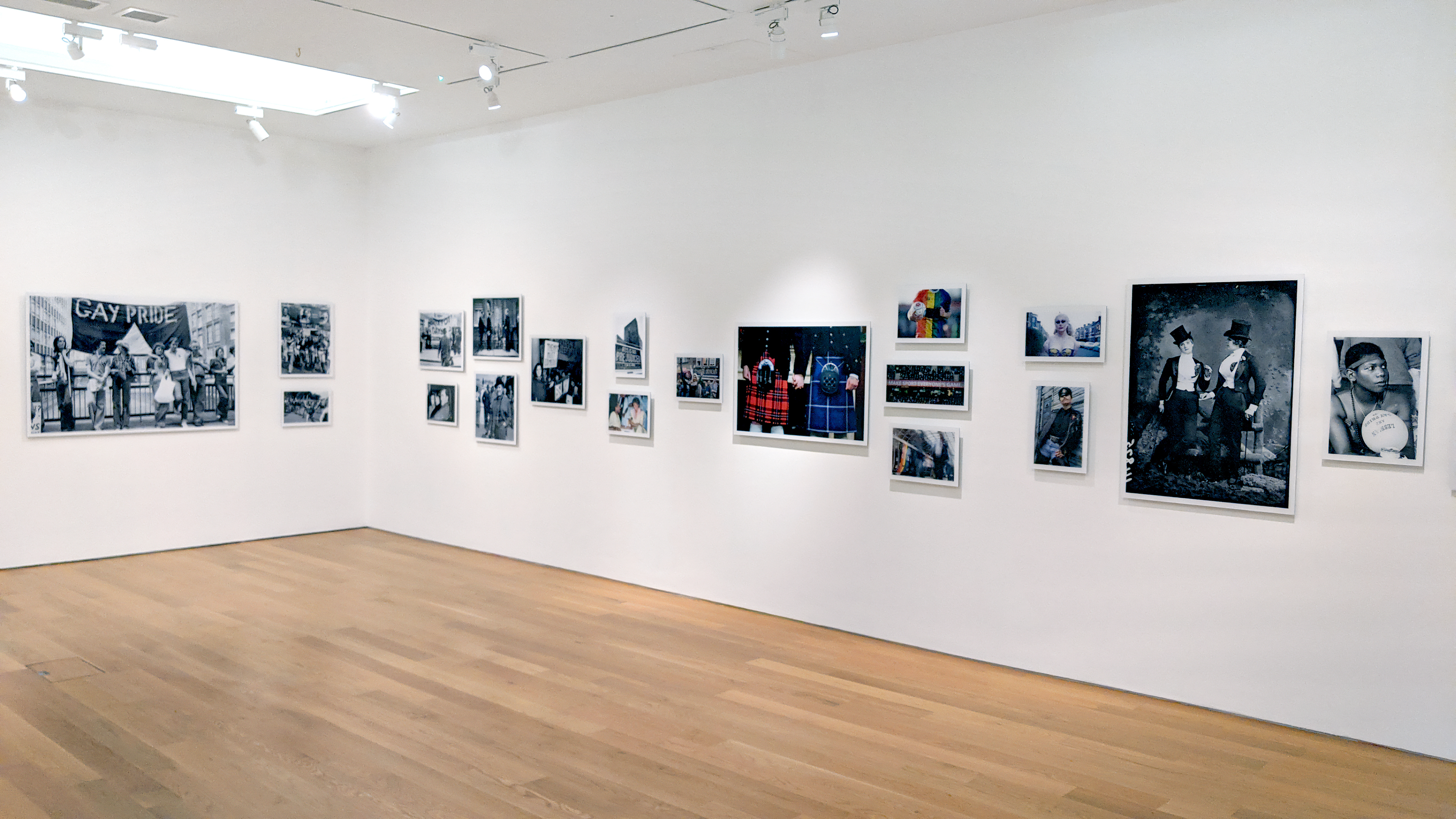
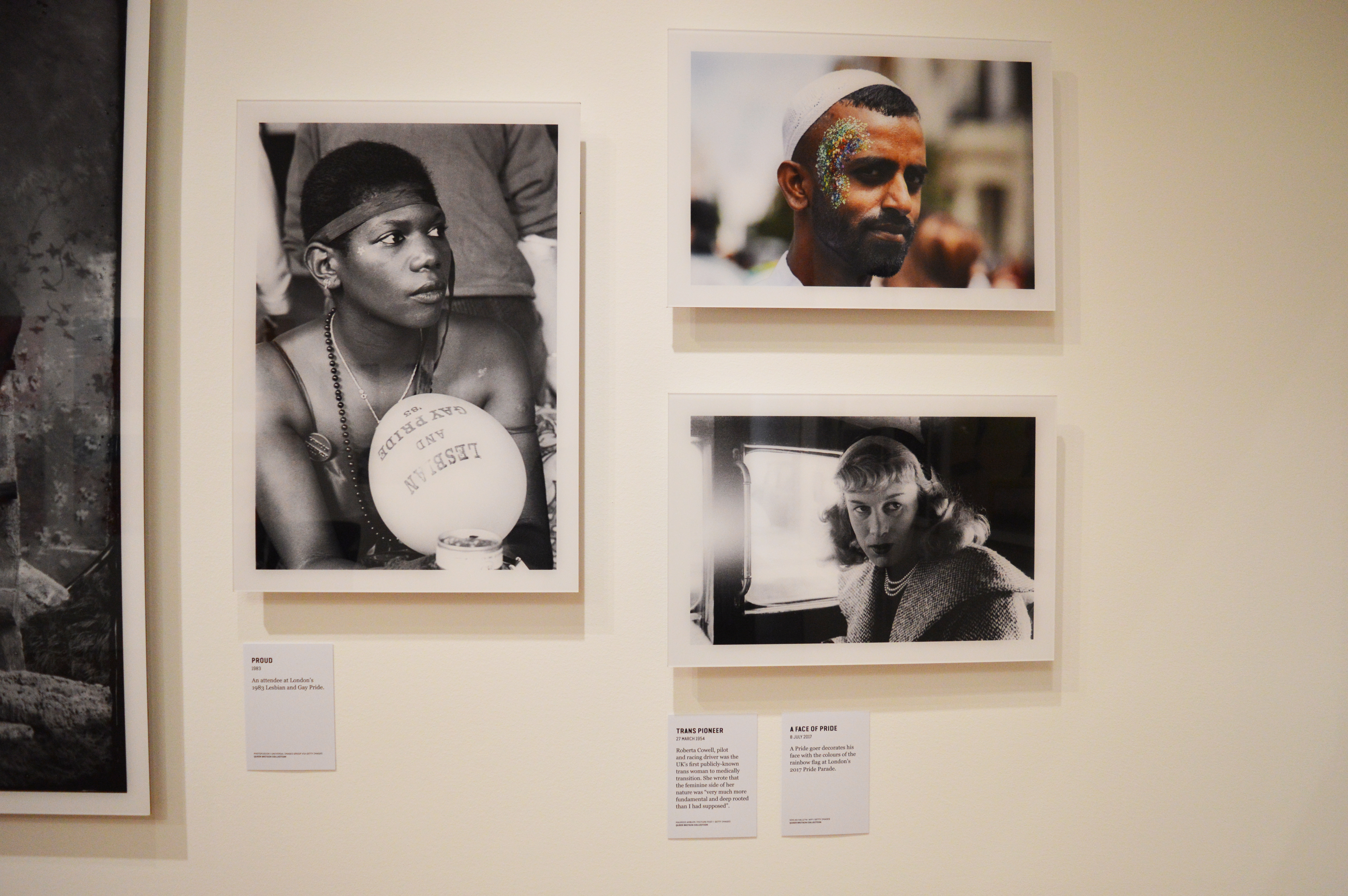
Also in this room are a series of wide-ranging historical photographs, dating as far back as the 1870s. These cover various milestones in the UK’s LGBTQ+ history, such as the introduction of Section 28 in 1988, which banned schools and local authorities from “promoting” homosexuality, and the legalisation of equal marriage from 2014 in England, Wales and Scotland (followed by Northern Ireland in 2020). Among the imagery are notable figures including Leo Abse, the MP behind the bill that partially decriminalised homosexuality in 1967; TV presenter Sandi Toksvig; and Margeurite Radclyffe Hall, who wrote the classic lesbian novel The Well of Loneliness.
The museum’s opening comes during a time of increased visibility for LGBTQ+ people, with millions tuning in to watch Netflix’s hit series Heartstopper. However, visibility and equality have not come hand-in-hand. Last December, it was reported that homophobic and transgender hate crimes soared in the summer of that year; in the five financial years up to 2021, anti-LGBTQ+ hate crimes rose annually, according to official Home Offices figures.
Ella Braidwood
The museum’s theme is generally jubilant and celebratory, though, with little on the harrowing parts of LGBTQ+ history. For instance, while the AIDS epidemic is briefly referenced, including with a photograph of Princess Diana comforting an HIV-positive man, the museum does not delve into the sheer tragedy of the thousands of gay and bisexual men whose lives were lost during this crisis. A placard highlights the accomplishments of Justin Fashanu, the first openly gay professional footballer – and Britain’s first black footballer to command a £1 million transfer fee – with no mention of his tragic early death, at the age of 37 by suicide.
For Galliano, it was a deliberate choice to focus on celebrating queer accomplishments, rather than the tragic parts. “There is stuff there that needs to be celebrated, rather than just always starting with the sad ending,” he explains. “That said we have to be telling hard stories and we have to be asking the hard questions.” Still, Galliano notes that displays may be adjusted depending on how they are received by the public.
Since being registered as a charity in 2018, Galliano explains how Queer Britain has come up against multiple challenges, most notably financially. “Funding was always a challenge from the start, [it] will always be a challenge,” he says. This is even more so given that entry to the museum is free, including for its exhibitions. “If we’re going to talk about inclusion, we need to talk about economic inclusion as well,” adds Galliano.
Ella Braidwood
The space, too, leased from the Art Fund, came up in January, which, says Galliano, was “a year earlier than we were expecting…but it was too good an opportunity to not run full tilt”, and so what is on display was pulled together quickly, in time for this Spring opening.
In July, Queer Britain will host its first exhibition, marking the 50th anniversary of the UK’s first pride parade. Though Galliano is tight-lipped about its content, he says this will consist of a “heritage items and community voices” which will also go towards “addressing” representation of all four nations that make up the UK.
The current final room includes portraits from award-winning photographer Allie Crewe, which celebrate the trans and non-binary communities, and two images – both arresting and beautiful – donated by Robert Taylor, who is also a trustee of the museum.
For Galliano, this museum is all about giving back to the queer community, alongside showing the richness – and diversity – of its history, not only to those who are LGBTQ+, but also to their heterosexual counterparts. “I want queer people to feel celebrated, and belonging, and lifted up,” he says, “and all their friends and families to recognise [where] their stories start and the importance of those.”
Advertisement
Queer Britain opens May 5 2022 and is located at 2 Granary Square, London, N1C 4BH and open Wednesday to Sunday from 12pm – 6pm.