If B cells are the munitions factories of the immune system, manufacturing antibodies to neutralize harmful pathogens, then the tiny biological structures known as germinal centers are its weapons-development facilities. Formed in response to infection and vaccination, these microscopic training grounds allow B cells to perfect the antibodies they deploy against specific viruses and bacteria.
Figuring out how germinal centers work is therefore crucial to understanding immunity and developing more effective vaccines. Now, a new study in Cell reveals why some germinal centers persist for months rather than weeks, providing insights that could inform future vaccine design.
Old bottle, new wine
Germinal centers form in the body’s lymphatic tissues shortly after vaccination or infection. Once inside a germinal center, B cells undergo rapid mutations and, through a process of natural selection, only B cells with antibodies that most effectively bind to their target antigens survive. These superior B cells then become either plasma cells, antibody factories that secrete copious amounts of antibodies into serum, or memory B cells, which patrol the body for signs of return of the pathogen they evolved to fight.
“The goal of the germinal center is to generate high-affinity plasma cells and memory B cells, that it then exports” says Renan V.H. de Carvalho, a postdoctoral fellow in the laboratory of Gabriel D. Victora at The Rockefeller University.
In mice, most germinal centers shut down after a few weeks, having accomplished their goal of producing high-affinity B cells. But those that form in response to certain respiratory infections, including the flu, can stay in business for more than six months, roughly a quarter of a mouse’s normal lifespan. De Carvalho and his colleagues wanted to understand why these germinal centers are so long-lived, and what precisely goes on inside them.
advertisement
For the study, the researchers first infected mice with influenza and SARS-CoV-2 viruses, waited for them to form germinal centers, and then sequenced the antibody genes of B cells harvested from those centers over the course of 24 weeks. Much to their surprise they found that, rather than continuously evolving at a steady clip, antibody optimization peaked after 12 weeks and then apparently regressed, even as the center remained active. This puzzling drop-off was due to the continuous introduction of unevolved “naïve” B cells into the germinal centers, researchers later found.
As weeks turned into months, a more complete picture began to form: the founder B cells that had initially seeded the long-lived germinal centers were being gradually replaced by naïve ones, so that only a tiny fraction of late germinal centers were made of the descendants of the B cells that started them.
Old-school vs new-school
These new recruits did not behave like the original B cells in the germinal center. Subsequent experiments showed that, while the naïve B cells also underwent evolution inside the germinal centers, they did not produce antibodies that could bind to flu or SARS-CoV2 antigens.
“We used to think of infection-induced germinal centers as a single reaction targeting antigens from a particular pathogen,” de Carvalho says. “Apparently it’s not, at least in the case of these long-lived germinal centers.”
But the few original B cells that remained on site were enough to produce efficient immunity against the initial pathogen. When the researchers re-exposed the mice to flu antigens 3 months after they were first infected — effectively mimicking a repeat infection or booster shot — they demonstrated that many of the memory B cells which began pumping out antibodies were descended from the few founder cells that lingered in germinal centers for many months, and not their naïve replacements.
“Even though they constitute a small fraction of the total number of cells later on, the founder cells that stay in the germinal center for a long time are still doing their job,” de Carvalho says. But just how well those founder B cells do their jobs, and whether naïve recruits cramp their style and reduce their efficacy, remains to be seen. Future studies from the Victora lab will address this question.
Meanwhile, the findings already have implications for our general understanding about how germinal centers operate. Understanding the dynamic between founder and naïve B cells could help researchers leverage long-lived germinal centers to produce more effective antibodies against dangerous respiratory viruses, like the flu and SARS-CoV-2.
“The invasion of ongoing germinal center structures by sequential waves of B cells may turn out to be an important factor in predicting germinal center outcomes, possibly well beyond this particular influenza model,” Victora says, “and might give us some insight into how to coax germinal centers to produce the antibodies we need them to.”
If there’s one thing we know about tiny tots, it’s that they definitely don’t do lie-ins. Unfortunately some little ones can become pros at waking up before the sun has even risen – much to the horror of their zombified parents.
But what actually constitutes as “too early” when it comes to kids waking up? Dani McFadden, an infant sleep expert from The Daddy Sleep Consultant, says she’d define it as “anything less than 11 hours after going to sleep”.
Advertisement
“In our experience, babies can typically sleep 11-12 hours at night and so we always aim for 11 hours from waking time when working with clients,” she tells HuffPost UK.
On rare occasions, some toddlers can get away with sleeping only 10.5 hours at night and are still absolutely happy and content with that amount, she adds.
Lauren Peacock, a sleep consultant at Little Sleep Stars, defines early rising as a little one consistently being awake for the day before 6am.
Most kids are natural ‘larks’, she adds, meaning they typically wake up fairly early – between 6 and 7am is standard. “If it’s earlier than that, there are usually steps a family can take to push the wake-up time to at least 6am,” she says.
Advertisement
Reasons your child is waking up too early
Overtiredness
“In our experience, we usually see early wakings being driven by overtiredness, usually because of a lack of daytime sleep,” says Dani McFadden.
Lack of daytime sleep – or a wake window between the final nap and bedtime which is too long – will lead to a baby becoming overtired, she explains.
“This will usually increase the levels of cortisol in the baby and cortisol is what keeps us awake each day. Therefore, if there is an increased level of cortisol in the body (more than what would usually be produced) this can lead to a baby waking more frequently in the night or waking earlier in the morning.”
Not building up enough sleep pressure
To sleep soundly until 6am or later, a child needs to be going to bed with enough sleep pressure (aka the physical drive to sleep) to do that, says sleep consultant Lauren Peacock. But sometimes they don’t build up enough of this sleep pressure in the day.
Things that can leave a little one low on sleep pressure are:
too much daytime sleep
insufficient awake time before bedtime
a bedtime that is too early for them
Vera Livchak via Getty Images
Advertisement
Interestingly – and annoyingly for parents impacted – without enough sleep pressure, a child may actually still fall asleep well at bedtime, as all the behavioural cues suggest it’s time to sleep. But the problem often comes at the other end of the night, says the sleep expert, when staying asleep without any remaining sleep pressure becomes “fairly impossible”.
What makes life even trickier is if you then cut down the amount of daytime sleep your child has too much, or you keep them awake for stretches that are too long, or you send them to bed later in the hope they sleep later, this can also backfire and cause early-waking. It’s about getting a happy medium.
“This happens because when a child gets too tired, they release additional wakeful hormones which can interfere with the body clock and in turn make 5am feel like the right time to be starting the day,” explains Peacock.
“So even though a child might still have enough sleep pressure to carry on sleeping, their body clock insists that they should be starting the day.”
As a result, she says, it’s often the timing and/or duration of their nap and/or the time a child is going to bed that is driving the early start.
Advertisement
Environmental factors
What probably won’t be music to parents’ ears after reading all of the above is that there are also some environmental factors that can wreak havoc on young children’s awake times.
Is your child hungry? Do they need a nappy change? Is there light creeping into the room? An increase in noise levels? Or a drop in temperature? These can all signal to your child that it’s time to get up and start the day. Cue: them standing in their cot, eyes wide open, shrieking at you; and you looking at your alarm clock and groaning hard.
How to stop your child from waking up so early
If your child is waking up at the crack of dawn then there are (thankfully) lots of things you can do to try and address it.
The first thing you can do is check how much sleep your child is getting overall in a 24-hour period, compared to the evidence-based range.
The Sleep Foundation is a great resource for information around average sleep needs by age, says Peacock. If a little one is towards the bottom of the range, or below it, parents should try encouraging more daytime sleep (longer naps) and/or an earlier bedtime, she suggests.
Advertisement
And if this doesn’t work, then it’s a “good indicator” that overtiredness is the culprit, “in which case, continuing to top up a child’s sleep tank should eventually start to chip away at the early start.”
If an early-riser is getting quite a lot of sleep for their age, or if more daytime sleep worsens the early start, then Peacock recommends going the other way and gently cutting the daytime sleep a little shorter or trying a later bedtime.
Chanin Nont via Getty Images
“Whenever a child’s routine changes, parents need to be prepared to stick with the new timings for a week or so, before evaluating the impact, as it typically takes a good few days for a child’s body clock to begin responding,” she adds.
“It’s all about getting a child’s sleep pressure back into alignment with their body clock – not least because young children are driven much more by what time it feels like than what time it actually is. The trick is to stop 5am feeling like the right time to get up.”
Advertisement
In terms of making the environment more conducive to a longer sleep, McFadden says it’s “imperative” that the room remains blackout dark in the mornings as light can stimulate our little ones, just as their body is preparing for wake-up and sleep is naturally lighter.
“Also, it’s important for parents to be mindful of external noise starting at this time which can wake babies, for example: birds tweeting, traffic picking up on the roads and parents getting up for work,” she says. “This is where white noise, which plays all night, can be very helpful for blocking out that external noise.”
Sometimes parents do land themselves with a natural early bird and if that’s the case, and your kid is raring to go at 6am every day, then it’s often easier for parents to adapt their own routine rather than their child’s, says Peacock.
“If caregivers can edge the time they head to bed earlier by 15 minutes every three to five days, they can typically get to a place whereby starting the day a little earlier than they did pre-children feels a lot more humane.”
Keir Starmer has told his frontbenchers and their teams to up their game as the party prepares for a crucial 12 months.
Shadow cabinet members are being urged to increase the number of parliamentary questions they submit to hold the government to account.
Advertisement
The number of ideas each shadow minister comes up with for Labour’s media grid – which lists stories issued to journalists on specific topics – is also being monitored to see who is pulling their weight.
Starmer also wants his shadow cabinet teams to come up with suggestions for the party’s national policy forum in July, where Labour’s manifesto for the next election will take shape.
The crackdown by the leader of the opposition’s office (Loto) comes as Labour maintains its commanding lead over the Conservatives in the opinion polls.
Nevertheless, the Labour leader is eager for his frontbench team not to take their foot off the gas with the next election still two years away.
2023 is seen as a crucial year, with council elections in England in May, as well as the ongoing political battles over the UK’s economic future.
One senior Labour source told HuffPost UK: “Like any zombie, this government may look like it’s on its way out, but they’ll keep going until they are eviscerated.
“We cannot take our eyes off them for a second. Our mantra has been ‘no complacency’ and that is even more important next year.”
Analysis by HuffPost UK shows that shadow defence secretary John Healey has tabled the most parliamentary questions of any Labour frontbencher this year with 1,317.
Advertisement
He is followed by shadow attorney general Emily Thornberry on 993, shadow rail minister Tan Dhesi on 784 and shadow education secretary Bridget Phillipson on 510.
At the other end of the spectrum, climate change secretary Ed Miliband submitted none, while shadow Welsh secretary Jo Stevens has only tabled seven.
It is understood that Starmer’s team were also impressed by shadow health secretary’ Wes Streeting’s recent ‘health week’, which sought to highlight the government’s failures on the NHS.
“That won plaudits from Loto for its content and the initiative Wes and his team demonstrated in proposing it,” said one Labour insider.
“That is precisely the type of thing we need to be doing to keep the Tories on their toes.”
There’s a reason why the original Gavin & Stacey Christmas episode is consistently hailed as one of the best festive TV specials ever made – it is a masterpiece, as we’ve previously written ourselves.
The episode, which sees the West and the Shipmans come together for their first Christmas as an extended family, originally pulled in more than 7 million viewers when it first aired on Christmas Eve back in 2008.
Advertisement
Here we share the behind-the-scenes secrets even the biggest fans might not even know about…
1. The special was filmed in October 2008 over 12 days in and around Barry, leaving the team just two months to edit it until it was on TV.
2. It was conceived after writers and creators Ruth Jones and James Corden didn’t have time to do a whole new series, but could fit in making a special.
The episode was filmed just over two months before it aired
3. They had also been fascinated with the idea of bringing together the Shipmans and the Wests for Christmas, and the chance to explore different festive foibles.
Advertisement
4. Many of the cast fell sick with flu during filming, according to a 2017 interview Ruth Jones (Nessa) gave to Radio Times, and there was an on-set doctor.
Filming of the 2008 Gavin and Stacey Christmas Special
5. The first scene that the cast and crew filmed was the one where Smithy visits Stacey at work to ask her to help him with his Christmas shopping.
6. The scene was shot at the Culverhouse Cross Marks & Spencer, which is located just outside Cardiff – despite the store being set in Essex.
7. James (Smithy) admitted he hadn’t learned his lines properly before starting the shoot, and also had fun wheeling Joanna Page (Stacey) around in shopping crates in between takes.
Advertisement
Joanna Page and James Corden in between takes
8. Another location you might have spotted in the special is the Welcome Break at Cardiff Gate, where the Barry lot stop off en route to Essex.
9. The baby who played Neil was sick all over Melanie Walters (Gwen) while filming on location at the services.
10. James wasn’t driving Smithy’s car in the scene where he’s singing Do They Know It’s Christmas down the phone with Gavin – the crew used what’s called a low loader, which essentially tows the car.
Smithy’s car on the low-loader
Advertisement
11. Mathew Horne (Gavin) was sat in the back of the low loader while James was filming his parts of the scene, and sang along down a microphone so that James could hear him in the car. He then filmed his turn as Gavin in the scene separately.
12. The child who visited Nessa’s grotto was played by Ruth’s real-life nephew, Zakk.
Ruth Jones with her real-life nephew
13. Mathew ripped his trousers while filming the scene where Gavin and Stacey come home on Christmas Eve.
14. The Christmas Eve fight scene struck fear into the director because it featured all 12 characters, and Ruth admitted she had to give him a warning after writing it.
15. The Christmas dinner the gang all tuck into was actually cooked on-location in Pam and Mick’s real-life kitchen, Ruth revealed to Radio Times in 2017.
Advertisement
The Shipmans and the Wests spent their first Christmas together
16. The mammoth scene was filmed on the penultimate day of the 12-day shoot, with press and promotional pictures also being taken in the house in between takes.
17. James was also caught taking naps on the Shipmans’ living room sofa during his downtime, where Juila Davis (Dawn) drew on his face.
James Corden asleep on the sofa
18. The final scene to be filmed on the last day of the shoot was the unwrapping of the presents, with Dave’s proposal to Nessa being the final shot in the can.
Advertisement
19. There was a feeling from James that the cast would “never make another Christmas special again” – but thankfully, that proved not to be the case, when in 2019, a follow-up finally arrived…
The Gavin & Stacey 2008 Christmas Special is available to watch on BBC iPlayer. You can also purchase behind-the-scenes documentary Gavin & Stacey: 12 Days Of Christmas on iTunes and Amazon Prime Video.
A hilarious video of a baby getting ridiculously excited about being fed is basically all of us ahead of our Christmas dinner.
In the clip, baby Milly pulls a face that can only be described as equal parts shocked, terrified and excited as she anticipates spoonfuls of chocolate pudding.
Milly was just nine months old when her mum, Sandra Karlsson Elfsten, decided to film her response to the delicious treat.
“She truly loved it,” the mum-of-three, who lives in Molkom, Sweden, tells HuffPost UK.
“She does that face when she gets excited over things.
“She actually does it even now [she’s five] – not exactly like in the video, but she gets excited with all her body.”
Karlsson Elfsten originally shared the video of baby Milly on Instagram in 2018, however it was recently resurfaced by another account – and we felt it was too good not to share.
Thank you Milly (and Sandra) for bringing us even more joy today.
With our quirks and personal traditions, no two Christmases are the same. And – at the risk of sounding like a cheesy Christmas ad – that’s what makes the holidays so special.
Ahead of this year’s festivities, we asked readers across the country to share what they’ll be doing come Christmas day.
Advertisement
Some of you are heading to church, others to the pool. Some are looking forward to family time, others will kick back with friends – or cats. And the food? If you’re uninspired by traditional turkey fare, how does cottage pie, chicken Kyiv, or a Zimbabwean feast sound?
However you’re spending the day, have a happy one.
‘I’m a working Santa, Christmas is my day off’
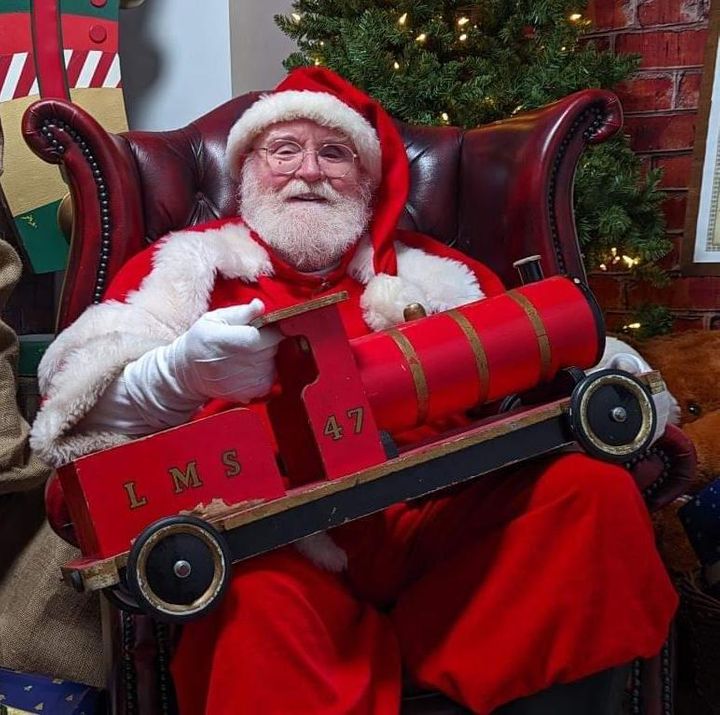
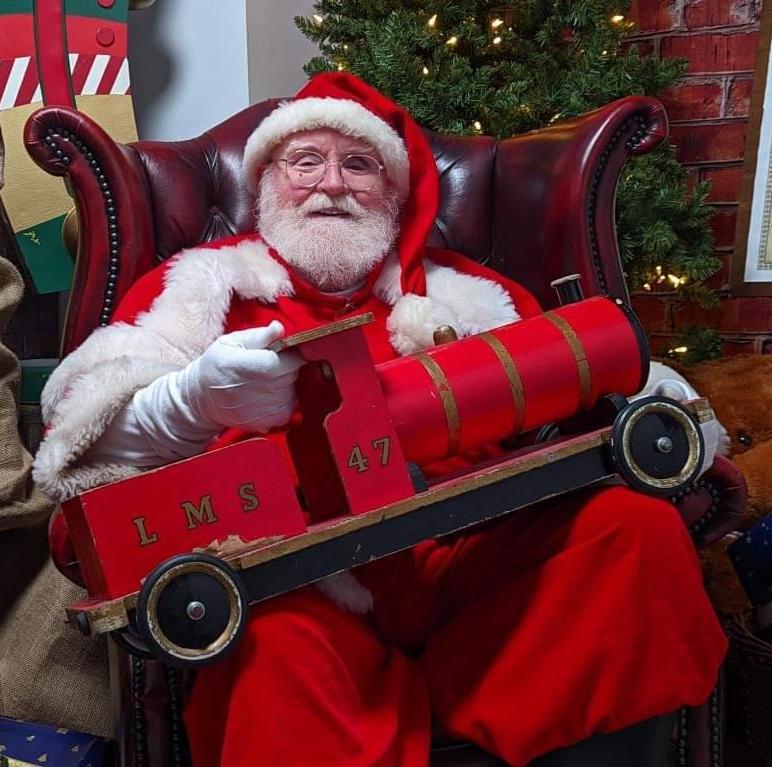
Michael Facherty, who’s 71 and based in Caversham, and has played the role of Father Christmas for nearly 40 years. On December 25th he’ll be having a well-deserved break.
Michael Facherty
“In the run up to Christmas a working Santa has many jobs. Among them is recording videos for clients, this year including a charity pop single, various corporate jobs including parties, and grottos. My favourite this year was being Santa on Hobbs of Henley Santa Cruises. Work with individual families includes Zoom calls and home visits.
Advertisement
“I often have a charity visit on Christmas Day but not this year, so I’ll have a lie in. The day starts with some presents and then I have my special Christmas lunch. My wife and son are vegans, but Matt makes me cottage pie with steak mince as a special treat. I’ll watch the Richard Attenborough version of Miracle on 34th Street at some point during the day. Boxing Day is my favourite day, because our grandchildren visit us.”
‘My British friends are now family.’
Nishtha Goel, the founder of sustainable brand Unnaaty, is 32 and based in London. She’ll be spending her fourth Christmas in the UK with friends, who she calls her “chosen family”.
Nishtha Goel
“I am from India and have been living in the UK since 2018. I don’t have any family here, but have found a friend who is my chosen family and since 2019 it is has become a tradition that I spend Christmas at her place, with a few other friends. What could have been a lonely day is not, because my British friends are now family.
“I am a vegetarian so, while my friends enjoy turkey, they are thoughtful enough to cook a separate vegetarian meal for me, which includes vegetarian stuffing, peas, carrots, Brussel sprouts, to name a few things. I enjoy every bit of the traditional Christmas dinner, it is such a beautiful way of bringing families together.
Advertisement
“My favourite part of the day is late evening, when we play silly board/card games and just have a relaxed time with each other, full of smiles and laughter.”
‘It is my favourite park run of the year.’
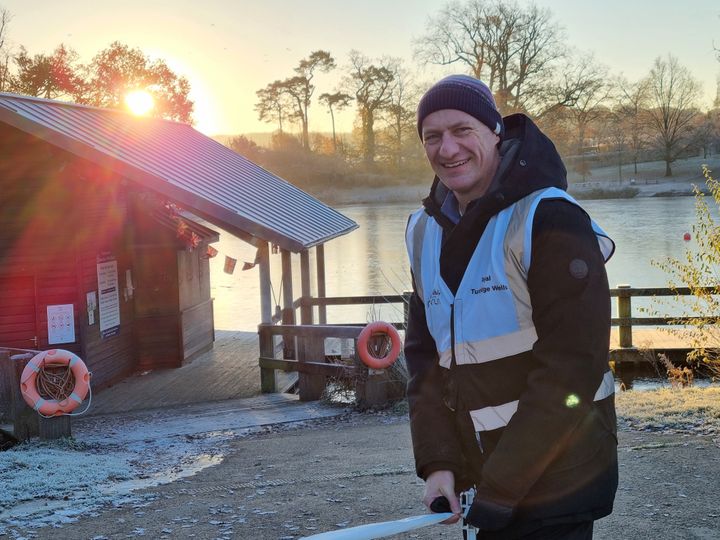
Robin Barwick, aged 50, is the event director Royal Tunbridge Wells parkrun. On Christmas day he’ll be helping 200-300 runners start the day in high spirits.
Robin Barwick
“I will be run director at RTW parkrun this Christmas morning, for what has become one of our best attended fixtures. It is my favourite parkrun of the year. Between 200 and 300 runners and walkers are likely to show up for our 9am start, along with around 35 volunteers.
“Christmas morning parkruns have a special atmosphere. Many come in festive fancy dress, with anything from reindeer headbands, elf costumes, the full Father Christmas outfit or maybe a Christmas tree disguise.
Advertisement
“Runners can take the 5k run competitively if they want to but on Christmas Day most people treat it as an opportunity to get some fresh air and exercise with friends and family without worrying about their finish time. It is a very social occasion and as our cafe in Dunorlan Park will be closed many will bring their own refreshments to enjoy after their run. They are not always alcohol-free.”
‘I’ll sleep the whole way through Christmas day’
Marlene Bayuga, 59, lives in Morden, Surrey and works as a Marie Curie healthcare assistant in the community covering Southwest London and sometimes Kent.
Marie Curie
Healthcare assistant Marlene Bayuga.
“This Christmas I will be working throughout the night from 10pm until 7am. On Christmas day I will sleep during the daytime, and I will go for Christmas supper at my brother’s house, where we have roast turkey with all the trimmings. Then I will leave at 9pm to go to work and I will bring a mince pie and some Christmas pudding with me!
“When I arrive to my patients’ house I greet them with Christmas greetings and reassure their family that their loved one will be cared for, monitored, and supported during the night so that they can have a restful sleep. It can reassure them to know that someone is there with their loved one, so they won’t be alone overnight.
Advertisement
“I work during Christmas because someone in the community will always need my care at the end of their life, and because everyone deserves to have a good end of life experiences, both patients and their families. My family completely support and understand this. I know I’m there to give light during what can be a really difficult time for them.”
‘We go to church to celebrate Jesus’ birthday’
Nicole Bateman, 34 from Bournemouth, is a mum of two, author and owner of A Box Full of Joy. She’ll be celebrating Christmas by attending church and spending time with her family.
Nicole Bateman
“We start the day with the kids coming into our bed to open their stockings, then we have gammon and eggs with orange juice for breakfast and then open our presents under the Christmas tree.
“We then go to our church to celebrate Jesus’ birthday and then head over to grandparents for Christmas lunch, then a walk after that.
Advertisement
“I have a daughter who is three and a son who is six, and my son has epilepsy. He was diagnosed in July 2020 and has yet to find a medication to control his seizures. Last Christmas, he had five seizures over the four-day period, so by keeping to familiar things (like waking up at our house and going to our church like we do on a normal Sunday) it keeps some routine and stability to the day, which hopefully limits seizures.
“Christmas time can sometimes cause sensory overload and seizures for our boy, so we have to get the balance between too exciting (excitement is one of his seizure triggers) but then still making it a fun day.”
‘I’m solo cat-sitting – and I can’t wait’
Charlotte Lingard, who’s 34 and based in Kent, is looking forward to spending Christmas with some feline friends.
Charlotte Lingard
Charlotte Lingard and two of the cats she’s looked after this year.
“I will be cat-sitting a cat called Lola in Blackheath over Christmas for a couple who are abroad for the Christmas holidays.
Advertisement
“I plan to spend my day eating all the festive party foods I enjoy, cuddling Lola and making sure she is spoiled; also exploring Blackheath and Greenwich, as it is not an area of London I am familiar with, but I have heard a lot of nice things about it.
“I have been doing cat-sitting on and off for nearly a year now. It started when my flat did not allow pets, and I was missing feline company whilst working remotely. I use two websites to find and apply for cat sits, I have had five star reviews so far.
“I am completely happy in my own company, so I am looking forward to it!”
‘I swim then cook the kids’ favourite: Chicken Kyiv’
Sue Bordley, who’s 51 and from the Wirral, writes swimming-related books and will be heading the pool for her daily dip on Christmas morning.
Sue Bordley
“On Christmas Day, I’ll get up at about 7.15 am and have a quick coffee before heading to the pool, which opens at 8am that day. It’s always nice to have a chat to Julie, Paula and Harry, my fellow die-hard swimmers who are there every morning.
Advertisement
“I’ll swim for an hour. Swimming got me over a breakdown six years ago. It’s my release, my lifeline – why on earth would I not want to have that on the day that’s supposed to be the best of the year?
“After my hour’s swim and a lovely relaxation boost in the hot tubs, I go home to spend the day with my husband Mark (48) and sons, Jack and Olly (15 and 12).
“While the boys play their new computer games, I prepare a (reasonably) traditional Christmas meal: I make the usual roast potatoes and vegetables, but we don’t have turkey, choosing roast pork instead and the boys are allowed to have their favourite Chicken Kyiv. At Christmas, everyone should have what they like – and it’s only one more dish to wash.”
‘I’m setting my own solo Christmas traditions’
Patience M. Chigodora, a 30-year-old spiritual life coach from Nottingham, is using Christmas to have some me-time.
Advertisement
“This year I’m doing things differently. My Christmas isn’t about being with family and friends; it’s about me. I actually want to rest, recover and feel replenished in the New Year which honestly last year I didn’t after spending a lot of my time travelling around the UK to be with family and friends.
“I am planning a few days filled with candle-lit baths, PJs, feasting on all my favourite Zimbabwean and English infused dishes paired with my fave red wine of course. Binging on my favourite Christmas movies and series (like How to Ruin Christmas series on Netflix), I might pop to the cinema to watch the new Avatar movie, go on walks and I’m allowing freedom for spontaneity and going with the flow.
“It’s really important to me this year that I celebrate Christmas how I want to – not how I am expected to. I will be seeing family and friends here and there, focusing on quality time rather than quantity, but 80% of the period, including New Year, will be spent basking within my inner-verse.”
‘We Zoom our families and celebrate online’
Viva O’Flynn, who’s 40 and based in Gloucester, enjoys spending a cosy Christmas at home with her husband, John. They’ll spend the afternoon on Zoom, celebrating with family abroad.
Viva O’Flynn
Viva O’Flynn and her husband, John.
Advertisement
“Christmas Day starts with me waking up next to my husband, John. He cooks brunch for us, eggs florentine or eggs Benedict with salmon. Then, we head to our Christmas tree to open presents. I open each gift with a kiss, a ‘thank you’ and ‘I love you’. He does the same.
“It’s just the two of us celebrating Christmas in person, because his family are in Ireland, mine are in the Philippines. We log into Zoom and say our Christmas greetings to them, and we play some games with them online. Some of my cousins even sing Christmas tunes.
“There is nothing like being with family to celebrate in person: hugging them, kissing them on the cheek, holding their hands, eating meals with them. But it is the pandemic and flu season, and flights back home are doubly expensive. We’ll wait until after the holidays to reunite with them in person. The next best thing is seeing them, hearing their voices, and celebrating Christmas with them virtually.”
There’s no doubt that the festive season can be a stressful time, amid all the travel plans, family visits and present shopping.
These activities often involve an array of demands that take a toll on your mental health, such as cleaning, cooking and spending. So it’s totally OK to experience stress or anxiety among the festivities; even mental health professionals – who may seem like they have it all together – aren’t immune to these feelings.
Advertisement
HuffPost asked therapists for insight on how they feel joy and cheer amid the stress of the season. Here are their personal tips for decompressing and relaxing:
They set aside time for themselves
The festive season can be a busy time, especially if you are surrounded by friends and family. It’s normal to feel stressed and anxious about meeting up with people or hanging with relatives.
“I always make sure I set aside some time for myself to relax during the holidays and focus on my wellness needs,” says Michael Klinkner, a licensed clinical social worker in Arizona.
They scribble a few thoughts in a journal
Minerva Guerrero, a therapist who founded Mind Matters Mental Health Counseling in New York, says she often takes a journaling break to intentionally ground herself.
Advertisement
“I like to journal to get clear on what I’m hoping the holidays bring me and how I feel during this time,” she says. “This self-care activity really helps me destress and relax during the holiday season.”
They listen to music
Music therapy can evoke feelings of calmness and relaxation.
“I often create soothing and hype-me-up playlists, which help me move through my feelings,” says Naiylah Warren, a therapist and clinical content manager with mental health platform Real.
They focus on holiday events that give them joy
During one of the busiest times of the year, it’s important to set boundaries to take care of your mental health and wellbeing.
“I generally check in with myself in regards to what traditions or gatherings feel stressful to me and which ones bring me joy,” says Kama Hurley, a clinical counsellor and life coach in Idaho. “I prioritise what I love to do and say no to the things that make me feel anxious.”
LordHenriVoton via Getty Images
Even therapists need some coping strategies to get through the holidays.
Advertisement
They make a self-care list
Hurley says she writes a self-care list when she’s anxious or stressed, as it gives her agency and lifts her mood.
“I write down activities that help me relax and make me feel good about myself that I can accomplish when feeling the intense emotions,” she says.
Having a go-to list that you can reference and change will help you identify which activities are sources of joy.
Madeline Lucas, another therapist and clinical content manager at Real, shared some self-care activities that help her feel less isolated in her holiday stress: taking long showers with music, applying sheet face masks, going on walks and stretching.
They sit in stillness for a few minutes
The art of meditation can be powerful in achieving a sense of calm and balance.
“I practise meditation exercises for a few minutes whenever I feel stressed,” says Regine Muradian, a clinical psychologist in California. When you feel that stress starting to creep up on you, take a moment to inhale deeply and focus on your breathing.
Advertisement
They plan ahead
Israa Nasir, a therapist who founded the mental wellness brand Well.Guide, said she plans ahead for the festive season, which helps her destress. “I make sure to take care of any client and associated work-related obligations fully when I take time off during the holidays,” she says.
Planning a schedule before you get too busy may feel comforting as it offers a sense of routine, with many decisions already made in advance.
They talk to their therapist
Many mental health professionals get help from therapists of their own to manage stress. If you feel that stress is inhibiting your ability to get through the day, consider connecting with a mental health professional now.
“If I anticipate a lot of stress prior to the holiday season, I’ll schedule a few extra sessions with my own therapist before they go on their holiday break to help process the feelings I’m having,” Nasir says.
While many familiar Christmas traditions originated in Western countries, people from all around the world and from different cultural backgrounds celebrate the holiday with the same spirit of gratitude and togetherness. No matter where, recipes passed on through generations are central to family gatherings. From callaloo to chicken tikka masala, find out what renowned chefs and food influencers around the world are cooking on Christmas Eve.
Mexico
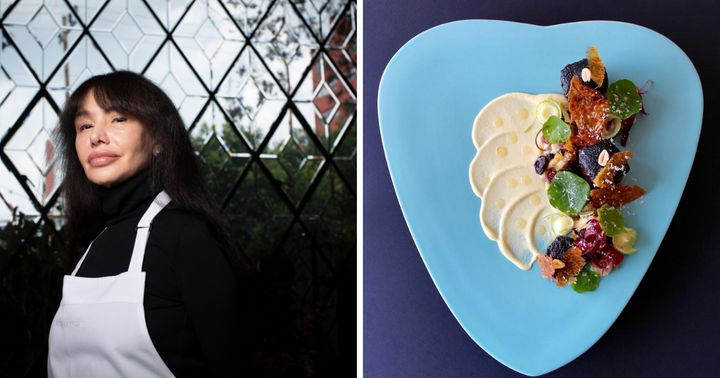
Martha Ortiz Chapa is the head chef at Tuch de Luna at La Casa de la Playa in Riviera Maya. She was the chef-owner of Dulce Patria, which had been named one of the 50 best restaurants in Latin America and the best restaurant in Mexico City before closing earlier in the Covid-19 pandemic. She has also served as a judge on “Top Chef Mexico,” and in 2020 was named one of the 40 best chefs in the world.
Advertisement
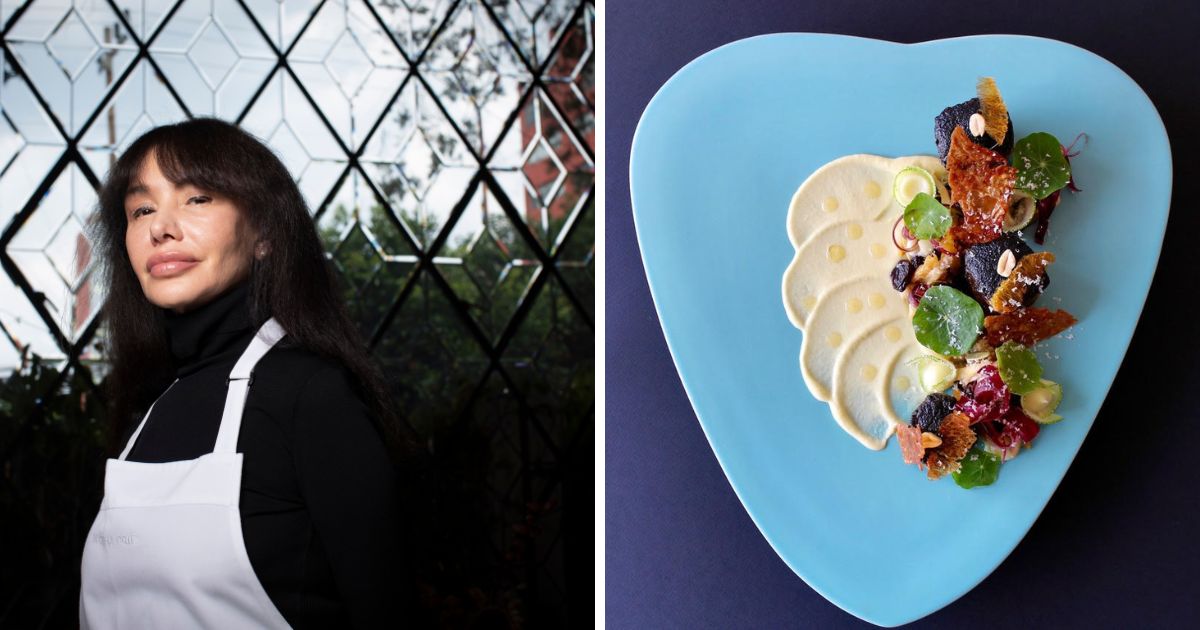
Courtesy of Martha Ortiz
Martha Ortiz and her turkey in mole.
Our December traditions begin with the Posadas (a religious festival held from Dec. 16-24), which lead the way to the grand celebration of Christmas Eve. During this time, Mexicans hang seven-point-star piñatas (the peaks representing a different capital sin, including gluttony) made with contrasting coloured tissue paper and filled with pieces of sugar cane, tejocotes (a fruit), orange wedges, peanuts, candies and sugar-coated almonds. We blindfold the guests, who take turns hitting the piñata until someone breaks it, in celebration of the predominance of virtue and abundance.
On Noche Buena (the night that is good), aka Christmas Eve, I elegantly present these crafts to my guests. I usually use a dark tablecloth as a canvas and decorate it with wooden kitchen utensils, such as grinders, spoons and saucepans, surrounded by colourful flowers. I personalise each guest’s place on their plate with a small piñata, which holds inside a traditional sweet or piece of candy and a message of friendship and love, in the hope that they will take it home with them and, when they break it, the abundance of affection, bonds and the celebration of life will grow.
As a proud Mexican, I begin with traditional dishes such as romeritos (tender sprigs of seepweed) with cactus strips, and mole (made with at least 50 ingredients) seasoned with dried shrimp. I serve a salad called Noche Buena, which is prepared with diced jicama, apple, beet, orange wedges and crunchy peanuts. For main, we have pork leg in spicy pulque marinade. I wash it down with my personal favourite, a punch of tejocotes, tamarind, jicama pieces, piloncillo (a raw form of pure cane sugar), guavas and spices and a touch of hard liquor.
Advertisement
I add the leftover punch to the mother sauce to prepare a fruity mole and serve it with turkey pieces that have a crackling-like crunchy skin. And, if there’s some left over, I make a delicate cheesecake to remember all the flavour of the Posadas days.
With this celebration of classic and modern dishes, I honour my grandmother’s cooking and think about the great wealth of ingredients from Mexico. This is how, surrounded with piñatas and sweet smiles, I wish that each Christmas Eve will become an early memory of tradition, lineage, and my pride of being a female Latin, Mexican chef.
St. Thomas, U.S. Virgin Islands
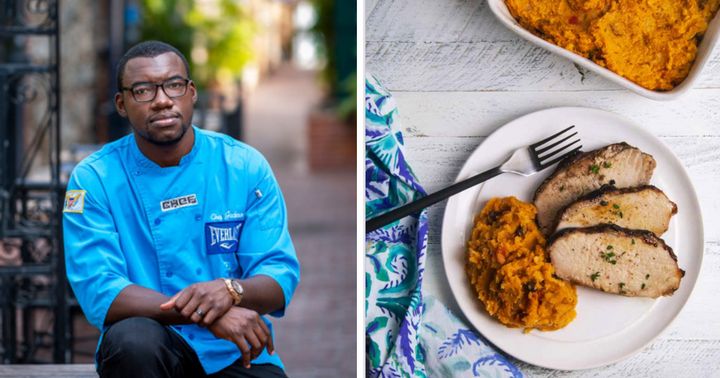
Julius “The Chef” Jackson is a professional chef, Olympian boxer, community leader and author of the cookbook “My Modern Caribbean Kitchen: 70 Fresh Takes on Island Favourites.” He currently offers private interactive culinary social events through “The Chef’s Cooking Lab” and is the head chef and manager at the nonprofit My Brother’s Workshop Bakery and Café in St. Thomas.
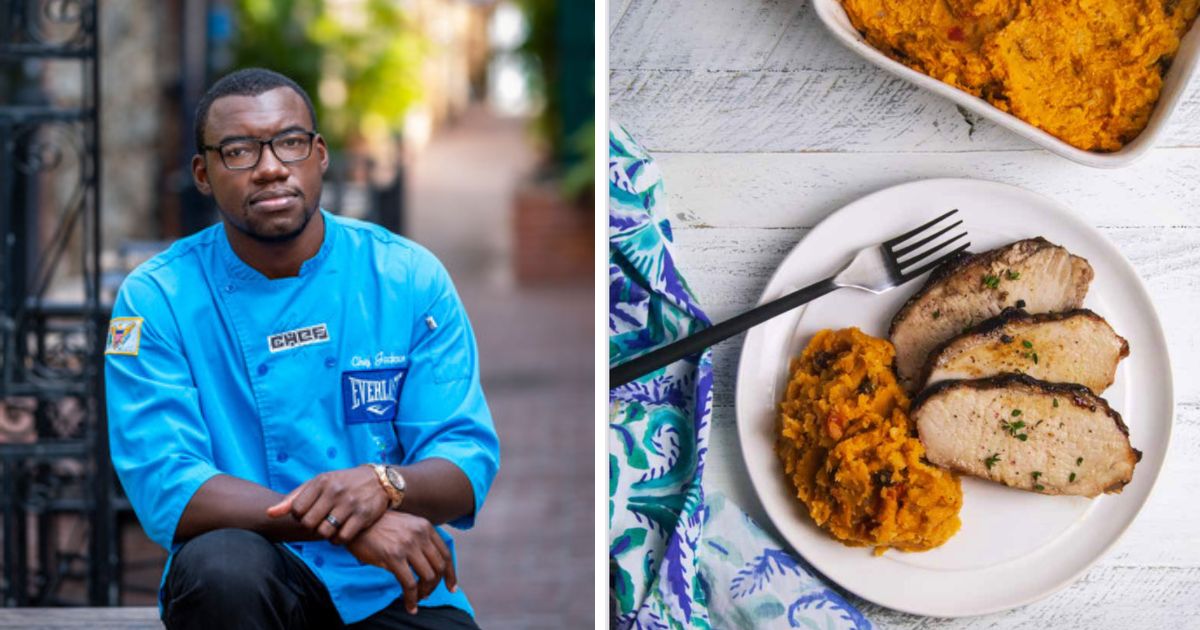
Courtesy of Julius Jackson
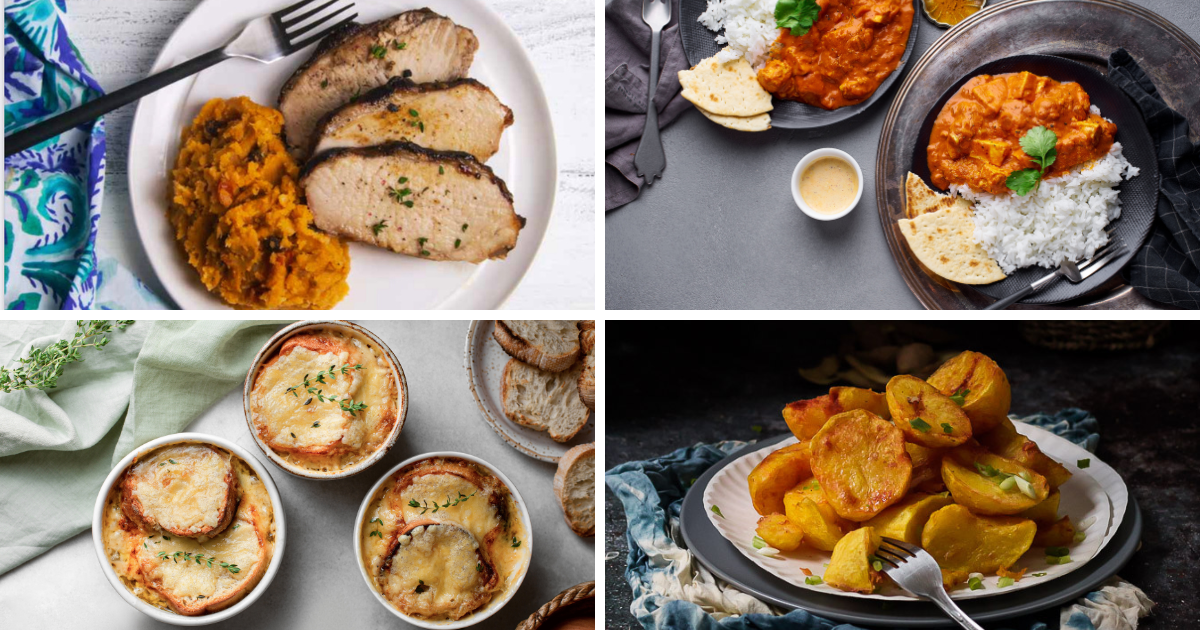
Julius Jackson and his Christmas Eve roast pork.
We have such a melting pot of cultures in the Virgin Islands that we have created our unique mashup. You can see this to be true in the way we celebrate the Christmas season.
Advertisement
It’s very traditional for us to have callaloo as a starter for the Christmas Eve meal. This stew made from okra, spinach and pork is influenced by African cuisine. My personal favourite is the seafood version, which I make with shrimp, conch, lobster and saltfish. The warm green goodness gives me the feeling of the Christmas season on a tropical island.
I also love roasting pork for our Christmas Eve or Christmas Day dinners. This dish came about from our Puerto Rican brothers and sisters that migrated to the U.S. Virgin Islands, and we adapted it within our culture. I generously rub the butt, shoulder or the whole pig down with seasonings and cloves, make incisions into the skin to allow the seasonings to penetrate inside the meat and under the skin. Then, I roast the pork for 5-6 hours until the skin is super crispy. This is one of my all-time favourites dishes because I love the tender and salty meat with the crispy skin.
The guavaberry fruit has also become a major part of our tradition here in the Virgin Islands. The slightly sweet- and tart-tasting fruit that looks like red and purple blueberry comes from our West Indian neighbours. During Christmas time, we consume guavaberry rum or incorporate it into desserts, such as homemade guavaberry tart and guavaberry cheesecake.
After dinner, we carol calypso/quelbe Christmas tunes at home and around our neighbourhood, stopping at homes of friends and family members for snacks and rum.
India
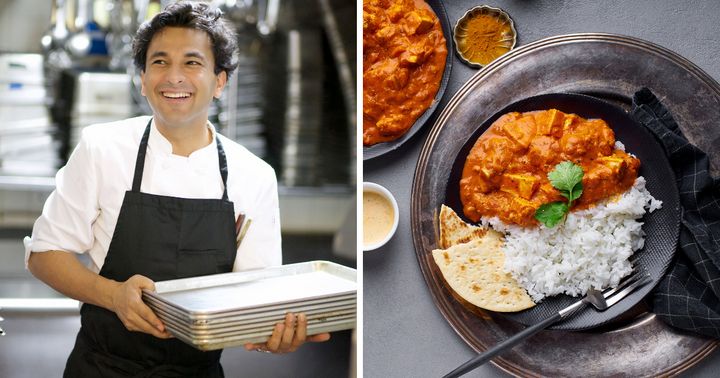
Vikas Khanna is an Indian American chef, restaurateur, cookbook author, filmmaker and humanitarian. He grew up in Amritsar, India, served as a judge on “MasterChef India” and received a Michelin star for six consecutive years for his New York restaurant Junoon. He has authored over two dozen books and directed and produced several films.
Advertisement
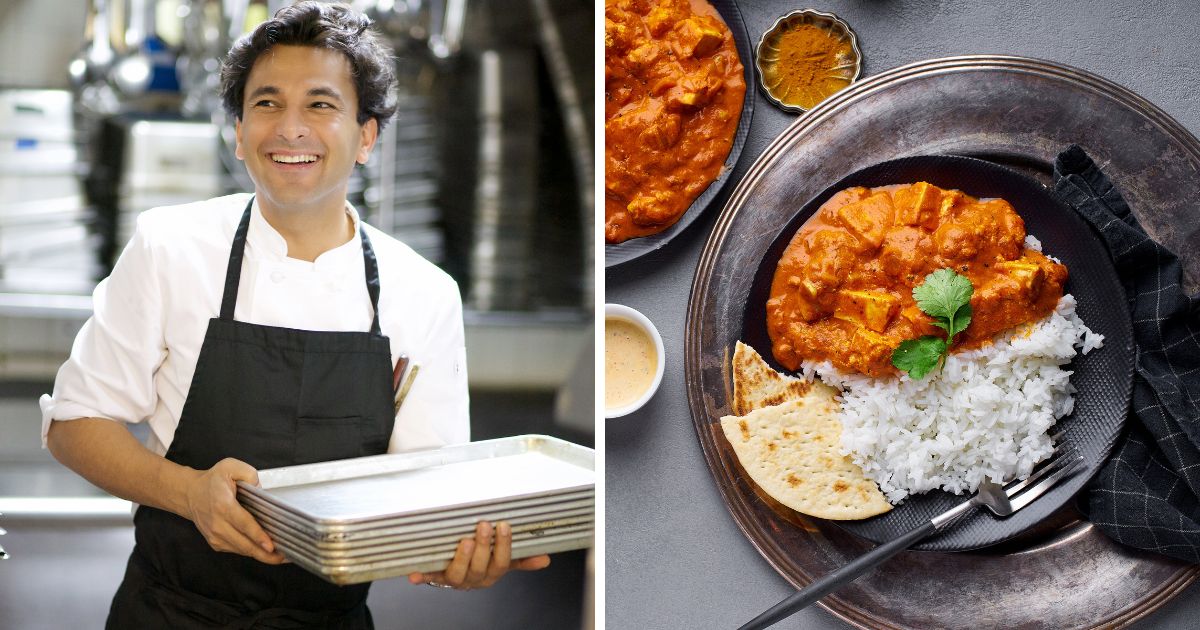
Courtesy of Vikas Khanna
Vikas Khanna makes paneer tikka masala for Christmas Eve, but in a smaller appetizer form.
Christmas Eve is celebrated in India with as much fervor as all other religious festivals, especially more so in the northern state of Punjab, where I hail from. For us Punjabis, it is one more occasion to celebrate and feast on good food.
We usually plan an elaborate dinner with near and dear ones (which in Punjab can be a lot of people). My special guests on Christmas Eve are all the elderly grandparents who I look forward to cooking for. Most of the dishes I cook are keeping in mind their palate and preferences, so it’s an Indian-style Christmas dinner. It is also my way of expressing my gratitude towards my grandmother, who was my first culinary teacher.
December yields some of the best farm produce, giving me an array of choices of ingredients. The weather in Punjab is cold this time of the year, so the dishes are served warm and spicy.
I make several dishes using paneer (Indian cottage cheese), because paneer and Punjabis are made for each other. We are a dairy-rich state! So, I make paneer tikka masala for appetisers, stuffed paneer paratha, paneer and mixed vegetables, and a curry. For the meat eaters, I make a chicken version of the same dishes.
Advertisement
Also, instead of the popular regional Punjabi dish, chole bhature, which is served at most festive occasions,I prefer making bo wale kulche, which non-Amritsaris find smelly because the dough is double-fermented, but I find them aromatic and absolutely relish them. Some of these recipes are in my book, “Amritsar — Flavours of the Golden City.”
After a hearty dinner and loads of friendly conversations, it’s time for desserts. The one dessert that is mandatory at my Christmas Eve dinner is whipped fruit cream with fresh seasonal fruits. It reminds me of my childhood when my grandparents would take me and my siblings out for this treat. Making the same dish for my special guests feels like completing the circle.
The happy faces of my guests, especially the grandparents, fill my heart with joy and energise me for the new year ahead.
France
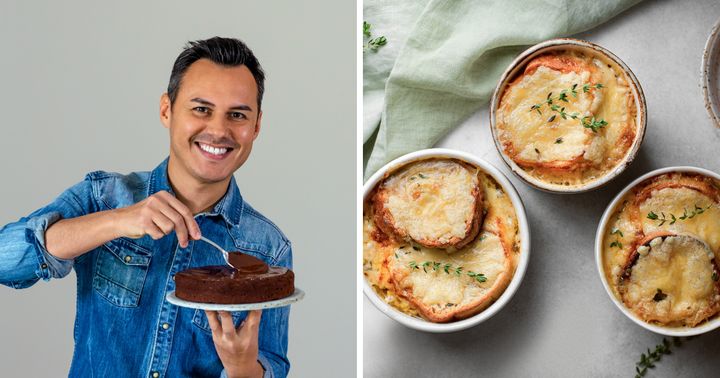
Herve Palmieri (who goes by Hervé Cuisine) is a Paris-based videographer, food blogger and author of “Easy and Amazing Desserts” and “Easy Aperitifs With Friends.” His YouTube channel featuring cooking tutorials has over 1 million subscribers.
Courtesy of Herve Palmieri
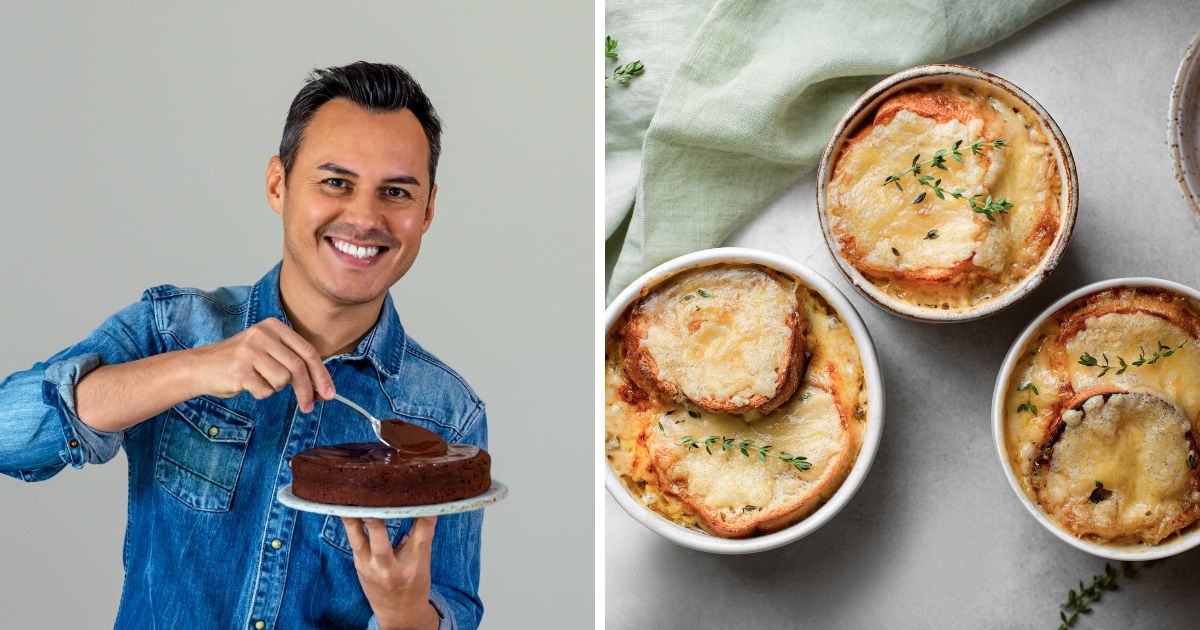
Herve Palmieri with a Black Forest cake, and French onion soups like the ones he makes on Christmas Eve.
Advertisement
The first thing that comes to mind when I think about Christmas Eve is my family. We all live in Provence in the southeastern part of France. I have one son, two sisters and six nephews and nieces. In France, Christmas is a very special time when families come together, forget, forgive and give. We always try to get together on Christmas Eve, taking turns to either host or rent a place in the Alps or in the national park of Queyras.
Everyone participates with the Christmas Eve meal planning. The kids help prepare puff pastry treats for appetisers that we cut out in Christmas tree shapes and fill with cheese, nuts, honey and raisins. They also like making tapenade (olive paste that’s popular in Provence) and goat cheese mix. Then, we display everything on the table like a buffet so everyone can taste a bit of everything.
Traditionally, we also serve some poultry and several sides. For instance, we would include grilled veggies like glazed carrots and sprouts, pureed parsnips or sweet potatoes with spices. For dessert, we have a tradition to serve two cakes: Black Forest, that I’ve been doing according to my mom’s recipe for years probably since I was 10 years old, and a buche, which is a more traditional recipe often made with chestnut puree and chocolate (or you can make it more exotic with mangoes and coconut).
Both of my parents, who come from Vietnamese and Italian origins, my sisters and I, love to cook or bake. So, for Christmas lunch, we prepare Vietnamese fried spring rolls, a recipe my grandfather passed on to my mother when she was a young girl and needed to help prepare the meals for her family of six children. For Christmas Day dinner, we usually make a typical French onion soup made with yellow or white onions, olive oil, vegetable broth and a crust of melted cheese and croutons with herbs like thyme and rosemary. It is very simple, tasty and supposed to help you cleanse your body after a heavy meal.
Christmas Eve is not all about eating, though. We like to play some group games, like the Wolf, which is a strategy game opposing wolves and villagers that you play in a circle in dim light, even though my father always falls asleep before the end of the game! We also go for a late walk outside in the little village in the Alps called Aiguilles en Queyras, even if it’s freezing, because you know, we do eat more than usual on that night.
Advertisement
Uganda
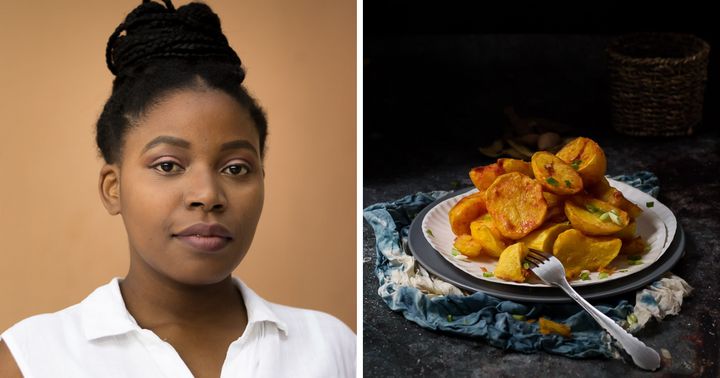
Sophia Musoki is a Ugandan food writer and food photographer. She is author of “A Kitchen in Uganda,” one of the most notable food blogs in the country, and three e-books, one of which received a Gourmand World Cookbook Award. Musoki also produces and hosts the podcast “Our Food Stories” where Ugandans share food stories.
Courtesy of Sophia Musoki
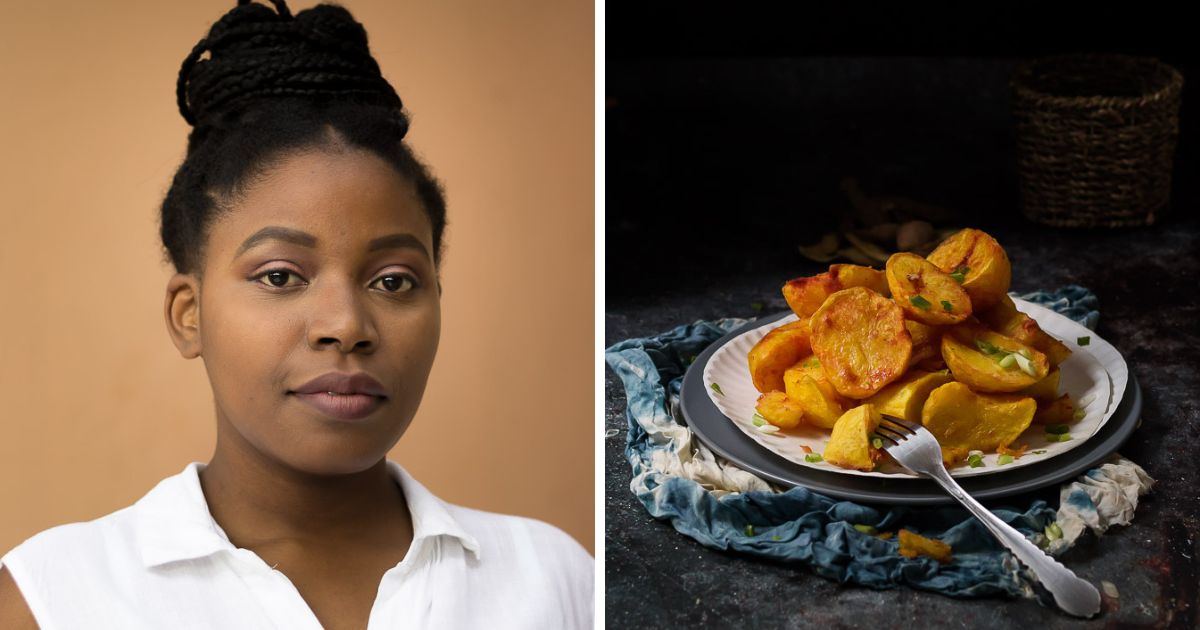
Sophia Musoki and her Ugandan fried potatoes.
For my family, Christmas Eve is a time when everyone arrives at my grandparents’ home in Kasese, in western Uganda, from various parts of the country to end the year together. Their home is situated on the edge of one of the many Rwenzori ranges with a dizzying but scenic view. Banana and coffee tree plantations surround the house, giving it a lush green backdrop for our African Christmas.
Christmas Eve is more of a preparation day for me and my family. We have 15-20 people crammed in the small kitchen, which is located about 5 meters away from the main house. Each of us has an assigned task. Older male relatives set up a corner to slaughter a mature goat for the meal, while the female relatives peel potatoes, bananas and yams. In another corner of the kitchen, my cousins, nieces and nephews shell fresh beans to make soup, using beans my aunts bring from either their gardens or the market. I love getting involved in the chopping, cutting, cleaning and slicing of all the condiments like tomatoes, onions, local garlic and garden eggs.
While everyone is busy, my grandmother puts on a big pot of green banana and black beans katogo (a stew of starch and a protein pottage) on fire to simmer for the evening meal.
Advertisement
On Christmas Eve, we also spend some time selecting cookware, such as heavy cast-iron pots for steaming and clay pots for stewing meat and boiling beans. If we don’t have enough, we either go out to the market and purchase some or borrow from generous neighbours.
Aside from cooking, this is also a time for the family to share good news, like the birth of a child, graduation, a wedding anniversary or a baptism. This cheerful atmosphere is filled with children playing hide and seek, which is more fun to do at night and among many people. The adults tell stories of their travels while neighbours drop by occasionally to join in on the conversation. We generally serve visitors fresh fruits. My favourite part of Christmas Eve is the camaraderie of the meal preparation. As we roll into the evening, we leisurely peel, slice and eat fruits like mangoes, sugar cane and jackfruit, which I believe “takes a village” to do. This keeps us occupied until the katogo is served on large shared trays, which is often very late into the night.