As we head into winter, cold and flu season draws ever nearer.
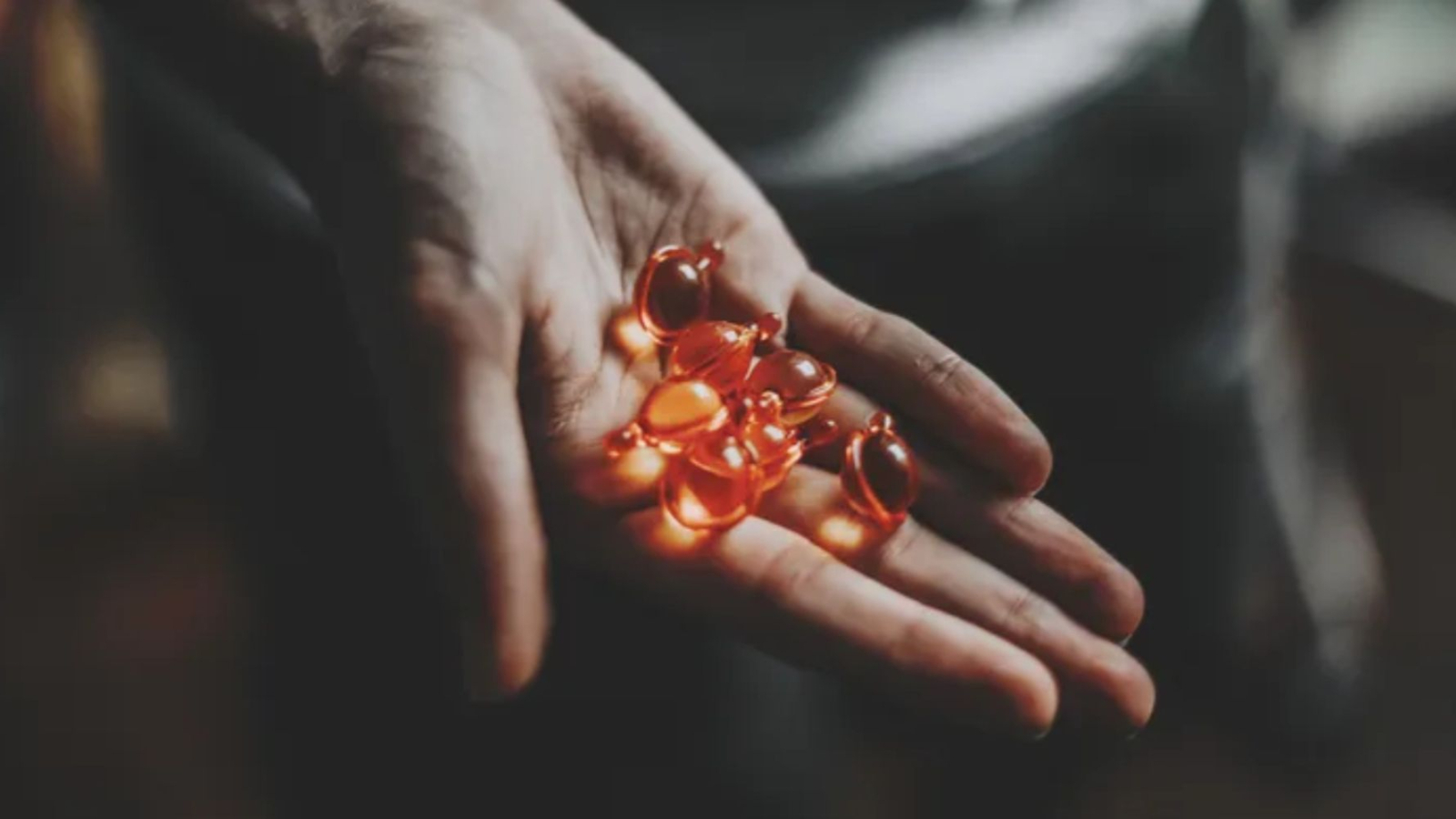
Those of us trying to prime our immune system for the onslaught of diseases might be reaching for supplements alongside staying active and trying to eat well.
But the NHS says some of those efforts may be in vain.
Though the service advises British adults to consider taking vitamin D in the darker months, their entry on the common cold reads: “There’s little evidence that supplements such as vitamin C, echinacea or garlic prevent colds or help you get better more quickly.”
Advertisement
Why not?!
It can be a tough pill to swallow, even if it means one less actual capsule to gulp down.
But it’s not so much that supplements like these are proven to be bad or even completely ineffective: it’s just that the NHS isn’t convinced by the conflicting evidence that they do work.
Microbiologist Morticia shared a video explaining that “there is actually no such thing as an ‘immune booster’” outside of vaccines, adding that ingredients like vitamin C and ginger root are “not boosting your immune system.”
That’s not to say eating a balanced and varied diet isn’t good for your immune system or even that vitamin C isn’t part of a good immune response, but that vitamin supplements may not act as straightforwardly on our bodies as we think.
Morticia mentions how iron supplements for iron deficiency can take months to work, despite seeming like a straightforward answer to the issue: she also points out that hydrogen peroxide is crucial to white blood cells’ disease-fighting power, but nobody is suggesting drinking that to see us through a sniffle.
Advertisement
A 2013 review of studies by Cochrane found that “trials of high doses of vitamin C administered therapeutically, starting after the onset of symptoms, showed no consistent effect on the duration or severity of common cold symptoms.”
Why is the immune system so complicated?
Akiko Iwasaki, an immunologist at Yale University, told BBC Future that “There are three different components to immunity.”
“There’s things like skin, the airways and the mucus membranes that are there to begin with, and they provide a barrier to infection. But once the virus gets past these defences, then you have to induce the ‘innate’ immune response,” the immunologist explained.
If those fail, Dr Iwasaki added, our adaptive immune system, which provides specific antibodies to fight the disease, comes online: though these antibodies can take “a few days or weeks to emerge.”
That last stage is triggered by infection or vaccines, hence the microbiologist’s comments earlier.
In fact the BBC says most symptoms of a cold “aren’t actually caused by the virus itself. Instead, they’re triggered by your own body, on purpose: they’re part of the innate immune response.”
Advertisement
So truly “boosting” these would more likely lead to a runny nose or muscle aches (a little like some people experience after a vaccine) than glowy skin or a sniffle-free winter.
“Vitamin supplements aren’t beneficial to your immune system unless you are deficient,” Dr Iwasaki shared.
Even though my favourite alcoholic beer is actually ginger-flavoured ― and though ginger wine has turned a bit trendy in recent years ― I’ve always wondered why completely child-safe fizzy ginger gets called “beer.”
After all, we don’t call lemonade “citrus ale” or cola “caramel shandy.”
It was fermented, and was often 11% alcohol ― that qualifies it for the “beer” title, if you ask us.
Advertisement
Brittanica’s online encyclopedia explains this original recipe was “made by fermenting a mixture of ginger, water, sugar, cream of tartar, and yeast. Lemon peel and juice or citric acid may also be added.”
The name simply stuck, it seems.
Traditionally-made ginger beer will use fermentation, making it less fizzy than ginger ale; but nowadays, food site The Kitchn says, “Some ginger beers are brewed with champagne yeast, and some are finished with forced carbonation.”
But those are pretty rare craft products: some modern ginger beers are simply carbonated, like ginger ale (which was almost never alcoholic).
Ginger beer’s cloudiness or clarity is determined by its filtering process.
Anything else?
According to Tayport Distillery, ginger beer and ginger ale were both popular during America’s Prohibition because they were good at masking the smell of alcohol.
Advertisement
“This clandestine use further cemented ginger ale’s place in mixology history,” they add.
The distillery says ginger ale, which was not usually fermented, was possibly invented in Ireland and made its way to Canada in the 1900s to huge success.
I don’t think I could go a week without using my grater. But by “using my grater,” I mean what most of us mean: using the one, coarse grating side that’s perfect for shredding Cheddar.
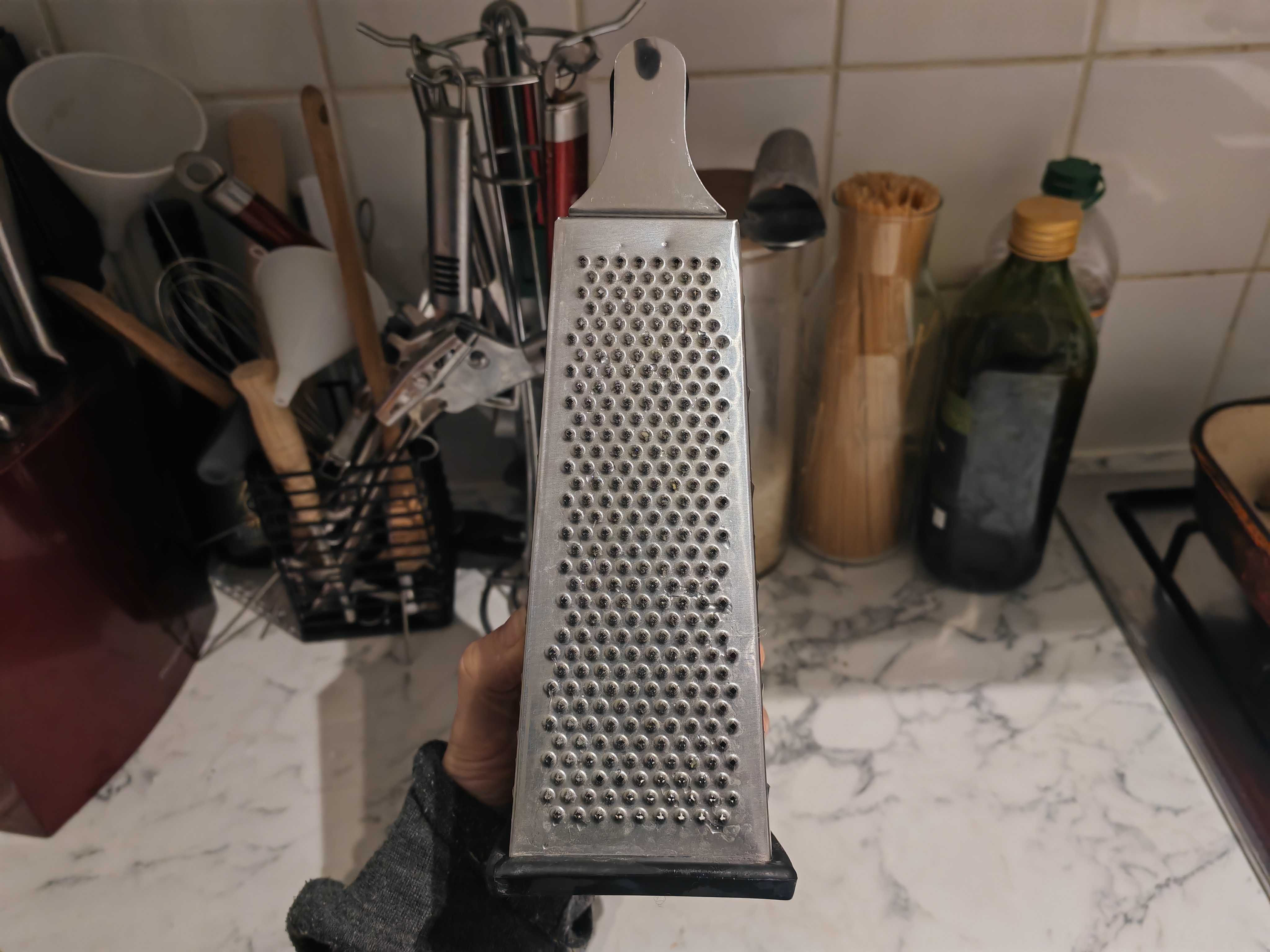
When I’m making a dressing or baking, the finer testing side does get some use. But the flat, wide, slicing side of my box grater has never been used ― and as for the spiky side, I won’t even touch it for fear of losing a knuckle.
Advertisement
If Reddit’s r/Cooking is anything to go by, it looks like I’m not alone.
Site user u/Hansekins recently posted to the forum asking “What is the fourth side of a box grater for?”
“The one that makes it impossible to hand wash the thing without drawing blood. The side that’s just covered with sharp pointy spikes that do… what, exactly?” they wanted to know.
What DOES it do?
The top comment on the post reads that it’s for “Grating parmesan, ginger, horseradish, garlic… Basically anything you want more of a paste or powder as opposed to shreds.”
But the commenter added that they “usually just end up using the small grater or a microplane for that stuff anyway.”
Advertisement
“You can also grate tomatoes for juice there if you don’t have a food processor,” another Redditor wrote, sharing that it can help to pulverise garlic too.
Others shared that it doubles as a nutmeg grater, which is true (though I’ve never escaped a nutmeg grating unscathed).
Many more people agreed with the hard cheese theory, to which I say, “fear not the Parmesan shard but instead the mangled hand.”
Chef Nathan Lyon confirmed on YouTube that it was historically meant for grating aged cheeses “into a fluffy powder-like substance; the kind that you’d get at the grocery store.”
Still, I’m with commenter jason_abacabb, who wrote: “I believe it exists just to rip my sponge to pieces.”
Advertisement
Turns out it has a name
The side is officially called a “star grater” (ironic, given that it’s usually the last cast member on the billing).
Its raspy texture, which food site The Kitchn describes as “Medieval,” can also be used for coconut, cinnamon, and chocolate.
It CAN. But if you ask us, we haven’t seen convincing enough evidence to prove it SHOULD….
It’s happened again; this morning, I missed my pre-work gym session because I hadn’t gotten enough sleep.
Despite my strict 9:30 pm bedtime, I regularly fail to get my full eight hours in ― like many of us, I find going to bed and falling asleep two completely different challenges, with the latter behind much harder.
Advertisement
If you also struggle to snooze, though, there may be hope: the University of Minnesota says the “Military Sleep Method” can help you nod off far faster.
One fan of the method said it cut their falling asleep time down to two measly minutes.
“You lie on your back, being still, and intentionally relax each muscle group, one at a time, while focusing on slow, calming breaths,” they say.
That includes your eyelids, tongue, jaw, and more ― make sure your sleep “scan” is thorough.
You should move from the top of your head to the bottom of your toes, imagining yourself sinking into the bed the entire time.
Advertisement
After that, the Sleep Foundation says you should clear your mind for ten seconds, imagining something soothing like rolling hills or lying in a treehouse in a forest.
If you can’t clear your mind, don’t fight your thoughts, they add; just let them float into and out of your head.
UMN says that what you do before sleep matters too ― overstimulating yourself or getting too distracted won’t help, they suggest.
Military service isn’t exactly conducive to a good night’s sleep, they say, so the “military sleep method was used by World War II soldiers to fall asleep within two minutes.”
It was later “popularized in the [1981] book Relax and Win: Championship Performance,”they add (for some reason, a copy of that book is going for over £200 on Amazon).
Most of us grew up hearing that dented or chipped cans are no good to eat from, as there’s a higher likelihood that the food’s sterile environment has been ruined.
But being possibly too honest here, my family for one would simply eat them anyway.
According to Dr Karan Rajan, who’s known for dispelling medical myths on TikTok, however, there’s a better way to check when you really have to bin the tin.
Advertisement
“If you have dented cans, here’s what to look for to know if it’s safe,” he began.
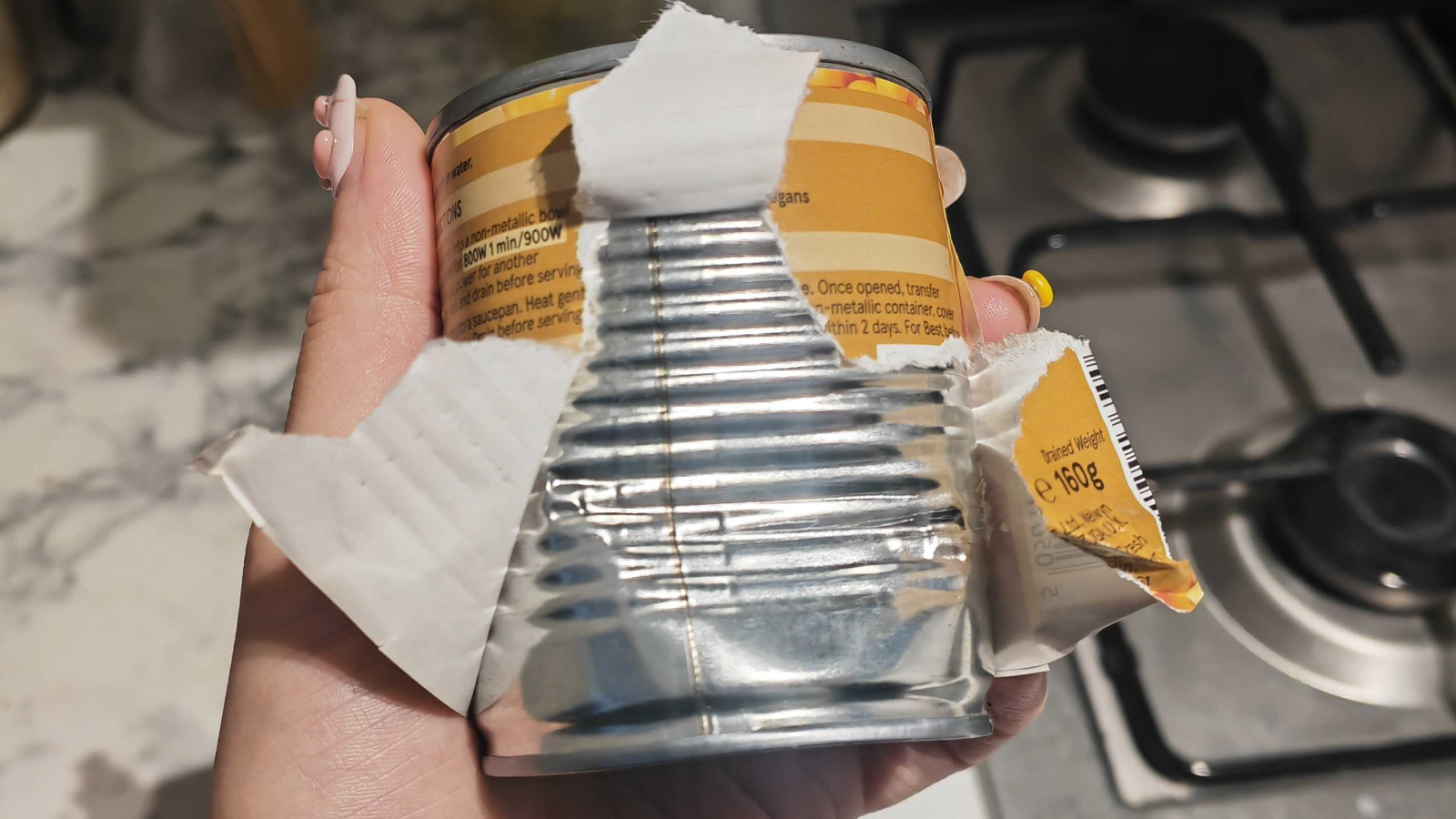
These are the lines on the can that show where the material has been fused together.
They’re usually hidden by the products’ label “so make sure you peel if off to inspect it carefully,” Dr Rajan advised.
If the dent covers that area of the can, the doctor says we should “throw the can away because it’s likely compromised.”
There’s a higher chance of oxygen, bacteria, and other food-spoiling nasties making their way into the can if its weakest point has been damaged.
A side dent which doesn’t involve the side seam and doesn’t cause a sharp pointy edge is “okay to use,” the doctor shared.
Advertisement
If there’s a sharp edge at the end of your dent, there’s a higher risk a small hole has been created at its point ― meaning the bad stuff has a way in.
Dents which include the top seam of the can (the rim you place your can opener under), dents which make your can look like it’s been crushed, and cans that look like they’re about to explode all mean your tin needs to be thrown away.
What if I’m not sure?
“Not every single dented or damaged can needs to be thrown away,” Dr Rajan says.
“But if you find yourself with a dented can and you’re unsure, if in doubt, throw it out.”
The USDA writes: “If a can containing food has a small dent, but is otherwise in good shape, the food should be safe to eat. Discard deeply dented cans.”
“A deep dent is one that you can lay your finger into. Deep dents often have sharp points,” they add.
“A sharp dent on either the top or side seam can damage the seam and allow bacteria to enter the can. Discard any can with a deep dent on any seam.”
We all hear a lot about blood pressure, but depending on how often you take a trip to your doctor’s, you might not know what yours is.
The term refers to “the strength with which your blood pushes on the sides of your arteries as it’s pumped around your body,” the NHS says (how bad is it that I didn’t know that?).
Advertisement
Low blood pressure isn’t usually a concern, though it can make some of us feel dizzy and sometimes causes fainting.
But high blood pressure “can increase your risk of developing serious problems, such as heart attacks and strokes, if it’s not treated.”
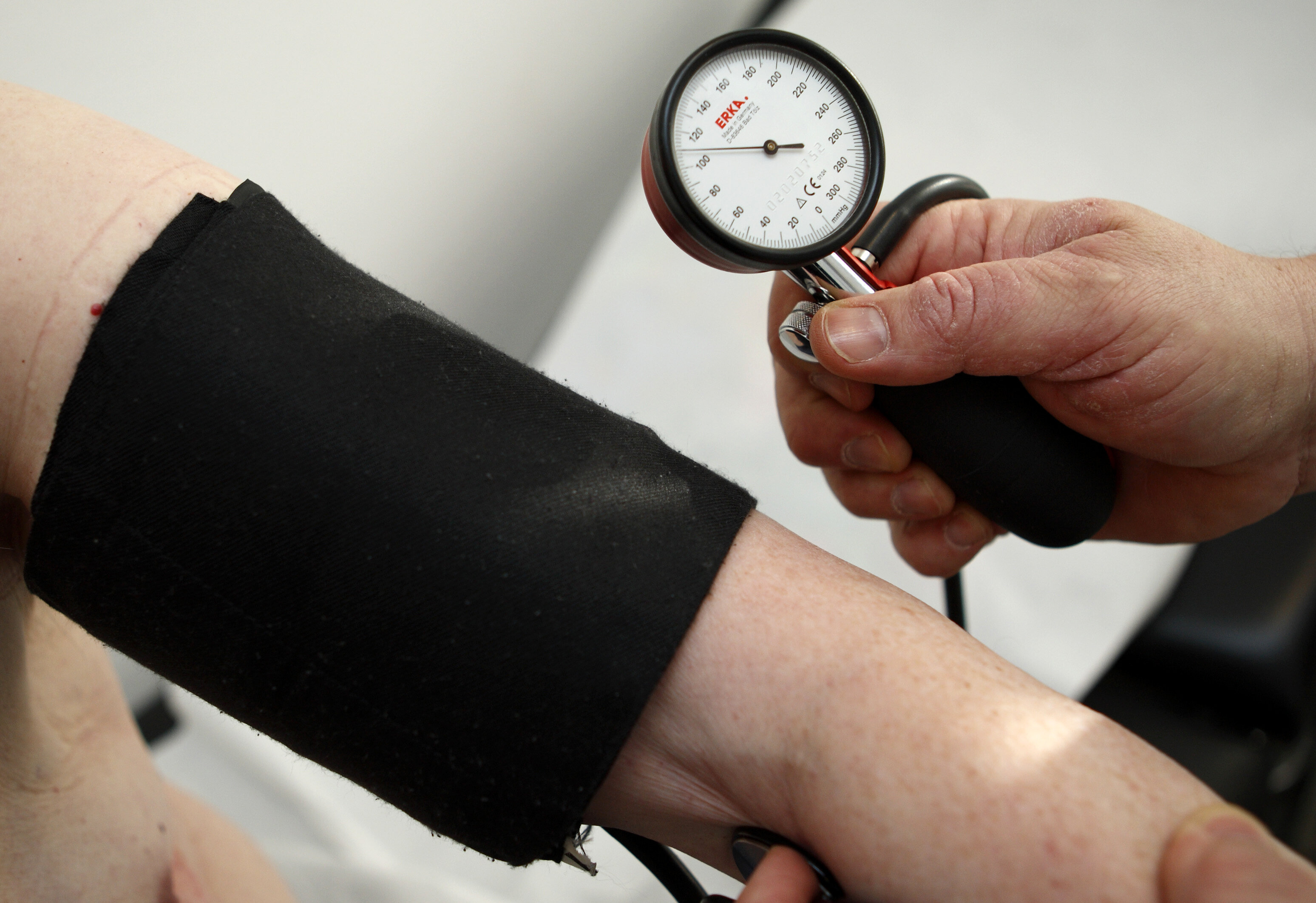
You can get your blood pressure checked using a blood pressure machine (if you’re over 40, you can get this done for free in participating pharmacies).
Once you get those numbers you might be wondering what’s normal for your age ― and according to the Heart Research Institute, “normal blood pressure varies from person to person” and by age and gender.
Advertisement
These are:
1) Newborns up to 1 month
Systolic (top number): 60–90 mm Hg
Diastolic (bottom number): 20–60 mm Hg
2) Infants
Systolic (top number): 87–105 mm Hg
Diastolic (bottom number): 53–66 mm Hg
3) Toddlers
Systolic (top number): 95–105 mm Hg
Diastolic (bottom number): 53–66 mm Hg
4) Preschoolers
Systolic (top number): 95–110 mm Hg
Diastolic (bottom number): 56–70 mm Hg
5) School-aged children
Systolic (top number): 97–112 mm Hg
Diastolic (bottom number): 57–71 mm Hg
6) Adolescents
Systolic (top number): 112–128 mm Hg
Diastolic (bottom number): 66–80 mm Hg
7) 18–39 years
Women: 110/68 mm Hg
Men: 119/70 mm Hg
8) 40–59 years
Women: 122/74 mm Hg
Men: 124/77 mm Hg
9) 60+ years
Women: 139/68 mm Hg
Men: 133/69 mm Hg
Why does age and gender affect normal blood pressure levels?
According to the National Institute of Aging, “normal” blood pressure levels differ among different age groups because “Your body’s network of blood vessels, known as the vascular system, changes with age.”
“Arteries get stiffer, causing blood pressure to go up,” they add. That’s true even for very health and heart-conscious people.
And “Although the mechanisms responsible for the gender differences in blood pressure control are not clear, there is significant evidence that androgens, such as testosterone, play an important role in gender-associated differences in blood pressure regulation,” a research paper published by the American Heart Association (AHA) says.
The AHA wrote on a separate page that pre-menopausal women tend to have lower blood pressure than men, but added that “after menopause, however, blood pressure increases in women to levels even higher than in men.”
To nobody’s surprise, Brits didn’t seem to agree with that categorisation ― according to a YouGov poll, only 2% reckon the classification is appropriate.
Advertisement
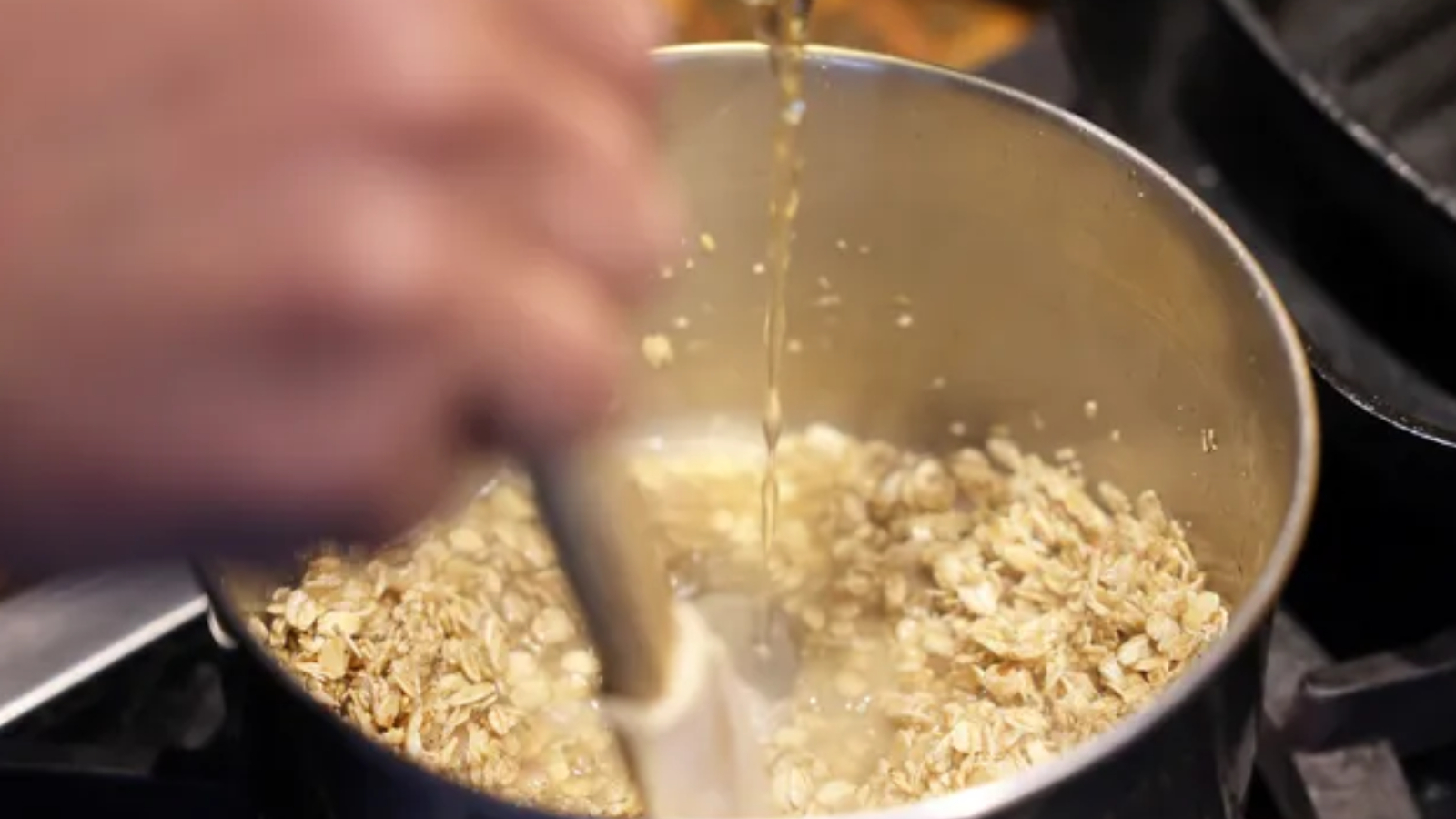
But even though we all seem to think porridge isn’t junk, does that mean it’s actually good for us?
Speaking to the American Heart Organisation (AHA), Candida Rebello, director of the nutrition and chronic disease research program at Louisiana State University’s Pennington Biomedical Research Center in Baton Rouge, said porridge has “many, many good qualities.”
Dr Frankie Phillips, a dietitian at The British Dietetic Association, seems to agree, telling HuffPost UK: “There isn’t a single dietitian who would consider oats to be anything but a valuable food for all ages.”
Oats are high in fibre, which Dr Phillips says “we eat far too little” of in the UK (20g on average rather than the recommended daily 30g).
Advertisement
They’re also a cheap source of vitamin B1, phytonutrients, and manganese.
Studies have linked the consumption of oats to lower harmful cholesterol and better weight management.
Additionally, the type of fibre oats have (beta-glucan) is a soluble fibre that helps you to stay fuller for longer and feeds your good gut bacteria.
“The fibre component alone is a nutritional wonder as it is a type of fibre called Beta-glucan, which studies have shown to be effective in helping to lower blood cholesterol levels and may also help to reduce rises in blood glucose levels after a meal,” Dr Phillips shared.
Beta-glucan is “quite unequivocally” good for our heart and gut health, Rebello says.
What about processed oats?
“Even when they’ve been refined as porridge oats they remain a highly nutritious, low-cost and versatile food containing fibre, B vitamins, a range of minerals and antioxidants,” Dr Phillips told HuffPost UK.
Instant oats may have a slightly higher glycemic index than their less-refined alternatives, Rebello says, meaning they’ll cause your blood sugar to spike a little more.
Advertisement
But it’s very hard to avoid any processing with oats ― even jumbo oats that take longer to cook have been steamed and rolled flat.
Oats aren’t like wheat, though. Their inedible hulls are always removed, but the fibrous bran makes up part of the body of the food rather than encasing it.
“In other whole grains, like in wheat, you can remove that bran layer,” Rebello shared.
“But in oats, this groat is very soft, so that bran layer cannot really be removed.”
That means all oats are wholegrain.
“Clearly, adding a heap of syrup or sugar to a bowl of porridge isn’t a great way of achieving balance, but a topping of chopped nuts, berries or dried fruit can pack in even more nutrients to an already top-notch breakfast choice,” Dr Phillips shared.
“If you’re limited to instant pots of porridge though, I’d suggest going for the plain type and adding your own toppings rather than pre-mixed pots which have added sugars,” he added.
But as for the oats themselves? Those are pretty great, experts seem to agree.
Preparedness is the key to surviving the throes of motherhood. It’s also the key to ensuring that the complexities of cross-country travel go off without a hitch.
But all the books on motherhood and travel checklists in every type A traveling mama’s arsenal could not prepare me for the realities of how the Transportation Security Administration, Southwest Airlines, a five-star Las Vegas hotel, and society in general judge mothers and their needs.
Advertisement
With equal parts excitement (finally, a bit of a break!), trepidation (is there enough pumped milk to last the baby four days without me? Can Dad survive the demands of the baby and the 4-going-on-14-year-old alone? Will the house still be standing when I return?) and guilt (oh, the guilt!), I arrived at Albany International Airport prepared to take my first work trip to Las Vegas since welcoming my infant son in 2017.
Traveling solo is stressful enough, but traveling as a parent can be downright traumatic. There are never enough hours in the day to address everyone’s needs, let alone your own, so systems and efficiency are a requirement of the prepared traveling mama. I rolled my colorful carry-on filled to the brim with four days of business-casual attire, TSA-approved clear containers with miniature versions of my daily skincare ritual (anything to minimize the bags under my eyes that felt big enough to accommodate my luggage), and my nondescript breast pump slung over my shoulder through the TSA line.
“Ma’am, you’re going to need to step to the side. You’ve been selected for additional screening,” a security agent told me.
My first thought was, “Did he just ‘ma’am’ me?” followed by a feeling of ease knowing motherhood taught me to expect delays.
Advertisement
I stood to the side in front of hundreds of passengers in the TSA security line as a female agent came over to pat me down in search of contraband. I never felt more dehumanized than when the agent continued to press at my swollen breast (ready to leak at any moment if I wasn’t reunited with my breast pump soon), asking, “What is this? What do you have in here?”
Having to explain that the hard, plastic piece she was feeling was a component of my nursing bra that allowed me quick access to pump or feed my child was humiliating, especially when she followed up with, “Where is the baby?”
The wrinkled nose and tight upper lip on the agent’s face when I told her that I was traveling alone on a work trip but had my breast pump with me was sadly the first humiliating scorn I felt that day. Where is the book that prepares you for how to handle the judgment and questioning of every decision you make as a mother when you need it?
Courtesy of Jennifer Rowe
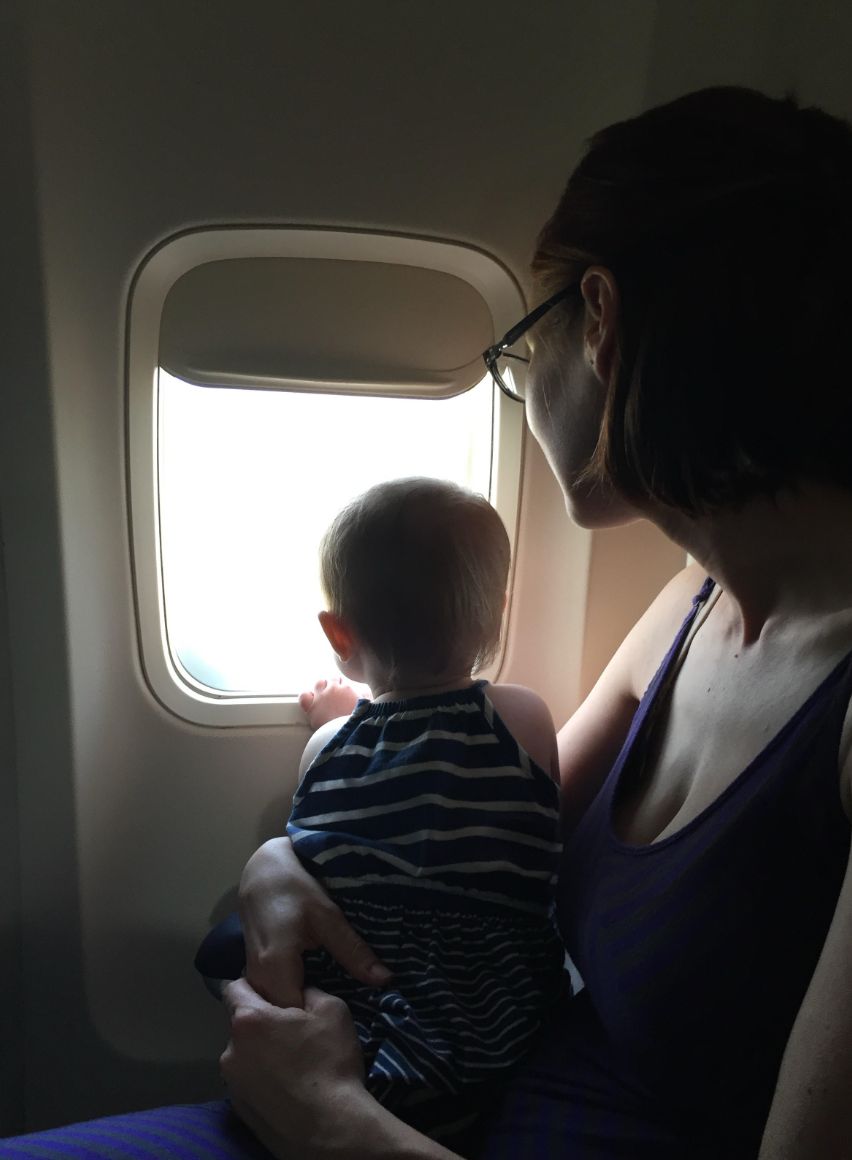
The author and her daughter traveling on Southwest Airlines.
I slinked away from the security line, cleared to access my gate, but with an incessant urge to justify the fact that I was traveling solo, leaving my baby behind in the capable hands of his other parent. My job required this travel, and my baby required my employment to meet his needs.
Advertisement
And yet, I didn’t say any of this to the agent. I continued to my gate with plenty of time to pump milk for my son in the airport’s nursing mother’s lounge, as well as relax a bit before the boarding process began. However, the lounge didn’t exist. The Friendly Airports for Mothers Improvement Act that I researched prior to the trip promised that the lounge would be available, but a posted sign stated, “Future Site of the Nursing Mother’s Lounge,” and that a bathroom was available to privately nurse or pump. I’m not sure about you, but I don’t prepare my meals in the bathroom. Why would I prepare my son’s meal there?
Feeling deflated (mentally, not physically, since my breasts were now engorged and still full of milk), I perked up when the Southwest Airlines gate agent announced it was time to line up for boarding.
“You’re going to have to check that. You’re only allowed one carry-on and one personal item,” the agent told me.
With the eyes of the rest of the passengers in group A focused on me, I confidently switched from my mobile boarding pass to the Southwest policy I had opened on my phone screen. I told the agent I specifically booked my flight with the airline due to its policy regarding passengers who are nursing or traveling with formula:
“We welcome nursing Customers who wish to breastfeed onboard or within our facilities. Baggage containing a breast pump and/or breast milk may be brought onboard in addition to the standard carry-on limit of one bag plus one small, personal item. You might be asked the nature of the additional carryon bag(s) throughout travel.”
Advertisement
“Where is the baby?” the agent asked me, the second time I’d been asked that day.
Courtesy of Jennifer Rowe
The entrance to Albany International Airport.
I quickly explained that I was traveling alone, but I had packed my carry-on and breast pump according to the terms of the airline’s policy. I was met with sighs of impatience and more judgmental looks of scorn, not only from the gate agent but from the dozens of irritated passengers that just wanted to get on board.
I reluctantly stepped out of my position in line and slinked to the side to speak with a second agent, who eventually gate-checked my carry-on luggage so I could keep my breast pump with me. And here I thought an infant would have been the more difficult travel companion.
After seven hours, three time zones, and with zero patience left, my breast pump and I arrived in the stunning lobby of my hotel with a desperate need to pump somewhere other than a bathroom so I didn’t give myself mastitis or a painfully clogged milk duct from lack of pumping on my usual schedule. If I lessened the number of times I pumped regularly, my milk production would change, and I’d be unable to keep up with the supply my son required.
“I’m so sorry, but your room isn’t ready yet. Check-in is at 3 p.m. You’re welcome to leave your luggage with our bellman and explore the resort until your room is ready,” the front desk associate told me.
Advertisement
It was only 11 a.m., but it was 2 p.m. back home. The thought of waiting another four hours before I could experience some sort of relief and fulfill my obligations as a mother nearly caused me to throw a temper tantrum that could rival any overtired toddler meltdown.
I pleaded with the associate, referring to the lactation stains that were visible through the layers of my nursing bra and cotton T-shirt, hoping for an act of compassion (or at the very least pity).
“Do you need to nurse your baby? Where is the baby?” the associate asked me.
Distraught, I explained for the third time that day that I was not with my baby, but my responsibilities as his mother did not stop because we were not physically together.
The microcosm of traveling as a working parent with my breast pump solidified the perception that, as a society, we have been conditioned to expect women to work like they don’t have children and to parent like they don’t work. It is difficult enough to navigate motherhood without the disproportionate judgment placed on women who continue to work and breastfeed.
Courtesy of Jennifer Rowe
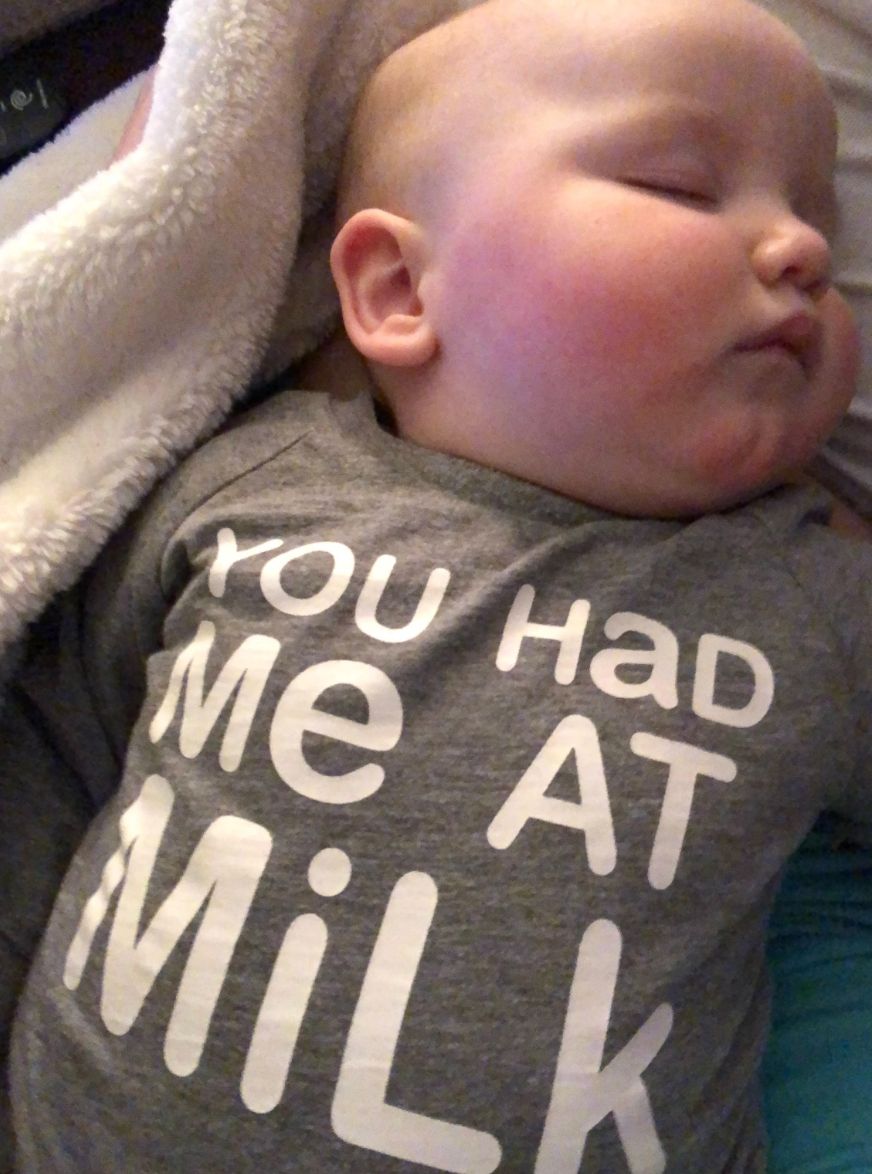
The author’s son asleep after a bottle of breast milk.
Until those regulations are consistently followed and employees are properly trained, treating traveling mothers with dignity and respect rather than judgment will go a long way in overcoming the unnecessary difficulties of an already stressful experience.
After four days of exhaustion playing the role of obedient employee, prepared mama (finding time to pump in between work meetings and obligations), and mentally readying myself for the complicated journey back home, I arrived at the Las Vegas airport as prepared as I could be to face the judgment and humiliation I’d just endured four days earlier. This time, I knew I’d be asked to step aside for additional screening as I now had 16 bags of breast milk that had to be tested before I could be cleared for my gate.
I took every precaution to make sure I could safely transport this liquid gold back to my son according to the TSA’s rules and regulations, so you can imagine my shock and horror as I witnessed a TSA agent open and spill not one but two bags of breast milk. Rather than apologise, the agent looked at me with disgust at the inconvenience I’d caused by their mishandling of my milk. Once again, I felt deflated over the journey I was about to endure as tears filled my eyes.
“No use crying over spilled milk,” the agent said to me.
No use indeed.
Note: HuffPost reached out to Southwest Airlines for comment but did not immediately receive a reply.
Advertisement
Jennifer Rowe is a mother of two in upstate New York who works full time as an executive in the fitness and development industry. As a freelance writer, her focus is on personal essays and narratives that highlight the many facets of identity a woman takes on within and beyond motherhood. When she’s not working or writing, Jennifer can be found with her nose buried in a book or on the sidelines of the baseball field and the dance studio cheering on her kids.
According to Menopause Support UK, there are approximately 13 million peri or post menopausal women in the UK.
Despite it being so common, and something that all women will go through eventually, there is so much we still don’t know about menopause. It’s not all hot flushes and mood swings.
Advertisement
In fact, according to Rebecca Elsdon, advanced skin specialist and owner of the re/skin clinic, “It’s important to shift the conversation from ‘fighting’ ageing to embracing skin health at every stage. After all, ageing is a privilege, and the focus should be on feeling confident in one’s skin, regardless of age.”
Elsdon partnered with global beauty and wellness brand Fresha, to discuss three skin issues you may not know are linked to menopause – and how to tackle them with the right skincare regime…
Sensitive to bruising and infections
Elsdon revealed that, as oestrogen levels drop, so does the skin’s ability to repair itself. Meaning that your skin may become more prone to infections and super sensitive to the environment. Suddenly, redness, irritation, and even conditions like rosacea can appear out of nowhere, with delayed wound healing also affecting the skin.
What to do: Strengthen your skin’s defences with antioxidant-rich products. Look for formulas with vitamin C and E to help your skin stand up to environmental stressors.
Advertisement
Visible dark spots
Hormonal shifts often make hyperpigmentation, like melasma or sunspots, more visible. These stubborn spots can linger and feel impossible to shift. However, according to Elsdon, the solution is quite simple.
What to do: Brightening ingredients like tranexamic acid, niacinamide, and vitamin C can help even out your skin tone. For tougher pigmentation, professional treatments like chemical peels or laser therapy might be the answer!
Yeast overgrowth
Finally, Elsdon revealed that a drop in oestrogen can mess with your skin’s natural microbiome, leading to yeast infections, especially in areas like skin folds. It’s an issue many women face but don’t often talk about.
What to do: Keep the area clean, use breathable fabrics like cotton, and if necessary, apply an anti-fungal cream. For extra protection, probiotic skincare can help restore your skin’s balance.
If you’ve had a rough night’s sleep recently, you may think to yourself ‘well, I’ll simply catch up on those missed hours of rest at the weekend’.
Unfortunately new research has revealed that actually this is a complete myth and that one night of restlessness can affect your attention, memory and cognition for – wait for it – a whole week.
Advertisement
The long-term study focused on one person’s brain and behaviour for five months using scans
As part of a unusual, long-term study, scientists tracked one person’s brain and behaviour for 19 whole weeks. The participant, first author of the study, Ana María Triana of Aalto University, Finland wore devices throughout the timeframe to track her activities and physiological markers and had routine scans to see how well her memory and cognition were working.
The results?
From the data gathered and published it would appear that our brains’ responses have two clear patterns – a response that could last around a week or a longer term wave of up to 15 days of gradual effects.
Things like focus after a bad night’s sleep fell under the shorter term response, while factors such as memory and attention were impacted for longer.
“We find traces of past behaviour and physiology in brain connectivity that extend up as far as 15 days,” the authors of the study, published in the journal Plos Biology, reported.
Advertisement
“Every day, we wake up as a slightly different person, as our mental states are influenced by many external factors,” they added.
“The quality of sleep, the level of physical activity, and the nature of our social interactions all affect the state of our brains at different timescales.
“Our findings suggest that behavioural, physiological and lifestyle factors correlate with brain connectivity across different timescales, in both the short term – less than seven days – and longer term, up to two weeks.”
The good news however is that physical activity was also found to positively affect brain region interaction and even slight changes in both mood and heart rate left lasting impressions for up to 15 whole days.