We’re finally in the autumn season which means it’s the perfect time to try out some new food and recipes. And when we think of pumpkins, we usually associate them with Halloween.
Environmental charity Hubbub found that around 12.8 million pumpkins were set to be carved out but not eaten, as one in seven people who celebrate Halloween said they don’t even think of pumpkins as food. Only 42% (two in five) realised you can eat a carving pumpkin from the supermarket.
Advertisement
In 2015, only 31% of pumpkins were actually eaten, rising to 46% in 2019 and 59% in 2020. However, more people are celebrating Halloween than ever before (up to 56% in 2020 from 50% in 2019), and those households which celebrate tend to carve an average of just over two pumpkins each.
There’s so much you can do with pumpkins outside of Halloween and we’ve got three recipes to highlight how versatile they are.
Advertisement
Response Source
For The Soup Lovers
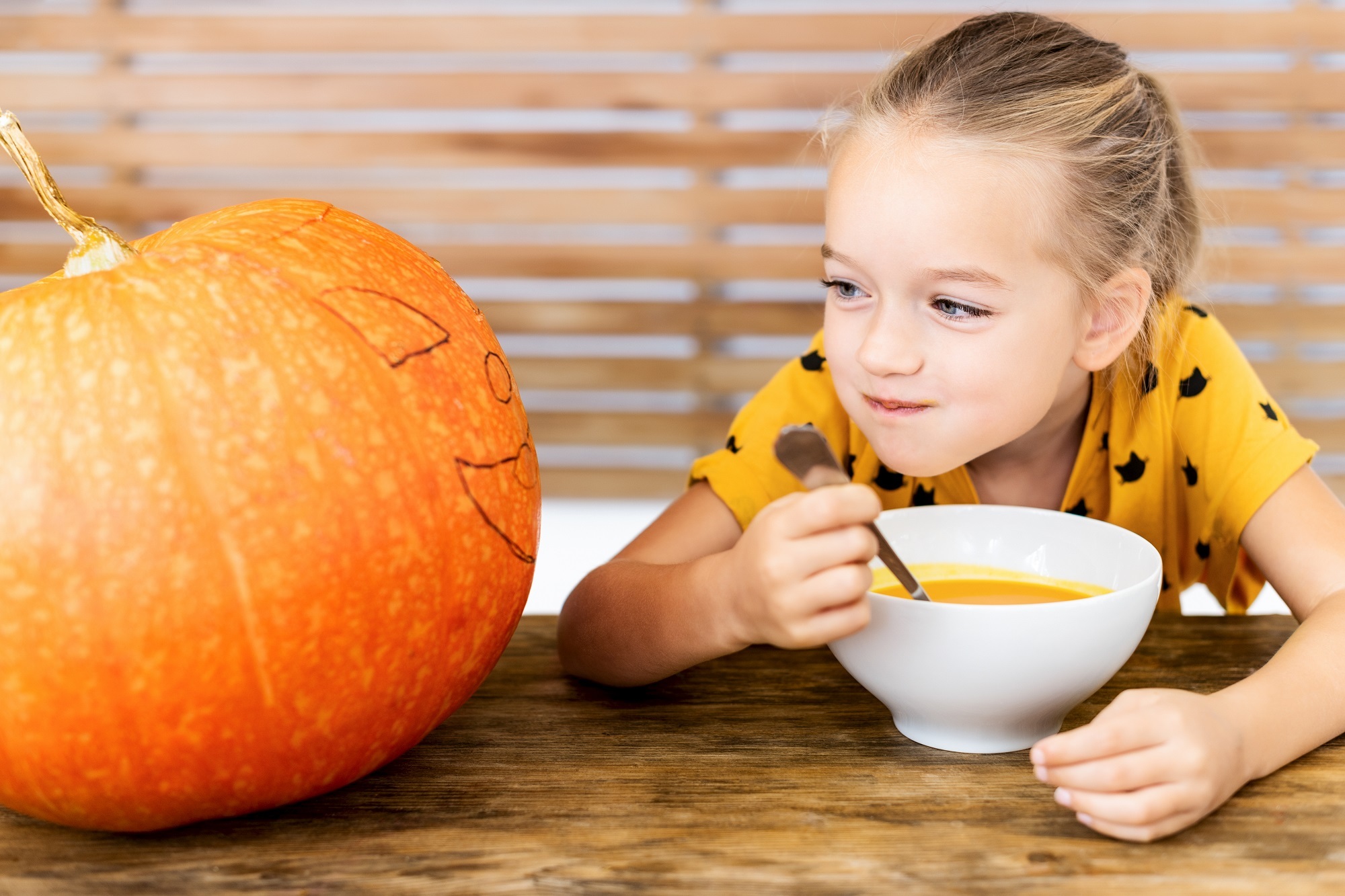
Soups were made for autumn time, especially this creamy pumpkin soup recipe created by the environmental charity Hubbub. This recipe is all pumpkin with some ginger and honey to add to the flavour.
Advertisement
Ingredients for the pumpkin soup:
250g butter
1 small onion, diced finely
800g pumpkin, peeled and cut into chunk
1-2 tsp runny honey
15g grated root ginger
1 vegetable stock cube or 1l of home made veg stock
100ml single cream
black pepper, to taste
2 tbsp freshly chopped coriander (optional)
Method:
1. Preheat the oven to 200ºC. Lay foil on an oven safe dish and spread the pumpkin seeds, add a splash of olive oil, salt, and pepper to taste. Put in oven to toast for 40 minutes. 2. Melt the butter in a large saucepan. Add the onions and pumpkin and cook on medium heat for 3-4 minutes until the vegetables soften but do not brown. 3. Add the honey, ginger, and vegetable stock and bring to the boil. Simmer for 15-20 minutes until the pumpkin is soft. 4. Stir in most of the single cream and place in a food processor. Blend until smooth. Season to taste with black pepper. 5. Serve garnished with a swirl of the remaining single cream, a sprinkle of coriander if desired, and the toasted pumpkin seeds.
Advertisement
For the fries lovers
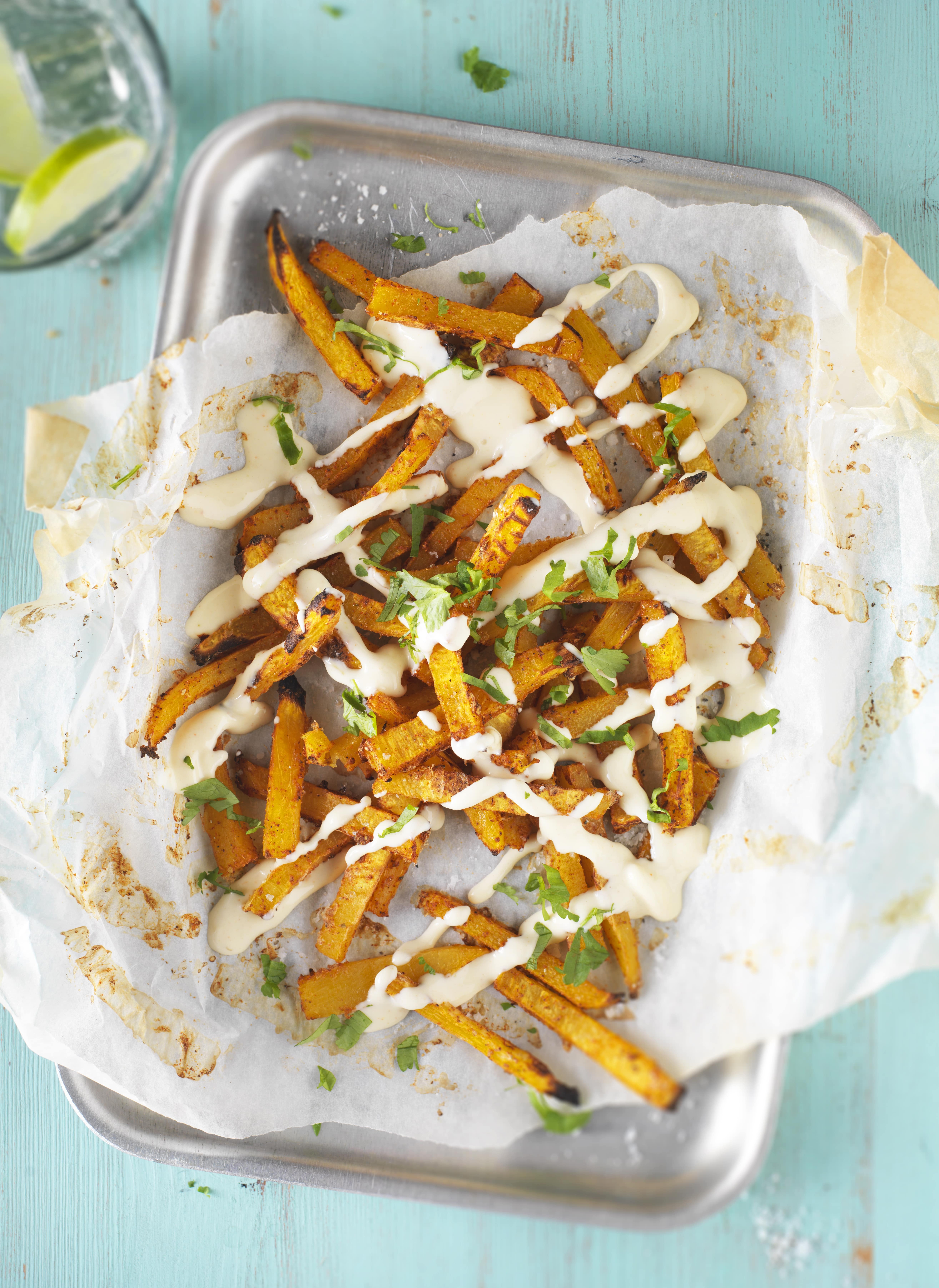
Who said chips have to be potato-based? These loaded pumpkin fries from the Primula cheese team will make you forget about your favorite junk food fries. Add in some cheese and jalapenos so you can add to the experience.
Response Source
Pumpkin Loaded Fries
Ingredients for the loaded pumpkin fries:
1 medium-sized pumpkin
2 tsp cornflour
2 tsp olive oil
1 tbsp fajita seasoning
150g Primula Cheese ‘n’ Jalapenos
Handful of fresh coriander, to garnish
Method:
Using a sharp knife, slice the pumpkin in half. Scoop out the seeds and pulp.
Remove the ends from the pumpkin, peel and slice into fries.
Place the pumpkin fries in a large bowl and cover with cold water. Let the fries soak for at least 30 minutes, but preferably overnight.
When the fries have finished soaking, pre-heat your oven to 220°C.
Drain the fries and pat dry with paper towels.
Fill a large zip-lock bag with the fries. Add the cornflour, seal the bag and shake to cover the fries. Add the oil and fajita seasoning to the fries and shake well, covering them evenly.
Spread the fries in a single layer on a lined baking tray. Allow the fries plenty of space to ensure they’re perfectly crisp. You may need a couple of trays.
Place in the oven for 10 – 15 minutes, flipping once halfway through, until the fries are crisp and golden.
Remove from the oven. Squeeze over the Primula Cheese and scatter the coriander.
Serve immediately.
For the toast lovers
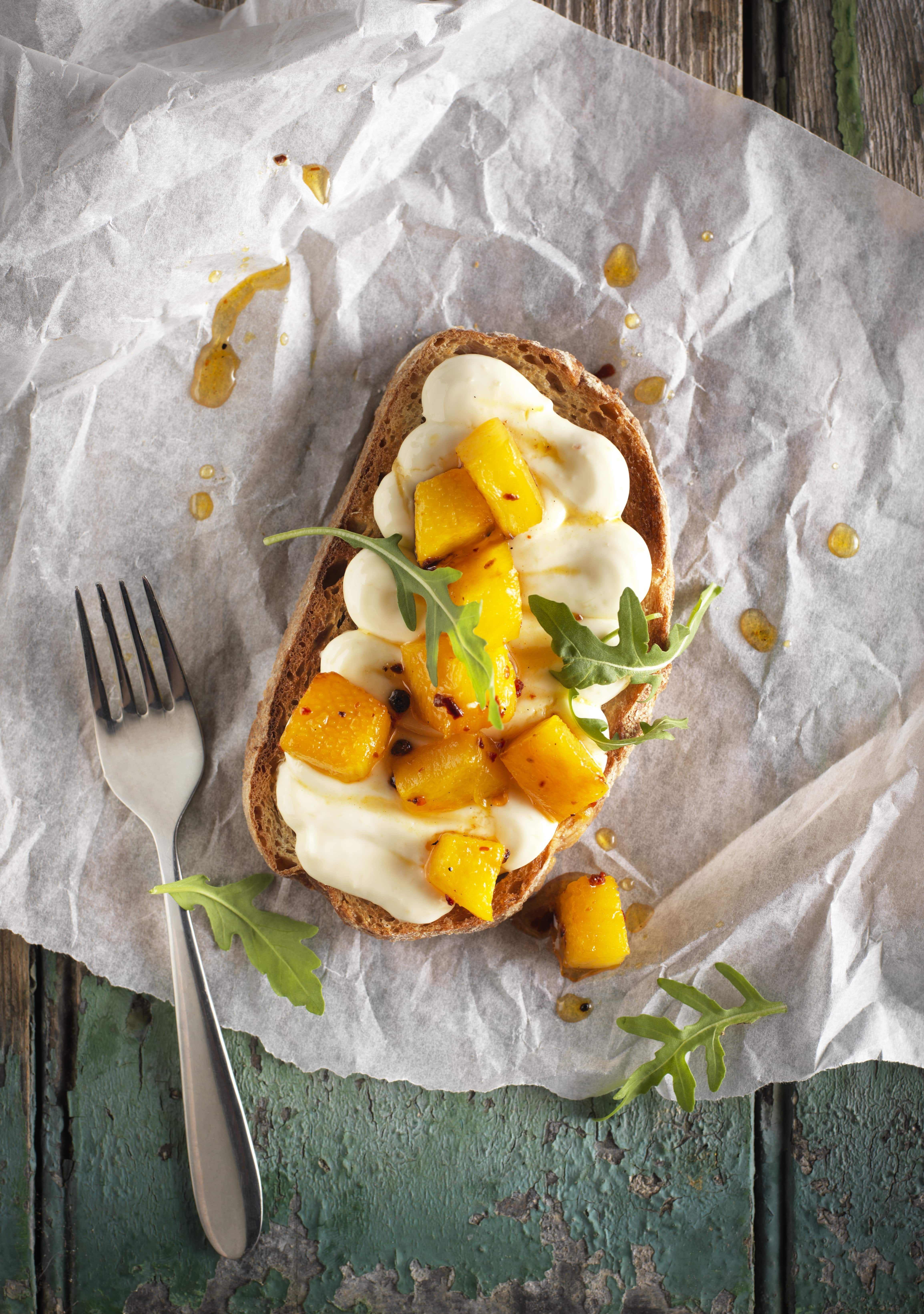
Another yummy recipe from the Primula team is this Roasted Sourdough Pumpkin recipe. Sourdough took off during the first lockdown and it might be time to go back to it with a twist. This roasted pumpkins sourdough recipe will be your guilty pleasure this autumn.
Response Source
Roasted Pumpkin Sourdough
Ingredients for roasted pumpkin sourdough:
Ingredients
Advertisement
500g pumpkin, peeled and diced
2 tbsp olive oil
Pinch of chilli flakes
2 garlic cloves, finely chopped
1 tbsp honey
1 loaf of sourdough bread, sliced
1 garlic clove, peeled
100g Primula Cheese ‘n’ Ham
Method:
Pre-heat the oven to 180°C.
Arrange the pumpkin in a large, shallow baking dish. Drizzle with olive oil and scatter over chilli flakes. Add the chopped garlic cloves.
Roast for 25 – 30 minutes, or until tender and lightly charred. Remove from the oven, add a tablespoon of honey and mix well to coat the pumpkin. Set aside.
Toast the sourdough until golden. Remove from the toaster and gently rub with the remaining garlic clove. Top with Primula Cheese ‘n’ Ham.
Packing a nutritionally balanced lunch that your kids will actually eat can sometimes feel like a crapshoot – the second you think you have your lunch game on lock, that’s the day they’ll come home with the elaborate bento box you packed them still intact.
As parents, we feel responsible for our kids’ health and that understandably translates into a lot of stress over what they’re eating or not eating.
Advertisement
“Your job as a parent is to offer healthy, nutritious foods as often as possible, on a consistent schedule,” saidAubrey Phelps, a functional perinatal and paediatric nutritionist. “But it’s up to your child to decide what to do with them.”
The best way to grow a happy, healthy eater is to keep offering what you’d ideally want your child to eat – and don’t take it personally if they choose not to eat it. When it comes to school lunches, Phelps recommends keeping it simple: “Focusing on specific vitamins or minerals can miss the big picture,” she said.
If you use the following macronutrient formula to pack your kids’ lunch and vary the sources of each, you’re almost guaranteed to have a healthy, balanced meal that will keep them focused and energised at school.
The Formula
Advertisement
50% veggies and fruit
25% lean protein and healthy fats
25% starch or whole grains
+ fluids
The ideal school lunch formula is often referred to asthe plate method – a visual representation of what a well-rounded meal looks like.
“Every child needs a healthy balance of macronutrients (protein, carbs, fat) and vitamins and minerals,” Nicole Avena, a New York-based health psychologist and author ofWhat to Feed Your Baby and Toddler told HuffPost. “The plate method helps ensure that no one nutrient is overpowering the rest.”
If your child has a lunch that’s mostly carbs or whole grains and some protein, for instance, they’ll likely feel tired in the afternoon. Carbs not only make you sleepy due to their ability to increase tryptophan and serotonin levels in the body (both of which are sleep-inducing compounds), but they can quickly raise your blood sugar, and the subsequent drop can leave you feeling tired, Avena said. Even a larger portion of protein and smaller amount of carbs can make your child sleepy.
Advertisement
“Proteins and fats are often more difficult to digest than carbs and nutrients that come from fruits and vegetables,” Avena said. “This can potentially lead to fatigue, since your body needs to use up more energy during digestion.”
Making sure their lunchbox contains every element of this formula means your child will consume the balance of nutrients necessary to focus and enjoy their school day without feeling sluggish.
Let’s break down the formula.
Veggies And Fruit – 50%
Try: carrot sticks, bell pepper strips, grape tomatoes, cucumber, grapes, apple slices, watermelon, berries.
The biggest portion, or half of the lunchbox, should contain 2-3 different kinds of vegetables and fruit – preferably, two vegetables and one fruit, as children’s daily intake of vegetables tends to be lower than their fruit intake, according to a2019 review published in the American Journal of Lifestyle Medicine.
Claudia Totir via Getty Images
This is actually an example of what NOT to do. Don’t go heavier on fruits than vegetables, since most kids tend to eat more fruits anyway.
“Vegetables and fruit provide antioxidants to fight off disease, including vitamin A for skin and eye health, lutein for eye protection (from blue light) and vitamin C for immunity,” said Amy Shapiro, New York City-based registered dietitian and founder ofReal Nutrition.
Produce is also rich in water to keep kids hydrated, and contains fiber for sustained energy and improved digestion.
“Protein is the nutrient that takes the longest to digest, so having it as part of your child’s lunch will keep them full and their blood sugar stable,” Shapiro said.
Depending on the type of protein provided, it may also contain amino acids for growth and muscle repair, zinc for immunity, and iron and vitamin B12 for energy.
On to healthy fats: “Fat helps to keep you full, provides energy and allows for the bioavailability and absorption of many of the vitamins we eat through other foods,” Shapiro said. “By including fat in your child’s meals, you’ll help them stay full longer and be more energized.”
Enough fat is often cooked into your food or a part of the meal already, so it doesn’t necessarily need to be a separate addition, Shapiro said. (Eggs and nut butters, for example, offer a one-two punch of protein and healthy fats.)
“Carbohydrates are broken down into sugar in the body, providing energy for immediate use and reserves for later use,” Shapiro said. “Ideally, whole grains or whole wheat should be included, as they’re rich in nutrients, digest more slowly and are high in fiber to aid in balanced blood sugar and digestion.”
They also contain B vitamins, which are important for energy and metabolism.
But if your child isn’t the biggest fan of whole grains, don’t fret: “Vegetables and fruits also fit into the carbohydrate category, so you don’t always have to think about bread or grains if your child doesn’t like them,” Shapiro said.
Starchy vegetables and fruit include carrots, corn, potatoes, winter squash and bananas.
Advertisement
Fluids
Even just mild dehydration can cause a decline in cognitive function.
“Being dehydrated can affect reaction time, attention, memory and reasoning,” Avena said. “Children are potentially more at risk of dehydration because they’re more likely to be dependent on someone else for their fluid intake.”
Send your child to school with a large water bottle so they get enough fluids during the school day — and remind them to keep it at their desk.
“Out of sight equals out of mind,” Phelps said. “I also recommend a water bottle that’ll keep the water cold or room temp (however your child prefers) so they don’t get turned off by drinking warm water.”
It doesn’t have to be plain water, either: They might prefer fruit-infused, coconut or sparkling, or a different liquid entirely, like milk or 100% fruit or vegetable juice.
“If your kid really struggles to drink enough, consider sending hydrating foods,” Phelps said. “Soups, smoothies, juicy fruits like grapes and melon, bell peppers, even yogurt, are all hydrating options that can help keep kids on track.”
The easiest way to measure out lunchbox portions
Children are intuitive eaters – they’ll eat when they’re hungry and stop when they’re full, with the amount of lunch they eat fluctuating day-to-day – so there’s really no such thing as perfect portions to pack.
The easiest way to ensure you’re in the ballpark? Use your child’s hands as your guide.
Advertisement
Think of your child’s hands as a plate – palms up, pinkies together. Half of their “plate” (or one hand) should be veggies and fruits. The palm of the other hand protein, and fingers complex carbs.
“Using this method, the amounts needed change as your child grows (and so will their needed portion sizes),” Phelps said.
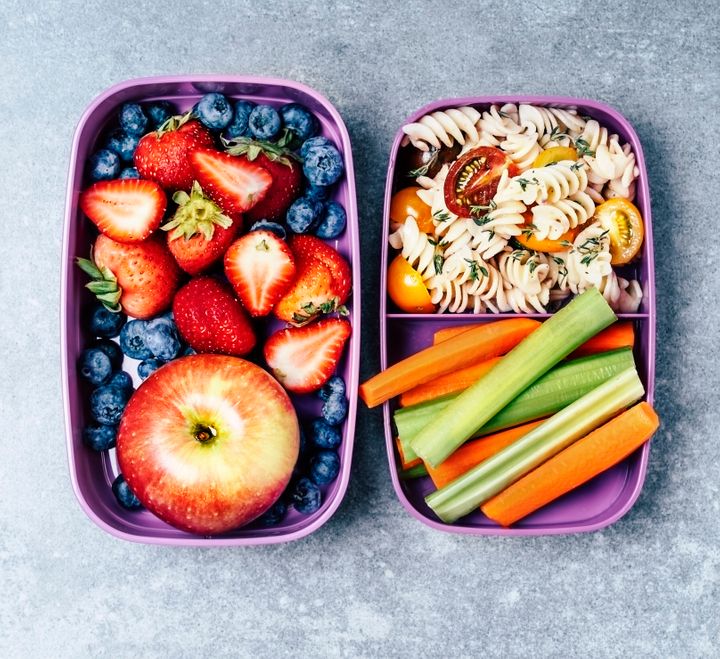
She’s also a fan of thebento box-style lunch containers, which are already sectioned off into child-friendly portions. You can fill one section with vegetables and fruit, one with protein and healthy fats and one with starch or whole grains sans guesswork. These ratios don’t necessarily need to be tweaked if your child has specific dietary needs.
“Appropriate substitutions are needed to ensure they have a filling and nourishing meal, regardless of the nutrition modifications that are needed,”Maya Feller, a Brooklyn-based registered dietitian, told HuffPost. The overall rule of thumb, however, generally stays the same.
Ratios and formulas should only be used as a guideline, not a hard rule, because children themselves should dictate how much they need to eat.
“If parents find their child is consistently eating 100% of foods packed throughout the day, it could be a sign they’re going through critical stages of development and require more energy,” Feller said.
It’s also important to keep in mind this is one meal out of their entire day — so if a lunchbox comes home practically full, it’s not game over. “We want to look at nutrition over the course of the day, not one meal,” Shapiro said.
When in doubt, you can check in with your kids: Ask how lunch was and make food and portion modifications based on the feedback given.
Remember: nutrition is cumulative
View your child’s nutrition over the course of a week, not a day – or a meal. “They’ll get what they need over time,” Shapiro said. “Some days are great and some days are off and it all balances out.”
Advertisement
The most important thing a parent can do is create a good relationship with food. That’s more important than creating the perfect lunch.
“Kids tend to be more black and white thinkers, so I don’t recommend focusing on ‘healthy’ or ‘unhealthy’ or ‘fun’ foods,” saidKrystyn Parks, a California-based paediatric registered dietitian. “All food is food. All foods have a purpose.”
Perfection isn’t the goal – setting routines that work for you and your child are.
“Find your own routine, get your kids involved in the choices and don’t measure yourself against another person,” Feller said. “No one day – or meal – is going to be perfect in terms of nutrition.”
Our menstrual cycle affects so much of our life. From hormonal acne and serious mood swings to generally feeling quite crappy, I’m sure if some of us had the option to skip our periods we would. And f, like me, you’re someone who has always had bad period pain, it can leave you feel a bit helpless.
There are lifestyle adjustments we can adopt that can help towards making our periods easier to deal with, though – and one of them is the food we eat at different stages of our cycle.
Advertisement
Lifesum, a nutrition app that aims to help users improve their baseline health through what they’re eating, has found that small changes to your diet can improve your symptoms during each phase of your menstrual cycle.
“What you eat plays a huge role in overall health creation, including how you feel throughout your cycle,” says Dr Alona Pulde, star of the Forks Over Knives documentary and member of the Lifesum health advisory board.
Advertisement
“Most people think of periods as just a week-long occurrence, but in reality, it’s a month-long cycle and nutrient-dense foods can help replenish your body and balance your hormones throughout.”
LaylaBird via Getty Images
Roxane Bakker who is a registered dietician and head of nutrition at Vitl agrees that it’s important to look after yourself when you’re menstruating, particularly when it comes to your diet. “Choosing foods that can help restore balance to your hormones are always a good option,” she says. “Vitamin B6 specifically is a key player in balancing your hormones. What you eat can sometimes help to relieve some of the uncomfortable symptoms you experience on your period”
Advertisement
There are four different stages to the menstrual cycle: the menstrual phase, the follicular phase, the ovulation phase, and the luteal phase. Each phase of our cycle requires different care and dietary needs, Dr Pulde suggests.
While dietary tweaks can help you ease your period pains, they aren’t solutions to medical conditions such as endometriosis, PCOS, or dysmenorrhoea. If your periods are so painful they’re affecting day-to-day life, speak to your doctor.
“Remember, everyone’s body works differently, and our needs vary,” adds Dr Pulde. “Focusing on a balanced, varied nutrient-dense diet that provides enough energy is key – not only for performance, but for our overall wellbeing.”
The Menstrual Phase
Advertisement
This first phase of the menstrual cycle is the time where our oestrogen and progesterone levels are lowest; you shed your uterine lining, and bleeding occurs. This usually lasts between three and seven days. During this time you can experience cramping, fatigue, low back pain, and mood swings.
This is a time when you’re losing a lot of blood so it’s important to stock up on iron-rich foods. Animal products such as red meat, poultry, and fish (heme iron) or plant-based products, including leafy greens, beetroot, and legumes (non-heme iron) are essential during this time.
Foodstock / 500px via Getty Images
“As you can imagine, fruit and vegetables are a staple when it comes to any healthy diet,” Bakker adds, “but they’re essential when it comes to managing period cramps. They’re a vital source of fibre which in some cases can help to relieve the stomach pains associated with menstruating.”
Be sure to avoid foods that are highly processed during this time, such as sweetened breakfast cereals. “They can make period symptoms worse, causing inflammation and bloating,” says Bakker. “Caffeine and alcohol also impact inflammation. And studies show that they can worsen PMS symptoms.”
The Follicular Phase
nextfood / Imazins via Getty Images
During this phase, which can last anything from 11 to over 20 days, depending on the length of your cycle, oestrogen levels start to rise again. Your energy should increase and you may notice you have greater motivation.
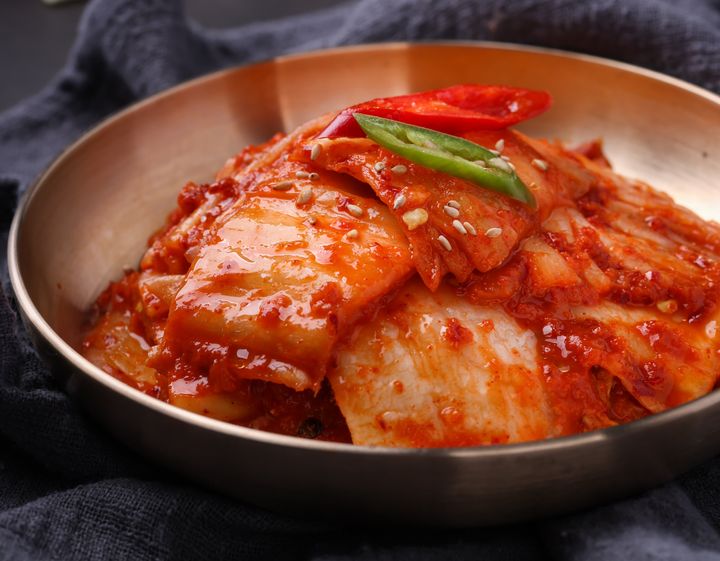
Eating fibre-rich foods (fruits, vegetables, whole grains, and legumes) and fermented foods (kombucha, kimchi, sauerkraut) will help to metabolise and clear excess oestrogen.
The Ovulation Phase
Claudia Totir via Getty Images
You may experience some cravings at the time of ovulation, around day 12 to 14 of your cycle, so you should be eating foods that are rich in fibre and high in nutrients and consuming enough of these food types to fill you up.
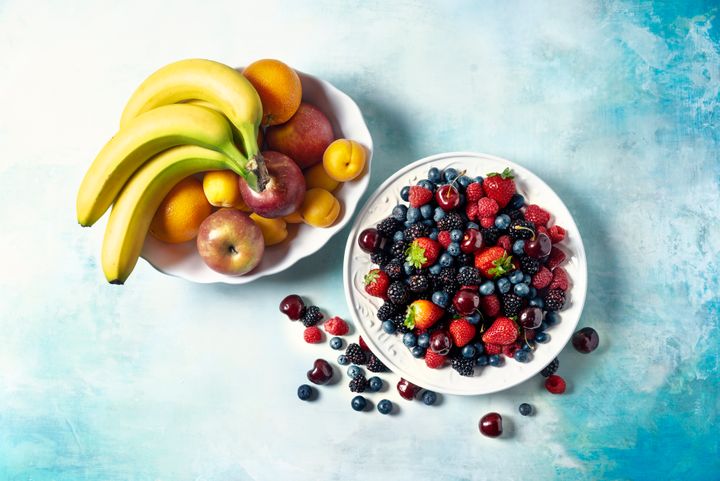
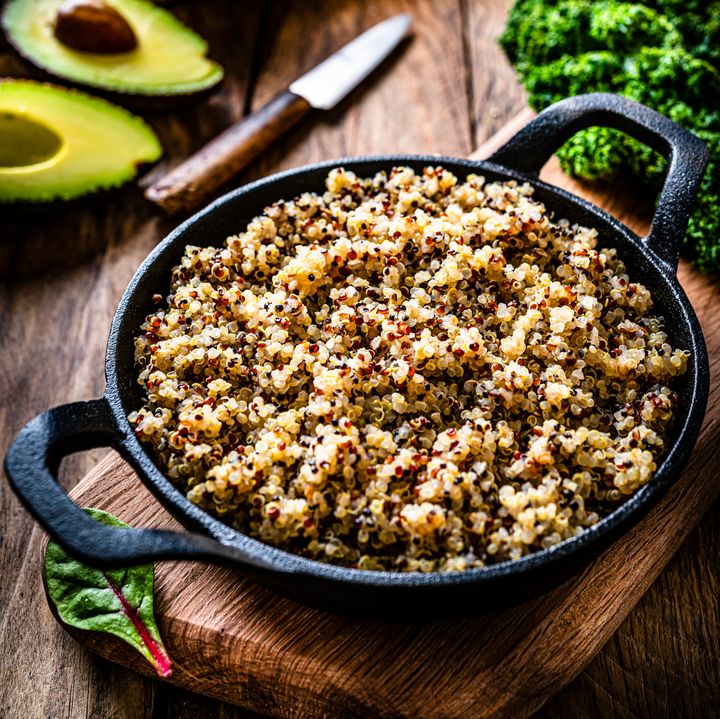
These include fruits (berries, apples, pears, bananas); vegetables (broccoli, Brussels Sprouts, artichoke, kale, sweet potatoes); legumes (beans, lentils, peas); whole grains (quinoa, oats, whole wheat pasta, barley); and nuts and seeds (almonds, pistachios, and sesame/pumpkin/sunflower seeds).
Advertisement
The Luteal Phase
fcafotodigital via Getty Images
The luteal stage of our cycle begins after ovulation, when both oestrogen and progesterone levels rise. During this time, pain can feel a bit more intense as large amounts of prostaglandins, a chemical that stimulates contractions, is released.
To help experience less cramping and lesson the physical symptoms of PMS, tuck into anti-inflammatory nutrients such as omega 3 (walnuts, flaxseed, chia seeds), antioxidants like vitamin C (found in fruit – particularly berries – and vegetables) and vitamin E (found in leafy greens, avocado, and whole grains).
“In this phase, it’s common to feel tired,” says Dr Pulde. “Eat complex carbs that provide fibre and vitamins to balance moods and curb cravings.”
Avoid or cut back on caffeine and alcohol if you can, she adds, and if you find your energy levels dropping, reach for the healthy snacks, such as hummus and veg sticks or homemade fruit and nut bars.
It was parents’ weekend at my daughter’s college, and we were treating her to dinner at an off-campus bistro. The waitress arrived, and she gave her order: “I’ll have the baked salmon with a side of sauteed spinach, please.”
I dropped my menu, my jaw and the mistaken notion that I knew what this kid had been up to since we’d dropped her off a couple of months ago. I had spent most of the past 18 years trying to nudge her – sometimes gently, sometimes with growing desperation º into eating something, anything, other than noodles with butter and salt, half a bagel with plain cream cheese or – her true love –Rold Gold Tiny Twist pretzels.
Advertisement
The idea of fish had always made her shudder. The mere mention of “green things” like spinach could lead to tears. So what was up with her dinner order tonight? She shrugged. “They serve salmon in the dining hall sometimes, and my friends all eat it. Everybody at school likes spinach, too.”
I feigned disinterest and changed the subject, but inside I was doing the parental equivalent of a victory dance. I had relinquished my title as mother of the world’s most adamant whiteatarian, all for the low, low cost of tuition at a liberal arts college that was 1,000 miles away from home.
Advertisement
Your kid is hardwired to act like this
Before I do any more gloating about the sight of my beloved progeny actually putting spinach in her mouth, let’s take a step back to those early years, when I was driven to frustration by a girl who refused anything that wasn’t white. What made her act that way, anyhow?
Advertisement
Well, mums and dads, you already know that children are annoying for lots of reasons, including a tendency toward tantrums, a love of pre-dawn wake-up times and, of course, picky eating. Would it help if I told you that their eating preferences are pretty much hard-wired into their sweet-smelling little noggins?
Aniko Hobel via Getty Images
Look familiar?
The National Institutes of Health says infants have an “innate preference for sweet and salty tastes and tend to reject sour and bitter tastes.”
And, guess what, it gets worse. “After the age of one, vegetables begin to taste very bitter to children,” Alisha Grogan, a paediatric occupational therapist who specialises in picky eating and sensory processing, tells HuffPost.
“When humans had to forage in the wild, children’s sensitive taste buds prevented them from eating anything poisonous.”
Advertisement
Some kids remain loyal passengers of the S.S. Sweet And Salty even as they get older, often to the exclusion of any food that might actually provide, you know, some nourishment. A range of different studies have reported that, by the time they reach age 3, between 6% and 50% of kids are described as picky eaters by their parents.
And if you think they’re doing this just to piss you off, you’re right, at least when it comes to the younger set. “Toddlerhood is when many kids start to exert their autonomy and push boundaries with parents,” paediatrician Dina Kulik tells HuffPost. Not only do they get to remind you who’s boss, they also literally make themselves happy with each bland, beige bite. “Simple sugars are easy to eat, they taste good and they provide a quick dopamine hit, much like other stimulating drugs,” she says.
Can your kid live on beige food alone?
Is a diet of pasta and bread sustainable for health? Kulik said there are concerns. “The risk of iron deficiency, especially, is high on a very starchy diet,” she says. Even though many manufactured grain-based products are supplemented, she said, kids following the whiteatarian plan are often low in iron, vitamin D, calcium and B12.
MelindaSiklosi via Getty Images
Think this bagel with cream cheese looks plain enough? Think again – those sesame seeds could even be too much for a picky eater.
In the short term, anyway, the nutritional prognosis is not totally dire. One study said that, while picky eaters did tend to have lower levels of zinc and iron, their overall macronutrient intakes were not severely reduced. And many of us know at least one adult who still lives on a mostly white diet and seems to survive, if not thrive.
“Many kids can survive on white carbs alone, as long as they’re eating enough of them,” Grogan says. “Carbs often are fortified with all sorts of vitamins and nutrition. However, depending on how limited a child’s diet is, they could have some nutritional deficiencies.”
The only thing you have to fear
In the comedy special John Mulaney & theSack Lunch Bunch, a boy named Orson Hong sings an ode in which he declares that “a plain plate of noodles with a little bit of butter is the only thing I’ll eat.” His heartfelt song is more a lament than an homage, and it’s clear that his character is anxious and fearful about ingesting anything but this classic whiteatarian meal.
Fear is a big part of what’s going on, said Amanda Smith, a programme director at Walden Behavioral Care, and it’s important for both kids and parents to acknowledge that. “Some kids might be afraid of different textures, or they might fear that a food will make them choke or vomit,” she tells HuffPost. “It can be overwhelming, scary and hard, so it’s important for parents to try to understand that.”
“Short-order cooking and pressuring a child to eat during meals can lengthen the time a child is selective about what colour foods they’ll eat.”
Keep in mind that once they’ve passed toddlerhood, this eating pattern is about them, not you. “If an older child is still eating only white foods, they aren’t trying to punish their parents or stress them out,” Grogan says. “Eating is hard for them. One way to help is to neutralise the topic, and to avoid labelling foods as good and bad or healthy and not healthy.”
Advertisement
Here’s what you can do
“I suggest not fighting or negotiating,” Kulik says. She suggested an attitude of: “Here’s the plate of food. If you want it, great.” Then, she advises, “If not, don’t start a battle. There is evidence kids need to try a food more than a dozen times to realise they like it. When you simply give in and offer the carbs, they don’t learn to try anything new, and the fear and pickiness persist.”
“Short-order cooking and pressuring a child to eat during meals can lengthen the time a child is selective about what colour foods they’ll eat,” Grogan adds.
In extreme cases, a child might have what’s known as Avoidant/Restrictive Food Intake Disorder or ARFID. The disorder, Kulik explains, is characterised by “very selective eating habits or disturbed feeding patterns.”
She cites estimates that anywhere between 5% and 14% of children in inpatient eating disorder programs, and up to 22% of children in outpatient programs, have the disorder. “It’s important to note that this is a true mental disorder, and the vast majority of kids who are whiteatarians don’t have it,” she says.
ermingut via Getty Images
Don’t forget about tan foods, the close cousin to white foods.
“If you have concerns, start with a visit to your child’s medical provider,” Smith suggests. “They’ll be able to assess any medical factors that could be playing a role, and they can check your child’s growth progress, weight and vital signs, and then run some lab work.”
You’ll also want to pay attention to patterns that develop at mealtimes. “If kids are having emotional tantrums or breakdowns over new foods being near them or on their plate, or if they’re gagging or throwing up when new or other-colored foods are near them, then it could be something more serious,” Grogan says.
“If your child is limiting intake to fewer than 20 foods, or you’re noticing physical symptoms relating to their diet, consulting with a health practitioner is advised,” says Sarah Appleford, a registered clinical nutritionist with an interest in children’s health, including fussy eating and gut issues.
“It’s more than just a phase if they’re refusing food at most meals, exhibiting anxiety or stress, have undeveloped eating skills or sensitivities based on texture, colour, appearance, noise or smell at the table and away from the table. Physical symptoms can include slow growth, fatigue, pallor of the skin or complaints of tummy pain or gastrointestinal upset such as constipation.”
Look to the rainbow
Advertisement
Along with every other awful thing, this issue is on the rise, according to the experts. “We’re seeing a growing number of kids with anxiety disorders, and extreme fussy eating behaviour is often a component,” Appleford says. But there is some good news, she adds: “Most children will naturally grow out of fussy eating as they gain more skills and confidence around food.”
“Parents can find it to be very stressful to have a child who only eats white foods, because it’s difficult to go to parties or even pack a lunch,” Grogan says. “But kids — even the pickiest — can learn to eat a variety of different coloured foods.”
In the meantime, listen to the experts and try to cut yourself (and your child) a little bit of slack. You might also want to start saving for that liberal arts college experience that will liberate their taste buds and turn them into rainbowtarians, just a few long years from now.
As more people have been working from home over the past year, coffee drinkers have had a chance to explore coffees apart from their usual Starbucks or Costa. Home baristas are digging into specialty coffee, grinding their own beans and making cold brew, Japanese iced coffee, espresso and pour-overs in their own kitchens. As a result, they’re realising there’s a whole unfamiliar world of coffee beans out there – one of which is single-origin coffee.
Most third-wave specialty coffee companies offer both single-origins and blends, but what’s the difference between them and what should you be buying and drinking?
Advertisement
What is single-origin coffee, anyway?
Essentially, single-origin coffee comes from a single producer, crop or region in one country.
Advertisement
“Single-origins are small lots and typically, depending on how granular you get, single-origin can be from a single country or region, and you can go all the way down to as granular as a specific lot size, which would be a small section of a [coffee] farm where they’re growing one specific type of coffee,” explains Jeremy Brooks, Verve Coffee Roasters’ head of sourcing and green coffee buying.
“Single-origins really do highlight the terroir of a specific place – so how the coffee tastes in that place,” Brooks adds. “Single-origins are typically very expressive of the country where they’re purchased from. Ethiopian single-origin coffee is like eating a peach. Whereas with blends, we can play around and position them in a way that actually gives you a little bit more of a dynamic range: Instead of having a peach, you have a peach cobbler.”
Advertisement
Most blends contain single-origins, but the difference comes from how a coffee roaster will build a flavour profile. “We’re taking coffees that maybe have one attribute of chocolate or plum and then you’re building something in order to bring a coffee to a customer that would allow them to experience it in a certain way,” Brooks explains.
Which tastes better: single-origins or blends?
“I think there is a time and place for everything,” Brooks says. “Early on in my coffee career, I was a die-hard single-origin maker. I would only drink single-origins. As I developed my coffee career and I’ve also become closer to the sourcing and roasting side, I now understand the value in both. They both play an important role in sourcing and the supply-chain side of how we support farmers and kind of what you want to taste. Like anything in your life, it depends on your mood.”
“Blends are a way that roasters communicate a vibe or something about themselves, something signature,” Talitha Clemons, owner of the Oklahoma City-based mobile coffee company Bright Vibe Coffee and a coffee taster competitor, tells HuffPost. “Maybe they want to create something that will remind folks of time around a fire or of holidays. When you taste a blend called Fireside, Sweater Weather or Tropical Weather, you are in a frame of mind to let that coffee take you to a place or a moment or memory, rather than focusing so much on given tasting notes. What is difficult for me is that a blend can contain multiple coffees and you may get some information about the regions the coffee comes from, but the level of transparency changes.”
Advertisement
Verve Coffee Roasters
Single-origin coffee can come from a single producer, crop or region in one country.
Veronica P. Grimm is the founder of Glitter Cat Barista, an inclusive organisation focused on helping minority groups become baristas and providing them resources to compete in coffee competitions. Grimm prefers to work with blends in these competitions because it balances the coffee with more depth. “Basically, [it’s] like having a soprano and a bass in a choir,” she says.
“When they are in harmony it is beautiful.” Despite preferring blends over single-origins in the field, Grimm likes to drink single-origins. “Blends bring together something magical in a cup of coffee,” she says. “But blending coffee takes work and on a daily basis I like to just enjoy what I’m drinking without too much thought.”
While both single-origins and blends will appeal to different types of coffee drinkers, Brooks said some people complain about how acidic or sour single-origins can taste. “It is a little bit more of a unique flavour profile that you have to grow to love,” he says. “Sometimes people can take that as a negative. On the reverse, some people can say that blended coffees are boring, they don’t have any flavour at all, that you have to put milk and sugar in them just to make them taste good.”
Clemons points out that just because a blend might not taste like a single-origin, the blend’s quality isn’t necessarily inferior. “Blends can be really tasty,” she says. “I am all for adding sugar and milk if and when you want it, but feeling the need to add something to coffees like milk or sugar because something it is lacking can have more to do with that coffee not hitting the notes you hoped it would.”
Brooks recommends that single-origins are best made with paper filter pour-overs, or a Chemex. As for blends, “If you’re looking for something with more body and you’re wanting the coffee to showcase a little bit more of that blend traditional flavor profile, using a drip pot or doing a French press is really good with blends,” he advises.
Single-origin costs a bit more than blends
During the pandemic, Verve saw an increase in online sales, with single-origins outpacing blends – Brooks thinks more at-home brewers are curious about specialty coffees. Single-origins tend to cost more than blends, but customers are willing to pay the higher price points.
“I think that people should drink the coffee that they can afford. Things are rough and there are folks who love to drink several cups of coffee throughout the day. I say just buy the best coffee that you can buy,” says Clemons.
For novice single-origin drinkers, Brooks recommends they start with mild Latin America coffees from Costa Rica and Colombia. “They tend to be inherently sweet and really approachable,” he says. “As you progress, you can get into some of the more exotic profiles, getting into Africa, especially East Africa.”
Whether you buy single-origin or a blend, here’s why you should always look into where your coffee is sourced
Advertisement
As both Brooks and Clemons stated, the most important part of buying any coffee is the ethical practices of the company. “I would love it if people drank more coffee that is sourced ethically from roasters who practice direct trade, safe and equitable work environments for employees, and who bring us tasty coffees,” Clemons said. “There is a need for wage transparency, racial equity, access and so much more in the industry as a whole.”
Brooks echoes similar thoughts. “Whenever you’re really looking to buy coffee, you’re really looking at the underlying missions and values of the people who are buying the coffee and the coffee that you’re drinking,” he says.
“If there’s a coffee company that’s buying really amazing blends and they’re paying their farmers really well, and they’re making a blend and that’s your approach, I think as long as you’re buying the coffee you know is supporting the long-term sustainability of the coffee industry as a whole, then you’re doing your part. If some coffee companies are really doing that just through their single-origins, then I think you should buy single-origins. But if they’re doing it through their entire buying philosophy, with their blends through their single-origins, I think it’s perfectly fine to buy from either side.”
The bottom line: Give new coffees a chance
Changing one’s coffee palate takes time, and a big part of that is education. “I think a lot of people are like, ‘This is weird. I’m out. I’ll just go back to whatever I was doing before,’” Brooks says. “I think once you start understanding it, you start to appreciate it because you realise this is intentional. This doesn’t just taste this way by accident – they’ve actually done something to make it taste this way, and that’s really cool. I think that once people start taking the time to learn about the coffee – the processes and the growing – and they learn about how complex it can be, they start to appreciate it.”
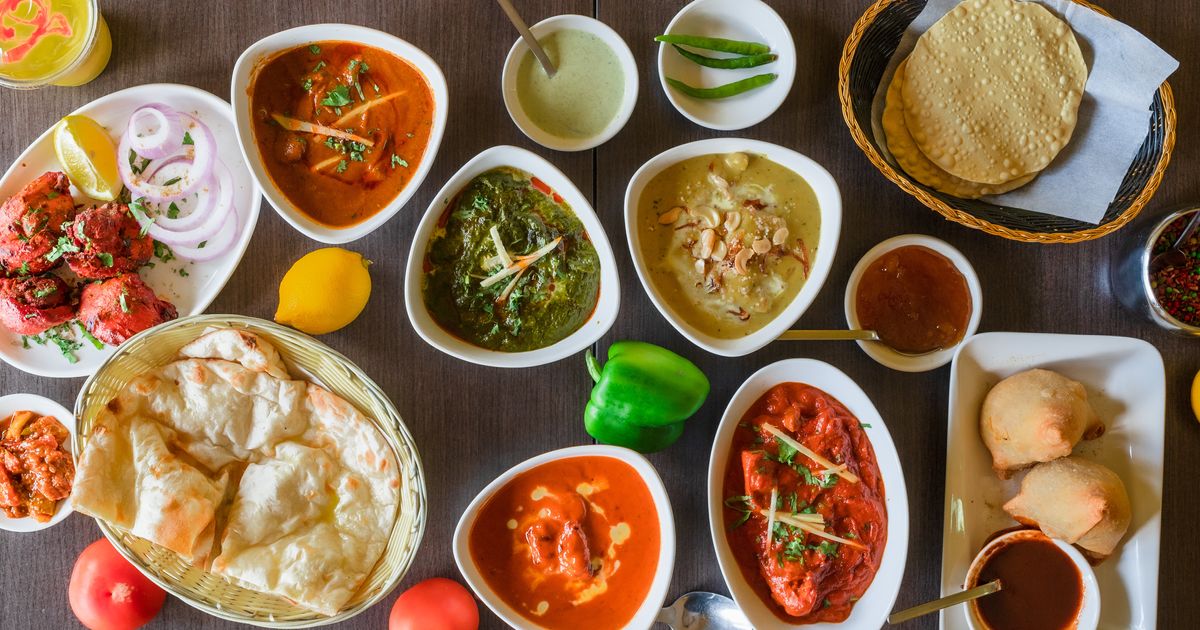
That’s after two food bloggers questioned why many South Asian dishes are often categorised under the umbrella term “curry”.
Advertisement
Chaheti Bansal, a chef by hobby based in California, posted an Instagram video pointing out the colonial origins of the word.
The 29-year-old asked why foreigners label any South Asian food as curry, even though there is huge variety among food items.
Advertisement
“There’s a saying that the food in India changes every 100km and yet we’re still using this umbrella term popularised by white people who couldn’t be bothered to learn the actual names of our dishes,” said the blogger.
“But we can still unlearn.”
Advertisement
After Bansal’s video was shared on BuzzFeed Tasty’s Instagram channel, and viewed more than 3.6 million times, many criticised her sentiments, saying it stoked a “woke” colonialism row.
So how did the word curry come to be? According to historians, British officials misheard the Tamil word Kari (referring to side dishes), which then – due to power imbalances – became the norm among locals. Homogenising such varied dishes as sabzi, chawals and sambars simply as ‘curry’ is “rooted in white, Christian supremacy”, one historian told NBC news.
The message was echoed by another food influencer, Nisha Vedi Pawar, who said the diversity of South Asian items shouldn’t be lumped together.
Pawar, 36, from New Jersey spoke to HuffPost to explain the issue she and Bannsal are trying to raise awareness for, has been blown out of proportion.
Advertisement
(Picture: Nisha Vedi Pawar)
Nisha Vedi Pawar aims to preserve Indian culture through her cooking
“Every time we try and defend anything people say we’re being ‘too woke’ or ‘too sensitive’, she says.
“Curry is often assumed to be heavy, cream laden dishes. Contrary to popular belief, Indians do not eat curry every day, neither will you find curry powder stocked in Indian homes or grocery stores. Curry is a concept that Europeans imposed on India’s food culture. By labelling all Indian food curry we are giving a very broad, watered down version of our beautiful cuisine.“
Instead, Bansal and Pawar suggest learning the different names of all your favourite Indian dishes.
“It starts with all of us making the effort to learn and label the dishes as what they are. Methi murgh, raasedar paneer, dahi wale aloo. Let’s start using the actual names of our dishes,” says Pawar, who adds that when calls like this to decolonise food get taken out of their context, it only contributes to culture wars.
“Sensationalised headlines make it very difficult for creators of colour to share their thoughts with the world without getting judged or railroaded. When the media takes a few blurbs from someone’s opinion and spins it to their liking, it create more harm than good,” she tells HuffPost UK.
“My goal is to create my page and educate people that Indian food is more than curries. I want to see more people taking the time to learn the origins of our dishes.”
And the waiters will be suitably impressed if you order a shorshe murgi instead of a chicken curry.
You are reading Anywhere But Here, our summer-long series on travel at home and abroad, serving up the information and inspiration you need
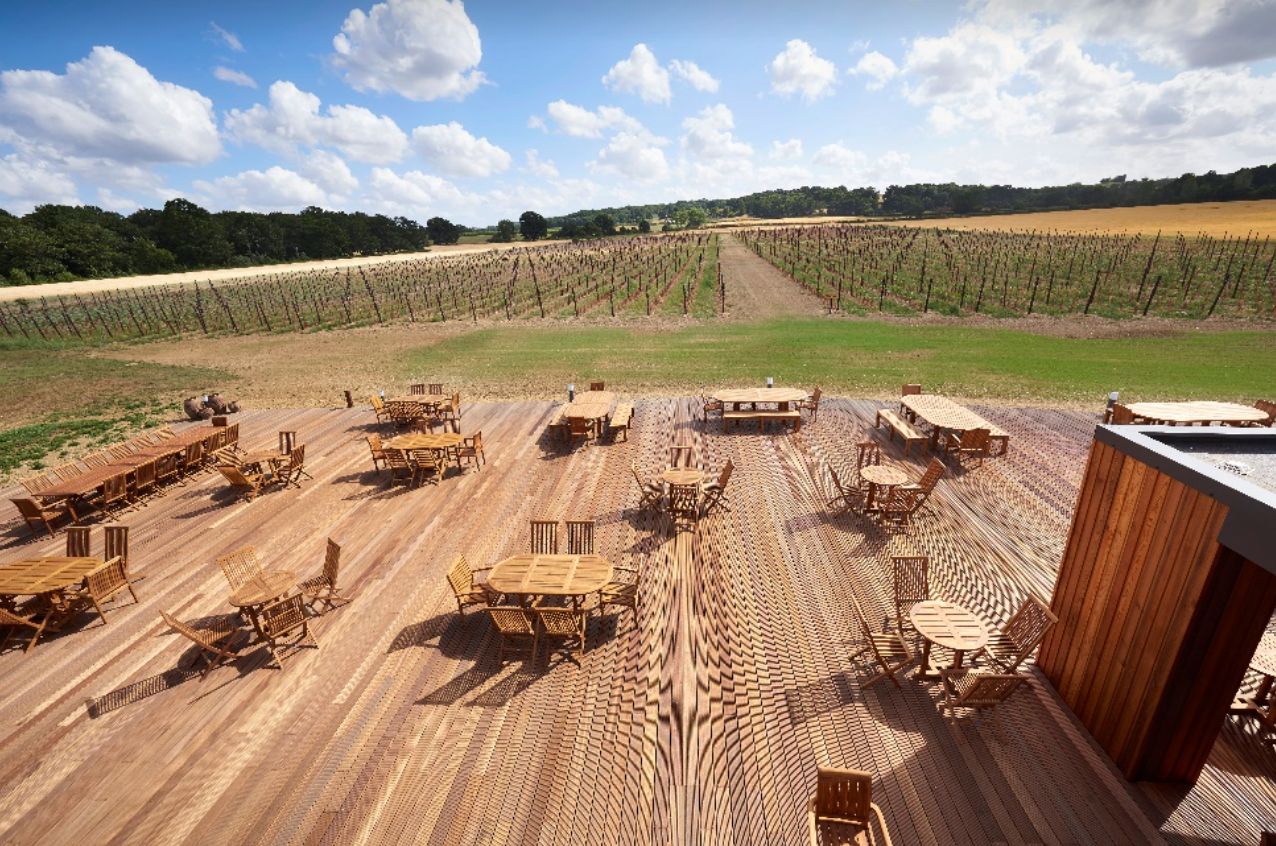
When you think of fine wine, Britain may not instantly spring to mind – but it should. The nation is home to dozens of lovely vineyards, many of which allow visitors to sip away while enjoying a captivating view.
Advertisement
As wine intake continues to increase in the UK, with a consumption of 1.77 billion bottles in 2020, new vineyards are blossoming all around the land, which can provide the same unforgettable experience you would receive in a rural estate in France. With less travel time, too.
To help you decide which one to visit, the investment experts at Money.co.uk have analysed more than 100,000 Instagram hashtags associated with 693 British vineyards to reveal the most popular.
Advertisement
Topping the list, Surrey’s Denbies Wine Estate is considered the most beautiful vineyard, with an impressive 9,255 hashtags. This award-winning destination located in Surrey Hills offers wine tasting alongside two restaurants and a hotel, with outstanding views of the 265-acre estate.
In second place, Llanerch Vineyard, located in Rhondda Cynon Taf, Wales, comes in with 5,325 hashtags. Located less than 25 minutes outside of Cardiff’s city centre, Llanerch Vineyard is home to award-winning wines, a restaurant, hotel and its own cookery school.
Advertisement
Finishing the top three is Camel Valley Vineyard located in Cornwall. With international award-winning English Sparkling wines, a Royal Warrant from The Prince of Wales, and spectacular views of the Cornish countryside, it’s easy to see why this vineyard is one of the most Instagrammed in Britain.
Here is the full list of beautiful vineyards to visit.
1. Denbies Wine Estate (Surrey, England)
Denbies Wine Estate
2. Llanerch Vineyard (Rhondda Cynon Taf, Wales)
Advertisement
@georginamoeke
3. Camel Valley Vineyard (Cornwall, England)
@laurenjadehill_writer
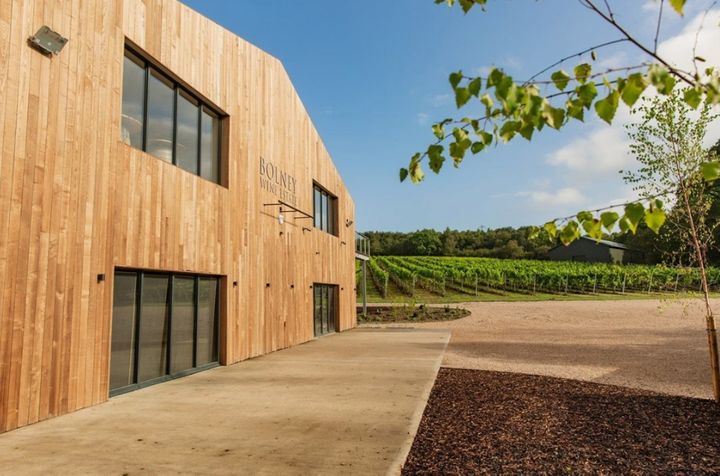
4. Bolney Wine Estate (Sussex, England)
@bolneyestate
5. Three Choirs Vineyard (Gloucestershire, England)
@threechoirsvineyard
6. Wyken Vineyard (Suffolk, England)
Wyken Vineyard
7. Hambledon Vineyard (Hampshire, England)
Hambledon Vineyard
8. Knightor Winery (Cornwall, England)
9. Hush Heath Estate (Kent, England)
Hush Heath Estate
10. Biddenden Vineyard (Kent, England)
Travel is the story of our summer. The rules (and traffic lights) are always changing, but one thing’s clear, we dream of being Anywhere But Here. This seasonal series offers you clear-headed travel advice, ideas-packed staycation guides, clever swaps and hacks, and a healthy dose of wanderlust.
First, there was the game-changing sausage roll. Next, the Quorn-based ‘steak’ bake. Now, Greggs has added another vegan alternative to its menu: the Vegan Sausage, Bean and CheeZe Melt.
Available in 2,000 shops nationwide, the new product is designed to mirror the traditional, meat-filled Sausage, Bean and Cheese Melt, or SBCM, as it’s known among die-hard fans.
Advertisement
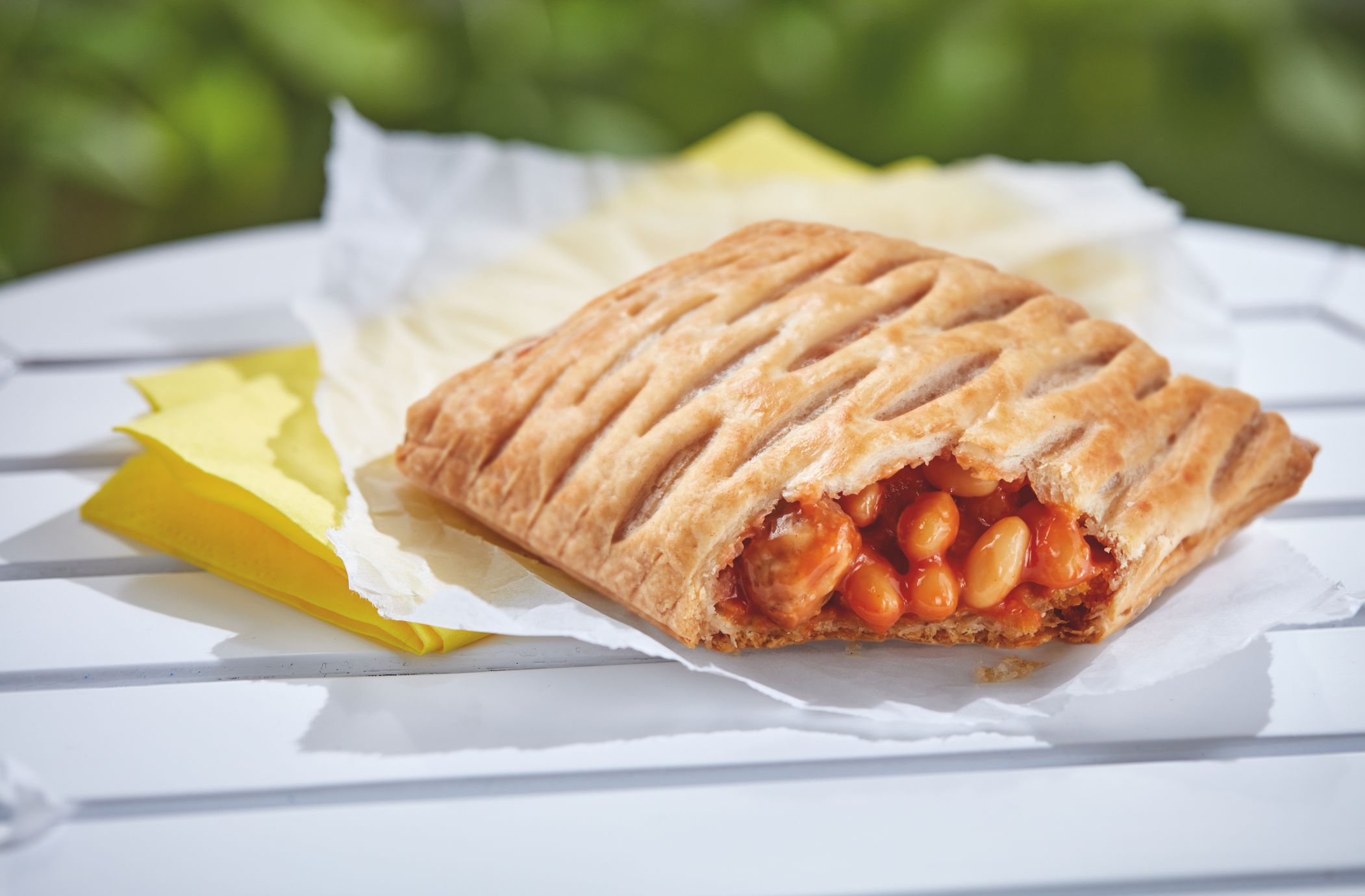
The vegan-friendly version is wrapped in layers of vegan puff pastry, but instead of the classic filling, it contains vegan sausage, baked beans and grated original and mozzarella flavour vegan cheeZe (yes, you have to spell it with a giant ‘Z’).
Customers queued round the block for Greggs’ previous vegan releases, so it’s no wonder the retailer is running with a theme.
Advertisement
Where other high street bakeries have struggled, Greggs has managed to bounce back from a tough 18 months, with profits now outstripping pre-pandemic levels. Can this £1.60 beanie bake help keep Greggs in the black?
We tried it to find out.
Advertisement
Greggs
The vegan SBCM
Faima Bakar, life reporter ⭐️⭐️⭐️
“My hopes are very high with Greggs’ new vegan sausage, bean and cheese melt. The last time I tried a new vegan item – the famous sausage roll – it had healing powers. I was sick at the time it was launched but the sausage roll was the only thing I could stomach. I got better after eating it. See, healing powers. So I was expecting the same kind of magic from this one.
“Unfortunately, it falls a bit flat. The beans feel too tomatoey and runny, it overpowers the rest of the flavours – but the sausage and pastry do satisfy. It looks and smells the same as other Greggs items, and has the crumbliness of them too, so maybe don’t eat it over your laptop.
“Though I don’t love this one as much as I like the other vegan products at Greggs, I am glad they’re continuing down this route. As I follow a halal diet, I can’t eat their sausage roll, steak bakes and melts. But the vegan offering changes all that.”
Advertisement
Rachel Moss, life editor ⭐️⭐️
“My breakfast routine usually consists of tea and something sugary, so it’s safe to say I’d never normally pick up a giant savoury square pre-10am.
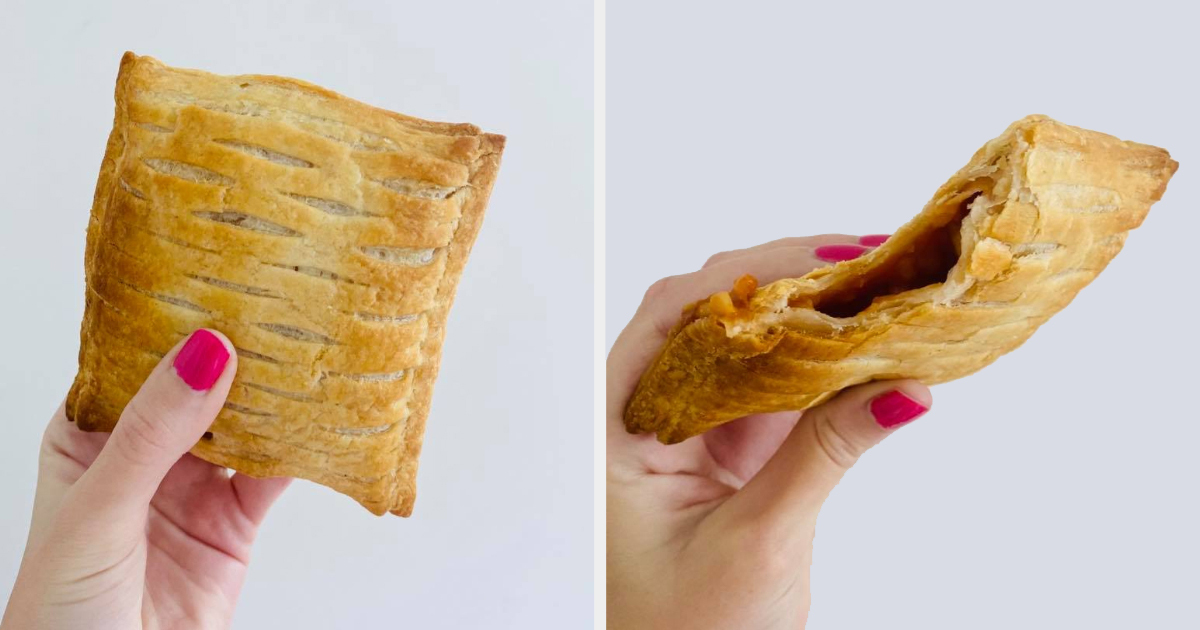
“I’ve got to hand it to Greggs though, the chefs have nailed the pastry – it’s buttery in texture, golden in appearance and you’d have no idea it was vegan unless someone pointed it out. Unfortunately, things go downhill once you bite into it; the filling is disappointing, mainly because there isn’t enough of it.
“The vegan sausage is almost entirely absent and the cheese is so mild, you can’t taste it. Inside the largely hollow shell, the dominant flavour is beans. I like beans, but would I buy a plain old ‘Bean Melt’? No, I would not.”
Rachel Moss
Where’s the filling?
Nancy Groves, head of life ⭐️⭐️⭐️⭐️
“Despite being a carb fiend, I’ve never really got into Greggs, I think because I prefer my starch in potato, rice or pasta form, rather than pastries and pies. Still, I’m not going to turn down a free meal, and this melt is certainly that: proteinous, despite its plant-based credentials.
“Biting in, I can taste all the different elements we’re promised even if I can’t see them – the filling has that unmistakeable pinky-red hue of baked beans which makes me feel a bit queasy. But neither the ‘sausage’ chunks or ‘cheeZe’ give me the ick that I often get from vegan substitutes, and the pastry square pretty much holds its shape, making it easy to eat on the go – or who am I kidding? – at my work-from-home desk. I’m left full, if craving some greens. I still don’t get the Greggs hype, but this melt is my type. Yes, I’m surprised too.”
Habiba Katsha, life reporter ⭐️⭐️⭐️⭐️
“As a certified Greggs fan I’m so excited that they’ve extended their vegan line. Though I’m not vegan per se, it’s nice to know that there’s a healthier alternative available. I grew up on Greggs and my fondest memories have been getting a sausage roll in the morning with my mum.
“The presentation of the sausage, bean and cheese melt is perfect, but I expect nothing less from Greggs. It’s golden and crispy. I’m shocked these are even vegan because I expected it to taste bland, but it’s quite the opposite. The filling really is flavourful and I can taste all the elements coming through. The nice surprise is how I feel after eating it. Even though I’m full, I still feel light because it isn’t too heavy on the stomach.”
World Animal Protection said KFC’s work with the Better Chicken Commitment (BCC) – a set of standards for birds’ welfare – and its reporting on its performance against its own standards set it apart from other retailers.
Nando’s, Burger King and Pizza Hut also scored high points for signing up to the BCC in the UK, unlike Starbucks, Subway, Domino’s or McDonald’s.
When contacted about the Pecking Order report, Dominos told HuffPost UK it supports the aims of the Better Chicken Commitment and that many of the processes it has in place meet, and in some cases, exceed its requirements.
“We are pleased to see the report acknowledges our efforts to provide environmental enrichment are in line with BCC standards,” a spokesperson said. “We are committed to working in an open and transparent manner, including supporting our suppliers to ensure that they improve upon the high standards of animal welfare which we, and our customers, expect.”
HuffPost UK also contacted Subway, Starbucks and McDonald’s and will update this article when we receive responses.
“Many big brand restaurants are denying billions of birds the chance to see sunlight, grow at a healthy rate or behave naturally,” said World Animal Protection global campaign head, Jonty Whittleton.
“Covid-19 has taught us that the welfare of animals and human health is interlinked – there should be no business as usual. Commercial motives are driving cruelty and suffering, and this needs to end.”
He added: “As more people take an active interest in the ethics of their food, more companies are willing to act. Now is the time for real change to happen, and companies that fail to move with the demands of the market are not only causing misery to millions of animals but are also risking their reputation.
“World Animal Protection is calling on these global companies to lead and ensure that any chickens that are being served at their restaurants are guaranteed a life worth living.”
Eating a plant-based or fish-based diet may help reduce your chances of developing moderate to severe Covid-19, according to a new study.
Following a plant-based diet was associated with 73% lower odds of severe disease, while a pescatarian diet was linked to 59% reduced odds.
“Our results suggest that a healthy diet rich in nutrient dense foods may be considered for protection against severe Covid-19,” researchers said.
However other experts have urged caution interpreting the findings. So don’t go ditching the masks and scrapping social distancing because you eat a lot of vegetables.
natashamam via Getty Images/iStockphoto
What did the study involve?
For the study in the BMJ Nutrition, Prevention and Health Journal, researchers drew on the survey responses of 2,884 frontline doctors and nurses with extensive exposure to the virus, working in France, Germany, Italy, Spain, the UK and the US.
The survey, which ran between July and September 2020, asked for detailed information about dietary patterns, the severity of any Covid-19 infections they’d had, personal background, medical history, medication use and lifestyle.
The various diets were categorised into:
plant-based diets, which are higher in vegetables, legumes and nuts
pescatarian, which are the same as plant-based diets, but with added fish/seafood
and low carb, high protein diets which included meat
What were the results?
Some 568 respondents said they’d experienced symptoms consistent with Covid-19 infection or they’d had no symptoms but had a positive swab test for the infection. Of these, 138 said they’d had moderate to severe Covid-19 and the remaining 430 said they’d had mild infection.
After factoring in several potentially influential variables like age, ethnicity, and lifestyle, respondents who said they ate plant-based diets’ or plant-based/pescatarian diets had, respectively, 73% and 59% lower odds of moderate to severe Covid-19 infection than those who didn’t have these dietary patterns.
Those who said they ate a low carb, high protein diet had nearly four times the odds of moderate to severe Covid-19 infection compared to those who ate a plant-based diet.
The study is observational, and so can’t establish cause, but researchers pointed out that plant-based diets are rich in nutrients, especially phytochemicals (polyphenols, carotenoids), vitamins and minerals, all of which are important for a healthy immune system.
Meanwhile, fish is an important source of vitamin D and omega-3 fatty acids, both of which have anti-inflammatory properties.
Deputy chair of the NNEdPro Nutrition and Covid-19 Taskforce, Shane McAuliffe, said caution is needed in interpreting the findings, however he added that a high quality diet is “important for mounting an adequate immune response, which in turn can influence susceptibility to infection and its severity”.