The big ‘O’, the climax also known as an orgasm. Sure you can have fun without one, but, let’s be honest, ut’s the part of sex we all want to experience, which is why we can’t stop talking about how we can get one, especially as women.
The female orgasm has been studied and researched for centuries, but now there’s new research that suggests there are actually three different types.
Advertisement
The study from Charles University in Prague, found that when women have an orgasm, their pelvic floor muscles tend to move in one of three patterns: a wave, a volcano, or an avalanche.
A ‘wave’ is everything you’d expect to feel – waves of tension and release of your pelvic floor muscles.
A ‘volcano’ feels like more of an explosion towards the end of the orgasm, as your pelvic floor explodes into a swift tension and release.
An ‘avalanche’ involves higher pelvic floor tensions in the build up, which drop when you orgasm.
Advertisement
James Pfaus, professor of neuroscience at Charles University in Prague led the study, which invited 54 women to use the ‘Lioness’, a Bluetooth-connected vibrator, to reach orgasm.
Volunteers were asked to masturbate at home using the device over a period of a few days. The vibrator was programmed to measure the force of their pelvic floor contractions via two sensors – which researchers analysed remotely to work out the rhythm and pattern of these movements in the participants.
‘Wave’ orgasms were most common – 26 out of 54 women experienced this type, whilst 17 had ‘avalanche’ orgasms and 11 had a ‘volcano’ orgasm.
Professor Pfaus said: “We are doing a long-term study of women using the Lioness to see how these different patterns are experienced subjectively as orgasms, as levels of pleasure, [and] where the stimulation that induces them largely comes from.”
Many women may have experienced more than one orgasm pattern, while others might say that even one orgasm is better than none, especially with recent studies pointing to a major gender-based orgasm gap.
For every sexual encounter, men orgasm on average 87% of the time, while women experience them 65%.
Orgasm rates also vary depending on your sexuality, with heterosexual men orgasming most regularly, followed by gay men, bisexual men, lesbians, bisexual women – and finally, at the bottom of the list, heterosexual women.
“It can take as little as four minutes for a woman, which is the same as men, but there is a perception it’s going to take about 40 minutes during sex,” she said.
No one should feel compelled to have an orgasm – many people have a fulfilling experience without reaching this point – and some people are anorgasmic (or unable to orgasm).
But Williams encourages women to become more familiar with their bodies and what they like. Then, when they get into a sexual situation with a partner, they can be less afraid to say what they do and don’t enjoy.
If this new research isn’t an excuse to start exploring, we don’t know what is. So, wave, volcano or avalanche? Which one will you be having next?
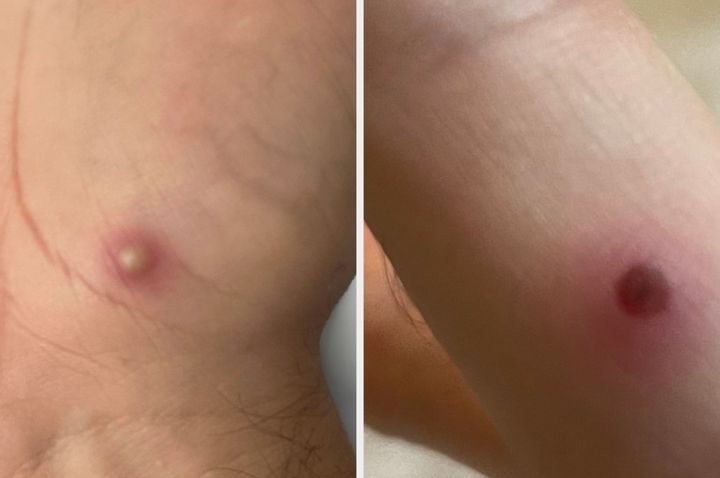
Jake* was having an ordinary family meal with his partner and 15-year-old son when he came down with a fever. For four days he felt exhaustion and had no appetite at all, and after a few days he developed brain fog. Twenty-four hours later, an anal lesion appeared.
“It was essentially an open wound for five days which was emitting a clear mucus and then blood,” Jake tells HuffPost UK.
Advertisement
“It was almost impossible to sit down and moving was very painful. Opening my bowels was pure agony and my body was making me do that eight or nine times a day. Each time was a bloodbath.”
The US Centers for Disease Control and Prevention (CDC) has estimated there are more than 25,000 cases worldwide – predominately in Europe, though more than 7,000 in the US, and more emerging in South America, South East Asia, the Western Pacific and the Eastern Mediterranean.
Advertisement
The virus was first reported in humans in 1970 in the Democratic Republic of Congo, having been identified in monkeys in a Danish laboratory in 1958 (thus the name). However, prior to 2021, there had only been seven UK cases.
As of August 4, there are more than 2,700 confirmed monkeypox cases in the UK, according to government figures, most in England and “a significant majority” of those – as many as 75% – in London.
Its prior rarity means knowledge of transmission among health experts is still patchy while we await more research – a period of stasis that echoes the early stages of Covid-19.
But this week, groups from across the political spectrum in Westminster joined forces, signing a letter to health secretary Steve Barclay calling for action on a disease that’s “causing real fear and anxiety” within queer communities.
FG Trade via Getty Images
While it’s possible for anyone, including children, to catch monkeypox, 98% of current cases are in men who identify as gay or bisexual, or men who have sex with men. This was confirmed by Dr Tedros Adhanom Ghebreyesus, director general of WHO, and he advised men to reduce their number of sexual partners while health authorities tackle the outbreak.
“We need to calmly and responsibly acknowledge that this current monkeypox outbreak is predominantly affecting gay and bisexual men.”
– Greg Owen, PrEP lead at Terrence Higgins Trust
So campaigners says it’s crucial that messaging about monkeypox transmission and vaccination is handled sensitively to avoid spreading further stigma against the LGBTQ+ community.
“We need to calmly and responsibly acknowledge that this current monkeypox outbreak is predominantly affecting gay and bisexual men,” says Greg Owen, PrEP lead at the Terrence Higgins Trust.
“We need to acknowledge that it’s also mainly being spread through the skin to skin contact, which is occurring during sex. There is nothing wrong with stating that. It is very problematic if we don’t.”
Advertisement
Dr Mark Lawton, a sexual health and HIV consultant in Liverpool and chair of the British Association of Sexual Health and HIV (BASHH), adds the following caution: “We believe, in addition to direct skin to skin to contact, monkeypox can be transmitted through contact with contaminated clothing and bedding and by respiratory droplets in close proximity.”
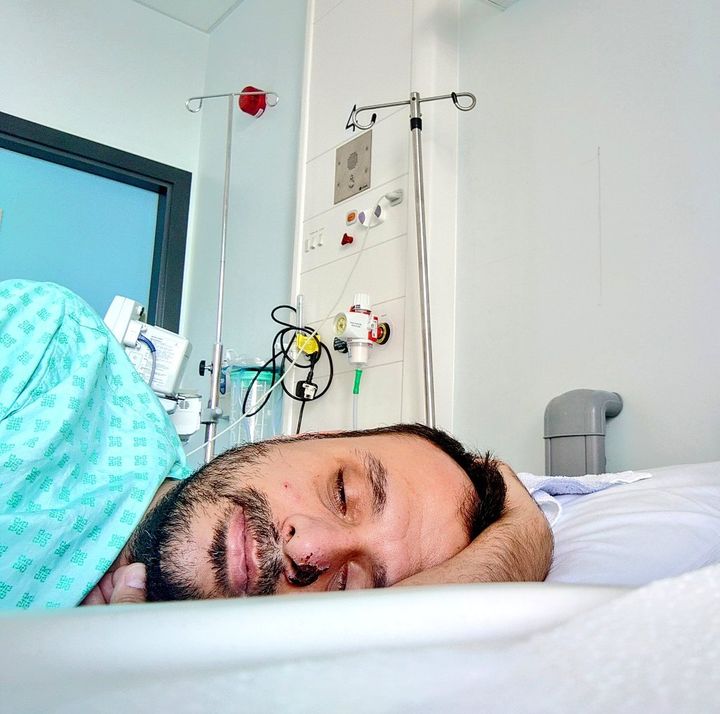
Harun Tulunay, a 35-year-old training coordinator who works with HIV/AIDS charity Positively UK, contracted a serious case of monkeypox in June.
“I was feeling like someone was ripping my flesh out of my bones,” says Tulunay of his experience. The Londoner doesn’t believe he developed monkeypox having sex, but through bodily touch, simply by lying next to a partner.
During his stint in hospital, the pain was so severe that doctors gave him opioids in an attempt to control the discomfort.
Harun Tulunay
Harun Tulunay in hospital with monkeypox.
Advertisement
“I wasn’t able to swallow, it was that bad,” he tells HuffPost UK. “The pain was worse than kidney stone pain. When they gave me antibiotics I was crying and kicking my bed and the doctors were holding me.”
While most monkeypox cases are much milder, there can be mental health implications for those who catch the virus.
Jake had been in close contact with his 80-year-old father in the period before his symptoms began and that, after getting a diagnosis, having to tell his family they might be at risk too gave him extra stress.
“Mentally it was very difficult,” says the professional services manager, who is bisexual, in his forties, and based in London.
“It meant my father knowing I’m in an open relationship which was stressful to share. My 80-year-old father has up until now just about managed to deal with my bisexuality by addressing it as little as possible. Now he is being contacted with offers for a vaccine as he may have been exposed.”
Advertisement
Twitter/@MonkeyPoxJake
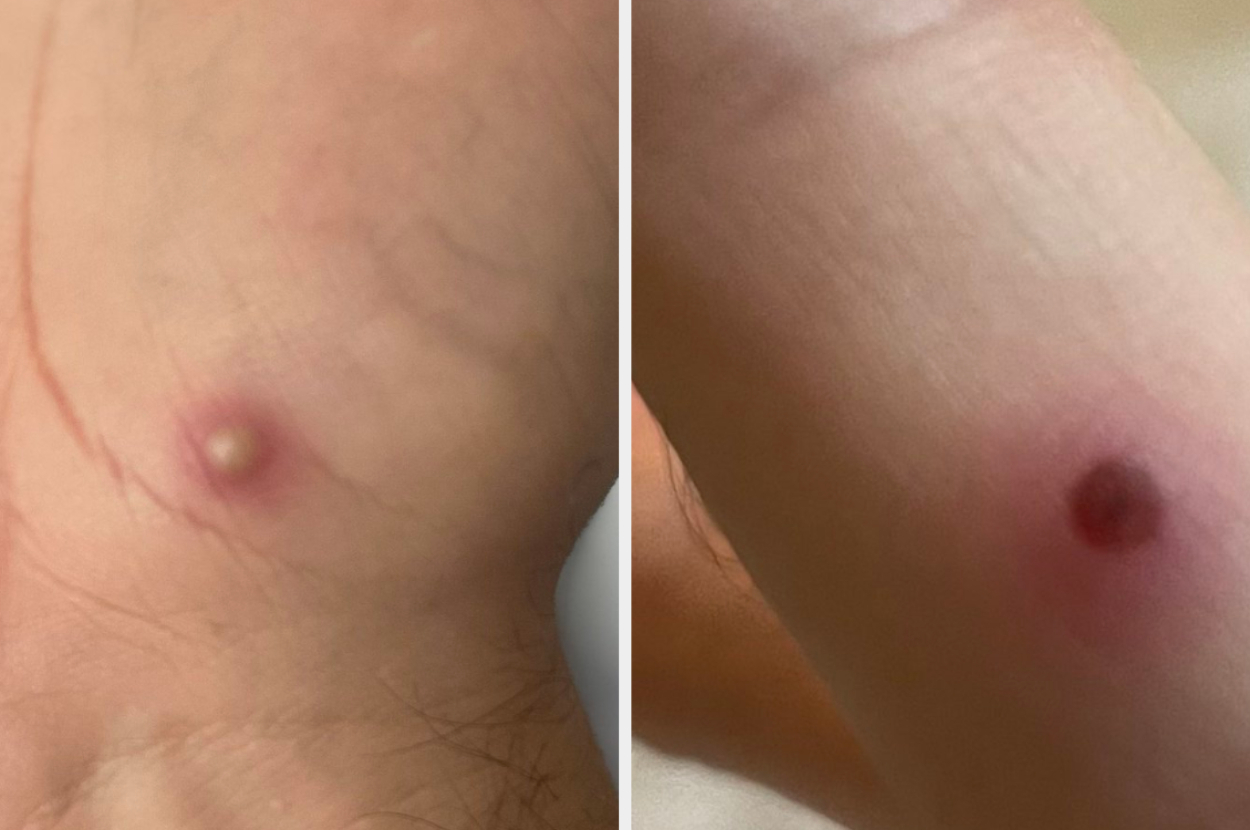
Jake’s hand with signs of monkeypox (left) and his arm scabbing over (right).
The Department of Health & Social Care (DHSC) says it is working “rapidly” to vaccinate those at risk.
“It’s important to emphasise that vaccination will not give instant protection against infection or disease, and can take several weeks,” the WHO director-general said on July 27. “That means those vaccinated should continue to take measures to protect themselves, by avoiding close contact, including sex, with others who have or are at risk of having monkeypox.”
The US virus declared the virus a public health emergency on Thursday. For those confirmed to have monkeypox, the US CDC is recommending a two-to-four-week isolation period.
Advertisement
Now campaigners are calling for similar focus in the UK. Greg Owen is among many spokespeople for queer organisations putting pressure on the government to do more to control the spread of the virus and speed up vaccine roll-out.
“We want to see a national lead appointed to hold all of those in the fragmented system to account in terms of tackling the monkeypox outbreak with the ultimate goal of preventing it from becoming endemic in the UK,” he tells HuffPost UK. Owen believes we “urgently” need to double the amount of vaccines with “an injection of cash, quickly” put into sexual health services.
The open letter signed by Conservatives, Labour, Liberal Democrat, Green and Scottish National Party representatives, as well as charities. echoed this: “We are united as LGBT+ groups from across political parties in asking that the government treat the monkeypox outbreak as a public health emergency.”
Alongside the Terrence Higgins Trust and BASSH, the British HIV Association, PrEPster and the National AIDS Trust are also rallying for government action, including £51m funding from the Department of Health and Social Care.
The call is repeated by Dr Lawton: “Crucial to this is immediate mobilisation of resources by the government to ensure sexual health clinics, who are bearing the brunt of this, are funded to deal with the additional workload and sufficient vaccine is made available for all those that need it,” he tells HuffPost UK.
Advertisement
The Terrence Higgins Trust has also expressed concern that access to other vital healthcare support is being stretched due to health workers being overworked and having to focus on an influx of monkeypox patients.
“Some [sexual health services are] seeing a 90% reduction in access to the HIV prevention pill PrEP and long-acting reversible contraception,” the charity writes on its website.
Anna Bizon via Getty Images
Similarly to the early days of Covid-19, monkeypox is affecting people that are otherwise fit and healthy.
“I have no underlying health conditions,” says James,* who is 36, and asked to stay anonymous. “I work out six times a week and my fitness and health is my top priority. So for this to floor me the way it did, it was really scary. I also found the isolation really difficult, three weeks from the first sign and symptom is really tough!”
Advertisement
Meanwhile, John Thomas only experienced mild symptoms, but believes one of the major challenges is convincing men who have non-severe cases to isolate for the benefit of others.
“I think mild cases go under reported compared to the horror stories,” he tells HuffPost UK. “If you don’t know you have monkeypox, or if you can get away without people knowing you have it, you’re free to spread the virus to others.”
He adds: “If I hadn’t been looking for symptoms I would have almost certainly gone to a club night on the Friday [around the time of his transmission], and probably on the Saturday night as well.″ I think enough isn’t known about transmission yet, or if it is, the messaging is confusing.”
Thomas is right to have thought twice about going clubbing, says Dr Lawton, who says it is possible that monkeypox could spread in an intense nightclub environment where people are wearing little clothing.
“This is certainly a potential source of infection,” he says. “It is predominantly transmitted through skin to skin contact, but this does not need to be sexual.”
Advertisement
While we wait for more research, campaigners like Owen are trying to stay pragmatic.
While expressing “huge concerns,” including fears around vaccine equity, he tells HuffPost UK: “I tend not to ‘worry’ – worrying can be really debilitating.”
* Some names have been changed and surnames changed to offer anonymity.
New research is offering some actionable steps we can take to protect our minds from memory loss.
A large UK-based study published this week in the American Academy of Neurology’s medical journal found that physical and mental activities – such as doing household chores, exercising or visiting loved ones may help lower the risk of dementia.
The roughly 11-year study followed 501,376 people in the UK who self-reported their physical and mental activities at the beginning of the experiment: how often they visit with friends, their education level, how often they climb stairs, how they commute to work, and more.
Advertisement
The study found certain activities were associated with a lower risk of dementia. People who frequently exercised had a 35% lower risk, people who frequently did household chores had a 21% lower risk and people who visited daily with family and friends had a 15% lower risk.
And while dementia risk factors also include things that are out of our control – like ageing and genetics ― the research underscores that there are behaviours within your power to either reduce your risk of dementia or delay the condition, Dr. Scott Turner, director of the memory disorders program at Georgetown University Medical Centre, tells HuffPost.
The study does come with a few caveats: The findings are a correlation, not necessarily a direct link. Another limitation is that because people reported their own physical and mental activities, there’s always a chance that some people forgot about activities they engaged in or reported them incorrectly.
“More research is needed to confirm our findings. However, our results are encouraging that making these simple lifestyle changes may be beneficial,” study author Dr. Huan Song of Sichuan University in China, said in a statement.
Whether through physical activity, social activity or mental activity, putting your brain to work can help delay dementia onset or reduce the risk altogether.
Chores double as both a physical and mental activity (and can even sometimes be considered exercise, Turner noted). Visits with loved ones are a social activity that also requires mental stimulation, and physical activity requires mental dedication, too.
Turner said that people who develop visual or hearing problems could be at a higher risk of dementia if they don’t address the problem by getting glasses or hearing aids. When you can’t hear or see, he explained, “you’re depriving your brain of sensory input, and you need to keep your brain stimulated” to help reduce your risk of dementia.
Morsa Images via Getty Images
Physical activity is one way to help decrease your risk of dementia.
Advertisement
Physical activity has a double benefit when it comes to dementia risk
Another risk factor for dementia is diabetes, Turner notes, and there are lifestyle patterns you can follow to reduce your risk of diabetes. These include exercising, following a healthy diet and maintaining an ideal body weight throughout your lifetime.
So, not only does exercise help slash your risk of dementia, but it also helps slash your risk of diabetes, which, in itself, puts you at risk for memory loss.
It’s never too late to implement these changes
Turner stresses that no matter your age, it’s never too late to start following some of these lifestyle recommendations. And that can be as simple as doing some extra vacuuming around the house or going for a walk with your neighbour, for example.
“I recommend doing as much as possible with lifestyle [changes] to avoid and prevent dementia,” he says. “And, of course, prevention is better than treatment.”
For those who already have memory problems or dementia, Turner says lifestyle changes that require physical, social or mental activity are still beneficial. You can help slow down the progression of dementia by keeping your brain stimulated. This is why puzzles are a popular activity among people with Alzheimer’s disease.
Advertisement
If you experience any new memory problems, talk to your doctor
“If someone does develop memory problems, then they certainly should seek evaluation starting with their primary care provider,” Turner says.
He stresses that some very treatable things cause memory problems, like sleep apnea and Vitamin B12 deficiency. But any neurological changes should be evaluated so you get the proper treatment plan.
You’re reading Move, the nudge we need to get active, however makes us happiest and healthiest.
Every football fan will tell you the joy of watching your favourite time play, but a new study goes one step further, detailing how it can even boost your mental health.
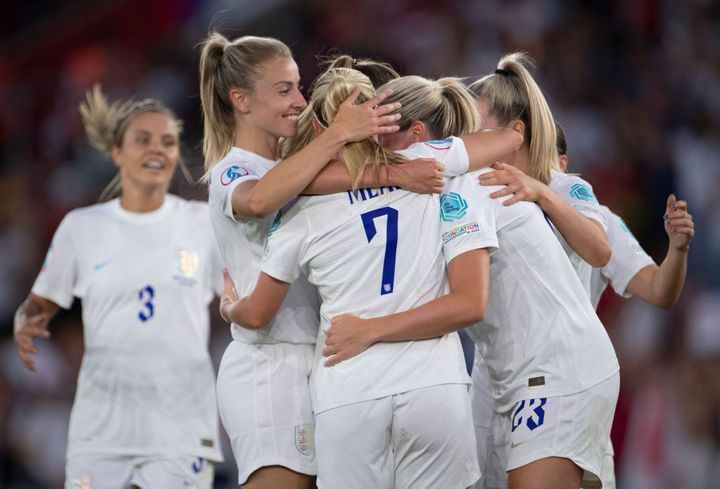
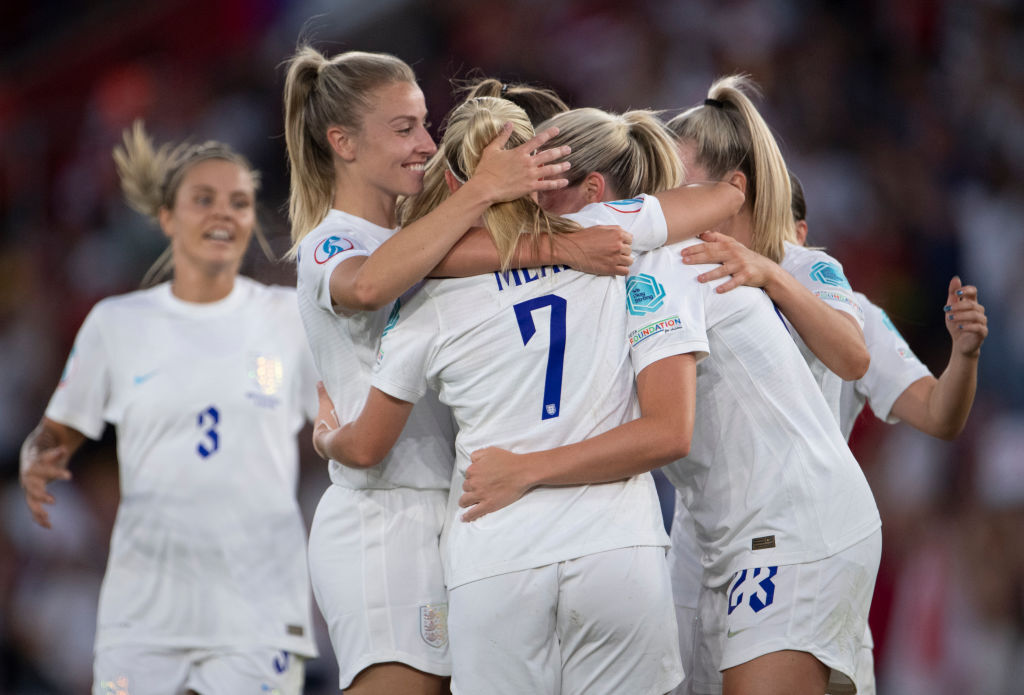
And with England’s Lionesses set to face Sweden in the Euro 2022 semi-final, it’s yet another reason to get behind the team, who’ve had a record-breaking run so far.
Advertisement
One in two of all sports fans said watching a match helps them socialise more with friends and family, according to the study conducted by charitable social enterprise, Better. Over a third (35%) said it makes them feel part of a community and 33% said it inspires them to be more active.
The researchers asked 2,000 sports fans across the country questions about their daily exercise regimes, their participation in sports, their sport-viewing habits, their fruit and vegetable intake and their alcohol consumption.
They wanted to determine which sports fans are enjoying engaging in a sport and which ones prefer the comfort of their sofas when watching their favourite athletes compete.
Visionhaus via Visionhaus/Getty Images
The mighty Lionesses will face Sweden in the Euros semi-final.
Advertisement
“Sport and exercise is brilliant for physical, mental and cognitive health. If it was a pill it would make billions!” said Dr Josephine Perry, a sports psychologist who spoke to Better.
“As well as the physical benefits, the exercise we get through sport gives us structure, purpose, energy and motivation.”
Dr Perry explained that sport also positively alters the way we process and respond to our emotions, reducing “how much we overthink” helping to build up “an emotional resilience to stress”.
“These help reduce symptoms of depression and anxiety, make us behave differently, boosts our self-esteem and means we reduce any feelings of loneliness by becoming more social,” she added.
The research also found that football fans were the most active across all sports, with 34% getting over 60 minutes of exercise every day. Footie fans were also found to be the least likely to drink more alcohol while watching sport (45%).
Advertisement
Josh Cheetham, a 30-year-old avid Leeds United fan, was not surprised by the research. “In 2018 I was suffering from depression, I was in a really dark place after a tragic life event, and I didn’t see how I was going to get better. Then I went to a football match, witnessed one of the best matches I’ve ever seen, and I was feeling better as soon as the final whistle blew,” he said.
“When I watch my team at away matches, I am usually on my own, but I don’t see it that way. We all support the same team, we are all one big community and family, you can start talking to anyone around you and immediately feel like you know them and strike up a friendship that lasts for years.”
So, if you haven’t tuned into the Euros yet, what are you waiting for?
England were always a favourite going into this tournament. But whatever the outcome, you’ll get a boost from supporting them.
Move celebrates exercise in all its forms, with accessible features encouraging you to add movement into your day – because it’s not just good for the body, but the mind, too. We get it: workouts can be a bit of a slog, but there are ways you can move more without dreading it. Whether you love hikes, bike rides, YouTube workouts or hula hoop routines, exercise should be something to enjoy.
The UK is baking, and with temperatures set to top 40°C in some parts of the country, an emergency weather warning has been introduced by the government.
Let’s be honest – Brits really aren’t used to temperatures this high at home and work, so everyone is looking for hacks to make our days a bit more bearable.
But what of your windows? Should you be opening them or keeping them shut? And how about your curtains and blinds – should they be closed, too?
We asked the experts to find out.
Windows: open or shut in a heatwave?
When it’s hot, it’s our natural reaction to open the windows to get some fresh air, but is this making us hotter?
If the air is cooler outside, you should open your windows to let the air in. But when temperatures start to rise outside, keep your windows shut to avoid letting hot air in your home and making yourself warmer. If you’re not sure how to check if it’s hotter inside or outside, use a thermometer in both places.
Advertisement
Chris Nye, from Your Overseas Home, says: “It might seem counterintuitive, but if the air outside is hotter than the air in your home, keeping your windows closed could help your home stay a little cooler.”
However, at night, you might want to open them a bit. “After the sun goes down, the outside air will start to cool down,” says Dr Lindsay Browning, sleep expert at, And So To Bed. “At this point, it is a great idea to open the windows to let in a breeze of cool external air into the bedroom, helping cool the room and to provide needed air circulation.”
This works particularly well if you have windows on both sides of your room or home. Just remember to close them first thing the morning again.
Tascha Rassadornyindee / EyeEm via Getty Images
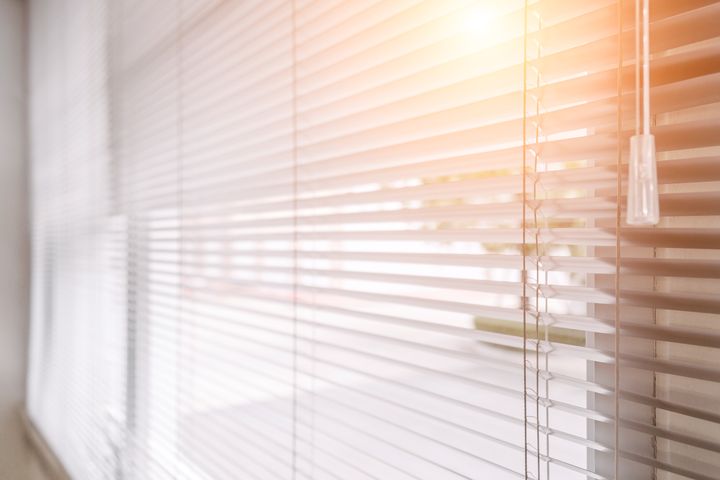
Curtains and blinds: closed or not?
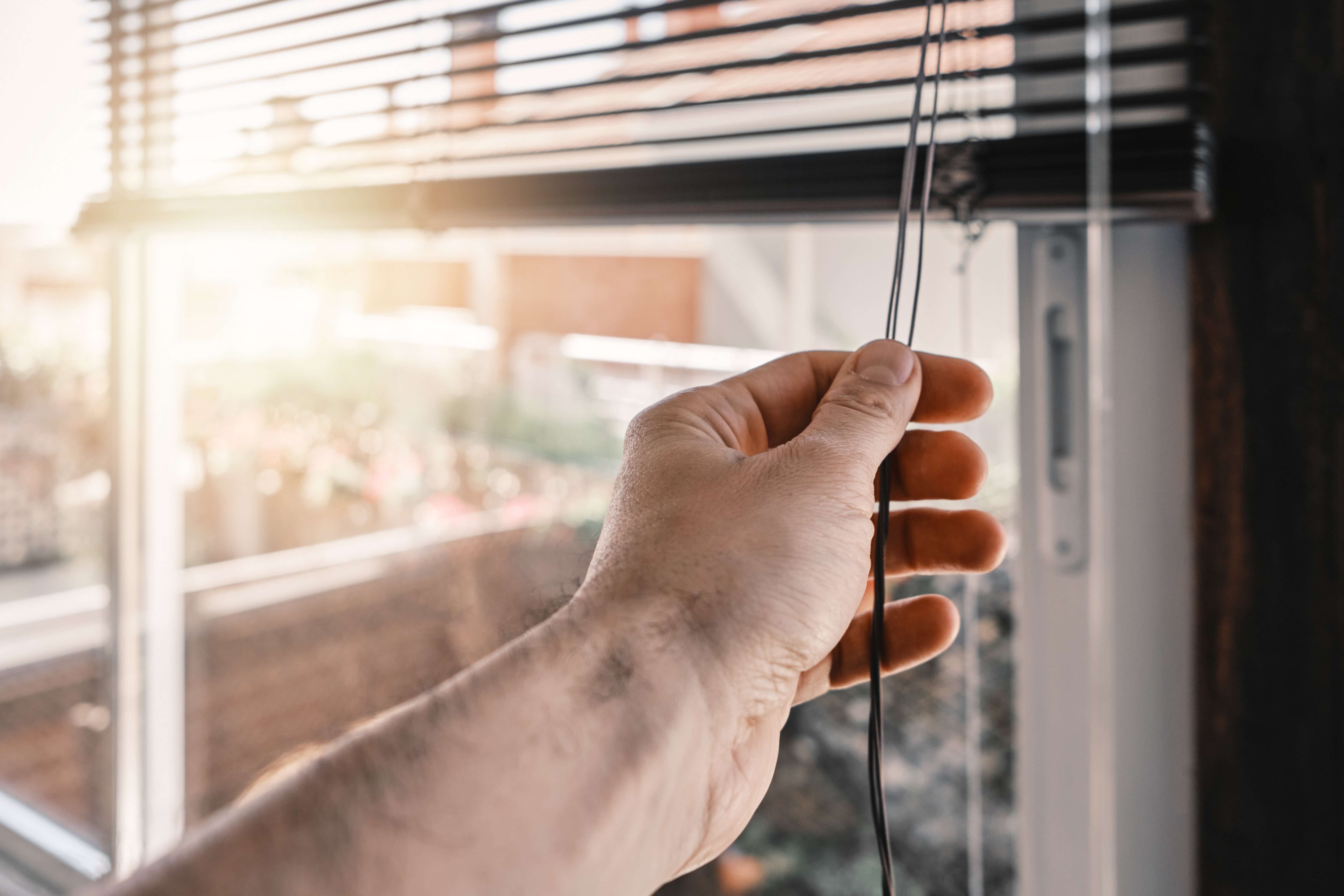
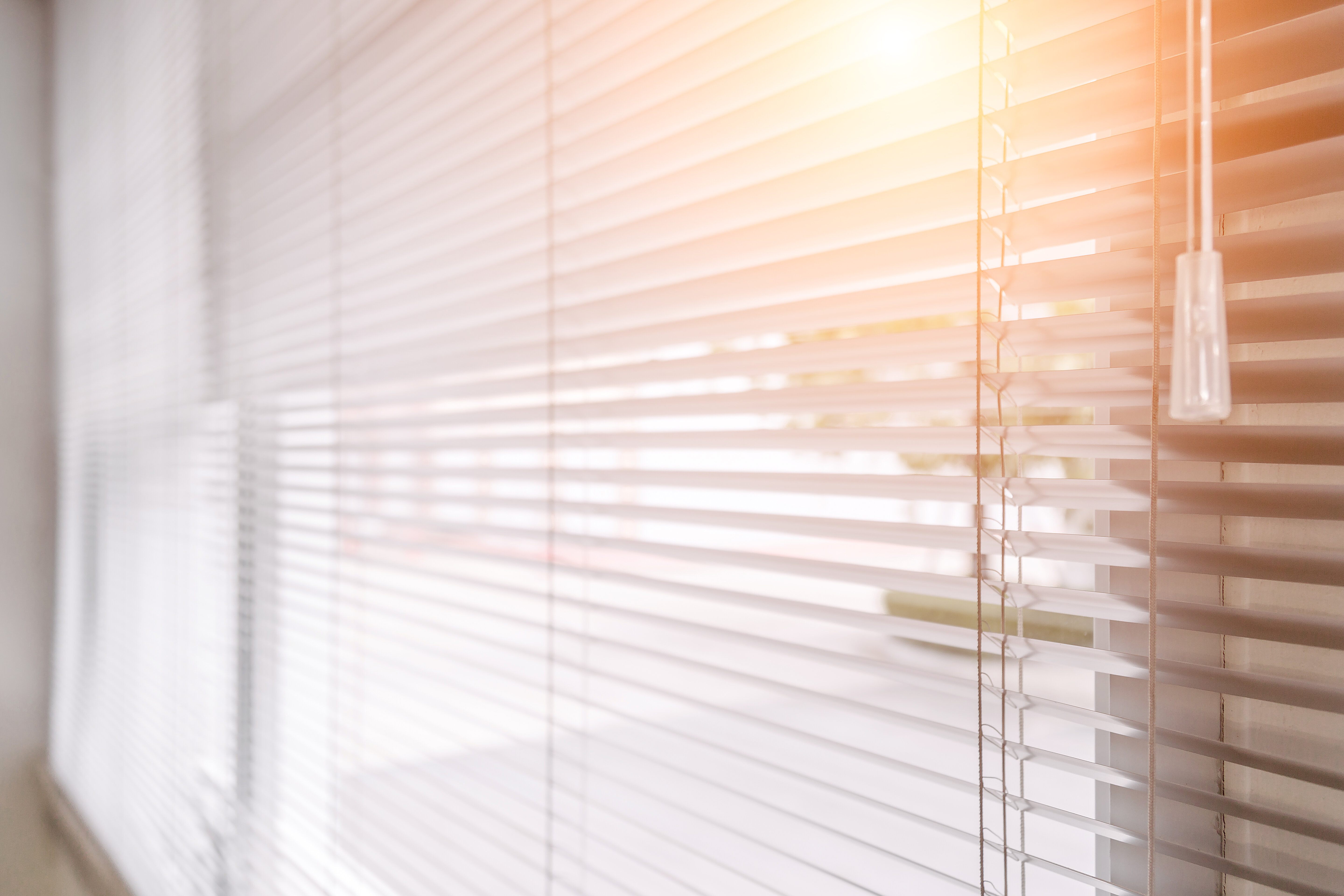
If the sun shines directly into your home, you should close your curtains to try and keep rooms as cool as possible on the hottest days of the year.
“If your house does experience more sunlight throughout the day, it’s recommended you keep your curtains, shutters and blinds shut to stop the sunlight from beaming into your home,” Lucy Askew, a spokesperson for Hillarys blinds previously told HuffPost UK.
“This will keep things marginally cooler and slightly more bearable during heatwaves.”
Nye adds: “You may even want to opt for blackout curtains to keep windows covered and block the sunlight out completely.”
Should you put foil on your windows?
Putting foil on your windows is the latest heatwave hack doing the rounds on TikTok.
Sunlight usually shines through a window which increases the heat of the sun and makes your house warm. But this hack can help you limit the amount of sunlight that get into your home.
Simply roll out some kitchen foil and apply it on your windows to block out direct sunlight.
This hack is popular in America where some states experience high temperatures all year round. In the video below, @americanredcross suggest cutting cardboard and adding it to the window after you applied to the foil.
And if your home has heated up a bit too much? It may actually be cooler to get outdoors for a bit – though do avoid the hottest part of the day. And if you are heading out, stick to shady spots such as under trees or a sun parasol.
Sleep, O sweet sleep, where art thou? Some nights it’s impossible to doze off, all the world’s thoughts heavy on your eyelids.
So whenever I see a trick or vital TikTok that promises a hack to make you fall asleep instantly, I’m hooked.
Advertisement
This week, I came across a content creator who goes by @YoungerYouDoc, teaching people “how to become the youngest version of themselves”.
In one video, he demonstrates how rubbing your wrists for two to three minutes can help you nod off. This is because a spot on your wrist provides one of several pressure points for sleep, according to reflexologists.
“There are four acupressure points starting at the pinky side of the wrist crease and moving up the inner forearm,” Dr Shari Auth, chief healing officer and co-founder of WTHN, told Bustle.
“They are good for insomnia and are excellent to rub at bedtime. These points are commonly used by acupuncturists to treat sleep, palpitations, and mental health issues such as depression and anxiety.”
Advertisement
So, for the last two nights I’ve tried the trick to see how it affects me. And unfortunately, it didn’t help at all.
Perhaps I had the wrong point (I watched a video about pressure points and it seems I did rub the suggested area). But what stopped me from falling into a slumber was being conscious that I was rubbing my wrist.
Before I fall asleep I like to be as still as possible, so I think for me it felt unnatural to keep rubbing for a few minutes.
I also switched hands in case one wrist was more effective than the other. But after doing it for a while, my wrist started getting warm and I decided to give up.
Advertisement
I also didn’t sleep very well and it took me longer to fall asleep than it would usually (though that might be unrelated).
In another viral video, he explained how his two-minute method was adopted by military personnel who often sleep in rough conditions.
It consists of incrementally relaxing your body, then imagining a warm light travelling through your body, while focussing on your breathing. Then you clear your mind of all stresses.
To do this, Agustin advises imagining one of two scenarios; the first is lying in a canoe in a calm clear lake, with a blue sky above you. The other is lying in a velvet black hammock under a pitch black sky.
Any time your thoughts try to distract you, repeat the words ‘don’t think’ 10 times.
Sounds simple enough, right? Well, Agustin explains, you’d need to do this every day for six weeks to see it work effectively enough to fall asleep within two minutes.
It might sound tedious, but it might be worth it in the long run.
This is probably not a question Prince William is asking himself as enters his fifth decade. But the Duke of Cambridge’s birthday has got us thinking about milestone ages, and why some of us place so much significance on certain numbers.
For women, approaching ‘The Big Four O’ often means discussions of fertility and the biological clock intensify (whether or not you want children and even though a woman doesn’t suddenly wake up on her birthday unable to conceive).
Advertisement
But what’s at the forefront of men’s minds as they approach this age? We asked a bunch of guys aged 39 and over to find out.
‘I get a lot of stick for being single still’
“I’m almost 40, single, with no permanent long-term job. I still love travelling and exploring and totally lack any sort of plan. But I’m kind of okay with that.
“At 40, you’re expected to have job security, a demonstration of some sort of career progression, where you’ve ended up with a bigger salary, a nicer suit and a nicer house.
Advertisement
“I get a lot of stick for being single still. All my friends are in marriages or second marriages in some cases, people say: ‘you’re not going to get sorted are you?’ Every now and then, you do question your life choices. There are always going to be periods in a 12 month calendar where you’re going to have a couple of phases of self-doubt, where you might question the way you’ve done things. You might feel a bit sorry for yourself and have a bit of a pity party. But on the whole I’m quite content with where things are – I’ve seen a lot of the world, I’ve met a lot of great people. I’ve been very, very fortunate in that sense.” – Stephen Boyd, 39, Lincolnshire
‘I was fine with turning 40, but turning 41 hit me hard’
Peter McKerry
“Turning 40 didn’t phase me, but when I turned 41 I began to obsess over the fact that my life was in a type of descent towards the inevitable end, and that my best experiences were behind me. I was also worried that if I had a child I’d have a limited amount of time to be in their life. My dad was 53 when I was born and I was teased about it at school, so I didn’t want to be an ‘old dad’.
“As it turned out I was 43 when my daughter was born so I beat him by 10 years! Now my life is all about watching her grow and develop (she’ll be three in August) and it has given me joy but also anxiety. I’m trying to live in the moment now because I don’t want to have more regrets than I already do, and I want my daughter to have the happiest and most secure childhood I can give her. So now I don’t obsess as much over my age or my past as I have a real focus on ensuring Flora is happy and loved.” – Peter McKerry, 45, Westcliff-on-Sea
‘Men get more of a free pass’
Andy Dewar
Advertisement
“I turn 44 this week and love it. I think 30 was more of hurdle for me psychologically, as it was the age where I felt you needed to knuckle down to some responsibilities and achievements personally and professionally, as well as resenting the fact I was no longer young and carefree. So by your 40s, you can enjoy all the new challenges and opportunities that come your way.
“There’s far more pressure on women at all ages but particularly 40s to have a great career and be a mum, I think. As far as media and peer pressure goes, men get more of a free pass. I’m lucky in the sense family and friends have never had any great competition between us to do well, some days are a grind, some days are easy. If you set yourself targets you lose sight of what’s important, which in my case is just trying to enjoy whatever it is I’m doing.” –Andy Dewar, 44, Hamilton, Scotland
‘I haven’t altered anything’
Michael Charles Grant
“I felt perfectly fine [approaching 40], with no pre-conceived thoughts of 40 being an issue and prohibiting me from what I can do physically and mentally. I look younger than my age so perhaps that played a fact in my mindset.
Has anything about being 40 surprised me? No not at all, why should it? I haven’t altered anything about my lifestyle to encompass my age or felt as if I had needed to.” – Michael Charles Grant, 40, Hertfordshire
Advertisement
‘Turning 40 made me re-evaluate my health and fitness’
″40… oh, that sounds old. Well, that was the thinking I had when I was in my mid 30s and heading towards 40. Society slots you into a category when your age starts with a four. I had just had my twin boys Alex and Lewis a few months before and dealing with them was really taxing on the mind and body. It was then also that I decided that ‘Dad Bod’ wasn’t something I liked and that I needed to do something about it. General fitness levels were poor and I found myself struggling with day to day tasks in dealing with two newborns. So I said to myself ‘Paul, you’re now 40, you’ve got the twins to think about, you don’t want two young boisterous boys growing up with a dad that can’t keep up… time to get into shape.’ It was a ‘If I don’t do this now, I never will’, moment.
“I’m in better shape now that I was in my 20s and 30s. Confident in how I look, with loads of energy for playing with the twins. My change in physique also motivated my wife to get back to the gym too, plus it has brought us closer with shared interest in fitness and just being better for our sons. Also, more body confident = more intimacy too.” – Paul McCaw, 46, Belfast Northern Ireland
‘Every decade has got better for me.’
Stu McKinlay
“Every decade has got better for me so – despite the birthday itself not feeling like a big deal – I was really excited that my 40s would continue that trend.
Advertisement
“My 30s were where I started to put into action the stuff that I had discovered in my 20s. I left my really great job in the public service (which I totally loved) to start my own business in brewing. My wife and I started the business, had three kids, and then moved our business and family from New Zealand to UK. It was busy beyond belief, but we were both doing things we loved. Coming up for seven years into my 40s and despite the clusterfucks of Brexit and Covid, I’m having the time of my life!
“While there’s immense privilege in being a man – and that’s something far too few men understand – I think there’s a lot of pressure on men to achieve certain things by certain ages. I’m constantly aware of how, at certain stage in my life, I feel like I’ve still not grown up. And I wonder if my parents felt the same. I do remember my dad telling me that he didn’t actually feel safe and comfortable in his life until he was in his 50s. I totally get that. I guess a part of it is kids growing up and releasing that weight of expectation around looking after them.” – Stu McKinlay, 46, London
How much sleep are you getting? Judging by how you’re feeling, you’d probably say ‘not enough’.
Many of us dealing with the drudgery of the day often don’t feel very well rested and are likely to wish for more snoozing time. But actually, we might be sleeping too much already, depending on our age.
Advertisement
The ideal amount isn’t actually eight hours for those over 38 years old, according to scientists who conducted a major new study.
The University of Cambridge and Shanghai’s Fudan University examined the sleeping habits of nearly 500,000 adults aged between 38 and 73 and found that the ideal amount of sleep may be seven hours.
Advertisement
Participants were tested on their cognitive abilities and asked about their sleeping patterns, wellbeing, and mental health.
Researchers also sourced brain-imaging and genetic data for up to 40,000 participants in the study to get a better insight into their wellbeing.
Advertisement
Interestingly, they found that getting too much sleep and not enough has the same consequences. While traditionally, we’re told to get eight hours, scientists found that this amount, or any more (or less than seven) have a negative effect on our bodies as we age.
They found that too much sleep and not enough both had a detrimental effect, causing mental health issues and ‘worse cognitive performance’.
The study also showed that being consistent is key, so getting six hours one day and then nine the next can still leave you feeling groggy and tired.
So, why exactly do we feel a brain fog when we wake up some mornings?
Advertisement
Researchers say that it could be due to slow-wave deep sleep being disrupted during shorter bouts of slumber. This means the brain doesn’t have enough time to clear out the toxins.
Not only is getting the right amount of sleep better for your overall wellbeing, it’s good for our memories. That’s because scientists found that the hippocampus – the memory centre – is also affected by a lack of or excess of sleep.
So the older you get, the more you might want to get into the routine of achieving seven hours a day. This also has the added benefit of decreasing the likelihood of illness.
Prof Barbara Sahakian from the University of Cambridge, one of the study’s authors, said: “Getting a good night’s sleep is important at all stages of life, but particularly as we age. Finding ways to sleep for older people could be crucial to helping them maintain good mental health and wellbeing and avoiding cognitive decline, particularly for patients with psychiatric disorders and dementia.”
The Sleep Foundation also has similar advice for the ideal slumber time, based on age group.
It suggests that older adults should aim for seven-eight. While the Cambridge study says to go for the lower number in that range, as long as you feel well-rested with the amount you currently get, then it’s all good.
You’re reading First Thing, the HuffPost UK series helping to make your mornings happier and healthier.
Getting enough sleep is critical for physical and emotional well-being, but so many people fall short. The US Centers for Disease Control and Prevention estimates that a whopping one in three Americans don’t get enough sleep on a regular basis. (For reference: adults should be aiming for at least seven hours.)
Advertisement
Of course, many factors go into a person’s ability to get sufficient rest, from work and family schedules to sleep hygiene.
With that in mind, here are five common mistakes a lot of people make in the morning that affect their ability to fall asleep – and stay asleep – later on:
Advertisement
1. You’re drinking too much caffeine
Obvious? Sure. But drinking too much caffeine in the morning can throw your entire sleep routine off track.
Advertisement
In general, most healthy adults can safely have up to 400mg of caffeine a day. That’s the equivalent of roughly four cups of brewed coffee or two energy drinks, if that’s your thing. Remember, though: caffeine levels in energy drinks can vary widely, and there are serious concerns about their potential impact on the body.
The effects from caffeine generally kick in within 15 minutes and peak about an hour later.
“Six hours after caffeine is consumed, half of it is still in your body,” according to the Cleveland Clinic. “It can take up to 10 hours to completely clear caffeine from your bloodstream.”
That means you can absolutely have a few cups of coffee in the morning and still be feeling them by dinnertime.
Advertisement
Also, keep in mind that some people are particularly sensitive to caffeine. So try cutting back for a bit to see how that affects your ability to get sufficient ZZZs.
2. You’re waking up at totally different times every day
Sleeping in when you can is glorious, yes. But it can also take a toll on your broader sleep patterns. Many sleep experts suggest that people set a standard wake time and stick with it to the best of their ability, even on the weekends.
Why? If you sleep for a few extra hours on a Sunday, for example, you might not be tired again until much later than usual – which means your bedtime is thrown off and you’re likely to be pretty darn tired when you wake up early for work on Monday.
An irregular sleep schedule can also increase your risk of what experts call “social jet lag” – basically, the discrepancy between your body’s natural sleep schedule (i.e., circadian rhythm) and your social schedule, which throws off the midpoint of your sleep and has been linked to health issues such as increased inflammation and higher risk of depression.
Sleep is governed by our circadian rhythms (which also influence everything from hormone regulation to body temperature). And the sun’s cycle has a huge impact on those rhythms day to day.
Your body’s circadian clock is most sensitive to light starting about two hours before your usual bedtime and lasting throughout the night up until about one hour before your usual wake time, per the CDC.
“Exposure to light during these times will affect when your body naturally gets sleepy and is ready to fall asleep,” the CDC says.
Advertisement
What all of this means is that exposing yourself to plenty of bright light in the morning can help shift your bedtime earlier; by the evening, you’re more likely to be sleepy and primed for rest.
blackCAT via Getty Images
If you’re waking up on the wrong side of the bed, your morning routine might be to blame.
4. You’re not making a to-do list
Creating a to-do list is one of the most powerful things you can do to stay on track throughout the day. It can also be an effective way to combat anxiety that often creeps up at bedtime and makes it hard to fall asleep.
Not all to-do lists are created equal, though. First and foremost, it’s a good idea to write it down.
“When you try to manage your to-do list in your head, you’re likely to forget items,” HuffPost senior reporter Kelsey Borresen previously wrote. “Jotting it down on paper (or digitally in your Notes or other mobile app, if you prefer) gives you something concrete to refer to when your brain feels like mush.”
Also, make sure it’s realistic. Try to focus on three to five things you can actually accomplish, experts say. It’s a plan, not a wish list.
5. You’re glued to your phone
Checking your phone immediately after waking means you’re letting someone else dictate what’s on your mind first thing. And that can set the tone for the rest of the day – right up until your bedtime.
“If we wake up and we check our phone and there’s an email from our boss that says, ‘we need to talk,’ or there’s an email from a client who’s like, ‘Hey, can I call you later?’ we can go straight from our slumber into panic mode, where your heart is racing,” Susie Moore, a life coach and author of “Let It Be Easy: Simple Ways To Stop Stressing And Start Living,” previously told HuffPost.
At that point, it can be a lot more difficult to return to a calm “intentional” state, Moore said, which can have ripple effects. So do yourself a favor and set the tone for the day by using an alarm clock rather than relying on your phone to wake you up. And try your best to make sure the time when you wake up and before you go to bed is phone-free.
Advertisement
First Thing is a series on HuffPost UK Life giving you tips and advice on how to enjoy your mornings. Whether you’re an early bird or night owl, starting your day off right will make for a happier and healthier day. We’ll be sharing exercise advice, nutrition guidance, as well as ideas on forming new habits. (And no, the answer to a productive morning isn’t just setting an alarm for 5am!)
You’re reading Move, the nudge we need to get active, however makes us happiest and healthiest.
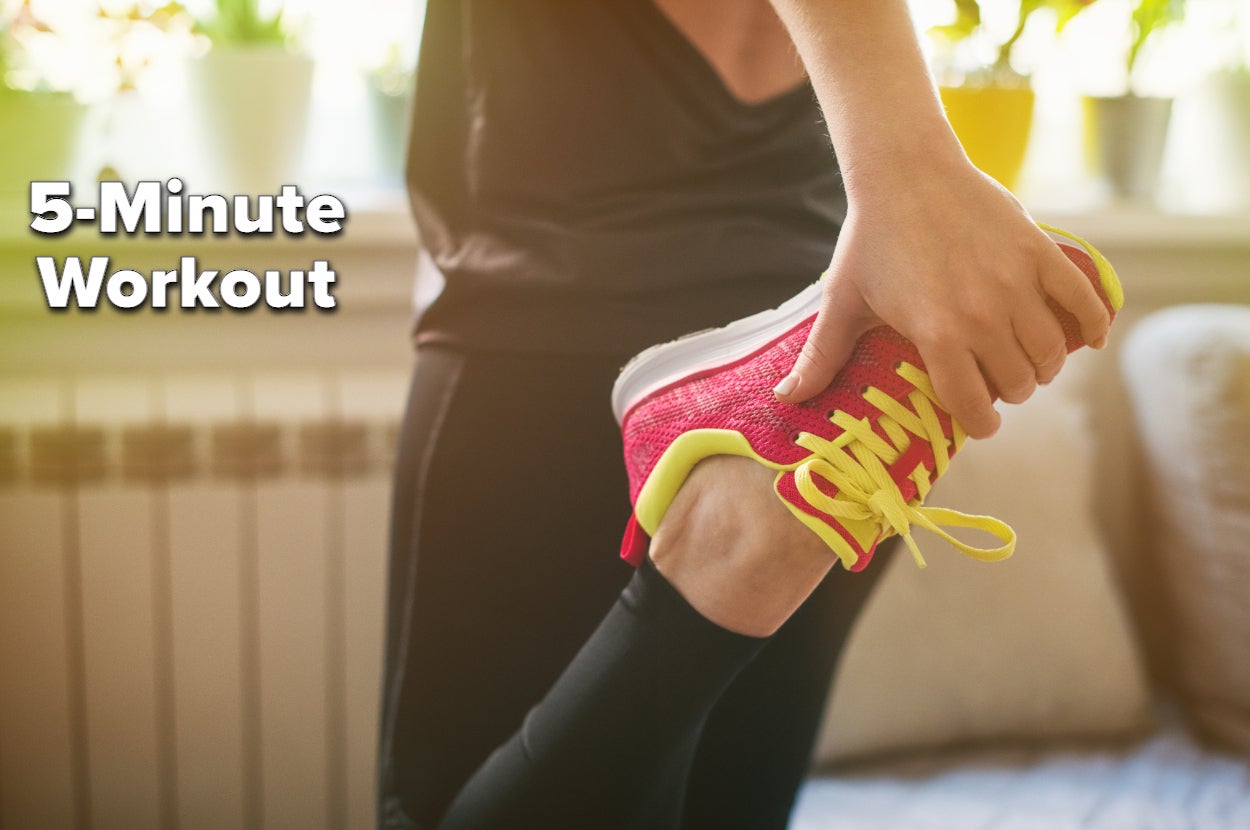
Do you have atrocious balance? Your core might be to blame. So this week, we’re delivering a five-minute workout that helps to improve both.
Advertisement
The quick, equipment-free routine has been written by Fiona Hawker at Curves, a fitness community designed specifically for women.
It’ll help improve your balance, whether you’re constantly wobbling during yoga classes or find it impossible to do a basic quad stretch on one leg.
Advertisement
“Balance exercises are especially important as you age because your proprioception (your ability to know where you are in space) gets worse as you age,” says Hawker. “Improving balance is also excellent for posture – it teaches you’re the static and dynamic positions that are natural to your human form.”
Add these moves to the end of your next workout or try them while you’re waiting for the kettle to boil. They really are that simple.
Advertisement
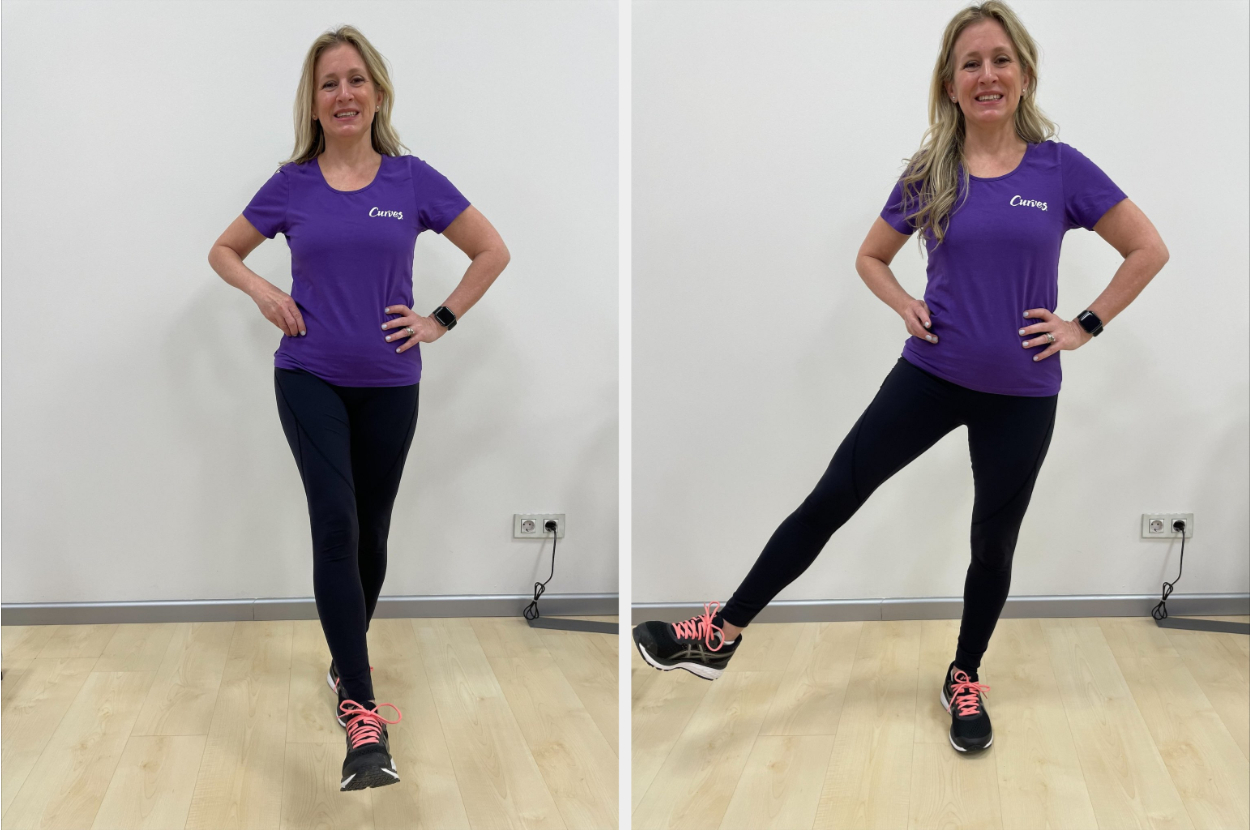
1. Leg swing
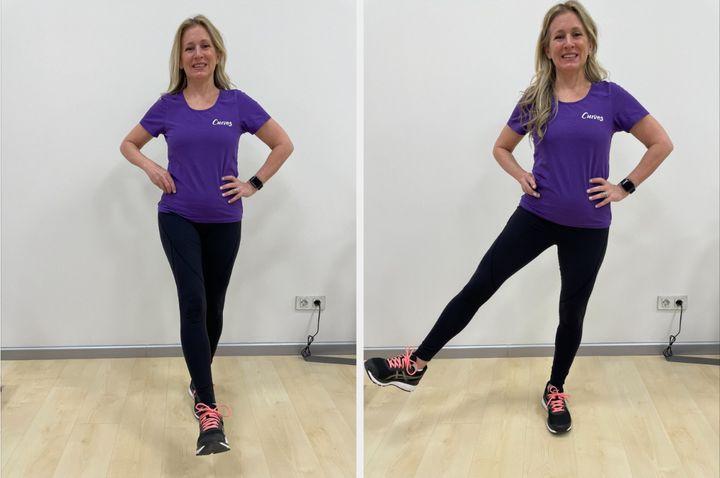
Stand with your feet together and your hands on your hips. Transfer your weight to your right leg and slowly swing your left leg out to the side as high as you can comfortable without leaning to the side. Maintain your balance by keeping your core tight, swing your leg back slowly and with control to cross slightly in front of your supporting leg and repeat. Keep your torso upright and facing forwards. This is a great exercise for the muscles in your inner and outer thighs, hamstrings, quadriceps, abdominals and hip flexors. Do this for 30 seconds then change legs and do the same on the other side.
2. Statue of liberty
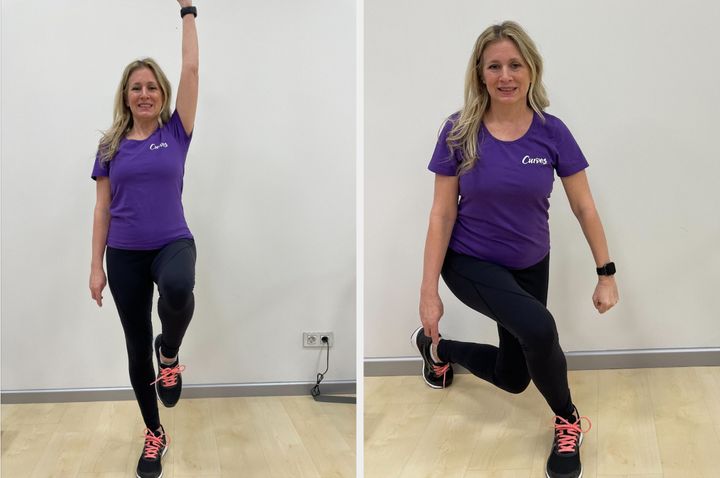
Start with your feet about hip width apart. Raise your left arm straight up and raise your left leg up to 90 then take your left foot down and crossed behind you dropping your knee to the floor and bringing your arm to your side. Perform this exercise slowly to focus on balance and keep your chest facing forwards. This is a great exercise for your abdominals, hip flexors, glutes, hamstrings and quadriceps. Do this for 30 seconds then change legs and do the same on the other side
Advertisement
3. Single leg rotation
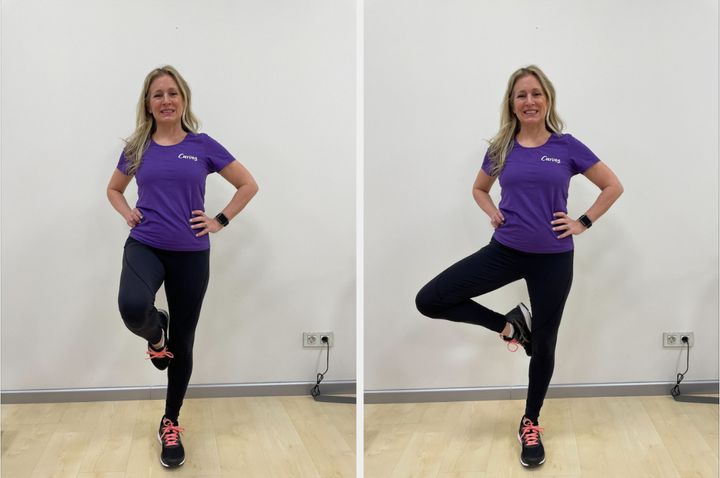
Stand on one leg with your hands on your hips and place the other foot against your knee or upper calf. Rotate your knee out to the side as far as you can without twisting the hips. Keep your hips and torso facing forwards then bring the knee back to the front. Perform this exercise slowly and with control. This is a great exercise for your abdominals, hip flexors and glutes. Do this for 30 seconds then change legs and do the same on the other side.
4. Standing side stretch
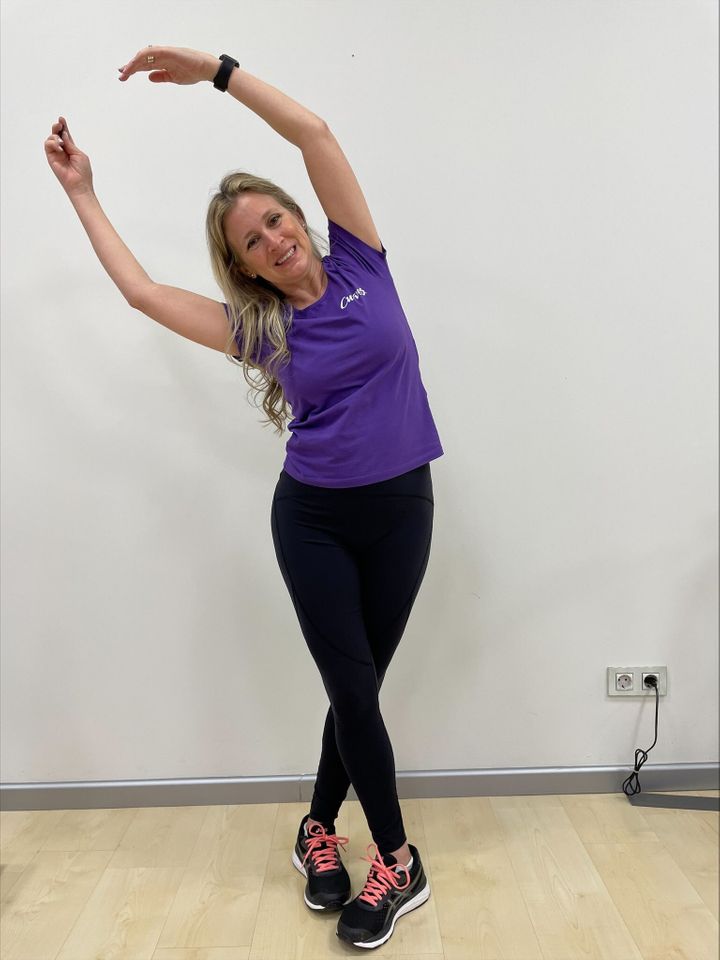
Start with your feet together and cross one foot over in front of the other keeping the feet close together, flat on the floor and pointing forwards. Raise both arms straight up and bend to the same side as your front foot. Keep your core tight and your back aligned so that you are not leaning forwards or backwards. Look up slightly towards your hands. This is a great exercise for your trapezius, deltoids, rhomboids, triceps, obliques, abdominals and hip flexors.
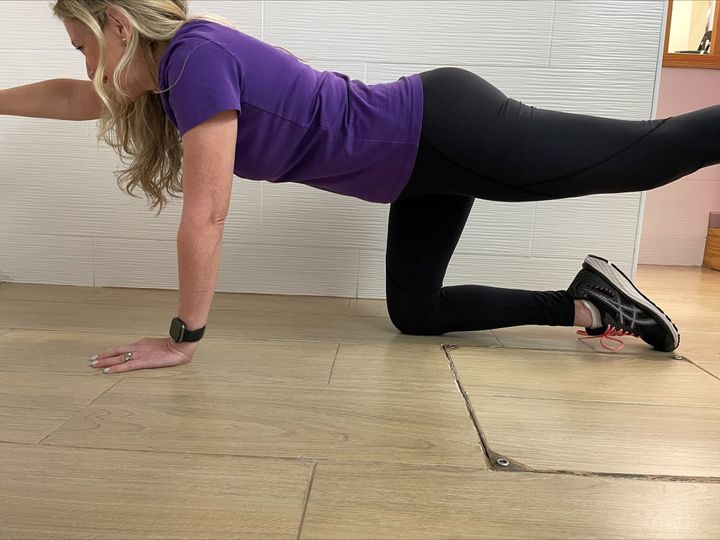
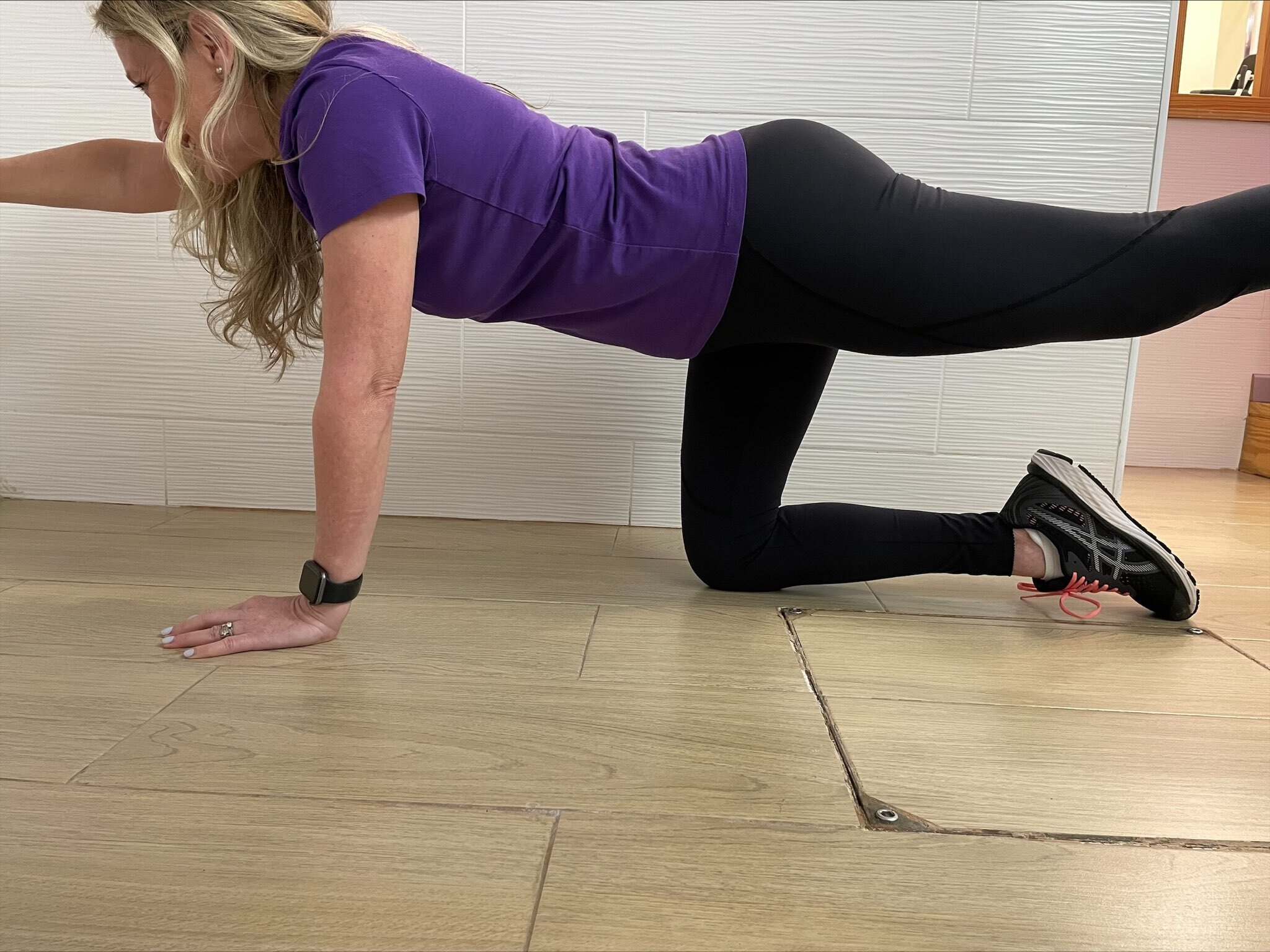
5. Balance table
Start on the floor with your hands stacked below your shoulders and your knees stacked below your hips. Extend your opposite arm and leg out until you form a straight line from your finger tips to your toes, hold for a couple of seconds then return to the start position and extend the other arm and leg out. Look at point on the floor between your hands. Keep your core in tight and be careful not to extend your leg out higher than your shoulder. This is great for your abdominals and lower back strength as well as improving flexibility in your shoulders, and hips. Do this exercise for 30 seconds.
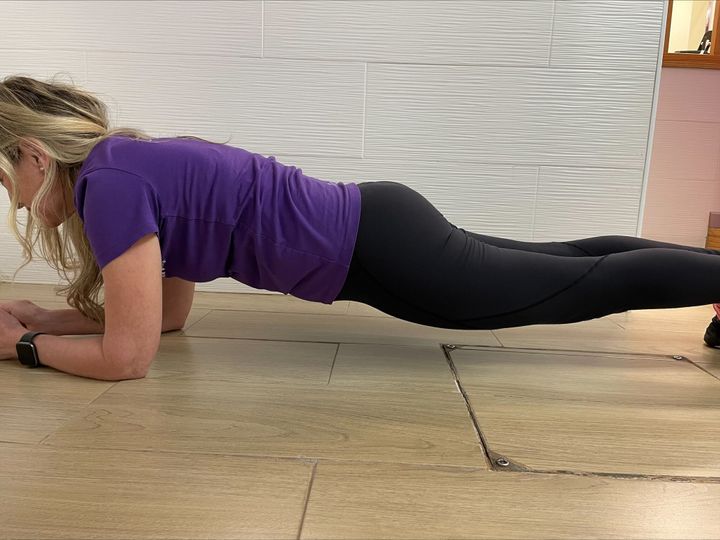
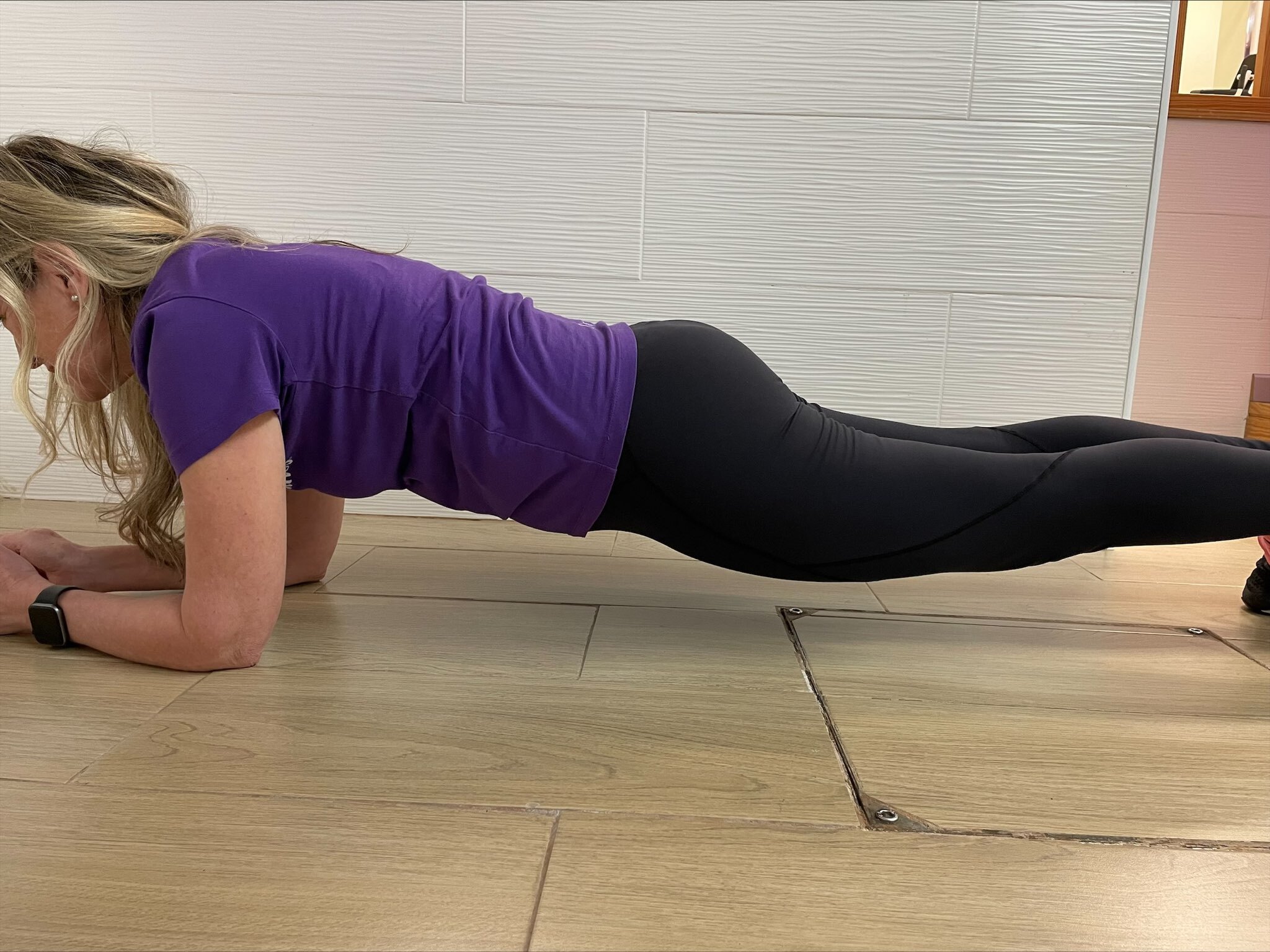
6. Forearm plank
Support your weight on your forearms with your elbows stacked under your shoulders and your legs extended out behind you on your toes. Keep your head in a neutral position so its not hanging down or raised above your shoulders. Pull your core in tight and keep your hips down so your abs are engaged but not sagging as this puts pressure on your lower back until you create a straight line from your head down to your heels. This is a great exercise for your abdominals, obliques, your back, shoulders, triceps, glutes and hamstrings. Hold this position for 30 seconds and don’t forget to breathe!
Move celebrates exercise in all its forms, with accessible features encouraging you to add movement into your day – because it’s not just good for the body, but the mind, too. We get it: workouts can be a bit of a slog, but there are ways you can move more without dreading it. Whether you love hikes, bike rides, YouTube workouts or hula hoop routines, exercise should be something to enjoy.