After almost 10 months of war, the impact of Russia’s invasion on Ukraine’s children is truly devastating.
The UN believes around 400 children have been killed and more than 700 have been left with life-changing injuries since Vladimir Putin ordered troops into Ukraine.
Advertisement
And, as the war is ongoing – making it harder to gauge the full impact of the atrocities in Ukraine – agencies believe the real figures are much higher.
Three Ukrainian photographers – Anastasia Vlasova, Alina Smutko, and Nina Sologubenko – have captured how children are coping this Christmas for Save The Children.
According to one mother, Oksana*, her eight-year-old daughter’s hair has started to turn grey from the stress.
Advertisement
“Look at my elder daughter, she is only eight and she has grey hair. I do not tell her, but when I braid her hair, I burst into tears, because she is a little child and they saw such things,” she told the photographers.
“It was very scary sitting in the basement, knowing that if – God forbid – the house was hit, you would be buried. You worried about yourself at that point, you’re scared for your children.”
Twelve-year-old Karina* also told the photographers: “There’s going to be something lacking. You know, the atmosphere of Ukrainian Christmas.”
Olha*, mother of seven, told Save The Children: “This year the mood isn’t festive. We just wish the war would be over, to live peacefully.
“We don’t want anything, no Christmas, no New Year. How can we celebrate? People are dying.”
She said that at night they “fear every rustle”.
Here are just seven images which provide a snapshot into the lives of Ukrainian children under attack from Russia right now.
Save The Children
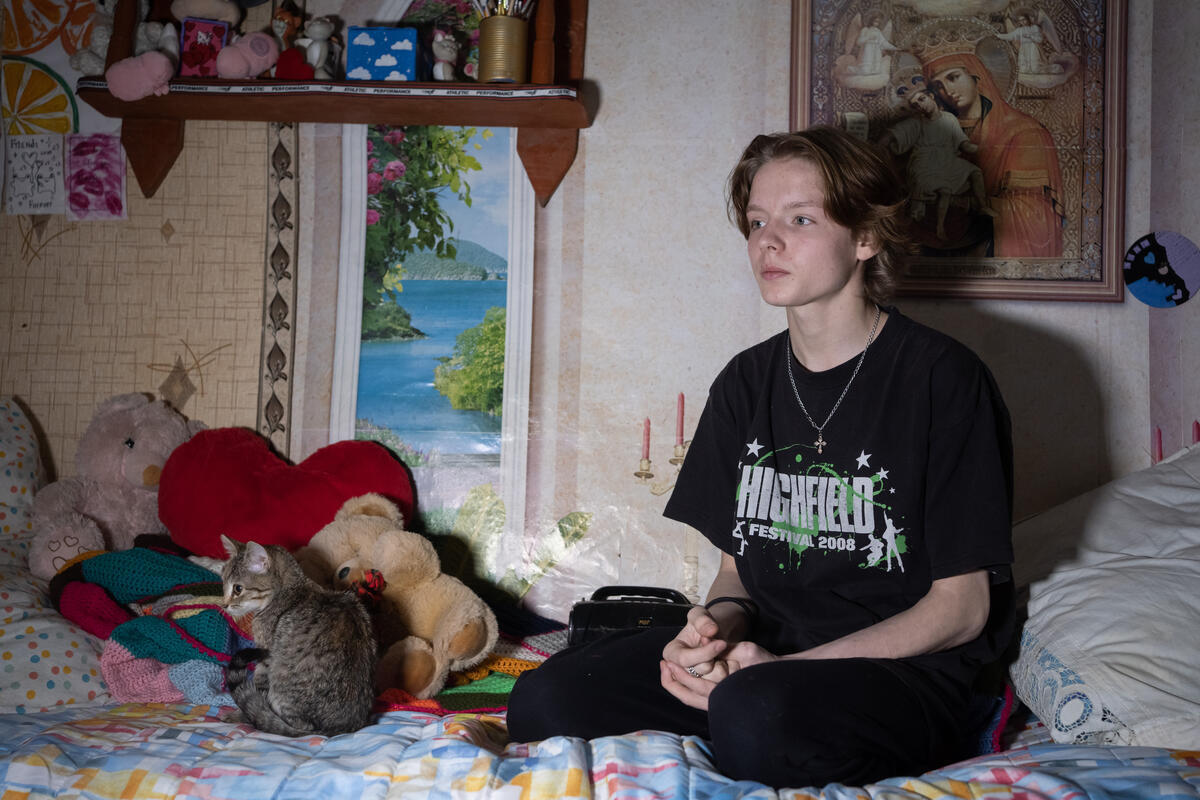
15-year-old Dmytro* was one of several children interviewed for Save The Children.
Save The Children
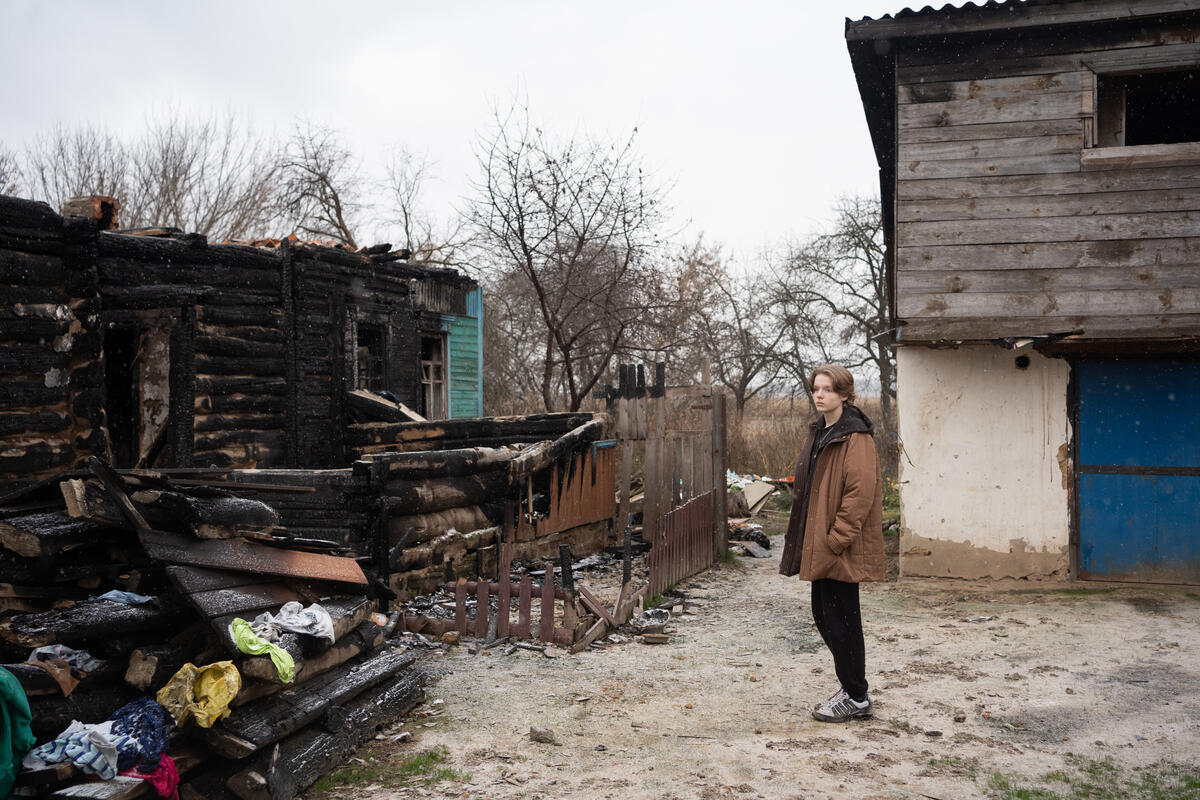
Dmytro* lives with his mother and six younger siblings in northern Ukraine, near the border with Russia and Belarus.
Advertisement
Save The Children
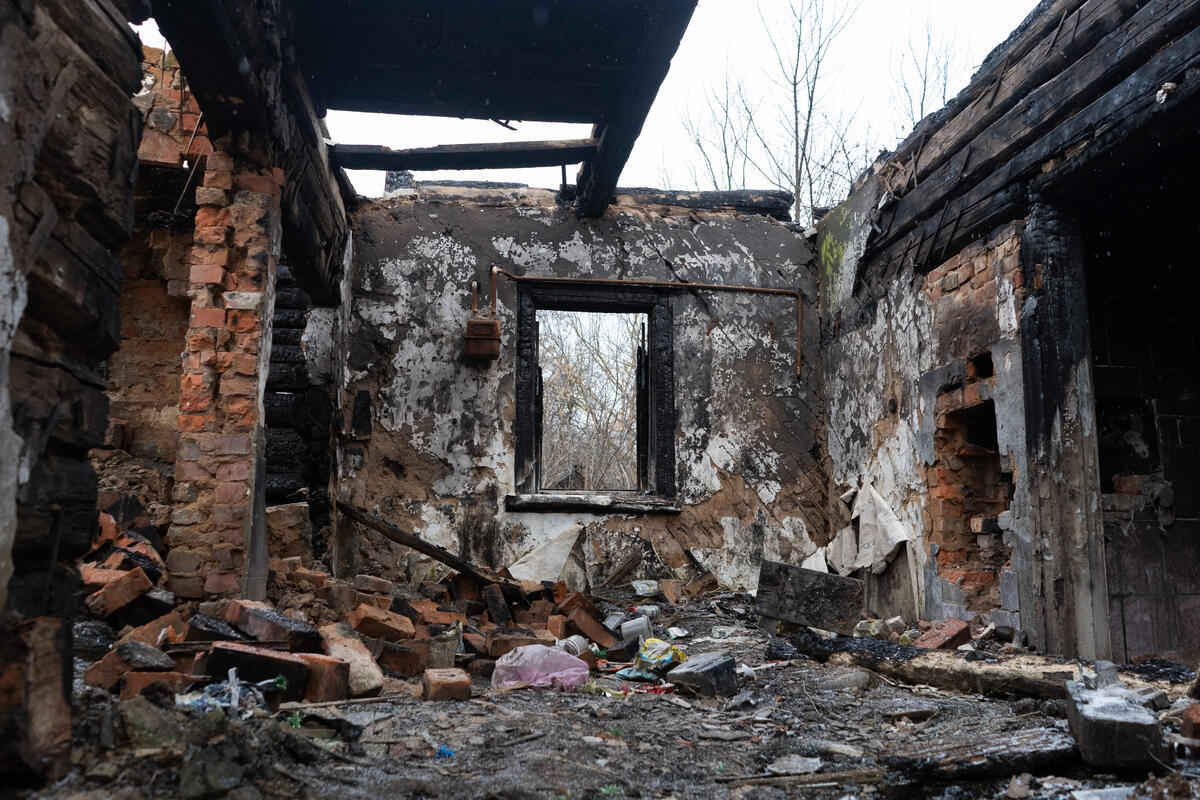
A view of *Dmytro’s house that burned down, near Chernihiv, Ukraine.
Save The Children
Three photographers have shared a harrowing insight into life in Ukraine right now.
Save The Children
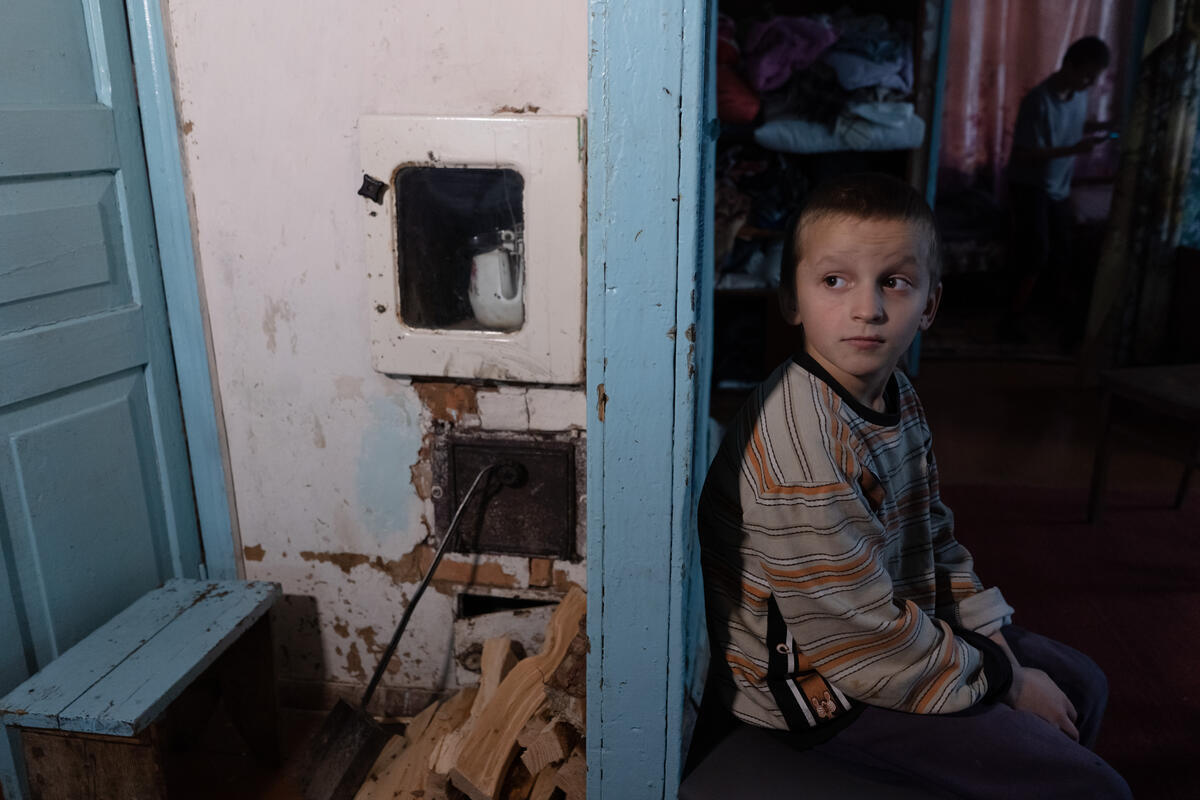
Dmytro*’s brother Taras*, four, sits by the wall behind the heating stove at home near Chernihiv, Ukraine.
Save The Children
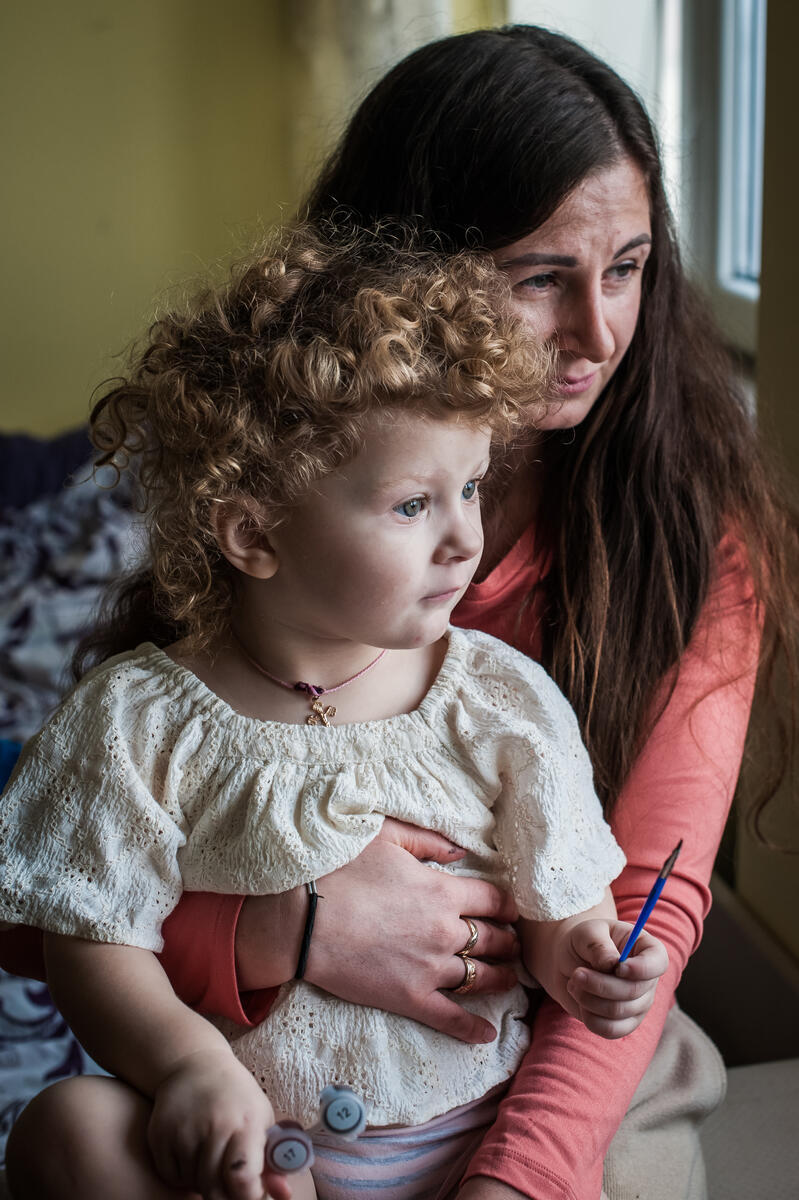
Elena*, 36, sits for a portrait with her two-year-old daughter Vira* in their flat in Suceava county, northern Romania
Save The Children
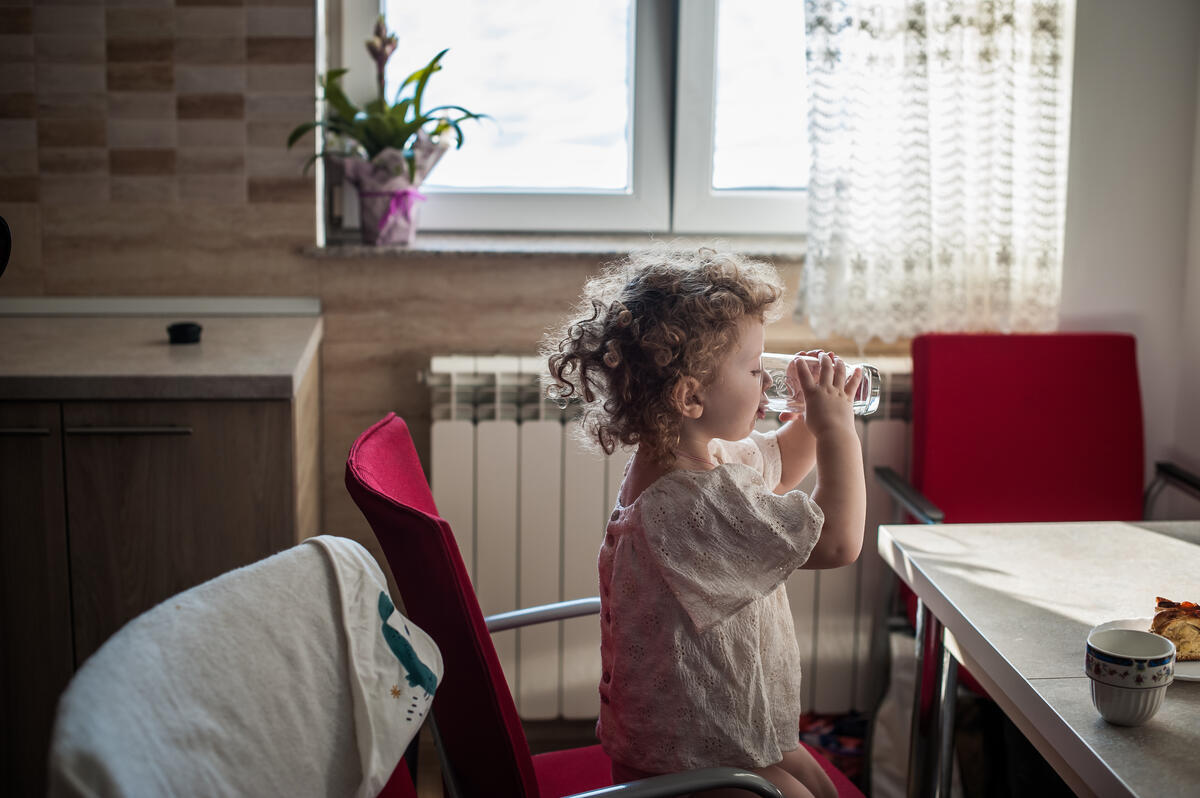
Vira*, two, sits in her kitchen for a portrait in Suceava county, northern Romania
Advertisement
Save The Children
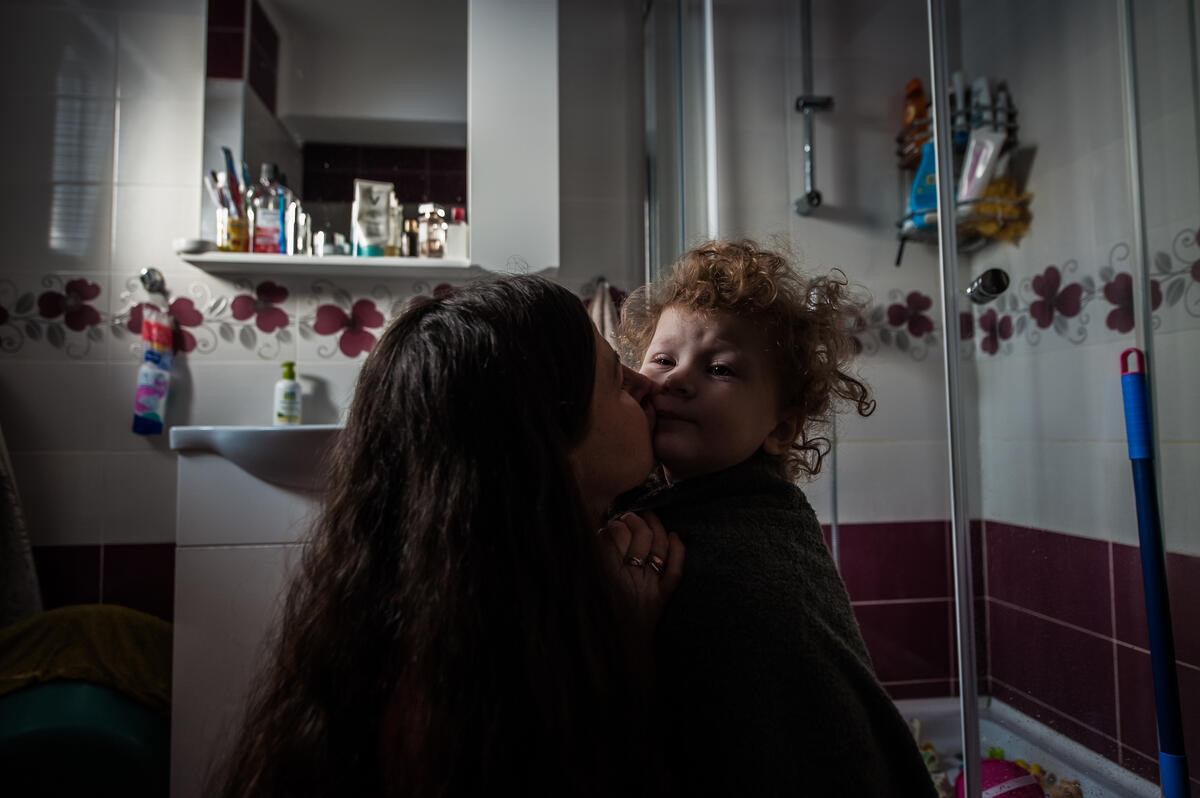
Elena*, 36, hugs her daughter Vira*, two, in the bathroom at their home Suceava county, northern Romania
The difficulties Ukrainian children are facing during this tumultuous period has not gone unnoticed in Kyiv.
The Ukrainian president Volodymyr Zelenskyy shared a video address on the first day of the new school year back in September. He said: “They stole part of your childhood, part of your youth…
“But you are free. You always will be. So be worthy of your will – and of our Ukraine.”
*Names have been changed to protect their identity.
Choosing the right oil makes all the difference between latkes that are golden and savoury and ones that end up oily and rancid. Using schmaltz, aka rendered chicken fat, is the traditional way to fry latkes, imparting a rich flavour to the potato pancakes. Canola and peanut oil are more popular and widely available, while some experts also tout olive oil, a more controversial pick. HuffPost interviewed several chefs to determine the best oil for frying latkes.
Option 1: Canola Oil
Grown from the rapeseed plant, this traditionally affordable oil has seen a recent spike in price due to the war in Ukraine. While canola is a type of vegetable oil, it’s not the same thing as vegetable oil. However, you can swap vegetable oil (typically a blend of soybean, corn, safflower or other oils) for canola in a pinch, since both have high smoke points (meaning you can cook it at a high temperature) and a neutral flavour.
Advertisement
Jeremy Salamon, the chef and owner of Agi’s Counter, a restaurant in Brooklyn, New York, told HuffPost that canola oil is usually his “go-to choice.”
“That’s what my mother uses, what my grandmothers used,” Salamon said. “It has a higher smoking point and lasts longer. You will get more flavor out of schmaltz, but canola is a sure thing.”
Phoebe Raileanu of Deli and Bakery in Sunset Valley, Texas, also uses canola. “Canola oil is the oil I grew up frying my latkes in. It makes for crispy, light latkes with a soft inside. Canola oil can also heat up to a high enough temperature to cook the whole latke through.”
Canola gets bonus points because you can reuse it. Simply strain the oil of any potato bits between uses. Shannon Sarna, the author of Modern Jewish Comfort Food, explained, “Just use a fine mesh sieve to strain out any pieces of food in the oil, store in a container at room temperature and use one to two additional times depending on how much cooking debris is left in the oil.”
Advertisement
Option 2: Peanut Oil
Often given a bad rap for flavouring foods with a peanuty taste, peanut oil “usually has a pretty neutral flavor, if not a little bit nutty,” said chef David Benstock from restaurant Il Ritorno in St. Petersburg, Florida. Refined peanut oil is often safe for those with nut allergies, as the oil is bleached and deodorised, removing the allergenic parts. Many restaurants and fast-food joints use peanut oil to deep fry, and it may be your favourite oil as a result.
Andrew Dana, the CEO and co-founder of Call Your Mother Deli in Bethesda, Maryland, told HuffPost, “Winner winner (shmaltz?) chicken dinner! I LOVE frying with peanut oil. I love to fry my latkes at a super high temp, and this oil holds up to the task. This allows me to make super crispy latkes without an overpowering oil flavour.”
Creating a light, crisp texture, peanut oil comes in second place for most chefs only out of an abundance of caution for those with nut allergies. As Raileanu explained, “peanut oil is the hippest oil to fry anything these days. It does make for a perfect texture on the latke, especially if you are deep frying.”
Option 3: Schmaltz
Traditionally used in Ashkenazi (or Eastern European) cooking, schmaltz is rendered poultry fat. Described as “liquid gold,” the lush and flavourful fat acts as a butter substitute for those who follow Jewish dietary laws, which forbid dairy and meat from being used in the same meal. Look for schmaltz at your local butcher shop or in the refrigerated section of some supermarkets.
The Washington Post via Getty Images
If you follow a kosher diet and like adding sour cream to your latkes, you’ll want to avoid frying with schmaltz.
Advertisement
According to Raileanu, this old-school option might not work for some followers of the faith. “Traditionally, latkes are eaten with applesauce and sour cream. I was raised in a kosher household, so this option would never work for us ― no mixing meat and dairy!”
While schmaltz is beloved for its rich flavor, deep frying with the fat could be too much of a good thing. “Sounds good in theory,” said Dana, “but it is just too much in practice! When I make latkes, I want to be able to eat at least six, and when fried with schmaltz, they get a little too rich for me.”
Looking for some of that umami schmaltz flavor without the heavy finish? Sarna recommends combining the oils for the best of both worlds, using two-thirds canola oil and one-third schmaltz when frying.
If you fry with schmaltz, be aware of the lower smoke point, which means your latkes can burn quickly. Novice latke makers may want to try another oil like canola.
Option 4: Olive Oil (Your Last Resort)
An unexpected oil for frying, olive oil is typically not recommended since it has a lower smoke point (176-210°C/350-410°F) relative to the other oils (200-230°C/ 400-450°F). (Basically, olive oil can’t be heated as hot as other oils without breaking down, which makes food taste burned).
Advertisement
If you’re frying with olive oil, keep the temperature low as latkes can burn and turn bitter, according to Salamon. It will also require a patient chef.
Raileanu cautioned: “I have used it once or twice in an emergency, but it has a lower burning point. So keeping the pan on low makes the latkes take forever, and frankly it’s not usually worth the wait.”
Frying typically requires larger quantities of oil, which can be prohibitive for pricey olive oil. Depending on your preference, the pungent and spicy flavor of olive oil imparted onto the latkes may be a pro or a con. Benstock considers it a positive: “The biggest pro of using olive oil is that it has amazing flavor and a nice viscosity for cooking.”
Looking to honour the OG Hanukkah story? Olive oil was likely the oil that lasted the eight days.
“On Hanukkah, we Jews eat things that are fried (ie, latkes, jelly doughnuts or sufganiyot ) to commemorate the miracle of the oil,” Raileanu said. “So if you are trying to stick to the script, use olive oil. But you’ll be the only one!”
In the past few years we’ve seen mental healthand therapy content explode online. As the stigma towards therapy decreases, people are using social media to share the beauty that can come out of sitting down with a professional and talking.
Among those sharing videos, are therapists and counsellors who want to reach a wider audience.
As someone who has been in therapy, being able to watch content linked to anxiety has helped and encouraged me to continue to do the internal work. And let’s face it, accessing therapy can be both arduous and expensive – especially if you’re early in your career or you’re facing long NHS waiting lists – so these videos are a way for people to start work on themselves today, without paying a hefty fee.
Advertisement
However, there’s been recent debate around how therapists are using social media. There’s a big difference between a therapist who shares five tips for coping with anxiety – and a therapist who retells their client’s life story for likes. (And no, I won’t be sharing examples of the latter).
slightly concerned about the amount of doctors, nurses, & therapists trying to go viral on tiktok & insta…can at least *one* segment of society be, like, healthy and grounded enough to maybe not need validation from strangers via 15-second clips with spongebob music
I had some students confide in me that their THERAPISTS were making fun of them on Tiktok. They were so completely traumatized, and I’m not sure they will even regain the ability to trust people in authority again. I would never make fun of a student.
Increasingly, it feels like it’s becoming normalised for therapists to speak about their clients in their social media, which has made people wonder how ethical this is.
“Therapists are not supposed to be using their clients to become influencers,” one therapist (@QueeringPsych) said on Twitter.
“Sharing helpful info (without generalising or diagnosing strangers) is great. Making your clients wonder if you’re gonna talk about them affects the relationship,” he added.
Therapists aren’t the only ones using social media to speak about their profession. American nurses recently came under fire after sharing their patient ‘icks’ on TikTok.
Advertisement
No job is perfect and being a nurse is a demanding job. But where is the line between raising awareness of the challenges of your profession and speaking about real-life patients? Does it matter if they’re unnamed? Or does it still cross a line?
Vuma Phiri, who is a 25-year-old paralegal from Western Australia, thinks the content therapists make is starting to go overboard.
“There are certain client-facing careers that need to avoid speaking about the people who come to see them because they visit you at their most vulnerable. It’s unethical to use their vulnerability to go viral,” Phiri says.
However, she shares that she’s benefitted from therapy content but mainly the therapists who give general advice without mentioning their clients’ experiences.
Advertisement
“You can definitely reach your audience well by giving out advice based on your knowledge rather than specifically speaking on those who come see you,” she says.
Phiri also says she’d be angry if her therapist used her story for a viral video. “The security I feel signing a confidentiality agreement would be breached by you speaking about me online on an app as far reaching as TikTok, even if I was anonymised.”
Crystal*, who has been going to therapy for some years, understands how these videos can help others, but “when its explicitly prefaced and explained as the story of a particular person, I think it’s invasive and an informal violation of trust,” she says.
She explains that she would feel violated if her therapist shared her story online. “How can I be baring my soul and telling a professional things that even my close family and friends don’t know and they’re using it as gist online for engagement?” asks the 24-year-old painter from London. “Even though only I would know it was about me, I would feel quite exposed.”
Westend61 via Getty Images
Advertisement
She adds that she’s never found hearing people’s personal stories in this context helpful. “It feels like entertainment and the focus is always on how juicy the story is rather than the healing/resolution/lesson to be learned,” Crystal adds.
Caroline Jesper, who’s head of professional standards at the British Association for Counselling and Psychotherapy’s (BACP), believes social media channels can be a great way to connect and communicate with people, and for therapists, it can be a good way to network with other professionals.
“However, it’s important therapists keep in mind their ethical values and principles while doing so,” she tells HuffPost UK.
“They shouldn’t breach confidentiality or publish anything on social media which could identify a client. They should also be aware that even when anonymising aspects of their client work, a client may see this and recognise themselves in being said. This would be a breach of trust in the therapeutic relationship.”
Are therapists allowed to speak about clients online?
Counselling Directory member Jennifer Warwick shares that there’s been some healthy debate amongst therapists about how, or if, they should use social media.
Advertisement
“Some stay well away, while others see it as a way of connecting and engaging with people,” Warwick says. “It’s a way of showing ourselves as being human and relatable.”
Therapists in the UK are bound by ethical guidelines set out by the governing boards, such as the BACP, so in theory this should prevent people crossing a line.
“Client confidentiality and privacy are key, so we need to make sure that no information that might identify the client is used,” Warwick explains.
“The BACP even have specific guidance for its members, which includes how social media relates to its ethical framework, maintaining clients’ privacy and confidentiality, as well as appropriate boundaries.”
But if you’re viewing this kind of content on TikTok – or you’re in therapy yourself – how can you judge when a therapist has shared too much?
Advertisement
“It’s vital for therapists to tread very carefully around this and not to share anyidentifiable information about clients, past or current.” Warwick adds.
“Imagine seeing a post from your therapist and thinking ‘they’re talking about me!’ even without them giving a name or location.”
She emphasis on the the importance of a health relationship between therapists and clients. “It makes no sense to have a client or potential client feel that we might not be safe to work with when they see us posting about a current client.
“It can however be helpful to talk about general themes or issues on social media that we work with, as this helps clients find the right therapist for them.”
Should therapists ask their clients if they can speak about them online?
“It’s definitely good to set boundaries with clients around social media use, for example, not responding to DMs or accepting friend requests,” Warwick says.
Advertisement
“Ideally, this would be stated as part of the therapist’s social media and also as part of the agreements made when starting with a client.”
“It might be good to discuss with a client how we use social media, to be there to answer any questions they might have and put their minds at ease so they know we are bound by ethical guidelines in our work, which protects our clients’ privacy and confidentiality.”
If you have concerns about your therapist, the BACP advises trying to speak to your therapist first to try to resolve the issue directly with them. But if you think confidentiality has been breached, you can make a formal complaint.
Help and support:
Mind, open Monday to Friday, 9am-6pm on 0300 123 3393.
Samaritans offers a listening service which is open 24 hours a day, on 116 123 (UK and ROI – this number is FREE to call and will not appear on your phone bill).
CALM (the Campaign Against Living Miserably) offer a helpline open 5pm-midnight, 365 days a year, on 0800 58 58 58, and a webchat service.
The Mix is a free support service for people under 25. Call 0808 808 4994 or email help@themix.org.uk
Rethink Mental Illness offers practical help through its advice line which can be reached on 0808 801 0525 (Monday to Friday 10am-4pm). More info can be found on rethink.org.
Rishi Sunak this week stopped being Britain’s shortest-serving prime minister.
After managing to survive 50 days in Number 10, he has surpassed Liz Truss’s ill-starred tenure as PM.
But during his brief time in charge, Sunak has managed to earn an unenviable reputation for being willing to completely change his position when the pressure’s on.
Advertisement
We’ve already seen two major U-turns – one on housebuilding targets and the other on onshore wind farms – brought on by the prospect of Tory backbench rebellions.
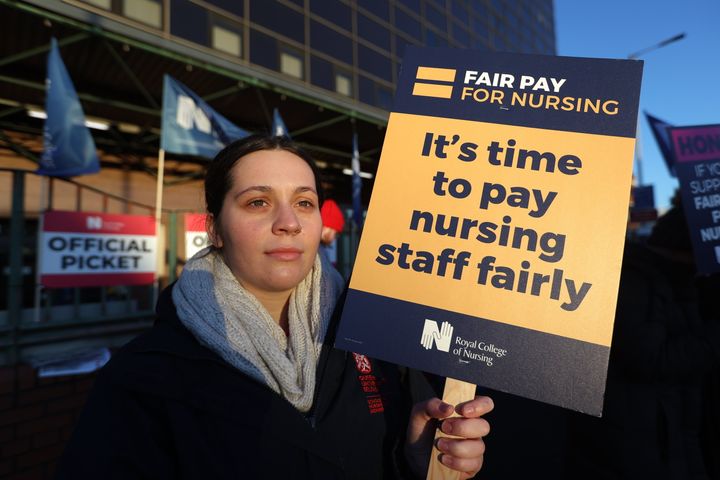
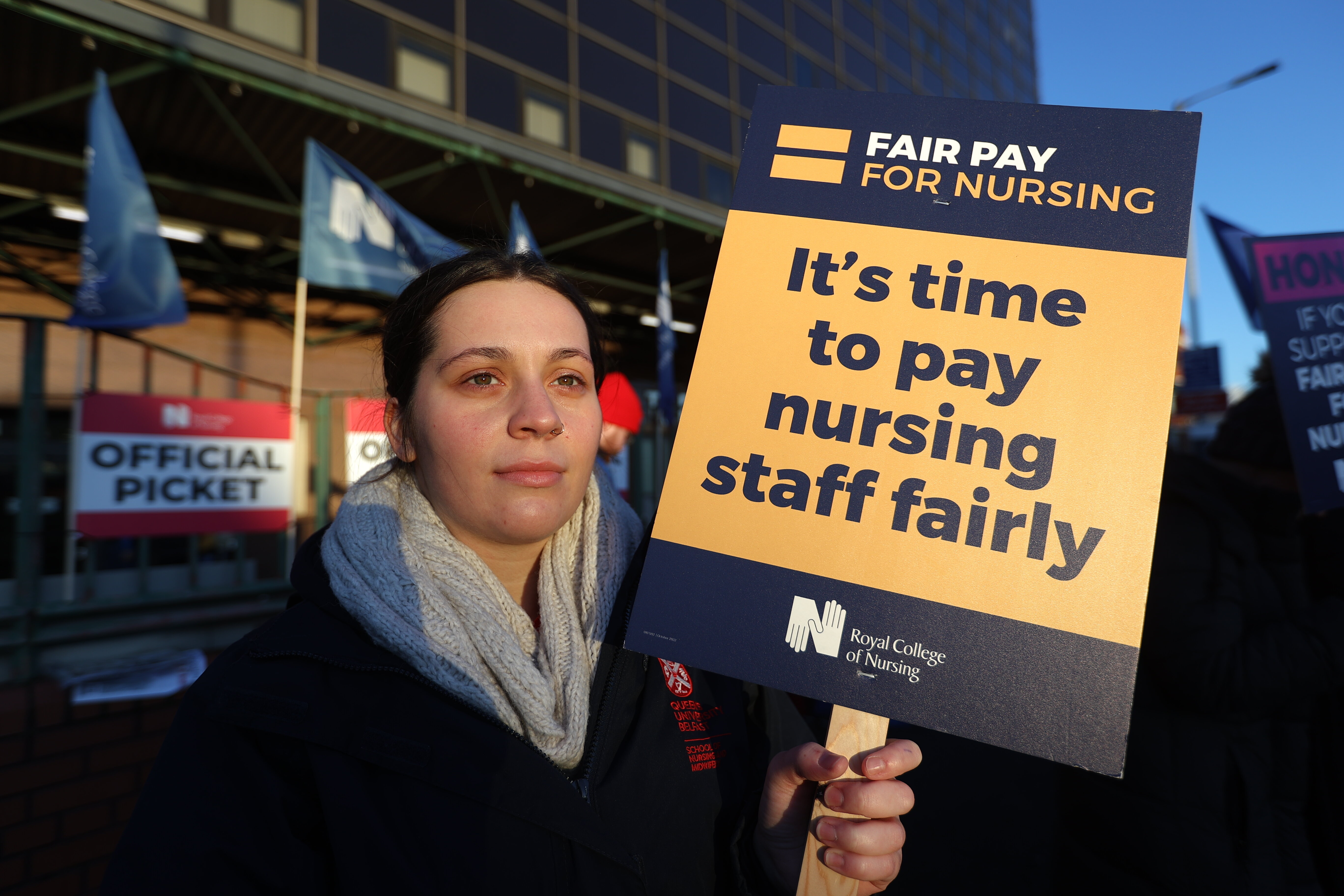
Now, it seems only a matter of time before he is forced into his biggest about-face yet as he tries to end nurses pay dispute which saw members of the Royal College of Nursing walk out on Thursday. A further 24-strike is due next week.
So far, ministers have stuck to the same line on nurses’ pay as they have on other public sector workers taking part in the growing winter of discontent – that the government has accepted the recommendations of the various pay review bodies and won’t be re-visiting the matter.
But with trade unions unwilling to accept the real-terms pay cuts on offer, the pressure is building on the PM – not least from senior Tories – to relent.
Advertisement
Former Conservative chairman Jake Berry – a man with an axe to grind after being sacked by Sunak – spoke for many of his colleagues when he said the current offer on the table to nurses was “too low” and that compromise was needed.
“There is no do-nothing option except continued strikes,” he said yesterday.
“And I just think the cancellation of probably literally hundreds of thousands of non-urgent appointments has huge repercussions for an already-overstretched health service.
“That’s why I think it’s reasonable to say in this regard, it is time for pragmatism and talking between the government and the unions. I don’t see why that is controversial.
“Machismo and sort of chest beating and ‘we’ll take the unions on’ doesn’t work. You only get these things sorted out by talking.”
Dr Dan Poulter – a GP – and former cabinet minister Robert Buckland are also among a growing band of Tory MPs who believe compromise is urgently needed to bring an end to the dispute.
Advertisement
Public support for the nurses’ fight remains strong, meaning the political damage for the government grows whenever they take to the picket line.
Staff Nurse Courtney Watson joins members of the Royal College of Nursing (RCN) on the picket line outside Mater Infirmorum Hospital in Belfast as nurses in England, Wales and Northern Ireland take industrial action over pay. Picture date: Thursday December 15, 2022.
Liam McBurney via PA Wire/PA Images
A veteran Tory MP told HuffPost UK: “I’ve been around long enough to know that there will invariably be a compromise found.”
Labour can hardly believe their luck. A party source told HuffPost UK: “I just don’t understand what they are thinking – do they think ‘crush the nurses’ is a viable strategy for the country or a good look? He’s just going to end up looking weak again.
“It’s notable that the Tories who think strategically can see a mile off this isn’t going to work.
“It’s absolutely bonkers they didn’t get that strike called off and instead let us use PMQs to frame all the strike action around it. It’s not just that Sunak has no vision – there’s no political strategy either.”
Advertisement
For now, though, the prime minister appears to be digging in.
Speaking in Belfast yesterday, he said: “We want to be fair, reasonable and constructive, that’s why we accepted the recommendations of an independent pay body about what fair pay would be.”
But there is a growing sense in Westminster that a government climbdown is inevitable.
And while that may well pave the way for a resolution to the nurses’ dispute, it will be yet another blow to Sunak’s faltering political reputation.
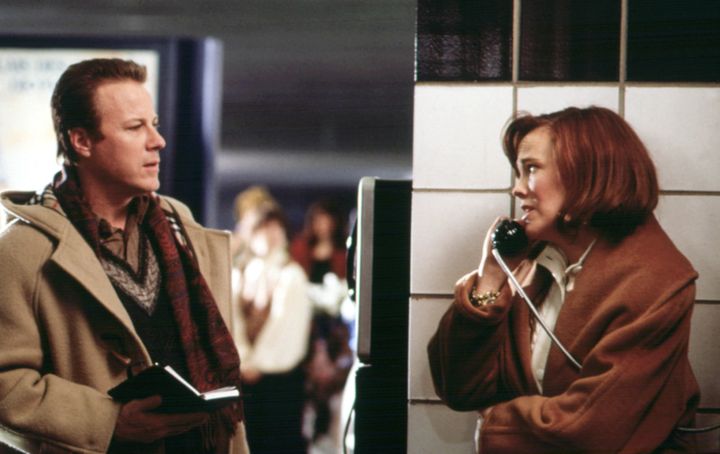
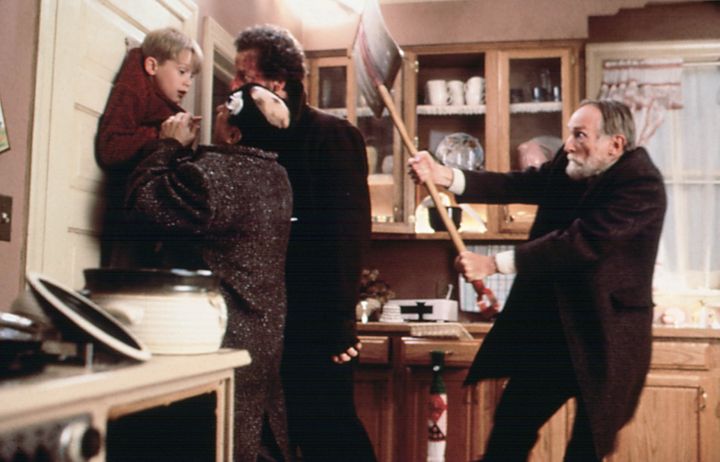
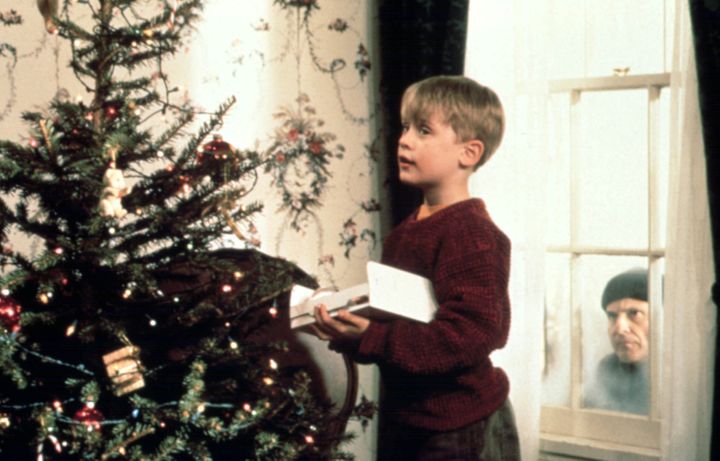
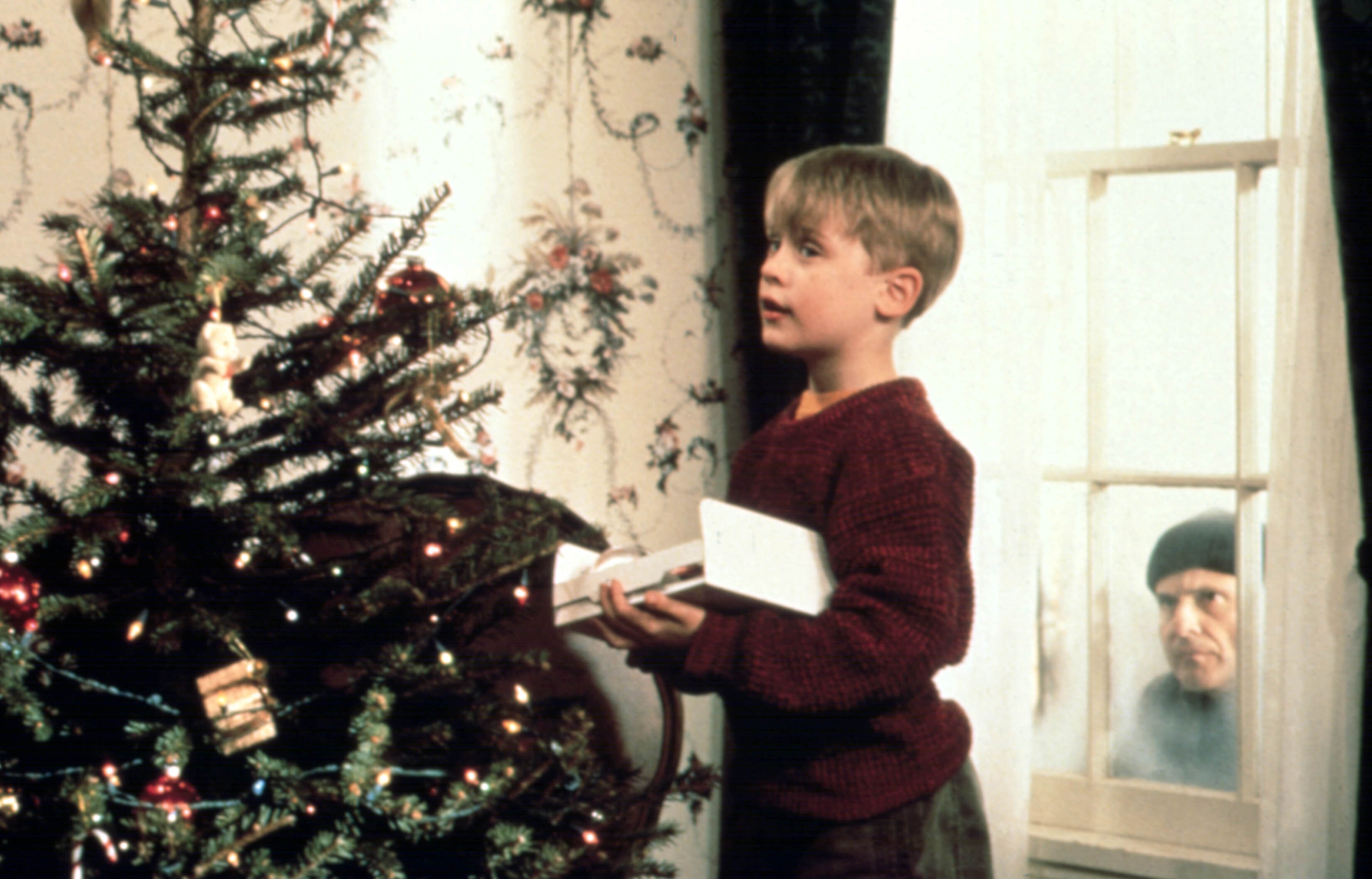
Somewhat incredibly, it is now 32 years since the release of one of the most beloved Christmas films of all time – Home Alone.
Starring Macaulay Culkin, it might not have been an immediate critical success, but the slapstick festive comedy stormed the box office, spawned various spin-off films and a recent TV series, and still holds a special place in the hearts of millions across the globe.
Advertisement
However, no matter how many times you’ve seen it in the ensuing years, there’s plenty we bet you still don’t know about it, so have these 21 behind-the-scenes secrets from the set, ya filthy animal…
1. Home Alone was written in just over a week
Screenwriter John Hughes knocked out the first draft of the script in just nine days after a family holiday to Europe.
He was inspired by his own worries whilst traveling, telling Time magazine in 1990: “I was going away on vacation and making a list of everything I didn’t want to forget. I thought, ‘Well, I’d better not forget my kids.’ Then I thought, ‘What if I left my 10-year-old son at home? What would he do?’”
2. But it took much longer to find the right Home Alone house
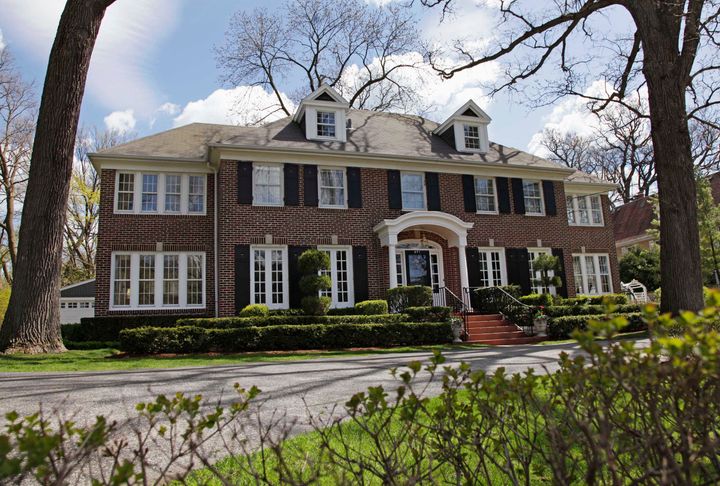
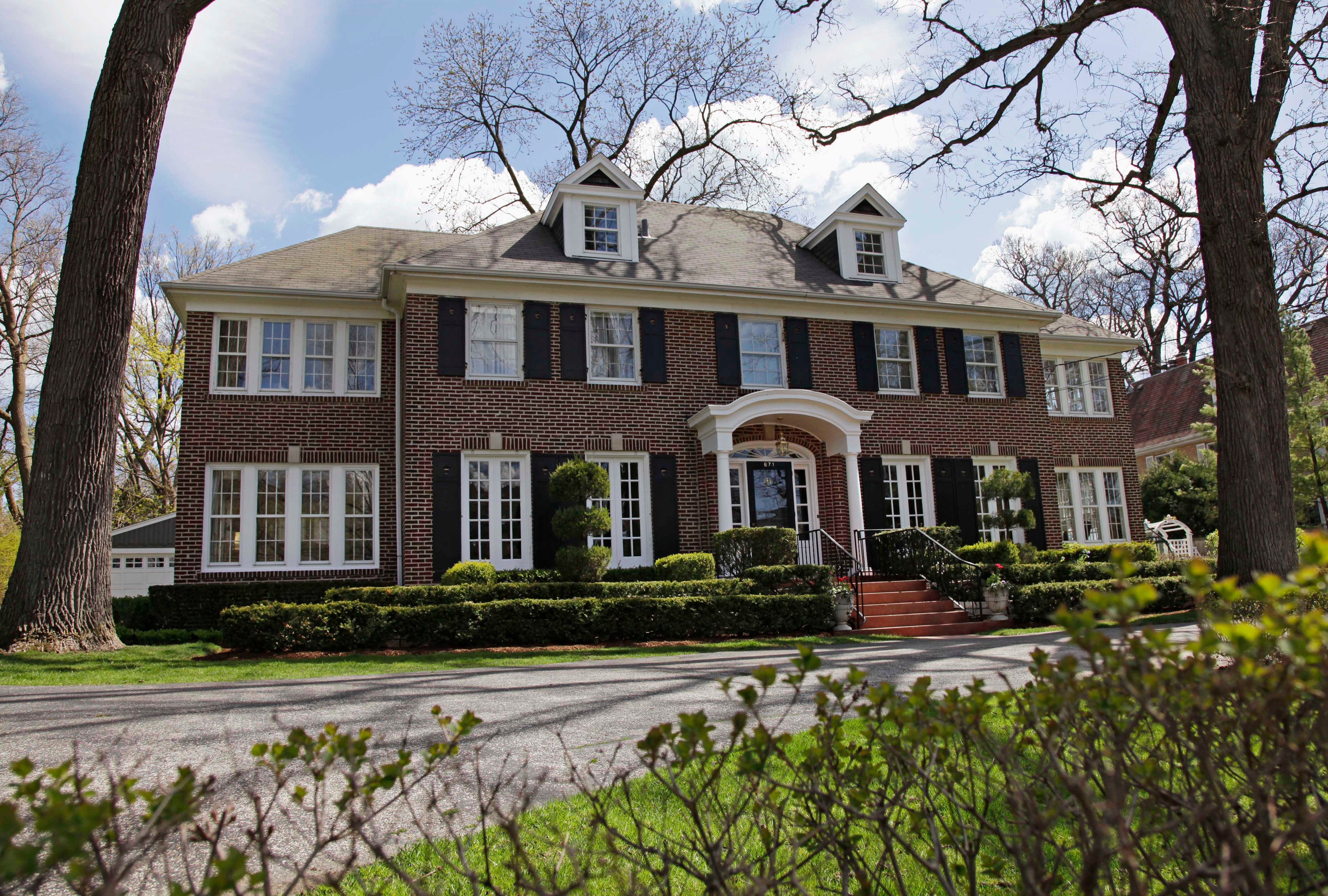
The Home Alone house
Nam Y Huh/AP/Shutterstock
Advertisement
Director Chris Columbus said the team “drove around for several weeks” in the Wilmette, Winnetka, Glencoe, Lake Forest areas of North Shore.
Eventually, the right house was found in 671 Lincoln Avenue in Winnetka, Illinois, which funnily enough had previously been scouted as a potential location for 1989’s Uncle Buck, but was never used.
The house itself – which was sold for $1.585 million in 2012 – has since become a major tourist attraction.
3. Some interior scenes were filmed in the real house, while others were shot on sets
The hallway and staircase were all real, while the kitchen and dining room and other first-floor rooms were built and shot in a studio. The attic bedroom was also a real feature.
4. The family who lived in the house remained there during filming
It took about five months to setup, shoot and derig for scenes in the house, during which time the then-owners, the Abendshien family, continued living there, despite having access to an apartment that had been paid for as part of the deal.
Advertisement
Cynthia Abendshien explained to Chicago Magazine that the location manager had told them “that, under the contract, if they needed to knock down a wall when we weren’t home, they could do it. So she told us it was best if we remained on the premises”.
John Abendshien added: “In that house, there’s a master bedroom suite with four rooms. Basically, we just moved into that. We put a hot plate up there to cook. We didn’t have to cook that much, because we had full access to the food truck that the crew used.”
5. Kevin’s treehouse was specially built in the house’s garden for the film
6. The flooded basement scene was filmed in a school swimming pool
The production made use of the pool at New Trier Township High School in Winnetka, Illinois, to film the scene where Kevin runs through a flooded basement, director Chris Columbus told Entertainment Weekly.
The school’s basketball hall was also used to construct the plane set, on which the Macallister family were seen traveling to Paris, while the kitchen set was also built on site there, too.
Advertisement
Scenes for Ferris Bueller’s Day Off and Uncle Buck had previously been shot in the same school.
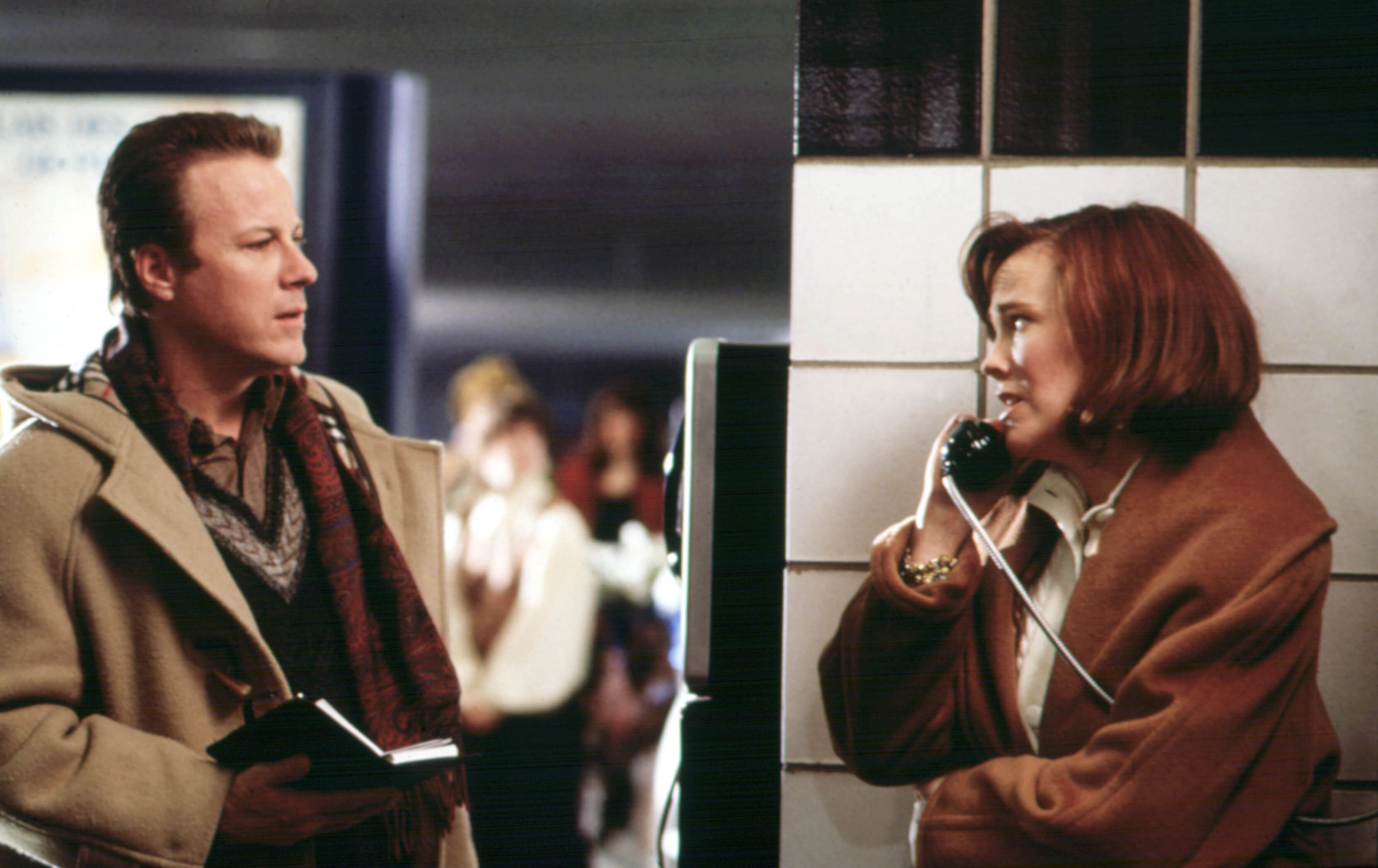
7. The Macallister family never actually made it to Paris
John Heard and Catherine O’Hara in Home Alone
Moviestore/Shutterstock
While the plot of the film sees the Macallister family leaving Kevin behind as they head to Paris for Christmas, all scenes were shot in the US.
Scenes where the family are seen at Paris Orly Airport were actually shot at O’Hare International Airport.
8. The airport scenes were particularly “nail biting” for the director
“We had to move fast. We only had two or three takes of the entire family running down the terminal,” Chris told Chicago Magazine.
9. The adult actors didn’t always act opposite Macaulay Culkin
A lot of the film was shot at night, but due to Macaulay’s age at the time, he wasn’t able to be on set after 10pm.
Advertisement
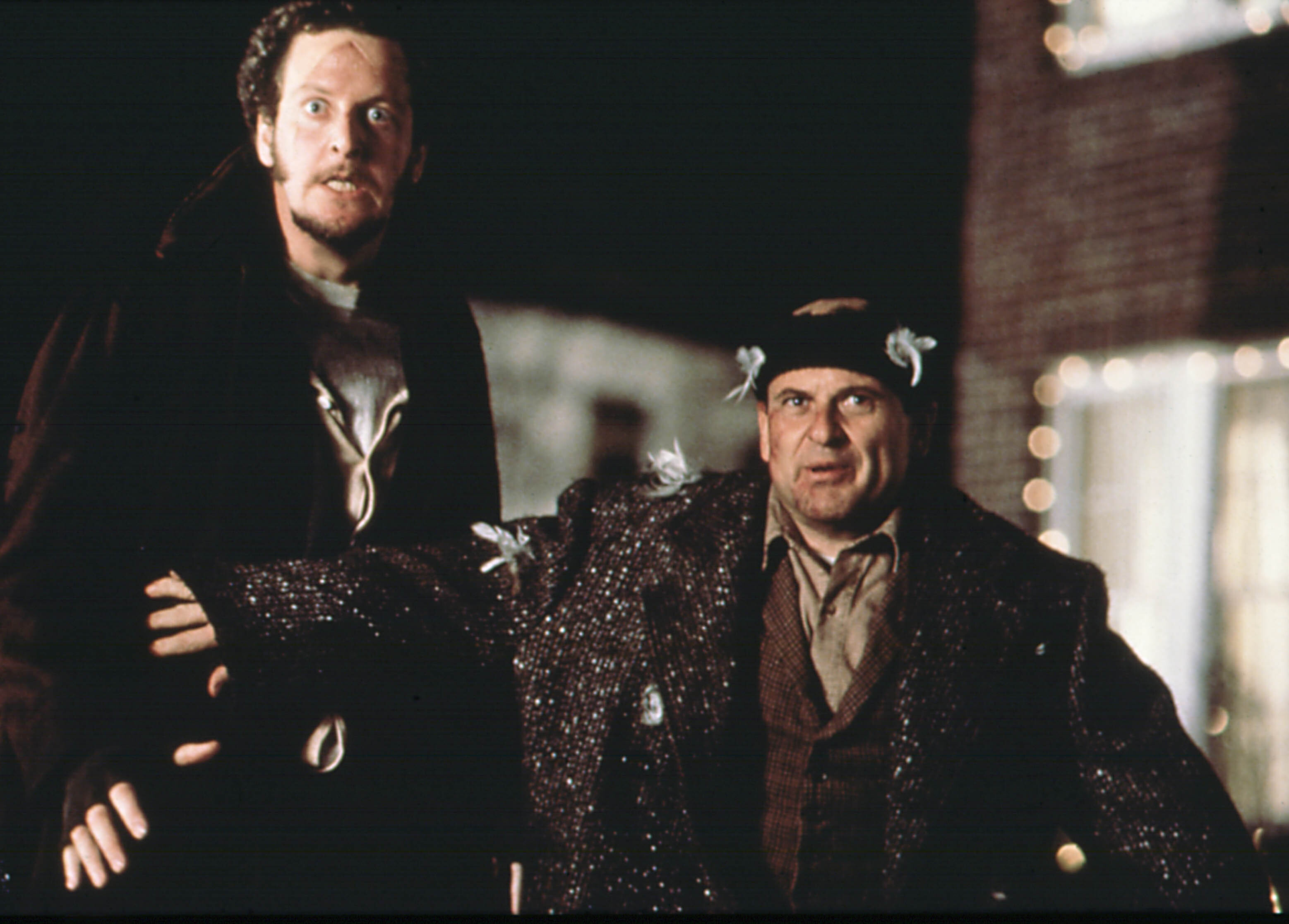
This meant that Joe Pesci and Daniel Stern – aka Harry and Marv – acted opposite director Chris Columbus standing in as Kevin behind the camera.
“I was Kevin McCallister from about 10 at night to 6 in the morning,” Chris told Entertainment Weekly.
Catherine O’Hara also recalled having to act opposite a tennis ball for some scenes.
She told Chicago Magazine: “We’d shoot a scene with one of the kids; then, as late as one in the morning, we’d shoot my close-ups.
They’d have a tennis ball on a stand, the height of the kid’s head, and the script supervisor would read the children’s lines.”
10. Joe Pesci even did his best not to interact with Macaulay when the cameras weren’t rolling
Macaulay Culkin, Joe Pesci, Daniel Stern as Kevin, Harry and Marv
Moviestore/Shutterstock
Advertisement
The actor went quite method in his approach to the character of Harry, as he avoided Macaulay on set so that the child star would be afraid of him.
He told People he “intentionally limited my interactions with him to preserve the dynamic” between the characters.
Joe explained he did not want “it to come across on the screen that we were in any way friendly”.
“I wanted to maintain the integrity of the adversarial relationship,” he added.
11. The film was written with Macaulay in mind to play Kevin
Screenwriter John Hughes imagined Macaulay in the leading role when creating the film due to his performance in 1989’s Uncle Buck, but director Chris Columbus told Entertainment Weekly he still met with “hundreds” of other young actors out of “directorial responsibility” to ensure they had the right person.
In the end, Chris was charmed by Macaualy, who he said was “really funny” and had “a great voice that was not annoying”.
Macaulay Culkin was just 10 years old when he filmed Home Alone
Moviestore/Shutterstock
Advertisement
12. Robert De Niro was considered for the role of Harry
While some outlets have reported the screen legend “turned down’ the chance to appear in the film, Chris told Insider that Robert never seriously considered it.
“It was talked about a little internally, but when [Joe] Pesci said yes, I was stunned,” he said.
It has also been claimed Jon Lovitz was considered for the part.
13. Filming the stunt sequences was not as funny as it looks on screen
Chris said the team had a constant fear the stunt performers had injured themselves while acting out some of the slapstick sequences.
He told Entertainment Weekly: “I really thought Troy, our stunt man, had broken his back on that first take [of walking up the stairs of the front of the house and doing a back flip]. Until we knew those guys were alive and okay, none of that stuff was funny, so I was surprised once we put the film together how well it actually worked for an audience.”
Stunt doubles stood in for Daniel Stern and Joe Pesci
Moviestore/Shutterstock
14. However, the stunts were not the hardest part of the shoot
Chris said that was actually making the gangster movie Angels With Filthy Souls – the one Kevin plays in the film and uses to scare off Harry and Marv – which you might not even have realised isn’t a real film.
Advertisement
“It’s not easy to recreate the look and the feel and the sound of those movies,” he told EW. “It was kind of a painstaking task to get it right. And we had to find actors that felt like they lived in that particular time period, as well, which was an interesting thing.”
15. One actor was unhappy with the amount he was paid for the film
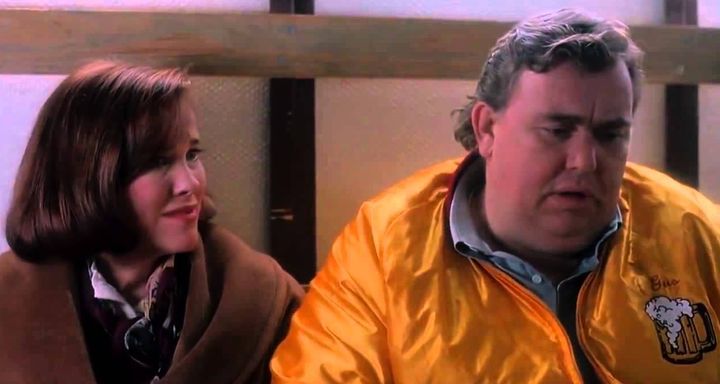
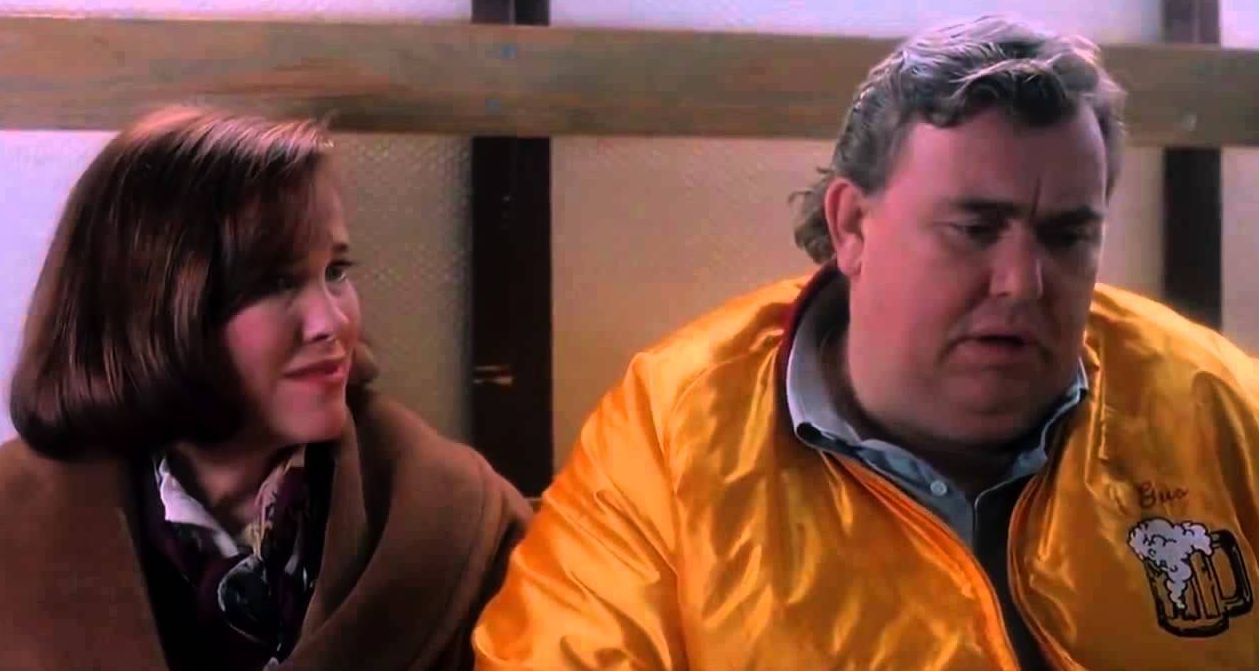
John Candy, who was a huge comedy personality in the US when Home Alone came out, made a brief appearance as Gus Polinski, but reportedly received just $414 for a day’s work of shooting.
Director Chris Columbus said there was “certainly a little resentment on John’s part” about the amount he was paid.
He told Insider: “It was a deal between him and John Hughes at the time. I never met John Candy before he came on the movie. I don’t know if John ever got any kind of compensation from Fox.”
John Candy in Home Alone
Advertisement
16. When there was a snowstorm early on into filming, the schedule was readjusted to capitalise on it
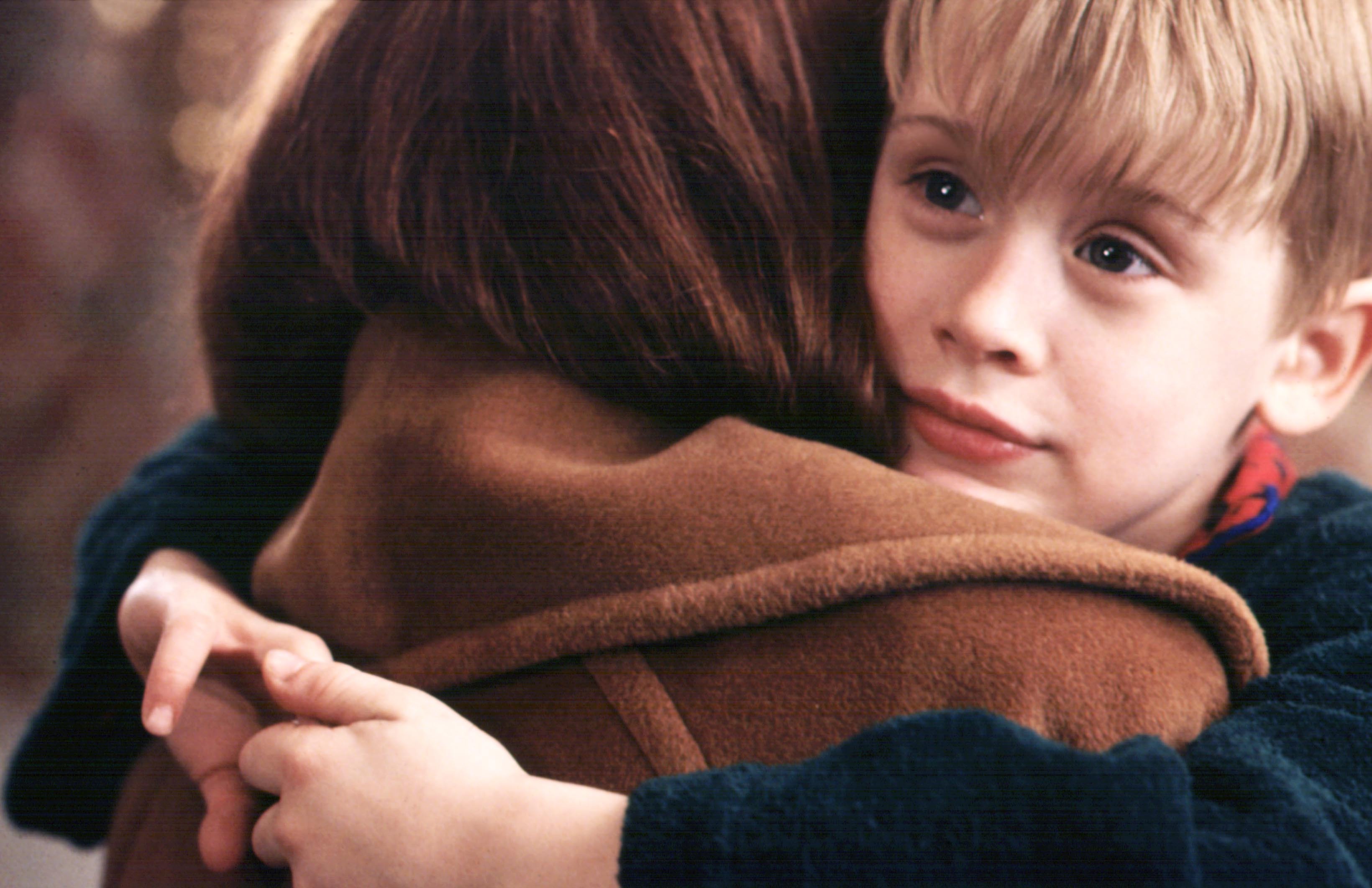
According to an episode of The Movies That Made Us, a snowstorm happened on the second day on set, so the team quickly seized the moment to shoot the scene where Kevin is reunited with his family on Christmas morning.
The flurries were enhanced with potato flakes to make it look like it was snowing more than it was at that moment in time.
Kevin was reunited with his mum Kate on Christmas morning
Moviestore/Shutterstock
17. They had to bring in snow machines for the rest of the film, which proved expensive
After the snow storm, the team had to bring in snow machines to match it for the rest of the movie. However, associate producer Mark Radcliffe told Chicago magazine that whenever the snow melted, “we were spraying ice, and then they had problems with ice. The next thing, they were literally laying bags of ice to try and create snow.”
Advertisement
18. This caused some problems for the location team
James Giovannetti Jr, second assistant director, added: “We had refrigerated semitrucks of shaved ice coming to the set. There must’ve been about 15 guys dumping tons of ice in the yard every day. We may have even got water in the house, because when it started melting, it started seeping into the basement.”
19. Some of the film was improvised – including one iconic moment
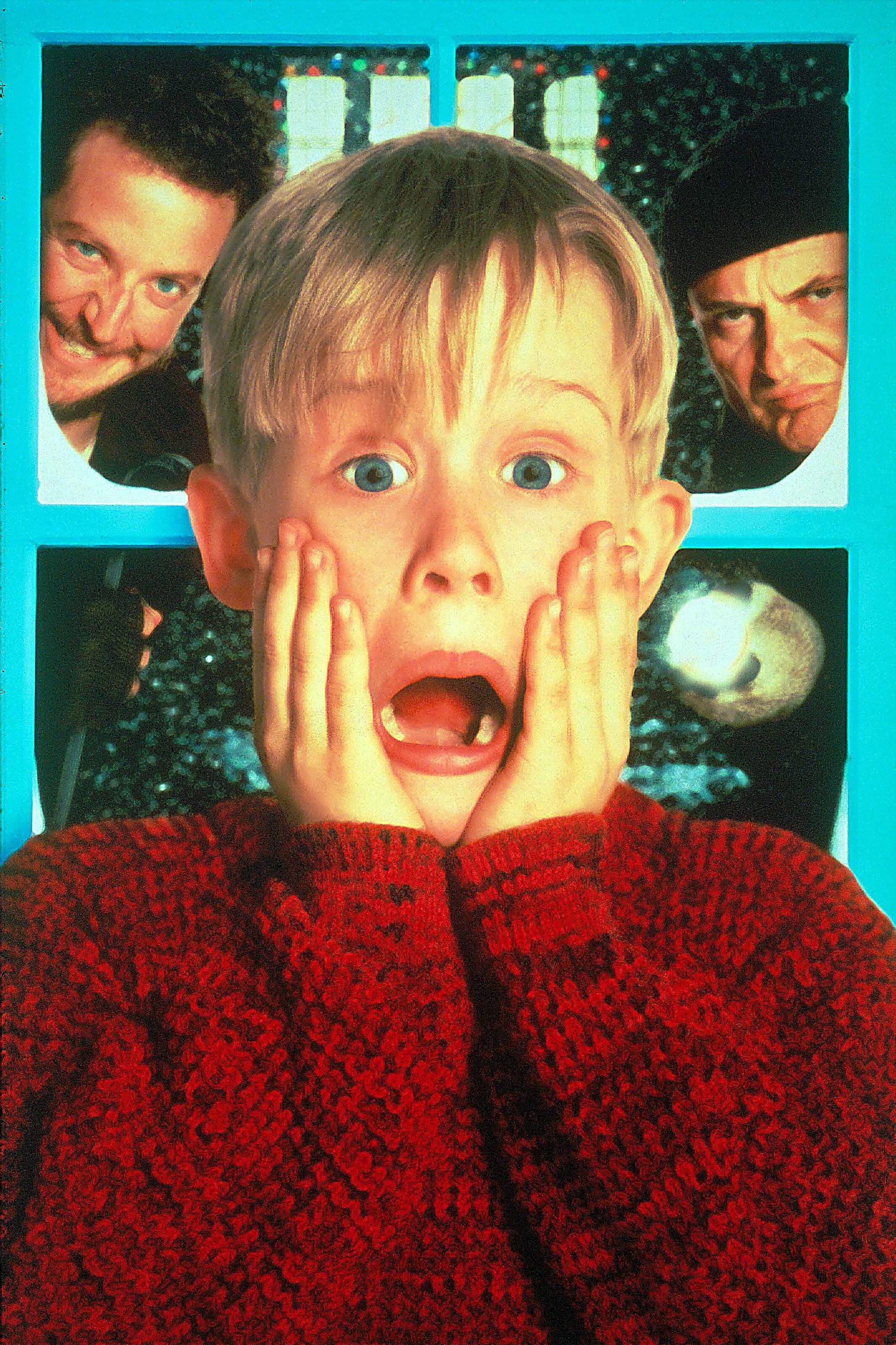
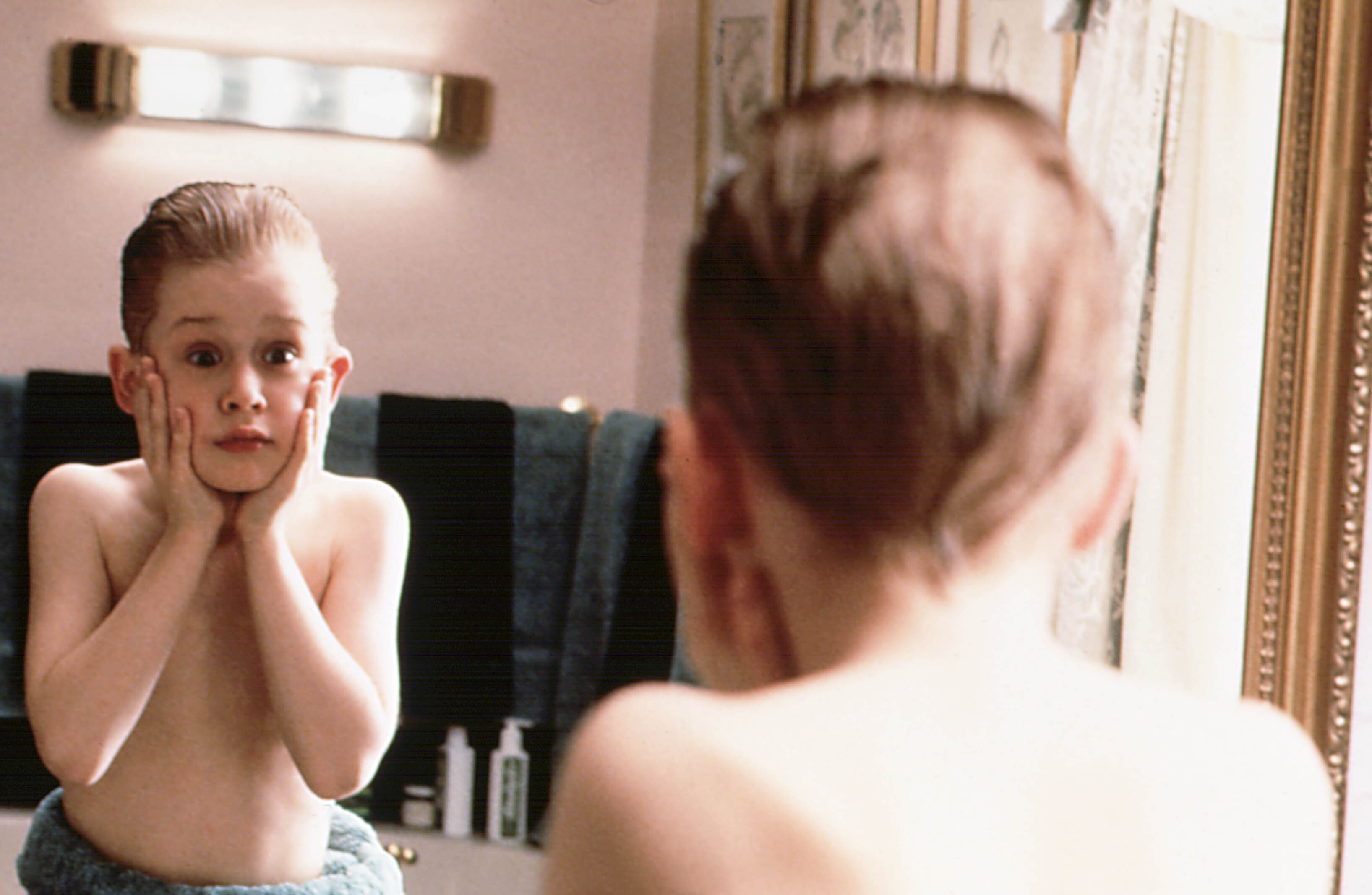
Kevin’s reaction after putting on the aftershave gave the film an instantly iconic moment that has been used on promotional material ever since.
However, Macaulay didn’t act the moment out as originally intended by the director.
The famous Home Alone scream was never intended to turn out the way it did
Moviestore/Shutterstock
Chris Columbus told Insider: “If you put something on your face that burns, most people move their hands right away. So my direction to him was when you pat your face, move your hands and scream. And I think it was the first take, he kept his hands on his cheeks.
“It’s funny, the iconic moment from Home Alone was an accident.”
John Candy, who played Gus Polinski, also loved to improvise and Chris said he took his cameo appearance “and ran” with the scenes.
Advertisement
He told Entertainment Weekly: “We’d do a couple scripted takes and then we would improvise about four or five other takes, and a lot of the improvisation ended up in the film.”
Such examples included the moment where Gus is seen talking to Kate about being left in the funeral home alone with the corpse all night.
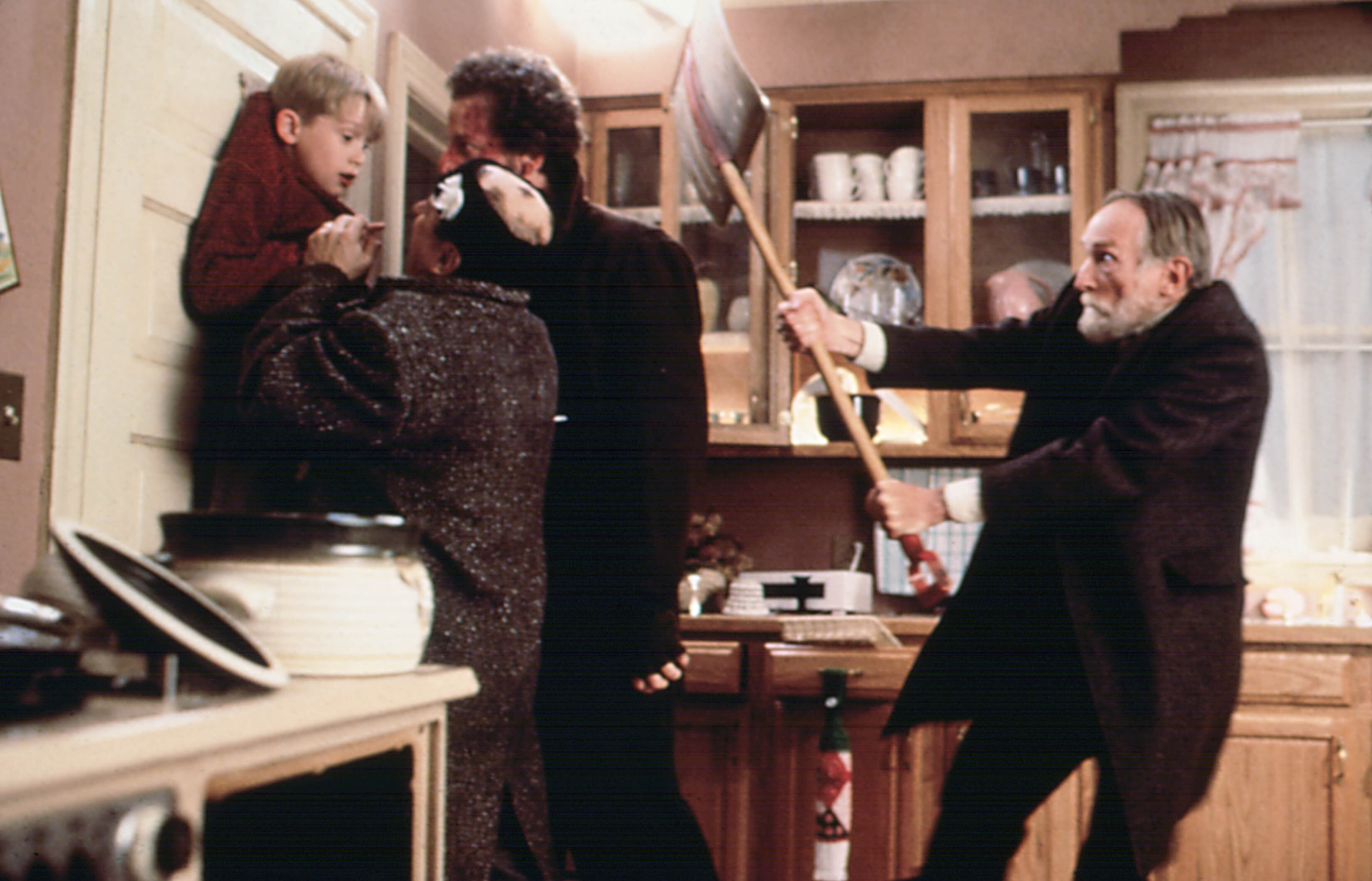
20. The tarantula on Marv’s face was actually real
Actor Daniel Stern recalled how the crew initially told him they had a rubber tarantula that they could use, but they also had a real one that “was real nice and showed it walking across the trainer’s arm”.
He asked if the crew could remove the spider’s “stinger,” to which he was told it would die.
“And I said yeah, but if you don’t take it out, I’ll die,’” he recalled to The Hollywood Reporter. “But everyone seemed cool with it, so I just had them put the friggin‘ tarantula on my face.”
The spider used in this scene was real
Advertisement
21. However, his scream wasn’t dubbed, as many people believe
Many reports over the years have claimed Daniel was asked to mime the scream that Marv lets out upon seeing the spider so as to not scare the creature, with it then later dubbed into the film in the edit.
However, Daniel revealed that actually wasn’t the case, as he did the scream there and then, take after take.
“I asked if that would spook the spider, but I guess tarantulas can’t hear,” he told The Hollywood Reporter. “Again, I was committed fully to that movie … I wanted to hit a home run in every scene.”
The complete Home Alone collection is available to stream on Disney+. HuffPost may receive a share from purchases made via links on this page.
Audience members on the BBC’s flagship politics show have expressed their frustration about the impact of Brexit on their lives – with one suggesting the “oven ready” withdrawal agreement was more like a “frozen turkey taken out five minutes before Christmas day”.
While leaving the EU has fallen down the political agenda, with no major political party arguing for the UK to rejoin even the single market, BBC’s Question Time aired the frustrations of some over the current situation – from trade to travel.
Advertisement
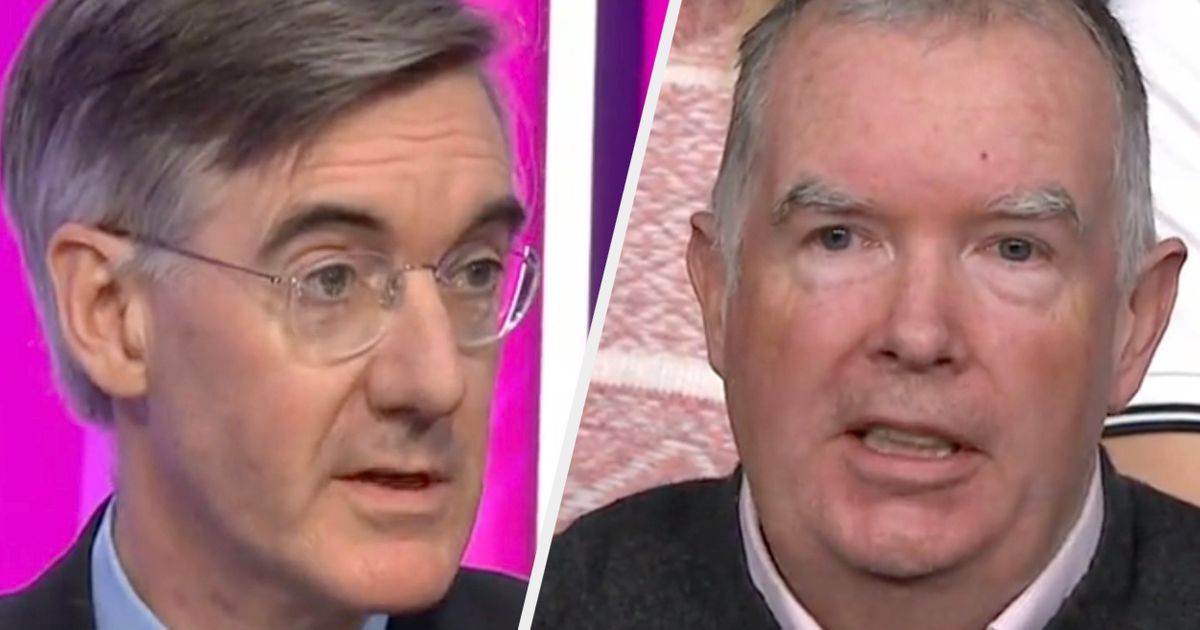
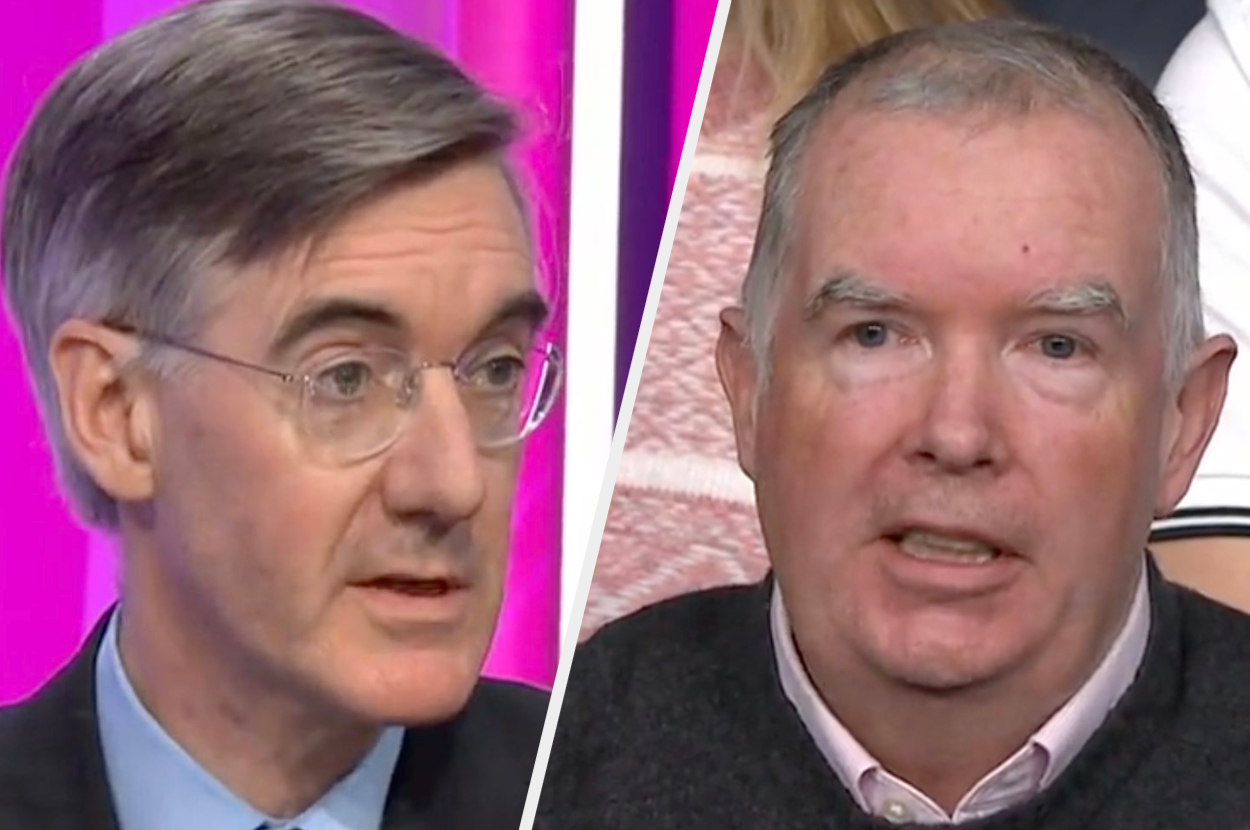
One “lifelong” Tory voter let off steam about the UK’s decision to quit to the bloc having impacted Britain’s wine industry, with former minster and Brexit evangelist Jacob Rees-Mogg taking the flack.
The audience member said: “I’ve spent the last 30 years as a director in the wine industry so I have experienced first-hand just how terrible things have become post-Brexit.
“I find it incredibly disappointing, as a lifelong Conservative voter, to hear Jacob saying all of this stuff.”
He added: “Just from a bureaucracy point of view and the paperwork, I mean everything.
“I’ve been importing and exporting wine for 30 years for a leading wine company and we just see delays, we see paperwork problems, everything has become so much more complicated.
Advertisement
“And the whole point about this being ‘oven ready’, it’s about as oven ready as a frozen turkey taken out five minutes before Christmas day, it really is a joke.”
He added: “I think it’s time someone starts being honest. None of the political parties are actually talking about Brexit and it’s one of the most fundamental problems we’ve got.”
He went on: “I look at the fact that people can tell untruths time and time again and then they are just forgotten, and Brexit was the beginning of all this, and I think as a society it’s incredibly worrying about where this is going to lead to.”
Rees-Mogg, the former business secretary, cited democracy, corruption in Brussels and holidays to Portugal as examples of the benefits of Brexit.
Advertisement
When another audience member criticised the long wait at border control when visiting Spain post-Brexit, Rees-Mogg suggested the British public go “where they are welcome”.
“If the Spanish don’t want British custom there is no need to spend your hard earned money in Spain,” he added, highlighting the virtues of Portugal recognising “having British tourists is a good thing to do”.
“If the Spanish don’t want British custom there is no need to spend your hard earned money in Spain”
We hope you love the products we recommend! All of them were independently selected by our editors. Just so you know, HuffPost UK may collect a share of sales or other compensation from the links on this page if you decide to shop from them. Oh, and FYI — prices are accurate and items in stock as of time of publication
Christmas is almost here, and if you have left buying presents to the last minute, you can’t really go wrong with some lush beauty products. But you need to think beyond the usual gift set.
Advertisement
Luxury beauty brand Shiseido has heard our cries for last minute gift ideas, with a selection of its skincare saviours available for under £30 from Boots – from stocking fillers at purse friendly prices, to blow-the-budget gifts, whether for a friend, relative, partner, or maybe even yourself.
Shiseido’s popular skincare ranges, such as the Benefiance, Ultimune, Vital Perfection lines, as well as the new WASO collection, are all available to shop at Boots now, with products suitable for all skin types and needs, whether you’re shopping for a seasoned skincare pro or someone dabbling for the first time. ]
From SPF protection, gel cleansers and make-up removers to nourishing eye creams,and moisturisers, as well as expertly curated bundles and make-up cosmetics, Shiseido has all bases covered this Christmas.
Most importantly, Boots customers do not have to spend a fortune, as some of Shiseido’s bestsellers are available to shop for as little as £7.50. But which products make the best presents? Let us take you through our picks.
Advertisement
One of Shiseido’s must-haves is the Clear Suncare Stick, which has gone viral on TikTok for its failsafe UV protection, nourishing the skin and preventing the appearance of fine lines, wrinkles and uneven skin tone. This water-resistant creation uses SynchroShieldTM to protect against harmful UV rays, without leaving a white cast like some sun creams, or stickiness. Retailing for £28, it makes for a perfect stocking filler or main pressie, depending on budget,
We should all be using a good quality cleanser to remove makeup, pollutants or dirt from our skin if we want to avoid clogging our pores and triggering a breakout. Shiseido has the solution in the form of the Waso Shikulime Gel-to-Oil Cleanser. This hybrid cleanser is easy to use, gentle on the skin, and removes stubborn eye makeup, as well as dirt and grime – a cleansing regime for £24.50.
With a price tag of £32, Shiseido’s award-winning Ultimune Power Infusing Concentrate serum may be over the £30, but it’s also a worthwhile investment. This multi-purpose moisturiser, which has garnered over 3,000 glowing reviews from Boots shoppers, is a beauty bag staple, as it works to hydrate, brighten and tighten the skin for a youthful complexion. Considering one serum is sold every seconds, it’s a stocking filler guaranteed to impress.
And let’s not forget bundles, too. The Benefiance Wrinkle Smoothing Eye Set has our piqued as it features the iconic Benefiance Wrinkle Smoothing Eye Cream, Wrinkle Smoothing Cream and Ultimune Power Infusing Concentrate, to help you complete a simple three-step beauty routine for morning and night. While the trio may come in at £66, it contains almost £100 worth of products, which means you save a hefty £28.40.
Boots shoppers are eligible for free delivery on orders over £25, as well as next day or named day delivery at a fee – as well the option to collect in store. But be quick – the deal on all theseShiseido bestsellers ends on Christmas Eve.
There are a few crucial items to figure out when starting therapy – like finding a therapist who you trust, picking the best treatment modality, and figuring out a way to fit a session into your schedule.
When it comes to the latter, the time you choose may be more influential than you think. Is it a bad idea to do it during your lunch break? Should you try to have your session at the start of the week? Is there even such a thing as an ideal therapy schedule?
Advertisement
“The best time of the day to have a therapy session depends on a variety of factors, and it varies based on the individual,” said Kristen Casey, a clinical psychologist and insomnia specialist. “Every person has a different schedule, lifestyle and ways of coping with the emotional hangover from a therapy session.”
In other words, there isn’t a “one-size-fits-all” answer, and it may take some trial and error to find the time that works for you. With that in mind, here are some factors that you’ll want to consider when it comes to determining the best time of day to schedule your next therapy session.
Think about what you’re going to talk about
It’s pretty difficult to say with certainty what topics are going to arise during a session, but if you have an idea of the subject matter that you plan on talking about, then that can be helpful in determining what time to schedule your next appointment.
“If you are working on intensive trauma that leaves you drained after each session, it might not be the best to do a session right in the middle of the work day,” said Kristen Gingrich,licensed clinical social worker and certified drug and alcohol counsellor. “However, if the only time you can find is in the middle of the day between different tasks, it’s important to make sure that you schedule time to help regulate yourself to make sure that it is not going to impact your day.”
Advertisement
Consider what processing looks like for you
If you’ve had a therapy session during lunch at work and then had to hop on a meeting in the next hour, then you might have realized that you need more time to process your appointment since your mind is still actively churning thoughts. In those scenarios, you’ll want to try to schedule your therapy session for a time where you’ll have some time afterward to recollect yourself.
“Try to schedule a bit of a buffer before and after to make the most of your session and give yourself space to process what you’ve just worked on,” said Dr. Nina Vasan, the chief medical officer at Real, a mental health platform. “Otherwise it can feel jarring to jump back into work or daily life.”
It can be helpful to develop a post-therapy ritual if your schedule allows it to come down from heightened emotions. This can be as simple as taking a nap, going on a quick walk, reading your favorite book, mindfully drinking a cup of tea, or anything that helps ground you back into your daily routine.
Anchiy via Getty Images
When scheduling your sessions, think about when you’ll have some downtime to process what you discussed with your therapist.
Think about when you’re most productive
After a long day at work, the last thing you might want to do is have another hour-long conversation. Even though it’s a voluntary activity, it can still be overwhelming for some people. If that sounds familiar, then the best time for a therapy session may not be at the end of the day.
Advertisement
However, if you’re a morning person, then a session before work may be more beneficial. “For example, maybe you’re distracted in the morning by the commitments you have for your day. In that case, an evening appointment could be better,” Vasan said. “For others, by the evening, energy is zapped which means meeting earlier in the day is more productive.”
Think about it: If you’re paying for a session, you want to make sure it’s at a time where it’s going to have your complete attention so you can focus entirely on your healing journey.
Discuss a good schedule with your therapist
Unfortunately, it isn’t always possible to schedule a therapy appointment at the time of the day that works “best for you.”
Since many therapists have full case loads, it can be a challenge to cater to everyone’s needs, said Kelly McKenna, a licensed clinical social worker and anxiety therapist. That’s not to say your therapist won’t work with you to find a time that is most beneficial, but due to the nature of the job and the schedule, sometimes it isn’t always possible.
In this instance, for example, you may want to find a therapist who works on a routine weekly schedule (ie. you see them at the same day and time every week). Not every therapist operates like this, so you may just have to succumb to one of the open slots they have left, but each case is different, so a conversation is definitely necessary to figure out a cadence that works for everyone.
During college, I grew a tumour that meant I hung out quite frequently in MRI machines. Though I’d never had a problem before, I found myself newly and severely claustrophobic – laying in a tiny tunnel for hours, arms raised overhead, will do that.
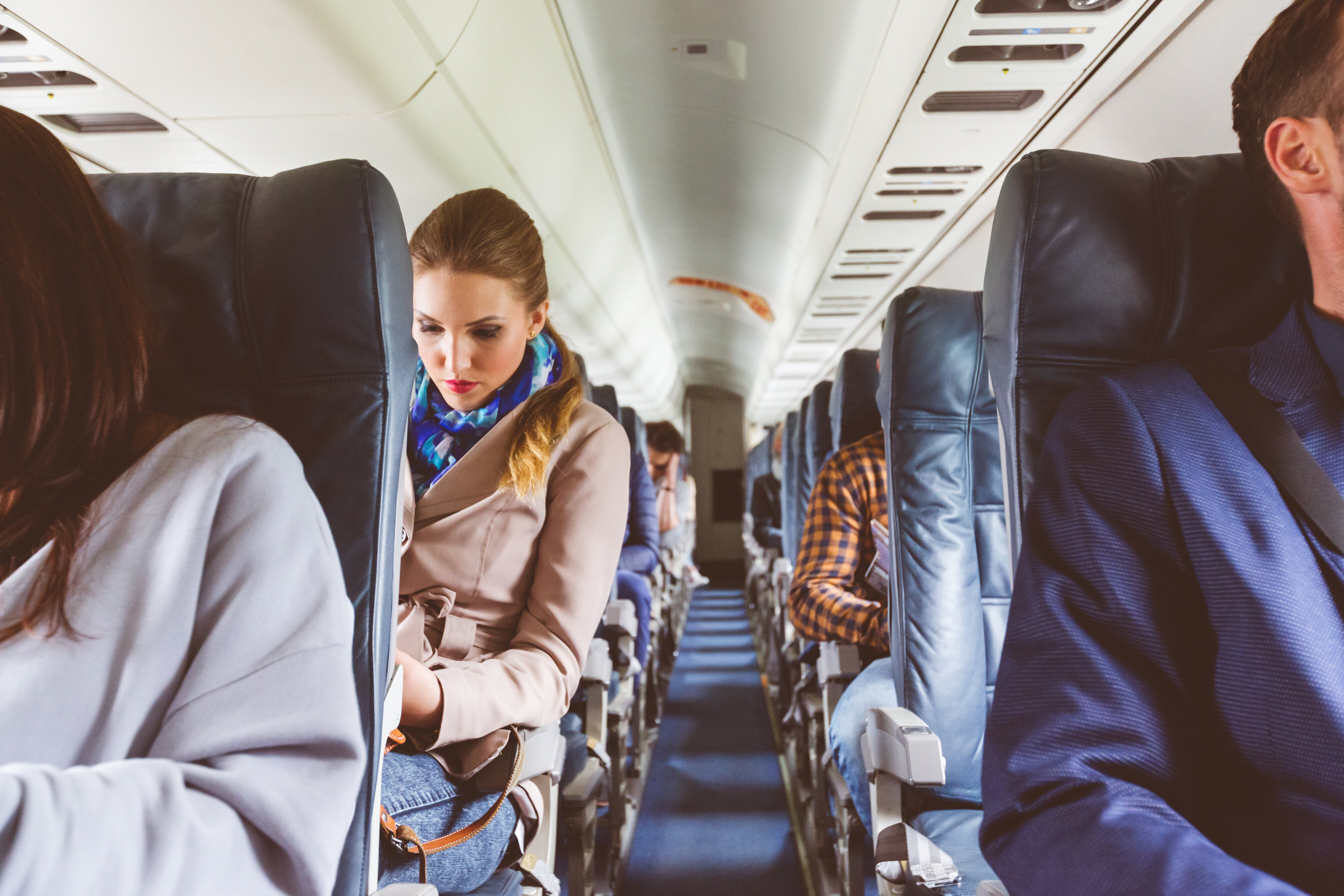
What I never saw coming was that phobia transferring to other small spaces, namely, airplanes. I’d developed severe anxiety around flying, stemming from that claustrophobia. Once the flight attendants closed the doors, and I was stuck there for a few hours, I was history. Since then, I’ve been on a mission to overcome flight anxiety because who wants to hang out in the Midwest their whole life?
Advertisement
It turns out I’m far from alone — up to 40% of Americans (and one in 10 Brits) have some sort of flying anxiety, from fearing a plane crash to worries about close contact with others. Or, like me, they don’t want to be stuck. Still, others dread navigating the airport, worrying their valuables might be lost or that they could encounter an issue with security doubting their intentions. Flying anxiety has become such an issue that some airlines like British Airways even offer courses, such as their Flying with Confidence one-day class, to get you back in the air.
There’s likely even more of a spike in flight anxiety thanks to the pandemic, according to Susan Zinn, a psychotherapist and author of “The Epiphanies Project.”
“That is why there’s been an uptick in airplane phobias, fear of flying, and feeling out of control, or road or flight rage — people all of a sudden get triggered that bring them back to a time in our recent past where they felt so out of control,” Zinn said.
Here’s what experts say we can do to reduce our anxieties about airplanes.
Expose yourself to the aspects of flying (preferably with a mental health professional)
For Johnny Jet, a worldwide traveler and expert who has been to over 70 countries, his traveling fears started with a doctor’s comment. He was headed on a 27-hour flight when his asthma doctor commented that he “might have a problem breathing on a plane because the cabin is pressurised.”
Advertisement
This led to a full-blown panic attack at a New York airport ahead of the flight, which he called “one of the worst days of his life,” and prompted an almost four-year-long fear of flying.
Exposure to planes and airports ended up being, ironically, part of the solution. “Speak to the flight crew, take a course, read books, go to the airport and do practice runs,” he suggested.
This type of activity ― known as exposure therapy ― can help your brain adapt to the situation over time and take some of the fear and uncertainty away from flying. It’s best to try this with a therapist who is trained in doing this.
Zinn added that medication might also be necessary for some people in tandem with preparation. She’s worked with clients who have spent several months practicing for a flight before the real trip.
Get strategic about your seat selection
Right after 9/11, Zinn had to jump on a plane out of New York for a business trip. She was terrified as their flight was escorted by air marshals openly carrying weapons. She was one of many who would develop a new fear of flying, which caused nausea and panic attacks.
Advertisement
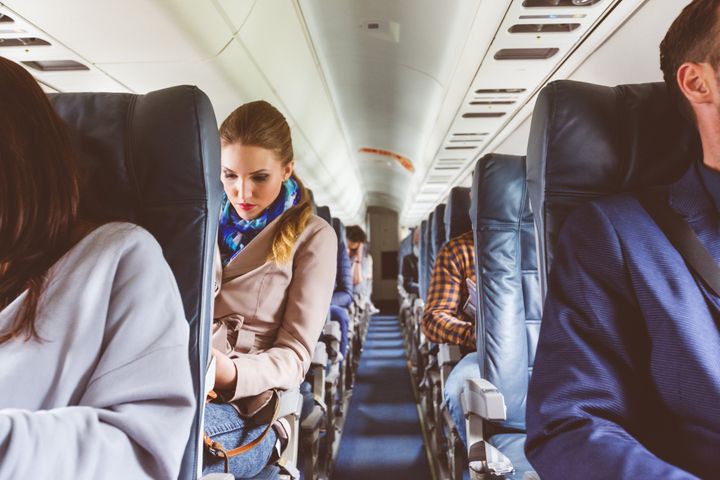
One strategy that helped her was carefully picking a seat that made her feel comfortable. “I always still to this day will sit on the outside aisle [seat] to make sure I can always get up, versus kind of being stuck on the inside, which made me feel better,” she said.
Quick access to the bathroom, where you can splash cold water on your face to “shock your system” when you feel panic is another tool that helps, Zinn explained. If financially possible, upgrading to first class for more room or choosing an exit row for more legroom might also help, Jet added.
izusek via Getty Images
Experts recommend choosing a seat that brings you the most comfort if you’re worried about getting on a plane.
Find a deep breathing method that works for you
It may be an annoying suggestion to hear, but breathing exercises are often given as a recommendation for anxiety because they work. Zinn said she often suggests her patients practice intentional breathing exercises, like five-finger breathing, where you take deep inhales and exhales as you trace the outline of your hand.
Doing this can help calm the panic that arises before it turns into a full panic attack, Zinn said.
Pack some sour candy in your carry on
Zinn also suggested eating some sour candy, such as a WarHead, to force your brain back into reality. The candy’s tartness can help you better focus on the moment rather than the fear or “what if?” during flying. It’s another way to practice mindfulness.
Advertisement
Learn the “why” behind air bumps
Adam Banks, a retired pilot based in New York, said the turbulence is one of the most concerning parts of flying for anxious passengers. Understanding what it is might help you see it as more normal and less of a sign of impending doom.
“Turbulence is just shifting winds. If you fly into a puffy cloud, the airplane is going to get a bump,” he said. “Airplanes are designed to handle these bumps. If you’re sitting over the wing, you can see the wings flex as they absorb turbulence. Turbulence might feel like the airplane is moving around thousands of feet, the reality is the airplane is probably only being jostled a few feet.”
Ground yourself in facts
Zinn said that dealing with both physical anxiety and our mind’s perception of danger plays a role in calming down, so statistics might help. For example, the annual risk of dying in a plane crash is only one in 11 million. You are much more likely to die from sunstroke, a bee sting, consuming a hot substance or even being attacked by a dog.
For me, flying in a tiny space will probably always be a struggle. But armed with some tools and tricks, flying is doable again, and I’m no longer doomed to the Midwest for life.
You’re reading Love Stuck, where trained therapists answer your dating, sex and relationship dilemmas. You can submit a question here.
The feeling of finding your perfect match is something you can’t explain – like that person was handmade for you and can fulfil all your wants and needs. But what happens if you think you’ve met your soulmate, but still find yourself fancying other people, even wanting to stray.
Advertisement
This is Katie’s dilemma. “My boyfriend is super nice, so sweet, surprises me often, sex is amazing, it’s the first relationship I’ve ever been in that’s healthy but for some reason, I want to have sex with other people,” Katie says.
“I don’t think I love him as much as I thought I did. What do I do? He moved in with me after four months of dating and now I don’t want him there but he’s doing nothing wrong, it’s just me. What do I do?”
Counselling Directory member Ilia Galouzidi is on hand to give Katie her advice.
What is your initial response to this dilemma? What would you say to this reader?
Galouzidi says she thinks it’s great that Katie has found someone who matches her in several areas and that she considers it a healthy relationship. However, she says that “we may often think that once we form a relationship that feels healthy with another person, we automatically abandon the part of ourselves that gets attracted by other people or needs to be seen and feel wanted.”
And it doesn’t usually work this way, she adds.
“We may enjoy being attracted by others or being attractive to others and still run an honest loving relationship with our partner,” Galouzidi says. “This is mainly because the feeling of desire and the feeling of love are different things.”
Advertisement
Why might a person crave sex with others, even in a good relationship?
Galouzidi wants Katie to start by asking herself the following question: am I usually craving sex from being attracted to someone, or when someone is attracted to me?
“Responding yes might just mean you appreciate attractiveness to people and/or you have a high sexual drive. If you tend towards the latter, you may want to think about how important is to you to feel attractive,” Galouzidi says.
“Then in relation to your relationship: do you feel desired, and equally, how much do you desire your partner? Desire is usually about elements of mystery, playfulness, and unpredictability.
“So you may also want to ask yourself: what elements make someone desirable to me? Am I desiring my partner in this way?”
How can moving in together change the dynamic of a relationship?
Moving in with someone can be challenging for couples, says Galouzidi.
“Although it has its benefits and may bring closeness to the partners, it can also create a lot of changes to their lifestyles,” she explains. “Suddenly, people may lose their private space or need to claim their private moments.”
Advertisement
Katie might want to ask yourself: how has my lifestyle changed? Which changes are welcome and which are more challenging? The answers to these questions can help a couple set boundaries to make sure each party respects the other person’s space and lifestyle, says Galouzidi.
Then, there is the element of familiarity. “Moving in together may get us familiar with each other’s habits, preferences, and peculiarities, which on one hand may create a sense of closeness and intimacy, but on the other hand, may take away the “mystery” and excitement that comes with it,” Galouzidi explains.
What practical steps can this reader take to figure out what she wants and adjust her relationship accordingly?
Galouzidi suggests Katie does a bit of self-exploration and reflection by asking herself the questions above to gain a deeper understanding of her personal needs and non-negotiables in the relationship. She may then want to share her findings with her partner in a non-judgmental way.
“Remember, a healthy relationship also means being able to put clear boundaries and feel heard and respected,” says Galouzidi. “You may find it helpful to pencil down time in your calendars when each of you can have some privacy at home. Also, you may want to try different sex games with your partner to ignite mystery and playfulness in the bedroom.”
Advertisement
She also wants Katie to ask herself how close to enacting her sex cravings she is. “Does it require effort from your end to be loyal to your partner? You are not a bad person if you answered: very close or very effortful. I am sure you respect your partner’s feelings and your intention is to be truthful to him.
“However, maybe clarifying your needs at the moment is crucial, so you can show up to yourself and your relationship with honesty.”
Love Stuck is for those who’ve hit a romantic wall, whether you’re single or have been coupled up for decades. With the help of trained sex and relationship therapists, HuffPost UK will help answer your dilemmas. Submit a question here.