The TV presenter said the Reform UK leader hasn’t properly thought through the policy, dubbed “Operation Fortress”.
Advertisement
Under the plan unveiled last week, the Royal Navy would intercept the boats and return the asylum seekers on board to where they came from in “the largest military operation in the English Channel since World War Two”.
Farage said the plan did not break international law because they would be carrying out a “humanitarian” mission.
However, the French government has already dismissed the plan, while a former Navy officer dubbed it “a crock of shit”.
Advertisement
In his Sunday Times column, Clarkson joined the chorus of opposition to the Reform proposal.
He said: “Most commentators have focused on the political problems of such a plan.
“They point out, with some justification, that if the British prime minister orders a Royal Navy warship to steam into a French port and deposit a couple of hundred Somalians on the quay, the French government and indeed the United Nations might have something to say about it.
“Others have explained that we don’t really have enough ships to mount such an operation. And they also have a point because when Cyprus came under attack recently, it took a whole week to mobilise a defensive flotilla, which, to our national shame, comprised exactly one ship.
“However, there’s another, even bigger problem with Nigel’s Send ’em Packing plan which is: it’s impossible.”
Advertisement
The Clarkson’s Farm and Top Gear star went on: “How, in the name of all that’s holy, does double-breasted Nige think it would be possible for a large warship to come alongside a much smaller dinghy, which is something it must do if the captain wishes to attach a tow rope?”
He said in 1997, the captain of an Italian warship was jailed after it collided with an Albanian vessel, leading to the death of 81 people, including several children.
“This is what Nige hasn’t considered,” Clarkson said. “How do you stop a boat that doesn’t want to be stopped?
Advertisement
“And how do you order a Royal Navy captain to do something which in all probability will cause him to spend several years in the Scrubs.”
He added: “It is of course politically colourful to conjure up the image of sleek British warships defending the realm. This sort of thing appeals to the Tommy Robinsonites.
“But if you really want to stem the flow, and I suspect most people do, you have to park the (imaginary) destroyers and use your noddle. Do that and you’ll quickly work out that to stop them coming here, you’ve got to stop them wanting to come here.
Advertisement
“You’ve got to make the UK less appealing than where they are now, which is France. This shouldn’t be too hard.”
A Reform UK source told HuffPost UK: “I trust the senior veterans who endorsed our plan a little more than Jeremy Clarkson.”
Listen to Commons People, the podcast that makes politics easy. Every week, Kevin Schofield and Kate Nicholson unpack the week’s biggest stories to keep you informed. Join us for straightforward analysis of what’s going on at Westminster.
Your fridge is the one appliance in your home that never gets a day off. It hums along 24 hours a day, holds your groceries at a safe temperature and just sits in the kitchen, which is probably why most of us never think about it until the milk goes warm.
But the small things you do every day, from how you pack your refrigerator to where you put your leftovers, can have a real effect on the appliance’s longevity.
According to Ian Palmer-Smith, an appliance repair expert at Domestic & General, the average refrigerator should last about 10 to 15 years, but that number can drop to “eight or nine years if you don’t follow best practices”.
Advertisement
The good news is that almost all of those best practices are simple, and several of the worst habits that negatively impact fridges are easy to break.
We asked three repairmen about the mistakes they most often see when it comes to fridge upkeep and what to do instead.
Andrii Zorii via Getty Images
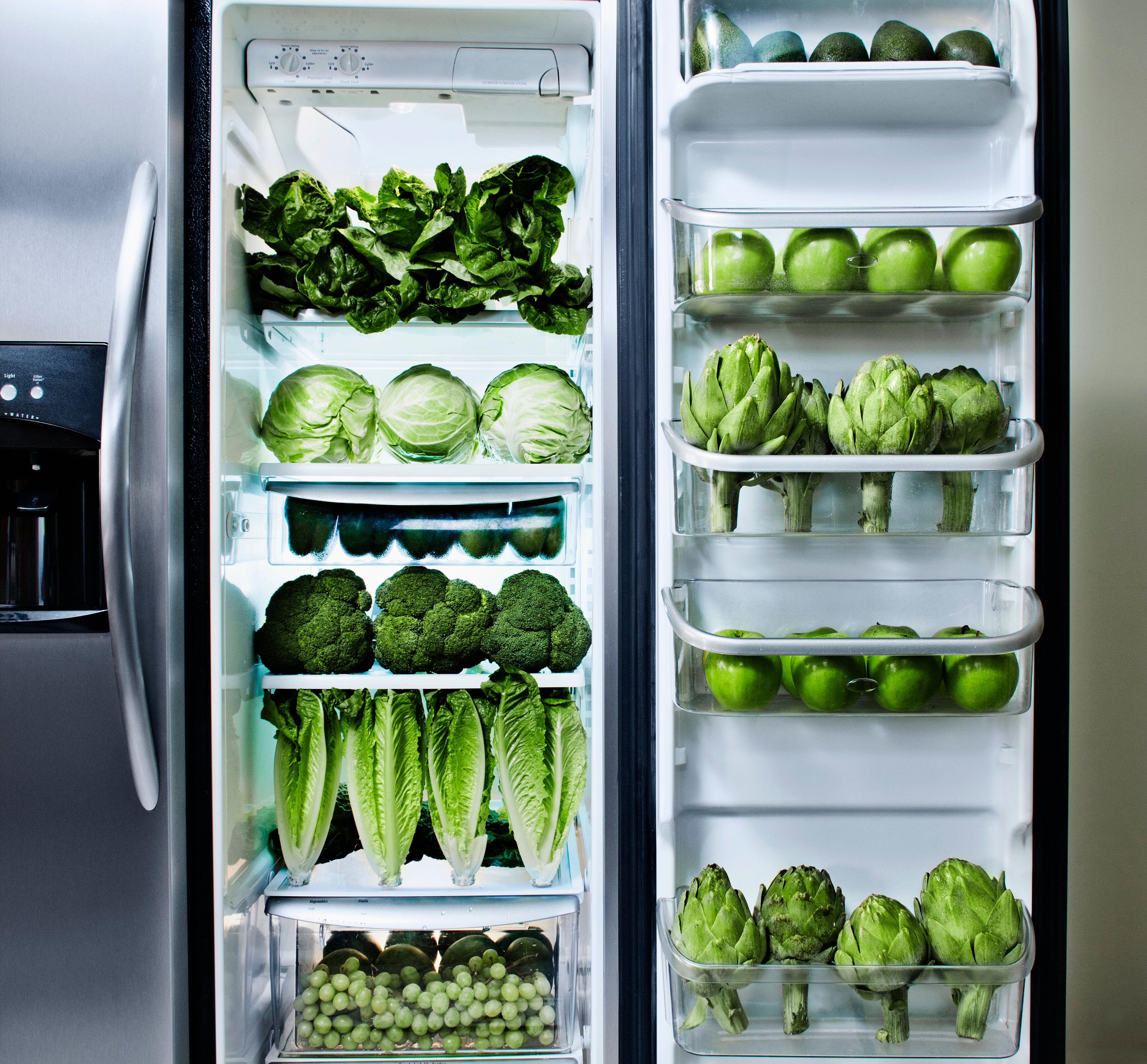
If your fridge is so packed that you can’t see any gaps between the food, it’s too full.
Advertisement
Mistake #1: Not cleaning the condenser coil
The repairmen agreed on one thing: the part of your fridge most likely to fail is the one you’ve probably never looked at.
“The biggest driver of fridge breakdowns is the condenser coil, where the gas gets condensed and forms refrigerant,” Palmer-Spring explained. It’s a metal grid that, depending on the model, sits at the back of the unit, underneath it or, on some high-end refrigerators, up top. Because it’s tucked out of sight, it collects dust, grease and pet hair, and that buildup keeps it from doing its job.
“That stops the coil from dissipating heat, so the motor ends up overheating,” Palmer-Spring said. “The inside of the fridge might not feel hot, but the motor is overheating.”
Advertisement
Tony Andrade, service manager at Abt Electronics, described the same chain reaction: a dirty condenser “makes the compressor work harder and can cause it to overheat. Once it reaches a certain temperature, it may shut down and cool inefficiently.”
The fix: Clean the area and don’t crowd it. Andrade recommends cleaning the condenser every six months if you have pets and roughly once a year if you don’t.
Palmer-Spring suggests pulling the fridge out every winter and going over the coil with a handheld vacuum, also giving the appliance room to breathe in the first place: people “often place the appliance right up against a wall or in a tight space,” which traps heat and starts the whole problem.
Advertisement
Mistake #2: Overpacking the fridge
We’ve all crammed a fridge to the brim before a holiday, and the repairmen say that’s fine every once in a while for a night or two. The trouble starts when it becomes your everyday default.
“Overpacking a fridge … makes the cooling system work harder, leads to uneven temperatures and can cause the compressor to work much harder,” Palmer-Spring said. The issue isn’t just weight but airflow. Cold air needs room to move, and a wall of groceries blocks that from happening.
Andrade explained that overstuffing “doesn’t affect the condenser itself, but it does affect air circulation inside the unit. If you accidentally block the vents where the cold air comes out, the refrigerator won’t cool properly, and you’ll end up with uneven temperatures.”
Advertisement
The fix: Use the eyeball test. “If you can’t see any space inside, it’s overloaded,” Palmer-Spring said. “It’s a simple visual exercise: if I can’t see space, it’s too full.”
Keep the vents, especially the one up top, clear and treat a packed-to-capacity fridge as a one-night dinner party situation, not a permanent state.
Mistake #3: Opening the door too often
The problem with this one is moisture. Every time the door opens, warm room air rushes in to meet the cold. “If you’re constantly opening the fridge just to see what’s inside, moisture can build up because the 70-degree air in your home is entering a 37-degree refrigerator,” said Dennis Godynuk, a fridge repairman and owner of Comfort Appliance Repair TN.
Advertisement
Repeated openings also undo the cooling cycle: he tells customers a fridge can take four to six hours to cool down properly and “people often keep opening the door to check on it, which resets the cooling process.”
AndreyPopov via Getty Images
Opening the refrigerator door too often in a short timespan can cause problems.
To be clear, some level of constant use is completely fine. “If you’re cooking and leave the fridge open for a minute, then close it and don’t open it again for 20 minutes, that’s generally not an issue,” Godynuk said. The damage comes from rapid, repeated openings, seven or eight times in an hour, which can leave the interior panels “very wet,” with water potentially dripping down into technical components.
Advertisement
The fix: Grab everything you need in one trip and resist the urge to keep “checking.” After a repair or a big restock, give the fridge a few uninterrupted hours to recover its temperature.
Mistake #4: Putting hot food straight in
Hot food releases steam, and steam is just moisture in disguise.
“If you’ve just finished cooking something, like noodles, and they’re still very hot when you put them in the fridge, they’ll release steam and create immediate moisture inside the unit,” Godynuk said. He sees the fallout regularly. “Customers call us saying their refrigerator stopped cooling, and we find that moisture has become trapped in a fan motor or cooling components,” he said.
Because those components run near freezing, trapped moisture can ice over, making the fridge louder or stopping it from cooling altogether.
Advertisement
It’s also a strain on the hardest-working part of the machine, the compressor (clearly, the most important part of the fridge). “Putting hot food in the fridge also puts pressure on the compressor,” Palmer-Spring said. “If you’re doing it continually, it’s not a good habit.”
The fix: Let food cool to room temperature before it goes in. An occasional warm container won’t doom your appliance, but as a daily routine it adds up.
Mistake #5: Setting the wrong temperature
A fridge that’s set too cold or too warm is constantly fighting itself, and that effort shortens its life. “A lot of people set their fridges either too warm or too cold,” Palmer-Spring said. “If it’s too cold or too warm, the fridge has to work harder, which reduces its lifespan.”
Advertisement
So what’s the sweet spot? Godynuk recommends keeping your refrigerator between 36 and 39 degrees Fahrenheit. He cautions against drifting higher even though regulations technically allow it. Some fridges let you set temperatures as high as 42 degrees, and because units cool to a set point and then float within a range. “If it’s set to 42 degrees, the temperature may rise to 44 degrees before the cooling cycle starts again,” Godynuk said. For him, that’s “too close for comfort,” so he warns against going below 36, since “32 is freezing.” (In the UK, Palmer-Spring noted, the commonly cited range runs about 3 to 5 degrees Celsius.)
The fix: Set your fridge temperature to the high 30s.
Mistake #6: Neglecting the door seal
That rubber gasket running around the door keeps cold air in and outside air out. But when the seal falls off or isn’t cleaned properly, the appliance may become damaged.
“Often it isn’t cleaned enough or harsh cleaning products cause it to deteriorate,” Palmer-Spring said. “If the seal is damaged, outside air can get in and create moisture.”
Advertisement
Andrade described the knock-on effect of a door that no longer shuts tightly: the unit simply can’t keep up. With cold air escaping, he said, the fridge “will run longer and more frequently,” forced to overwork to make up the difference.
The fix: Clean the seal with mild soap every six months and skip the harsh cleaners that break it down. Check it now and then for cracks or gaps and replace it if it’s no longer sealing snugly.
None of these common mistakes require much effort to undo, and considering that a refrigerator is built to run for well over a decade if you let it, you should try your best to avoid these issues.
Advertisement
As Palmer-Spring put it: “Most fridges can have a long lifespan as long as they have proper airflow, are cleaned regularly and you’re not putting unnecessary stress on the compressor or other components.”
You send your partner a text. Hours pass without a reply.
Logically, you know they’re probably busy. But emotionally, your brain starts spinning. Are they upset with you? Did you do something wrong? Do they still love you?
Most people have moments like this from time to time. But for many people with attention-deficit/hyperactivity disorder (ADHD), those feelings can be much more intense, and may be tied to something often referred to as emotional permanence.
Advertisement
Emotional permanence is a non-clinical term used to describe the ability to hold on to the feeling that someone loves, values or cares about you even when they aren’t physically present or regularly communicating with you.
“Emotional permanence is not an officially recognised diagnostic symptom of ADHD, although many individuals with ADHD report experiencing symptoms that closely resemble it,” said therapist Stephanie Lewis.
“Many report a lack of ability to maintain the emotional reality of a relationship as long as the individual involved is not physically present or actively engaged in communication with them. The phenomenon is much more than simply forgetting another person exists; rather it involves loss of access to the feeling of being loved, valued and/or connected to another person during short periods of time.”
Advertisement
A delayed text, a missed call or a quiet day from a partner or friend can suddenly feel like evidence that the relationship has changed and can cause not only anxiety for the person with ADHD, but also possible friction within a relationship.
Catherine Falls Commercial via Getty Images
Although it’s not a clinical diagnostic symptom, people with ADHD often struggle with “emotional permanence,” according to experts.
How A Lack Of Emotional Permanence Affects Relationships
People who struggle with emotional permanence don’t necessarily doubt their relationships all the time. Rather, they may suddenly feel as though an emotional connection has disappeared simply because it hasn’t been recently reinforced.
Advertisement
For example, someone with ADHD may intellectually know their partner loves them, but after a day without hearing from them, begin wondering whether something is wrong.
“In my work with individuals with ADHD I have met patients who intellectually understand their partner’s love for them,” Lewis said. “Yet, upon going one full day without receiving a text message from their partner, they begin to wonder whether something is wrong and/or if they have caused their partner to become upset with them.”
That uncertainty can quickly snowball.
“This emotional uncertainty will often result in anxiety, increased reassurance-seeking behavior or increased conflict within the relationship,” Lewis said.
Advertisement
The same pattern can show up outside romantic relationships. A delayed response from a friend can feel like rejection. A lack of feedback from a manager can feel like criticism. Even when nothing has objectively changed, the emotional certainty that someone cares can suddenly feel precarious.
Why Emotional Permanence Can Be Harder For Some People With ADHD
Although emotional permanence is not part of the diagnostic criteria for ADHD, experts say several characteristics commonly associated with ADHD may help explain why many people with ADHD identify with this experience.
Lewis points to working memory challenges, difficulties with emotional regulation and rejection-sensitive dysphoria – an intense emotional response to perceived criticism or rejection that many, though not all, people with ADHD experience.
Advertisement
“A number of variables may also contribute to the existence of emotional permanence,” Lewis said. “For example, working memory deficits may limit the ability to retain emotional information, whereas difficulties with emotional regulation and rejection-sensitive dysphoria may increase the fear of rejection or disconnection.”
Clinical psychologist Navvab Tadjvar said these challenges can make the absence of emotional reassurance feel much more significant.
“Because the ADHD brain is so intensely bound to the immediate present, when the feedback stops, the internal anchor collapses,” Tadjvar explained. “Silence doesn’t evoke the possibility that the care will return; it evokes the feeling of total abandonment, leaving us helpless and all alone in the world.”
Advertisement
That doesn’t mean someone with ADHD doesn’t understand that they are loved or cared for. But it does make it difficult for them to access emotional connection in the moment, especially when there’s a gap in communication or they’re missing reassurance.
The Impact Extends Beyond Romantic Relationships
While emotional permanence is often discussed in the context of dating and relationships, ADHD coach Dom Passantino, who also has ADHD, said one of its biggest impacts is actually how people see themselves.
“People often flop into discussions of ADHDers’ lack of emotional permanence with the mindset, ‘They forget they’re in love if someone isn’t there,’” he said. “But it’s a lot more than that, and I feel like the darkest impacts of it are on how we view ourselves and not others.”
Advertisement
According to Passantino, many people with ADHD find themselves craving validation from people who rarely offer it while dismissing reassurance from the people who do.
“And when hypersensitivity is thrown on top, you turn these traits from upsetting to actively damaging,” he explained. “This becomes a breeding ground for dysfunctional and abusive relationships for both parties.”
Justin Paget via Getty Images
Developing “evidence files” full of thoughtful texts and other proof of love can be helpful for people trying to strengthen emotional permanence.
Advertisement
How To Strengthen Emotional Permanence
Lewis said: “A critical first step would be the recognition of the phenomenon without judgment.”
One strategy she often recommends is creating an “evidence file”: saving thoughtful text messages, kind emails, handwritten notes or voice messages from loved ones that can be revisited when self-doubt starts creeping in.
“I frequently instruct my clients to develop ‘evidence files,’” Lewis added. “They may then refer back to the evidence file at times when insecurity regarding their partner increases.”
She also says cognitive behavioral therapy (CBT), dialectical behaviour therapy (DBT) and ADHD coaching can help people learn to pause before assuming silence equals rejection and become more comfortable tolerating uncertainty.
Advertisement
Passantino agreed that keeping reminders of positive interactions can be especially helpful for people with ADHD. He compares it to the everyday systems many people with ADHD already use to remember tasks.
“In very much the same way that an ADHDer will need a Post-it note stuck on their monitor to remind them to buy milk or brush their teeth, we need to remind ourselves of the positive interactions we have with people,” he said.
He said this can be particularly important for people who have spent years masking their ADHD traits and learning to question whether positive feedback is genuine.
Advertisement
“Because we spend so much time masking, we just assume any positive interaction is fake, that people were just humouring us or being polite,” Passantino said. “Celebrating your own personality, not turning down the colours on it, is very important – it’s the classic ADHD coach mantra of ‘being yourself on purpose.’”
According to Tadjvar, strengthening emotional permanence is not only an individual process; loved ones can also help by creating more predictability and consistency within relationships.
“Cultivating emotional permanence requires a collective commitment to building a predictable world,” he said.
Advertisement
He encourages partners, friends and family members to create that sense of security through small, consistent acts of communication. “Sending a quick, ‘Thinking of you, buried in work until 5 p.m.,’ text rather than going radio silent provides the sturdy, predictable scaffolding the ADHD brain needs to feel safe,” he explained.
Ultimately, Tadjvar said, “Cultivating this skill is a practice of rewriting the intervals of absence: transforming silence from a terrifying void of abandonment into a secure, shared space where the connection remains safely intact.”
Keep in mind that it’s important not to self-diagnose. While many people with ADHD relate to emotional permanence, Lewis stressed that it is not unique to ADHD.
Advertisement
Similar experiences can also occur in people living with anxiety disorders, depression, post-traumatic stress disorder (PTSD) or attachment-related difficulties.
According to Lewis: “If you find that your inability to emotionally connect with others consistently affects your relationships and/or your daily functioning, consider consulting with a licensed professional mental health provider.”
President Donald Trumpfiled an emergency motion in his $10 billion defamation lawsuit against the BBC to prevent the disclosure of his financial records in court — and withdrew allegations that the network had damaged his brand and businesses.
The emergency stay granted Thursday in the Southern District of Florida by US Magistrate Judge Enjoliqué Lett temporarily blocks the BBC from obtaining detailed financial information on the Donald J. Trump Revocable Trust, which is managed by the president’s son Donald Trump Jr.
Advertisement
“Counsel for the Plaintiff—who also represents the Trust—testified at the July 27, 2026, discovery hearing that the Plaintiff no longer intends to pursue a damages theory premised on injury to the plaintiff’s brands and businesses,” Lett wrote in her motion-granting order.
Trump argued in his lawsuit that the program caused economic damage to his businesses, but dropped that particular claim ahead of a deadline Thursday to produce financial records corroborating this — which would have included tax returns, financial statements and ownership records.
Advertisement
A lawyer for Trump said during the hearing last month that Trump’s attorneys “don’t want to acknowledge that the brand has or has not suffered any injury,” and are “not pursuing that as part of our damages,” concluding, “It is simply the reputational injury to the President, full stop.”
The president is still seeking $10 billion in damages from the broadcaster.
Attorneys for the BBC denounced the fact that Trump is still seeking damages without financial disclosure.
Alex Brandon/Associated Press
Attorneys for the BBC argued Wednesday in a memorandum opposing the motion that Trump could have focused only on his supposed reputational harm when he first filed the lawsuit, and decried that he is still seeking damages without providing any actual disclosure.
Advertisement
“In fact, claiming $10 billion in harm while purporting to disclaim damage to Plaintiff’s business and professional interests renders it all the more implausible that Plaintiff will ever be able to show such damages,” the attorneys wrote Wednesday in the memo.
Trump’s lawyers on Wednesday had called the BBC’s request for disclosure “shockingly broad,” arguing it would cause irrevocable harm to the trust overseeing his companies. While Trump succeeded Thursday, the emergency stay does not necessarily shield his records forever.
The court could still decide that the BBC is entitled to obtain relevant financial information. The emergency stay itself will remain in effect until Lett rules on whether or not to lift it — following updated filings from Trump and his attorneys regarding the ongoing lawsuit.
During my senior year of college, I dated a boy who was tall, dark-haired, and smoked a lot of weed. (If I’d had a checklist, those would have been the boxes on it at the time.)
We talked easily, about everything from medieval art to music, and I found his lanky limbs and soulful eyes very appealing. But despite how much we enjoyed each other’s company, both in bed and out of it, I didn’t, fundamentally, feel anything. If he’d told me he never wanted to speak to me again, I wouldn’t have cared, except that I’d have needed to get my weed from someone else.
That’s when I came up with the theory of the third thing.
The premise is that there are three things that make you fall for someone. The first is a physical connection. The second is an intellectual connection. And then there’s the third thing… whatever mysterious ingredient makes you imagine a future together. My friends and I spent hours sitting on the floor of my dorm room, listening to Matchbox 20 and drinking diet Snapple with vodka, trying to unravel what the third thing could be.
Advertisement
I was a good student. I was naturally shy and awkward, but I was also used to thinking things through and figuring them out. In middle school, I’d analysed my classmates’ social interactions, realising that when someone told a story about themselves, you were supposed to respond with a story on a similar topic.
In high school, I’d made a checklist of all the things I needed to do to be cool (start reading Seventeen magazine, stop walking around with a book in front of my face, keep gum in my backpack and offer it to my classmates after lunch).
In college, I’d turned my attention to boys. It was easy to kiss them on sticky bar dance floors and meet them for coffee dates at the student centre. But I wanted to fall in love, and I wasn’t sure how to do it. If I could figure out the third thing, then I’d know the formula. I’d know how to find someone who I was really excited about.
Advertisement
I dated regularly throughout my 20s, but nothing lasted. Then, following another breakup, I found myself spending a lot of time on the phone with my friend Dan. We’d dated briefly when we first met years before on study abroad. He was awkwardly, gawkily handsome, and was one of the smartest people I’d ever met, dropping references to Byzantine emperors into casual conversation. However, at that time, there just wasn’t that third thing.
Then, suddenly, eight years later, there was. I wasn’t sure what had changed. I still didn’t know what the third thing was, but something was different, even if I couldn’t identify it. For years we’d just been friends – albeit friends who drunkenly made out occasionally when we ended up in his car together late at night. And now we were spending all our time thinking about each other. How had this happened? And what were we going to do about it?
As it turned out, we were going to get married. Three years later, we found ourselves holding hands and saying vows in a historic library in Providence. We ate cupcakes, drank prosecco, and spent the night dancing with our friends and family among the stacks. It was the happiest day of my life; I’d found a smart, handsome man whom I loved, and who loved me. We had chemistry; we could spend hours talking, and most importantly, we had the third thing. I felt like I’d gotten exactly what I wanted.
Advertisement
Except that after 10 years of marriage, it wasn’t what I wanted anymore. Dan’s brooding moroseness, which I’d found appealing, had begun to seem whiny. My quest for self-improvement, which he’d found admirable, had begun to seem exhausting. It had started to drive me crazy that he sang to himself. It had started to drive him crazy that I left the cupboard doors open. These were things that we’d lived with for years. They hadn’t been a problem. And now, suddenly, they were, and I wasn’t sure why.
There were other, bigger issues. We were politically divided. We wanted to spend our time in very different ways. My marriage didn’t end just because we no longer had the third thing. But that was part of it. We were still attracted to each other. We still talked about everything as easily as we always had. But we no longer had that ineffable thing that made us feel romantic about each other.
We tried. We left our son with his grandparents over the 4th of July weekend, went to a local brewery for IPAs and pepperoni pizza, shared a joint and had sex in front of a mirror. We sat side by side, feeling miles away from each other, and watched fireworks explode into distant sparks of light. We went to two different couples’ therapists. They gave us worksheets. We did the worksheets. We still didn’t love each other anymore.
Advertisement
The hardest thing about the end of the marriage wasn’t the loss of the present. At the time, we were sleeping on separate floors of our old suburban house, trying not to touch when we passed each other in the stairway. But in my imagined future, we were going to be one of those elderly couples who travelled around the country in an RV, who went to see independent films and had season tickets to the local symphony. We were going to sit side by side at our son’s graduation, and when he crossed the stage, unimaginably tall but still wild-haired and bright-eyed, we were going to squeeze each other’s hands.
Courtesy of Lia Romeo
The author on vacation in Palm Springs.
Instead, I was single and dating again in my 40s. From everything I knew about ageing while female, I figured that dating at that age would be some kind of barren wasteland. Instead, I discovered that the apps had come along and made it easy. I could go on a date with someone new every night if I wanted, and for a while I did. I was doing things I thought I’d never do again, like kissing strangers at the entrance to the subway. And for the first time, I was dating women, which was something I’d always wondered about. When I was younger, I’d gone from one man to another, and suddenly I wondered if maybe the reason I’d had trouble figuring out the third thing was that I didn’t want to be with a man. Maybe my newfound queerness held the answer I’d been seeking.
Advertisement
I started dating a beautiful woman with long blonde hair, tattoos and a sweet smile. We sent each other passages from books, we talked about theatre, we spent hours making out. Still, despite how much we enjoyed each other’s company, both in bed and out of it, there was no third thing. We were mutually unserious, and after a few months things came to an end.
I think someday I’d like to fall in love again, but I’m also terrified because I’m finally coming to understand that there isn’t a formula. I’m realising that the third thing is different at different times, or for different people. That it’s something that can appear out of nowhere… and can disappear, too. That sometimes love just goes away, and if I find it again, it might go away again, no matter how hard I try not to let that happen.
I’ve finally figured out that I might never figure it out. If the third thing comes my way again, it’s just going to be because I’m lucky. I can’t control whether I find it; I can only control whether I’m brave enough to say yes to it. I don’t know whether I will be.
Advertisement
For now, I write, I teach and I worry about the world, and I watch my son use Magna-Tiles to build rainbow castles reaching up towards the sky. Sometimes I swipe right on strangers, and meet them for hikes or cups of coffee. I walk my dog around the neighbourhood in the spring and watch the crabapples bursting into improbable, extravagant bloom. The flowers drift down from the trees as I walk underneath them. I reach out my hands to catch them, and I end up empty-handed, but later, when I get home, I find myself picking delicate pink petals out of my hair.
Lia Romeo is a playwright, essayist, novelist, and screenwriter. Her plays have been produced off-Broadway, as well as regionally and internationally, and her essays have appeared in the Washington Post, the New York Times, and other national publications. She is currently at work on a screenplay.
Westminster loves nothing more than a bit of groupthink.
A settled view on a particular issue can quickly become established fact in SW1, even if there is plenty of evidence that it may be wrong.
The most recent example is the growing belief that two-party politics will return in time for the next general election.
Advertisement
This is not an outlandish idea, given the most recent trend in the opinion polls.
It is undeniable that Labour has enjoyed a Burnham bounce since the former mayor of Greater Manchester replaced Keir Starmer as party leader and prime minister.
This has coincided with a steady decline in support for Reform amid the ongoing controversies over the financial arrangements of both Nigel Farage and his party.
Advertisement
At the same time, Kemi Badenoch’s Tories have been enjoying a modest uptick in support, while the Green Party have also gone into reverse following a series of mis-steps by their leader, Zack Polanski.
Burnham becoming PM has coincided with a leap in support for Labour.
via Associated Press
Advertisement
Some political commentators have therefore concluded that the next election will once again be a straight fight between Labour and the Conservatives.
However, leading pollsters have told HuffPost UK that it is far too early to assume that British politics will simply return to the way it has always been for most of the last century.
Indeed, Chris Hopkins, political research director at Savanta, said a return to two-party politics “feels like something of an impossibility”.
Advertisement
He said: “In almost all opinion polls conducted since Andy Burnham became Labour leader, five parties have achieved 10% or higher.
“The top two – more often than not, Labour and Reform UK – tend to combine for around 50% of the overall vote share.
“This is a far cry from recent general elections, especially 2017 where the Conservative and Labour combined for a whopping 82% of the overall vote.
Advertisement
“Of course, if British politics has taught us anything over the last few years, it’s that the fortunes of political parties can change very quickly, so you can never rule a return to two-party politics out.
“For now, only the Greens feel at risk of losing ground, probably to a rejuvenated Labour Party, but Reform UK don’t feel like they’re going anywhere while Nigel Farage is at the helm.”
With Farage certain to return as MP for Clacton next Thursday with a thumping majority – albeit having only defeated Count Binface and a variety of other minor political figures – the chances of him shuffling off the political stage appears remote.
Advertisement
Indeed, the signs are there that the Reform leader is preparing to come out fighting in an attempt to wrest back the political momentum from Burnham.
Keiran Pedley of Ipsos UK said “we should be careful not to overstate the return of two party politics”.
“Reform are still ahead of the Conservatives for now,” he pointed out. “The Greens and Lib Dems have a significant presence in some parts of the country and nationalist parties are in power Scotland and Wales.
Advertisement
“It may well come to pass that the next election ends up as a mainly Labour vs Conservative affair, but we should caution against jumping to that conclusion too soon.
“To announce the return of two party politics having declared it dead a few months prior feels somewhat premature.”
Badenoch has won praise for her performance as Tory leader, but the events of the past week have seen her criticised.
via Associated Press
Advertisement
The Tories’ mini-renaissance under Badenoch, who has won praise for her performance as leader in recent months, threatened to come off the rails this week, however.
Her decision to stand by a former neo-Nazi chosen to stand as a Conservative council candidate in Somerset sparked a furious backlash and baffled many senior Tories.
Joshua Bonehill-Paine eventually stood down, but was appointed an adviser on anti-radicalisation by Badenoch, a decision which led to fresh outrage.
Coming on the back of Badenoch’s decision to remove the party whip from Gavin Barwell and block the likes of Grant Shapps from standing as candidates, it seems clear that she wants to take votes from Reform.
Moderate Tories believe she is making a huge mistake.
One senior figure told HuffPost UK: “Her strategy appears to be to hope that Reform implodes/Farage walks away and then pick up the pieces.
Advertisement
“The reality is that there’s a solid populist vote of 20% that will be very hard for the Tories to reach and the cost of doing so would be to alienate the majority of the electorate. With Labour moving leftwards on the economy, a big opportunity is being lost.”
Cameron Garrett, deputy director of research at the More in Common think-tank, said: “Our politics is increasingly volatile, and it’s too soon to be heralding a return to the two-party system.
“Kemi Badenoch’s personal approval rating has risen dramatically in recent months, but it has yet to lift her party’s fortunes. And while Burnham has seen a bounce, it’s too early to tell whether it will last.
Advertisement
“Voters will need to see real, tangible change before they’re willing to return to the political mainstream for good.”
Listen to Commons People, the podcast that makes politics easy. Every week, Kevin Schofield and Kate Nicholson unpack the week’s biggest stories to keep you informed. Join us for straightforward analysis of what’s going on at Westminster.
According to research conducted by Dr John Gottman and Dr Julie Schwartz Gottman of the Gottman Institute, there are four “horsemen of divorce”: criticism, contempt, defensiveness, and stonewalling.
And Susie Masterson, a BACP-registered therapist, told HuffPost UK that warning signs of divorce aren’t usually as simple as issues like financial problems or different life goals.
Advertisement
“I have seen couples overcome lots of challenging situations including: infidelity, unemployment, family estrangement and critical illness,” she said.
Here, she shared what she thinks can make the difference between couples who may be likelier to stay together and those that might split.
How can a therapist tell a couple may be headed for divorce?
“Compatibility is not just about liking the same things or shared values; it’s about how we respond to challenges,” Masterson said.
Advertisement
She stated that couples often come to therapy during transitions like moving in together, changing jobs, having kids, or battling illness.
“Our responses to these transitions often highlight differences which might otherwise not have been apparent,” the therapist added.
For instance, many couples have financial disparities that might not be visible until e.g. someone loses their job.
Advertisement
But “Whilst many couples file for divorce citing financial challenges, it’s usually not that simple. When I speak to couples, it’s the differences between the response to these challenges that cause the relationship to break down.
“Successful relationships are predicated on a balance between power, respect and connection,” she explained.
“To be in a relationship with someone requires investment. We need to meet each other wherever we are. We all change. Just not at the same time or at the same pace. Tolerance is key to being able to manage this.
Advertisement
“In my experience, relationships break down when one or both parties are not willing/able to do this. This is often due to competing needs in a situation, where it becomes difficult for any concessions or compromises to be made.”
How can I tell if I’d be happier divorced?
That’s not to say that tolerance and compatibility should be forced in a situation that isn’t serving you.
Advertisement
Masterson pointed out that all relationships go through cycles of rupture and repair. And “Sometimes, when we have been together for a long time, the accumulated impact of this can wear us down”.
It’s also possible that past hurts have gotten swept under the rug, in which case, learning how to heal from them should take priority. “Even if it doesn’t keep us together, it is a brilliant skill to learn as [we need] to be able to model this for our kids. It will also help us in future relationships.”
Ultimately, she ended, “It’s equally important to recognise that not all relationships can go the distance. Before making the decision to separate, it can be really helpful to fast forward to a preferred future and ask questions like: what will be different, how will it feel, who will be in my life, where will I be, what will I be doing?
Advertisement
“Then pause and reflect why any of these preferred outcomes are not possible within the relationship. When you have this clarity, it can help with self-trust and empowerment to commit to a certain course of action.”
Did you know that our eyes make three types of tears – basal tears, which lubricate our peepers, reflex tears, which respond to stressors like onion fumes, and emotional tears?
Well, it turns out our sweat might take different forms depending on whether it comes from stress or a workout.
Advertisement
“When you’re exercising or sitting in a hot environment, your body mainly produces sweat to cool itself down. This comes from eccrine sweat glands, which produce a watery sweat that’s mostly made up of water and salt,” Dr Asiya Maula, a private GP at The Health Suite, told HuffPost UK.
“Stress is different. When you’re anxious, nervous or frightened, your body’s ‘fight or flight’ response kicks in.
Advertisement
“This activates a different type of sweat gland called the apocrine gland, which is found mainly in the armpits and groin.”
How can I tell eccrine vs apocrine sweat apart?
It can be hard to tell them apart, Dr Maula said. But stress, or apocrine, sweat has a different texture: this “contains more proteins and fatty compounds, making it thicker than the sweat produced during exercise”.
Additionally, “stress sweat” might have a more intense odour.
“Stress sweat itself is actually almost odourless when it’s first produced. The stronger smell develops when bacteria naturally living on the skin break down those proteins and fats,” the GP explained.
Advertisement
“That’s why many people notice stress sweat has a much more noticeable odour than the sweat they produce after a run or a gym session”.
Of course, context helps – “If you suddenly notice damp palms before a presentation, sweaty underarms during an important meeting or increased sweating while you’re feeling anxious despite not being physically active, stress is likely to be playing a role.”
But the speed of onset might matter too, Dr Maula said.
“People often describe stress sweat as appearing very suddenly and affecting areas like the palms, soles of the feet and underarms, even when the room isn’t particularly warm.”
Advertisement
What does stress sweat mean?
Well, aside from meaning that you’re – you guessed it – stressed, the doctor said occasional apocrine sweat is nothing to worry about.
But “if you’re finding yourself sweating excessively during everyday situations, or you notice it’s becoming more frequent alongside symptoms such as poor sleep, constant worrying, palpitations or feeling on edge most of the time, it may be a sign that your stress levels are becoming difficult to manage”.
That’s worth speaking to your GP about, she said.
How can I stop stress sweat?
Unfortunately, it’s not possible to stop stress sweat in the moment.
But if you want to try reducing your stress levels overall, Dr Maula said you can try “Regular physical activity, good quality sleep, limiting excessive caffeine, mindfulness techniques and breathing exercises can all help reduce activation of the body’s stress response”.
Advertisement
And, she ended, “For people whose sweating is particularly severe or affecting their quality of life, there are also medical treatments available, so it’s important not to suffer in silence”.
Most adult Brits struggle to get a good night’s sleep; as many as 14% of us get by on “dangerously low” levels of shut-eye, regularly catching less than five hours of kip a night.
Meanwhile, about two-thirds of us will experience neck pain at one point or another, while almost 80% of us will get back aches.
Advertisement
Worse, back and neck pain can make your sleep worse, and insomnia may increase your perception of discomfort. Talk about a vicious cycle.
So, it’s a good thing a systematic review of studies has found four pillow qualities that might help with all three.
What should I look for in a pillow?
This research analysed 11 studies, with 309 participants in total. The study authors wanted to evaluate the quality of evidence for the benefits of different pillow materials, heights, shapes, and thermal (heat) properties.
Advertisement
They found “moderate evidence that some of the following pillow parameters could improve sleep quality/spinal alignment, and decrease sleep-related neck pain”.
These include:
Latex material,
A contoured design (a dip in the middle of the pillow with higher sides, especially useful for side sleepers),
A height of 7-11cm for the lower, middle part of the pillow,
A cooling surface.
Latex pillows seemed best at reducing neck pain, while a contoured pillow with a 7-11cm high centre helped to keep sleepers’ spines in alignment.
Advertisement
Meanwhile, cooling pillows have been associated with more deep sleep than their non-cooling counterparts.
The researchers added that people should try to “consider as many of the above-mentioned parameters as possible when choosing a new pillow that fits their individual needs of promoting sleep comfort”.
Advertisement
Which pillows seemed to perform the worst?
Another review of studies found that, generally, feather pillows tend to perform worse than rubber or spring pillows.
And a separate 2011 paper also suggested “feather pillow users provided consistently low reports of pillow comfort and sleep quality”.
But your sleeping position matters here.
For instance, those who sleep on their side might have to put their neck at an uncomfortable angle if they’re using a softer pillow, while front or back sleepers could push their head further out of alignment if using a very stiff one.
Advertisement
That’s why, researchers note, it’s important to factor in your individual comfort level.
National Rail said on its site that the issues began just before 2pm on 6 August and are expected to last “until the end of the day” in the Greater Manchester/north-west of England area.
The BBC reports we don’t yet know what caused the issue, how severe it may be, or how long it will last.
Advertisement
Here’s which train lines may be affected, and what each have said, as of the time of writing:
What has National Rail said?
In a statement, it warned of “major disruption for the rest of the day due to power issues impacting signalling”.
The service added: “Currently no trains can run from Manchester Piccadilly through to Manchester Victoria and Bolton, impacting services right across the North West network.
Advertisement
“Some trains are running south and east of the city towards Stockport, but are also subject to delays.
“As a result, cancellations are expected on rail routes across Greater Manchester until the end of today (Thursday 6 August).”
If you’re travelling by train today, check with National Rail or your train line first.
Which lines have been affected?
Per National Rail, lines affected by the signal issue include:
Avanti West Coast,
CrossCountry,
East Midlands Railway,
London Northwestern Railway,
Northern,
TransPennine Express,
Transport for Wales.
What have these lines said?
This is what each line has said as of the time of writing. (Advice is subject to change, so check in regularly before travelling.)
TransPennine Express’s site reads: “All trains will be stopped due to a failure of the communication systems on the network”, adding there is “major disruption and no trains or replacement buses are operating, and we strongly advise you not to travel”.
Transport for Wales said “train services between Chester and Liverpool Lime Street are also disrupted” and trains “will not be able to run until the electrical supply has been restored”.
Advertisement
It added: “We have organised buses to run between Liverpool Lime Street and Chester to help you complete your journey, at no extra cost. These will arrive at 15:30 at Chester provided by Patts Coaches and arrive at Liverpool Lime Street at approximately 15:30 provided by Northwich Travel.” These arrangements will last until 6pm.
Northern’s site says there are “major disruptions” across various routes, adding, “due to failure of the electricity supply at Manchester Piccadilly all lines are blocked”. It said this is expected to last until the end of the day.
Esst Midlands’ site said: “There is a failure of the electricity supply around the Manchester Piccadilly area. This is currently disrupting our trains on the Liverpool Lime Street/Nottingham/Norwich routes.” The company added: “Our services are unable to run between Sheffield and Liverpool Lime Street until the end of the day.”
Advertisement
London Northwestern Railway’s site lists “major problems” from services via London Euston, from Euston to Crewe, from Crewe to Stafford, and services via Birmingham New Street.
And Avanti West Coast’s site reads: “This Friday, we’re seeing some short-notice cancellations on our network, so please check your journey before you travel. We’re really sorry if this affects you and your journey, but we’re working hard to make sure we can minimise these cancellations.” Its site has a section to help you find out your live train status.