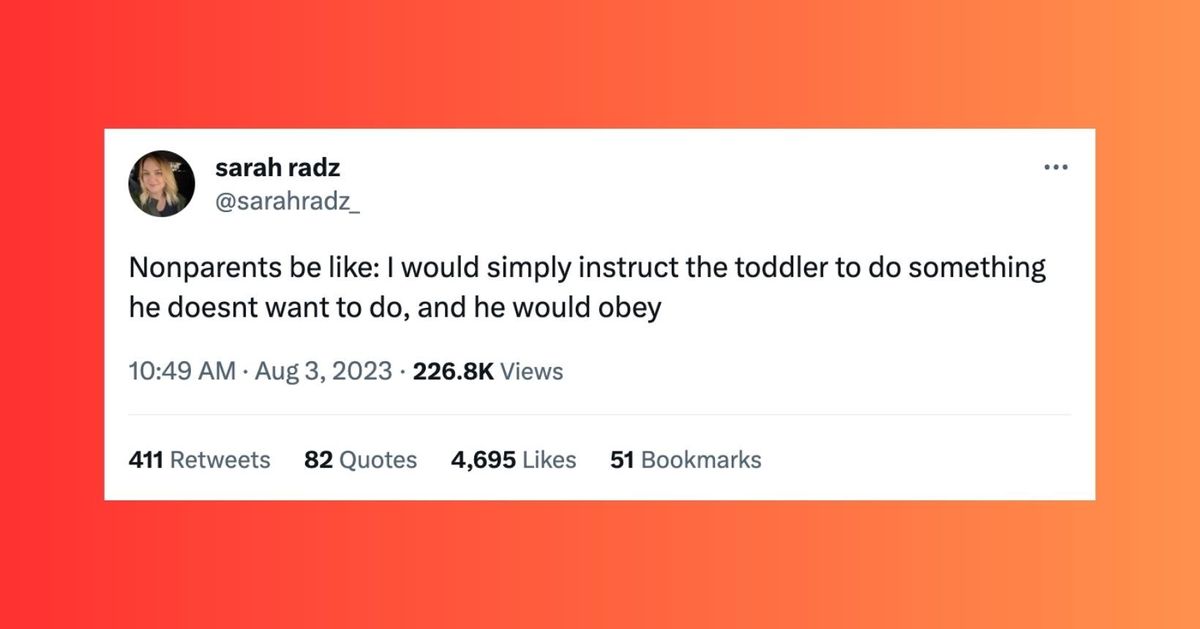
If you’re the parent of a school-aged child, there will inevitably come a moment when they ask for help with a school project — bonus points if this happens the night before said project is due.
Do you zoom off to the crafts store in search of supplies? Give them a lecture about responsibility? Roll up your sleeves and grab a Pritt stick? Sigh dramatically and pour yourself a glass of wine?
The funny parents of Twitter (formerly X) have been there, done that and are here to tell you about it. Read the hilarity below:
Starting a family is one of the biggest milestones in a relationship and it is impossible to overestimate the total joy of your baby arriving.
It’s therefore understandable that when your little bundle of gorgeousness is here, that they demand all your attention and that leaves precious little time for anything else.
Advertisement
Most parents complain about their lack of sleep, messy homes, and a total inability to have a shower some days. However, we don’t always discuss the impact that parenting can have on your relationship, and especially on your sex life. If it does get raised, it’s often laughed off – “how can I even think about sex when I’m covered in baby vomit!” – but maintaining intimacy can be a real challenge for some couples and can lead to relationship difficulties further down the line if not addressed.
In support of HiPP Organic’s new campaign, ‘The Parenting Connection’, I, as a psychosexual and relationship therapist, want to encourage open dialogues among new parents – helping them address the balance between parenthood and maintaining a strong relationship as a couple.
Don’t panic! It’s never too late to start addressing intimacy difficulties even if it’s been a while since you did the deed. Pressure, anxiety and shame are total libido killers, so try to step more into a compassionate mindset. That’s especially important near Valentine’s Day when there can be huge pressure to have the perfect relationship! Remind yourself that it’s understandable that your mind hasn’t been on your sex life, but that it doesn’t have to be like this forever. Why not start by talking to your partner about how you feel and how you would like to improve the intimate side of your relationship.
Seize the small moments. It doesn’t have to be about waiting until you have the energy to jump into bed together. You might be waiting a long time! Instead, small touches and moments of affection can make a big difference. Try giving your partner a hug and a kiss when you see them after work. Give them your eye contact when you talk. Touch them gently on the arm or back when you’re discussing your days. These small acts can mean so much when you’re both in need of some physical attention.
Create a sexual menu. This takes the pressure off you having to have full sex, which might be tricky if the birth partner is still healing. A sexual menu can be a fun exercise for you both to share some different ideas for intimacy, such as bathing together, sensual massage or slow dancing. It also helps you to think about what you do want, rather than focusing on what you don’t. Ticking things off your new menu can add a much needed injection of novelty which is key for healthy relationships, so have fun!
Try the 3 Minute Game. It’s so simple! Just ask each other 2 questions: “where would you like me to touch you for three minutes?” and “where would you like to touch me for three minutes?”. Breaking intimacy down into three minute chunks is a fantastic way to help you think about touch positively and willingly, as well as helping to improve your communication around intimacy.
It’s hard to prioritise your relationship when life is so exhausting, but we know that life satisfaction increases with relationship satisfaction so it’s worth the effort if you can. Remember that little and often is much more sustainable than trying to do grand gestures, and those small acts of intimacy can really build up to a much closer and more connected relationship. Good luck!
Elinor Harvey is a psychosexual and relationship therapist.
The birth rate in the United States has shown an overall decline over recent decades. People are choosing to have fewer children, having children later in life and increasingly deciding to remain child free. There are multiple factors contributing to this trend, including access to reproductive healthcare (limited to a much smaller number of states since the fall of Roe) and increasing educational and career opportunities for women.
More and more, Millennials say that they’re choosing not to have kids because they can’t afford it. A Newsweek poll of 1,500 adults from April 2023 that asked, “If the cost of living was lower, would you consider having a child?” found that 30% of respondents overall answered yes. Among respondents ages 18-34, that jumped to over 50%.
Advertisement
A number of Millennials have expressed their hesitations about having children on TikTok, with some citing the US Department of Agriculture estimate that the cost of raising a child born in 2015 would be $233,610 over the first 17 years.
In response, one 22-year-old TikToker (who does not have children) posted a rebuttal of these claims, explaining that, in her view, families paying for childcare were choosing to “prioritise” their careers, as opposed to having one parent stay home to care for the children. If Millennials simply choose instead to prioritise having children, she insinuates, they could do so. She gives the example of her own family. She states her father chose to “grow” his salary in order to support her mother and the 11 children she stayed out of the workforce to raise.
Her video, which she took down and then made public again, has gone viral and the commenters have spared her no mercy in their criticism. Yet the overall tone of her claim ― that parents could afford children if only they put in a little more effort ― is not uncommon.
But it’s unfair to compare the financial situation of Millennials to that of previous generations. While the cost of housing has risen precipitously, salaries have not gone up in sync — and most of us don’t live in fairyland gardens where we can water our salaries and watch them grow.
Advertisement
“Most of us don’t live in fairyland gardens where we can water our salaries and watch them grow.”
In 2023, the median price of purchasing a home in the US was $412,000, or 5.5 times the 2022 median household income of $74,580. In 1980, the median price of a home was $47,200, which was only 2.2 times the 1980 median household income of $21,020. Millennials aren’t imagining things. Their salaries don’t stretch half as far.
In addition, the soaring cost of higher education means that many are shouldering crushing student loan debt. Americans owe a total of $1.75 trillion in student loans, an average of $28,950 per borrower. This debt makes it difficult to save for a down payment on a home, or whether unpaid leave from work to care for a new child. (The US has long been an outlier among developed nations in offering zero weeks of paid parental leave.)
Then there is the cost of childcare itself. While it’s true that a number of people, usually women, leave the workforce to care for children because the cost of childcare totals as much, or more, than their salaries, there are also reasons people keep a job beyond the arithmetic of a pay cheque. Some people work in order to maintain health coverage for their families. The consequences of leaving the workforce aren’t limited to the present: workers lose out on seniority, pensions and social security earnings when they take time away.
But it’s not unusual for a parent’s salary to be decimated by childcare costs. The Department of Health and Human Services established 7% of family income as the benchmark for affordable childcare. Yet, according to Care.com’s 2024 Cost of Care Report, families are spending an average of 24% of their income on childcare. Sixty percent of families are spending 20% or more.
Advertisement
Here at HuffPost, we have been highlighting some of these families’ stories in our series Banking On Childcare. By sharing their childcare expenses and their struggles, these parents paint a portrait of the complicated, and at times heartbreaking, decisions families are forced to make in order to provide for their children.
Here are some of the things they have said about their kids, their jobs and their priorities:
“I’m still paying student loans, and that’s $350 a month. My car payment’s $400. We’re told, ‘Go to school, go to college, you’ll be fine.’ And I’m going to be paying my loans until I’m 52, I think it works out to. So I’m not giving my kids a chance — I can’t save anything for them, to help them not be in this position. And that’s what really breaks my heart. In addition to [that], I feel like I’m just missing their whole lives because I’m too busy trying to survive and work a million jobs.” — Ashley P., Pennsylvania(Read full story: ‘When You Subtract What I Pay For Child Care, I’m Only Making $10 An Hour’)
“To go from two pretty decent incomes to literally cutting our income in half was hard. We tried to mentally justify it with, ‘Oh, but look how much we’re saving on day care’ and all of this, but at the end of the day, you’re still at a loss.” — Rachael Gomez, Texas (Read her story: My Family Of Five Lives On $90,000 A Year And ‘It’s A Struggle’)
Sherrie Bain
Sherrie Bain and her son.
“I literally worked seven days a week. I took extra assignments at school, I would do aromatherapy [sales], anything that I could find to supplement my primary income. Anything where I was able to work online, I would do that, so that I would have the income but not have to be concerned about paying for additional childcare.” — Sherrie Bain, California(Read her story: I’m A Single Mother With A Ph.D., And ‘I Literally Worked Seven Days A Week’ To Make Ends Meet)
Advertisement
“When you’re planning to have children, you’re aware of the need to create a college fund, like everybody talks about. You need to plan for college when you’re having kids, but you have 18 years to generate that fund. No one ever warns you about the cost of early childcare. And if you’re lucky, you have three months to plan for that, maybe nine months if you’re really on top of it. Nobody talks about it, but your hands are tied. You’re gonna quit your job, or you’re gonna have to pay.” — Deanna Conley, Rhode Island(Read her story: ‘Everyone Talks About This Village, But There Really Isn’t A Village’: The Reality Of Child Care)
“I need these [subsidized childcare] funds to always be there in order to have the ability to work and to thrive for my family and for myself. This is what would help me and other families a lot: That the funds are always there, that they don’t make it too complicated for us to apply in order to thrive, in order to triumph. Because for a lot of women, a lot of single mothers, it’s very difficult to get ahead.” — Luz Quevedo, Oregon (Read her story: How I Make State-Funded Child Care Work As A Single Mom)
“I’d definitely like to get [my 3-year-old] into something more full-time next year, but I just don’t know how feasible it would be. If I did get a full-time job and put him in full-time preschool, then we would probably not qualify [for subsidized care] and so I would just be paying for childcare. It wouldn’t make any sense. I don’t even think we’d break even, to be honest.” — Michelle Dewalt, Washington(Read her story: I Work As A Part-Time Nanny So I Can Care For My Own Children)
Ida Rodriguez
Ida Rodriguez of Massachusetts and her daughters
“There has to be some level of understanding. We can’t expect people to work all this time, but then at the same time, not be flexible. I can’t tell you how many employers I’ve had in the past that were like, ‘Your child is sick? Well, why don’t you just give your child Tylenol and still come in.’” — Ida Rodriguez, Massachusetts(Read her story: What I Spend On Child Care As A Mom Who Makes Under $30,000 A Year)
Advertisement
″We’re kind of at a crossroads where one of us is probably going to have to leave our job because of the current situation and how unaffordable it’s becoming. And so we’re looking at, do we choose to lose health insurance? Or do we lose a big chunk of our income?” — Lucie Benevise, Virginia (Read her story: I Make $22 An Hour In Roanoke, Virginia. This Is What I Spend On Childcare)
The next couple of weeks will be a mixture of anxiety and excitement for teens (and their parents) up and down the country.
On August 17, A-level, AS-level and T-level results will be revealed, while a week later, on August 24, GCSE results will be announced.
Advertisement
It’s a huge moment for a lot of teens who, based on their results, may then decide to continue studying, try and get a job, or even consider resits.
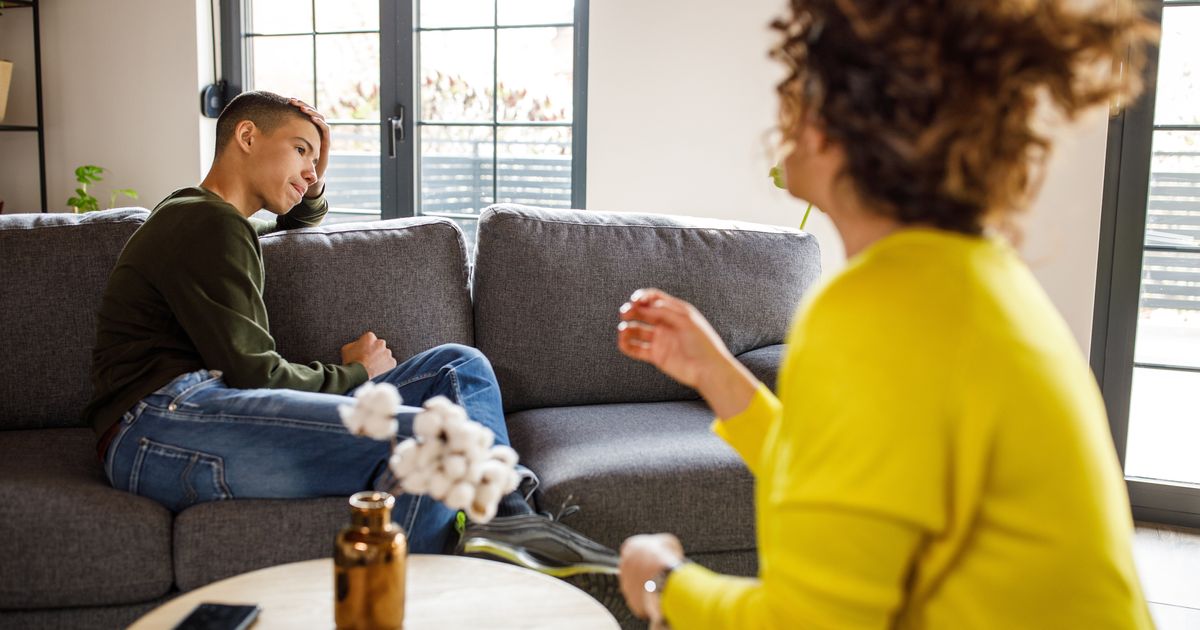
So, says Dr Nihara Krause, a consultant clinical psychologist specialising in teenage mental health, “how parents engage at this time can help shape motivation and confidence moving forwards”.
It’s understandable that lots of teens will be more than a little anxious about how their parents will respond to their grades – so responding positively is key, even if the outcome is not what you or they wanted, suggests the psychologist.
While we want what’s best for our children, sometimes we can easily let our own disappointment show – and when your teen is feeling pretty pants, this isn’t really going to help.
Advertisement
Here, Dr Krause – who is working with Talking Futures, a toolkit which helps parents instigate career conversations with their kids – shares some phrases you definitely want to avoid uttering when they receive their grades.
What not to say on results day
1. You should have revised more
In short: not a helpful comment. “This suggests disappointment in the effort put into revision and that your child has fallen short of parental expectations,” says Dr Krause.
It’s going to leave your teen feeling pretty lousy.
2. If only you had spent less time on your phone
Whilst spending time on the phone is a very common parental concern, it’s more helpful to identify what difficulties or blocks there might be in a young person applying themselves to their studies rather than focusing on time spent elsewhere, suggests the psychologist.
3. What are you going to do now with these results rather than the ones predicted?
“Avoid indicating that there are no alternatives and painting a bleak future,” says the expert.
Instead, parents might want to do a bit of research themselves, looking into further education and career options available to their child following their exam results.
This way, they can steer their teen’s focus towards their futures, no matter their results.
4. How did everyone else in your class do?
If your child is feeling rubbish about their results, this focus on how other people did probably isn’t going to help.
Advertisement
“Opting for a judgmental question may affect self-esteem in terms of feeling less than or, if they’ve done better, to feel ‘better than’,” says the psychologist.
5. Exams were a lot harder in my day
It’s best to avoid turning the conversation into a comparison on sitting exams when you were young, as this “minimises their success”, she adds.
What to say instead
1. I’m so proud of the effort you put into your exams
Regardless of results, it’s important to acknowledge your child’s efforts and encourage them to think about the steps they have taken to get to where they are today.
“Encourage gratitude, discourage bragging, and focus your conversations with them around next steps in their future whilst motivation is high,” she suggests.
2. Let’s focus on your strengths, rather than comparing yourself to others – how your friends did won’t impact you or your future
“There is a mistaken belief that comparison generates ‘healthy competition’,” says Dr Krause.
But she suggests focusing on what helps a young person to gain their own personal best is far more effective than comparing, as it helps them identify unique qualities and improve on these.
It also helps generate self-acceptance and positivity, while avoiding complacency, the expert suggests.
3. Let’s consider your next steps together
A problem shared is a problem halved, after all.
“Be positive about alternatives and help build confidence by showing that you are there to support them,” says Dr Krause, “by doing this you can also motivate your young person to look ahead.”
Research from Talking Futures found 65% of 13-to-18-year-olds are most likely to say their parent is the number one person in their life that they would want to support and guide them on their chosen career path.
However good timing and using the right phrases are essential to ensuring this is done constructively.
Advertisement
“Depending on how the young person feels about the results they have received, now might not be the best time for parents to bring up the topic of the future and next steps,” says Dr Krause.
“And even if it does feel like it’s an OK topic to discuss, parents should approach conversations with extra care – mixed emotions and feeling overwhelmed is common for both parents and young people alike at results time, so let them settle first before constructive conversation can begin.”
Here’s to a positivity-filled results day, no matter the outcome.
Not long after her 18th birthday, my daughter appeared in the kitchen, pulled down the strap of her camisole and revealed a fresh tattoo on her right shoulder blade.
“Like it?” she asked.
“It’s puffy,” I said, “and red. Is that how it’s supposed to look?”
I’d turned away from the cutting board where my younger daughter and I were slicing peppers and bok choy for supper to examine my older daughter’s wounded skin. As I adjusted my glasses, I saw a woman’s body falling through space.
Advertisement
I hated it but kept my mouth shut. Grimacing hard, I returned to the vegetables. The chop-chop of stainless steel on wood became an audible stand-in for what I yearned to scream: How could you be so reckless?Why would you make such a damaging, irreversible choice?
My older daughter seemed oblivious to my distress as she torqued her body toward the mirror to admire herself. “It didn’t even hurt that much,” she said to my younger daughter, who’d abandoned meal prep to swoon enviously. I picked up two carrots and a bunch of scallions, waving them in the air. “Dinner anyone?” I’d lost my appetite, but we’d still have to eat.
The body branded on my daughter’s back should not have upset me — she’d been chattering about various tattoo options for months. And legally I was no longer obligated to worry. Now, along with voting, skydiving, operating the meat slicer at a deli, owning a pet, becoming a realtor and booking a hotel room, my “adult” child was authorised to enter the Mooncusser Tattoo and Piercing parlour in Provincetown, Massachusetts (motto: “Take it to the grave”) and pay a guy to drive a bunch of oscillating, ink-laden needles into her skin.
The mere fact of the tattoo was not the problem. Rather, it was the tattoo’s allusion to Seth, my husband, her father, that left me unsteady and clutching my knife fiercely.
Advertisement
Seth had jumped to his death off a bridge near our home in Cambridge when the girls were 11 and eight years old. He’d been a devoted father, a beloved robotics professor, and never diagnosed with a serious mental illness. Then, on a warm summer morning, Seth was gone.
That night, as our house filled with stunned family and friends, while a steady stream of chocolate babkas and pans of macaroni and cheese arrived at our doorstep, my daughter had asked, “Will we ever be happy again?” I’d said yes, but didn’t believe it.
I spent the following years trying to re-create the sense of safety and balance we’d lost. Over the course of that day-upon-day slog, my daughters and I became a single unit, attuned to each other’s moods and needs. When one of us required a break, we’d gather on the couch with sweet tea to watch Gilmore Girls, wallowing in its charmed landscape and mother-and-daughter high jinks. In summer, when we ached for the missing fourth towel on the beach alongside ours, I’d point toward the bay: “We’re diving in.” We all came to believe in the curative power of cold salt water.
Somehow, whether due to our tight-knit threesome or despite it, they grew up, from pixies scrambling to the top of the jungle gym to teenagers tucking deodorant in their backpacks and hiding texts from me.
I believed that my daughter must have known her falling-figure tattoo would unleash my old sadness and renew my fear that suicidal impulses can be passed through generations. But she looked surprised when I asked if she was considering a plunge from the sky herself anytime soon.
Advertisement
Courtesy of Rachel Zimmerman
The author’s daughters in 2023.
She shook her head at my apparent cluelessness. “It’s just a story,” she responded. “It’s Icarus, but a woman. Dad used to read it to me. I think it’s cool.”
Cool? Perhaps on someone else’s child. Not mine.
In my mind, Seth’s suicide had tainted all modes of falling: jumping, diving, flying, climbing, even landing. Since that time, I could not even bring myself to cross the Tobin Bridge. Nor could I understand why, with the newfound freedom of adulthood, my daughter chose to mark herself with an upside-down figure whose melting feather-wings failed to keep her aloft.
“There must be a reason you chose this tattoo,” I said, unable to let it go.
Her eyes, dark and sparkling like his, rolled. Then she shrugged and disappeared from the kitchen. “I’ll eat later,” she yelled. “I’m going out.” My younger daughter chimed in before exiting, too. “It’s her body,” she said. “Her choice.”
As dinner simmered, I stood alone at the stove, weary with the sense that our familiar unit was unravelling, like the band we’d formed was breaking up.
Advertisement
In a few weeks, our split would become official. The three of us drove to New York to drop my older daughter off at college with her tattoo and dyed eyebrows and piercings on anatomy unknown to me ― was it the rook or snug, tragus or antitragus, septum, rhino, nasallang or some other body part I’d need a piercing dictionary to figure out?
In her freshman dorm, she told me she was ready for me to leave. A moment later she changed her mind: “You can stay a few more minutes.” I tucked the baby blue sheets into her single bed, then unrolled the brand new mattress topper. “Comfy,” I said, with an upbeat lilt. There was so much more to say. But I knew better. Instead, I left a handful of protein bars on the battered desk. “I’ll walk you out,” my daughter said.
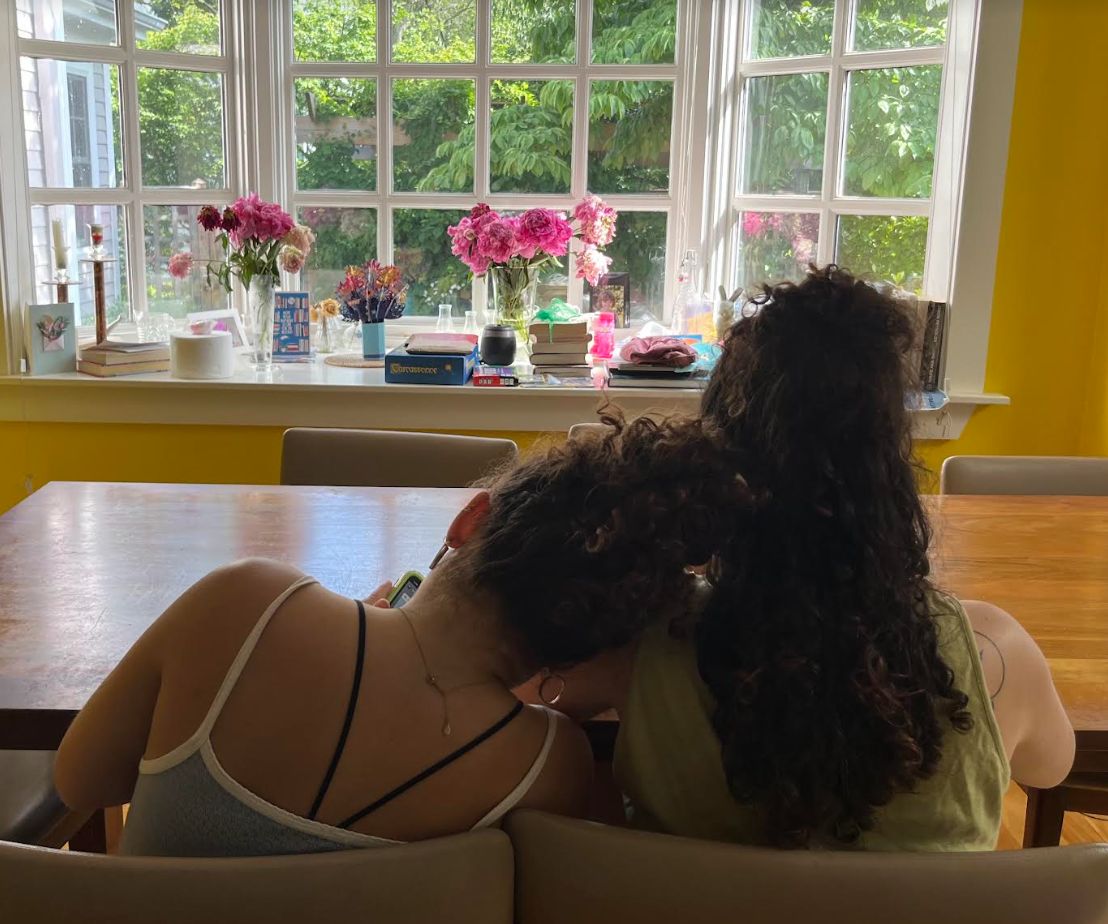
On a Manhattan street corner, the three of us sweating dirt, we pulled each other close. We are the same size, 5 feet tall, so when we huddle like this, we’re aligned, like classical architecture, face-next-to-face, hip-to-hip, like we belong to the same body. When we finally separate, the distance between us is that much more acute, like we’re falling, apart. “Love you,” we said in unison.
My younger daughter and I climbed back into the car to head home, singing show tunes the three of us used to sing together. I hear loss in the patchy harmonies.
A few days later, I phoned my daughter at college to check in. She didn’t answer my calls or texts. I was thrown back to the day Seth died. At first, I thought he’d been in an accident, and that’s what I think again. Something happened to her, I am certain, in the park, or at a party, on a fire escape, the drink was spiked, one misstep too many. Suddenly, I was sweating, breathing irregularly, trying to quiet the voice that said my child must be dead. The tattoo, I was certain, had prevailed.
Advertisement
A sleepless night. Then a text. “Alive,” she wrote. She’d been at an art opening downtown, eating 99-cent pizza at the place on Bleeker, perched on a stoop talking politics with a new friend until 3 am.
I wrote her a long email about my difficulty with our separation, why the falling-woman tattoo led me directly to her father’s jump from the bridge, and how I worried it might be a warning sign. She texted back while I was out walking the dog: “I didn’t think about the connection there but now I see how you did.”
Courtesy of Rachel Zimmerman
The author on a mountain in New Hampshire in 2022.
She had never wanted to dwell on the details of her father’s death. Though my youngest had repeatedly asked, “How did Daddy die?” and dutifully attended her grief group for children, constructing art to honour the dead out of pipe cleaners and polished stones, my older daughter would have none of it.
She grieved for him in her own way, sideways: a passing lyric in a ukulele song; channeling him while playing the bullied, suicidal girl in the musical Heathers; lining her bedroom wall with “before” photos. She knew but also turned away from knowing ― the way we all know and don’t know so much: our partners, their secrets and our own.
Advertisement
As I pulled the dog along at a swift pace, I realised the meagre influence I’d had over my daughter was now gone. She’d figured out how to cope, to find good, on her own. She’d gained comfort from the tattoo, reliably covering her body like a favourite soft sweater.
This offered me some comfort, too. A tattoo of falling is not falling, I thought. It’s a recognition of falling. A testament to having not fallen. There is soap, my philosopher father used to tell us when we were children, and there’s the idea of soap. The tattoo helps keep him alive, a new facet of her story ― a story distinct from mine.
I tried to let go, the way mothers must. I read Kahlil Gibran, foolishly hoping that words on a page could ease this separation: “Your children are not your children… they are with you yet they belong not to you.”
As if to underscore the point, my daughter soon texted me a new picture ― a second tattoo, Ignatz, the mischievous mouse from the old Krazy Kat comic strip. Seth, a passionate comic collector, had the same tattoo, although he’d removed it years before we’d met.
“What do u think?” she texted.
“It’s cool, honey.” Now all I wanted was to remain in her 18-year-old orbit.
My new job as the mother of an adult child is to sort loss from loss, death from images of death, ideation from execution. The line is slim. When her number appears on my phone, there’s always a moment of trepidation, awaiting the sound of her voice. The words I hear could break either way. This is the cost of living. Never sure if she’ll fall hard and shatter or, miraculously, pull off a safe, auspicious landing.
Advertisement
Rachel Zimmerman, an award-winning journalist, has written about health and medicine for more than two decades. A contributor to The Washington Post, she previously worked as a staff writer for The Wall Street Journal and a health reporter for WBUR, Boston’s public radio station. She is the author of “Us, After: A Memoir of Love and Suicide,” to be published in 2024.
In My Story, readers share their unique, life-changing experiences. This week we hear from Richard Poulin, 40, who currently lives in Bangkok, Thailand.
My wife and I accepted new teaching jobs in Singapore. Before leaving America, we proudly showed our newborn daughter, Rylae-Ann, to family. All was right in the world, and we eagerly boarded a plane to begin our new life.
Advertisement
However, when Rylae-Ann was three months old, we saw signs that all was not right.
She was missing developmental milestones. We would play games to encourage her to reach out, do exercises to practice sitting independently, and give massages to coax her to engage her core muscles. But nothing seemed to work.
One day my wife, Judy, went to look for homes while I stayed back at the hotel with our daughter. During one of the sessions, Rylae-Ann tensed her arms and legs. Her eyes briefly crossed, and her tongue made a thrusting action.
Despite it lasting a few seconds, I was concerned. I attributed it to my pushing her too hard, causing muscle cramps. I tapered my eagerness for my daughter to progress.
The fleeting actions caused enough concern that I did some Googling. I did not dare tell Judy. I didn’t want her to start worrying.
Advertisement
I came across an article about a girl with a deadly ultra-rare disease. I admonished myself. I had become one of those parents who Googled symptoms and ended up with an obscure diagnosis for my daughter. I closed my laptop and tried to focus on my family’s new life in Singapore.
Richard Poulin
As the days passed, Rylae-Ann’s parents realised she was missing developmental milestones.
Over the next few months, our lives began to unravel. The tensing of muscles in our daughter’s tiny limbs became more intense and lasted longer; it was the only time we ever saw any movement from her.
We began to refer to them as ‘spells’. These spells came every three days like clockwork. She had trouble staying asleep. When she was awake, she looked sleepy and constantly cried.
Rylae-Ann’s developmental milestones remained paused at the three-month mark. She couldn’t hold up her head, she did not reach out and grasp things, and her eyes remained tiny slits. The photographer commented on her sleepy look when we got her identification card.
Advertisement
We went to doctors who reassured us that babies develop at different rates. But as the spells’ intensity and duration grew, we could no longer sit idly by. We began visiting more doctors and researching.
One rainy night, the spell lasted longer and was more intense – we were filled with fear. We rushed out of the door to the car we’d booked on a ride-sharing app and headed to the nearest hospital. I willed all the lights to turn green while Judy cooed softly into Rylae-Ann’s ear. Once we arrived, the nurses did an assessment and put our daughter at the front of the triage line.
They gave our daughter diazepam for fear she would have another seizure. A doctor came and assigned an initial assessment of epilepsy. The doctors admitted Rylae-Ann, and we were separated from her for the first time.
Judy and I discussed the diagnosis when we returned home to get clothes and necessities. What the doctor was telling us didn’t seem right, mainly because we thought what the doctor saw as a seizure was something else due to its three-day cyclical nature.
Advertisement
After a barrage of tests, the doctors said she had epilepsy. They prescribed her medication, and we went home. But her symptoms did not improve. The medicine left her sleeping all day and she felt lifeless when we picked her up – we stopped the drug after a few days.
We continued to visit the doctor, trying to explain why we thought it wasn’t epilepsy. Despite genetic testing, blood tests, EEGs (which record brain activity), MRI, CSF (cerebrospinal fluid) tests, and more coming back normal or inconclusive, the doctors did not change their diagnosis, so we went to other doctors. We even travelled to other countries searching for answers.
As we collected second opinions, we improved our description and came armed with digital evidence. Doctors had different opinions, including epilepsy, dystonia, cerebral palsy, and other neurotransmitter disorders. However, no definitive answer came.
Our daughter was regularly admitted to emergency care during the onslaught of medical tests. We were always in the hospital, so much so, the nurses knew our daughter by name. Most were lung-related issues such as aspiration, pneumonia, and collapsed lung. But also, a typical childhood viral infection would cause her to be extremely weak to the point that the doctors required her to be in intensive care.
Answers never came. Instead, a random Facebook post about a child with similar symptoms caught the eye of Judy’s older brother. When Judy shared the article with me, it triggered a memory of a post I saw earlier.
The name AADC stuck with me because of its similarity to a classic rock band. I remember the article discussing the extremely rare disease, affecting around 130 people worldwide since 1990.
Advertisement
Richard Poulin
Rylae-Ann would often end up in intensive care.
I explained how it was improbable. However, Judy pointed out that although it is an extremely rare genetic disorder, many of the children were from Taiwan, where her parents are from.
AADC deficiency is a rare disease that causes a mutation in the DDC gene. This gene instructs the body to produce the AADC enzyme, which is responsible for dopamine and serotonin.
Children with AADC deficiency have little or no dopamine and serotonin. Both are responsible for several critical bodily functions to sustain life and movement.
That night, alarms were going off in my head. I sat up in bed and went to work, reading research papers about the disease. The more I read, the more I knew our daughter had this. One glaring reality was that children with this disease die early in life due to the severity of the symptoms.
Advertisement
One of the reports talked about how a doctor in Taiwan had completed clinical trials for an experimental, innovative treatment. There was no word if the treatment was available, but I knew we had to visit this doctor.
Richard Poulin
Rylae-Ann struggled to sit upright or feed.
Judy’s younger brother still lived in Taiwan, so we asked him to make an appointment as soon as possible. The next day he told us we had an appointment booked a week later, the day after Christmas.
We packed our bags and landed in Taiwan on Christmas day. That night, Judy and I sat at the park drinking a small bottle of vodka, trying to process how we went from cloud nine, to falling from a cliff, to Hell over six months. As the bottle’s contents disappeared, I promised my wife we would never have a Christmas like this again.
On the day of our appointment, we met the doctor who was surprised to receive patients thinking their child had a rare disease – and even more surprised at our knowledge of the disease.
“The doctor felt confident that our daughter did, in fact, have an aromatic L-amino decarboxylase (AADC) deficiency.”
I asked if the treatment in the article was available. We held our breath. “No,” he replied. Tears welled. “But, there is another clinical trial recruiting. However, it is only available for Taiwanese.”
“She is Taiwanese!” we screamed. We had recently applied for her citizenship. Although Judy is Taiwanese, she never lived there. We grew up in Thailand, where Rylae-Ann was born. Rylae-Ann only had an American passport, but her Taiwanese passport would soon be ready.
She enrolled in the clinical trial for a new exploratory treatment known as gene therapy. However, she had to wait 11 months to begin treatment – another year of trying to keep her alive and healthy.
Advertisement
Yet with the mystery uncovered, we had more information on how to care for her.
The 11 months also gave us time to figure out the logistics of how our daughter would participate in the study. She would have to stay in Taiwan for six months, so we decided to have Judy’s mum and nanny remain in Taiwan for that period while Judy and I took turns flying back so we could continue earning money at our new jobs in Singapore.
Richard Poulin
Judy and Rylae-Ann on the day of her surgery.
On 13 November, when Rylae-Ann was 18 months old, she underwent brain surgery for gene therapy. Family and friends asked us if we were worried. We weren’t. We had our backs against the wall and fought to keep our daughter alive.
While alive, she depended on us for everything. Managing work to pay the mounting health care bills was extremely difficult. There was no downtime or social life. I remember telling Judy that the lack of sleep was making me mad.
We felt blessed that our daughter would have an opportunity in life.
The surgery lasted several hours. It was Judy’s turn to be in Taiwan, so I waited for a video chat update.
Advertisement
The way we explain gene therapy to other parents is it involves injecting a shell of a virus into the brain. The virus normally goes unnoticed by the body, so it is able to bypass the body’s immune system. Researchers used this situation to inject good DNA into the virus. The virus then “infects” the good DNA in the body. In our daughter’s case, it was in the area of the brain where dopamine is produced.
The surgery was a success. A few days later, to Judy’s surprise, Rylae-Ann was discharged. We began physical therapy immediately.
The results came quickly. One month later, she sat up on her own. This was a huge milestone. Since then, she has continued to make progress. Every day we supported her, but we did it in a way where we could still make memories as a family.
Just over a year after gene therapy, our daughter was swimming, walking, running, and even riding a horse. Today, she is an independent child who continues to explore the world. Not only does our daughter have a chance to live, but we also have a chance to be parents.
Richard Poulin
Rylae-Ann has grown into an independent child who continues to explore the world.
Advertisement
Judy and Rich now use their spare time to help other families in the rare disease community and have launched a non-profit organisation called Teach RARE, where they work to raise awareness and teach caregivers how to combine educational activities with therapy goals.
To take part in HuffPost UK’s My Story series, email uklife@huffpost.com.
You’re reading Between Us, a place for parents to offload and share their tricky parenting dilemmas. Share your parenting dilemma here and we’ll seek advice from experts.
With the cost of living crisis, rocketing bills, and soaring rent payments, a growing number of adult children – dubbed ‘boomerang kids’ – are moving back in with their parents.
Advertisement
In fact, as of 2021, there were 620,000 more adult children living with their parents compared to 10 years previous, census data found.
While lots of parents will enjoy the chance to spend more time with their grown-up children, having them move back in can also cause tension and rifts.
Such is the case for one anonymous HuffPost UK reader, who shared their parenting dilemma with us:
“Our adult son has moved home for the second time, and I desperately want him to move out. He came home after a highly toxic relationship breakdown during which time he had wiped out all of his savings. He reluctantly came home at my insistence, and said it would only be for 2-3 weeks, but never left, and never asked us if he could stay permanently.
“As such the ‘ground rules’ conversations never took place, although we’ve tried to have them several times since with no impact or improvement. Since moving home seven months ago, he has not changed his sheets, washed his towels, he’s doing nothing to improve his job prospects in order to earn a consistent living wage that would allow him to move out, he’s not doing what we suggest to save money to clear his debts quicker. He doesn’t routinely help out around the home – he’ll clean his own plate but won’t unload the dishwasher, for example. He’ll remove his clothes from the washing line but leave everything else in the rain.
“He pays us ‘rent’ weekly which is now consistent, but resents it. This is about a third of what it would cost him to live in a house-share where we live. We have tried to address all of the above issues many times, but nothing changes. I feel we have no choice but to ask him to leave, but I fear making him homeless.”
So, what can they do?
1. Sit down and talk
While the situation is clearly hard for the parent, therapists recommend they take a step back and consider that their son is probably struggling quite a bit at the moment, too.
“Are these current behaviours new, or are they out of character? I would want to know more about how your family have communicated in the past – do things get heated?” asks Counselling Directory member Octavia Landy.
She recommends setting a specific time for a family meeting and, in the first instance, talking with the son about what is happening for him. The parent needs to find out: how is he? Is he struggling at the moment? What would he like to happen in his life?
During this conversation, the parent can also talk to their son about how it feels for them when he is not pulling his weight, and how it’s impacting the rest of the family, she suggests.
This isn’t a finger-pointing exercise, so at the same time the parent can remind their son that they care – this could be as simple as asking him what he needs or figuring out how the family can work towards this goal together. Empathy is key.
Advertisement
“It sounds like he is feeling lost and needs to make some changes, perhaps he feels overwhelmed,” adds the therapist.
2. Be prepared to listen calmly
When things get heated – which they can in these scenarios – it can be easy to just storm off and not really hear each other out. But every effort needs to be made, on both sides, to properly listen.
“As the parents, you will need to model consistency and keep calm,” suggests Landy.
“Bring the conversation back to the matter at hand, reiterate what you need to change, but also listen to your son. It sounds like there is something deeper happening for him, and by connecting on a new level, you can support each other and work together.”
3. Set clear boundaries
“Boundaries and communication lie at the heart of this dilemma,” says counsellor Georgina Sturmer, addressing the parent directly.
“At the moment, it feels as if the lack of boundaries is leading to a sense of anger and resentment on your part. It sounds like it might be time for you to communicate more effectively, ‘adult to adult’, about how you want your relationship to be.”
Advertisement
The Counselling Directory member also suggests a bit of self-reflection on how the relationship with the son has changed since he became an adult.
“Consider what your boundaries look like,” adds Sturmer. “How do you communicate with him about what constitutes acceptable behaviour?”
It’s also important to figure out where the partner stands on all this, because if there’s disagreement over how is best to handle the situation, it could fuel the son’s behaviour further.
As there wasn’t really a clear cut establishing of boundaries when the son moved back in, now is the time to lay down the law and sweep any uncertainty under the rug.
“Work together to establish ground rules and a timeline for these to be reviewed. It will be important to check in with him on how things are progressing,” adds Landy.
Advertisement
4. Ask yourself what you need to feel happy in your home
Sturmer suggests the parent should ask themselves what they need in order to be able to feel happy and safe in their home – and the answer might be a difficult one to come to terms with.
“It might be that this means that you need to ask him to leave,” she says. “If this triggers fears about him becoming homeless, then address these fears directly.
“Perhaps you can find a way to work together on a timeframe for him to leave home. Or if you don’t feel able to ask him to leave, start setting stricter ‘ground rules’, based on what you might expect from an adult living in your home.
“This can shift the dynamic from ‘parent to child’ to ‘adult to adult’. Even though he may always be your baby, remember that he is an adult, and he deserves to have an opportunity to be independent.”
Ultimately, communicating clearly, really listening to each other, and setting firm boundaries (and timelines) will be key in making all of this work.
Advertisement
Landy concludes: “Change needs to happen, and whilst that can be scary, by working together you can hopefully support your son to stand on his own again, without having to ask him to leave.”
Help and support:
Mind, open Monday to Friday, 9am-6pm on 0300 123 3393.
Samaritans offers a listening service which is open 24 hours a day, on 116 123 (UK and ROI – this number is FREE to call and will not appear on your phone bill).
CALM (the Campaign Against Living Miserably) offer a helpline open 5pm-midnight, 365 days a year, on 0800 58 58 58, and a webchat service.
The Mix is a free support service for people under 25. Call 0808 808 4994 or email help@themix.org.uk
Rethink Mental Illness offers practical help through its advice line which can be reached on 0808 801 0525 (Monday to Friday 10am-4pm). More info can be found on rethink.org.
The reality is though that we need to talk about pronouns. So we might as well be sensible about it.
More and more young people are challenging the concept of gender binary, according to family psychotherapist Fiona Yassin. The therapist has seen “a big increase” in the number of young people pausing and assessing their identity.
Advertisement
In fact, the founder and clinical director of The Wave Clinic, tells HuffPost UK around 60% of children and young people who are treated at the clinic request their pronouns are changed from the ones they were assigned at birth.
And in some cases, these children are pre-teens, which can catch parents off-guard.
“At The Wave Clinic, we’re specifically noticing that gender identity and pronouns are being debated by younger children at the ages of around 10-11,” she says.
“Questions of identity: ‘who am I?’ and ‘who do I want to be?’ are very strongly linked to the developing sense of self.”
Pronouns are words we use in everyday language to refer to ourselves or others, according to Stonewall, and they can be an important way for people to express their gender identity. Some commonly used pronouns are she/her, he/him and they/them.
Advertisement
“Whilst conversations around pronouns and identity have become commonplace amongst children, tweens and teens, the topic is unfamiliar to many parents and carers and they may not necessarily feel equipped with an understanding of, or language to talk about, pronouns and gender identity,” Yassin says.
With that in mind, here’s her advice for parents and carers on how to approach a conversation with a young person who would like to change their pronouns.
1. Stay with the information you’re presented with and avoid jumping ahead
“When a young person tells a parent that they are thinking of – or would like to – change their pronouns, parents often become alarmed that there’s also going to be a change in sexuality,” says Yassin.
And although the two can (and do sometimes) go together, it’s important for parents – and indeed, everyone – to understand that gender identity and sexuality are two different things.
She describes instances where young people have started a conversation about pronouns and have then been pressed by parents on whether they’re gay.
Advertisement
“This often happens because parents feel fearful about the transition their young person is wanting to make. In reality, there are many stages to transitioning and all require gentle communication,” she explains.
So, her key advice is to stay with the information you’ve been given, avoid jumping to conclusions and steer away from questioning your child about their sexuality.
2. Respond in an age appropriate way
If you have an 11-year-old talking to you about changing their pronouns, “it would be inappropriate to dive into a more extreme conversation, for example about surgical or hormonal changes,” says Yassin.
“If the conversation does evolve into this then it’s okay to explore this further. But it’s important to meet them where they are at and not get ahead,” she adds.
3. Be curious and actively listen
The charity Mermaids, which supports trans and gender diverse children and their families, says one of the key things they encourage parents or carers to do is to really listen to their child.
Advertisement
This means hearing and respecting what they are saying, giving them time and space to explore these feelings and what they mean for them as individuals, and taking their young person’s lead, says a charity spokesperson.
One of the most important things parents can do is to be curious, agrees Yassin.
“Without being persecutory or pushy, use this as an opportunity to find out what they are considering around their identity and why, and what different pronouns mean to them,” she suggests.
“Exploring this with your young person can be a beautiful moment – it’s likely that you are both navigating this for the first time. As a parent, you are not there to assert judgement or to share your opinion – acknowledge that your child’s feelings, emotions, thoughts, experiences and viewpoints on the world are likely different to yours.”
4. Set time aside to have a conversation where you won’t be interrupted
If you’re not able to listen properly – for example, it’s during the morning school rush or late at night – you need to gently defer the conversation for a time when you can do so.
Yassin advises parents to “acknowledge you’ve heard your young person and set a time aside when you know you can explore this together”.
Advertisement
So, you could say something like: “Thank you for sharing this with me. I really would like to hear about what you’re experiencing and find out more about your views and opinions on this. Let’s sit down together as a family when we get home and explore this together.”
5. Only invite people into the conversation who you know are open and understanding
If there’s someone in your family who you think will react badly or simply won’t be emotionally available or open to the conversation, it’s worth letting them sit this one out.
“It is better to have the conversation and explore this with your young person without someone who is tricky and has less flexible attitudes,” says the therapist.
“If you need to tell friends or family members who have staunch or more traditional views about your child’s change of pronouns, look to have these conversations without your child’s involvement. This helps to protect your young person from volatile and unhelpful reactions.”
6. Be careful about your choice of words
In the heat of the moment, and without the appropriate warning, you might say something you regret – or that comes out wrong.
Advertisement
Yassin urges parents to tread carefully here, as you don’t want to use any words that could minimise their experience.
“Fluidity is everything in these conversations and defining your young person by using words such as ‘queer’, ‘bisexual’ and ‘heterosexual’, may make them feel boxed-in or marginalised,” she says.
“In addition, some parents can get stuck on the notion that ‘they/them’ pronouns do not sound right or fit snugly into the English language. Avoid using language and phrases that can feel shaming and marginalising, such as, ‘it’s not natural to use they/them’.”
Some parents might also assume their child is following a trend or is in a phase when they decide they want to change pronouns.
As Yassin says: “We hear many parents ask ‘who else in your class/school has changed their pronoun’ or ‘who amongst your friends has done this already’. This line of questioning can feel disempowering and minimising to a young person and could cause quite an angry backlash.”
Advertisement
Plus, research is showing that the majority of children over the last decade or so who have changed their gender pronouns do stick with their decision.
7. Steer clear of shame-inducing language
Don’t shame your child for wanting to change their pronouns. The therapist suggests doing so could “cause harm to a generation of children who, because their parents are not accepting or retaining curiosity, shut down or hide parts of themselves”.
“Young people in the early years of identity development are experimenting and trying things out for size and it’s important that as parents, we encourage our young people to be curious and experiment,” she adds.
8. It’s okay to say you don’t know
If your child is asking questions and you don’t know the answers, it’s OK to admit that.
“Ask your young person if you can join them on their journey of discovery and learn and research together,” suggests the therapist.
“Assume that if your child comes to you with the conversation, it’s likely they have already done a lot of research online and are talking to people who are in the same position as them. Exploring this together can also help to sieve out misinformation and find trusted resources for support.”
Advertisement
9. Accept that you might make mistakes
Chances are you’ll probably make some mistakes along the way, like using the wrong language or stumbling on their pronouns.
“The reality is, we are all human and despite having best-intentions, you may not get it right 100% of the time,” says Yassin.
“Mark this at the outset and talk to your young person about what will happen if you use the wrong name or pronoun. Being open and honest upfront can help to avoid the issue escalating if mistakes are made.”
Mermaid’s spokesperson says some families don’t use any pronouns for a while, to help make the switch, or they have a pronoun jar (a little bit like a swear jar) where they pay up if they make a mistake.
“Acknowledging that getting someone’s pronouns wrong was a mistake and may have caused upset to them, so apologising and correcting yourself is important too,” they add.
Advertisement
10. Consult a gender positive therapist
If a child is considering changing their pronouns, you might also want to seek outside help to ensure they feel supported during this period of change. Mermaids’ helpline, for instance, provides support to parents and carers during this period.
“For some, the change can bring hefty conflict into the family and for some cultures this shift will be very difficult to accept,” says Yassin.
“Parents should happily consult a therapist, particularly a gender affirming and gender positive therapist, who can help to facilitate a conversation with the family about what’s happening and why it might be happening.
“Having professional support can help to avoid fragments and tension appearing within the family.”
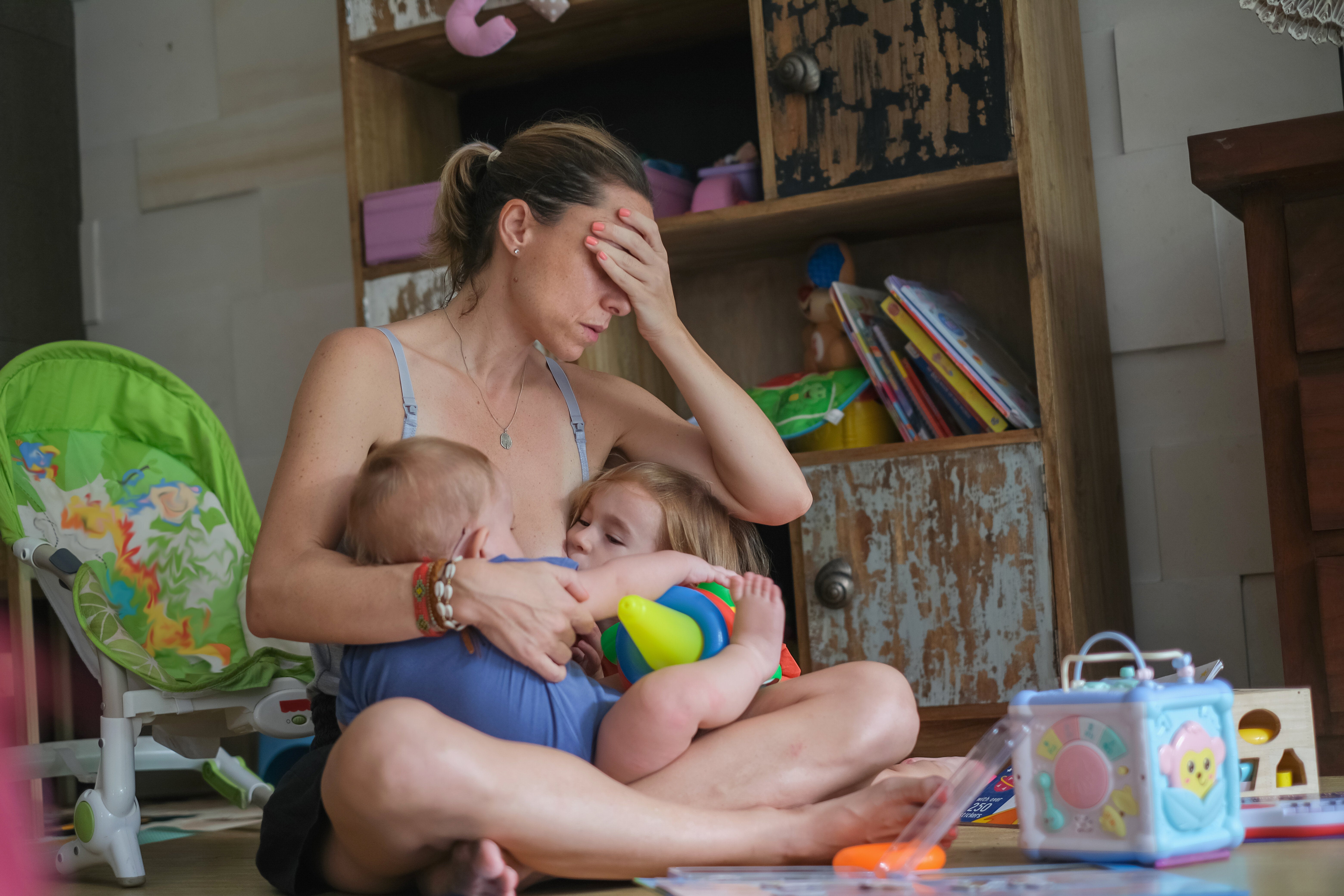
As a breastfeeding mother of three, Krystal Duhaney is no stranger to the sensation of being “touched out”. She describes it as “reaching the point where you just want a little breathing room from constant physical contact”.
“Don’t get me wrong, I love cuddling and snuggling with my little ones, but there are moments when I feel like I’ve had enough,” Duhaney, a registered nurse, lactation consultant and founder of MilkyMama, told HuffPost.
Advertisement
“Imagine having tiny hands tugging at your clothes, clinging to your legs, lifting up your shirt, and constantly wanting to be held. It can be overwhelming, especially when you add breastfeeding into the mix. Sometimes, all you want is a moment of personal space to recharge and gather your thoughts.”
This phenomenon is most often reported by mothers, but any parent or caregiver can experience it. Some have described it as a skin-crawling or claustrophobic feeling. For Duhaney, being touched out can make her feel “a bit irritable and impatient”.
“It’s like my body is craving a break from the never-ending physical demands,” she said. “It doesn’t mean I love my children any less. It’s just a natural reaction to the constant touch and sensory stimulation.”
Parents may feel touched out for any number of reasons. The near-constant physical contact when taking care of young children, especially, is a big contributor – think nursing, rocking, holding, cuddling, baby-wearing, co-sleeping, etc. Personal space and alone time are in short supply when you have a baby or a toddler.
Advertisement
“Breastfeeding demands, especially when coupled with frequent nursing sessions, can add to the feeling of being touched out,” Duhaney said.
“Sometimes, all you want is a moment of personal space to recharge and gather your thoughts.”
– Krystal Duhaney, mother and lactation consultant
Plus, there’s the “sensory overload from the combination of physical touch, noise and other stimuli,” which can be overstimulating to moms, she added. This may be especially pronounced for mothers with ADHD or other neurodivergent parents.
The heavy mental and emotional burdens of modern parenthood – like the pursuit of trying to “do it all” – likely play a role in feeling touched out, too, experts say.
“There isn’t much space left to think about yourself when you are worrying and thinking about your child, spouse, and all the other tasks you are responsible for,” marriage and family therapist Gayane Aramyan told HuffPost.
Advertisement
Naturally, all of this can take a toll on your relationship with your partner, too. Aramyan said her clients who are mothers often tell her they “literally don’t want to be touched anymore at the end of the day” and “just want their own space”.
“It’s really hard to make space for the family members who are not infants to have close intimate touching when you have an infant hanging off of you all day,” psychologist Louise Packard told Motherly.
If you’re feeling touched out, here’s how to cope
urbazon via Getty Images
“Whether it’s enjoying a cup of coffee alone, taking a quick walk, or simply locking yourself in the bathroom for a few minutes of peace, those moments of solitude can work wonders,” Duhaney said.
First, know that as unpleasant as this sensation can be, it is a very common experience and is in no way a reflection of your parenting abilities or the love you have for your family.
Mums often feel guilty for being touched out, but they shouldn’t: Bodily autonomy is a “normal human need,” psychologist Jessica Combs Rohr wrote in a blog post for Psychology Today.
Advertisement
“A fun thing about motherhood is you almost always feel like you are being a bad mother if you have a normal human reaction to difficult experiences,” she wrote in the story.
When you’ve reached your touch limit, communicate that to your family. Explain that you love them, but you need some time or space for yourself right now.
When you’re not so overwhelmed, have an honest conversation with your partner about what you’re feeling. That will help them understand what you’re dealing with and realise it isn’t personal.
“Set some boundaries and ask for support,” Duhaney said. “Your partner, family or friends can help share the load and give you some breathing room.”
Try to schedule some “me” time every day — even if a few minutes is all you can manage.
“It can be as small as 10 minutes before everybody else waking up,” Aramyan said. “Or taking 10 minutes during your child’s nap to not do anything but sit and read, or meditate. It’s important to fill our cup not just with girls’ nights or date nights or exercise, but to have something that happens daily for us to get something done for ourselves.”
Advertisement
Duhaney said it’s also important to give yourself permission to take breaks without feeling guilty about it.
“It’s OK to step away and recharge. Find moments throughout the day to steal some personal space,” she said. “Whether it’s enjoying a cup of coffee alone, taking a quick walk, or simply locking yourself in the bathroom for a few minutes of peace, those moments of solitude can work wonders.”
Connecting with other parents who understand firsthand what you’re going through can also help.
“Find online communities or local mom groups where you can share your experiences, vent, and get advice from moms who’ve been there,” Duhaney said. “Sometimes just knowing you’re not alone in feeling touched out can bring a sense of relief and validation.”
If your partner is the one feeling touched out, here’s how you can help
If you’re the partner of a touched-out mum, be supportive and understanding. Respect her boundaries, which may mean putting your desire for physical affection on the back burner temporarily.
“Show empathy and understanding by acknowledging her feelings and validating her experiences,” Duhaney said. “Let her know that you’re there for her and ready to help in any way you can.”
Advertisement
Make sure you’re pulling your weight when it comes to caregiving and other household responsibilities. See where you can do more to lighten her load.
“Offer to take over some tasks, such as feeding, diaper changes or bedtime routines, to give her a break,” Duhaney said. “By sharing the load, you’ll provide her with the opportunity to recharge and have some much-needed personal space.”
“Pay attention to signs of her feeling overwhelmed and step in to assist before she reaches her breaking point.”
– Duhaney
Be proactive about stepping up without always needing prompting or reminders from your partner.
“Anticipate her needs and offer help without waiting to be asked. Pay attention to signs of her feeling overwhelmed and step in to assist before she reaches her breaking point,” Duhaney said. “Proactively taking care of household chores or offering a listening ear can go a long way in easing her burden and making her feel supported.”
For the time being, sex may feel like yet another thing she has to do for someone else — but there are many other ways to foster intimacy. Maybe that’s getting a date night on the calendar once a month, setting aside 15 minutes at night to talk about stuff other than kids or household logistics, holding hands while watching TV or giving her a foot rub after a long day.
Advertisement
Encourage your partner to prioritize time for herself and help her make it happen.
“Support her in taking time for herself, whether it’s a relaxing bath, a solo outing, or pursuing a hobby she enjoys,” Duhaney said. “Offer to take care of the kids during those times, so she can fully focus on rejuvenating herself.”