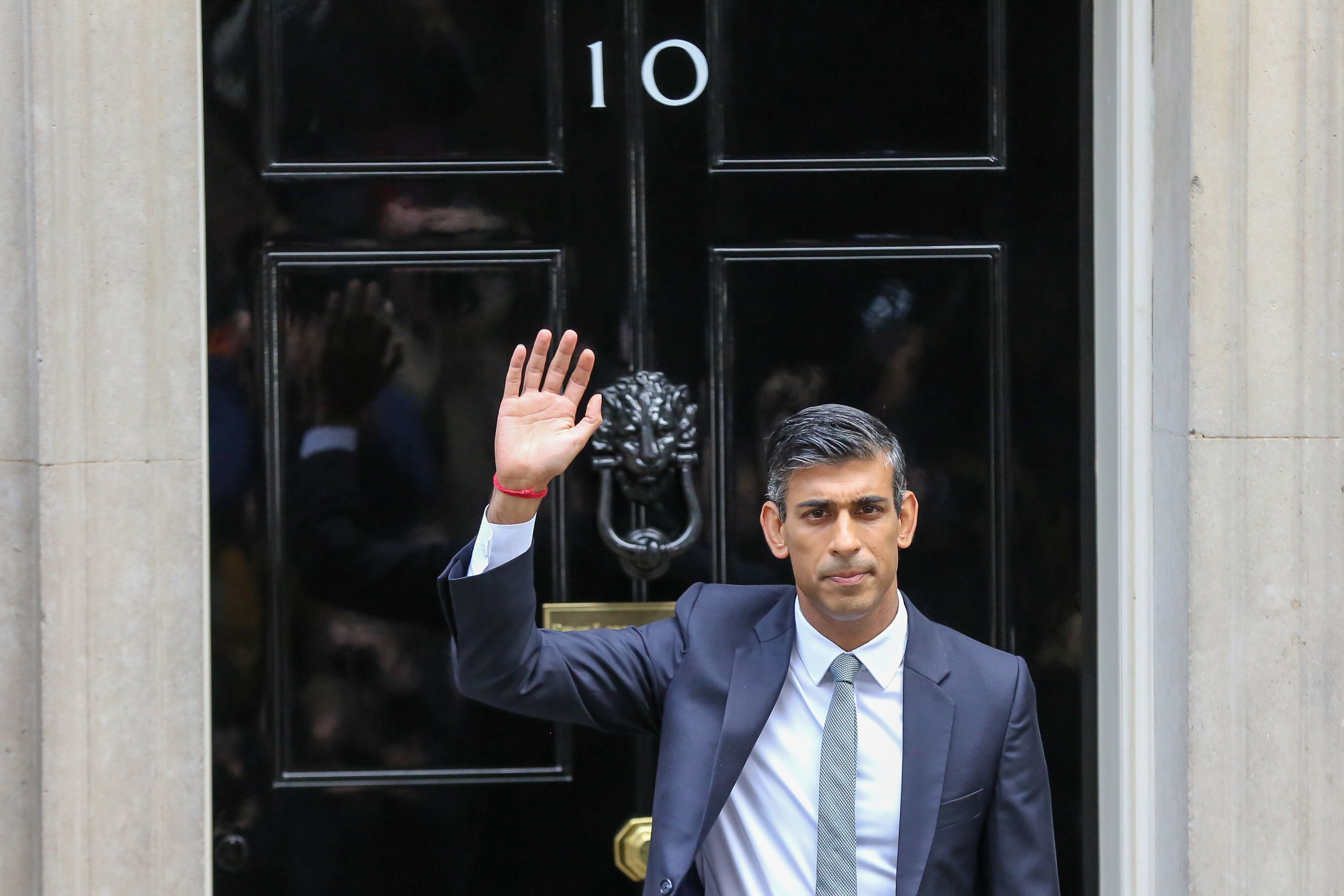
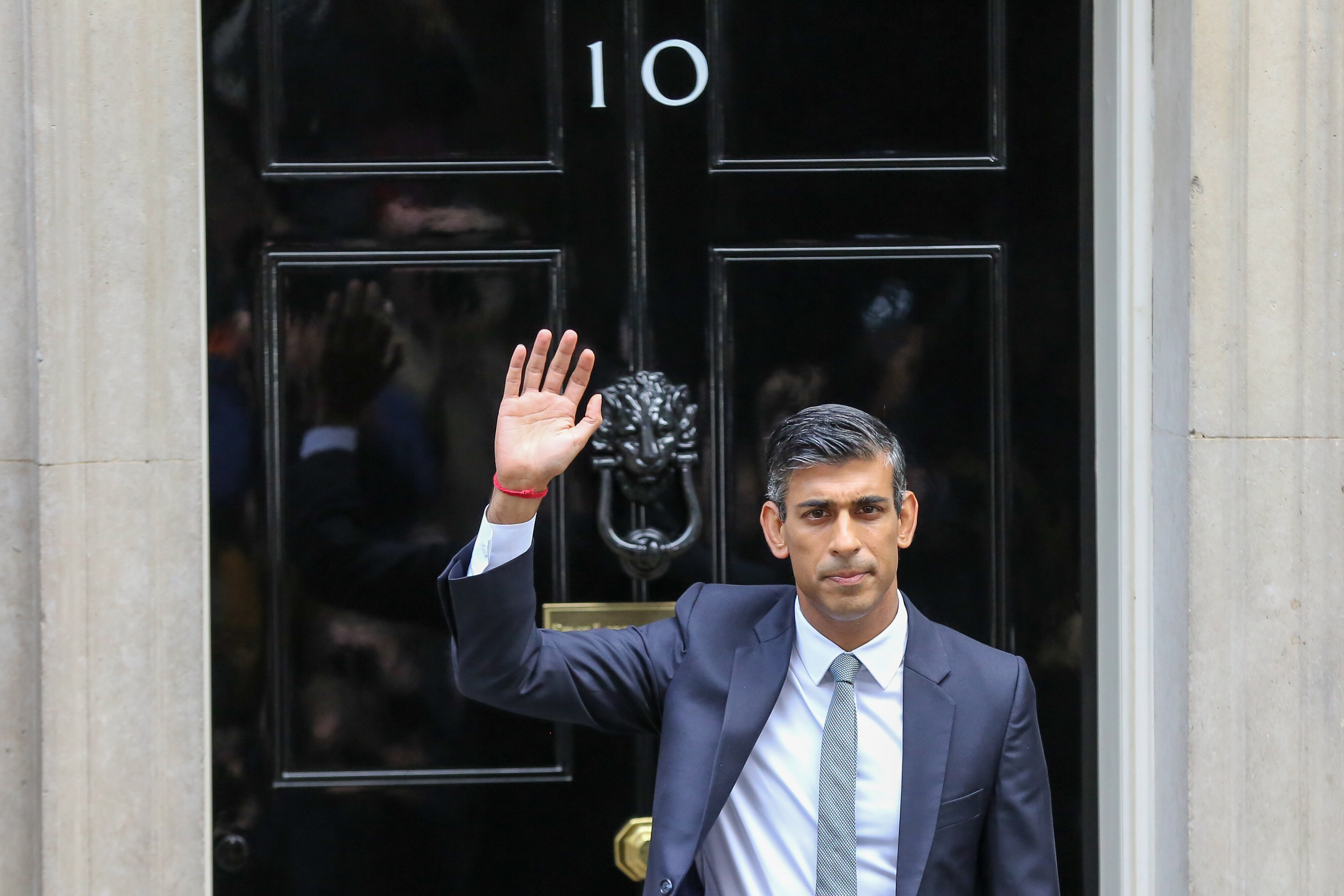
In four months, we’ve had three different prime ministers: Boris Johnson, Liz Truss and now, Rishi Sunak.
On October 25, the multi-millionaire officially took the top job, becoming the first UK prime minister of Asian descent and the youngest one too.
Advertisement
Nearly all of us have strong opinions about the government, but the public awaits to see how the latest leader of the Conservative Party will lead the country. His policies aren’t the only thing people are discussing though, the public have another obsession regarding Rishi: his height.
The new prime minister is 1.7m, which means that he’s 5ft 6 – and people have strong feelings about this. The average height for men in the UK is 5ft 10, a fact which has made the PM’s height the talk of the town.
Some people are mocking his height
Advertisement
rishi sunak being short is more shocking to me than him being prime minister
Others think the discussions around his height are unfair and mean
Why do people think it ok to comment on Rishi Sunak’s height? Heightism to mock and undermine. I know how hurtful this can be -my son was bullied relentlessly at school – just for being small.
Mocking Rishi Sunak for his height seems so…puerile. Go after people for things they can change like their stinking policies, but once you go personal you’re opening the gates for the racists to take over with much worse.
Rishi Sunak won’t see your short jokes but your male friends who have been taught by society to be insecure and ashamed of their height from a young age will (unironically)
Jokes about men’s height aren’t new, but they’re getting old. If you know it’s wrong to comment on women’s appearances, the same grace should be applied to men.
Men are more than just their height, but unfortunately, people do take the height of men into consideration.
A study conducted by the researchers at the University of St Andrews in Scotland found a link between height and the perception of masculinity. Whilst another 2005 study stated that men who said they were 6’3” or 6’4” got about 60% more messages on dating sites than men who were 5’7” or 5’8.
But the tide is slowly changing for short men. The term ‘short king’ increased during awards season when celebrity couples like Sophie Turner and Joe Jonas and Spider-Man’s Tom Holland and Zendaya took to the red carpet. Though both women are taller than their partners, they clearly couldn’t care less about height.
So the next time you want to critique Rishi Sunak, make sure it’s about his policies, not his height.
You’re reading Gen:Blxck, a series exploring Black culture, history, family and identity through the generations.
My earliest memories of having my hair done are all at home. My mother would braid mine and my sister’s hair before it got too thick for her to manage. Then I met my first hairdresser, a family friend of a friend, called Akosi. I’d travel to her house with my mum and spend the next few hours sitting in between her legs, getting curly box braids (my absolute go-to back then).
Advertisement
But in recent years, there’s been a surge of young Black women getting into the hair industry and using Instagram as a way to find clients. They’re labelled IG hairdressers by the community, and fewer women my age are now going to traditional Black hair salons where ‘Aunties’ typically styled your hair.
Aunties once ruled the Black hair landscape here – we grew up with them and we didn’t have anyone else to compare them to. But now there is a growing ‘Aunties versus IG hairdressers’ debate in the community. And of course there are pros and cons to each.
If you’re looking for a cheap price point, you’d probably want to get your hair done by an auntie. The trouble is, you’re more likely to be waiting a few hours to get your hair finished in the salon as they switch – and chat – between clients.
IG hairdressers, on the other hand, are easier to find and book online and more likely to be able to do a hairstyle they haven’t done before, but they also tend to charge more and often get called out for unprofessional behaviour like cancelling last minute.
Advertisement
Whoever we trust with our hair, the styles Black women are favouring are changing – and fast. For centuries our hair has been policed by whiteness, but now, Black women are finding a new sense of pride. We’re finding our unique styles, whether that’s braving the big chop or saying ‘no’ to wigs altogether.
It’s been a long journey to get here and even the biggest fans of IG hairdressers will acknowledge we’ve got decades of salon owners to thank for it.
“In the 1960s, Black hair was often either stylishly styled in a natural African look or chemically treated to give it a washed-out colour,” co-founder and CEO of Curl Centric, Akirashanti Byrd tells HuffPost UK,
Byrd is 45 and she’s been styling Black hair for 15 years. Her customers are mainly Black women who want to keep their hair in its natural state.
“Often, these women are not familiar with the various styling techniques and products available to them, so I spend a lot of time educating them on the available options,” Byrd says. She has seen many trends in her time as a hairdresser. “By the 1980s, Black women were experimenting with naturally kinky curls and Afros, greatly expanding their style options,” she says.
Advertisement
“In the 1990s, we saw celebrities like Viola Davis rocking bold Black hairstyles that stood out from all other styles. This decade also saw the introduction of blonde hair dye, which helped make light-skinned people’s dark locks more visible. Since then, many variations of Black hairstyles have continued to be popular today, including relaxed curls, cornrows, dreadlocks and afro.”
The ways you can treat and style Black hair have also expanded in this time – especially with the help of the natural hair movement.
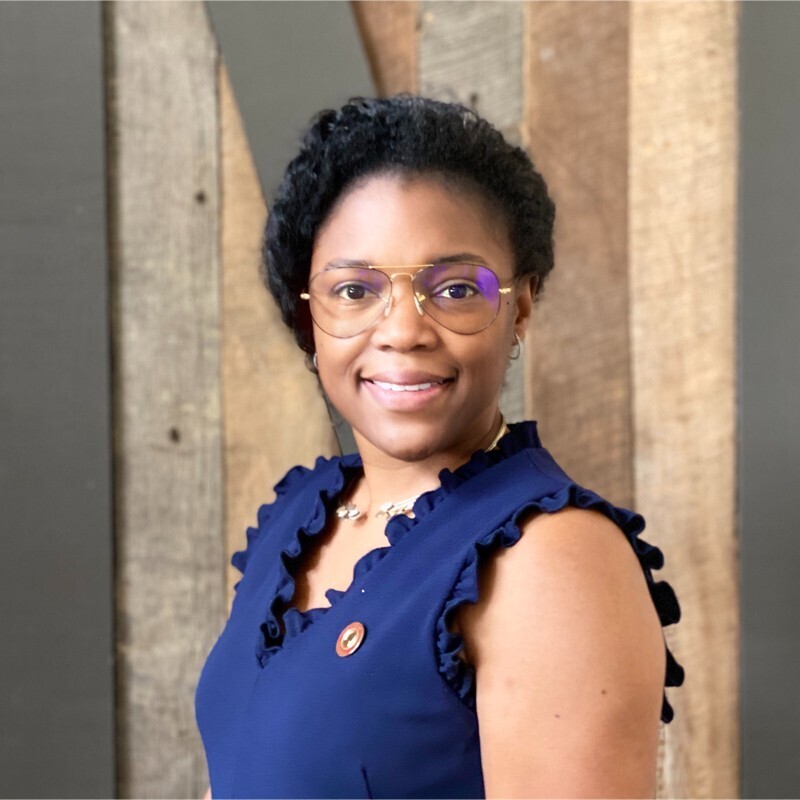
Akirashanti Byrd
Akirashanti Byrd: ‘I spend a lot of time educating [women] on the available options.’
The natural hair movement really kicked off in the 60s alongside the civil rights movement, and was spearheaded by political activist Angela Davis. Afros were worn to protest against white supremacy and champion Black liberation.
However, the early to mid 2000s saw a resurgence of this movement. More and more women in our community started to question why we relied so much on straight hair to make us feel worthy. So we put relaxers and the hot combs on pause and brought back the blue magic, afro combs and blow dryers.
Advertisement
Social media has played a big part in this. I learnt how to style my natural hair by watching YouTube. I watched to see how I could maintain a wash and go, slick down my 4C hair, and even attempted to learn how to cane roll (I’m still learning).
“The rise in popularity of natural hairstyles has led to an increase in demand for products and services that cater to this market and has resulted in more Black-owned businesses entering the industry,” Byrd says.
“The natural hair movement has positively influenced the Black hair industry. It has helped increase awareness of the need for products specifically designed for Black hair and has created a demand for these products. This has resulted in more companies developing Black hair care lines, helping to grow the industry.”
Brands like Ruka Hair, Cantu, Shea Moisture, KeraCare are Black girls’ go to for hair products. And women are investing their money into these brands. Black Women in the UK account for 10% of haircare spending, although they make up only 2% of the UK adult population, a survey by TreasureTress found.
Advertisement
“Today, I feel like hair trends seem to change with the season: seasonal colours, lengths and protective styles etc,” says hairstyilst Ayanda Soares. Soares has been a hairdresser for 14 years and describes her customers as those who want to embrace their natural hair and often opt for protective styling.
She began learning when she was a teenager. “I had always done my own hair, as my mum was terrible at doing mine and my sister’s hair – she had dreadlocks for most of our childhood,” she shared. “In secondary school, I would braid friends’ hair and I learned to do braided weaves around the same time.”
Soares tells HuffPost that in her time as a hairdresser, she’s seen a surge in demand for experimental methods such as tape-ins and keratin fusion. These options weren’t accessible in the UK in the same way they were in the US due to a lack of hair suppliers offering extensions for women with Black hair.
“These have been around for many years, but have not been seen at this level in the afro/Black hair space,” she adds.
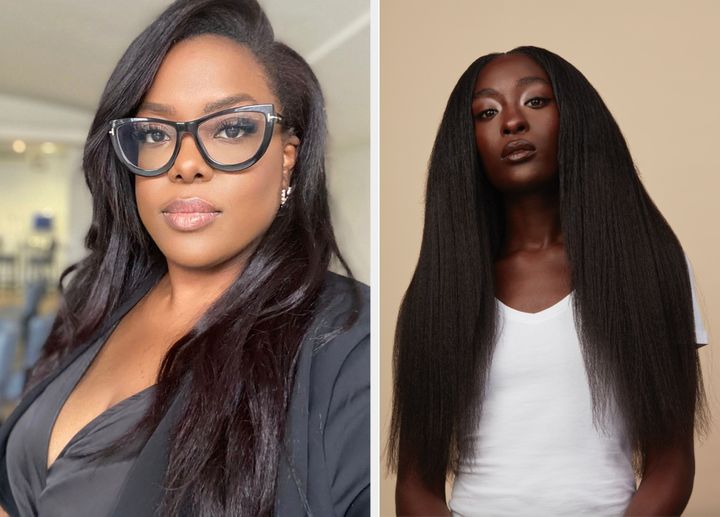
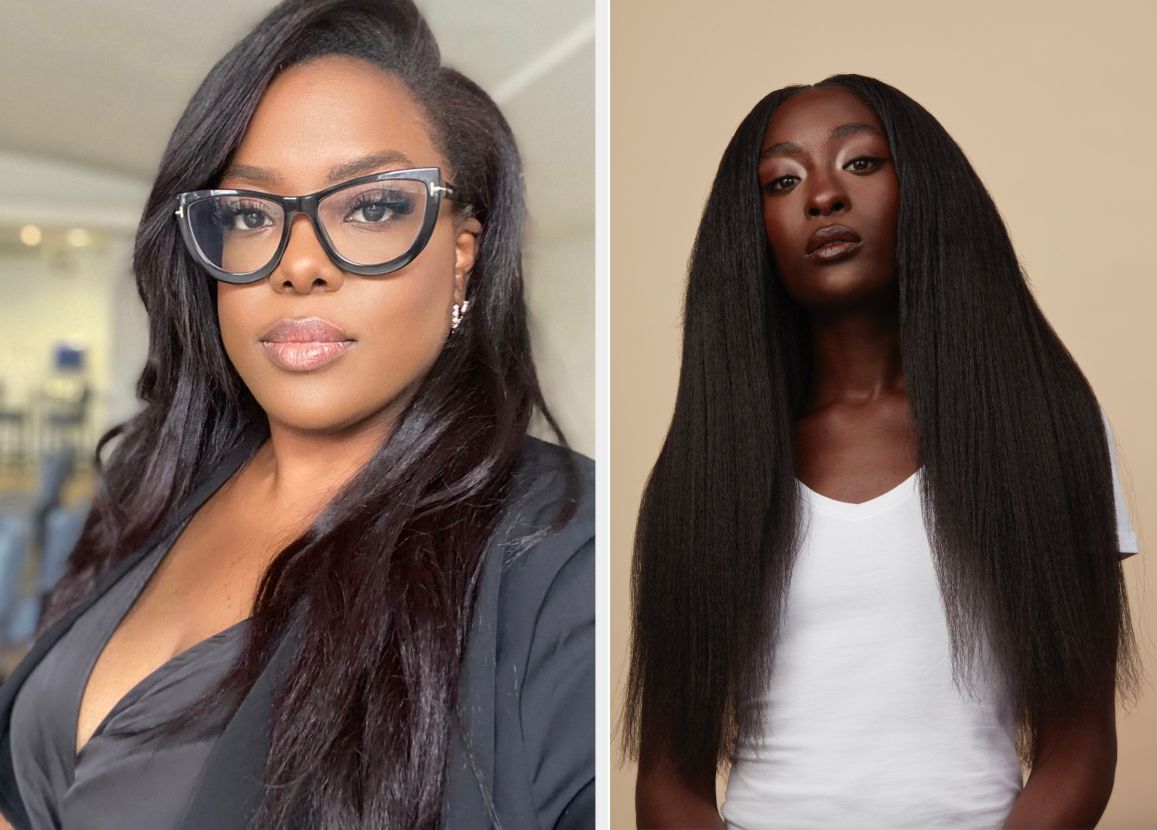
Ayanda Soares
Ayanda Soares (left) and a model with tape-ins styled by her (right).
Soares agrees that social media has played its part in changing the landscape of Black hair styling. “It has also has allowed us to showcase our work globally,” she says.
Advertisement
She is big on educating women about how to care for their hair, running training programmes that highlight how to clean and prolong your hair extensions, for example.
“Content creators also help sell the message for us business owners, in terms of education, so we tend to work with influencers often,” she adds.
The pandemic also affected the way Black women do their hair – 64.7% said the way the did their hair changed as a result of lockdowns, according to the TreasureTress research.
More of us made the decision to transition “back to natural”, where women grow out their chemically treated hair. Additionally, they actively sought out resources to educate themselves on how to take care of their hair because they were no longer able to visit professionals due to lockdowns.
And with a younger demographic booking clients, the hair styles Black women are choosing is shifting.
Advertisement
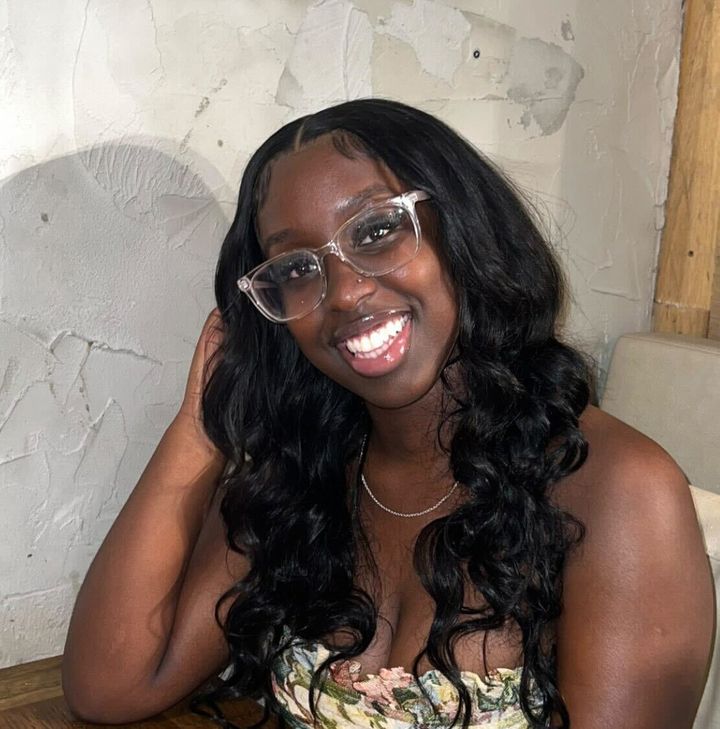
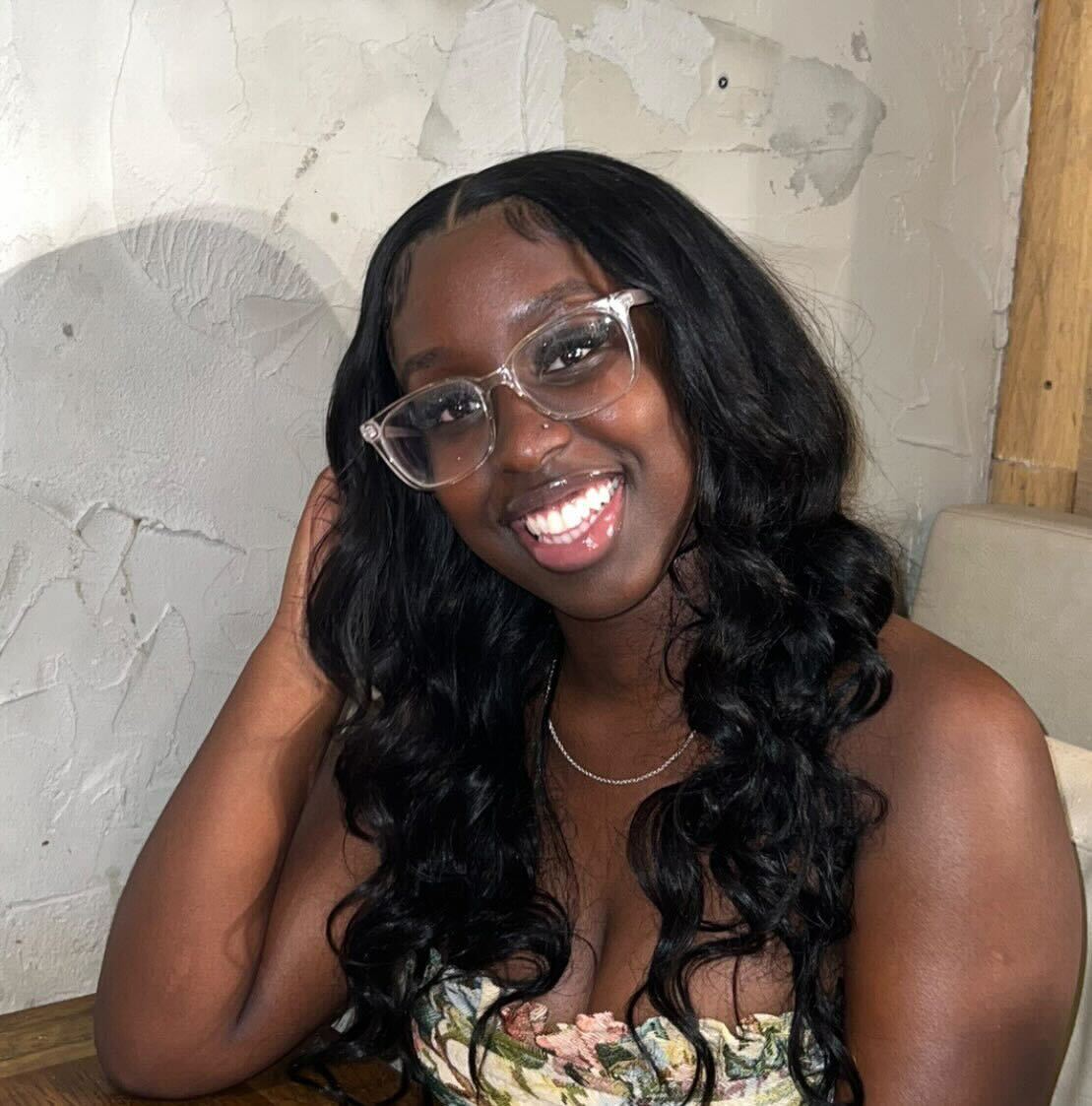
Marlene Gatrude Twinomugisha
Marlene Gatrude Twinomugisha: ‘I just kind of fell into it’
The most popular hairstyles today tend to be the more natural ones, like knotless braids, free-style feed in cane rolls or locs, Marlene Gatrude Twinomugisha, a 20-year-old hairdresser from London tells me.
She started doing hair by “accident”. Similar to Soares, she didn’t like the way her mum did her hair, so took it upon herself to learn how to style it. “I then moved on to to doing hair for my cousins, then my friends and more people were asking me to do their hair at school, so I just kind of fell into it,” she says.
“My experiences getting my hair done by aunties when I was younger was me showing them a hairstyle, them saying they can do it but whenever the style was done, it didn’t look the same at all,” says Twinomugisha, who posts her styles on Instagram under the name Crowned By Her UK.
Advertisement
She believes younger girls have moved to sourcing stylists from Instagram because IG hairdressers are able to jump on hair trends quicker. “Aunties can’t really keep up,” she adds.
However, IG hairdressers also have their issues. Writing for Refinery29 earlier this summer, Yolanthe Fawehinmi detailed how the convoluted booking process and poor customer service is causing young women to return to their roots.
“As more and more horror stories pile in about the last-minute cancellations, excessive fees, where you’ll need to pay a deposit via a booking system to secure an appointment and can be charged for being late, wanting extra length or colour, and of recent, even parting your hair — sometimes bad customer service, young people on social media are boycotting Instagram hairstylists, particularly those on TikTok, who are going back to Britain’s African braiders,” she reported.
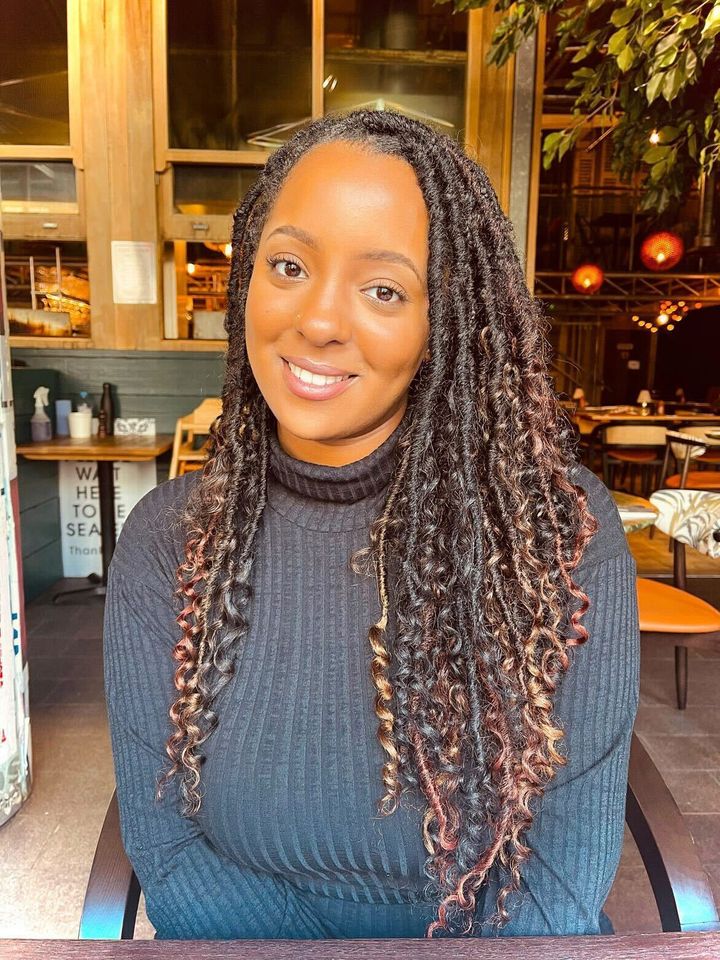
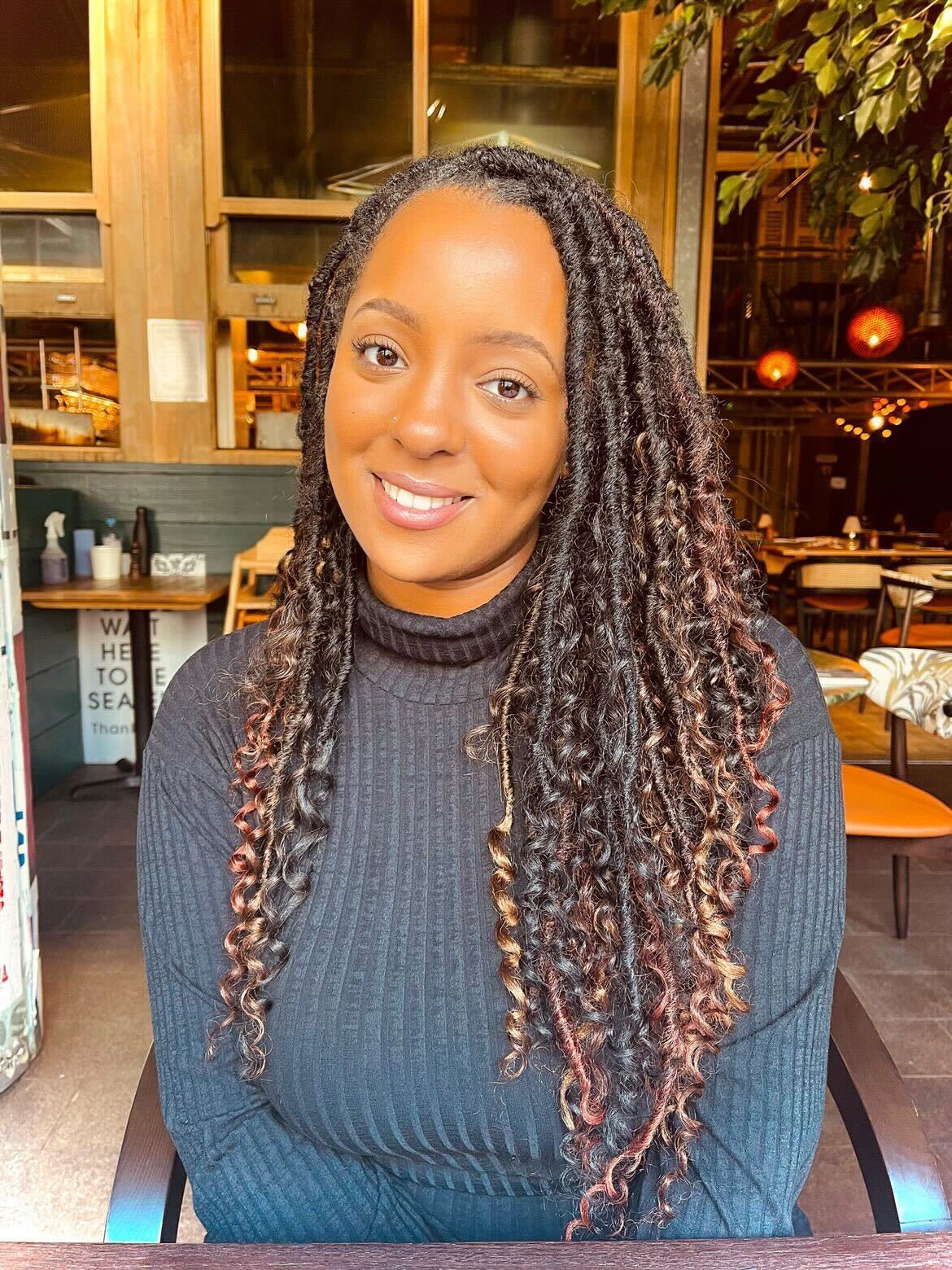
Sade Idem, a 25-year-old hairstylist from Kent, says younger black stylists have more of a business mindset.
“With many of us growing up in the UK, we’ve seen how much Caucasian stylists would charge for less challenging hair services, and we realise £60 for seven hours of braiding with no breaks is criminal!” she says.
Advertisement
Idem has a lot of respect for older stylists as they’ve paved the way for the younger ones. “However, many older stylists are focused on the final look, rather than the health of the client’s hair long term,” she comments. “Their customer service can also be affected as they’re trying to fit in as many clients as possible to make up for the low prices they charge.”
Sade Idem: ‘We realise £60 for seven hours of braiding with no breaks is criminal.’
So what does the future of Black hair and hairdressing look like from here? To me, it looks like versatility, growth and experimentation. As we move towards more protective and natural styles, I see us breaking away from the idea that we have to play it safe with our hair. Let’s enjoy it, and have fun.
I hope to see more young Black girls growing in the profession, but I do believe there’s a place for aunties in the Black hairdressing arena. They worked hard to build Black spaces for women to do hair in this country and paved the way for younger Black women to learn and grow as hairdressers.
As Byrd puts it: “There’s no doubt that Black hairdressing is a growing industry with immense potential. The future looks bright for those willing to put in the hard work and dedication required to succeed.”
Advertisement
What does it mean to be Black and British? Well, it depends which generation you ask. This Black History Month, HuffPost UK has teamed up with BuzzFeed’s Seasoned and Tasty UK to find out. Read more from Gen:Blxck here.
By now, you’ve probably heard about TikTok’s latest food trend ― the butter board.
The concept is fairly simple. It’s a board artfully coated with soft butter. Often the dairy product is smeared and swirled around in patterns and topped with elements like honey, lemon zest, flaky salt, edible flowers, herbs and more.
Think charcuterie board, but instead of meats and cheeses, it’s elevated butter. Friends might gather around the communal dish, scrape the butter off the board and onto pieces of bread with a knife, or dip their bread directly into it.
Advertisement
The butter board was popularised by TikTok user and food blogger Justine Doiron aka @justine_snacks. On Sept. 15, she posted a 28-second video of herself making a butter board inspired by a recipe from Joshua McFadden’s 2017 cookbook, “Six Seasons: A New Way With Vegetables.” To date, the clip has racked up more than 8.5 million views on TikTok and another 11.2 million on Instagram.
Like the many viral food trends that came before it, the butter board is somewhat divisive. While some are utterly disgusted by the concept, others see it as a delightful indulgence.
the butter, peanut butter, etc boards have got to stop. all i can think about is dust and hair.
Even if you’re on board with the butter board, not all food safety experts are. HuffPost spoke to Darin Detwiler, an associate professor at Northeastern’s College of Professional Studies and the author of “Food Safety: Past, Present and Predictions.”
Below, he shares some food safety concerns surrounding the butter board and advice for minimising the risks involved.
Is the butter board safe?
It’s perhaps unsurprising that Detwiler might have a few concerns about a dish that involves groups of people huddled over a small board as they eat and touch a dairy product.
Advertisement
He warned would-be butter board eaters to be mindful of “cross-contamination with many hands contaminating the butter board” and “dairy products left out of refrigeration too long ― keep cold foods cold.”
Pay attention to people’s food allergies, as butter boards involve dairy and other potential allergens like tree nuts and certain fruits or vegetables. The popularity of wooden boards as the base for many butter boards on social media also gave Detwiler pause.
“Consider the inability to sanitise a wooden board, with its micro-cracks and knife gauges that harbour pathogens such as E. coli and salmonella,” he explained. “Food-borne pathogens can make everybody sick, but the most vulnerable populations ― the very young, elderly, immune-compromised, and pregnant ― are the ones most likely to end up with reported, confirmed cases, hospitalised, and even dying as a result of such an illness.”
Detwiler noted that E. coli, salmonella and listeria are typical pathogens in food and, in rare cases, can lead to severe and potentially life-threatening complications like haemolytic uremic syndrome (HUS). Always seek medical attention if you suspect you have contracted one of these infections.
“Could people become sick from a butter board, it is 100% possible, as people have become sick from contaminated surfaces and person-to-person contact,” he added.
Advertisement
How can you minimise safety risks?
The risk of getting sick from a butter board still seems relatively low, according to other experts.
“This is not something that would make my top 20 list or top 50 of risky things,” food safety specialist Benjamin Chapman told The New York Times.
Although Detwiler is a little more concerned but believes a safe butter board experience is possible.
“Keep everything clean, cold, and conservative ― not too much at one time,” Detwiler said. “Also, keep in mind if people have any food allergens and keep those foods away from other foods.”
If you want to use a cutting board, choose it wisely. The United States Department of Agriculture advises using one cutting board for raw meat, poultry and seafood and a separate board for fresh produce and bread, so you might want to similarly avoid cross-contamination by using a separate platter for your butter board fantasies.
Advertisement
if you want to serve butter to people at a party, just put it in a proper butter dish. the idea of smearing butter over cutting board that’s been used for who knows what is gross
“Use a plastic board or a serving platter as opposed to a wooden board,” Detwiler recommended. “With any board, sanitise using a teaspoon of bleach to a gallon of water.”
Be mindful of timing as well. American butter tends to require refrigeration, and the USDA cautions against leaving out foods that require refrigeration for more than two hours ― and no more than one hour if the room temperature is 90 degrees Fahrenheit. Salted butter is also more protected from bacteria than unsalted butter, so more suitable for room temperature conditions. It’s also worth noting that people in many other countries (including some in the UK) keep their butter on the counter.
Still, if you’re working with a refrigerated product and want to play it safe, limit how long people can enjoy your butter creation.
“Do not leave butter boards out for more than two hours,” Detwiler advised. He also offered a more sanitary alternative to the big sweeping masterpieces on TikTok.
Advertisement
“Many dirty hands can spread not only food-borne pathogens but other pathogens and viruses as well,” Detwiler noted. “Use several smaller boards, as opposed to one large board, to minimise the number of hands in the food.”
So is the butter board trend here to stay? It’s hard to say, but with the murmurings of an impending butter shortage, perhaps we won’t even have the option.
You’re reading Move, the nudge we need to get active, however makes us happiest and healthiest.
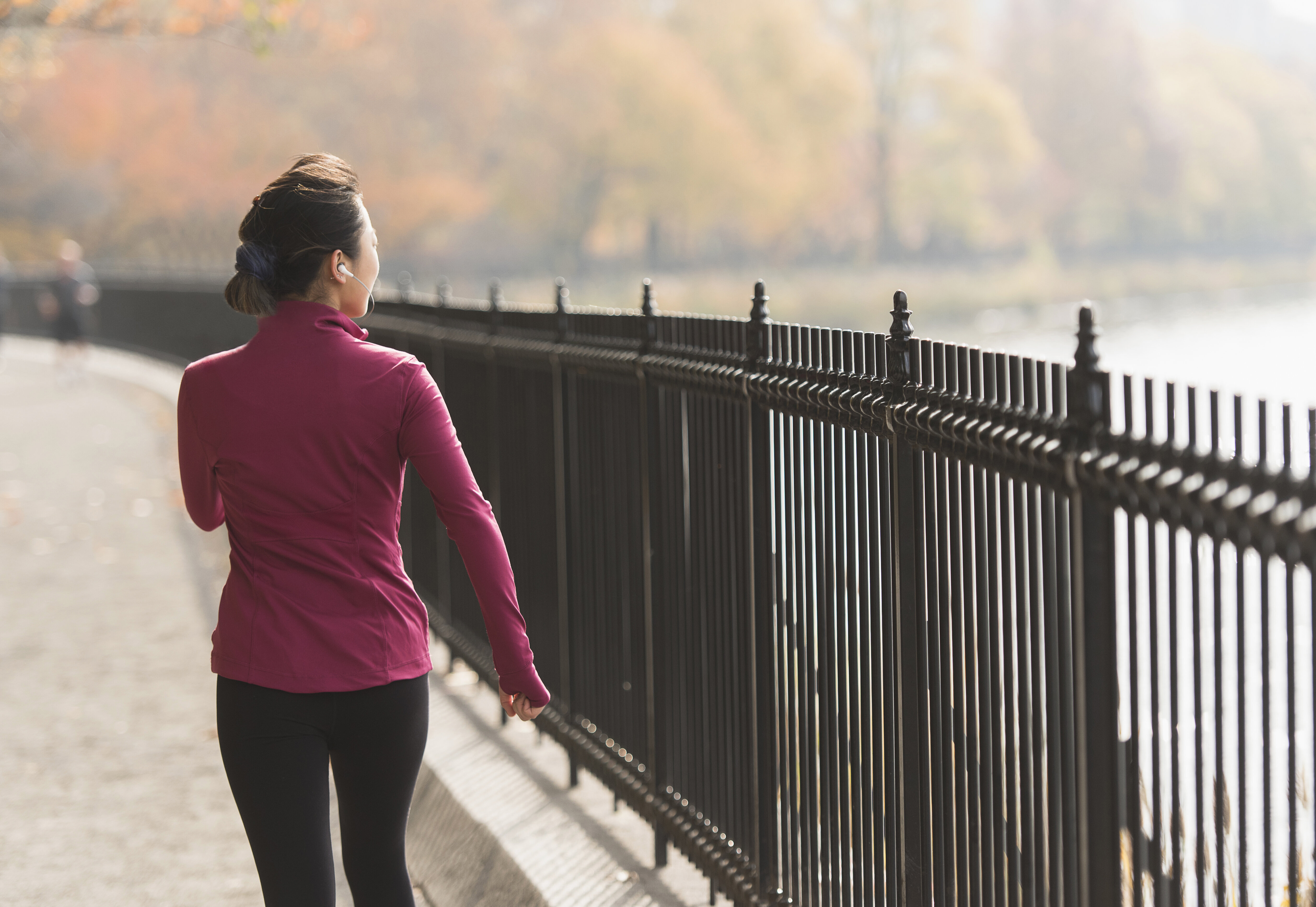
Walking is cooler than ever, thanks in large part to the made-famous-by-TikTok Hot Girl Walk trend. Not only is it cool, but walking is also great for your mental health and your physical health.
There are even ways to make your walks more beneficial, whether that’s Nordic walking (a kind of walking that uses poles, similar to ski poles, to incorporate your upper body) or interval walking, which, according to Harvard Health, gets your heart rate up more than a regular walk.
Advertisement
An interval walk incorporates phases of fast and moderate walking to create a heart-pumping, challenging workout. You can mix and match the duration of each pace however you like, but generally the majority of the walk is done at a moderate pace with the quicker pace sprinkled throughout. It’s common to do this workout at a 2-to-1 ratio, meaning you walk at a moderate pace for double the amount of time of a fast pace (so, walk at a moderate pace for two minutes and follow it up with a faster one-minute walk), but it’s really up to you how you split it up.
During the moderate walking pace, you should be at about 30% to 40% of your maximum effort, said Kate Lemere, chief instructor at Barry’s Chicago. In other words, your walk should be at a pace that would allow you to hold a conversation.
During vigorous, fast intervals, she said, you’ll want to be around 70% of your maximum effort, a pace at which it should be more difficult to string together a complete sentence.
Interval walking is a way to add something different to your regular walk and can make it much more efficient.
Advertisement
Here, experts share all of the ways interval walking is good for your health.
It shortens the amount of time you need to exercise.
“What does interval training do for you? It cuts down the amount of time you have to exercise to get the same benefit,” said Dr. Michael Ayers, a sports cardiologist at UVA Health in Virginia.
For people with busy schedules, this is a huge benefit of incorporating fast-slow intervals into a walk — or incorporating any kind of high-intensity interval training into exercise, for that matter. When you mix vigorous exercise with moderate exercise, those short bursts of vigorous exercise get you the same benefits of a slower walk in less time, Ayers said.
In other words, all of the benefits of a moderate-intensity walk can be achieved faster when you add in some quick high-intensity intervals.
“Interval training definitely shortens the amount of exercise time that you have to do per week,” he added.
It creates an endorphin rush.
Ayers noted that, overall, one of the big reasons his patients like interval training is how it makes them feel afterward.
Advertisement
“There’s a big endorphin kick when you go into vigorous exercise,” he said. With an interval walk, as long as you reach a vigorous pace for 30 to 60 seconds at a time, you’ll get an endorphin kick.
You could do a five-minute moderately paced interval followed by a fast minute-long interval, or one minute of moderate walking followed by 30 seconds of power walking. As long as you break up your slower intervals with at least 30 seconds of vigorous walking, you’ll be on your way to that endorphin boost.
JGI/Tom Grill via Getty Images
If you’re looking to increase your walking speed, interval walking can be a great way to build up to that goal.
It builds endurance.
Walking may not be the first thing you think of when considering endurance-building workouts, but walking can actually build up your aerobic endurance, according to Dr. Tamanna Singh, a clinical cardiologist and co-director of the sports cardiology center at Cleveland Clinic in Ohio.
For someone who is really pushing themselves during a walk, especially if they aren’t used to bursts of vigorous exercise, that pace acceleration “may be enough to stimulate the aerobic and anaerobic system,” she added.
Advertisement
This will help you build up your aerobic endurance and sustain anaerobic levels of effort moving forward, Singh said.
Plus, interval training can help you reach endurance goals related to walking farther or walking faster.
″[The] best way to increase your [walking] speed is with interval training — increasing the duration of those faster intervals over time will help you be able to do that,” Singh said.
It’s a good workout for people who are getting back into exercise.
Interval walking can also be a great progression for those who are getting back into aerobic activity after an injury or pregnancy, said Lemere.
If you fall into one of these categories, you shouldn’t just jump right into the workout. First, make sure you’re able to walk at a sustained pace and recover without pain the next day, she said. And it’s always a good idea to check with your doctor before adding something new to a post-injury workout routine.
Advertisement
But if you are ready to take your walking to the next level, you can increase your exercise output by adding fast-slow intervals.
Interval walks are helpful for people coming off of an injury and hoping to get back into running, too.
“Incorporating walking intervals is one of the best ways not to only increase your cardio but also to progress if your goal involves running,” Lemere noted.
It can help you feel less bored during a workout.
Variety equals excitement in most scenarios, including workouts.
A 45-minute or hourlong walk can seem daunting (and can end up being kind of boring), but when you break that walk into chunks that incorporate quick walking followed by slower-paced walking, you can make the workout a little more exciting, Singh noted.
You can try walking at a moderate pace for 10 minutes and follow it up with a fast walk for five minutes and repeat that pattern until you hit your time goal. This, she added, is also a way to stay engaged during the workout, which is another huge benefit.
Advertisement
“Engagement is a huge component in making sure people can commit” to exercise, Singh said.
It’s not as hard on your body as a traditional run …
When you’re not properly warming up and recovering, “running can be very painful and hard to recover from,” Lemere said.
Our bodies change with age, and running may not be something you can do anymore. That’s OK.
Interval walking is a good way to get in some brisk movement outdoors without putting all of that pressure on your joints.
But the cardiovascular benefits of walking at a sustained pace are largely the same.
Beyond the benefits above, interval walking has not proved to be any more beneficial than sustained walking when it comes to general health. You may be sweating a little more after a fast walk interval, but the overall health benefits aren’t actually going to be much different.
Walking of any sort is healthy, Ayers said. Across the board, walking increases muscular strength decreases the likelihood of diabetes, and also decreases blood pressure and cholesterol levels. It results in a lower risk of heart attack and stroke, too.
“At the end of the day, get moving [and] be very intentional about how you move your body,” Singh said. “That’s the cheapest, easiest way to stay healthy and reduce your cardiovascular risk.”
Advertisement
Move celebrates exercise in all its forms, with accessible features encouraging you to add movement into your day – because it’s not just good for the body, but the mind, too. We get it: workouts can be a bit of a slog, but there are ways you can move more without dreading it. Whether you love hikes, bike rides, YouTube workouts or hula hoop routines, exercise should be something to enjoy.
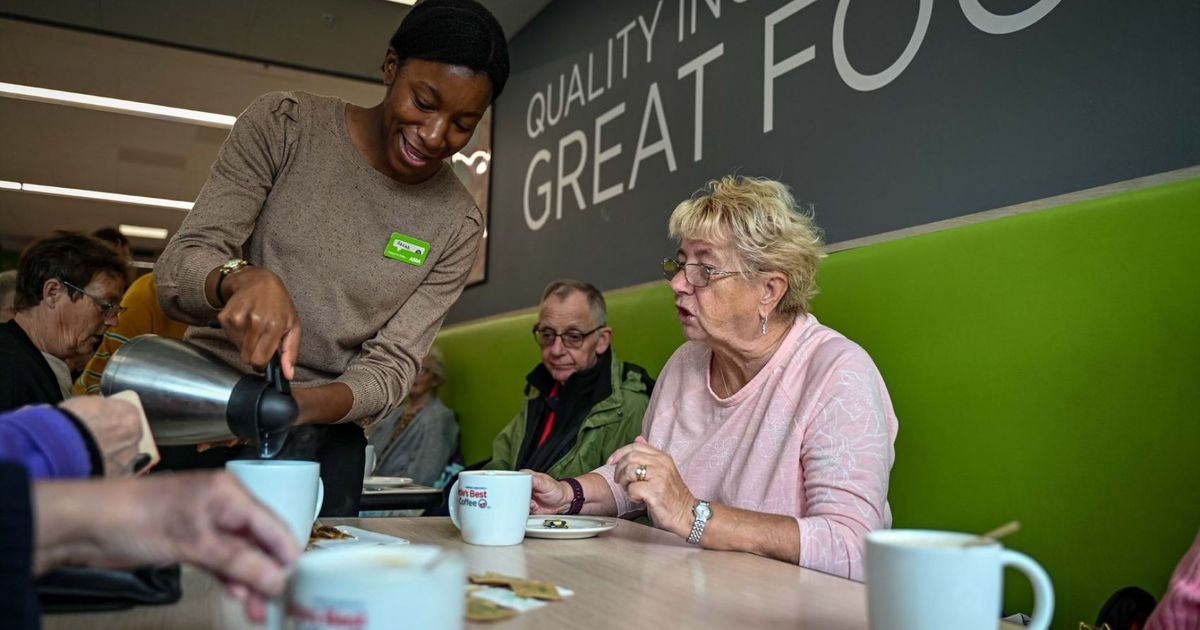
Asda has launched a £1 “winter warmer” meal deal including a soup, a roll and unlimited tea or coffee for over-60s.
The deal will be available throughout November and December in any of the supermarket chain’s 205 cafes.
Advertisement
The supermarket announced the move after its latest Income Trackers showed that those aged 65 to 74 experienced a £163 drop in disposable income in August, compared to last year.
Asda is also set to provide help for community groups, with £500,000 in funding available in individual grants of up to £2,000 per organisation.
Mohsin Issa, Asda’s co-owner, said: “We know that this winter is set to be incredibly hard for thousands of pensioners as they worry about how to keep themselves warm in the face of rising living costs and a fixed income.
“We’ve already been able to serve over half a million meals through our Kids Eat for £1 initiative in our cafes and we’re hoping our new offer of soup and hot drinks for over-60s will prove just as impactful for those who need it most.
Advertisement
“Meanwhile, the cost-of-living grant programme led by Asda’s charity The Asda Foundation will support grassroots organisations who are providing a lifeline in their communities during these tough times.”
2.8m older households will still be living in fuel poverty this winter despite the Government freezing the energy price cap.
To help @ASDA have launched three new ‘winter warmer’ initiatives to support customers and community groups struggling with the cost-of-living crisis 👏👏 https://t.co/HJYB2bZKO5
It comes as the UK faces cost-of-living and energy crises this winter, with many elderly people set to face fuel poverty.
Research from Age UK estimates that 2.8 million older households will remain in fuel poverty this winter despite the energy price cap being frozen.
Meanwhile, the National Grid Electricity System Operator (ESO), the body that oversees Britain’s electricity grid, has warned that planned energy blackouts could be needed.
Advertisement
Households are being encouraged to help avoid blackouts, “save money and back Britain” by using more energy during off-peak times.
In what it called an “unlikely” scenario, the ESO said that households and businesses might face planned three-hour outages to ensure that the grid does not collapse.
Once you get to a certain age as a woman, you will know that menopause is around the corner.
And with that, comes the symptoms. Hot flushes are all but synonymous with the menopause, even though not all women experience them. And you’ll probably think there are a handful more, too. Well, you’re wrong.
Doctors report there are actually 62 different symptoms of menopause that women present with. That’s despite the biggest study yet into menopause awareness finding most women associate it with just five symptoms.
Advertisement
Hygiene and health company Essity surveyed 5,000 women pre-menopause, in peri, or post menopause – and found even women who are at the end of their journey remain relatively clueless about what they have been through
While 40% of women going through or having gone through the menopause have visited their GP to get help with symptoms, two thirds of women didn’t know menopause decreases sex drive and a whopping 74% didn’t realise it could be linked with weight gain.
Meanwhile, only 1% of women surveyed were aware it can cause changes in their vagina and how often they pee.
Menopause specialist Dr Naomi Potter reveals that tinnitus, UTIs, weaker bones and a change in body odour also feature in the list of menopause symptoms.
Advertisement
And worryingly, there’s a lack of knowledge of when it all kicks in, she says.
“Women believe they can’t experience symptoms in their forties because they’re not old enough, or their symptoms aren’t menopausal – when in fact if they’re over 45, it’s likely they are,” Potter says.
A spokesperson for Essity said: “[These] findings tell us that it’s a heavily misunderstood subject and the taboo surrounding it means women aren’t accessing the information and advice that could really help them.”
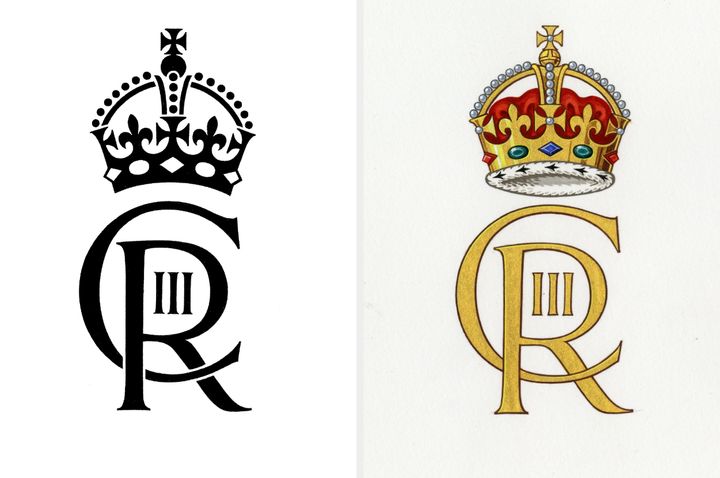
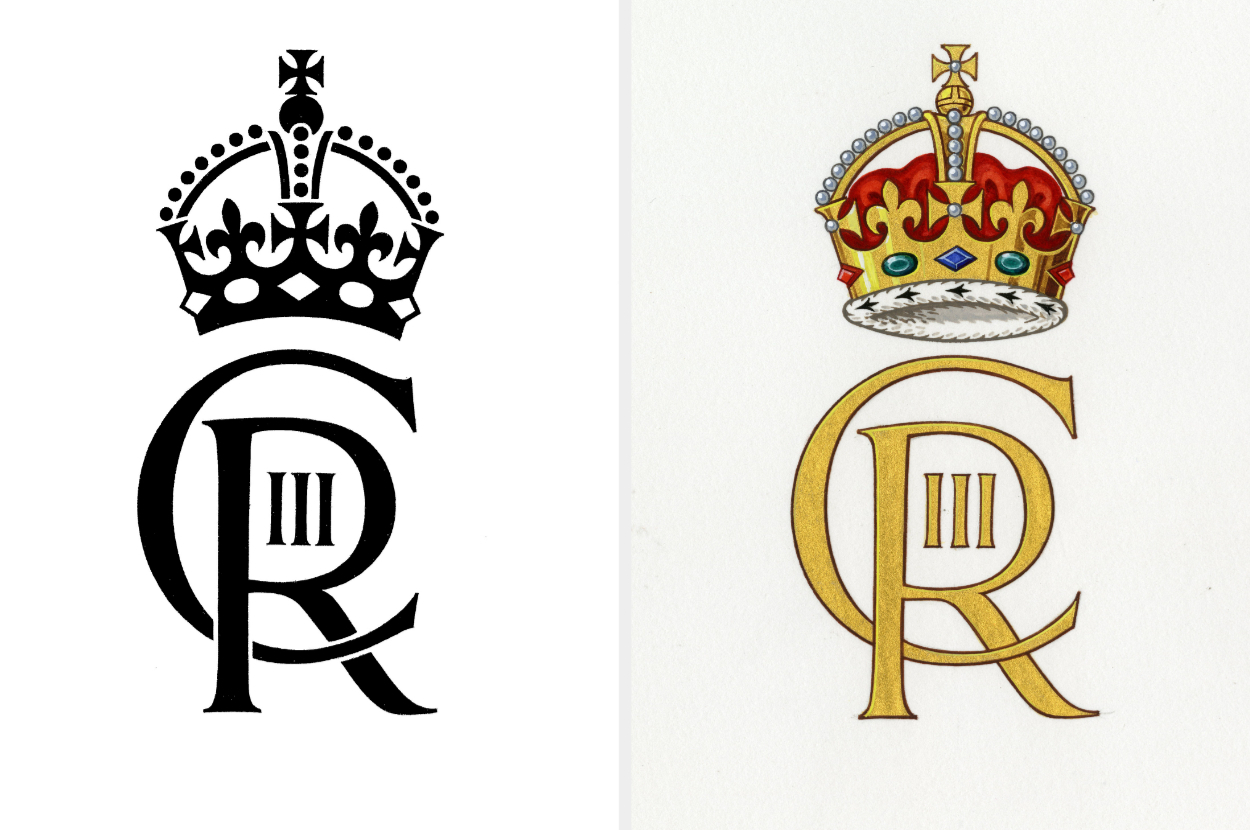
King Charles III has just unveiled his new royal cypher – another, albeit smaller, indication that his reign has officially begun.
The sign, revealed shortly before the official royal mourning period for the Queen ends on Tuesday, includes the C for his first name and the letter R for Rex, the Latin name for King.
Advertisement
In between these two letters is the Roman numeral for three (III) indicating that he is the third monarch in British history to be known as Charles, so it reads Charles Rex III.
Buckingham Palace via PA
King Charles III’s new cypher
The monogram is Charles’ personal property but will appear on government buildings, traditional police helmets, state documents and any post boxes built after his reign began.
It is also used on government departments and the Royal Household for franking mail, although the decision to update the cypher from the Queen’s to the King’s will be at the discretion of individual organisations.
Advertisement
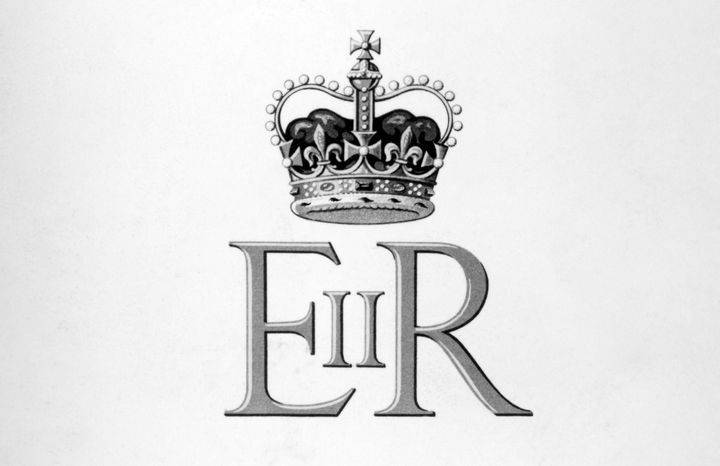
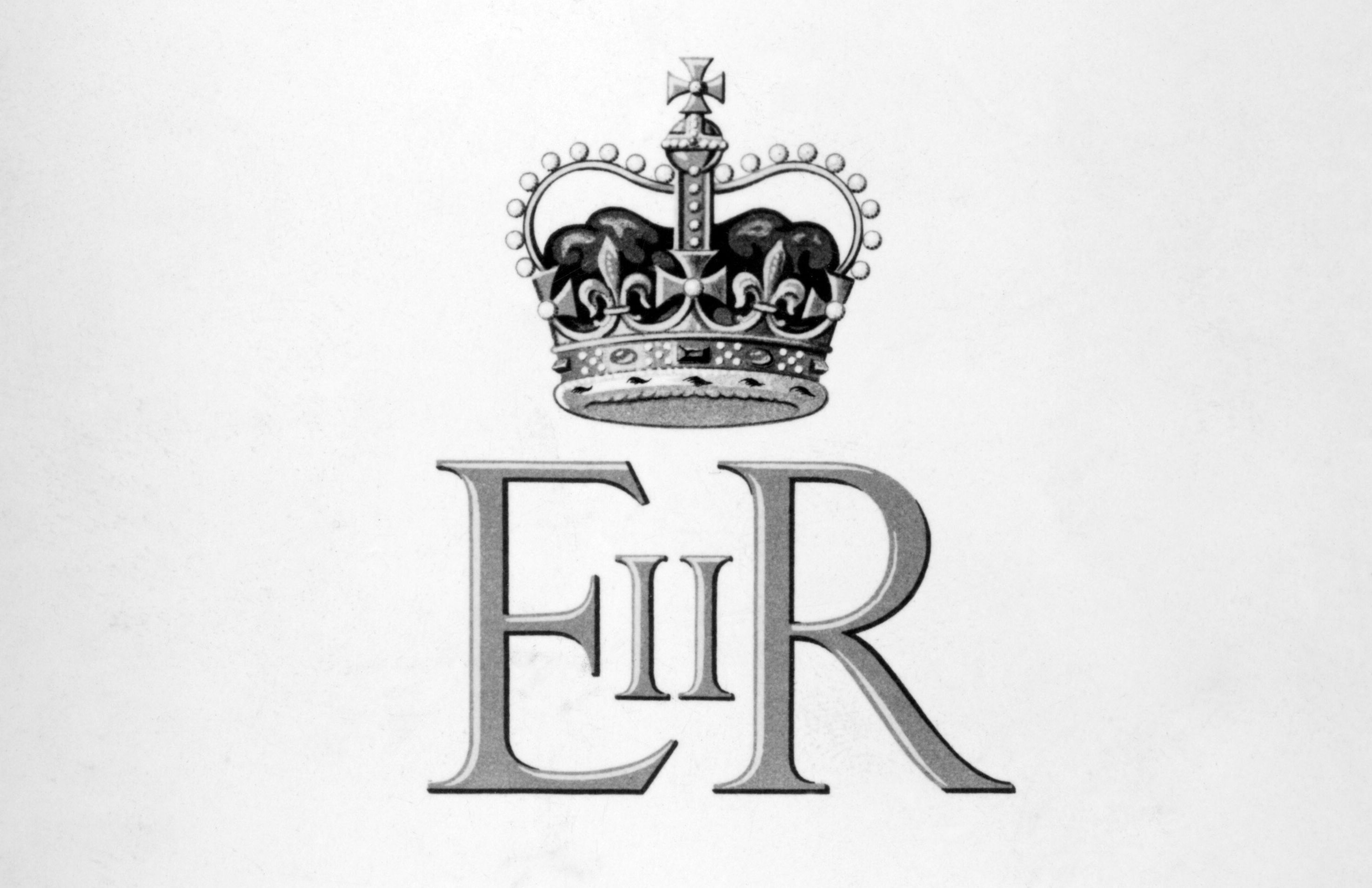
The monogram is not too dissimilar to the one used by his predecessor, his mother Queen Elizabeth II. As the Latin word for Queen is Regina, and she was the second English monarch to use the name Elizabeth, her monogram was ER II (sometimes known E II R).
However, when her cypher was used in Scotland, the II was not used because Scotland never recognised Elizabeth I as their monarch, only Mary Queen of Scots.
And, while kings tend to use the more rounded Tudor crown, queens typically use the St Edward’s crown on their cyphers, as seen below.
PA Images via Getty Images
The official design, prepared at the College of Arms and approved by the Queen, for the Royal Cypher of Queen Elizabeth II.
The King chose his own design after the College of Arms presented him with a series of options. The Scottish version includes the Scottish Crown and was approved by Lord Lyon King of Arms.
Advertisement
The heralds who make up the College are members of the Royal Household.
The cypher could only be shared once Charles confirmed he wanted to reign under his first name, rather than any of his middle names – Philip, Arthur or George.
Don’t expect any huge changes overnight though, as it is traditionally a slow process to alter such symbols on a nationwide basis. The Queen did not experience many of the physical changes until more than a year after her accession to the throne, around 1953.
And, like his mother’s, the King’s coronation is also expected to be a little while off out of respect for his deceased predecessor. There’s speculation that the sovereign will try to have a more toned-down affair as well, in line with his plans for a slimmed down monarchy and amid a worsening cost of living crisis.
Currency, too, will gradually be updated to include Charles’ profile rather than his mother’s, although the new ones will show the King facing to the left. This is a continuation of a 17th Century tradition, which saw successive monarch facing alternative ways.
Advertisement
New stamps, sculptures and portraits, are in the work as well, although they will all need approval from the King himself.
Still, the cypher shows that the new Caroline era is upon us, a name which stems from the Latin equivalent for Charles, Carolus.
This announcement also comes after the Palace released an image of the black ledger stone with the Queen’s name, birth and death dates etched onto it in St George’s Chapel, to mark the late monarch’s final resting place.
She shares the stone with her parents, King George VI and Queen Elizabeth, along with her husband, Prince Philip.
Hard to believe it’s been two years since Topshop closed its doors on the high street, but we’re still trying to understand what happened to one of the most iconic brands in British fashion history.
For a generation of women, Topshop was the place to shop, a position sealed by the likes of Kate Moss, Beyoncé, Cara Delevingne, Adwoa Aboah and Gigi Hadid, who all worked with the brand.
Advertisement
Yet by 2020, its high street reign ended when Phillip Green’s Arcadia group, which also owns Miss Selfridge, Burton and Dorothy Perkins, collapsed into administration.
It was bought up by Asos in February 2021, where it now sells online, but it’s nothing on the heyday of its flagship stores, including its 100,000 sq ft Oxford Circus mecca in London.
Now, a BBC documentary, Trouble at Topshop, tells the story of its rise and fall – shedding new light on what happened behind the scenes.
“This is a story of a group of women who led a fashion revolution. And it’s the story of a man who’s retail empire would make him king of the high street,” we’re told.
Advertisement
“When their world’s collided, there would be a battle for the soul of Topshop.”
The two-part series details Topshop’s biggest controversies – from questions over Green’s tax record to his treatment of employees – all of which have been well documented, though make for fascinating viewing. But along the way, we also learn some lesson-known facts about the brand we worshipped as teens.
Think you knew Topshop? Here are a few snippets from the doc that surprised us.
Topshop was seriously uncool
You probably associate Topshop with the noughties, but the brand (originally Top Shop) was actually founded in Sheffield in 1964 as a ‘youth store’. And by the 80s, when Jane Shepherdson joined the brand as an assistant buyer, it was a “dated retailer for teens”.
“When I took the job at Top Shop I thought: ’Well, this is a bit embarrassing, because it’s Top Shop. It’s a bit naff!” she says in the show.
Burton and Dorothy Perkins were the “cash cows” of the retail group at the time, and Shepherdson recalls: “We didn’t get a huge amount of attention at the time, we were left to get on with it really.”
But thanks to her smart eye, Shepherdson started repositioning Topshop in the market and increasing profits – long before Phillip Green came along.
Advertisement
Women led the fashion revolution
Phillip Green may be the household name, but a team of women led by Shepherdson (who became brand director in 2007), Caren Downie (buying director 1998-2008) and Jenny Garcia (head of buying 2011-2019) created the Topshop look adored by millions.
Until Shepherdson took over, the clothes and marketing were created for the male gaze, says Downie. But she shook up the market by prioritising looks women wanted to buy with their own money – for themselves, not for their husbands.
“Because we were all women and we knew what we wanted to wear – and we knew how it should feel and how it would make us feel – we were able to kind of drive it forward in a completely different way,” Downie says.
Shepherdson would sign off all collections, with outfit options shared in front of a panel – “it was quite Anna Wintour-ish and reminiscent of Vogue,” says Garcia.
But in 2002, Phillip Green’s acquisition meant a shakeup of the business, which was controversial from the off.
Advertisement
“When we heard we were being bought out, there was a whole [sigh] around the office, and a feeling of: ‘Really? What on earth is that going to be like?’” recalls Garcia.
A shoutout for Radio Top Shop
Green’s methods may have been controversial, but he did know how to increase profits – in the early days, at least. And as the brand grew, so did the popularity of its flagship store on London’s Oxford Street. If you visited it in its heyday, you’ll probably remember the DJs positioned by the front door.
But did you know that long before the in-store parties, the brand had its own radio station? Radio Top Shop, which became Fashion FM, launched in 1982 before it eventually closed down. It played in Topshop stores, even launching the career of BBC Radio 1′s Chris Moyles.
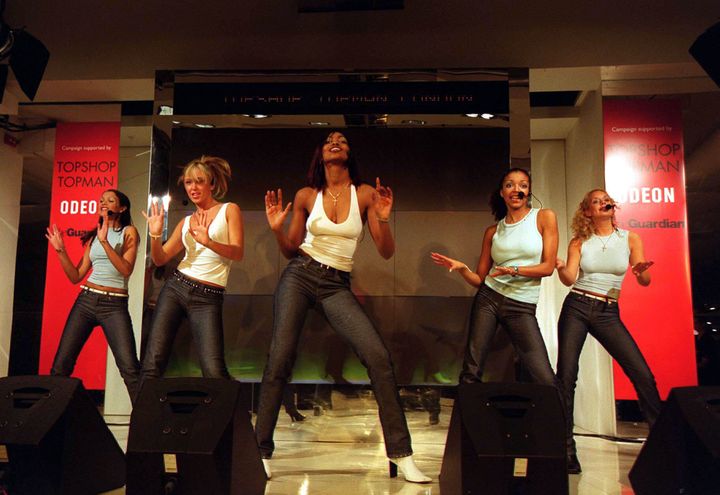
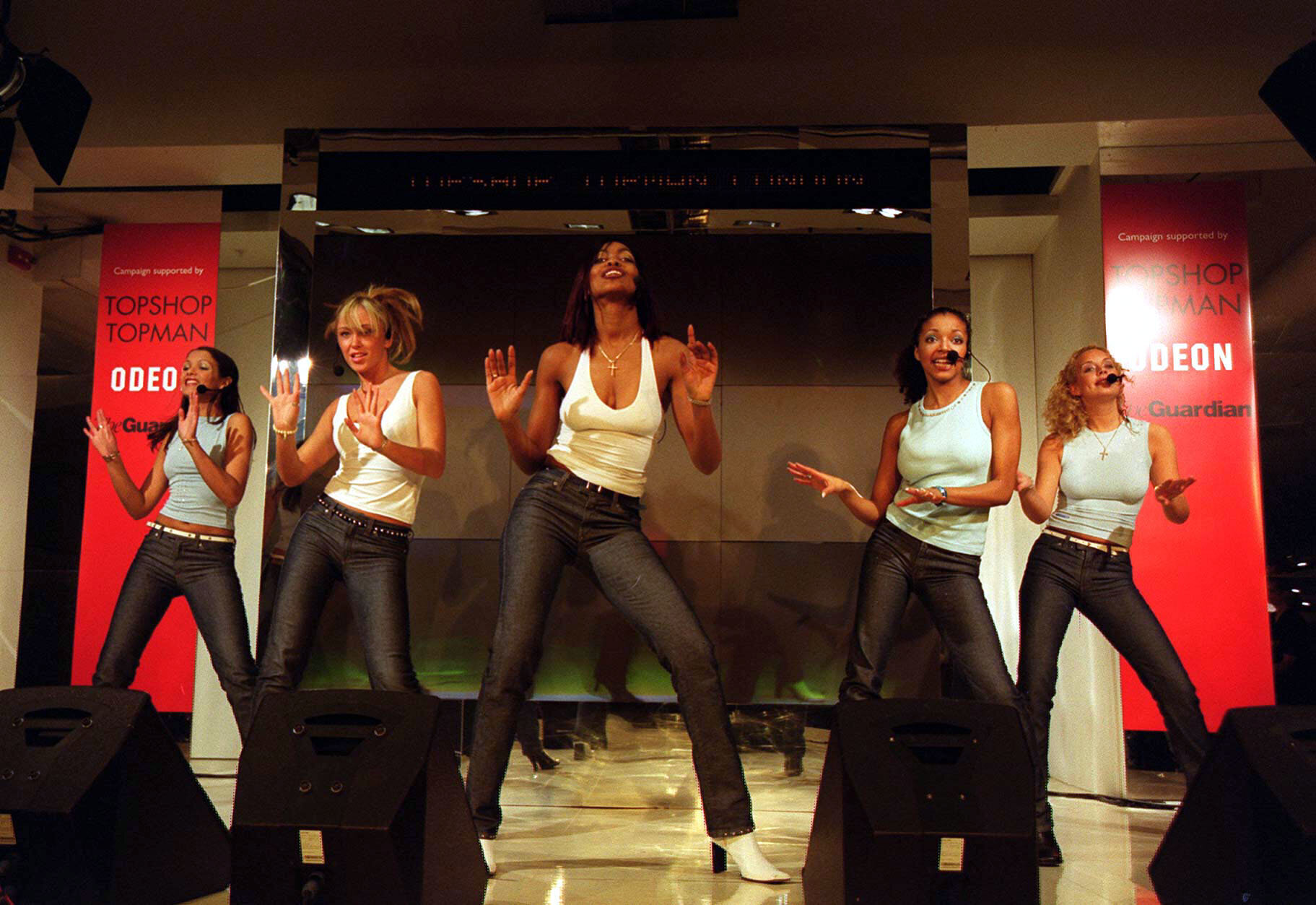
The flagship store also did a turn as a gig venue, with wannabe pop acts performing live next to the clothes.
Anthony Harvey – PA Images via Getty Images
Pop band Precious, performing at the Topshop / Topman store on Oxford Street, as part of the BBC Talent initiative.
Advertisement
Topshop wasn’t quite as quintessentially British as you’d think
Topshop marketed itself as the home of Brit-cool fashion, with London very much at its centre. But Garcia reveals the team travelled all around the world to find inspiration for their collections, taking “thousands and thousands of photos” of people on the “fringes” of the fashion scene in streets, clubs, shops, markets – you name it.
Although we associate the brand with British youth culture, it’s actually one of the few British fashion houses that’s broken America. And at its height, Topshop had stores in 40 countries worldwide.
It brought the high street to London Fashion Week
In 2005, Topshop took to the catwalk at London fashion week – something no other high street brand had done. If you were a tween or teen at the time, this game-changing show may have evaded your attention, but it almost definitely influenced the clothes you bought over the next five years.
Topshop was suddenly associated with models – catapulting its reputation to a whole new level – and within months, Phillip Green’s empire was estimated by the Sunday Times rich list to be worth £3bn.
That Kate Moss collab almost didn’t happen
David M. Benett via Getty Images
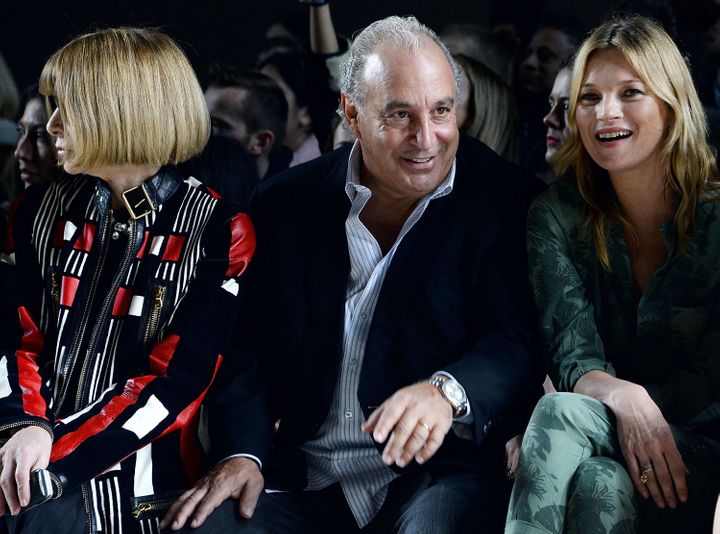
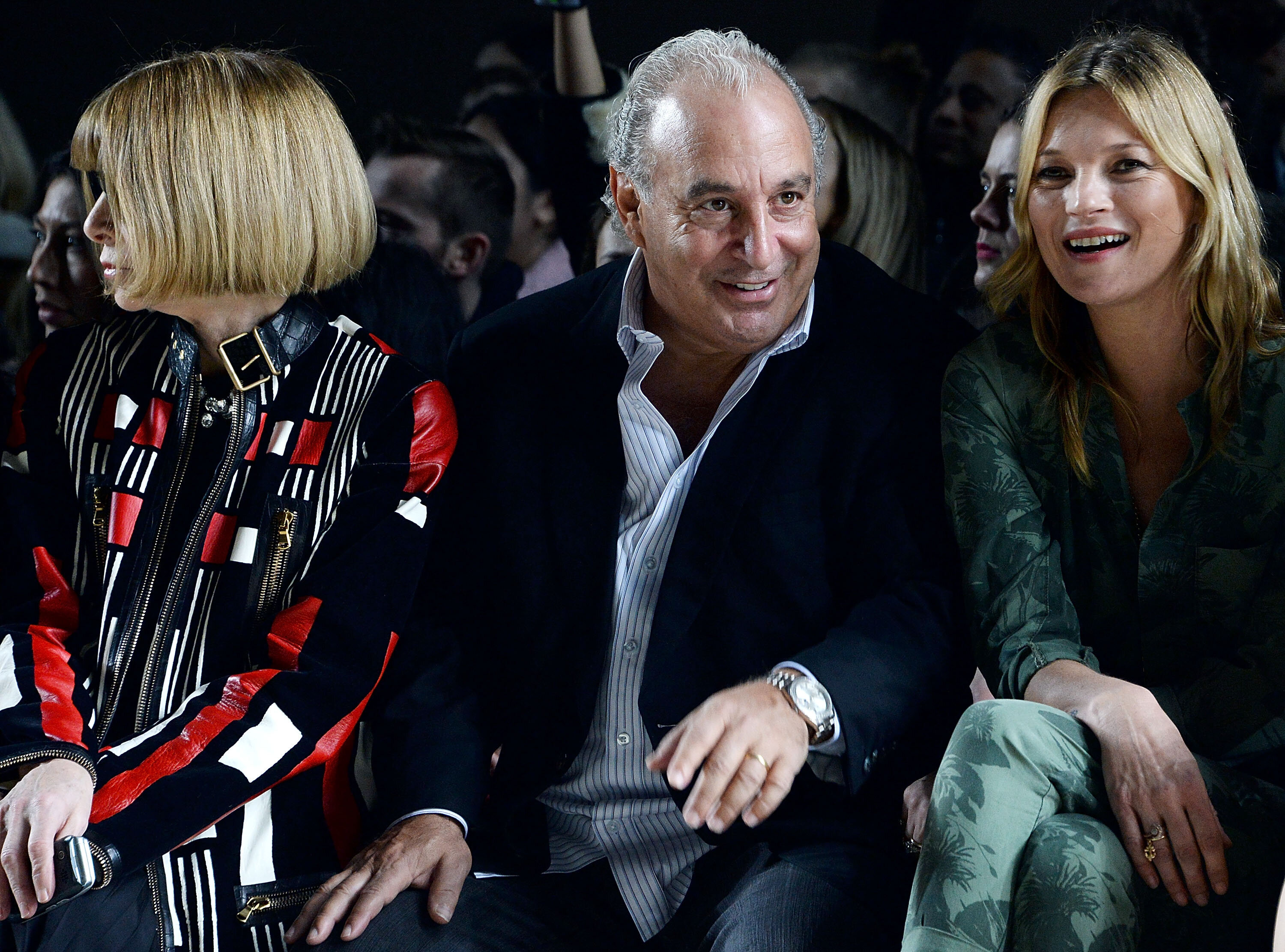
Anna Wintour, Sir Philip Green and Kate Moss attend the Topshop Unique show at London Fashion Week AW14 at Tate Modern on February 16, 2014 in London, England.
Advertisement
Kate Moss launched her first collection for Topshop in 2007 and within its first week, it made around £3m. But it almost didn’t happen. In the documentary, we learn that Green met Moss by chance at a party.
″[It was] by pure luck that I found her, it wasn’t a plan,” he says in interview footage from 2013. “It was just one of those instinctive moments. She said ‘why don’t we do some business?’ and I said ‘well, come and see me.’”
The collection may have been a hit with customers, but papers at the time claimed it contributed towards Shepherdson’s resignation. In the documentary, she says the collection with Moss was a good idea – but hints at tensions mounting behind the scenes regarding how business decisions were made.
You’ll have to watch the documentary for the full details, but what’s clear is without Shepherdson at the helm, Topshop was never the same again.
Trouble at Topshop airs on BBC Two at 9pm on Monday September 26 and on iPlayer
The death of the Queen has been felt by millions of people around the world – but for those grieving their own private losses during this time, it’s bringing up a lot of complicated emotions.
For Anne-Marie Brownlee, 40, from Coventry, reliving the major moments in the Queen’s life these past few days has left her drawing parallels with the loss of her late husband, who died suddenly and unexpectedly on November 1, 2021.
Advertisement
Brownlee was waking up to celebrate their daughter’s second birthday when she discovered her husband John had passed away, right next to her in bed. It later transpired he’d died from an incredibly rare, underlying lung condition.
Recently, she’s been overwhelmed by a renewed sense of loss in the run up to John’s birthday. And now the Queen’s death has left her experiencing those waves of grief all over again.
“When something like this happens – and it’s such a widespread loss – you can’t help but be brought back to the reality of your situation,” she says.
Anne-Marie Brownlee
John and Anne-Marie Brownlee
Advertisement
Brownlee experienced the Queen as a quiet constant in her life, from watching her yearly speech on Christmas Day to celebrating the big Jubilee jamborees.
But so was John, who she met when she was just 15. “Throughout all of my adult life he’s been by my side, so there’s a direct comparison in that sense – all those big moments he’s been with me, like the Queen has,” she explains.
“Realising that she died and losing her has just brought back to the surface those feelings of loss and that renewed remembrance of all the things that we’ll miss in the future. All those upcoming big milestones that he’ll never be part of, like she’ll never be part of – and having to accept that all over again.”
While she’s avoided most of the news coverage surrounding the Queen’s death – probably subconsciously so as not to get too upset, she notes – she did catch a documentary about Queen Elizabeth’s life one evening this week.
“When I was watching it, I did find myself tearing up through many of the parts, purely because it’s a loss, and then because I guess it’s going back in her life: seeing her get married and having children. It’s all things that happened in my life that I can relate to and then feel that sadness and the loss,” she says.
Advertisement
The 40-year-old, who works in internal communications, is no stranger to the strangeness of private grief during a period of nationwide mourning.
Her late partner lost his best friend in a freak motorcycle accident not long after 9/11, and she lost her own father the year that Diana, Princess of Wales, died.
The moment she found out Diana had died is etched on her brain because of the strong feelings already overwhelming her that day.
“We’d gone on a family holiday down to Devon. It was the first time going away without my dad,” she recalls.
“The day we were due to come home was the day Princess Diana died. I remember being in the car with my mum and I remember the radio stations were constantly full of the news, playing sad music. It was raining outside for the whole journey, and me and my mum were sobbing the whole way.”
Advertisement
Like recent days, it brought up all those old feelings of loss once more – particularly as her dad loved the monarchy, and was a big fan of Princess Diana. “It was just the darkest and most miserable day,” she says.
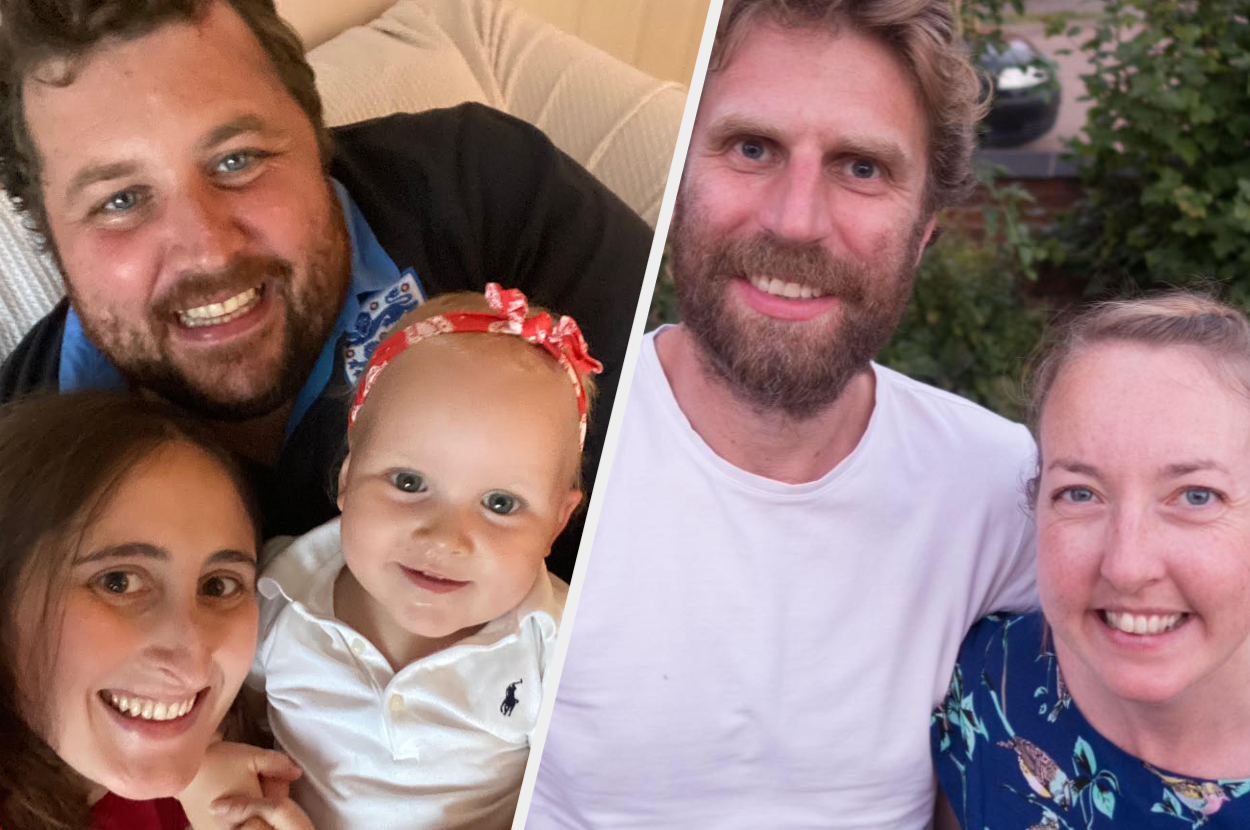
Headhunter James Coull, who is 40 and based in Northampton, has also found the past few weeks difficult, as he was preparing for the one-year anniversary of his wife’s death on September 14.
“Leading up to that, it’s been a whole month, really, of feeling anxious,” he says.
“The first everything is always new to you, you never know what to expect, and I suppose you look at a situation like the Queen – she’s 96. My wife was 32 and healthy…”
Coull’s wife Kathryn died suddenly and unexpectedly at home, while pregnant. James woke up to find out that not only had he lost the love of his life, but also their unborn daughter Florence Rose, at 32 weeks.
Advertisement
Recalling the moment, he tells HuffPost UK: “It wasn’t planned, I wasn’t expecting anything, it wasn’t like she had a terminal illness and you’ve got time to cope with it. It was just waking up and finding somebody dead in bed.”
He’s found the past few days particularly difficult, navigating his own feelings of intense grief, while seeing people around him mourning the loss of the Queen.
“It’s very different when you’re mourning for somebody you’ve never met before, somebody who’s more of a ‘figure’. Somebody who you’re well aware of who they are but you haven’t got any emotional, strong ties to that person,” he says.
“People make comments in the office or everyday life about being really sad that Queen Elizabeth has died, but they don’t know that person. It hits home a lot harder, doesn’t it, when it’s someone who’s so close to you: somebody that you’ve committed to spending the rest of your life with, somebody that you’ve made a joint decision to bring someone into the world with.
“I suppose you can’t really compare that to somebody who’s in the public eye. I think you pretty much accept that once family members or friends get into their 70s and 80s, you know it’s inevitable they’re going to pass one day.
Advertisement
“And I suppose you always prepare for it. But you never imagine you’re going to bury somebody younger than you.”
James Coull
Kathryn and James Coull
The news of the Queen’s death on September 8 was followed by an immediate outpouring of grief online, with many heartfelt memes suggesting she had been reunited with her late husband Prince Philip.
But Coull has really struggled with this as he questions his own thoughts and feelings around the afterlife.
“I understand why people do it – it’s a good feeling, it’s giving people hope that there is life after death, but you just don’t know do you?” he says. “Some people believe in that side of things, the spiritual side of things, and some people don’t.”
Advertisement
For others, like Brownlee, the idea of the Queen and Prince Philip together again has brought hope – and a sense of peace. She is comforted by the idea that sometime in the future she could also be reunited with John.
There’s no right or wrong way to grieve during this time – and everyone will experience loss in their own way. Vicky Anning, communications manager for charity Widowed and Young (WAY), says the Queen’s death has prompted “a whole range of emotions” among its members.
“Some people have found the chance to mourn along with the nation incredibly cathartic,” she explains, “while others have found the media coverage very triggering – reminding them of their own personal losses and bringing up difficult reminders of the early days of their own bereavement.”
Lauren Vivash, 36, from Essex, discovered her husband Robert had a brain tumour in 2019 – she was pregnant with their daughter at the time.
Robert had been having seizures which were attributed to a Grade II tumour. Despite surgery, it progressed quicker than expected and he died in June this year.
Advertisement
Lauren Vivash
Rob and Lauren Vivash, and their baby daughter
The Queen’s death occurred just shy of 100 days after Robert’s death, yet Vivash found the process of grieving alongside the rest of the nation as “cathartic”, saying she no longer felt alone in her sadness.
“To begin with I found it really upsetting,” she recalls of hearing the news. “For that first night, I was crying the whole time. It just really hit me. I was like: this is a bit strange. I wasn’t brought up to be a big royalist or anything.”
But she admired the Queen, she says, adding “she was the most famous widow in the world”.
She recalls how her late husband had been very invested in the royal family and they’d watched lots of the coverage together when Prince Philip died. This left her feeling closer to the royals, too.
Vivash remembers seeing footage of the Queen sitting alone at her husband’s funeral and, knowing her own partner was ill, found some strength in that. “Obviously I hoped that he wouldn’t die but it gave me a sense of like: well, she’s shown how you can carry on after losing your husband,” she says.
Advertisement
Discovering the Queen had died, she says, “it’s almost like it gave me permission to grieve”.
There’s this expectation, she says, that after a funeral of a partner, friend or family member, you’re expected to move on. “People think grieving is linear and that it’s horrible that they die, but you get better and better. But it’s not the case at all,” she says.
At the moment that feels different. “I think because everyone is grieving, it just gives you that permission to be upset again and maybe gives people more of an idea. It’s not the same as losing your husband when he’s only 38, but it gives them an idea that it’s painful to lose someone.
“I think that’s why I found it cathartic.”
Lauren Vivash
Rob and Lauren Vivash
Despite dealing with her own raw feelings, Vivash will still be tuning in to watch the Queen’s funeral on September 19 – not only to witness history on her husband’s behalf, but also to support the royal family in their grief.
Sadly, some funerals originally set to happen on the same day are being postponed, after the last-minute Bank Holiday was announced.
And with wall-to-wall coverage of the royal funeral, Monday will undoubtedly be a difficult time for those experiencing their own recent loss.
Coull encourages anyone impacted to reach out to others who know what you’re going through – via support services and bereavement support charities – as talking can really help.
“The first month I felt like I was in a parallel world. I felt it was a dream I couldn’t wake up from. You don’t sleep, you don’t eat, you don’t function as a human being, you almost shut your brain down so you don’t think about things,” he recalls of the time shortly after Kathryn’s death.
“I don’t like to use the cliché that time is a healer, but it is. Things do get easier. You learn to live with things, you learn how to cope with things, you learn how to go back to your everyday life.
Advertisement
“The feelings are still there, maybe slightly suppressed, but you know that every day you spend being sad and grieving is a day gone. And you don’t know when your time is up.
“You have to find the inner strength to move forwards.”
Help and support:
Mind, open Monday to Friday, 9am-6pm on 0300 123 3393.
Samaritans offers a listening service which is open 24 hours a day, on 116 123 (UK and ROI – this number is FREE to call and will not appear on your phone bill).
CALM (the Campaign Against Living Miserably) offer a helpline open 5pm-midnight, 365 days a year, on 0800 58 58 58, and a webchat service.
The Mix is a free support service for people under 25. Call 0808 808 4994 or email help@themix.org.uk
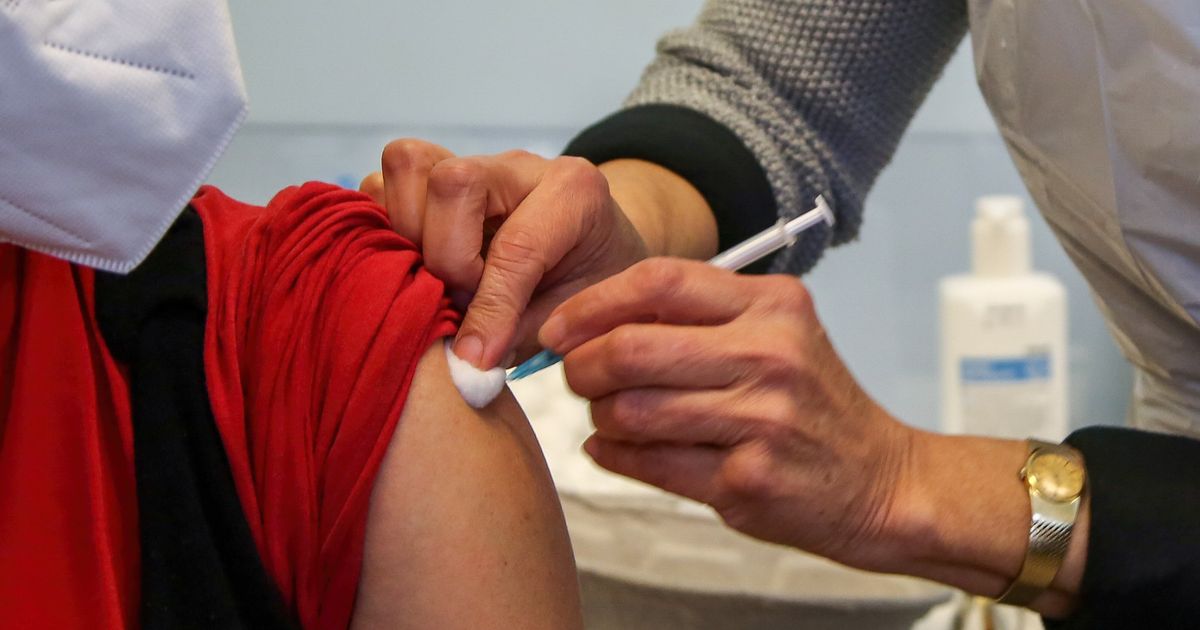
Patients are expressing concern that some Covid booster jabs, flu vaccinations, as well as key hospital appointments, are being cancelled ahead of the Queen’s funeral on September 19 since it was made a last-minute Bank Holiday.
Kate Brodie, 62, a retired NHS GP who is about to start a second round of chemotherapy for breast cancer, had specifically timed the date of her Covid booster so it fell before her hospital treatment started.
Advertisement
The vaccine was booked for September 19. However Brodie, who lives in south Devon, says she received a text message on September 12 saying the appointment had been cancelled due to the unexpected bank holiday.
“Having cancer is a huge stress with all the worry about survival, the process of going through gruesome treatment and hoping to continue to avoid Covid 19 while my immune system is down,” she tells HuffPost UK.
“The death of the Queen is very sad, but the reaction by NHSE [NHS England] to cancel delivery of much-needed services at short notice will cause harm and hardship to many.”
Advertisement
Many GP practices across England will be closed for the Bank Holiday, which has been given to allow individuals, businesses and other organisations to pay their respects to the Queen on the day of her state funeral.
A letter from Dr Ursula Montgomery, director of primary care at NHS England, said that out-of-hours services will be in place during the day to meet patients’ urgent primary medical care needs.
The funeral has come at a busy time for the NHS, as it implements its Covid booster and flu vaccination programmes ahead of the winter.
A text message from one GP surgery on the outskirts of London, seen by HuffPost UK, said flu vaccine appointments scheduled for this week would need to be rescheduled by a few days because of “the unfortunate news the nation is facing at the moment”.
Dr Helen Salisbury, a GP and medical educator from Oxford, explained on Twitter how a last minute bank holiday can be a “nightmare” for those trying to run health services, especially with lots of patients already booked in.
“What to do?” she tweeted. “Implore staff to work and pay extra? Reschedule and delay all the appointments?”
Advertisement
A bank holiday at short notice is a nightmare for those of us trying to run health services. Loads of patients booked in do what to do? Implore staff to work and pay extra? Reschedule and delay all the appointments?
Other staff working in general practice responded to say that even when they do open on Bank Holidays, they often aren’t busy. Some added that they suspect lots of patients won’t turn up because they’ll be watching the funeral.
I worked GP OOH the Saturday of Princess Diana’s Funeral and it was deserted. No one phoned us and we didn’t see anyone despite being there waiting and available. It’s like GP surgeries being open on Sundays or bank holidays during the pandemic when no one wants to come then.
Scheduled Covid boosters are still going ahead in care homes, said NHS England, which has also issued guidance urging clinics to stay open to deliver the boosters “where there is a high population need”.
But a report by openDemocracy found thousands of non-urgent hospital appointments – for issues such as hip and knee replacements, cataract surgery, maternity checks and some cancer treatments – are being postponed.
One pregnant woman revealed how her foetal scan had been cancelled, leaving her anxious about her baby’s health.
“I’m really disappointed,” she told openDemocracy. “Yes, it’s a routine scan, but that’s another week or two until I’m seen and wondering whether my baby is healthy – which means quite a lot of anxiety, sitting and waiting.”
Hospital appointment I’ve had booked for 6 months cancelled because it’s on the day of the funeral. What a weird little island we live on
Kate Brodie has since tried to rebook her Covid booster for the next cycle, but was told there were no dates free near to where she lives.
“Thankfully I have found a centre 15 miles away that I can attend on Sunday instead,” she says. “I am lucky I am mobile and have transport to reach the further venue.”
Meanwhile, Greg Hadfield, 66, from Brighton, also found out his Covid booster vaccine appointment on September 19 has been cancelled and is now having to travel nearly 40 minutes by car to get another one.
The 66-year-old was originally invited to have the booster at his local Waitrose. However because the store will now be closed for the Bank Holiday – as many supermarkets will be – his appointment won’t go ahead.
“When I tried to re-book for another day at the same centre, the system offered only dates that were 14 days-plus ahead, by which time I will be abroad for a month,” he tells HuffPost UK.
Advertisement
He has managed to book an appointment 40 minutes away for the same date, September 19, which hasn’t been cancelled – so far.
“I am just relieved to get the booster before leaving for Turkey and Greece later this month,” he says.


![Akirashanti Byrd: 'I spend a lot of time educating [women] on the available options.'](https://www.wellnessmaster.com/wp-content/uploads/2022/10/from-aunties-to-ig-hairdressers-black-womens-hair-ideals-are-changing-5.jpg)