The nominations for this year’s Brit Awards have been unveiled ahead of this year’s ceremony, with Lola Young leading the way this time around.
As always, the Brits recognises the biggest achievements in music over the last 12 months both here in the UK and overseas.
Advertisement
Lola has racked up five nominations in the lead-up to next month’s ceremony, ahead of fellow competitors Olivia Dean with four, and the likes of Wolf Alice, Sam Fender, Fred Again.. and Lily Allen on three each.
Meanwhile, international nominees include Bruno Mars, Sabrina Carpenter, Taylor Swift and Lady Gaga.
Here’s the full list of all of this year’s nominees.
British Album Of The Year
Dave – The Boy Who Played The Harp
Lily Allen – West End Girl
Olivia Dean – The Art Of Love
Sam Fender – People Watching
Wolf Alice – The Clearing
British Song Of The Year
Calvin Harris and Clementine Douglas – Blessings
Chrystal and Notion – The Days
Cynthia Erivo and Ariana Grande – Defying Gravity
Ed Sheeran – Azizam
Fred Again.., Skepta and Plaqueboymax –Victory Lap
Lewis Capaldi – Survive
Lola Young – Messy
Myles Smith – Nice To Meet You
Olivia Dean – Man I Need
Raye – Where Is My Husband!
Sam Fender and Olivia Dean – Rein Me In
Skye Newman – Family Matters
British Artist Of The Year
Fred Again..
Lily Allen
Little Simz
Lola Young
Olivia Dean
PinkPantheress
Sam Fender
Self Esteem
British Group Of The Year
Sleep Token
The Last Dinner Party
Wolf Alice
British Breakthrough Artist
Barry Can’t Swim
Jim Legxacy
Lola Young
Skye Newman
British Alternative/Rock Act
Blood Orange
Lola Young
Sam Fender
Wolf Alice
British R&B Act
Jim Legxacy
Sasha Keable
British Dance Act
Calvin Harris and Clementine Douglas
Fred Again.., Skepta, Plaqueboymax
PinkPantheress
Sammy Virji
British Hip-Hop/Rap/Grime Act
Central Cee
Jim Legxacy
Little Simz
Loyle Carner
British Pop Act
Lily Allen
Lola Young
Olivia Dean
International Song Of The Year
Alex Warren – Ordinary
Chappell Roan – Pink Pony Club
Disco Lines and Tinashe – No Broke Boys
Gigi Perez – Sailor Song
Gracie Abrams – That’s So True
Huntr/x – Golden
Lady Gaga and Bruno Mars – Die With A Smile
Ravyn Lenae – Love Me Not
Rosé and Bruno Mars – Apt.
Sabrina Carpenter – Manchild
Sombr – Undressed
Taylor Swift – The Fate Of Ophelia
International Artist Of The Year
Chappell Roan
Sabrina Carpenter
Taylor Swift
Tyler, The Creator
International Group Of The Year
Tame Impala
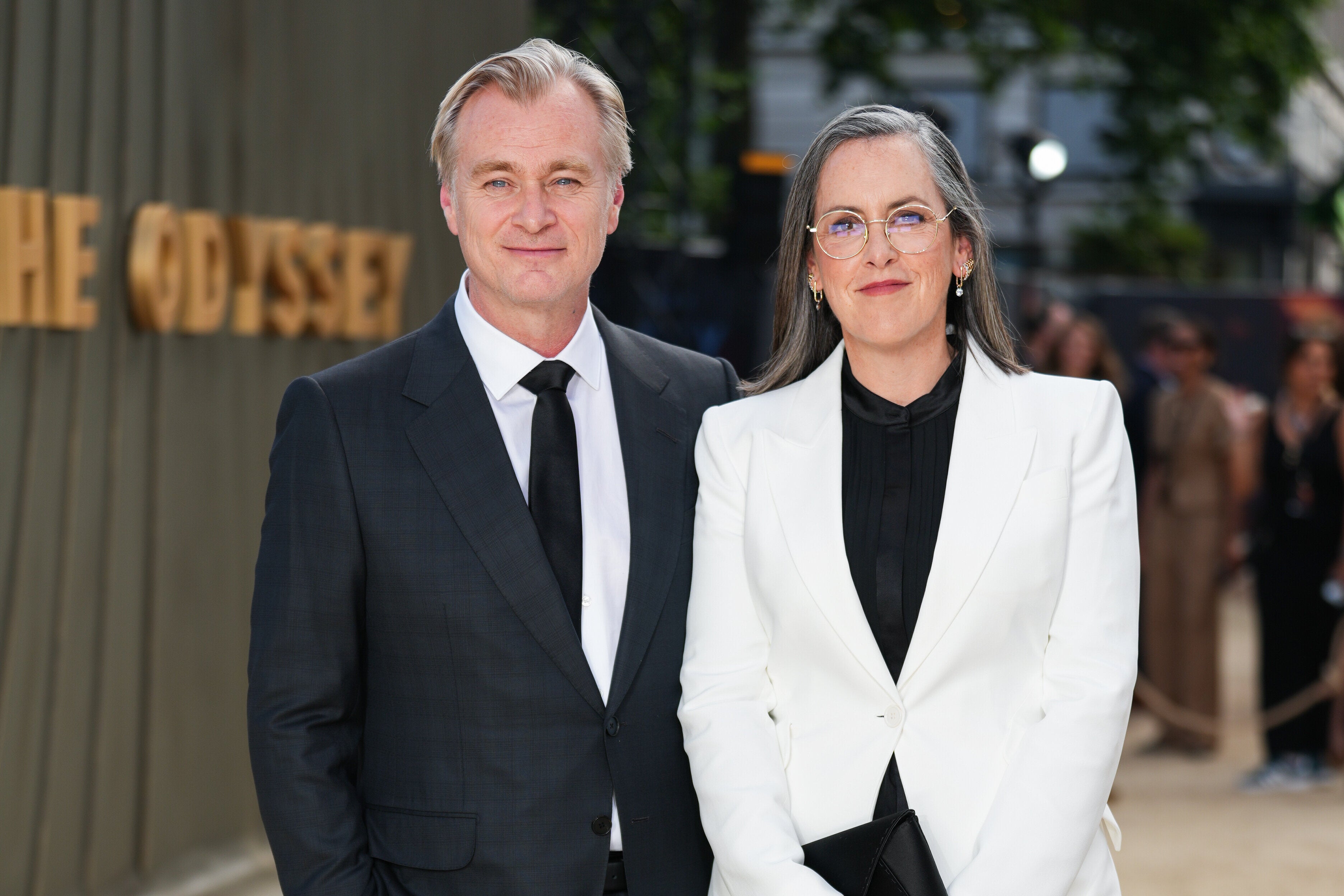
The 2026 Brit Awards will take place at Manchester’s Co-op Live Arena on Saturday 28 February.
Estrangement, and especially the estrangement of adult children from their parents, has been a big topic in the past few months.
Oprah Winfrey invited a panel of therapists to talk about the “rising trend” of estrangement on her podcast, for instance. One of the experts controversially blamed “therapy” for “inflammatory reactions” to parents’ behaviour.
We don’t know the particulars of that case for sure.
But with so much attention around the topic of estrangement, we spoke to Dorcy Pruter, the founder of the Conscious Co-Parenting Institute, who began her business after reconnecting with her father following years of estrangement.
Here, she shared “the hard truth most [estranged] parents aren’t ready to hear (at least not at first)”.
Advertisement
“Going no-contact is never the first choice”
Some parents may feel blindsided by their grown-up child going no-contact.
But “going no-contact is never the first choice,” Pruter said. “It’s the last resort of a child who didn’t feel safe, seen, or sovereign in the relationship.”
She added that there is often no single moment that leads to a break.
Instead, “it begins with small moments of emotional misattunement. Dismissed feelings. Subtle control. A child becomes the parents’ emotional regulator.
“It can look like ‘loving too much’ or ‘doing everything for them,’ when in reality, the parent may have unknowingly made their child responsible for their self-worth.”
Advertisement
For the parent, she said, they might really feel they gave their child everything.
“So when a parent finds themselves mystified by estrangement, the most powerful question they can ask is not ‘What went wrong?’ but: ‘What truth did my child not feel safe enough to tell me?’
“Is it helpful to reflect? Yes, but only if the reflection is rooted in curiosity, not guilt or blame. Parents must be willing to trade the need to be ‘right’ for the courage to reconnect. That means listening to the silence not as a punishment, but as a message.”
Advertisement
How can I tell if my grown-up child is distancing themselves from me, and what can I do if they go no-contact?
Another reason parents might feel shocked by their child’s distance, Pruter told us, is that they struggle to notice early signs of disconnection for what it really is.
“There are often early signs of withdrawal, short or transactional conversations, and emotional distance, but many parents miss them because they interpret that distance as rudeness or ingratitude, rather than disconnection,” she said.
Advertisement
And if your child has already gone no-contact, she recommended taking that as an opportunity to “heal [your] own wounds, take radical responsibility, and become safe for their child again, even if that child never returns.
“I often tell my clients that reconnection isn’t about changing your child’s mind. It’s about transforming your own heart.”
Since seizing Venezuela and capturing its leader, the US president seems intent on taking full “control” of the semi-autonomous Arctic island of Greenland.
Advertisement
Trump appears unbothered that the land is part of the kingdom of Denmark – and therefore also part of Nato – or that Greenlanders themselves have said they do not want to become part of America.
The president claims Denmark is not protecting Greenland from potential China and Russia threats, so an American takeover is needed to protect “world peace”.
He has also not ruled out using military force to take the world’s largest island.
And, worryingly, Moscow seems rather thrilled at the chaos, especially as the president is putting Nato under strain.
Advertisement
In his annual press conference, Lavrov told reporters: “In Greenland there was no coup, but as President Trump said, this territory is important to the US.
“As Crimea is equally important for the security of Russia.”
In an apparent endorsement of Trump’s aggression, Lavrov also claimed: “Greenland is not a natural part of Denmark.”
Advertisement
However, he added that Russia has no plans to get involved in the dispute – despite Trump’s claims that Moscow has its eyes on the territory.
“Nato is going through a period of challenges, and Russia is not interested in interfering in Greenland,” Putin’s top diplomat said.
“It was neither a natural part of Norway nor a natural part of Denmark. It is a colonial conquest. The fact that the inhabitants are now accustomed to it and feel comfortable is another matter.”
Advertisement
Trump’s tantrums have put a major strain on Nato – something the Kremlin has been trying to do for decades – which in turn weakens the defence alliance’s united approach to Ukraine.
Putin’s special envoy Kirill Dmitriev already welcomed the “collapse of the transatlantic union” this week, while former president Dmitri Medvedev suggested Europe is getting poorer.
He wrote on social media: “Make America Great Again (MAGA) = Make Denmark Small Again (MDSA) = Make Europe Poor Again (MEPA). Has this idea finally sunk in, dimwits?”
Advertisement
Putin’s spokesperson Dmitry Peskov also said: “There are international experts who believe that by resolving the issue of Greenland’s incorporation, Trump will certainly go down in history. And not only in the history of the United States, but also in world history. It’s hard not to agree with these experts.”
Trump has even threatened to slap tariffs on imports from European allies who have so far opposed the idea of an American takeover.
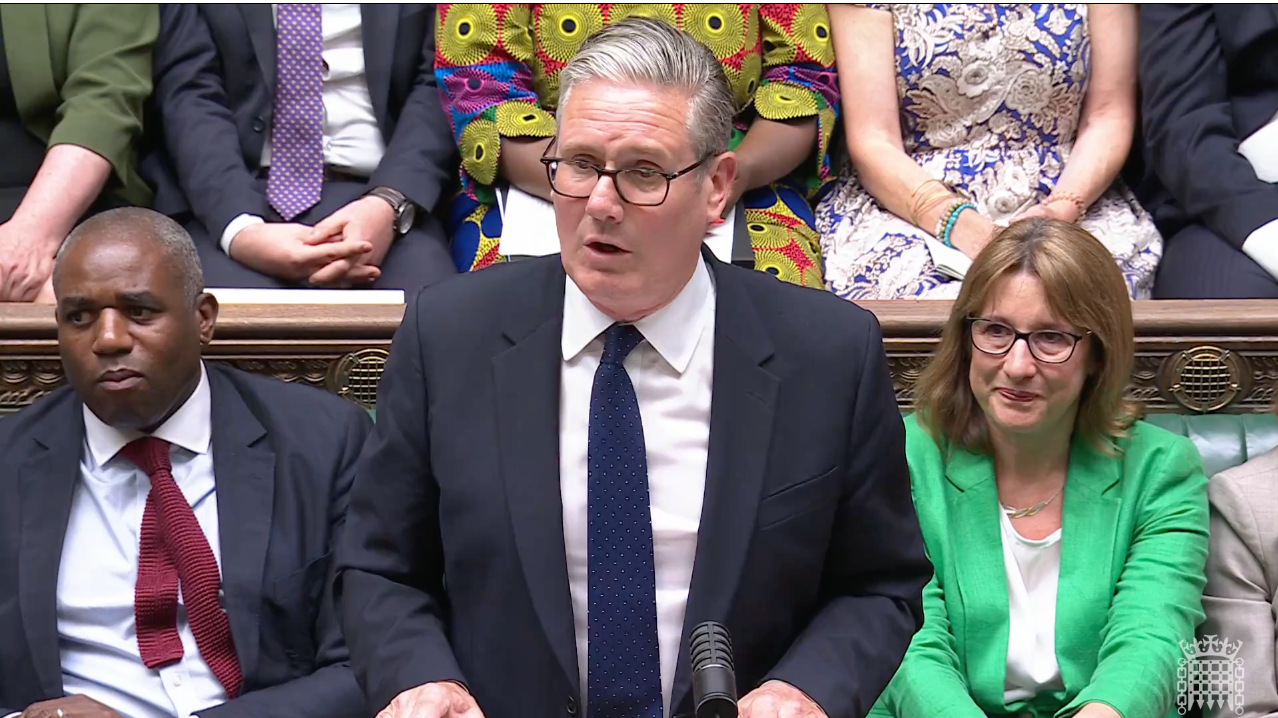
EU leaders will meet to discuss how to respond at an emergency summit on Thursday, although the UK’s Keir Starmer has insisted Britain will not be looking at retaliatory tariffs and that he does not want to start a trade war.
Advertisement
Though Trump is putting 80 years of international diplomacy in jeopardy with his Greenland warnings, allies are nervous to draw too many red lines because his co-operation is needed for security guarantees with the Ukraine war.
The president himself has been pushing for a peace deal to end the Ukraine war – even if it means giving Putin even more of Ukraine’s sovereign land.
You might have heard of “grey rocking”, a method which experts say can make dealing with narcissistic and high-conflict people a little easier.
It involves keeping comments and responses to antagonistic individuals short, boring, and emotionally uninvested.
Advertisement
And, therapist Danielle Pinals shared on her Instagram, the “BIFF” method might help those dealing with a narcissist ensure they don’t “allow you to get derailed by emotional manipulation or control”.
Here, we spoke to relationship therapist and author at Passionerad, Sofie Roos, about how (and when) to try the BIFF method.
What is the BIFF method?
Coined by Bill Eddy at the High Conflict Institute, the term stands for “brief, informative, friendly, and firm”.
Advertisement
In other words, don’t spend too long explaining yourself, stay courteous, make sure you relay only the relevant information, and stick to your guns.
An example, the High Conflict Institute explained, could be getting a very long, angry text accusing you of being a terrible person and mother because you asked your coparent to take the kids to your boss’s birthday during their stay.
A BIFF response, they said, would be: “Thank you for responding to my request… Just to clarify, the party will be from 3-5 on Friday at the office, and there will be approximately 30 people there.
Advertisement
“There will be no alcohol, as it is a family-oriented firm, and there will be family-oriented activities. I think it will be a good experience for them to see me at my workplace. Since you do not agree, then of course I will respect that and withdraw my request, as I recognise it is your parenting time.”
When should you use the BIFF method?
Aside from being useful for navigating situations like divorce and coparenting, Roos said, “it can also be helpful during conflicts at work, with relatives and your partner’s family.”
Advertisement
This does not have to be limited to people you suspect of narcissm, though it may be useful then too.
In fact, she added, “I would recommend people to use the BIFF method when they notice that the conversation starts to get loaded, [accusatory], or [circular and] aggressive. It’s especially useful in written communication, such as in emails or SMS.”
Following the BIFF method significantly decreases the chance of escalation, she added.
“I see this as a great way to protect both yourself and the relationship in question as it helps you set boundaries without being cold, cynical or aggressive,” she ended.
Advertisement
“And while it’s far from easy all the time, it’s definitely a strategy worth getting better at as it’ll help you long term with getting more peaceful, communicative and mature relationships, no matter if they’re private or professional.”
After Australia made moves to ban under-16s from using social media, both the UK and France are considering a similar move.
The UK government has now launched a consultation on children’s use of technology, including social media, and said it’s seeking views from parents, young people and civil society – with a response expected this summer.
What do parents and experts think of a social media ban for young people?
In December 2025, a YouGov poll of 5,000 people found 39% of respondents “strongly supported” and 35% “somewhat supported” a ban on under-16s having social media accounts. In contrast, just 15% “somewhat opposed” and 4% “strongly opposed” it.
Advertisement
A separate survey by The Good Growth Foundation found 66% of respondents backed a social media ban for young people, while a petition calling for a ban on social media access for under-16s has been circulating in parent Whatsapp groups – at the time of writing, it had 65,000 signatures.
Dr Tracy King, is a chartered clinical psychologist who has a 13-year-old autistic daughter. She told HuffPost UK that from a parental and professional perspective, she supports stronger regulation and safeguards, but she is cautious of an outright ban.
“Social media can expose teenagers to real risks, including comparison culture, grooming, algorithm-driven distress, and constant nervous system activation,” she said.
Advertisement
“I see this particularly affecting neurodivergent young people, who may be more vulnerable to social overwhelm, rejection sensitivity, and online manipulation.
“At the same time, for many autistic teenagers, social media can provide connection, identity exploration, and a sense of belonging that is harder to access offline.”
The psychologist suggested a blanket ban risks “removing one of the few spaces where some young people feel socially competent or understood, without addressing the underlying issues of platform design, moderation, and digital literacy”.
Advertisement
What she wants most is not just restriction, but protection paired with education and realistic, age-appropriate boundaries. “That education has to extend to parents, as I see many who have no idea of online risks happening behind the bedroom door,” she added.
Lucy Whitehouse, who has a three-year-old and is CEO of sex education charity Fumble, noted that pressure should be put on social media platforms to “clean up their act”, rather than banning young people.
“Social media has a lot of negative content, but it is also the place that young people go to in lieu of any inclusive and accessible sex education at school to find answers to the questions that they have and to connect and to learn,” she added.
Advertisement
One month after the ban in Australia took effect there was mixed reaction from teens, according to CNBC – while some expressed relief at being free of the distraction, others admitted to finding ways to circumvent the ban.
Lee Chambers, founder of Male Allies who has three children aged 13, 11 and two, believes this would happen in the UK too: “If you ban social media, young people will find another way in.”
He also noted that it’s hard to know where a line is drawn in terms of what constitutes ‘social media’.
“What we need to do is to put real regulation and rules around these platforms that the social media giants must adhere to.”
He added that young people need help navigating the online world – “it’s not something that we can just switch off, it’s everywhere, and with AI things are only going to get worse”.
Advertisement
The government is said to also be looking at options including implementing phone curfews to avoid excessive use and restricting potentially addictive design features such as ‘streaks’ and ‘infinite scrolling’.
Technology Secretary Liz Kendall said: “Through the Online Safety Act, this government has already taken clear, concrete steps to deliver a safer online world for our children and young people.
“These laws were never meant to be the end point, and we know parents still have serious concerns. That is why I am prepared to take further action.”
Advertisement
Since the Online Safety Act came into play, children encountering age checks online has risen from 30% to 47% – and 58% of parents believe the measures are already improving children’s safety online.
Nova Eden, who has three children aged 14, 11 and six, and is one of the leading voices in the Smartphone Free Childhood campaign, added: “The harm being caused to young children is a public health emergency.
“There is an urgent need for UK leaders to step up and implement meaningful, accelerated change for the next generation. It is time to prioritise children’s mental health and wellbeing over the profits of Big Tech.”
91% of women with children spend at least one hour a day on housework, compared with 30% of men with kids, the European Institute for Gender Equality shared in 2021.
According to the same data, working women spend 2.3 hours a day on housework, whereas working men spend 1.6 hours on it daily.
But no matter what, or who, the cause of chore inequality, chances are anyone who brings up being on the more labour-intensive side of it will have heard “write them/me a list!” at least once.
I have grown to despise that advice in relationships where one person is already doing the bulk of the domestic work. Here, we spoke to relationship therapist and author at Passionerad, Sofie Roos, about why I might not be alone.
Advertisement
“Write a list” profoundly misunderstands the nature of domestic inequality
Roos said that, while she understands that the idea aims to “create a fairer share of the home labour, I think this advice in reality fails to address the core problem”.
It creates more work for someone who, by nature of being given the task, likely already does the lion’s share of domestic labour, she said.
“When one of the partners is expected to write a list and manage things, they also get all of the responsibility for the situation in their lap as they then must see what needs to be done, to prioritise and organise, and plan and follow through… [which is a] big workload.
Advertisement
“This tip also tends to add to the myth that (usually) women should just ‘know how to run a home and a relationship’, as if it were a skill you’re born with rather than something you learn and build up together with your partner,” she added.
Plus, Roos said, it adds to the feeling that one partner is “helping” another, implying that household work is inherently one partner’s domain.
And a single list assumes that housework is static, that noticing, judging, pre-empting, remembering, and reacting to changes and unexpected shifts in your household’s needs isn’t a huge part of the mental load.
Advertisement
“That said,” Roos told me, “I think it’s [a] pretty stupid piece of advice that in reality tends to make things worse rather than solving anything between you”.
What should couples do instead?
OK, so Roos agrees that the dreaded list should be off the table. But given that domestic labour inequality is so pronounced, and that at least some of the parties involved probably want to improve that, what should we do instead?
“I think the focus should be shifted… to share[d] responsibility,” the therapist told us.
Instead of assigning a “project manager” role to one partner, she added, “Ask yourselves what’s your shared responsibility, where the two of you can take more initiative and where you can lead, and communicate around what tasks you feel more keen on doing and try to split it between you in a fair way”.
Advertisement
It’s important to find a way to follow up on that, too, she continued, “for example, by sitting down and having a check-in every second week where both of you take a shared responsibility of communicating how it goes, what you can do better or change and what you should keep on doing the same.”
The partner who has historically done less in the home needs to understand why this is important, however, she added.
“To make them understand that, you might need to sit down and have a talk where you honestly explain how it feels to you when they say [things like], ‘Just tell me what to do and I do it’… you’re not their parent, and this dynamic easily makes it feel that way, which isn’t sustainable in the long run.
Advertisement
“And lastly, don’t forget that this is something you’ll need to tweak and adjust with time as life changes… household labour needs to stay up to date with your situation,” she ended.
“Finding the balance is therefore nothing you do through one set solution, but by having an ongoing process around the labour work at home!”
Donald Trump has doubled down on his threats to slap tariffs on Europe over Greenland – while also telling the continent to focus on the Ukraine war instead.
The US president announced on Saturday that he would charge a 10% import tax from February 1 on eight European countries – including the UK – because of their opposition to his plans to take control of the Arctic island.
Advertisement
They will be hiked to 25% from June 1 unless America has “control” of Greenland by then, he said.
Greenland is semi-autonomous and part of the kingdom of Denmark. Its government has repeatedly signalled that it does not want to become American.
At a Downing Street press conference on Monday, Keir Starmer said Trump’s tariff threat was “completely wrong”, but ruled out imposing retaliatory UK tariffs on American goods.
Advertisement
Speaking to NBC News over the phone on Monday, the US president insisted he was “100%” committed to his tariff plan.
In his first public comments since plunging the trans-Atlantic relationship into crisis, Trump said: “Europe ought to focus on the war with Russia and Ukraine, because frankly, you see what that’s gotten them.
“That’s what Europe should focus on – not Greenland.”
Trump’s Treasury secretary Scott Bessent also told reporters at the World Economic Forum in Davos that it would be “very unwise” for Europe to retaliate over the president’s threats.
Advertisement
He said: “I’ve been travelling so I haven’t been in touch [with European officials] but I spoke with president Trump and evidently there are a lot of inbounds, and I think everyone should take the president at his word.”
He said it was a “complete canard” – an unfounded rumour – to think Trump’s actions over Greenland are down to his failure to clinch the Nobel Peace Prize, even though the president said exactly that over the weekend.
In a message to the Norwegian prime minister Jonas GahrStøre on Sunday, Trump said: “Considering your Country decided not to give me the Nobel Peace Prize for having stopped 8 Wars PLUS, I no longer feel an obligation to think purely of Peace.”
Advertisement
“The World is not secure unless we have complete and total control of Greenland,” he added. “Denmark cannot protect that land from Russia or China, and why do they have a ‘right of ownership’ anyway?”
Støre later replied by reminding the US president that it is not the Norwegian government who chooses the recipient of the Nobel Peace Prize, but an independent committee.
But Trump told NBC News: “Norway totally controls it, despite what they say. They like to say they have nothing to do with it, but they have everything to do with it.”
Norway’s prime minister says he had to explain to Donald Trump how the Nobel Peace Prize is awarded after the US president wrongly blamed the government for not being given it.
Trump has held a grudge ever since Venezuelan opposition leader María Corina Machado received the accolade last October.
He said: “Considering your Country decided not to give me the Nobel Peace Prize for having stopped 8 Wars PLUS, I no longer feel an obligation to think purely of Peace.”
Norway is one of the eight European countries – including the UK – which Trump has threatened with tariffs for opposing his plan to take over Greenland, which has been part of the kingdom of Denmark for more than 300 years.
Advertisement
Responding to the president’s rant, Støre said: “Norway’s position on Greenland is clear. Greenland is a part of the Kingdom of Denmark, and Norway fully supports the Kingdom of Denmark on this matter.”
He also said he had made it clear that it is an independent committee, rather than the Norwegian government, which decides who wins the Nobel Peace Prize.
“As regards the Nobel Peace Prize, I have clearly explained, including to president Trump what is well known, the prize is awarded by an independent Nobel Committee and not the Norwegian Government,” he said.
Advertisement
Nevertheless, Trump has doubled down on his comments in an interview with NBC News on Monday.
He said: “Norway totally controls it despite what they say. They like to say they have nothing to do with it, but they have everything to do with it.”
Whether dealing with coeliac disease, gluten intolerance or just tummy troubles, many Americans swear their digestive issues mysteriously ease up when they travel to Europe, the supposed land of consequence-free carbs.
While some of that likely comes down to portion size and wheat quality, another often-overlooked factor is how the pasta is cooked. You’d never catch an Italian cooking their pasta beyond al dente – and sometimes, it’s even a little firmer than that.
Advertisement
According to Marissa Karp, founder and lead registered dietitian at MPM Nutrition in New York, the longer pasta cooks, the more its starches soften and become available to our bodies when we eat it. But more isn’t always better.
How long pasta is cooked can affect how quickly it’s digested, how quickly it raises blood sugar and how you feel after the meal – from steady and satisfied to heavy and ready for a nap.
Ahead, registered dietitians break down the different levels of pasta doneness, what noodles look and feel like at each stage, and how each one affects digestion, energy and blood sugar.
Advertisement
Getty Images
Firm: how it affects your digestion
Defined as two or three minutes less cook time than the package instructions, “firm” pasta sits at the very beginning of the doneness spectrum. Go ahead and ignore the box here – your spaghetti won’t be raw, but it will have more texture than most Americans are used to.
“Firm pasta has the most bite to it,” Karp said. “There’s clear resistance when you press it between your teeth.”
Advertisement
When pasta is cooked a little firmer, your body takes longer to digest it. That means a bowl of penne won’t spike your blood sugar as quickly, according to Kimberly Rose, registered dietitian and certified diabetes educator.
That slower blood sugar spike can make a noticeable difference in how you feel afterward. Instead of the classic post-pasta slump – heavy, sleepy and weirdly hungry again an hour later – you’re more likely to feel steady and satisfied. And taking that second helping is because the pasta is genuinely delicious, not because the first bowl barely made a dent in your hunger. “Firmer pasta tends to break down more slowly, which can help people feel satisfied for longer and support steadier blood sugar when eaten in appropriate portions,” said Amanda Frankeny, a registered dietitian nutritionist.
If you’re trying to keep your blood sugar steady or you’re tired of that familiar post-pasta slump, cooking pasta a bit firmer may be worth a try. Just know that if you have a more sensitive stomach, this texture isn’t always the most comfortable.
Advertisement
Al dente: how it affects your digestion
In the food world, al dente has become the default way to cook pasta, much like ordering a steak medium-rare or scrambling eggs until they’re just set, not dry.
To get there, you’ll usually want to ignore the package instructions again and pull your pasta from the water about one to two minutes earlier than the package states. (If you’ve been faithfully following the box this whole time, there’s a good chance you’ve been eating softer, mushier pasta than you realised.)
Al dente is the Goldilocks texture most of us are taught to aim for: not too firm, not too soft.
“Al dente tends to be the most comfortable because it digests at a steady pace and tends to offer balanced, sustained energy,” Karp said.
Advertisement
That aligns with research. A 2022 study found that when pasta is cooked for less time, your body breaks down less of its starch, leading to a slower, steadier rise in blood sugar.
While “chewing your food well” has become a diet-culture cliche, 2023 research suggests the real driver is food texture. Foods that require more chewing tend to trigger stronger satiety signals, simply because digestion starts earlier and happens more gradually.
Most of us likely cook pasta to this doneness not only because it has a pleasant mouthfeel but because it’s often easier on the body.
Advertisement
Soft: how it affects your digestion
“Digestion begins in the mouth,” explains Rose, “and soft pasta is fastest to digest.” That’s because soft pasta requires minimal chewing. With almost no resistance for your teeth, it moves quickly from the plate to the stomach, where it’s broken down faster than firmer noodles.
That might sound counterintuitive, but research on food texture backs this up: foods that are soft and easy to chew don’t tend to keep us as full as foods that make us do a little more work. When you have to chew more, you also tend to eat more slowly, which gives your body (and gastrointestinal fluids) time to register that you’re eating.
Typically cooked to the package instructions or even a little longer, soft pasta has no bite left at the centre. This can also happen when pasta is cooked and then baked or reheated in dishes like casseroles or mac and cheese, where a second round of cooking pushes it past al dente.
Advertisement
That quicker breakdown is also why soft pasta is often blamed for the classic carb crash. According to Rose, “Soft pasta will raise your energy levels quickly because more starch is readily available; however, this type of energy is short-lived and may result in a drop in energy after consuming.”
When pasta is overcooked, a few things change the way your body handles it, according to a 2015 study. First, the starches become more broken down and easier to access, which means the carbs hit your system faster – giving you that quick burst of energy, followed by a drop. At the same time, the structure of both starch and protein in the pasta softens, which makes it harder for your body to digest and can lead to bloating or an upset stomach after eating.
Still, soft pasta absolutely has a place at the table. For people who have trouble chewing, sensitive digestion or who need quick, easily accessible energy, it can be a great option. According to Frankeny, “That’s not a bad thing at all. Depending on how active you are, how much you are eating and everything else is on the plate – like produce and protein – softer pasta can easily be a part of a well-rounded meal.”
The government had been due to move an amendment to the legislation on Monday which critics said would have watered it down to protect members of the intelligence services.
Advertisement
The aim of the new law, which was promised in Labour’s 2024 election manifesto, is to end cover-ups by public bodies in the wake of major disasters such as the Hillsborough disaster and the Manchester Arena bombing.
Labour whips were bracing themselves for a major backbench rebellion if the vote had gone ahead.
But ministers announced on Sunday night that it was no longer moving the amendment and was seeking further talks with MPs and victims’s families.
A government spokesperson said: “This legislation will right the wrongs of the past, changing the balance of power to ensure the state can never hide from the people it should serve and putting a legal duty on officials to respond openly and honestly when things go wrong.
Advertisement
“The bill will make the police, intelligence agencies and the whole of government more scrutinised than they have ever been, but we can never compromise on national security.
“We will continue to work with all parties to make sure the Bill is the strongest it can possibly be, without compromising national security.”
Under the law, a “duty of candour” would be introduced making it illegal for those in positions of authority to withhold information from investigations.
Advertisement
The government amendment would have allowed the heads of the security services to decide whether or not to disclose information involving their operations.
Ministers insisted the change was necessary to protect national security.
But speaking on Sunday, Labour MP Ian Byrne – who was at Hillsborough on the day of the tragedy in 1989 – told the BBC he was prepared to vote against the government amendment.
Reacting to the government’s decision to pull its amendment, Byrne, the MP for Liverpool West Derby, told HuffPost UK: “I’m delighted to see this pause.
Advertisement
“Now I urge the government to either adopt my amendment or work with us to draft a new amendment which makes the legislation worthy of the name Hillsborough and a legacy to the 97 [Liverpool fans who died].”