‘How Can I Move Out Of The Friend Zone With The Guy From My Running Group?’

You’re reading Love Stuck, where trained therapists answer your dating, sex and relationship dilemmas. You can submit a question here.

There’s a reason why the friend to lover trope is so popular in film and TV. You’re friends with someone for years, you date other people and then you realise the person you’ve been looking for has been right in front of you.

Having a solid friendship with someone can be a great foundation for a relationship. But the movies we watch don’t tell us how awkward it can be to tell your friend you fancy them. What if they aren’t attracted to us? What if it ruins the friendship?

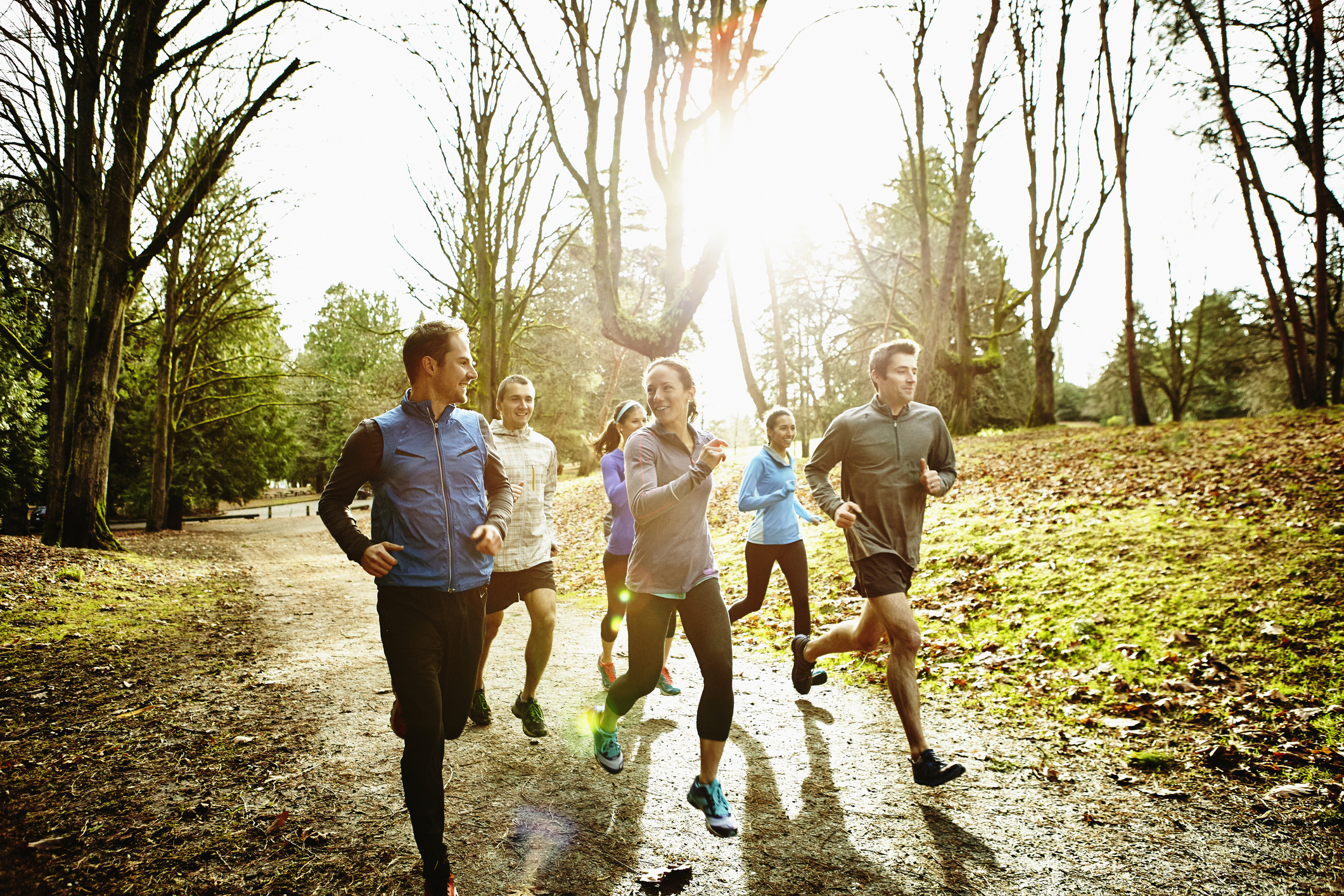
This is what this week’s reader, Carol, is worried about. “There’s a man that I like and we have been friends for about five years. We are in the same running and wild swimming group and get on well. How can I move out of the ‘friend zone’?” she asked.

Though the term “friend zone” has been debated, there’s nothing wrong with exploring the potential of a relationship with a friend – as long as you’re fully prepared to accept that they may not reciprocate your feelings.

Though it can be scary to shift the dynamic, Counselling Directory member Simona Bajenaru says we should be honest and authentic.

“Speaking your feelings might be as rewarding as perhaps the hesitation to do so. Whether reciprocated or not, once the initial fear and shame subside, your sense of confidence and pride might blossom,” Bajenaru says.

How can we get out of the friend zone?

Bajenaru first invites anyone in this situation to ask yourself five questions:

  • Why now?

  • What drives your desire to move out of the “friend zone”?

  • What are your expectations, moving out of it?

  • Would you say he completes or complements you where you are at now?

  • What feelings come up when you envisage your future together?

Bajenaru emphasis that “although answering these questions logically is important, digging deeper into your feelings will help clarify whether your desire to advance this relationship is genuine or acting on a temporary need to be fulfilled (company, intimacy) or fear to be satisfied (loneliness, low self-esteem).”

In a situation like Carol’s – where you usually see the other person in an activity group – asking them if they’d like to meet up one on one for a coffee or drink is probably a good first step.

Why do people struggle to move from friendship to romantic?

“Coming out of the ‘friend zone’ is terribly scary for most of us,” Bajenaru says. “Hesitation is a natural reaction to such prospects since a non-reciprocation of your feelings blurs your treasured friendship’s way forward.

“Best case scenario, his feelings are mutual and knowing each other well enough provides a beautiful and safe space to nurture the next stage of your relationship.

“The less fortunate scenario may be a slow distancing leading to potentially losing a valued friend, a perhaps abrupt end to his reliable, consistent presence in your life. Should this be the case, please know you have not done anything wrong.”

How can we continue a friendship with someone if they don’t reciprocate feelings for us?

There is an overall risk of awkwardness between yourselves for a while after feelings are shared.

“Sometimes the response is not even immediate: your friend may choose to process his own feelings first. A beautiful placeholder to receive might be ’I am flattered, I need to process it,” Bajenaru says.

“However, they may choose to never respond nor engage, avoiding difficult conversations with you and themselves.

Bajenaru adds that “continuing the friendship would require an honest conversation about the attempt to have more than a friendship and setting some boundaries and perhaps ‘ground rules’ until some new kind of ‘normality’ is established.”

Love Stuck is for those who’ve hit a romantic wall, whether you’re single or have been coupled up for decades. With the help of trained sex and relationship therapists, HuffPost UK will help answer your dilemmas. Submit a question here.
Share Button

How Alcohol Affects Your Body When You’re On A Flight

Ordering beer, wine or a cocktail while flying is a common move. For some, having an alcoholic beverage on the plane is a travel day essential to relax, take the edge off, celebrate a vacation or even to fall asleep on a long flight.

But is this really the best option? Alcohol can leave you groggy and dehydrated. When consumed in excess, it may lower inhibitions and lead to unruly behavior, which we saw a lot of when people reacted negatively to federal mask mandates.

We reached out to some experts in medicine and nutrition, and asked if alcoholic beverages were a good idea while flying. Here’s what we found out about how alcohol affects your body while you’re up in the air.

Is it a bad idea to order alcohol on a flight?

There’s no easy answer to this question, experts say. Ordering a beer or wine while flying is a personal decision that might work for one person and not for the person sitting next to them. “If a person is on edge due to flying in general — and doesn’t become more so with alcohol — sometimes having a beverage might relax them or make the process feel a little bit more pleasant or more ordinary,” said Wendy Bazilian, a registered dietitian nutritionist.

But while some may grab a drink as a celebratory kickoff for a long-awaited trip, others may experience side effects while drinking on a plane.

You may not sleep well.

It’s tempting to order a drink in hopes that it will help you fall asleep and get some much-needed rest on an overnight flight. But this isn’t necessarily the greatest idea, according to the experts we spoke to. “Even though you think it relaxes you, your sleep will be disrupted and you likely will not get into REM sleep, the type of sleep that is restorative,” said Amy Shapiro, a registered dietitian at Real Nutrition.

You may doze off after a glass of wine, but your sleep won't be as restful.

Jaromir Chalabala/EyeEm via Getty Images

You may doze off after a glass of wine, but your sleep won’t be as restful.

Drinking on a flight doesn’t promote restorative sleep but can help some people fall asleep, Bazilian points out. “If in moderation … if she or he believes it helps a little to ease into sleep, then that can be fine.”

You may become dehydrated.

Alcohol is a diuretic, which means your body will increase its output of urine. If you don’t drink additional water to make up for this fluid loss, you may quickly become dehydrated, Shapiro said.

You may become intoxicated without even realizing.

“There is usually very little food available on most flights — or it is not particularly appetizing — and it would be easy to drink too much on a relatively empty stomach,” said Dr. Karen Jubanyik, an associate professor of emergency medicine at Yale University School of Medicine. It would be very easy to drink the same amount you drink at home, but without adequate food intake, this amount might be too much, she said.

There’s also the fact that most people are pretty sedentary on a flight, rarely leaving their seat. When you do get up, you may find you’re feeling the effects of alcohol more than expected.

You could become disruptive.

We all know that drinking alcohol can lower inhibitions. This could cause an individual to become loud and disrespectful to the flight crew and fellow passengers. People with lowered inhibitions may have a harder time staying calm when annoyed by small inconveniences and actions of people nearby, like a fully reclined seat back. “If someone has lowered inhibitions, they may speak their mind or start a confrontation with another passenger over relatively small things, which can also land them in trouble,” Jubanyik said.

You may have trouble moving around the plane.

“Progressive intoxication can lead to slurred speech, trouble with coordination and trouble walking,” Jubanyik said. “Just walking to and using the bathroom or exiting the plane could be difficult.”

The good news? You can drink on a flight if you keep some recommendations in mind.

Sipping a cocktail while commuting home from a work trip or while en route to a vacation doesn’t carry a ton of benefits, but you can still enjoy a drink while flying if it’s a behavior that works for you.

“It can be helpful in relaxing you or easing anxiety in the beginning, and since many people are anxious flyers, this can help,” Shapiro said, while also pointing out that drinking too much can lead to increased anxiety and have a boomerang effect, so it is important to know your limit.

Sometimes you may just want to order a drink simply because you feel like having one (many of us regularly do so after work or on the weekends), and this is fine when done in moderation and with a few tips in mind.

Don’t drink on an empty stomach.

If you plan to drink alcohol on a flight, pack some snacks and make sure to eat a meal before boarding if you know there won’t be any in-flight food service.

“Eating food alongside alcohol can help maintain energy and steady blood sugar while your body processes the alcohol,” Bazilian said.

Stay hydrated.

The experts we spoke to recommend alternating each alcoholic drink with at least one or two glasses of water. “This will help you to remain hydrated and to feel the negative effects less,” Shapiro said. Electrolyte drinks can also help, and if you have the chance, fill up your water bottle in the airport before takeoff. Water and other nonalcoholic drinks aren’t always readily available throughout the flight, so sometimes it’s just easier to carry your own.

Don’t drink if you’re going to be renting a car upon arrival.

“It is particularly a bad idea to drink alcohol if you will be renting a car and will need to drive upon arriving at your destination,” Jubanyik said. “Even if not technically drunk, driving in an unfamiliar location will likely require additional attention and reaction time than one needs in their local environment.”

Pace yourself.

It’s easy to drink quickly on a flight or to grab another drink simply as a way to pass time. Along with staying hydrated and taking a breather between drinks, Bazilian recommends paying close attention to how much alcohol you’re consuming. “One of those little alcohol bottles on a plane is typically 1.5 or 1.7 ounces, not a 1-ounce pour, and the mini-bottles of wine may be more than a 3-ounce pour. Just be aware that one drink [on a flight] may be more than you count as one when you’re on the ground.”

Share Button

Exercising With Long Covid Is Tough. This Gentle 5-Minute Workout Can Ease You In

You’re reading Move, the nudge we need to get active, however makes us happiest and healthiest.

Re-establishing your fitness routine after having Covid can have major benefits for your physical and mental health, but it needs to be approached cautiously if you’re still experiencing long Covid symptoms.

The NHS advises those experiencing long Covid to ease themselves back into exercise slowly. “Exercise is very important for regaining your muscle strength and endurance but this needs to be safe and managed alongside other long Covid symptoms,” it says. You can read further information about exercising after Covid infection on the NHS website.

Jeannie Di Bon, founder of the Moovlite app, is a movement therapist specialising in working with people experiencing chronic fatigue and chronic pain. More recently, she’s been designing workouts for those experiencing long Covid.

“You may find that your energy levels have dropped post-Covid and you may experience fatigue and post-exertion malaise (PEM),” she explains. “With this in mind, I recommend taking it gently and slowly. We need to keep the nervous system calm to allow the body to repair and we need to start moving without causing a fatigue flare-up.

“Listen to your body and try not to push yourself to pre-Covid fitness too soon. The more you fight the impact of long Covid, the harder it may be to recover.”

Below, Di Bon has shared a gentle, five-minute workout created for those who feel ready to start moving again.

But remember, always speak to a healthcare professional about resuming physical activity if you’re experiencing chest pain or severe breathlessness, or if physical activity is worsening your long Covid symptoms.

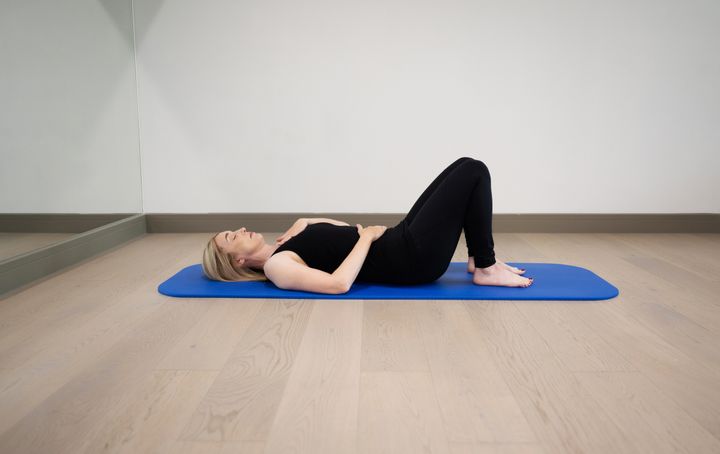
Exercise 1: Belly breathing

Jeannie Di Bon

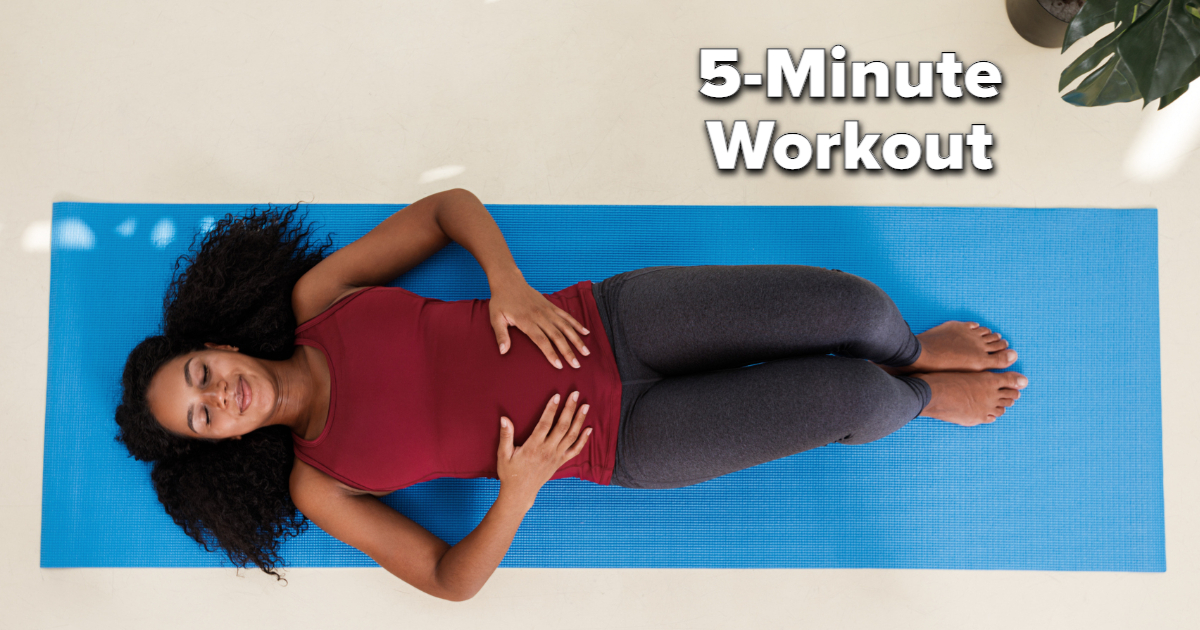
Start with some gentle belly breathing, allowing the lower ribs to expand. For many people, Covid causes a cough and cold so we want to start moving the lung tissue in the right way. Try to breathe quietly in through the nose and out through the nose. Lying on your back does not require strong inhales so take it very gently, allowing the breath to come to you.

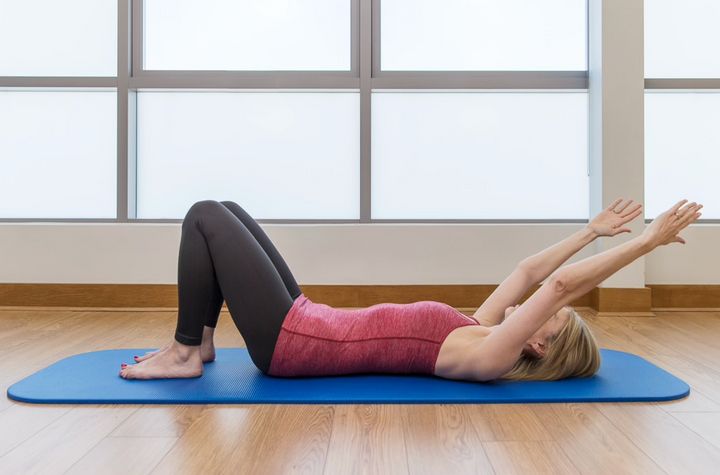
Exercise 2: Arm rolls

Jeannie Di Bon

Staying supine (lying on your back) is a good way to start moving – especially as some people experience dizziness with long Covid. You may find you don’t want to be standing for too long or doing exercises that involve inversions or squats. Keep it simple. This arm roll exercise can help stretch into the thorax and open the chest.

Start with your arms by your side. Try to keep the back heavy as you move the arms above your head and gently stretch. Let your breath settle the spine into the floor and allow the tissues to relax. You can add arm circles to this for a beautiful stretch across the chest.

Exercise 3: Ankle roll

Jeannie Di Bon

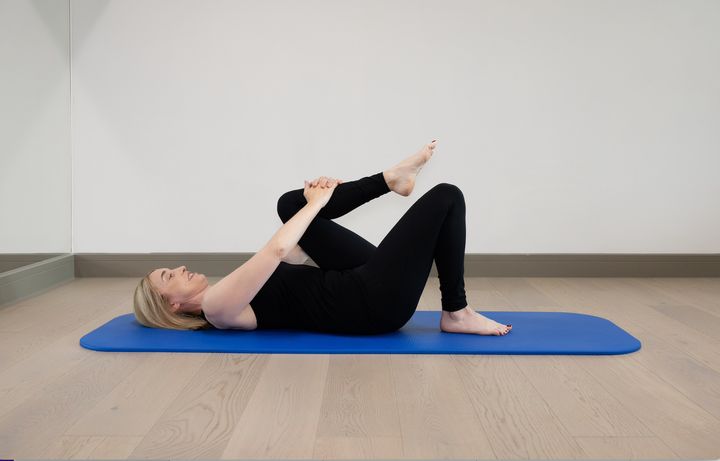
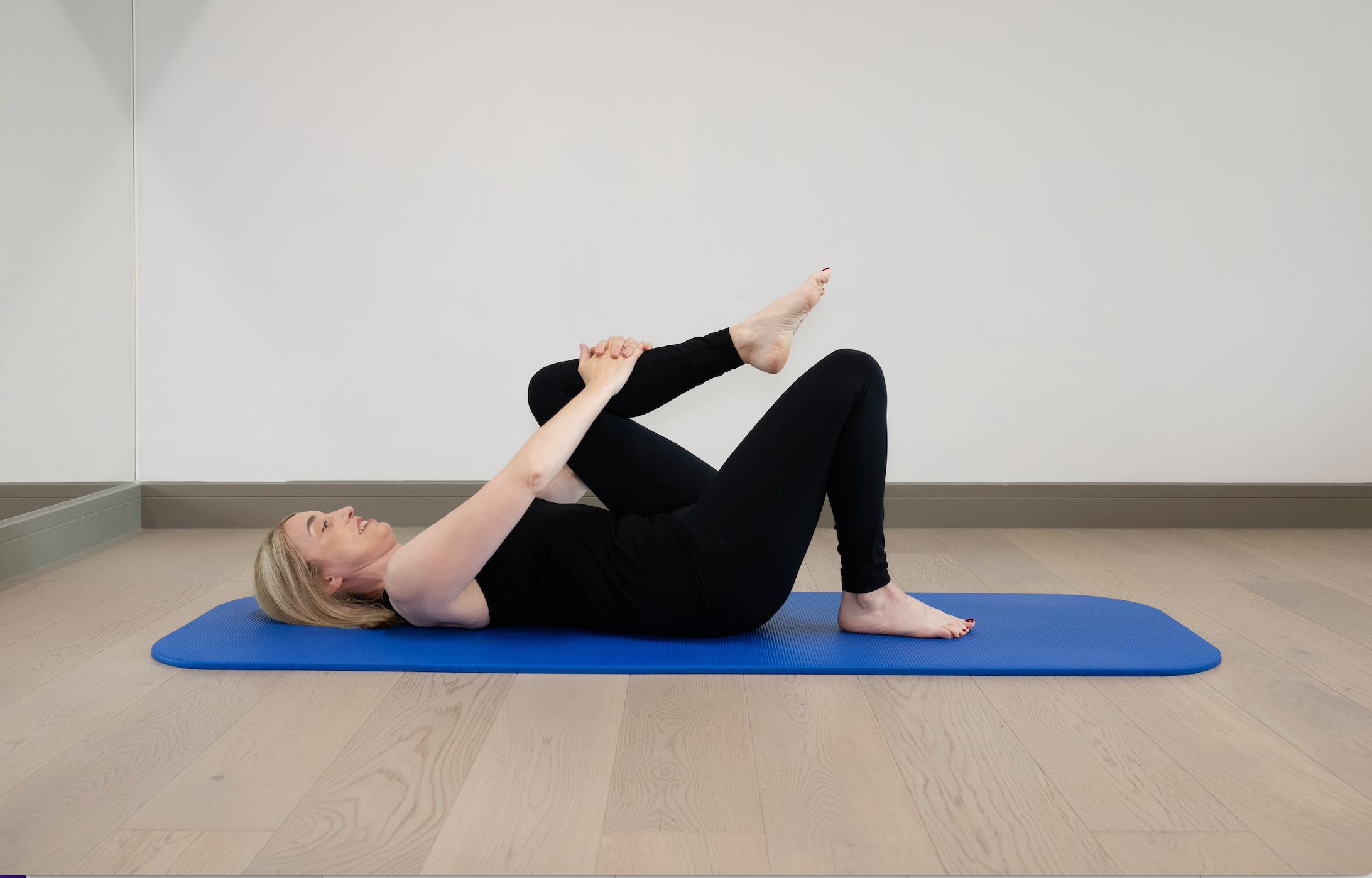
To help with the dizziness that can happen, some simple leg exercises like calf pumps or ankle circles are recommended. You can do these lying on your back: hold on to one leg and try to circle to the ankle without the rest of the leg moving. Gently lower it back to the ground and repeat on the other leg.

Exercise 4: Resistance training

Jeannie Di Bon

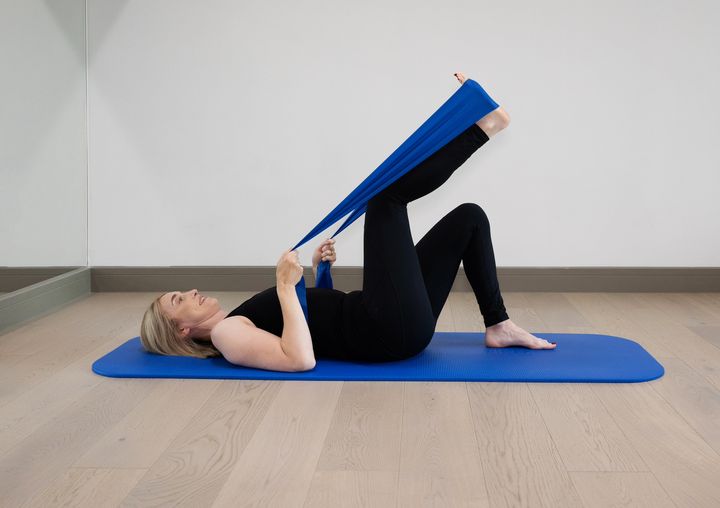
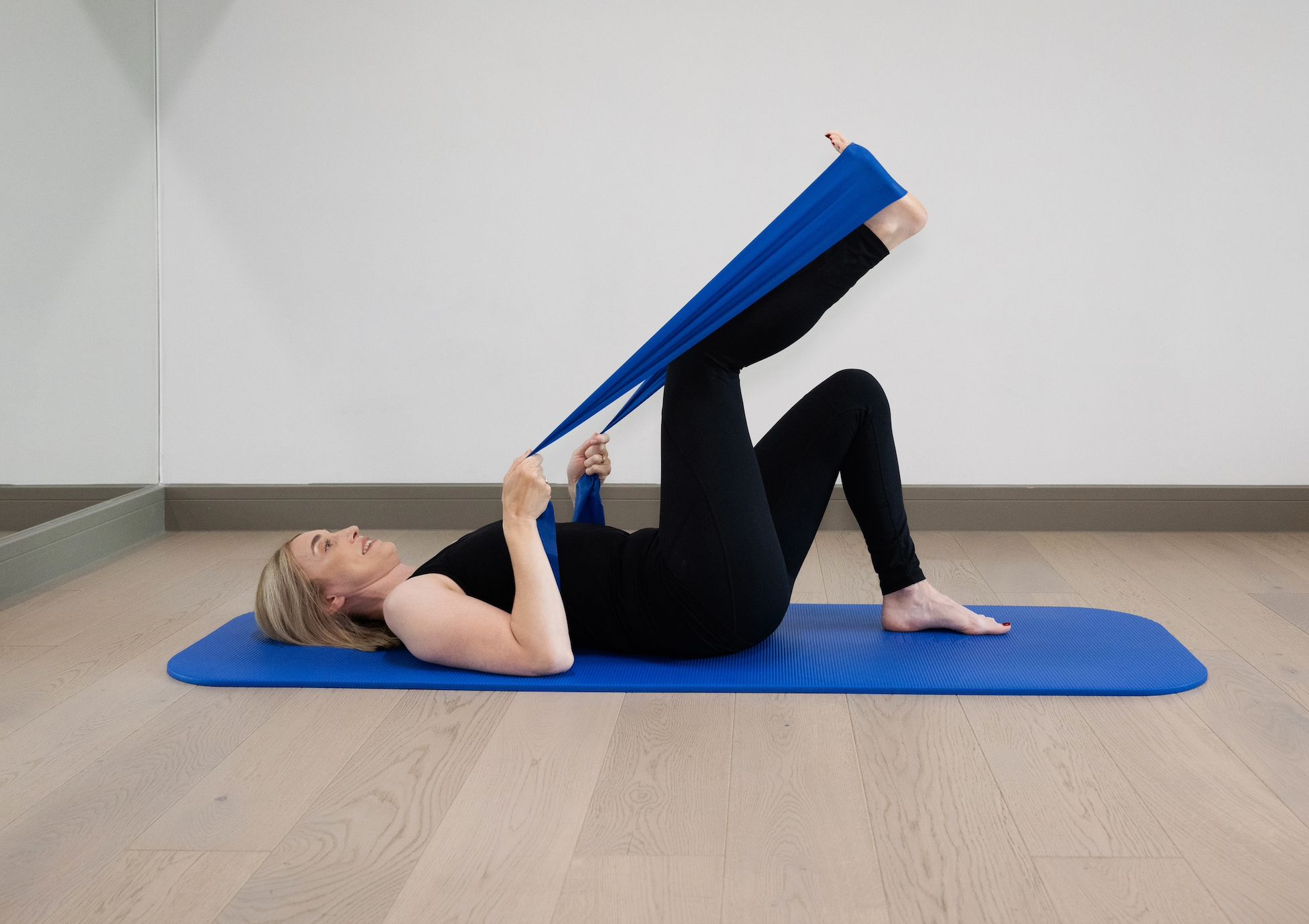
To build leg strength further, you can add a band for resistance work that is also gentle. This is another great exercise for circulation and helps prevent dizziness. Take a band and place it around your foot with the knee bent. Focus on gentle rolling the back of the thigh along the mat until the leg straightens.

Try not to lock the knee or hang into the band. Keep the energy flowing down the leg into the band. The back stays heavy into the mat – if your back is arching, raise the leg higher. Once the leg is straight, press the balls of the feet into the band and start to point and flex the foot. This is a brilliant way to utilise the calf pump.

Exercise 5: Seated twist

Jeannie Di Bon

Jeannie Di Bon

Jeannie Di Bon

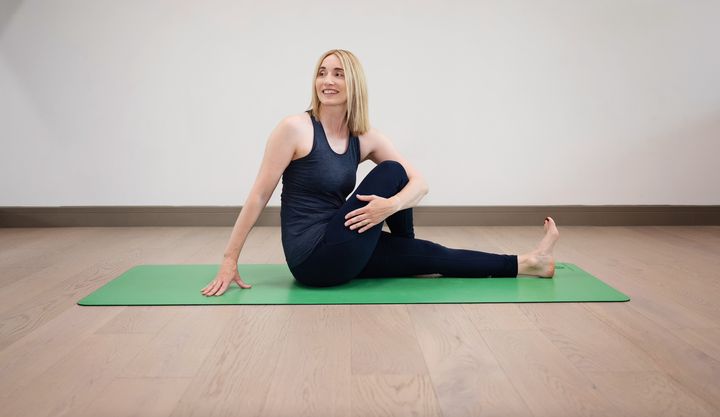
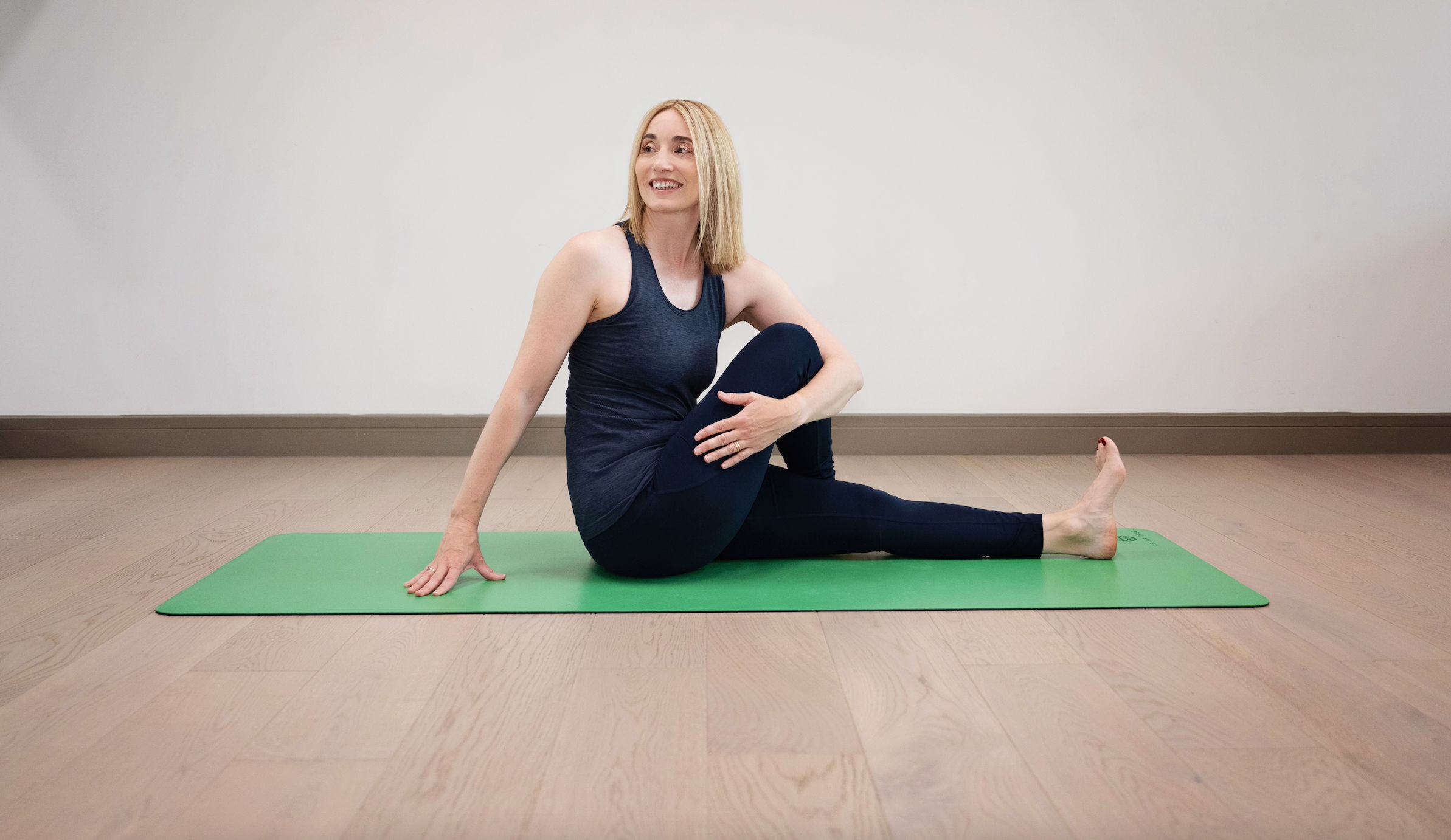
A seated twist is great to help circulation and digestion. Many people do experience stomach cramps and pain with Covid. Find a comfortable seated position and cross one leg over the other straight leg. Use your arms to guide yourself around to look over the opposite shoulder. Try to lift the spine up as you twist, rather than compress the spine. It’s also important to go gentle and not force into the twist. Stay in the position and breathe softly allowing tight muscles to release. You can then repeat on the other side.

Move celebrates exercise in all its forms, with accessible features encouraging you to add movement into your day – because it’s not just good for the body, but the mind, too. We get it: workouts can be a bit of a slog, but there are ways you can move more without dreading it. Whether you love hikes, bike rides, YouTube workouts or hula hoop routines, exercise should be something to enjoy.

HuffPost UK / Rebecca Zisser

Share Button

People Are Muting Their Favourite Influencers. They Tell Us Why

Instagram and influencers – it’s difficult to imagine one without the other. I’ve happily followed fashion influencers on Instagram since I first downloaded the app in 2014. And there’s no doubt the limited representation of Black women in mainstream media made me feel connected to Black influencers specifically.

These were the people I ran to for makeup recommendations, to ogle their clothing choices and tap up their lifestyle content, from food to travel. I’ve kept up with everything my favourite influencers are wearing and buying for years.

That is, until the pandemic.

It was during lockdown when I started feeling less inclined to scroll influencer content. This was partly because my own life, like many others at the time, wasn’t where I wanted it to be. I was job-hunting, while freelancing through a pandemic. It was difficult and I wanted social media to be a form of escapism.

But the content I’d once found aspirational began to feel out of touch. Seeing people the same age as me buying things I couldn’t afford didn’t want to make me want to work harder – it made me feel like I was doing something wrong.

I knew the influencers weren’t really the problem, but I had to control how they were leaving me feeling. As someone who spends a lot of time on social media, it was up to me to decide which content I wanted to consume.

So I started to unfollow or mute some of their accounts.

Like me, Toju, a 21-year old student from Glasgow, also noticed a shift during the Covid lockdowns in how she felt about the influencers she followed.

These were the weeks and months when it was easy to think other people had more space, more time, were being more productive or having more fun than you, despite the challenges we were all facing. Remember when it seemed like every past Love Island contestant ever was in Dubai over Christmas 2021?

“During that time, a lot of influencers were travelling or just living very different lives to me,” she says. “I’ve also recently felt a shift again this year as more influencers have moved towards luxury or designer items in their content.”

More influencers that ever seem to be publishing elevated content, from showcasing their designer clothes and bags to eating out at expensive restaurants and generally living a life of luxury.

Of course, this content can be seen variously as aspirational or a form of escapism. It can also make you feel wholly inadequate in the here and now.

The cost of living crisis is playing out in real time. It’s hardly surprising Toju and many other social media users no longer feel inspired by influencer accounts.

“I can’t even be ‘influenced’ because these items are simply entirely out of my reach and budget, so I gain nothing but feelings of inadequacy from them,” she says.

“I’m seeing more things that would like to have but can’t afford on a daily basis, something I probably wouldn’t see if I wasn’t on social media.”

But the answer isn’t necessarily coming off social media entirely. It could just be changing who you do follow or which platforms you use and for what.

Data analyst, Hena J. Bryan, 25, a content creator herself, says that she’s put many of the influencers she used to follow on mute for over a year now.

“They just don’t align with a lot of the things I find important,” she says. “I think relatability, for me anyways, goes beyond finances, especially as I can afford the things they’re advertising. I want to discover more influencers who offer more than pretty pictures, and I’ve found a few who speak to my interests.”

Bryan creates content about the books she is reading and enjoys engaging with others doing the same. She adds: “I think people should curate their feed. You literally have to be militant and protect your digital footprint/experience.”

If you want to follow influencers, seek out those who genuinely speak to your interests.

SDI Productions via Getty Images

If you want to follow influencers, seek out those who genuinely speak to your interests.

It’s also worth being aware that how you engage with social media shifts over time. Akachi Priscilla Mbakwe, 32, a marketer from south London has lived online since her early teens. “I’ve been following influencers since I was on Tumblr,” she tells HuffPost UK. “People like Justine Skye who at the time were influencers, but the term wasn’t invented yet.”

When she was younger, Mbakwe says she followed people “for aspirational reasons”, and for their fashion and make-up content.

“I started to feel different in the pandemic especially during the resurgence of Black Lives Matter. I saw influencers uploading pictures of themselves whist the caption was about George Floyd – they just looked silly to me.”

There’s self-preservation at play here, too. “I started to unfollow influencers because I realised subconsciously that I was constantly comparing myself to them,” says Mbakwe. “Now I have such a better relationship with myself and how I look and I don’t want to compromise.

“I still look at them from time to time but not like I used to. Also, now I feel that most influencers make the same content. They’re all following the same formula. If you follow one it feels like you follow all of them.”

So, where does ultimate responsibility lie: with the followed or their followers?

Though the life of an influencer looks perfect, influencers themselves will tell you that sometimes it’s far from that. A lot of work goes on behind the scenes and many posters rely on rented or gifted products to project the image they do, some earning little more than the followers who aspire to their lifestyle.

“I don’t feel like influencers should change their content to suit us,” weighs in Mbakwe. “I think we (the consumers) should curate and have better boundaries with our feed if the content you’re viewing is making you feel bad.”

Bryan echoes this: “I believe we should all have social responsibility, but we shouldn’t have to force influencers to do/say things they don’t want to. You’re responsible for what you consume and I think TikTok has created a wave of new influencers who don’t lend themselves to perfectionism and are more relatable.”

With living costs only set to increase, it might be time for be more conscious about the content we choose to see. Arguably Influencers aren’t the ones to blame, just a byproduct of a capitalist society that rewards people for flaunting their wealth.

You have the power to choose who and what you engage with, so be honest about how your Instagram feed leaves you feeling – and make the changes you need.

Share Button

Vitamin C: An essential nutrient

Reprint Permissions

A single copy of these materials may be reprinted for noncommercial personal use only. “Mayo,” “Mayo Clinic,” “MayoClinic.org,” “Mayo Clinic Healthy Living,” and the triple-shield Mayo Clinic logo are trademarks of Mayo Foundation for Medical Education and Research.

Share Button

When Is Wayfair’s Way Day Sale And What Are The Best Deals?

​​We hope you love the products we recommend! All of them were independently selected by our editors. Just so you know, HuffPost UK may collect a share of sales or other compensation from the links on this page if you decide to shop from them. Oh, and FYI — prices are accurate and items in stock as of time of publication.

So, you pride yourself on being a savvy shopper when it comes to deals and discounts. You’re a Prime Day pro, you can bosh Black Friday, and you’re all over the hidden savings to be found in Ebay’s refurbished section.

But you’re missing a trick if you’re not also mining Way Day – Wayfair’s annual 48-hour sale, a great time to nab some big savings on even bigger ticket items for your home and garden.

When Is Way Day 2022?

Wayfair’s biggest sale of the year is actually a two-day affair, running from 12am the morning of Wednesday April 27 through to midnight on Thursday April 28.

That adds up to 48 hours of discounts on a huge range of items across Wayfair.co.uk, with free delivery on orders over £40 to most UK addresses.

What are the best Way Day deals?

Way Day is a great time to pick up those tick list items you’ve been wanting for your home and garden, whether that’s kitting out your bedroom, sitting room, home office, nursery or outdoor space. And there’s also a wealth of soft furnishings and accessories to be snapped up on site.

Among this year’s deals, the home retailer is selling beds for at little as £99.99, garden furniture sets under £200, and sofas for a bargainous £249.99. The discounts have even started early with 70% already off some items.

Categories on sale will include:

We’ll be rounding up the best savings to be made on home and outdoor ware in this year’s sale right here on HuffPost Shopping as Way Day progresses.

Stay tuned as we update our shopping guides on this page and you can also sign up for alerts on a range of homeware categories on the Wayfair site.

Share Button

The Most Important Phrases You Should Teach Your Kid From A Young Age

As parents, we want to raise good kids — ones who are curious, confident, empathetic, resilient and respectful.

What we say to (or in front of) our children, the way we say it and the behavior we model help shape the people they’ll become.

We asked experts to share some of the most important phrases we can teach our kids from a young age. Many of them are simple yet make a “surprisingly big impact on children’s abilities to thrive,” said educational psychologist Michele Borba, author of “Thrivers: The Surprising Reasons Why Some Kids Struggle and Others Shine.”

1. “There’s no such thing as a stupid question.”

Little kids love asking questions — sometimes nonstop from the moment they open their eyes in the morning to the time their head hits the pillow at night. All that curiosity is great, but it can also be exhausting for parents and caregivers.

“Sometimes we inadvertently deflect our children’s curiosity because it can be overwhelming,” psychotherapist Mercedes Samudio, author of “Shame-Proof Parenting,” told HuffPost. “But teaching our children that there is nothing wrong with being curious and even teaching them how to seek out answers from others can be a helpful trait to cultivate in children from a young age.”

Encouraging their inquisitiveness and helping them feel confident enough to speak up when they’re unsure about something will serve them well for years to come.

2. “I got this!”

We want our kids to adopt a “growth mindset,” a term coined by Stanford psychologist Carol Dweck, which describes the belief that talent can be developed with hard work, determination and help from others. Those with a fixed mindset, however, believe their intelligence and skills are innate and therefore unlikely to be improved upon.

“When kids (or adults) are in a fixed mindset, difficulty makes them feel inadequate — their fixed ability feels deficient — and their confidence becomes shaky,” Dweck told Stanford News. “But when they are in a growth mindset, difficulty is a natural part of learning, so they are more likely to take it in stride and find new strategies that work better.”

Phrases like “I got this!” can help kids feel more confident as they attempt new and difficult things.

Maskot via Getty Images

Phrases like “I got this!” can help kids feel more confident as they attempt new and difficult things.

Borba recommends encouraging your child to use phrases like “I got this” or “I can do this” to bolster their belief in themselves when challenges arise.

“Our children must develop growth mindsets — a sense of personal efficacy or agency — especially in today’s uncertain world,” she said. “Resilient children are tenacious — they don’t stop! And they don’t wait to be rescued.”

3. “Hi, my name is X. What’s yours?”

Between schools being closed and many activities and events being canceled, the coronavirus pandemic limited kids’ opportunities to socialize with their peers. Now that things are opening up again, we can encourage kids to get back out there and introduce themselves to new people and, hey, maybe even make a new friend.

“Two years of physical distancing has caused a lot of children to be socially anxious,” she said. “They haven’t exercised their social skills — and they’re easy to learn if we model them.”

4. “It’s OK to make mistakes. Just be honest about it.”

Making mistakes is an inevitable part of life. When we teach our kids this, we send a message that messing up is only human. It’s how we handle those blunders that matters.

“Honesty is a trait many parents want to cultivate in their children, and the best way to do that is to make sure that it’s OK to make mistakes in your family,” Samudio said. “From a young age, we can teach children that the best way to develop honesty is to be supported through mistakes — which moves children away from lying to get out of trouble, because mistakes don’t bring punitive responses.”

5. “Thank you.”

Gratitude is a learned behavior. As parents, it’s our duty to help instill in our children the importance of being thankful for what we have — and expressing it. Research has shown that practicing gratitude is strongly and consistently linked with greater happiness, as well as better health and relationships.

Saying thank you often increases gratitude — “a known and simple happiness booster,” Borba said.

You might model this to your child by expressing to them how grateful you are for their thoughtful or helpful acts, said Amy McCready, founder of Positive Parenting Solutions.

“Be specific about how they made a difference for you: ‘Thank you for playing with the dog while I had my conference call. I really appreciate how you kept him occupied so I could concentrate on the meeting.’” she previously told HuffPost. “Being the recipient of gratitude will encourage your kids to want to pass it on.”

Let them also see you share your appreciation for others in your day-to-day life.

“From the cashier at the grocery store, to the dry cleaner to their teachers,” said McCready. “Your kids are watching and listening.”

6. “It’ll be OK.”

Helping our kids learn to stay optimistic through difficult times can put them in a better position to weather life’s challenges.

Language like “It’ll be OK,” “I’ll get through it” and “Things will get better” can be powerful in achieving this.

“Let’s teach kids simple statements to keep hope alive and pessimism down,” Borba said.

According to Aha! Parenting, “Research shows that optimists, who believe they can achieve success, are in fact more able to do so. They are less likely to get depressed, get fewer illnesses, have longer relationships, and live longer.”

Teach your child that they have the power to perceive setbacks any way they choose. When they’re catastrophizing, remind them that many problems are temporary and often within their power to fix — or at least improve.

This is part of a HuffPost Parents series called Enjoy the Ride. Read more here.
Share Button

Tories Accused Of Breaking Pre-Election Rules Over Prison Terror Crackdown

Labour have accused the Tories of breaking strict pre-election rules by preparing to announce a crackdown on terrorism in prison.

Justice secretary Dominic Raab is on Wednesday expected to unveil the government’s response to a report by Jonathan Hall QC, the independent reviewer of terrorism legislation.

According to The Times, Raab will announce that existing laws are to be strengthened to make it easier for convicted terrorists to be separated from the rest of the prison population.

He is also expected to introduce tougher measures to allow acts of terror inside prison to be punished more severely.

But Labour say the announcement has been timed to “deflect attention” from the partygate scandal.

Shadow justice secretary Steve Reed has written to Simon Case, the cabinet secretary, to ask whether rules banning major government announcements in the run-up to elections have been broken.

Voters across the country will go to the polls for the local elections on May 5.

The letter, seen by HuffPost UK, says: “The issuing of fixed penalty notices to the prime minister, the chancellor and other officials has shone a light on the government’s record on crime and an announcement such as this one could be perceived as an attempt to deflect attention away from these issues one week away from crucial local elections.

“Please will you confirm what consideration was given regarding the timing of this announcement, in line with guidance provided to all civil servants, including special advisers, and what specific advice was offered?”

Reed said: “This soft-on-crime Conservative government is trying to deflect from its own criminality.

“Bungling Dominic Raab has been sat on this crucial report for six months, yet it’s only now, when the prime minister is mired in the partygate scandal and the Tory-made cost of living crisis, that his department issues its response to rampant radicalisation in prisons.

“The lord chancellor needs to tell the victims of terror offenders why it has taken him so long to take radicalisation in jails seriously.”

A Ministry of Justice spokesperson said: “All announcements are made in accordance with government guidance.”

Share Button

Can We Ever Really Recover From Burnout?

You’re reading Life-Work Balance, a series aiming to redirect our total devotion to work into prioritising our personal lives.

“I’ve had splinters on my feet, I’m physically exhausted, I’ve had breakdowns. All the detox time in the world doesn’t change how burned out I am.”

This is the experience of Anthony*, a tech worker, 34, from London. After being asked to work weekends, weeks of late shifts, only then to be swapped onto earlies without warning, Anthony’s job has left him totally drained. So much so he’s quit his job without securing another. “I just can’t take anymore of this.”

Anthony isn’t alone in this state of mind. By the end of 2021, burnout was affecting more than 79% of UK workers, according to research by the HR tech company Ceridian, with 35% of people reporting high or extreme levels.

Nearly half (49%) of those surveyed in research cited an increased workload as a cause. The ongoing pandemic, post-Covid recovery, and the so-called Great Resignation, have left employers squeezing more out of their workers than ever before. And it’s causing a physical and mental health crisis.

Is there a chance of recovery? How long does it take to get over burnout?

We’ve seen buzzwords like self-care, wellness weekends and digital detox become the norm, but they risk ignoring the broader picture – that short stints of respite or relaxation don’t counteract the strenuous, back-breaking and brain-fogging nature of work under capitalism.

So what can we do? The obvious solution – if the Great Resignation is anything to go by – is to leave workplaces, even professions, that are bad for our health.

It’s what Lana*, 26, a social services worker in New York City, had to do to get some relief from her burnout.

“I quit working in the most toxic field possible in which I was forced to travel all over the city to unsafe locations. I got no support while dealing with people in extreme suffering/people who are dying. So I decided to get out of the field,” she tells HuffPost.

“Now I do my job and come home. No travel, no dying, I don’t stay late and I don’t take work home with me.

“My burnout was affecting me and my clients. I had to take a good hard look at myself and give myself the freedom to breathe again.”

Lana says she appreciates not everyone can leave their job immediately, especially given how expensive the cost of living is right now.

But if you are experiencing burnout, she says, it pays to make a change, rather than attempting simply to work through it.

“Finding new work definitely isn’t the only way to get over burnout, but you have to know when it’s time to take a break or reevaluate,” she says. “I feel like we owe it to ourselves.”

And while you might not completely be able to get over this block, there are some things you can do to mitigate burnout.

Jo Davidson, a business strategist who predominantly mentors female entrepreneurs, says she sees burnout among her clients all too often.

Recognise when you’re being pushed too much, she says. “Acknowledge that burnout is a result of the body telling us to stop. But we choose to ignore it, and don’t listen,” she tells HuffPost. “Taking changes is important because going back into exactly the same situation will only ever delay the healing.”

So how long can you expect to take to recover? Well, there is no right answer as the journey isn’t so linear.

“Recovery from burnout is definitely affected by how long it has been going on and how the individual recognises they have it and how actively they want to overcome it. For some it may be 10-12 weeks, however for others it can take years.”

10 steps to dealing with burnout

Davidson says there are ways you can aid your own recovery, whether that ultimately means leaving a job – or not. Here are some of those steps:

1. Acknowledge that it exists
2. Track stress levels (use an app, journal)
3. Identify the stressors and step away from these situations
4. Seek professional help. This is a strength not a weakness
5. Create a work life balance that includes time to have fun and rest
6. Change jobs if it is really badly affecting your mental health
7. Be kinder to yourself and keep a gratitude journal
8. Own it and believe that you can change it
9. Create a healthy sleep schedule and diet
10. Set boundaries.

While these are ways as individuals that we can ameliorate our conditions, remember that setting personal boundaries may not change the demands of your job wholesale.

This requires a company-wide push, or if you’ve got enough seniority in your role, a persistence in demands to change the wider work culture. Work should be a complementary part of our lives, not the thing that makes it unliveable.

*Names have been changed and surnames omitted to offer anonymity.

Life-Work Balance questions the status quo of work culture, its mental and physical impacts, and radically reimagines how we can change it to work for us.

HuffPost UK/ Isabella Carapella

Share Button

Keir Starmer Says ‘Difficult’ To See Jeremy Corbyn Getting Labour Whip Back

Keir Starmer said it is “difficult” to see how Jeremy Corbyn could have the Labour whip restored following his comments on Nato.

Last week Corbyn suggested military alliances like Nato could build up “greater danger” in the world and should ultimately be disbanded.

The former Labour leader was stripped of the whip in 2020 over his response to the equalities watchdog’s report into anti-Semitism in the party.

He was reinstated as a Labour member after a suspension, but Starmer has refused to readmit him to the parliamentary party.

Corbyn’s allies in the party have repeatedly demanded that their ally be allowed to sit as a Labour MP again so he can stand for the party at the next election.

But asked on the BBC’s Sunday Morning programme whether Corbyn could be restored as a Labour MP following the comments, said: “It is very difficult to see how that situation can now be resolved.

“He lost the whip because of his response to the Equalities and Human Rights Commission in relation to anti-Semitism but I made it very clear, the first thing I said as party leader was that I was going to tear out anti-Semitism by its roots in our party.

“I’ve also made it clear that our position in the Labour Party is not to accept the false equivalence between Russian aggression and the acts of Nato.”

Told that it sounded as if he was against Corbyn returning as a Labour MP, Starmer replied: “I’m very clear on my positions on those two issues, very clear.”

Corbyn, the MP for Islington North and a long-standing critic of Nato, told Times Radio last week that he did not blame Nato for Vladimir Putin’s invasion of Ukraine but questioned: “Do military alliances bring peace?”

He acknowledged the transatlantic alliance was not going to be scrapped immediately but added that people should “look at the process that could happen at the end of the Ukraine war”.

Corbyn has described the choice to remove the Labour whip from him as a “totally unjustified decision”.

Asked if he could start his new own political party, he said: “I don’t know what the future is going to bring.”

Last week Boris Johnson accused Starmer of being “a Corbynista in a smart Islington suit”.

But Starmer responded: “I think you’ll find Mr Corbyn doesn’t have the whip.”

Share Button