After almost 10 months of war, the impact of Russia’s invasion on Ukraine’s children is truly devastating.
The UN believes around 400 children have been killed and more than 700 have been left with life-changing injuries since Vladimir Putin ordered troops into Ukraine.
Advertisement
And, as the war is ongoing – making it harder to gauge the full impact of the atrocities in Ukraine – agencies believe the real figures are much higher.
Three Ukrainian photographers – Anastasia Vlasova, Alina Smutko, and Nina Sologubenko – have captured how children are coping this Christmas for Save The Children.
According to one mother, Oksana*, her eight-year-old daughter’s hair has started to turn grey from the stress.
Advertisement
“Look at my elder daughter, she is only eight and she has grey hair. I do not tell her, but when I braid her hair, I burst into tears, because she is a little child and they saw such things,” she told the photographers.
“It was very scary sitting in the basement, knowing that if – God forbid – the house was hit, you would be buried. You worried about yourself at that point, you’re scared for your children.”
Twelve-year-old Karina* also told the photographers: “There’s going to be something lacking. You know, the atmosphere of Ukrainian Christmas.”
Olha*, mother of seven, told Save The Children: “This year the mood isn’t festive. We just wish the war would be over, to live peacefully.
“We don’t want anything, no Christmas, no New Year. How can we celebrate? People are dying.”
She said that at night they “fear every rustle”.
Here are just seven images which provide a snapshot into the lives of Ukrainian children under attack from Russia right now.
Save The Children
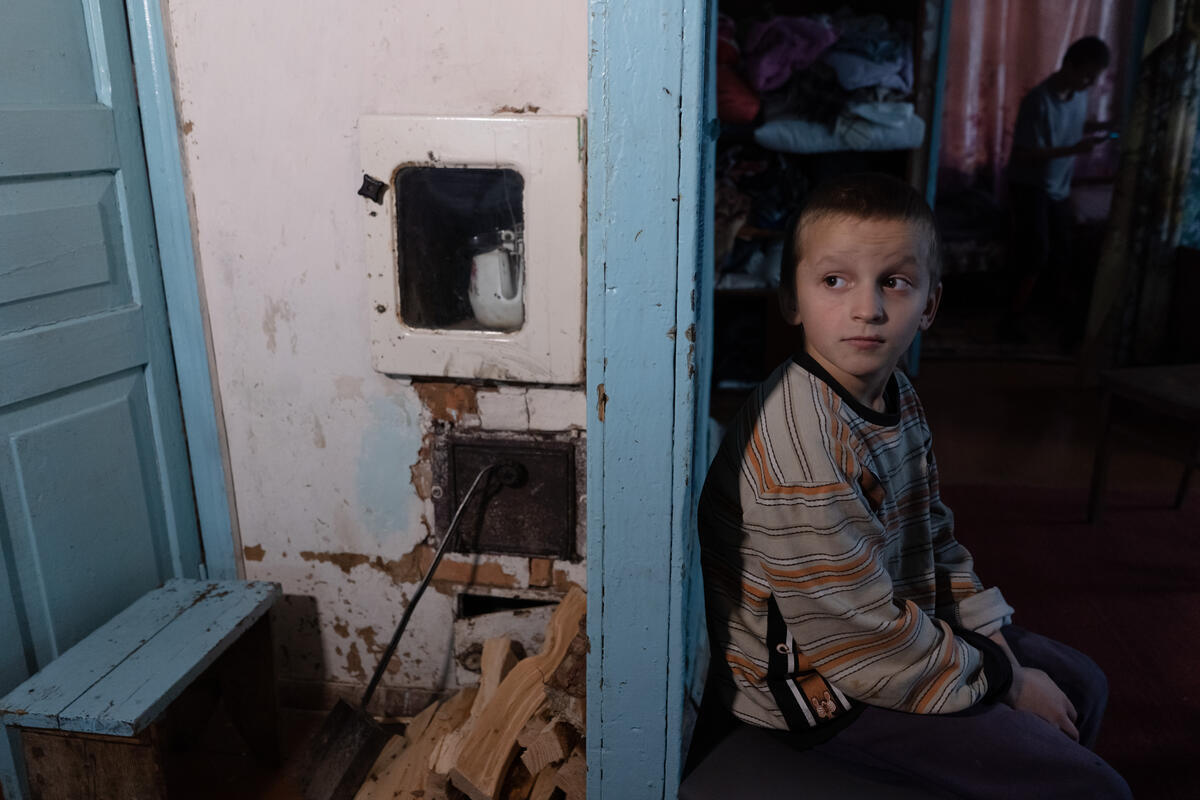
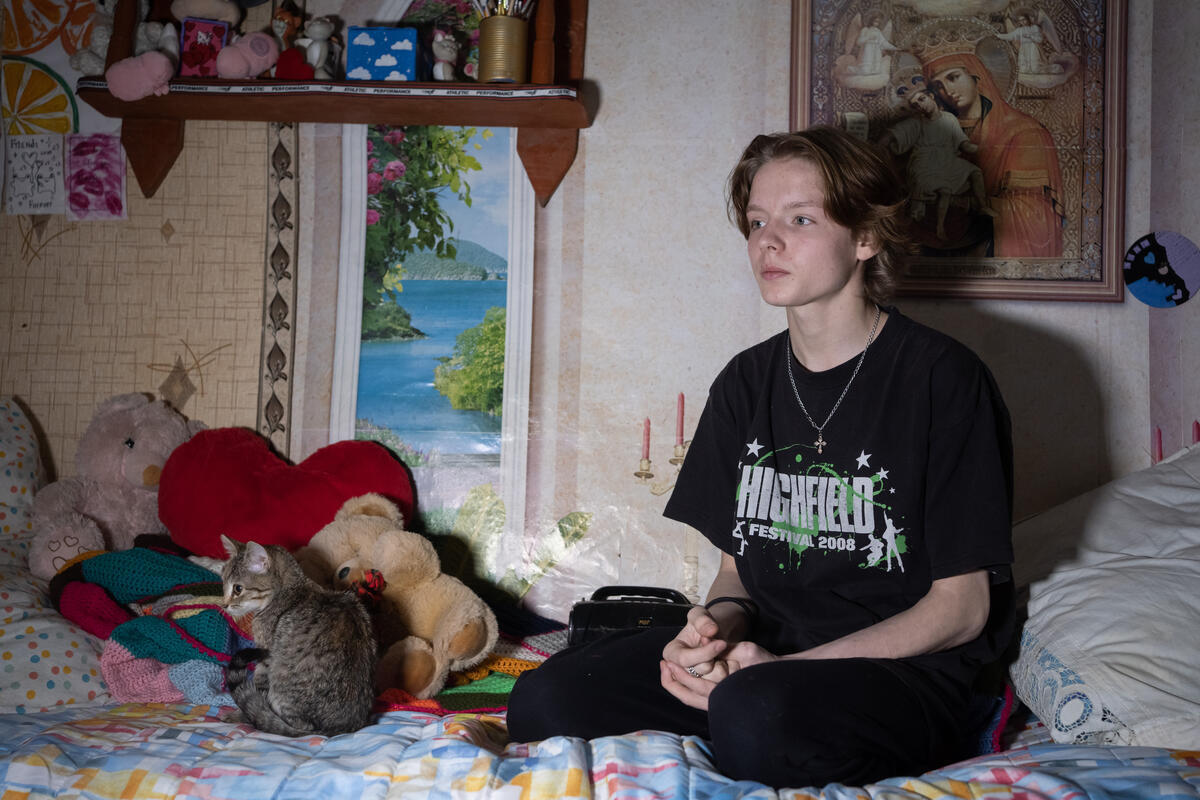
15-year-old Dmytro* was one of several children interviewed for Save The Children.
Save The Children
Dmytro* lives with his mother and six younger siblings in northern Ukraine, near the border with Russia and Belarus.
Advertisement
Save The Children
A view of *Dmytro’s house that burned down, near Chernihiv, Ukraine.
Save The Children
Three photographers have shared a harrowing insight into life in Ukraine right now.
Save The Children
Dmytro*’s brother Taras*, four, sits by the wall behind the heating stove at home near Chernihiv, Ukraine.
Save The Children
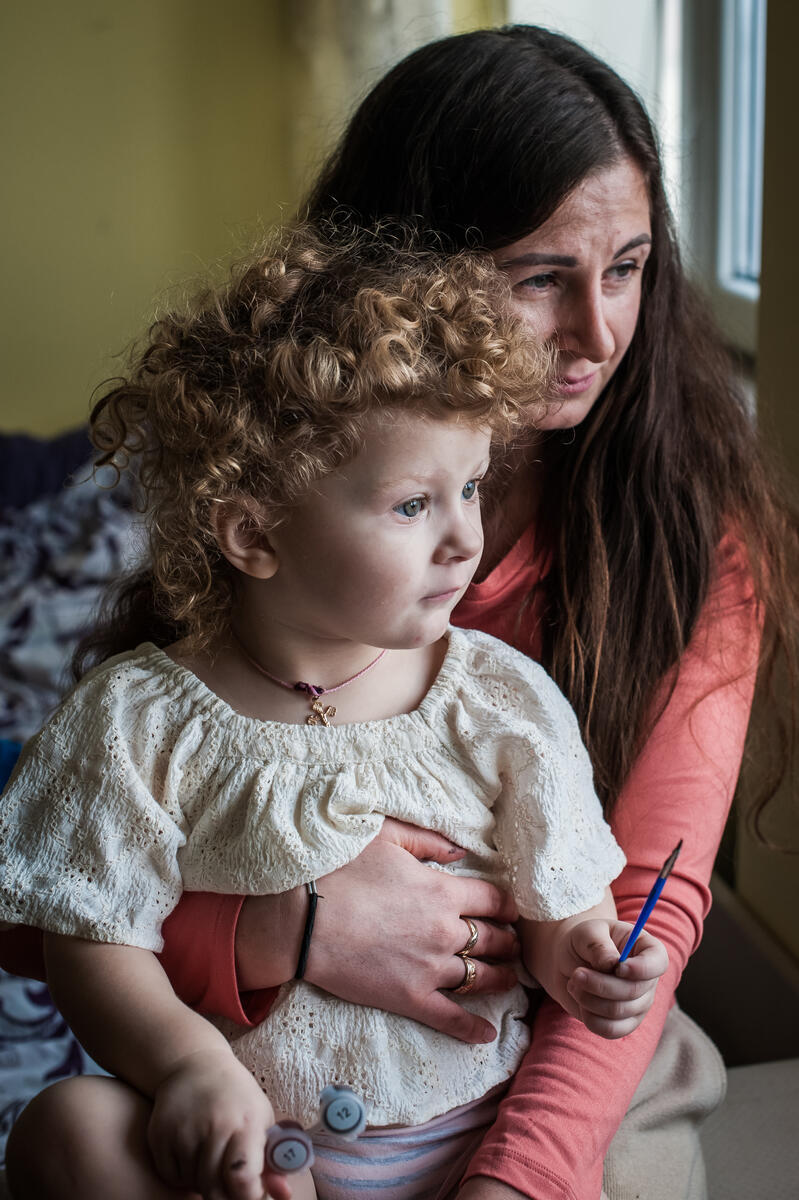
Elena*, 36, sits for a portrait with her two-year-old daughter Vira* in their flat in Suceava county, northern Romania
Save The Children
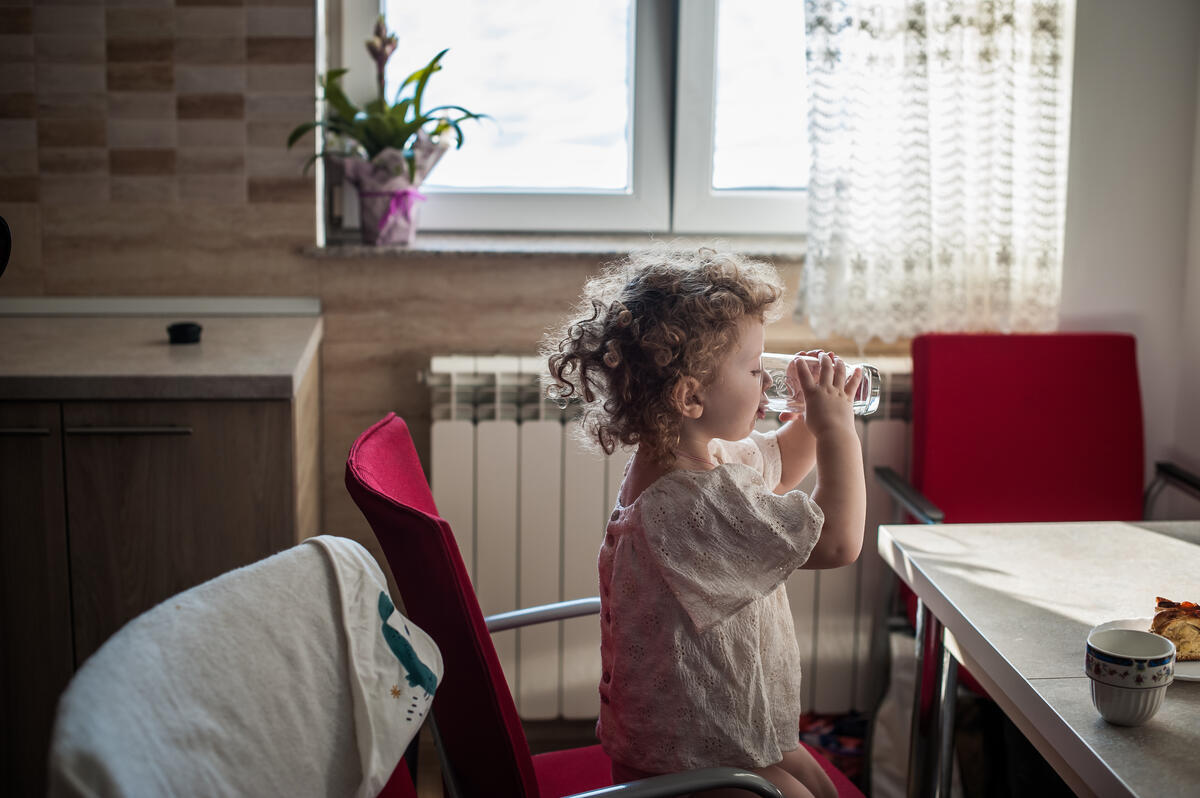
Vira*, two, sits in her kitchen for a portrait in Suceava county, northern Romania
Advertisement
Save The Children
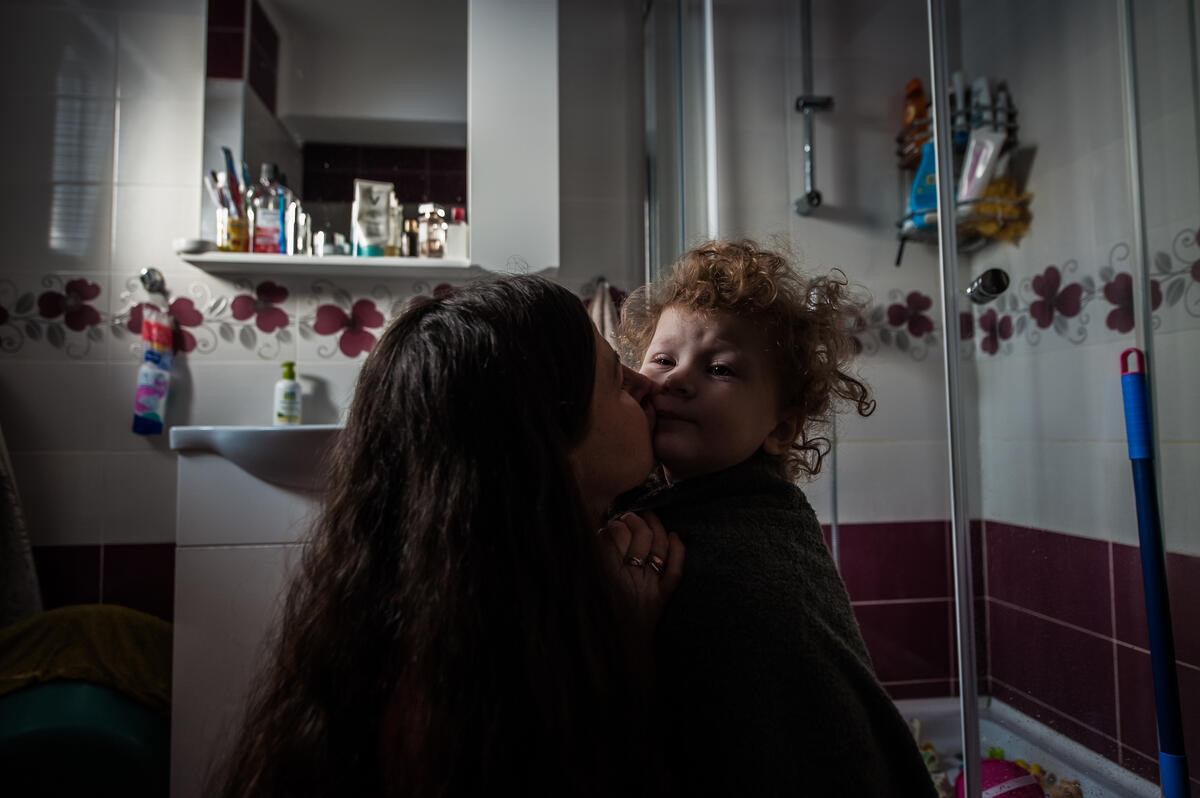
Elena*, 36, hugs her daughter Vira*, two, in the bathroom at their home Suceava county, northern Romania
The difficulties Ukrainian children are facing during this tumultuous period has not gone unnoticed in Kyiv.
The Ukrainian president Volodymyr Zelenskyy shared a video address on the first day of the new school year back in September. He said: “They stole part of your childhood, part of your youth…
“But you are free. You always will be. So be worthy of your will – and of our Ukraine.”
*Names have been changed to protect their identity.
Life with toddlers is a real rollercoaster – one moment they’re telling you they love you, the next they’re mooing at you as you step out of the shower.
Fast forward two hours and they’re prostrate on the floor, screaming at you because you wouldn’t let them lick your shoe.
Advertisement
While they can be pretty harsh sometimes – and totally unreasonable – their brutal honesty and innocent outlook on life often brings plenty of laughs to the table, too.
These tweets sum up just how chaotic life can be with young children – and while we do love a moan as parents, we also know we wouldn’t have it any other way.
1. Where did you hide the poo?!
I know there’s the famous sad story in three words, but I just heard a horror story from my toddler in six: “I pooped in a SECRET way!!!”
3. Today in questions you never thought you’d ask yourself: Why is there a car under my back?
Our toddler, while extremely cute, is a trash sleeper. He’s just not great at it. So he started sleeping with race cars to help him feel better. And the current car of choice is a large one that ends up under my back when he climbs into our bed. So now I need a new spine 😩
5. This parent was probably quite relieved they didn’t get to see their toddler’s carol concert IRL.
Was sent a recording of my toddlers carol concert (no space in her nursery for parents to come and watch) and it’s literally the best thing ever- just a bunch of 3/4 year olds screaming FELIZ NAVIDAD like maniacs with no effort to make it sound like a song. 10/10
9. Twinkle Twinkle Little Star. But with the word penis.
Instead of sleeping, my toddler is singing “penis penis penis” to the tune of twinkle twinkle little star and I have no joke to add to this, it’s just happening
10. This two-year-old ran the dishwasher undetected and empty for an entire hour.
Was watching tv, realized the dishwasher was on even though Id emptied it. Asked my husband why he ran it. He didn’t. THE TWO YEAR OLD RAN THE DISHWASHER UNDETECTED AND EMPTY for an entire hour. He’d been asking if he could run it for weeks. Guess he just saw his opportunity?
Does anyone else’s toddler just randomly do the Naruto run even tho they’ve never seen Naruto?? The parenting books don’t mention how to handle this?? Is Naruto endemic to toddlers?? Do they show it in the womb? Is my son Naruto??
16. Who doesn’t love getting sick 17 times a month?
17. This toddler requested their pear is cut into rectangles and nobody has time for this.
My toddler recently learned all about shapes and has started requesting that I cut his pear into rectangle slices so I guess this is the beginning of the end for me
21. WFH and looking after toddlers is a real hoot (said no one ever).
Shoutout to all parents who are trying to reply to emails this morning while on a Zoom call, while holding infant/toddlers who are sick with non-COVID fevers. You are not alone. #parenting#WorkinProgress
If you enjoy catering to the whims of someone who is illogical, insistent, and mostly incomprehensible, parenting a toddler is the perfect gig.
— Jess Hernandez BUY 1ST DAY OF UNICORN SCHOOL (@jhernandezbooks) December 11, 2022
Advertisement
23. Two going on… 42?
These toddlers are built differently with this gentle parenting. Today mine asked me asked if I could hand him a toy he couldn’t reach from car seat. I told him “I can’t rn, I’m driving”. He stared straight at me & calmly said “but you are at a red light”…… pic.twitter.com/oFZy0ZLDnF
It’s hilarious what toddlers bring home from daycare (when it’s not the latest respiratory virus.) Our little one’s new catch phrase is, “para! no me guuuuusta” which he yells full voice while thrusting out his hand in a stop ✋ sign directly in your face.
25. But then in the next breath they can be stone cold.
My toddler ran across the room to me with her arms open, and at the last second stopped herself, shook her head and said “no” and walked back to her dad. Toddlers are cold. 😭😭
26. This toddler is going places. (Mainly the steakhouse next door.)
While leaving the grocery store, my toddler smelled food from the steakhouse next door and said, ‘that smells like it needs to be in my mouth.’ Who am I to argue with logic like that?
Name two words parents dread more than sleep regression… we’ll wait.
We often hear about them in Whatsapp groups (why is my baby suddenly not sleeping?! Send coffee!), or in books about child development, with most agreeing the first sleep regression happens around the age of four months. Then eight months. Then 18 months and finally, two years.
But for lots of parents, it can feel like every week you’re starting a new sleep regression with a baby. And even when they’re toddlers, you’ll get the odd night where they sleep through in their cot (and you’ll pop some Prosecco in the morning to celebrate), but you’ll also get lots of occasions where they’ll wake up, end up in your bed, pull your hair, grab your lips and shout “DADDY!” approximately 59 times at 3.30am.
Advertisement
So what are sleep regressions – and why oh why does it feel like you’re constantly in one?
It turns out most sleep specialists don’t really consider sleep regression a thing, per se – the concept is not really used in scientific or medical contexts when discussing child sleep. That said, sleep specialists do recognise that lots of parents are aware of them.
“The only ‘regression’ with any science behind it, that I recognise, is the one that happens around four months old when babies’ sleep cycles actually change and become more like adult sleep,” says Emily Houltram, founder of The Sleep Chief. “But even that one divides professionals!”
Explaining what a sleep regression is, Lauren Peacock, a sleep consultant at Little Sleep Stars, says that “it generally refers to a sudden perceived deterioration in a child’s sleep pattern, typically characterised by difficulty settling at sleep onset and/or night-waking that is happening more frequently and possibly for an increased duration”.
Sleep isn’t linear, she explains, and like all other aspects of development, it matures over time with a noticeable change occurring in the first six months. “Once this change occurs, periodic night-waking becomes a normal part of the sleep pattern,” she says.
Advertisement
Then, whenever children hit a significant stage of their development – so that could be crawling, walking, talking, starting childcare, becoming a sibling, getting sick or teething (the list goes on), there is potential for their sleep to be impacted. Again, and again, and again.
Peacock suggests the term ‘regression’ is actually very misleading because none of these events occur as a result of a child going backwards – “they are only ever moving forwards,” she adds.
But for parents who aren’t sleeping that well, it can definitely seem like a step backwards compared to those halcyon days of newborn sleep when you could ease them gently back into slumber with a mere cuddle and a bit of milk.
Most babies will be impacted by a disruption to sleep at some point in their first few years, but some will be less impacted than others.
“All babies experience changes to their sleep pattern and many will go through phases where sleep feels more challenging,” says Peacock. “Some little ones do have a trickier relationship with sleep than others and so whilst some children will experience more frequent and persistent sleep disruption, others will navigate through these inevitable ups and downs much more smoothly.”
Advertisement
If you’re very much in the camp of surviving the day on four hours’ sleep and feeling like you might never get a good night’s kip ever again, we have some good news – and some bad news.
The good news is that this won’t last forever. When they’re teenagers they’ll be sleeping for lengthy stretches to the point where you’ll probably worry they’re sleeping too much.
The bad news is that even as your baby becomes a toddler, and then a young child, there’ll probably be a few bumps in the road as far as their sleep is concerned. (Like we said: basically one big sleep regression.)
Signs your baby might be entering a so-called sleep regression include:
:: Becoming more difficult to settle at bed or nap time
:: Waking more frequently than was previously typical
:: Waking in the night and then staying awake for a long period – something sleep experts refer to as a “split-night”
:: Waking up a lot earlier.
Vera Livchak via Getty Images
Advertisement
There is a popular narrative around sleep regressions occurring at specific ages: so typically we hear four months, eight months, 18 months and two years as inevitable points that sleep will deteriorate, says Peacock.
“However, some families will feel that their child never experiences a ‘regression’, whereas others will feel that they are hit hard by every single one – with some extra ones thrown in for good measure,” she says.
“There are ages that it is more common to see sleep challenges crop up, and they do tend to coincide with children making big developmental shifts which are more common in the baby and toddler phases, but even older children can hit bumps with their sleep.”
If you are struggling right now, infant sleep expert Katie Palmer, from Infant Sleep Consultants, suggests maintaining good sleep hygiene to get your child into the best position possible to navigate the next few months (and years, if you’re really lucky) of sleep disruption.
“This involves a good routine in the day, well-timed naps, a good bedtime routine and allowing your child to self settle,” she says. “They will always find this easier at the onset of sleep but if you know they can do it at the start of the night, there is no reason why they can’t for the rest of the night.”
Advertisement
The sleep specialist adds that if a child is going through a developmental leap, they may be more unsettled when it comes to drifting off – and if you’re finding this, you can help them by keeping familiar routines and boundaries in place.
Of course, there are certain points where a parent might think: is there something drastically wrong with my child because they literally do not sleep? And if you’re feeling that, it’s definitely worth speaking to a sleep specialist about it – or at the very least your GP.
“There are ages that it is more common to see sleep challenges crop up, and they do tend to coincide with children making big developmental shifts which are more common in the baby and toddler phases, but even older children can hit bumps with their sleep.”
– Lauren Peacock
If a child’s sleep is good enough most of the time – both in terms of quality and quantity – then sometimes just knowing that more challenging periods are biologically normal, and will pass, is all the reassurance parents need, says Peacock.
“All children will, sooner or later, reach the stage of sleeping through the night,” she adds.
But if a child isn’t managing well with the sleep they are getting – for example, if they are regularly tired and irritable throughout the day, or it’s taking hours to settle them at bedtime every night – that’s indicative of a more pervasive challenge with sleep rather than a short-term ‘regression’, she explains.
Advertisement
“Sometimes these challenges are underpinned by physiological aspects such as digestive discomfort or daytime naps not being optimal,” she says. “Other times, the patterns of behaviour that have developed around sleep aren’t helping a child to sleep well.
“The question really is whether things are working well enough, most of the time. If the answer to that is no, there are lots of ways that children can be supported towards better sleep.”
Each new stage of parenthood comes with different joys and stressors. The problems that weigh heavily on a parent when raising a toddler or a teen are much different than the ones they face once their kids are grown up.
We asked therapists what issues parents of adult children most often bring up during their sessions. Below, they reveal the top concerns they hear again and again and offer advice on how to work through them.
Advertisement
1. “I’m concerned about what they’re posting on social media.”
A parent may know it’s unreasonable to expect an adult child to share all the details of their lives with mom or dad. Still, parents worry that their child may be secretly struggling with something while they’re kept in the dark, said Atlanta clinical psychologist Zainab Delawalla.These worries are often based on — or exacerbated by — what parents see on their kids’ social media profiles.
“Parents often try to ‘read between the lines’ and worry about if their kids are drinking too much, socializing too little or prioritizing the ‘wrong things’ all based on what they see their kids posting,” Delawalla said.
“I often advise these parents to think about what they see on social media as the ‘headline’ of a news article: It gives you some information about the content of the article but is rarely the full story.”
NickyLloyd via Getty Images
Here’s what parents say about their adult kids in therapy.
Advertisement
The next step is to have an actual conversation with your kid to gather more information about the potential problem.
“The harder part, of course, is trusting that their kids will give them all of the necessary information,” Delawalla said. “And if they choose not to share a specific aspect of their lives with their parents, that they feel equipped to handle it without the parents’ help.”
2. “What if my kid never finds a partner?”
Some parents of adult children worry when their kid is single passed a certain age. Perhaps their son or daughter wants to be in a relationship but has no serious prospects. Or maybe their kid is quite happily single. In either case, the lack of a long-term partner can be distressing to parents when it feels like everyone else is settling down.
Winifred M. Reilly, a marriage and family therapist in Berkeley, California, often hears comments like these from her clients with adult children: “She’s 33, and the clock is ticking,” “He keeps meeting people who are afraid of commitment,” and “Maybe we weren’t the best role models for marriage. What if it’s our fault?”
“At best, as parents of adult children, we’re in the audience watching a play in which our children have the leading role,” Reilly, author of “It Takes One to Tango,” told HuffPost. “None of us enjoys the helpless feeling of being unable to control things or make things better. Especially when our children are struggling. It’s harder still when we take their difficulties personally.”
Advertisement
“None of us enjoys the helpless feeling of being unable to control things or make things better.”
– Winifred M. Reilly, marriage and family therapist
Reilly’s advice? Take a breath and leave it alone. Repeated questions about the status of their love life will only bug them or make them feel worse than they already do.
3. “Is our relationship too close? Or too distant?”
Navigating the closeness (or lack thereof) of the parent/adult child relationship is a common theme among the clients of Pasadena, California, clinical psychologist Ryan Howes.
“If their child is taking their individuality very seriously and not calling or visiting as much as they would like, the parent is wondering how they can foster more contact,” Howes told HuffPost. “And they may be questioning what they did wrong to make their child want to avoid them.”
He continued: “If their child is failing to launch, is still living at home, or seems dependent on them to make rudimentary decisions, they wonder how they can inspire their children to become their own person and are perhaps questioning what they did wrong to make their child so dependent.”
Advertisement
In either situation, the parent is looking for answers on what the “right” amount of independence or contact is for this stage of life and how to persuade their child to get on board.
Howes explained that there is no universal right or wrong amount of contact — only what works best for a given family’s dynamic.
“Now that their child is an adult, their job is no longer to tell their children what to do, but to have a conversation about it, adult-to-adult,” he said. “They need to start by clarifying what they want and hope for regarding the frequency and depth of contact with their adult children, and then ask their children what they want and hope for, and try to come to an agreement.”
4. “My child is too strict — or too permissive — with their kids.”
For some grandparents, the urge to butt in and voice their opinions on their kid’s parenting style can be hard to tamp down.
“Yep, it is really hard not to say something!” Reilly said. “And that’s exactly what you need to do. This issue is both a parenting and an in-law issue, which makes it extra-high voltage. Parents of young children have to find their way. And they usually find that way by trial and error. Sometimes parents don’t even agree about what’s OK and what’s not for the kids. The last thing you want to do is be taking sides.”
Advertisement
“Supporting them financially, materially and in other ways while they flounder and drift aimlessly is not what love looks like.”
– Kurt Smith, therapist specializing in counseling men
Reilly’s rule of thumb: If your kid asks for parenting advice, offer your two cents. Otherwise, be loving and supportive and keep your opinions to yourself.
5. “I feel like my kid has no direction in life.”
Parents come to Northern California therapist Kurt Smith, who specializes in counseling men, for help when their 20- or 30-something-year-old child doesn’t have consistent employment (even though they’re physically and mentally capable of holding down a job). He walks them through how to set healthy boundaries and helps them acknowledge the role they may have played in the child not being more motivated or independent.
“Supporting them financially, materially, and in other ways, while they flounder and drift aimlessly is not what love looks like,” Smith said. “Instead, it looks like being uncomfortable, child and parents, for however long it takes for the adult child to find their identity and turn that into a direction for their life.”
Also, these adult kids may live with their parents long-term until they’ve found steady employment and some financial stability (or perhaps longer). While this may be a fine — or even preferred — arrangement for some families, it can be a common pain point for others.
Advertisement
“Some recent parents I helped had their 47-year-old son living with them for more than 10 years. He moved back home after his divorce, lost his job, never got another one, and never left,” Smith said. “The biggest issue in these situations is helping the parents redefine what loving an adult child looks like, since most mistake love as still caring for them like they did when the child was an actual child.”
Eventually, these clients could set — and firmly hold — new, healthy expectations for their son. He was able to secure a job and move out on his own.
“He’s been out for a while now and just bought a house,” Smith said. “His parents are thrilled and so proud. He was capable of this the whole time — his parents just needed to get out of the way.”
6. “I worry my kid is making the wrong life decisions.”
Parents often have doubts about their kids’ big life decisions: whether it’s about how they manage their money, what career they pursue, or who they choose to date, Delawalla said.
In these cases, the goal in therapy is to help parents understand that the person best-equipped to make these decisions is the person whose life they impact the most, she said.
Advertisement
“Parents are one step removed from such decisions, and while they may have a different perspective, it is healthier for them to allow their children to have freedom of choice,” Delawalla said. “We discuss how to offer their opinion without imposing their will and not withdrawing their support, whether intentionally or unintentionally if their children’s decisions don’t align with their own.”
7. “I think my kid needs help. When should I intervene?”
This one encompasses several of the abovementioned issues: financial, career, relationship or other stressors can all fall under this umbrella. A parent sees that their child is struggling. Their instinct is to swoop in immediately and bail them out of trouble. While it’s understandable that they want to fix things for their child, this behavior may not be in anyone’s best interest in the long run.
Parents may have the resources, knowledge or experience to remedy the situation. They want to intervene but don’t know when or how to go about it. (And those who don’t have the means to fix things for their kid may feel guilty about it, Howes said).
When dealing with this issue, Howes said he defers to a school philosophy from his kids’ kindergarten days: “We don’t do anything for the kids they can do for themselves.”
“If they can tie their shoes, then the teachers won’t tie them for them,” he said. “If they can clean up after lunch, the teachers won’t clean up after them. This is a solid philosophy. Doing those tasks for them teaches them that 1) the world will take care of the things they don’t want to do, and 2) they aren’t competent, so someone better at the task should take over.”
Advertisement
This applies to young adults, too, Howes said.
“If they are able to figure out a budget, recover from heartbreak, and learn to take care of themselves, then they should have the opportunity to do that, which builds self-confidence and a sense of independence,” he said.
“If they are able to figure out a budget, recover from heartbreak, and learn to take care of themselves, then they should have the opportunity to do that.”
– Ryan Howes, psychologist
Swiftly jumping in to save the day sends the message that the adult child cannot handle the situation on their own and needs Mom or Dad to come to their rescue.
“Of course, there are exceptions” to this, Howes said. “If the adult child truly lacks the ability or resources to manage their own life, then parents and other family members may need to step in. But that is not as frequent as some parents think.”
In therapy, Howes asks the parents to consider why they’re intervening: Is it because their child needs them to? Or is it because they don’t like the uncomfortable feeling of knowing their kid is in a tough spot?
Advertisement
“If it’s about their discomfort,” he said, “then we have some important work to do.”
Families across the UK have been urged to stay vigilant about Strep A symptoms this week, following a series of tragic deaths in children.
A total of 15 children have now died in the UK from Strep A since September, according to the latest figures. This includes 13 children under the age 15 in England and two others in Northern Ireland and Wales, according to data from the UK Health Security Agency (UKHSA).
Advertisement
Streptococcus A (Strep A – also known as Group A Strep or GAS) are a group of bacteria that can cause a wide variety of skin, soft tissue and respiratory tract infections. These include strep throat and impetigo, but the most common illness caused by Strep A is scarlet fever, which is highly infections and has been spreading across the country.
But why are infections so awful this year? And what – if anything – can parents do about it?
Why is Strep A spreading?
Less mixing due to Covid could be part of the reason why hundreds of children are being diagnosed with Strep A-related illnesses this year. When social measures were put in place, the spread of Strep A was contained. Now, children who did not catch Strep A in 2020 or 2021 are being infected.
“It strikes me that as we are seeing with flu at the moment, lack of mixing in kids may have caused a drop in population-wide immunity that could increase transmission, particularly in school age children,” microbiologist Dr Simon Clarke, from the University of Reading, told Sky news.
What are the symptoms?
The best way to protect your kids is to know the symptoms and seek treatment quickly. It’s important to remember that Strep A causes a mild illness in the majority of children that can be easily treated with antibiotics. Symptoms include:
Advertisement
red and white patches in the throat
trouble swallowing
a headache
lower stomach pain
general discomfort, uneasiness, or ill feeling
loss of appetite
nausea
rash
“On darker skin, the rash can be more difficult to detect visually but will have a sandpapery feel,” Duncan Reid, pharmacist at Pharmacy2U told HuffPost UK.
Additionally, the British Islamic Medical Association explained that “the rash is more obvious in the groin/armpit area. Sometimes the flushed cheeks appear as ‘sunburned’ on darker skin with whiteness near the mouth”.
“In children with darker skin tones, the rash could be harder to spot as it may not appear red, but will be darker than normal skin,“ Dr Mabs Chowdhury, president of the British Association of Dermatologists added.
“The rash in all pigment types can have a sandpapery feel. The tongue can appear redder than normal with prominent white spots (sometimes called ‘strawberry tongue’).”
Advertisement
Where are the infections in the country?
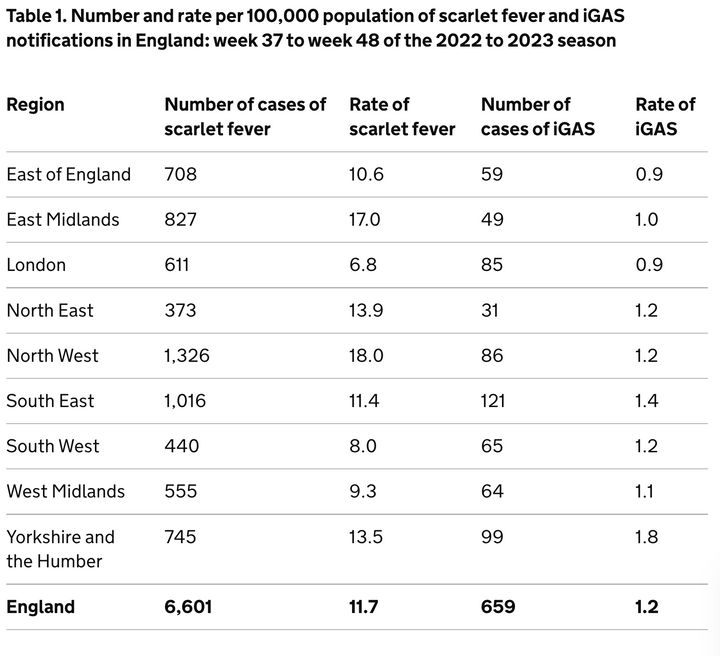
The latest available data shows that in England, there were 1,062 scarlet fever infection notifications received in week 48 (the week commencing November 28).
Currently, there are large concentrations of Strep A and associated scarlet fever cases in multiple parts of the UK, with the North West particularly impacted. The below data also shows incidences of invasive group A streptococcal infection (iGAS) – a rare but serious complication of Strep A, which can be life-threatening.
Number and rate per 100,000 population of scarlet fever and iGAS notifications in England: week 37 to week 48 of the 2022 to 2023 season.
How do parents feel?
Plenty of parents are beside themselves with worry right now as strep A continues to dominate the news. On social media and in private Whatsapp groups there’s been an outpouring of worry from parents, who are understandably on edge in case they miss the signs of illness that could progress to something far worse.
Advertisement
“I’m personally more worried about this than I was when Covid started,” said 35-year-old Emma Hawes from Wigan.
Hawes, who has a 13-year-old and eight-year-old, told HuffPost UK: “I am extremely anxious at the moment. I had no idea what the symptoms were so I’ve obviously been reading as much as I can.”
Diana Wilkinson, 45, has two children of primary school age. She told HuffPost UK: “I’m genuinely so worried about it. Every time I see the news it’s full of warnings of Strep A, and horrifically the number of fatalities is rising.
“Our school has been great at flagging concerns and sending out information about what to look out for, but with several cases already it feels very close to home.”
Is there an antibiotics shortage?
Some pharmacists are warning of a shortage of antibiotics – which hasn’t done much to quell concerns. However, the government has repeatedly denied it.
Advertisement
The National Pharmacy Association explained: “Pharmacies are having to work very hard to obtain stocks of these antibiotics and some lines are temporarily unavailable.
“We have been advised by wholesalers that most lines will be replenished soon, but we cannot say exactly when that will be.”
Leyla Hannabeck, CEO of the Association of Independent Multiple Pharmacies, claimed that authorities going on broadcast rounds saying there is supply is “misleading”.
“I want to reassure the public that pharmacies are doing everything we can to get hold of antibiotics and we are pushing the government to identify where the blockage is,” Hannabeck added.
Health secretary Steve Barclay said there was a “good supply” of penicillin, and that he had been reassured by medical suppliers. However, he said some GPs may experience shortages as stock is moved around to meet demand.
Advertisement
“Now, sometimes, GPs can have particular surges if they’ve got a lot of demand in an area, and that’s quite routine, we can move the stock around our depots,” he told Sky News.
Will schools close?
Currently, the Department for Education (DfE) has not updated its official advice to schools, but it is directing them to guidance from the UK Health Security Agency (UKHSA).
Parents were told to keep their children at home if they suspected that their children had Strep A, in a blog published by Dfe.
Education secretary Gillian Keegan said the department was “working closely” with the UKHSA and “monitoring the situation”, adding that the situation is “worrying”.
One school in Hull temporarily closed for a “deep clean” after several Strep A cases, but at the moment, schools on the whole are not being advised to close.
Advertisement
How do you catch Strep A?
Duncan Reid, pharmacist at Pharmacy2U explained: “Strep A is spread through contact with droplets from an infected person when they talk, cough or sneeze.”
“Some people can have the bacteria present in their body without feeling unwell or showing any symptoms of infections and while they can pass it on, the risk of spread is much greater when a person is unwell. It is still possible to infect others for up to three weeks.”
“Good hand and respiratory hygiene are important to top the spread of Strep A. By teaching your child how to wash their hands properly with soap for at least 20 seconds, using a tissue to catch coughs and sneezes, and keeping away from others when feeling unwell, they will be able to reduce the risk of picking up or spreading infections.”
When should parents contact their GP?
if you suspect your child has scarlet fever
your child is getting worse
your child is feeding or eating much less than normal
your child has had a dry nappy for 12 hours or more or shows other signs of dehydration
your baby is under 3 months and has a temperature of 38°C, or is older than 3 months and has a temperature of 39°C or higher
your baby feels hotter than usual when you touch their back or chest, or feels sweaty
your child is very tired or irritable
your child is having difficulty breathing – you may notice grunting noises or their tummy sucking under their ribs
there are pauses when your child breathes
your child’s skin, tongue or lips are blue
your child is floppy and will not wake up or stay awake.
When it comes to raising kids, everyone wants to share their two cents on what the best way to do it is – and that often includes grandparents.
And whether you’re a new parent who’s still finding their feet, or a seasoned pro who’s mastered the art of caring for multiples, it can be hard not to get upset when someone criticises what you’re doing, or goes against a particular way you want to raise your kids.
Advertisement
Perhaps unsurprisingly, disagreeing over parenting techniques is the most common reason why parents argue with their own parents (aka the grandparents), according to a survey by iHus, which specialises in multigenerational living.
“It is totally normal to have a different parenting style to your own parents,” therapist Siobhan Butt, who is a member of Counselling Directory, tells HuffPost UK.
“You are different people, living at a different time and have a different set of life experiences that inform how you decide to parent.”
Advertisement
The differences in how you parent can come out in all kinds of situations, she suggests, from what you choose to feed your children and how much screen time you allow them, to your political and religious ideology.
The C.S. Mott Children’s Hospital in Michigan asked parents of children aged 0-18 years old about disagreements with grandparents around their parenting choices. Most parents (89%) said their child saw at least one grandparent often or occasionally – and of these, 37% reported minor disagreements with grandparents about their parenting choices, and 6% reported major disagreements.
Two in five parents (40%) said disagreements arose because grandparents were too soft on their children, while 14% said they were too tough.
The most common areas of disagreement were over discipline, meals and snacks, and TV or screen time, followed by manners, health and safety, treating some grandchildren differently than others, bedtime, and sharing photos or information on social media.
If you are finding your parents are doing things that go against how you parent – or they’re making comments about your parenting style that are pretty negative – you’re probably going to have to sit down and have a chat with them about it. Otherwise the resentment is just going to pile up until someone blows a gasket.
“It is always best to have this conversation with them,” says Siobhan Butt, who runs Revive Relationships. “Be open, tell them how you are feeling, make it known that you respect them and appreciate that they have lots of life experience and wisdom to bring, but if you would like advice about a particular situation you will ask them for it.”
Advertisement
Likewise, if you see your parent saying or doing something to your child that you’re not happy or comfortable with – for instance, disciplining them in a certain way – don’t be afraid to pull them up on it.
“Boundaries are so important in this situation, like I said before talk to your parents, be open and honest and let them know what you are uncomfortable with and why,” says the therapist.
But be gentle with them, she warns, as it’s likely they aren’t trying to be malicious and they have the best intentions for you and their grandchildren.
“If you respond to their actions with hostility the situation could escalate and conflict can arise,” she adds.
Advertisement
If you do sit them down for a chat, you might want to remind them that while you respect them and value their input, you are uncomfortable with what they did – and then explain why, says the therapist. Finish the conversation by telling them you would appreciate it if they could not do this in the future.
Of course, sometimes this will fall upon deaf ears. Of those surveyed by C.S. Mott Children’s Hospital, 43% of parents said they’d asked a grandparent to change their behaviour to be consistent with their own choices or rules and while almost half (47%) found they did make a change, just over a third (36%) said the grandparent agreed to change their ways but didn’t, and 17% said the grandparent flat out refused.
“If it is a boundary that keeps being crossed, try being curious,” says Butt. “What is it that they find so difficult about keeping to this and how can you help them?”
With Christmas just around the corner and families coming together under one roof, tensions can run a little higher than normal – meaning the odds of a rift might be higher too.
Adene Sanchez via Getty Images
If you are feeling a bit tense because of something your parent has done or said to your child – or even about the way you parent – it’s important to recognise this and do something about it. “Just how we can recognise a song within a few seconds of hearing it, we can do this too with our own emotions,” says Butt.
Advertisement
“Before things feel like they are too much and your response turns into a reaction of hostility, take a deep breath, maybe remove yourself from the conversation or say you are feeling uncomfortable and you would appreciate it if the conversation could be changed.
“If difficult conversations normally end in shouting and upset think about the pattern of behaviours that normally happen: what role do you play and what can you do to help change this pattern?”
Grandparents are so important and often have so much to offer to your children – like they did to you when you were growing up (and still often do today). They are also, as writer Rhiannon Lucy Cosslett puts it, “the invisible glue holding our broken childcare system together”. Many will – and do – drop everything to get the chance to spend time with their grandkids.
That’s not to say that sometimes you won’t disagree with what they say or do – and vice versa – but after a heart-to-heart, you can often end up singing from the same hymn sheet. (Or at the very least, the same book.)
In cases where this doesn’t happen, ultimately it’s grandparents who lose out – 15% of parents said they limit the amount of time their child sees some grandparents, and these limitations were far more common when grandparents did not respect parenting choices.
In My Story, readers share their unique, life-changing experiences. This week we hear from Rachael Kent, who’s 40 and based in south Yorkshire.
When my daughter was 18 months old, she was still making baby babble noises. It was like she was trying to make sense of different things, but it was just noises that came out of her mouth. She couldn’t form words.
Advertisement
Freya-Rose started a preschool group at two and when I saw her in that environment with other children her age, I realised she was going to need some intervention to help her with her speech.
She was referred to speech and language therapy – we did group sessions to begin with and she tried so hard. She’d get frustrated because she knew exactly what she wanted to say, but it just didn’t come out.
As she grew up, other kids would shy away from her. They’d call her the baby because of the fact she’d make sounds like ‘ba ba ba’ all of the time, even when she was trying to talk. You could see it hurt her because she’s a very expressive child. She can’t hide anything that well.
At the park, kids would go near her but the second she opened her mouth and all these strange noises came out, you’d see them look and then move away – and she’d just be stood there. That was heartbreaking to watch.
Advertisement
Every now and again you’d come across another child who didn’t mind or care that she couldn’t speak and they’d go on the roundabout together.
But it got to the stage where as a parent I used to think: is it really worth taking her up to that park and watching her look so disheartened because nobody wants to talk to her?
I would always say to other parents: if they see a child like that, don’t pull your kid away from them, don’t make a big issue out of it as if they’ve got something wrong with them. Get them to ask questions because that’s how they’re going to learn and how they’re going to be more accepting of kids that are a little bit different and talk in a different way.
When Freya moved to nursery, she had another speech and language assessment and they decided they were going to come in weekly to work with her.
The nursery had to do 15-minute sessions with her every day and then we did 15-minute sessions with her at home. You can’t just rely on the actual therapist coming in, like it’s going to be some sort of magic thing. As a parent you have to put that work in too, constantly helping them. It’s got to be a team effort between everybody to keep it going.
Advertisement
Because she was really struggling to make herself understood, we taught her Makaton and she picked the signs up really quickly. We already knew Makaton because Freya’s older brother Alex, who’s now 21, has autism, ADHD and epilepsy – and we’d used it to communicate better with him when he was younger.
We’re very lucky Freya is a really placid child, so even when she couldn’t speak we only ever had two or three incidents where she got frustrated at other children.
But the rest of the time she would keep trying to show you over and over again – and as a parent that’s really upsetting when you find out your child’s been doing that. She’d be there with tears in her eyes, welling up, because she so desperately wanted everyone to know what she was saying.
She’d go into her own little shell: most of the time she’d play alongside other children, but not actually with them because she didn’t know how to tell them what she wanted to do.
As a parent, you do hit those low points where you think: are they ever going to get that speech or is she going to have to fumble her way through life?
Advertisement
She’d have several accidents at school because she couldn’t tell them she needed the toilet and she’s the sort of child that will not go unless she’s told that she can go. Or she wouldn’t do her school work – and it wasn’t because she didn’t want to, but because she couldn’t get the lid off the pen. It can bring a lot of frustration. It complicates so much when you take away someone’s speech.
Rachael Kent
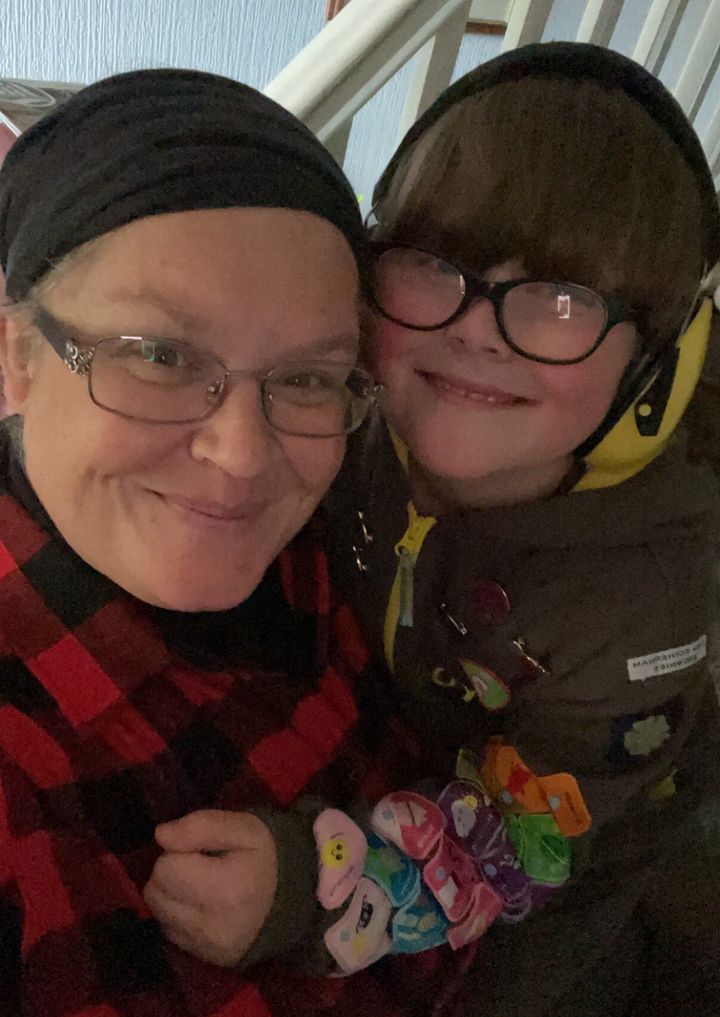
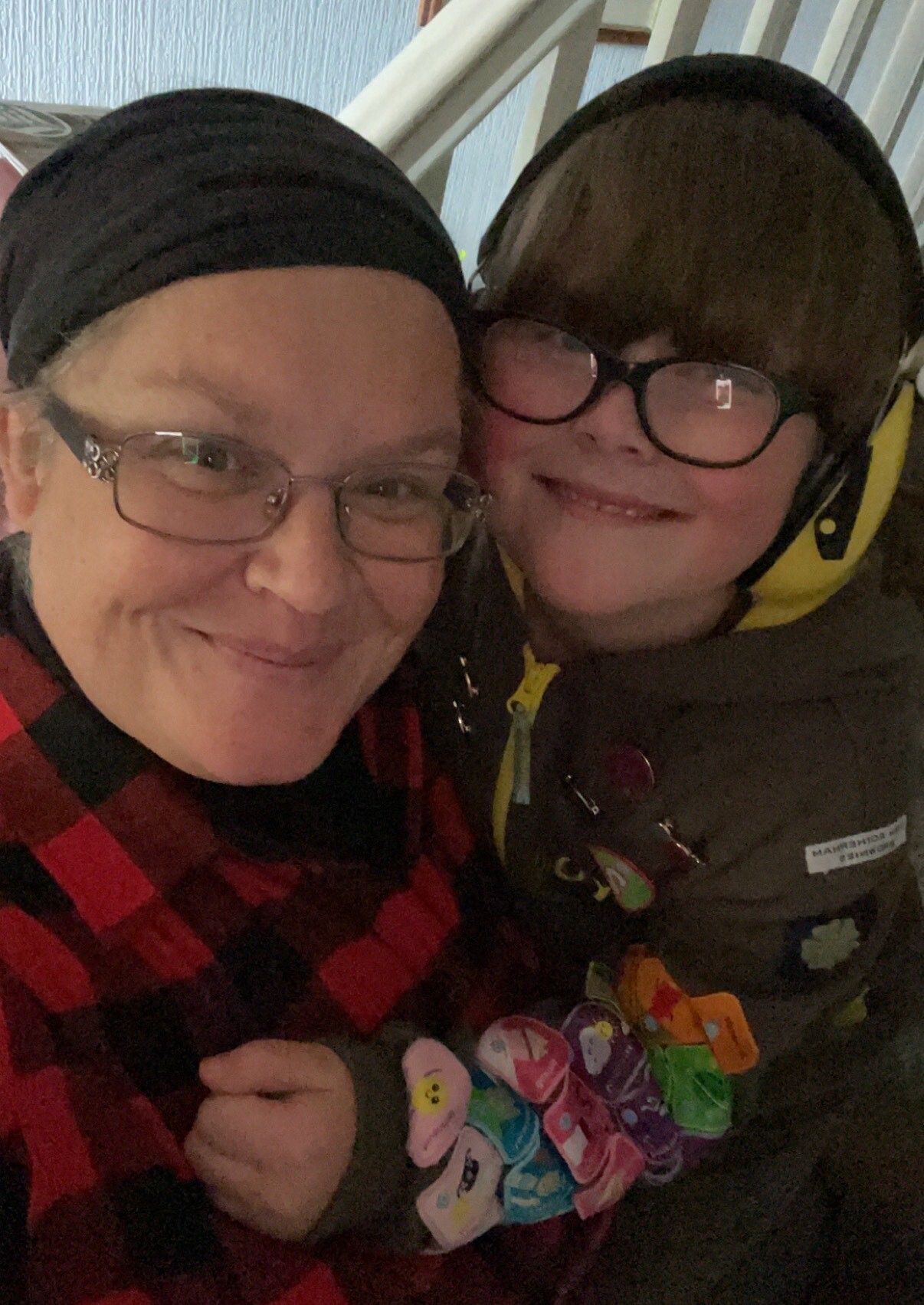
Rachael and her daughter Freya-Rose
Freya was diagnosed with a speech sound disorder, which means she knows what she wants to say, but her brain doesn’t send the right signals for her mouth to make the movements of different sounds.
The speech and language team said about getting her into groups to try and encourage speech through social interaction. She wasn’t allowed to attend after school clubs, because they said she needed 1-2-1 support and they didn’t have the staff to facilitate it.
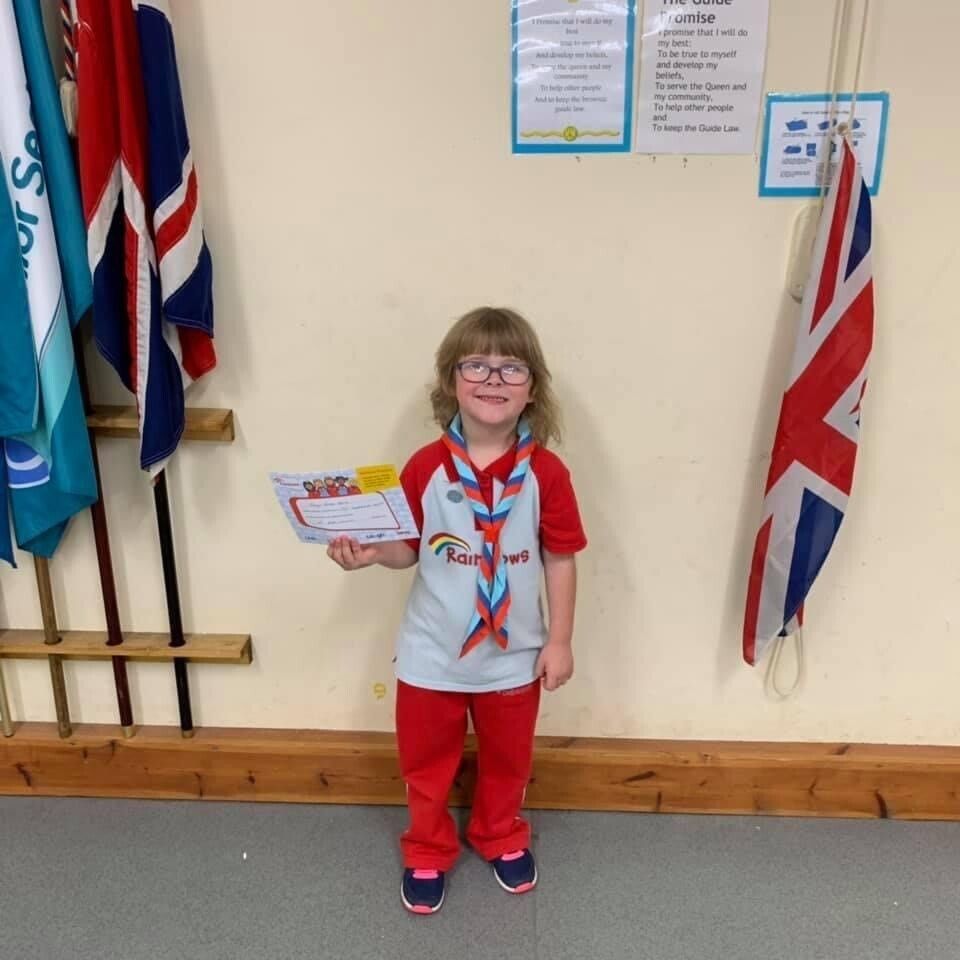
I’d gone to Brownies and Guides when I was younger and had adored my time with them, so I approached our local Rainbow group and explained the whole situation. They hadn’t got any experience of someone that didn’t speak, but they were willing to learn.
Advertisement
The first time I took her, I asked them if they wanted me to stay and they said: ‘No, let’s see how she gets on.’ I made them some visuals and gave them a crash course in the signs Freya used and we’ve never looked back.
Rachael Kent
“It was the best feeling ever.”
The third week of Rainbows she came out with the biggest grin on her face. She dragged me to the door, pointed inside and she signed to me: ‘My friends.’
It was the best feeling ever. She had the odd friend outside of school but that was more because I was friends with their parents, not because they’d chosen to come and see her. She never really said ‘that’s my friend’ until she went to Rainbows. She couldn’t wait to put her uniform on each week.
Sometimes you can take children to groups and they’ll – for want of a better word – tolerate them if they’ve got any additional needs. I had that experience with her brother at a few groups we went to when he was growing up. But Freya just 100% belongs. The other girls walk in and she gets big hugs off everyone. If she’s looking unsure, someone is always there to grab her hand and take her to where she needs to be.
Advertisement
When Freya was about five, a speech and language specialist worked solidly with her, in addition to us and her school doing the speech and language sessions as well, and she slowly started saying two- or three-word sentences.
We kept building on that and then by the time she was six we were getting pretty much full sentences where you recognised at least 90% of the words that she was saying.
Freya-Rose is now eight and has been diagnosed with autism, a moderate intellectual disability, and PICA – in addition to her speech sound disorder.
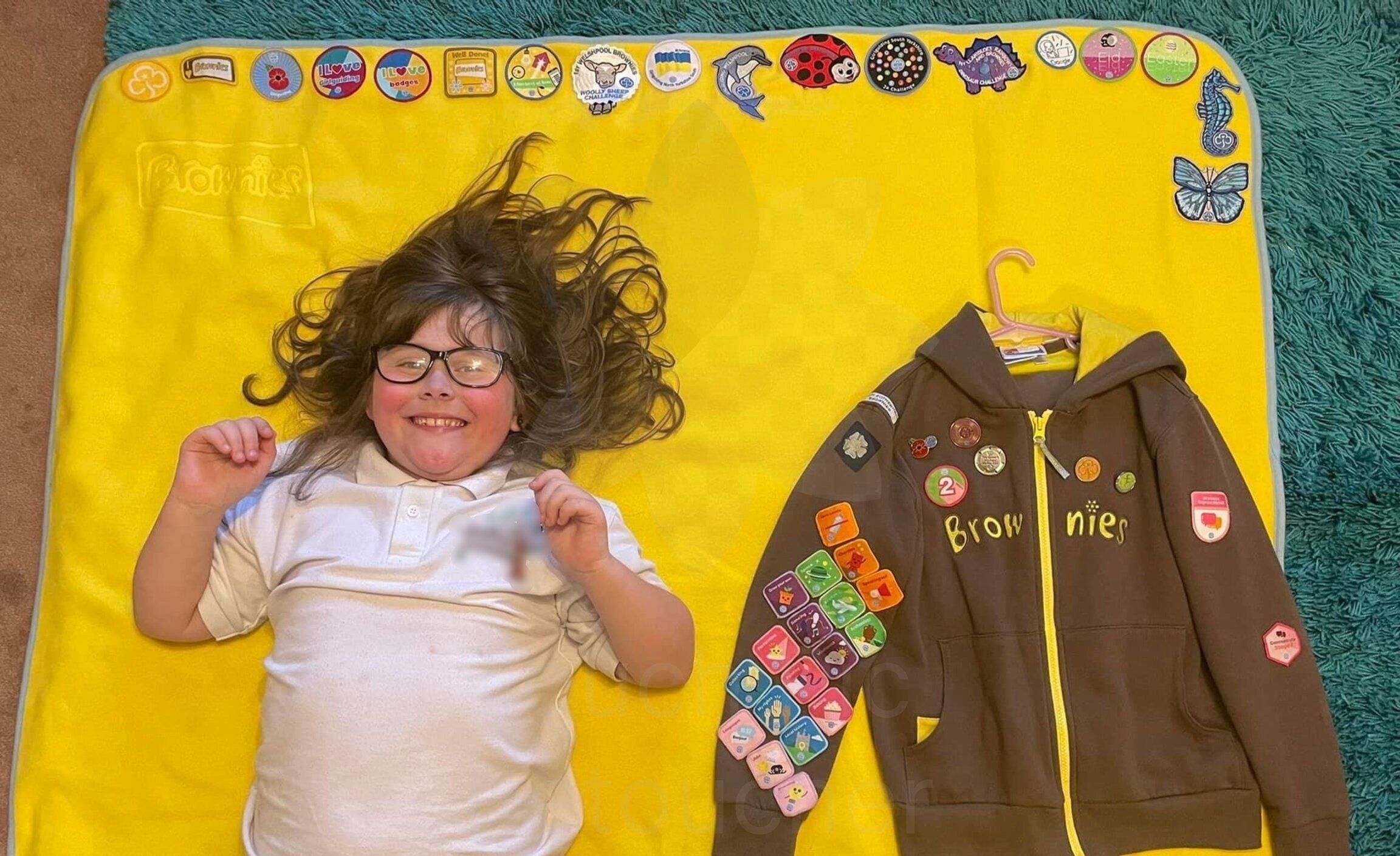
She’s been in Brownie’s for 12 months, after finishing Rainbows, and completed all her interest badges within six months of being there. She’s absolutely flying.
She even went away for a full weekend with them and they set an entire chalet up with symbols for fridge, bedroom, etc.
Advertisement
Rachael Kent
“They’ve helped her confidence grow so much.”
She had the best time and they’ve helped her confidence grow so much – she’s gone from being that girl who would just sit and smile at everybody to someone that, when questions are asked, her hand will go up and she’ll try to answer stuff.
This week she’s narrator number five in her school nativity. I saw two of the school staff and they said: ‘Wait until you see it, make sure you’ve got tissues because we sat and cried through the entire practice when she stood up there with a microphone and said her lines.’
She’s got four pages and a couple of sentences on each page to read out. She’s not 100% clear all of the time, but compared to where she was before, it’s just amazing.
To find out more about Girlguiding and each of its four sections: Rainbows, Brownies, Guides and Rangers, visit girlguiding.org.uk.
Advertisement
Rachael was interviewed by Natasha Hinde and her answers were edited for length and clarity. To take part in HuffPost UK’s My Story series, email uklife@huffpost.com
We all know vaguely what happens when you have a caesarean section – you’re given anaesthetic, a cut is made in your abdomen and then, minutes later, your baby is pulled out and passed to you. It’s a magical medical moment.
But it turns out there’s actually a hell of a lot going on from the obstetrician’s perspective. More than you could possibly know.
Advertisement
A fascinating Tiktok video explaining the anatomy of a C-section has been viewed more than 11 million times after showing just how complicated the surgery can be.
Using various sheets of coloured fabric and paper, Tina (@mamma_nurse) explained how there are various layers that surgeons have to cut through, before moving muscle out of the way and then manoeuvring past organs – and that’s before you’ve even reached the area where the baby is.
Most information given on C-sections by healthcare providers is lacking in details. Probably for good reason.
Advertisement
But if you’re the type of person who likes to be super informed ahead of birth – or you’re just really curious as to what the surgery involves – we asked Meg Wilson, an obstetrics and gynaecology consultant at London Gynaecology and the Whittington Hospital, to walk us through the process.
(Just a head’s up, there are some quite graphic images below.)
What happens during a C-section
First up, you’ll be given some pain relief – either a regional or general anaesthetic – and a catheter is fitted. Your abdomen will be cleaned and a drape will be put up so you won’t be able to see the surgery unfold.
An obstetrician will make a 10 to 15cm cut along the skin at the bottom of your abdomen, just at the top of your pubic hairline.
The first layer they cut through is the skin, and that cut also goes through a layer of fat. “Then you come down on to the rectus sheath – a white fibrous layer – that is covering the muscles of the abdomen,” says Wilson.
They’ll make a cut in that as well and all these cuts will be done in the same direction: horizontally.
Advertisement
Byba Sepit via Getty Images
Next up, they come to the rectus muscles “which people know as their six pack muscles,” says the obstetrician.
These two muscles run as a strip down the abdomen and where they join together is something called the linea alba. It’s a weak area which surgeons can basically “poke through” to open it up, says the obstetrician.
“That takes you into your abdomen, by making that little hole, and then you’re into what we call the peritoneal cavity which is the proper wet inside of your tummy.”
Surgeons will make the hole a bit bigger by basically moving the two muscles apart.
“You’re pulling them out to the side to make a hole there,” says Wilson. “I think it’s really important that people know you’re not actually cutting muscles, you’re just shifting them apart.”
Advertisement
When in the peritoneal cavity, surgeons will get a nice view of the surface of your bladder and then the main event: the womb itself.
Now comes the really interesting bit. They have to actually move organs to get to where they need to be – so yes, they shift your bladder out of the way.
“You lift up a little bit of something called the peritoneum,” she explains, which is “like a sheet that runs over the womb and the bladder.” Surgeons will make a small hole in that “sheet” and this allows them to see where the bladder is attached to the womb.
“It allows you to push the bladder out of the way and push it downwards a little bit,” Wilson says, noting it only gets moved about 1-2cm.
In the operating room, they have a specially designed surgical instrument that goes in to protect the bladder and hold it down and out of the way.
Advertisement
The surgeon cuts into the womb (again, a horizontal cut in the same direction as the skin cut). The womb is a muscle so they expect to have some bleeding at this point as muscles have a strong blood supply.
In cases where a parent has placenta previa – where the placentacompletely or partially covers the opening of the uterus – it might be a bit more complicated, she adds, and they might have to cut higher up in the womb or even through the placenta, which could result in more blood loss.
“Then you’re going to hit the membranes around the baby – the amniotic sac – and you see that bulging out when you reach it,” Wilson continues. “You keep going and make a little hole in that with the scalpel and usually lots of amniotic fluid all comes spilling out in a big gush.”
At this point it’s all about getting the baby out. In a straightforward pregnancy the baby will be in a head down position, so they’ll get a nice view of that.
The retrieval process involves a bit of teamwork. “You put your hand in and slip your hand around the baby’s head – like a cupping action – and your assistant will put lots of pressure on the top of the woman’s tummy, pushing right at the top of womb where the baby’s feet are, and you’ve got your hands acting as a little slide for the baby to come out,” she says.
Advertisement
The head pops out, then comes the neck, and then there’ll be a bit more gentle pulling to deliver the shoulders one at a time, and then the body “slips out relatively easily after”.
Michael Hanson via Getty Images
Doctors work to remove a baby from a woman’s uterus during a c section.
At this stage the curtain is often lowered and the parent(s) can see their baby and hold them. They tend to let the umbilical cord pulsate for at least a minute to give the baby beneficial nutrients and then they’ll clamp the cord, cut it and hand the baby to the midwife who will wrap them up and dry them off.
“Then it’s a case of removing the placenta, which is still stuck on to the lining of the inside of the womb,” says Wilson. “We pull a little bit on the cord and the placenta will be detaching.”
After the placenta has been removed, surgeons will then clean out the inside of the womb which Wilson says is “a very simple action” of rubbing a swab around the insides of the cavity “to make sure there’s no little bits of membrane or last little threads of placenta that are still there”.
Advertisement
The mum will still be bleeding at this point so time is of the essence to get the womb stitched up again. Once that’s done, surgeons will take a moment to do a check and assess that there’s no additional bleeding anywhere.
bymuratdeniz via Getty Images
At this stage, she says, they clean away any spilt fluid and blood that may have collected in the sides of the pelvis using a swab. They also check the womb is contracted and that the ovaries and fallopian tubes look normal.
“It’s just an opportunity to do a health check because you’ve got the tummy open and it’s a relatively straightforward thing to do,” she adds.
The instrument protecting the bladder is then taken out and “then you allow everything to fall back into place,” adds Wilson. “The bladder will go back to where it was originally placed and those two rectus muscles that you held open to get into the cavity of the tummy will fall back into place as well.
Advertisement
“You don’t routinely close the rectus muscles … they will come back together naturally and reform their meeting point.”
The next layer that’s surgically closed is the rectus sheath, which is the layer just beneath the fat. “We sometimes put a stitch in the fat layer but for most women we then just close the skin with another running stitch,” she adds.
“By routine we remove all the drapes and clean any collected blood that’s in the vagina,” she adds, “and make sure there’s no clots of blood or anything.”
At this point they might put in a painkiller suppository and a dressing is placed over the c-section wound. The whole process is complete in less than an hour.
Admittedly some parents are more into it than others, going to great lengths to build sets involving their naughty elves. Some have even created Instagram accounts devoted to the mischievous elves running riot in their homes.
Meanwhile others are a little more laidback about the whole affair.
If you’re stuck for inspiration, we’ve scoured Instagram to find some relatively simple – but still creative – elf on the shelf ideas.
Cristiano Ronaldo has claimed Manchester United officials “didn’t believe” him when he needed to take time off because his baby daughter was unwell.
The footballer has opened up about life at the football club in an explosive interview with Piers Morgan, in which he also criticised the club’s football manager Erik ten Hag and accused the club of “betraying” him.
Advertisement
And while the timing and nature of the interview hasn’t gone down well with everyone, his comments about receiving a lack of empathy over his daughter’s illness has struck a chord with some – particularly dads.
It’s raised the question of how and why in 2022 fathers are still being made to feel bad for taking time out to care for their kids.
Ronaldo suffered a huge loss earlier this year when his son died during childbirth. His twin sister Bella survived, however when she was hospitalised with an illness, the father-of-five needed to take time out and implied in an interview with Piers Morgan on TalkTV that some at the football club were less than sympathetic about it.
“I spoke with the director of, and the president of, Manchester United and they kind of didn’t believe that something [was] going wrong, which made me feel bad,” he said.
Advertisement
“I am never going to change the [prioritising of the] health of my family for football… and it was something that really hurt me because they doubted my word that I struggled, especially Bella and Geo.
“We had one week in hospital because Bella had a big problem and I didn’t go to the pre-season because of that.”
Manchester United said “the club will consider its response after the full facts have been established” and told HuffPost UK that at this time, it has no further comment.
While it’s clear there’s a lot more to unpack between Ronaldo and Manchester United, the interview has prompted conversations about the way dads are treated by employers – and the need for change.
“There’s certainly a lack of sympathy when it comes to dads whereby the world of children is not really their world,” writes journalist Martin Robinson for The Book of Man.
Advertisement
“If something demands time out for men, that’s not really on,” he said in response to the Ronaldo interview, citing the fact two weeks paternal leave is still the standard for dads in the UK – which is barely anything when you think of what a huge life event the birth of a child is.
There are clearly still incidences where men are expected to continue working, keeping a stiff upper lip, while women care for their children at home. And that reeks of sexism.
The lack of sympathy from employers is an issue that’s cropped up when Nigel Clarke has spoken to dads through the support group he runs called Dadvengers.
When a child is ill or you’ve got a situation where a father needs to take time off work to care for their child, Clarke suggests some organisations automatically focus on it being a “childcare issue” rather than thinking about the fact the dad must actually be really worried about their child.
“They make an assumption it’s a childcare issue and why should the father be taking time from work to deal with that? which in itself is wrong,” he says.
Advertisement
StefaNikolic via Getty Images
He suggests it’s largely a generational thing, with older generations thinking this way much more than younger men – so some organisations are a lot more forward-thinking than others.
“Organisations, businesses and communities in general need to appreciate that the way we parent as families is changing,” he continues.
“Before it was maybe more about women taking care of their children, but nowadays it’s going to be much more shared.
“We have to acknowledge the landscape is changing – and as workplaces, as communities and people in general, we need to make changes.”
Advertisement
It can be immensely stressful when you need to be with your child because they’re sick and your employer is not supportive.
Steve*, 51, from Northumberland, knows this all too well. He says a former employer withdrew a promise of flexible work which, as a solo parent, caused him a lot of stress.
“They argued that I specifically wasn’t allowed to be at home with my daughter when she was off school because I was a single dad so I would be child-caring, not working,” he tells HuffPost UK.
The dad, who works in communications, believes that while what Ronaldo has said about his football club was “ill-advised”, he can see where he’s coming from as the pandemic has caused a lot of undue stress on society – and then there’s obviously the hugely traumatic ordeal of losing his child.
“We don’t think clearly when we’re depressed, sad and stressed. We don’t have enough mental capacity to concentrate on everything,” he explains.
Advertisement
“You can’t compartmentalise work and personal issues. It’s possible and reasonable to say that while what Ronaldo said was ill-advised, it was also understandable.”
The first part of Ronaldo’s interview will air on TalkTV on Wednesday November 16 at 8pm.