The Power Of ‘Finishing Strong’ With Your Kids At Night

At the start of the pandemic, when my family was locked down in our 800-square-foot New York City apartment and reeling from the pivot to remote work and no school or day care, an Instagram post from Glennon Doyle saved my sanity.

Her post was primarily about how parents should embrace screen time as a survival tool. But she also offered a theory that sticks with me still, two years on: the idea that all parents really need to do is finish their days with their kids well. Doyle hatched her theory when she worked as a preschool teacher. She’d spend hours devising thoughtful activities and lesson plans to fill the kids’ hours, but ultimately what they remembered most was whatever came at the end of their days.

“This is my philosophy with all things children now. All you have to do is finish strong,” Doyle said in her video post.

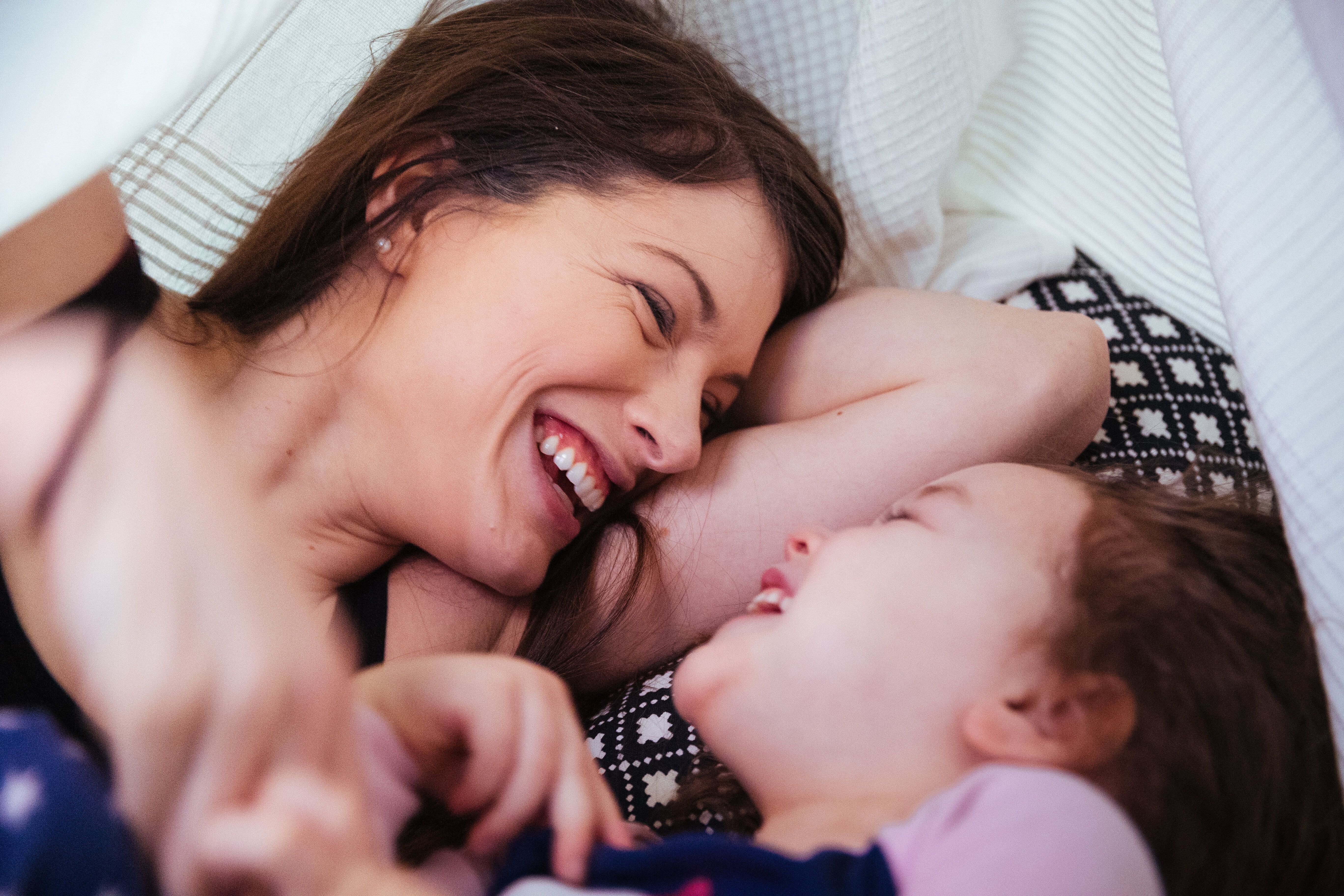
I loved this advice then, and I love it still now because it feels like self-compassion. I remembered it last night when, after a day with my younger son that involved more tears and nagging than I’d like, we salvaged the day with a big bedtime hug and a chat about the relative merits of dump trucks versus forklifts. After a pretty blah parenting day, it was the reset we both needed.

Of course, Doyle isn’t the only one preaching the power of ending the evening on a high note. Here’s why the last thing you say at night can be so powerful — and how to work on “finishing strong” with your kiddo.

The Power Of Nighttime Routines And Rituals

Consistency is essential to children, parents are told time and again, because it’s true. Establishing routines with younger children can help strengthen the connections in their brains that help them make sense of their days. Research suggests that kids with strong family routines tend to be emotionally healthier than those without.

Bedtime routines help set clear expectations for behavior and (ideally) help make kids feel relaxed and primed for sleep. A good, consistent bedtime routine may help improve your relationship, if for no other reason than it will help ensure they’re getting enough zzz’s. (Reminder: Kids need substantially more sleep than adults.)

But nighttime rituals and routines serve a strong emotional purpose, too. Kids need to feel that they’re getting plenty of together time and love during their days. Making sure to emphasize connection at bedtime can help fill that cup.

“All kids are wired for positive attention and emotional connection from us on a daily basis,” said Amy McCready, founder of PositiveParentingSolutions.com and author of “The Me, Me, Me Epidemic.” “If they don’t get it proactively, they’ll act out in ways to get attention and power.”

Remember: Bedtime Battles Aren’t Inevitable

While I’m personally heartened by the idea that I can turn around a crappy day with a decent nighttime routine, sometimes that feels impossible. My preschooler excels at dragging out bedtime. Many nights, I’m a frazzled, grumpy shell of myself with little left to give emotionally.

That’s why I like McCready’s focus on what she’s dubbed “mind, body and soul time.” It is a simple strategy that can help minimize bedtime battles and give kids the sense of connection they so crave.

“Here’s how it works: Plan to spend 10 to 15 minutes of one-on-one time with your child at bedtime after they have gone through their to-do lists (teeth brushed, room tidied, etc.),” McCready said. “Minimize distractions — no cellphones, no TV blaring in the background, no mental to-do lists running through your mind! During this time, be fully present in mind, body and soul — and play or do something your child wants to do.”

That could be reading a book, playing a silly game, listening to some wind-down music, she said — what matters is that you let your kiddo call the shots.

“By doing so, you’re filling [their] bucket with the essentials to feel loved, safe, secure and valued — no matter what else happened that day,” McCready said. “What a great way to end each day and promote peaceful sleep, for them and you!”

Be sure to let them know this is something they can expect regularly, she added. Again, it comes down to establishing routines and rituals and fostering connection. McCready suggests saying something like: “Spending this time with you is the best way to end my day, and I can’t wait to do it again tomorrow.”
Share Button

5 Weekend Morning Mistakes That Secretly Screw Up Your Whole Week

By the time the weekend rolls around, most of us are exhausted. Burnout is at an all-time high and people, understandably, want to use their weekends (or whatever days they get off during the week) to relax, socialise and sleep in.

But creating and maintaining a weekend morning routine can really help set the tone for the rest of the week. With that in mind, here are five common mistakes people tend to make on their days off — and how to create a healthy morning routine that won’t mess with how you’re feeling on other days.

Mistake #1: Sleeping too late

No one wants to be scolded for sleeping in on the weekends. But many experts agree that blowing past your usual wake time can hamper overall well-being. Research shows that significant variability in sleep and wake times leads to less healthy behaviours overall. Studies have also linked “social jet lag” — the shift in sleep habits from weekdays to weekends — to greater overall fatigue and sleepiness.

“Getting up at around the same time daily helps to set your body clock with light exposure, awakening the body and allowing one to start to build up an appetite for sleep for the following night,” said psychologist Shelby Harris, author of The Women’s Guide to Overcoming Insomnia Without Relying On Medication.

“Sleeping in on the weekends makes it harder to fall and stay asleep the following night simply because you’re not awake for enough hours to be hungry enough for sleep that next night,” she added, noting that she makes an effort to practice what she preaches and gets up consistently at 6 a.m.

However, not all research knocks catching up on ZZZs on the weekend. One study found that people who were sleep-deprived during the week but caught up on the weekend lived just as long as people who got sufficient sleep overall. (As opposed to people who were sleep-deprived, who were more likely to die early.)

Ultimately, balance is key.

“Sleeping in a little bit is one thing; sleeping in for hours and hours so that you then can’t get to bed on Sunday night is another,” said Debra Swan, a Chicago-based health coach who works with clients around the US. She stressed that you should try to keep your sleeping in to an extra hour or two.

Mistake #2: Not hydrating first thing

Hydrating is really important first thing in the morning, Swan said, particularly after a night of drinking. And she really thinks it’s best if coffee isn’t the first liquid you have in a day.

Sipping H2O ― even if you’re not thirsty ― helps you stay adequately hydrated throughout the day. There are plenty of ways to sip it if the idea of starting off your Saturday or Sunday with a tepid glass of tap water sounds meh. Have a seltzer on hand if that’s your preference, or try herb- or fruit-infused water. Your goal should be to try to find something you actually like, so you’re more likely to make a.m. hydration a long-term routine.

Hydrating when you first wake up is important.

Hydrating when you first wake up is important.

Mistake #3: Not making yourself accountable to someone or something

It’s easy to stick to routines on weekdays because we all have someone or something we’re accountable to, whether it’s waking up to take kids to school or to get to work on time. Try to build that same sense of accountability into your weekend mornings, Harris suggested.

“Kids are frequently a helpful routine alarm, but if that’s not in the mix, consider signing up for a workout class in the morning or meeting a friend for coffee, or even doing your laundry in the building on Saturday morning because it is quiet,” she said. “Accountability is very helpful in beginning a routine.”

Or maybe you want to find an accountability partner, like a friend or family member who can help you if you’re, say, really struggling not to sleep until noon.

Mistake #4: Not prepping for the week ahead

“You should absolutely relax on the weekend,” said Swan, who took pains to point out that morning routines should be really manageable and not feel like a chore.

She knows people need a chance to unwind. Still, she thinks it can be a missed opportunity when people don’t use their time off prepare for the days ahead, and said the mornings can be a really nice time to do a bit of that work.

“The weekdays are so busy, and people have high hopes of meals and eating healthy – but preparation is key,” she said.

Swan often recommends that clients she work with use the weekends to think about any recipes they want to try out, then make sure they have the ingredients they need on hand and do any possible prep work, like chopping vegetables, ahead of time.

That way, you’ve made your life easier for hectic weekdays – and you’ve also helped set the tone for the rest of the week.

Mistake #5: Not getting outside

“Get some fresh air and sunshine,” Swan said, adding that it’s good to get outside shortly after you get out of bed. “Bright light lets your brain know it’s time to wake up.”

Spending time outdoors has all kinds of health benefits, including how people say they feel overall, and research shows that morning light exposure can lead to better rest at night.

Going outside in the morning isn’t the kind of change that’s particularly difficult or burdensome, but it’s powerful.

“How you behave one day influences how you behave the next,” Swan said. “Yes, the weekend is less structured. Yes, it’s a time to relax. But you still want to have a good start to the day.”

Share Button

6 Exercises You Should Do In The Morning If You Wake Up Tired

You’re reading First Thing, a weekly series on HuffPost UK helping to make your mornings happier and healthier.

Does your morning exercise routine consist of working your arms by smacking the snooze button for the third time? (No shame ― sometimes you gotta do what you gotta do!)

It may feel like exercising at the start of the day is an impossible feat when you’re so exhausted. However, you don’t have to spring out of bed and start running a 5K to feel energised. Even a little bit of movement will go a long way when it comes to revving you up for the day.

“Moving your body when you first wake up helps your circulation and stimulates your lymphatic system,” said Jennifer Jacobs, a certified personal trainer and founder of The J Method, adding that exercise helps fluid move through your body and reduce inflammation. “As a result, you feel more energised.”

We asked experts to share the best energy-boosting moves that’ll help you kickstart your morning feeling loose and alert. Here are their favourites:

1. Downward dog

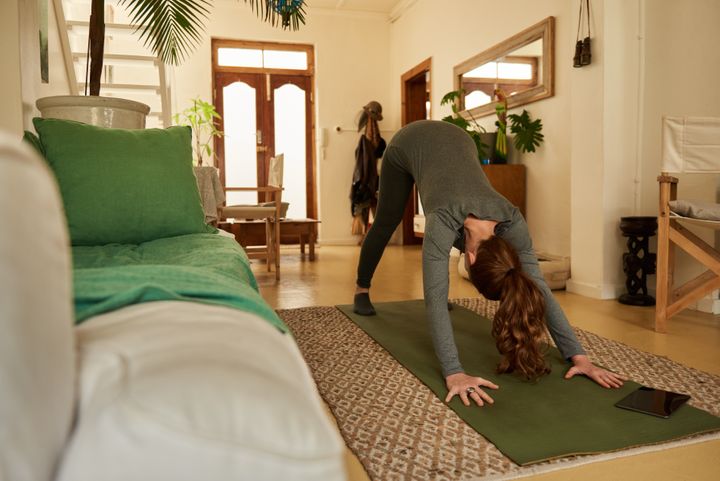
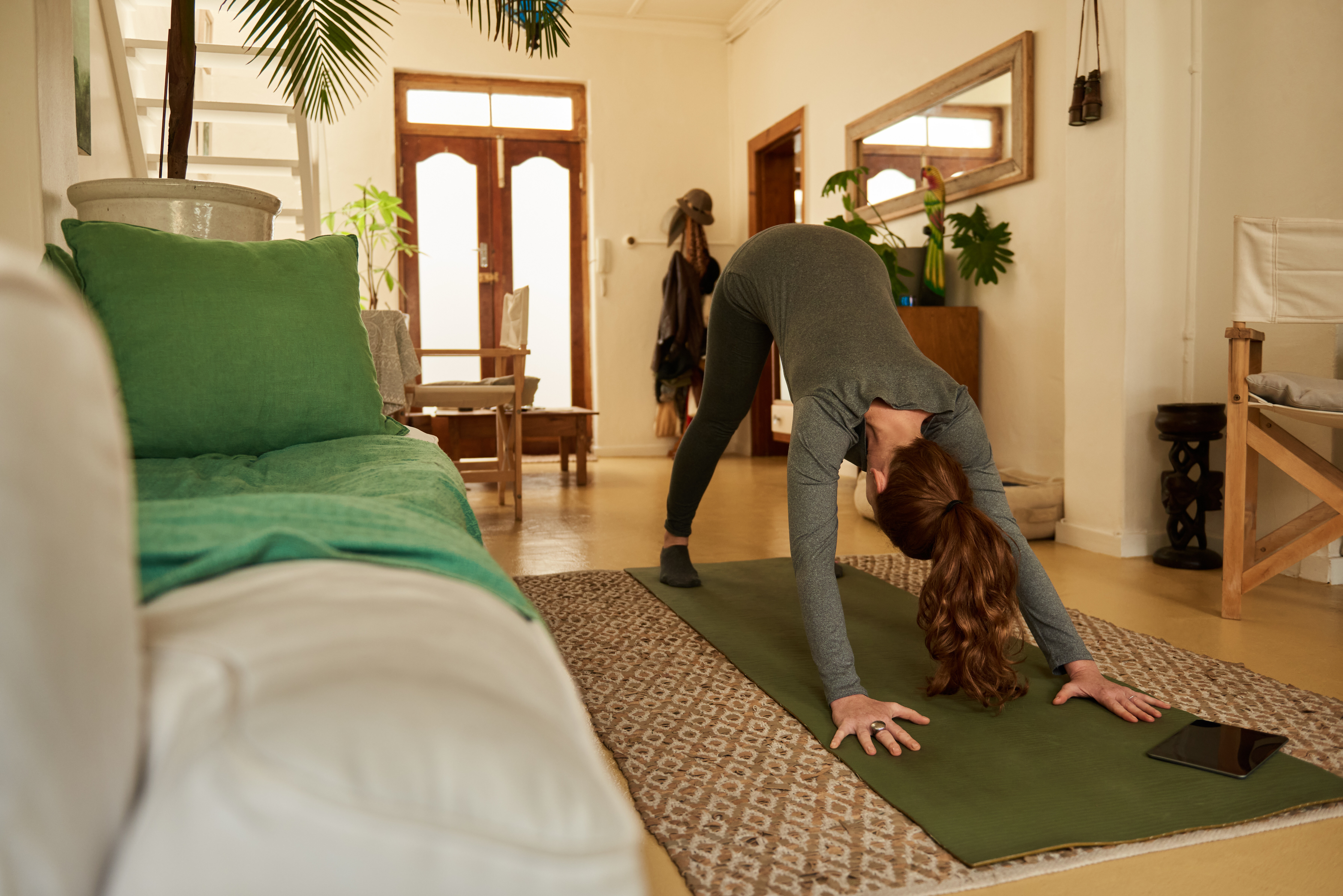
Start your a.m. with a downward dog to get your blood flowing and increase alertness.

Start your a.m. with a downward dog to get your blood flowing and increase alertness.

One of the reasons you may not want to drag yourself out of bed is because your body is stiff from sleeping all night. This yoga pose is a great way to kickstart blood flow and wake up, said Megan Roup, founder of The Sculpt Society.

Starting on your hands and knees, stack your shoulders over your wrists and spread your palms out wide. Pressing through your palms, tuck your toes and lift your knees, pointing your hips toward the ceiling as you press down through the heels.

“To make this stretch more active, you can pedal out the feet while you actively press into the floor or bend and straighten both legs,” Roup said. Hold the pose for 15 seconds and repeat for three to four rounds.

2. Hamstring flossing

“This dynamic stretch helps to loosen up your hamstrings and your lower back more effectively than doing a static stretch, which may cause muscle spasms if your body isn’t properly warmed up,” said Theresa Marko, a board-certified orthopaedic clinical specialist in physical therapy and owner of Marko Physical Therapy.

To do this move, start by lying on the floor with knees bent and feet flat. Gently grab behind one of your thighs and straighten and bend the knee repeatedly (just make sure not to overextend your knee). This back-and-forth flossing motion will give your hamstring a stretch-and-release sensation. Do 10 repetitions on each side for two to three rounds.

3. Wake-up bounce

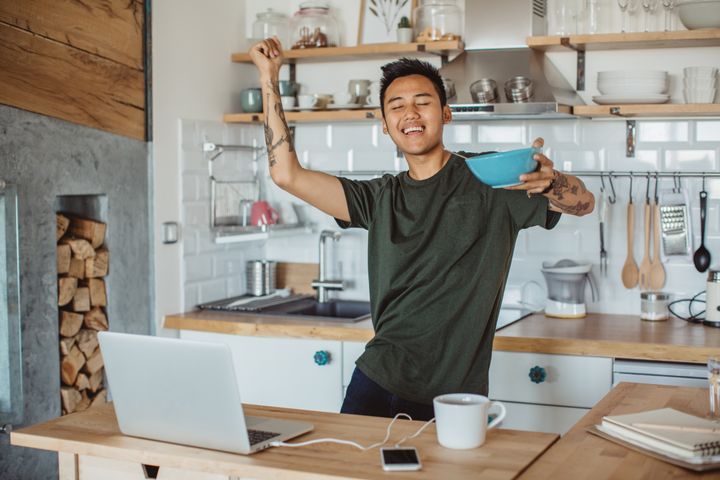
Don't underestimate the cardio and energy power of a little dancing.

Don’t underestimate the cardio and energy power of a little dancing.

“This is my go-to morning move that really wakes me up,” Jacobs said. “Choose a song that’s roughly three to five minutes and spend the duration of the song bouncing through the balls of your feet. You’ll start to increase blood flow – not to mention sneak in a quick calf workout – and may find that after the song ends your mood has improved, too.”

4. Child’s pose to side bend

It may seem counterproductive that one of the stretches to wake you up resembles a move that looks like you’re sleeping, but Khalil Jones, a certified personal trainer who also trains at Rumble Boxing in Philadelphia, said this move is great for stomach sleepers. This is because it can reset the spine after having the lower back rounded forward all night. (And reducing stiffness in your back allows you to move more freely and feel more energised.)

Kneeling on the floor, spread your knees hip-width apart and bend forward to place your torso between your thighs. Lengthen your tailbone and place your hands out to the side. Hold for 15 seconds for three to four rounds. As you come out of child’s pose, do a side bend: Grab one elbow with the opposite hand over your head and lean away from the elbow. This will stretch your back and triceps and improve mobility in your upper body.

5. Hip flexor stretch

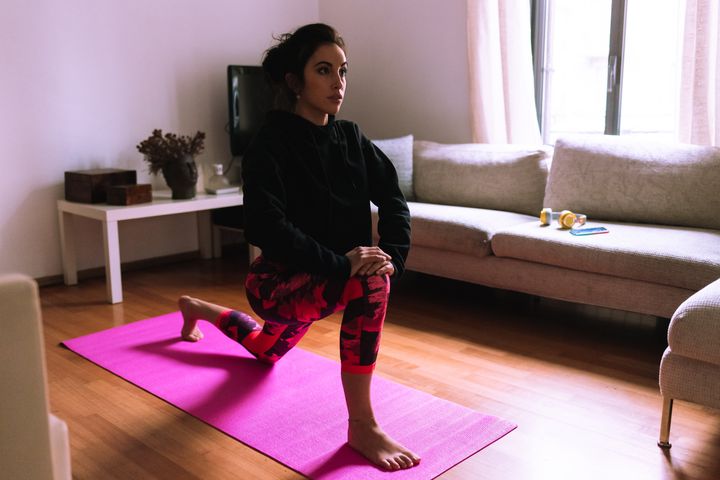
A hip flexor stretch can alleviate tightness in multiple parts of your body.

A hip flexor stretch can alleviate tightness in multiple parts of your body.

“Hip flexors are such an important muscle,” Marko said. “Tight hamstrings can tug on your lumbar spine, and this can cause pain.”

Dropping down into a half kneeling position, do a slight pelvic tilt, lunging yourself forward to stretch your hip flexors. Hold for 15 seconds, repeating for three to four rounds.

If you feel too tight to try this, start by lying on the floor first, knees bent and feet flat. Keep your knees together and rock your legs side to side. Next, let your knees fall all the way down to one side to get a more intense stretch on your lower back. Switch sides, holding for 15 seconds each time, and then try the hip flexor stretch again.

6. Lateral breathing

If you just can’t get yourself out of bed to stretch and move before you need to be productive, don’t sweat it. Nikki Chrysostomou, a licensed movement therapist and founder of Movement Integration, said you can practice this stimulating stretch anywhere ― in the car, at your desk or even on your bed.

All you need to do is inhale and exhale deeply and focus your mind on getting the breath into your sides. If it’s helpful, you can place your hands on your ribcage to help you monitor where your breath is going.

“Lateral breathing helps to stimulate the mind,” Chrysostomou said. “To do this, work on taking breath away from the stomach. Think of breathing into the back of your ribcage, into the sides of the ribs and into your armpits. This creates a bucket-handle effect, with the ribs expanding out, and can perk you up.”

First Thing is a weekly series on HuffPost UK Life giving you tips and advice on how to enjoy your mornings. Whether you’re an early bird or night owl, starting your day off right will make for a happier and healthier day. We’ll be sharing exercise advice, nutrition guidance, as well as ideas on forming new habits. (And no, the answer to a productive morning isn’t just setting an alarm for 5am!)

Share Button

Should You Try A Sleep Workout? It’s The Latest Bedtime Trend

HuffPost is part of Verizon Media. We and our partners will store and/or access information on your device through the use of cookies and similar technologies, to display personalised ads and content, for ad and content measurement, audience insights and product development.

Your personal data that may be used

  • Information about your device and internet connection, including your IP address
  • Browsing and search activity while using Verizon Media websites and apps
  • Precise location

Find out more about how we use your information in our Privacy Policy and Cookie Policy.

To enable Verizon Media and our partners to process your personal data select ‘I agree‘, or select ‘Manage settings‘ for more information and to manage your choices. You can change your choices at any time by visiting Your Privacy Controls.

Share Button

We Need More Sleep, Less Screen Time. The Pandemic Is Messing With Both

HuffPost is part of Verizon Media. We and our partners will store and/or access information on your device through the use of cookies and similar technologies, to display personalised ads and content, for ad and content measurement, audience insights and product development.

Your personal data that may be used

  • Information about your device and internet connection, including your IP address
  • Browsing and search activity while using Verizon Media websites and apps
  • Precise location

Find out more about how we use your information in our Privacy Policy and Cookie Policy.

To enable Verizon Media and our partners to process your personal data select ‘I agree‘, or select ‘Manage settings‘ for more information and to manage your choices. You can change your choices at any time by visiting Your Privacy Controls.

Share Button

An 8-Year-Old Wrote A Formal Complaint About Bedtime – But It Backfired

HuffPost is part of Verizon Media. Click ‘I agree‘ to allow Verizon Media and our partners to use cookies and similar technologies to access your device and use your data (including location) to understand your interests, and provide and measure personalised ads. We will also provide you with personalised ads on partner products. Learn more about how we use your data in our Privacy Centre. Once you confirm your privacy choices here, you can make changes at any time by visiting your Privacy dashboard.

Click ‘Learn more‘ to learn and customise how Verizon Media and our partners collect and use data.

Share Button

Why Am I So Tired After A Big Sleep? A Quick Guide

HuffPost is part of Verizon Media. Click ‘I agree‘ to allow Verizon Media and our partners to use cookies and similar technologies to access your device and use your data (including location) to understand your interests, and provide and measure personalised ads. We will also provide you with personalised ads on partner products. Learn more about how we use your data in our Privacy Centre. Once you confirm your privacy choices here, you can make changes at any time by visiting your Privacy dashboard.

Click ‘Learn more‘ to learn and customise how Verizon Media and our partners collect and use data.

Share Button

From Sleep Anxiety To Somniphobia – This Is What It’s Like To Fear Going To Bed

HuffPost is part of Oath. Oath and our partners need your consent to access your device and use your data (including location) to understand your interests, and provide and measure personalised ads. Oath will also provide you with personalised ads on partner products. Learn more.

Select ‘OK’ to continue and allow Oath and our partners to use your data, or select ‘Manage options’ to view your choices.

Share Button

How To Have A Better Night’s Sleep: The Ultimate Sleep Hygiene Guide

HuffPost is part of Oath. Oath and our partners need your consent to access your device and use your data (including location) to understand your interests, and provide and measure personalised ads. Oath will also provide you with personalised ads on partner products. Learn more.

Select ‘OK’ to continue and allow Oath and our partners to use your data, or select ‘Manage options’ to view your choices.

Share Button

Let’s Hear It For The Joy Of Adult Sleepovers – No Sex Involved

HuffPost is part of Oath. Oath and our partners need your consent to access your device and use your data (including location) to understand your interests, and provide and measure personalised ads. Oath will also provide you with personalised ads on partner products. Learn more.

Select ‘OK’ to continue and allow Oath and our partners to use your data, or select ‘Manage options’ to view your choices.

Share Button