As the cost of living crisis rages on, LBC presenter Nick Ferrari has left many angered and shocked after saying people shouldn’t become parents if they can’t afford to buy their children toothbrushes.
His comments were in response to figures released by the charity Beauty Banks and the British Dental Association, which found 83% of secondary school teachers said they or their school have given students toothbrushes or toothpaste.
Advertisement
Responding to this heartbreaking stat, Ferrari said: “If you are a mum – and/or a dad – and you haven’t got money to buy your child a toothbrush, you should never have become a parent in the first place.” Yes, you heard correctly.
The repercussions of oral hygiene poverty are huge and devastating for children.
The new report found one in two teachers said children isolate themselves because of oral hygiene issues, while one in four miss school because of it. One in three have witnessed bullying directly linked to a student’s oral hygiene issues.
Sali Hughes, co-founder of Beauty Banks which donates personal hygiene products to people living in poverty, branded Ferrari’s comments as “shocking”.
Advertisement
She told HuffPost UK: “Suggesting that women who find themselves poor should never have had children, at the very best fails to comprehend the unprecedented scale of financial difficulty for families since Covid, a global energy crisis, recession, and a cost of living crisis that has seen essentials like food and toiletries rise sharply – and unmanageably – in price.
“Circumstances have changed so dramatically for so many families that Beauty Banks has seen a 75% increase in product requests from food banks, hostels and schools, with toothpaste and toothbrushes now being the most asked for toiletries items.”
She concluded: “If Nick Ferrari can’t conceive of such poverty, then he is very fortunate. But this is the demonstrable reality for many modern Britons. I suggest that rather than belittling people living in poverty, and rubbishing frontline teacher testimony, he should listen, try to understand, and affect change.”
According to the Joseph Rowntree Foundation, around one in five people in the UK (20%) were in poverty between 2020-21. That’s 13.4 million people. (And this data was compiled well before the worst of the energy crisis took hold.)
Advertisement
It’s believed around one in four children in the UK are living in poverty and, according to the Child Poverty Action Group, 75% of these children have at least one parent in work.
After LBC shared a clip of Ferrari’s response to the report, hundreds of people – including TV host Carol Vorderman – had plenty to say about it, with the former Countdown star calling his language “humiliating”.
I grew up in poverty & language like this is humiliating. My Mum (3 kids & 5 part time jobs) could only afford 1 tub of hot water/week. Sunday night a few inches of hot water in the bath & we’d take it in turns to wash quickly. No money for heating/clothes but she was a great Mum
There were also plenty of reminders that not every parent is already living in poverty when they have children – and that circumstances can (and sadly often do) change.
Pretty disingenuous statement, Nick. Personal circumstances are an ever-changing and fluid dynamic for all but the most fortunate. Do you honestly believe the majority of the poor are the authors of their own misfortune? Because if you do, that speaks volumes about you.
Funnily enough, Nick, my kidneys failed 10 years after I had my twins, it kick started a chain of events that left me without a pot to piss in. Circumstances change and people end up in deserpate situations, perhaps people who can’t understand that, should never become parents.
People’s circumstances change. My mum, for example? Complications during pregnancy, with longer-term health issues. My dad was made redundant, and later diagnosed with longer-term health issues due to chemicals he’d worked with. Circumstances change. Show compassion and humanity.
A young mum, husband dies suddenly & unexpectedly. He was the main breadwinner, now she can’t afford the mortgage & sinks into poverty, losing her home & relying on her parents for hand-outs & they’re not well off either. Glad to see you’ve researched all angles before belching.
Photographer and activist Misan Harriman, who is an ambassador for Save The Children UK, issued a video statement in response to the comments, which he branded “unacceptable”.
“We have to have a duty of care to the most vulnerable in our society and if a parent cannot afford a toothbrush, they are vulnerable. They need help, not criticism.
“As a nation we need to ask ourselves who we are – and I do not recognise any place where parents that are going through hell are stamped on. We have to be better than this.”
After what felt like the longest month ever, February is finally here – bringing with it slightly longer days, ever-so-slightly warmer weather and the first school holiday of the year.
If you’re stuck for things to do over half term, or perhaps you’ve got under-fives to entertain each week, there’s plenty of things to do in London (and indeed nationwide this month).
Advertisement
With everything being so damn expensive right now (especially for parents), we’ve rounded up a list of free things to do in the capital during February, as well as some inspo for those living outside of London. You’re welcome.
Free things to do in London
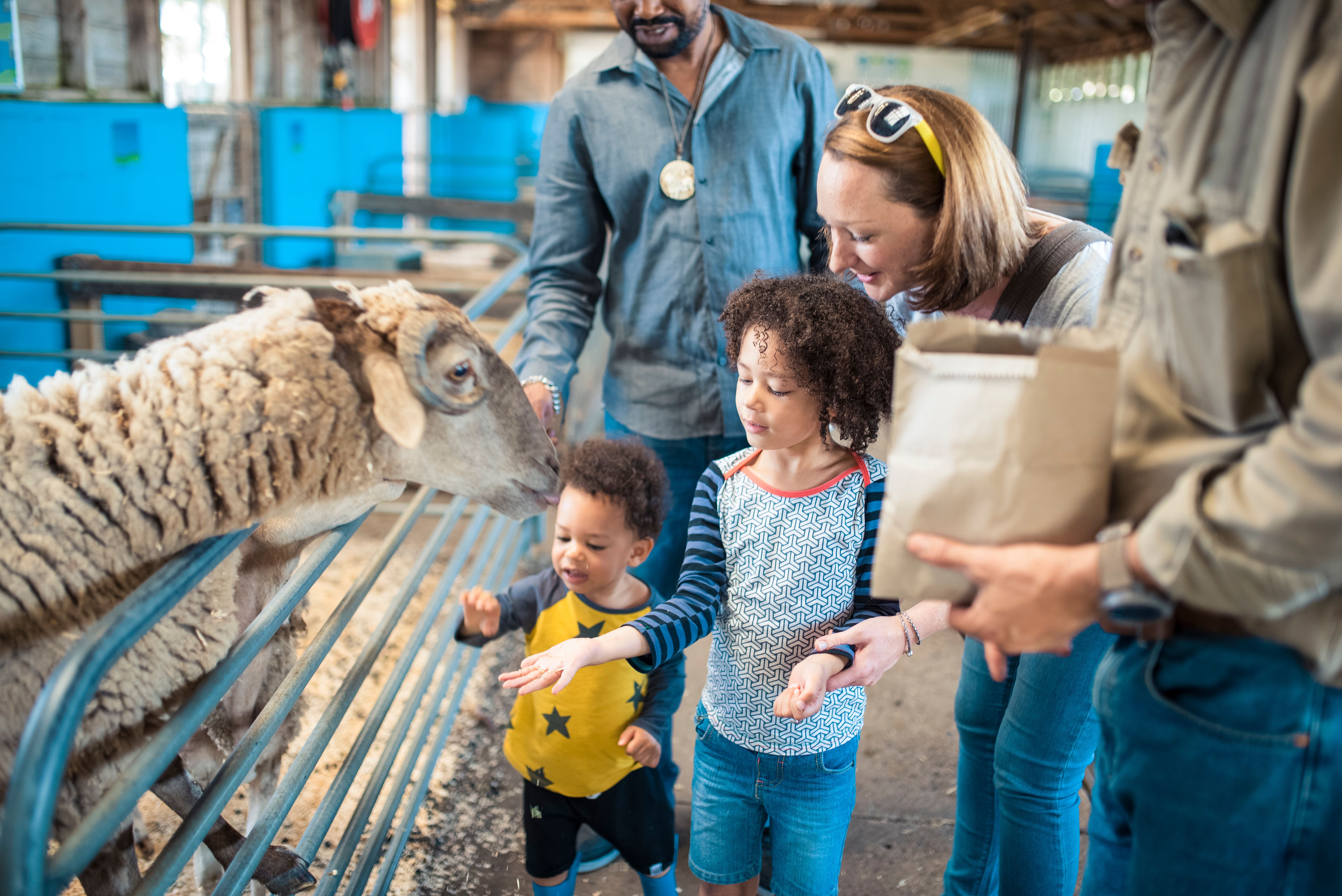
The Science Museum has a whole host of free activities for kids this month. Some of the highlights include:
Technicians, an interactive gallery for 11–16-year-olds where they can step into Shuri’s Lab from Black Panther; try their hand at creating lifesaving drugs; pilot a remotely operated vehicle on the ocean floor; or even control a robotic arm);
Pattern Pod, a multi-sensory gallery for under-eights;
The Garden, another interactive space for kids aged three to six;
Character Creator (weekends and school holidays, 12-1.45pm) where children aged three to 13 years old can create, design or even become their own unique sci-fi character.
Tree-mendous Adventures (dates and times vary) for three- to seven-year-olds. Visitors are taken on a journey from the end of the roots to the tips of the leaves in an interactive storytelling adventure through the trees.
The Southbank Centre’s Imagine Children’s Festival (February 8-18) has over 100 events on, many of which are free to attend. Some of the free highlights include:
Advertisement
One & Everything Family Trail, exploring endangered languages (Feb 8-17)
STIK, STAMP, by acclaimed street artist STIK. This is a free print workshop where children create a stamp print to take home (Feb 8-16).
Rhymes LIVE, an interactive show to reimagine the nursery rhyme (Feb 10)
Daytime Rave with DJ Archie and Friends, the Guinness World Record Holder for World’s Youngest DJ (Feb 11).
The Marvellous Myth Hunters, a free storytelling event for those that love heroes, monsters and mythical tales (Feb 12)
Wellbeing Wind Down – daily wind-downs help families using simple yoga, concentration and mindfulness exercises (Feb 12-17).
Imagine’s Big Gig, the festival experience but without the rain and the mud (Feb 13)
ZooNation Youth Company’s Hip-Hop Half-Term – a day of demos and workshops by some of the leading young performers in the UK (Feb 15).
The Museum of the Home in Hoxton is free to visit and, on February 14, will be running a series of drop-in (10.30am-4pm) clay-based workshops inspired by Vietnamese culture for all the family to enjoy.
Learn about the origins of the use of clay with archivist and storyteller Trà My, before playing with clay to make your own new ceramic home object with artist AP Nguyen.
Once you’ve played with clay you will be told stories from Vietnamese folklore and have the opportunity to join artist Chery Nguyen for a soothing workshop where you can decorate your very own teacup.
The Tate Modern has plenty on offer for kids and grownups alike. It’s free to enter. Check out UNIQLO Tate Play, which is the gallery’s new free programme of art, activities and play for families of all ages. From February 11-19, you can try your hand at weaving your own artwork (10.30am-6pm) at the Threads Holiday Make Studio.
The Barbican has a range of free things to do on Level G, including Squish Space which is a free creative play space for under-5s and their families. The space is designed by artist/designer duo India Harvey and Lisa Marie Bengtsson and brings people together to learn through interaction, collaboration and play. Using a variety of materials and tactile objects, it’s a place to spin, jump, hide, touch and explore. You can book here.
Ruislip Lido – on the outskirts of London – is home to a manmade beach and huge play area for children of all ages to enjoy. There’s also a miniature railway which you can get on nearby (although you have to pay for tickets). On 14 February, the Woodland Centre nearby is hosting a free arts and craft session from 1-3pm for kids aged four and over. More information, including how to book, can be found here.
A must for anyone visiting or living in London is to take kids to see the Changing the Guard at Buckingham Palace. It happens daily from 10.45am and lasts for about 45 minutes. Be warned, it can get busy so it’s worth arriving earlier to get a good spot.
Advertisement
Let your kids go undercover and test their detective skills during half term at the Horniman Museum, as part of the Montgomery Bonbon: Museum Mystery Trail (February 11-19). Kids can grab an activity sheet at the main entrance and test out their detective skills, while solving puzzles and having fun. On Saturdays from 2pm-4pm, children aged three and over can get stuck into a free craft session.
Outside of London? Try these instead
Head to the playground. If you’ve visited your local one a fair few times, why not find a bigger, more exciting playground, that you can travel to and spend a few hours at?
Lakes, ponds and aquadromes are often great places to visit for a walk. Even if it’s wet, children – especially younger kids – often love to splash about in puddles. Grab their waterproofs and get going.
Venture to a nearby park and play nature bingo. You can find printable bingo sheets online. Don’t have a printer? Draw out the grid on a piece of paper! Make a game out of your park visit and see how many things they can find. If that doesn’t float your boat, take a football or a frisbee and get active.
Head to the beach. You don’t need to go in the sea. Wrap up warm and let your kids build castles (or other structures!) on the sand, or take a net and wellies and help them check out the rock pools.
Advertisement
Visit your local library. Libraries are such a great place to take kids – especially when it’s raining. If you haven’t become a member yet, it’s worth signing up. We have it under good authority that under-5s are particularly huge fans. Some libraries also have toys and play areas.
Art galleries and museums are often free to enter and tend to have activities on for kids, especially during half-term.
Pets at Home is hosting free pet workshops in stores across the country. Children will have the chance to meet a range of small animals and learn about looking after them. They’ll receive an activity sheet to take away and a special My Pet Pals certificate. The free workshops will be running every Saturday and Sunday until March 12, with additional sessions during the week of February half term at some stores.
An actor on Tiktok has called for the creation of child-free suburbs after a trip to her local swimming pool ended in chaos. Because, well, kids.
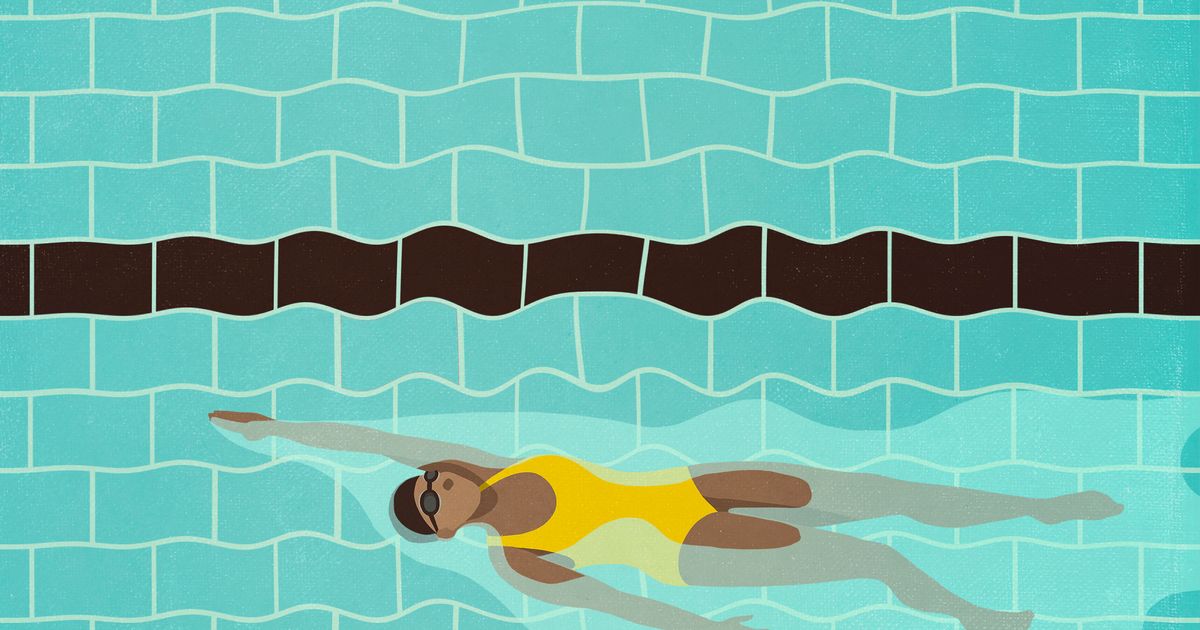
Kitch, who is known as Tiktok user @soybabie__ and based in Melbourne, said she’d visited her pool to do laps, but her peaceful swim in the lap lane was disrupted by screaming kids who kept jumping in.
Advertisement
“I would like to know when somebody is planning on opening an adults only suburb where everything in it is only for adults, because I’m so sick of going places and kids are just everywhere screaming and I just have to put up with it,” she said in a Tiktok video, which has had a quarter of a million views.
“I just went for a swim. They have their own pool and they’re in the lap lane pool, not swimming laps just jumping in and screaming – and that’s just allowed because they’re allowed everywhere.”
“I just feel like for people like me that are evil and hate kids, we should have our own suburb where we can just be quiet and undisturbed,” she joked.
Most parents will tell you they love their child more than life itself. I’m the same. But I have to tell you, when I saw this, I thought: “Fair.”
Advertisement
Adults only holidays exist, so it doesn’t seem unreasonable to have more areas where children don’t venture.
Of course, there are some who would strongly disagree. One user commented on the video: “You used to be a kid mate.. ya know. So get over getting older.” The comment had 215 likes at the time of writing.
Another added: “Go live in Antartica.” Eek.
But plenty of parents, like myself, agreed that child-free people should have their own spaces to exist. In fact, we’d probably go to them too if we had a rare day to ourselves.
That’s not to say I don’t love my child fiercely. I do. But sometimes it’s nice to have some alone time where you can just… adult. The feelings aren’t mutually exclusive.
“As a parent of two small children, I completely understand what you’re saying and respect that childfree people need space too,” said one mum.
Advertisement
Another added: “As a mum, I agree. I hate going to dinner without my kids to listen to other people’s kids carry on. There should be more adult only places.”
“I would totally support a place without kids. Maybe I could go there too without my kids,” said another parent.
Some pointed out that adult only places like this do exist: retirement villages. But the original poster suggested they shouldn’t just be for older adults.
The video also prompted an interesting point that most adult only places are centred around alcohol – ie. bars and nightclubs. People suggested child-free parks, restaurants and even supermarkets should be a thing.
Advertisement
After the video was picked up by the media, @soybabie__ shared another video acknowledging that people were “pressed” that other people don’t want to be around children 24/7.
“I’m not saying kids shouldn’t be allowed at the pool, it’d just be nice if there were more places that were JUST for adults to enjoy and that includes parents wanting a break from their kids too,” she said.
We’ve all been there: you’re tired, overwhelmed, then one of your kids makes a move and it’s the final straw. Words you’d sworn you’d never use as a parent slip right out of your mouth.
Or maybe you’ve found yourself reevaluating your priorities. Restricting junk food or screen time might not be your number one goal every day.
Advertisement
It’s good to be thoughtful about your intentions as a parent, but you don’t want your expectations to be so rigid that they can’t bend to accommodate the moment you’re facing, or the child in front of you.
“Parenting is not static,” New York psychologist and parenting coach Sarah Bren told HuffPost.
“It requires a great deal of learning, adapting, iterating and tolerating messy growth (our kids’ and our own). It rarely looks in real life the way it all played out in our fantasy,” she explained.
Whether others are doing the judging, or we’re doing it ourselves, it’s important to remember that no one moment determines our worth as parents.
Cindy Graham, a psychologist in Maryland, told HuffPost: “Oftentimes we think the goal of parenting is to raise happy, healthy, well-adjusted kids.
Advertisement
“We sometimes forget that parenting is also about learning to show grace — to ourselves and our children — and teaching kids to show grace. You will say things you never thought you would, so learn to apologise effectively and make amends.”
If you’ve ever felt alone in not living up to your own parenting expectations, read on. We asked parents what things they promised themselves they would never do — and then did.
We’d bet that every parent can relate to at least one of these scenarios.
Feeding
“I swore my kids wouldn’t ever eat McDonald’s. Sometimes I just don’t have it in me to cook.” — Patty Van Laar
“That I wouldn’t cook separate meals for them, they would eat what we eat. Uhhhh, yeah. So what’s it gonna be tonight, kids? Chicken nuggets or mac ‘n’ cheese? Honestly, it’s because I have yet to figure out how to cook a meal worthy of adults that can also be on the table by 6pm. I work full time 9-5 and the kids deserve to eat at a time that matches their schedule and hunger. Just not enough hours in the day!” — Beth Carchia
“Breastfeed beyond a year. Had no idea that babies don’t just wean themselves. My boys nursed till two-and-a-half!” — Jean Wolfers-Lawrence
Advertisement
“Hot dogs.” — Sara Biehl Horsman
“I swore I would always have candy out, free for the eating. Needless to say, I didn’t do that!” — Gretchen Kuiper
“Eat dinner at 8pm, because of kid activities and practices. I never thought we would be that family so busy that dinner was at 8, on a school night. Yet it’s the norm for a lot of the year now and I’m just fine with it.” — Renee Colleen
“We were gonna eat dinner together every day at the table! With no electronics! Sigh.” — Katie Morris
JGI/Jamie Grill via Getty Images
Sleeping
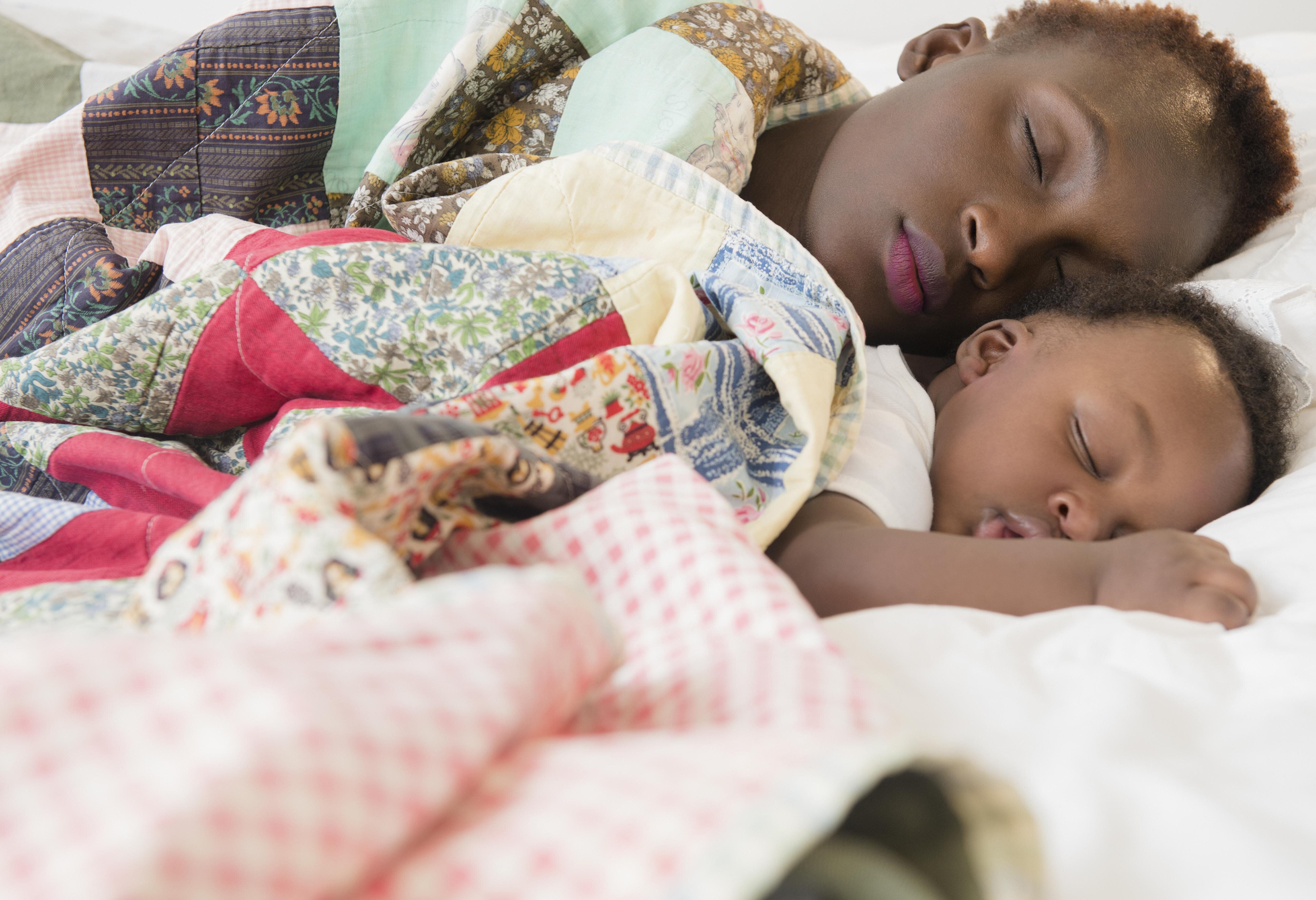
“I swore that my children would never sleep in my bed, they would always sleep in their cribs. My son turns nine in April and only stopped sleeping in my bed regularly last year.” — Desiree Dalby
Advertisement
“Co-sleep. I thought you just let them cry and figure it out — till I was working two jobs while my husband worked night shifts and I needed to sleep. I started at two years old and don’t know why I didn’t start sooner. He slept and I slept. We did that till he was six/seven and we transitioned him back to his room.” — Amanda Krieger Royer
“My first was sleeping in her room by the age of seven months! I thought I had aced this parenting thing. And then my second came and he slept in our bedroom every night (and in our bed at least three times a week) till he was two-and-a-half years old!” —Michele Lempek Rosa
“Laying with them until they fall asleep.” — Jordanna Oswald
Screen Time
“I would look at people in public and think, ‘There’s no way my kid will ever bring a tablet out in public.’ Me, 10 years later: ‘A tablet is a must if we want to enjoy a dinner in public with our two year old.’ I completely understand and apologise to any parent I side-eyed 10 years ago.” — Amanda Manley
Toys & Clothes
“I swore we wouldn’t have a playroom full of toys. I was steadfast that the children’s bedrooms were where their toys would go. They can just play in their rooms! Fast forward to when I have three kids and we’ve turned our dining room into a playroom. Our kids are little so we need them close by for safety reasons. There’s no way they can just play unsupervised in their rooms on the second floor.” — Betsey Niebauer
“I said that I’d never dress my kids in clothing that had characters/TV shows on them, i.e. ‘Paw Patrol,’ Spidey, etc. I said my kid wasn’t going to be a walking advertisement. This lasted until I saw how excited and happy it made them to wear a shirt with Chase on it.” — Catherine C.R.
Advertisement
Discipline
“I swore I’d never say, ‘because I said so.’ Well, I have like 10 minutes a day of ‘me time’ and I’m not using it to repeat the same stuff I already told you in another conversation. I’m the parent, you’re the kid, sometimes you’re gonna have to live with that as an answer.” — Rachel Bowie Mace
“I swore I’d never have one of ‘those’ kids, the ones having a tantrum in the grocery store because you wouldn’t buy them Twizzlers or a toy. So naive!” — Jennifer Streng
“I never thought I’d tell my kid to not speak to me as if I were his friend (something my own mother would say to me) and the words have definitely come out of my mouth!” — Naomi Raquel
“I swore I would never yell at them. Well, let me tell you, I had no idea in my early 20s just how frustrating parenting is, and boy oh boy, have I screamed and yelled. I wish I didn’t, but it happens.” — Danielle Butler Shearin
The Leash
“I remember saying how ridiculous the kid leashes/harnesses/backpacks/ bracelets were. Oooh, I was so judgy. Anyway, life gave me a runner at 15 months old, so naturally we were using a backpack harness and I did get the dirty looks, but aw well, he’s alive and well.” — Cindy Montalvo
Advertisement
“My first son was chill, but my second son? Not so much. That kid would have run out into traffic without a second thought. The leash was a godsend. I honestly didn’t care what people thought. It helped keep him alive.” — Amy Kristine
“I was sitting there judging all of those people that put their kids on a leash, like OMG, get a dog if you want to use a leash. Until my 14-month-old no longer wanted to be in a stroller and she was also a runner. So I needed a leash and some running shoes and off we went!” — Courtney Entersz Wenhold
On Thursday, the model posted an Instagram photo of the couple’s two older children, Luna and Miles, holding the new baby, named Esti Maxine.
“The house is bustling and our family could not be happier,” Teigen wrote in a caption for the post.
“Daddy sheds nightly tears of joy seeing Luna and Miles so full of love, and I am learning you still need diapers with a c section!? We are in bliss. Thank you for all the love and well wishes – we feel it all!”
Legend shared the same photo on his Instagram account, writing that he was in awe of Teigen’s “strength and resilience.”
Esti Maxine was born Jan. 13, Legend said, adding that Luna, 6, and Miles, 4, have embraced the newborn.
In an Instagram post from December, the cookbook author poked fun at people who have said that her pregnancy felt longer than it actually was.
“Omg I feel like she’s been pregnant foreverrrrrr,” she wrote, imitating the kinds of remarks she would hear. “How do you think I feel thank u.”
Motherhood is full of conflicting emotions. It can be beautiful and joyful and fun, but it can also be demanding and confusing and overwhelming at the same time.
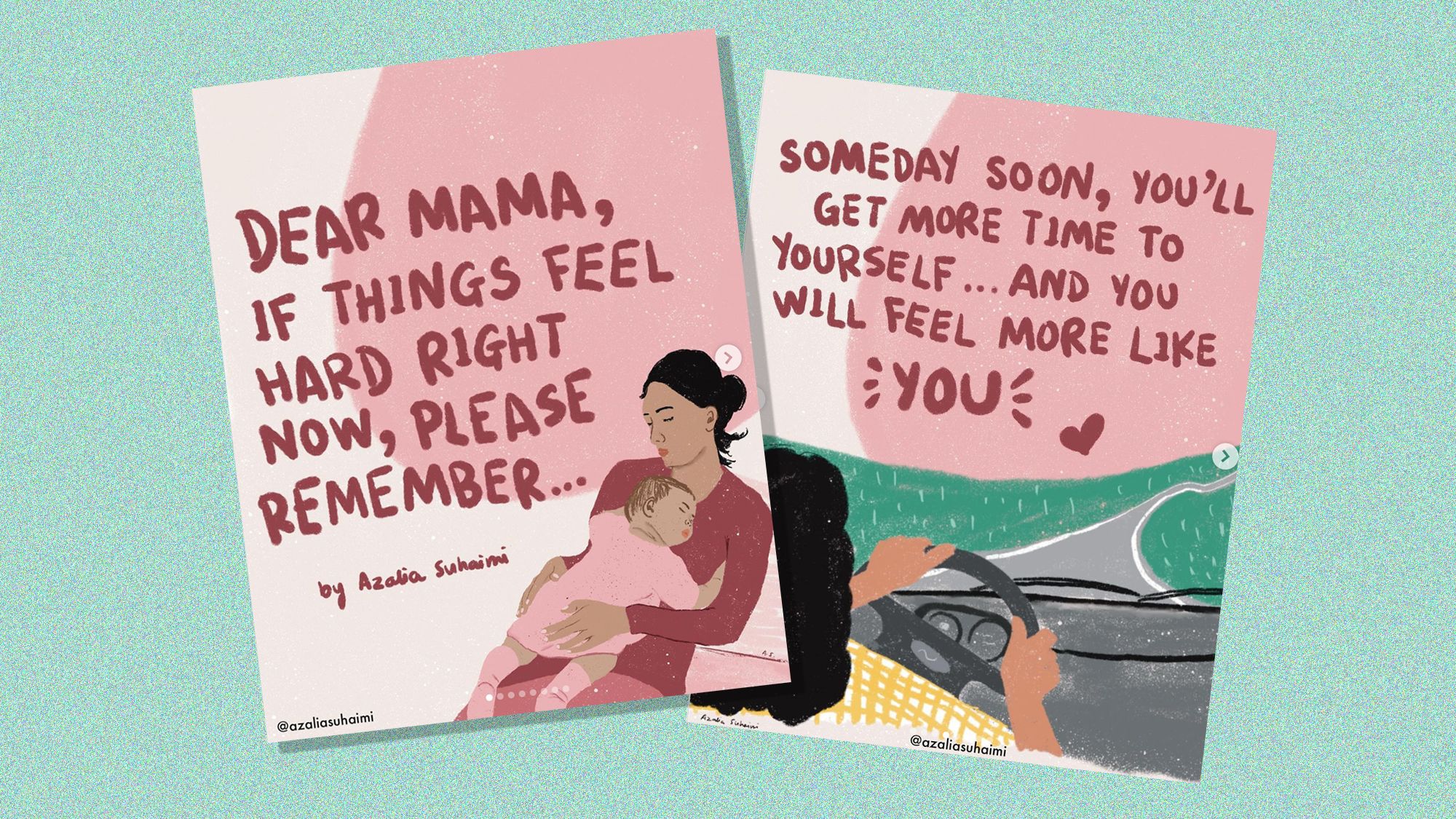
In artist and poet Azalia Suhaimi’s illustrations, the Malaysia-based mother of two offers comforting reminders to parents navigating these ups and downs.
Many of her illustrations, which she shares on her Instagram account, @azaliasuhaimi, begin with the words “Dear Mama.” But she said they apply to dads and other caregivers, too.
Advertisement
“My artworks are titled ‘Dear Mama’ as they mostly began as love letters to myself, like self-reminders on a bad day,” Suhaimi told HuffPost. “When I decided to share them with the world, I then began building a community of like-minded mothers, all of whom I have really loved connecting and exchanging stories with.”
Suhaimi started her Instagram account several years ago when she was “going through the postpartum blues.” At that time, she would share her own photography with poetic captions that talked honestly about motherhood.
“I scrolled through social media and saw all these picture-perfect Instagram photos of mothers enjoying their new babies,” she said. “I felt weird and alone and left out, like I was the only one struggling with these difficult feelings while every other mother out there seemed to be having the best time of their lives.”
Advertisement
Then, during the Covid lockdowns, she took a digital art course online and began creating illustrations for her posts.
In her work, she enjoys capturing the raw and real moments of parenthood, raising awareness of maternal mental health issues and offering solidarity to other parents in the thick of it.
Suhaimi’s kids are now ages eight and four. She said this is her favourite phase of motherhood so far.
“I can finally sit a bit and reflect on all the lessons I’ve learned from the struggles of early motherhood the past few years. And you can see these reflections on my artworks.”
Advertisement
As an artist, Suhaimi hopes to make parents feel less alone in their own journeys, whatever they’re going through.
“Parenthood is hard and messy as it is, so it’s nice to have solidarity, and a safe space where we can talk about the hard things without being judged and where our feelings are validated,” she says. “And I hope my artworks provide that safe space.”
Another important part of Suhaimi’s message is reminding parents to give themselves more grace.
“Some of my darkest moments of parenthood were really made darker simply because I wasn’t kind to myself,” she said. “I easily judged myself and concluded myself as a bad mom when what I faced was simply just a bad day.”
For Suhaimi, learning to practise self-compassion made “a whole lot of difference” in how she parents her kids and in her motherhood experience.
Advertisement
“So I hope that my artwork can help remind other parents and myself too – I still need the reminder – to practise self-compassion,” she says.
What do you think of when you hear the word family? More often than not, it may be a heterosexual couple – a mum and dad – and their two biological children. The classic nuclear family setup.
But the reality is that many families no longer look like this in the UK, despite the those old stereotypes holding fast. In 2021, there were 19.3 million families in the UK – of these, 3 million were solo parent families.
Advertisement
Around 1.1 million children in England and Wales are estimated to live in a stepfamily, while statistics on same-sex parent families are harder to come by. According to charity FFLAG, the most recent statistics for the number of same-sex couples raising children are from 2013, when 12,000 couples were doing so. It’s safe to say there’s probably a lot more now.
For children who come from single parent, LGBTQ+, adoptive, blended, foster and kinship families (where family members or friends raise children), being bombarded with the message there’s only one type of family can cut deep.
Journalist Freddy McConnell – a self-described solo seahorse father – issued a plea on Instagram recently after his tearful child came home from school and said everyone in his class had a mum and dad.
“I don’t know if this was someone else’s observation or his,” wrote McConnell, before urging parents to tell their children what families actually look like. “If your kid has a mum and a dad, please don’t let them out into the world under the misconception that *that* = family,” he said.
Advertisement
“Please take every single opportunity to point out that ‘family’ is a huge and never-ending idea,” he said. “That love makes a family, not who’s in it. That everyone’s family means the world to them, so be gentle.”
Sadly, the othering McConnell’s children’s faced is not unique. But while there are some amazingly diverse books and TV shows for kids out there, as well as references to different types of families when learning at school, the classic 2.4 family is still very much the norm in lots of the media kids consume from a young age. Bluey and Peppa Pig, for example (though a shout out to Hey Duggee for doing things a bit differently).
Lots of the classic children’s books we end up buying our kids (mainly for our own nostalgic pleasure) also centre around very ‘traditional’ family units, not necessarily reflective of 2023. Think: Mog, The Tiger That Came For Tea, Peepo.
Louisa Herridge, a solo mum who is 43 and from Warrington, says films and books can sometimes be triggering for her daughter Emilie if they’re just about dads.
“I would love to see a single mum narrative in books and kid’s films and one where they are thriving and not just trying to get back with dad,” says Herridge, a positive psychology and mindset coach, and founder of Mamas Ignited.
She praises the latest Disney films which “have much more powerful messages for young girls in particular – and we do see different family makeups.”
The mum actively teaches her daughter about how families are all different, and says her daughter’s school makes an effort in this area too. One example she gives is that they say “grown-ups at home” instead of mum and dad.
“But schools are still portraying stereotypical norms,” she adds. “In her school Nativity this year, they portrayed four family setups showing how they celebrate Christmas. In each scene, there was a mum, dad and two kids.”
Discussing the impact, the solo mum suggests children who do not come from nuclear families “have the potential to feel different – and very early on in life” which, she says, can impact their self-worth and self-esteem.
“Children that stand out as different are at risk of bullying – and as an ex-teacher this is something that I have experienced,” she adds.
Advertisement
““I remember the stigma attached to single mums and the societal message was that I should aspire to get married and have a baby.””
– Louisa Herridge
Herridge recalls feeling guilt when she separated from Emilie’s father because she didn’t want her daughter to “come from a broken home” – something that was shaped by her own perception of what a family should look like growing up.
“I grew up terrified that my parents would split up and that I would come from a ‘broken home’,” she says. “Looking back this stigma of a ‘broken home’ comes from how family life is portrayed in society.
“I remember the stigma attached to single mums and the societal message was that I should aspire to get married and have a baby.”
Her daughter has, on occasion, been impacted by the narrow view of family that is sometimes portrayed in society and culture. “The first time I can remember it having an impact on her was at her Reception Nativity,” she recalls. “After the Nativity she was very upset that she didn’t have her dad there and, in her head, everyone else did.”
Sometimes families have one parents, sometimes two, sometimes even three. And sometimes one – or all – aren’t necessarily the biological parent. Mok O’Keeffe, a LGBTQ+ historian at GayAristo, has been helping his sister-in-law raise three children after his brother died in 2010.
“I promised my brother I would keep his memory alive and be there for the girls. And I have done that. They have a wonderful mother and I am their father figure,” says O’Keeffe, who is married.
svetikd via Getty Images
“They were flower girls at my wedding and mean the world to me. My sister-in-law says we are the modern family,” he adds. “We certainly are unique at sports day!”
The children – who are now all teenagers – “think it is quite cool to have a gay uncle as a father figure,” says O’Keeffe, who is 53 and splits his time between Chelsea in London, and Abergavenny, Wales.
Advertisement
Their experience as a family unit, while tinged with tragedy, has been an overwhelmingly positive one – helped, O’Keeffe says, by their extended family who live in Spain.
“The aunts and uncles and grandma are loving and welcoming to the girls,” he says. “They spend summers in Spain and, in many ways, my girls may have lost a father, but as a result have more loving and invested adult role models than they might have had if he had lived.”
The historian says he’s had a positive experience with their schools, who have accepted him as the father figure in the girls’ lives – something that came about after he and his sister-in-law set up a meeting to explain their situation. “Both their junior and high schools were 100% supportive,” he adds.
“I have not experienced any negativity around what my sister-in-law and I call ‘our modern family’. I have found that the girls’ friends and parents have been totally accepting of me as a significant part of the girls’ lives.”
Advertisement
The UK is a more diverse place than it’s ever been – with so many families of all shapes and sizes. But it’s clear that some children are still being made to feel like outsiders because of the narrow view of family that still presents itself.
While schools and media are doing their best to move with the times, it’s clear more needs to be done. And caregivers – especially those in more ‘traditional’ family units – are the ones who can be doing some serious legwork here.
Freddy McConnell suggested parents must be the ones to “keep talking” to their kids about this stuff. “However you want to explain it, with however many picture books to help, please just make sure you *actively* do,” he said.
“So that kids with a solo dad or solo mum, two mums, two dads, more than two parents, adoptive families, donors, guardians, carers, blended families etc etc, don’t find themselves having to defend their loved ones at school or anywhere else.
“So that school is as safe a place for us as it is for your family. And, to put it bluntly, so that no one’s little one has to put on brave face in class, before letting it out through tears at bedtime.”
While parents are a great place to start, Herridge caveats that “unfortunately the same messages will not be given [by all parents] as there will be old prejudice and misrepresentation in some families”.
Given this is the case, schools have a huge opportunity to make a difference.
What are children taught in schools about family?
Guidance provided to primary schools states that children should be taught “families are important for children growing up because they can give love, security and stability”.
Children are told “that others’ families sometimes look different from their family, but that they should respect those differences and know that other children’s families are also characterised by love and care”.
The guidance says teachers must teach pupils that there are many types and sizes of families, for example:
some children live with a parent or parents
some children live with other family members such as grandparents or older siblings
some children live with a foster family or in another type of home
some people are the only child in their family while others have siblings.
Diversity is needed more widely is needed in the media, adds Herridge. “This is a much wider issue than just families as there needs to be more representation of colour, disability, gender and sexuality.
“Diverse resources in schools would be a great start, along with breaking down the patriarchal expectations of women that are still so often represented in books and films.”
So what is a family then? “Families come in many different varieties, changing and adapting over time,” says O’Keeffe. “They are no longer fixed entities, with traditional mother and fathers – and educational establishments are recognising this.”
Advertisement
“Family are the people who love you no matter what, who you want to be with and who add that extra spark to your life,” adds Herridge.
Her daughter Emilie, who is seven, says families “are happy, go on nice days out, are loved and [there’s] no falling out”.
“The people in families are mums, nannies, dads, children or maybe not a child, aunties, uncles and cousins. There doesn’t need to be a number of people,” she says.
“You are family because you were made a family. In any shape and sizes, you are still a good person.
“Just because you don’t have a dad, doesn’t mean you are different.”
A reading list for you and your kids to explore what different families look like
Do you have recommendations for more books or shows about the shape of families today. Email ukparents@huffingtonpost.co.uk to let us know about them.
You’ve likely heard talk in the news about XBB1.5, an Omicron variant that has become a dominant strain of the Covid-19 virus in the US and that experts warn could soon become so in the UK, too.
While for the most part this Omicron variant is similar to previous ones, there are a few things to know about XBB1.5, especially if you believe that it may have hit your household.
What symptoms of XBB1.5 are common in children?
Experts agree that symptoms tend to be the same as those we’ve seen before.
“I have not seen any evidence to suggest the main symptoms of XBB variant are different from previous variants,” Dr. Ruth Kanthula, a paediatric infectious diseases specialist at MedStar Health, tells HuffPost.
“It’s hard to tell about loss of taste and smell in young kids,” says Dr. Tanya Altman, a paediatrician and author of Baby and Toddler Basics.
Advertisement
Altman says she has noticed that kids tend to be less interested in eating while they are sick, and ask for “more flavourful or spicy foods after they recover, which to me suggests their taste may not have fully recovered yet.”
Altman describes the majority of Covid infections that she is seeing now as mild – with kids having less serious symptoms than adults, such as shortness of breath. She adds that children seem to be recovering quickly after testing positive.
“This could be due to the fact that most of the population has some sort of immunity from previous infections or vaccines, or the virus is now weaker, and I think it’s likely a combination of both,” she continues.
It’s important to note, however, that a child can have two respiratory viruses at the same time, which may cause their symptoms to be more severe. Other viruses in heavy circulation right now include RSV and the flu, which some have dubbed, along with Covid-19, the “tripledemic”.
Advertisement
How contagious is XBB1.5?
The “main difference that has been observed with XBB variant compared to other Covid-19 variants is that XBB variant spreads quickly,” says Kanthula.
Advertisement
Because the XBB1.5 variant has quickly come to account for a large portion of infections, scientists think that it may be more highly transmissible than other variants.
Phynart Studio via Getty Images
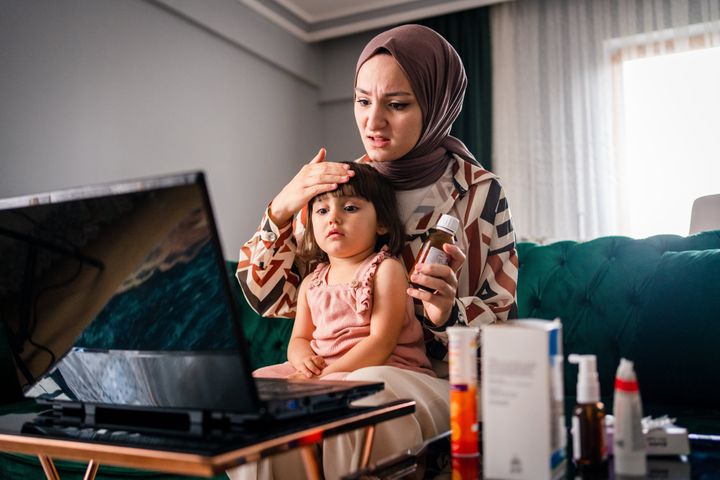

mother having video call with a pediatrician while holding ill daughter in her lap.
“The XBB.1.5 variant has a mutation virologists believe is helping the virus better bind to cells and thus be more transmissible,” Johns Hopkins professor of molecular microbiology and immunology Andy Pekosz explained in a Q&A on the university’s website.
Practically, this means that the virus could infect many members of a household, or a school classroom, in a short amount of time.
In addition to being more highly transmissible, XBB1.5 also seems to be “immune-evasive,” according to Pekosz, meaning that there may be a lot of breakthrough infections in people who have previously had Covid, are immunised, or both.
Advertisement
What should I do if I think my child has XBB1.5?
If your child has any of the symptoms listed above, it makes sense to give them a Covid-19 test. Note that these tests will only tell you whether your child is positive for Covid-19, not which viral strain they have.
Treat your child’s symptoms just as you would any other respiratory virus, with rest, fluids and acetaminophen/ibuprofen for fever or aches. As always, says Altman, if your child has a fever for more than four days, isn’t keeping fluids down, has trouble breathing or looks really sick, call your doctor.
For infants under three months, you should contact your doctor if they have a fever of 38°C or higher or miss two feeds, as young infants can become very sick with different respiratory viruses.
Does my child need to quarantine if they are infected?
As the NHS website explains, you have Covid-19, you can pass on the virus to other people for up to 10 days from when your infection starts. Many people will no longer be infectious to others after five days.
Anyone with Covid is currently advised by the NHS to try to stay at home and avoid contact with other people for five days, and avoid meeting people at higher risk from Covid-19 for 10 days, even if those people have had a Covid-19 vaccine.
Advertisement
“If a child or young person aged 18 or under tests positive for Covid-19, they should try to stay at home and avoid contact with other people for 3 days. This starts from the day after they did the test,” the guidance continues.
“Children and young people tend to be infectious to others for less time than adults. If they’re well and do not have a temperature after 3 days, there’s a much lower risk that they’ll pass on Covid-19 to others.”
While it’s frustrating to have to keep your child home from school, particularly if they’re not feeling ill, Altman says: “Covid is one that you really don’t want to spread to others, especially those who are high risk, so please keep your kids home when sick, mask if you need to leave your house with sick kids and keep them away from others as much as possible.”
How can I prevent my child from getting XBB1.5?
“I think the goal now is to learn to live with Covid, just as we live with flu, RSV and other contagious respiratory illnesses,” says Altman.
Stay home when sick, wash hands, disinfect surfaces, teach kids to cover their faces when they cough or sneeze, and mask when appropriate (such as days six to 10 of a Covid-19 infection.)
Advertisement
Even though XBB1.5 is known to evade immunity, “based on past experience we know that vaccination can protect against developing severe disease,” says Kanthula, so you should make sure your children have been vaccinated and had boosters.
Altman says she believes that the hybrid immunity of three doses of vaccination and one illness seems to offer the most protection against reinfection.
Experts are still learning about Covid-19. The information in this story is what was known or available at the time of publication, but guidance could change as scientists discover more about the virus.To keep up to date with health advice and cases in your area, visit gov.uk/coronavirus and nhs.uk
Plenty of parents dread potty training – and for good reason. There will be rogue poos that find their way onto your favourite rug, there will be wee everywhere, and there will be tears (mainly from you).
But once the penny drops and things click into place, nothing can quite prepare you for that feeling of accomplishment. You will burst with pride – not just for your genius of a child, but for yourself. After all, if you can teach them how not to soil themselves, you can literally achieve anything.
Advertisement
For those yet to embark on the journey, or if you’ve recently started but aren’t having much success, there are some key things to know.
Potty training and toddler specialist Amanda Jenner – who is glamorously known by kids as “the wee and poo fairy” – has worked with hundreds of parents over the years, helping their children master the art of going to the toilet.
When asked what the perfect age is to start, she says there isn’t one as every child is different. “You know your child best,” she says, suggesting you might want to start the process “any time from around 2-4 years old”. When they’re showing signs of readiness (more on that later) and can communicate when they need to go, “then it’s the right time to give it a go,” she adds.
Here, the toddler expert talks us through the potty training mistakes that parents commonly make (we’re only human after all) – and how to rectify them.
Advertisement
1. Starting when your child isn’t ready
If you’ve started potty training, given it a good couple of weeks and your toddler is showing absolutely no interest and having lots of accidents, then they are simply not ready, says Jenner.
Children are able to control their bladder and bowels when they’re physically ready and when they want to be dry and clean. Every child is different, so some might be ready to start this sooner than others.
We know that by two years of age, some children will be dry during the day, but the NHS acknowledges this is still quite early. By three, however, most children are dry most days – although some will have the odd accident if excited or upset.
What to do instead: have a break for one or two months and then start fresh. Look out for them showing signs of readiness. These include:
stopping in their tracks when they are doing a wee or a poo,
becoming aware of their bodily functions,
insisting on a nappy change when it has been soiled,
hiding behind the sofa when they are doing a wee,
going longer periods with drier nappies,
understanding simple instructions and commands,
being able to communicate that they’ve done a wee or poo.
2. Getting started when there’s a change in circumstances
It’s not a good idea to start potty training if you’re experiencing some disruption to your lives right now. This could be because your toddler is feeling unwell, there’s a new baby in the family, you’ve moved house, your child has started or changed nursery, or there are any problems in the household, such as a separation or a death in the family, says Jenner.
What to do instead: wait until there’s less disruption in your lives and start the process again. Jenner recommends spending the week before you start potty training educating yourselves on the process and reading a potty training story book to your little one to help them understand what they have to do.
StefaNikolic via Getty Images
3. Getting frustrated with your child
Potty training can be unbelievably frustrating for both you and your toddler. Believe us, we know. But little ones don’t like to disappoint their parents, so try not to become cross with your child for accidents or not wanting to sit on the potty or toilet, says Jenner.
What to do instead: turn your frustration into lots of encouragement using upbeat and happy language. You could say: “mummy and daddy are so proud of you for trying” or “what a big boy/girl you are using the potty/toilet and wearing big girl/boy pants”.
Advertisement
4. Trying to nighttime potty train at the same time as daytime potty training
Trying to get your child to use a potty in the day and then go through the night without going to the toilet – and not wearing any nappies – is probably not going to work out like you’d hoped.
It usually takes a little longer for children to learn to stay dry throughout the night and although most learn this between the ages of three and five, around 20% of children aged five sometimes wet the bed.
Nighttime dryness involves different bladder control than the day and some children sleep deeper than others, which means they aren’t aware when they have a full bladder, says Jenner, which can then lead to bed wetting.
What to do instead: wait until they are dry in the day for a couple of months and then begin nighttime training. In the meantime, keep them in nappies overnight.
5. Forcing them to sit on the potty if they are refusing
If they won’t sit on the potty, don’t make them do it as this will only result in them associating the potty with a negative or fearful experience, says Jenner, meaning they probably won’t want to continue with potty training.
Advertisement
What to do instead: try using distractions and making it a more fun and positive experience – use bubbles, books and sensory toys. If they still refuse, then stop after a few days of trying and revisit again in a month or so. Continue to educate them in this break by using books, flash cards, watching videos and talking about it. Good luck!
I lay in bed realising I’d finally succumbed. I had flu. The self-diagnosis made sense: our then 15-month-old had picked up her billionth illness of the year from childcare and was suffering with a high temperature and the kind of chesty cough that rattled her ribcage. Meanwhile, flu cases were on the rise in the UK.
I’d spent a sleepless night shivering in bed one moment, my teeth chattering aggressively, and sweating buckets the next. By morning, my body ached and I was so tired I was unsure I’d be able to move out of bed. Spoiler alert: I had to because, as we all know, toddlers do not stop. Even when sick.
Advertisement
I did a Covid test, and it came back negative. I spent the rest of the day trying to look after my daughter while feeling like I’d been hit by a ton of bricks. It meant back-to-back Hey Duggee and lots of reading – she’d fetch books and sit on top of me while I lay on the sofa, so I didn’t really have much say on the matter.
One of my boobs started to feel a bit tender as the day went on but I brushed it off. In over a year of breastfeeding I’d never had mastitis, so I presumed I wouldn’t develop it now – the stories I’d heard about it were always from those experiencing it in the few months after having babies.
Plus, there had been multiple occasions where my breast had felt a little bit sore due to engorgement but I’d always managed to clear the issue at home.
The following day I still felt awful and noticed that my tender boob now had a red patch on one side and, oh my word, the pain. It had progressed to the point where it hurt to even put a bra on. I strongly suspected it might not be flu that was causing my body aches, fatigue and shivering after all, so I called the doctor’s surgery and managed to bag an appointment that afternoon.
Advertisement
After a quick examination, with my GP exclaiming how hot and red the area was, she confirmed I had mastitis – where the breast becomes inflamed, usually as a result of an infection. This issue mostly occurs in those who are breastfeeding when there’s a build-up of milk in one of the breasts or a blocked milk duct hasn’t cleared properly.
The diagnosis made sense. I’d been reducing my feeds for a few weeks to try and wean my daughter off milk during the day, so she was only really having the odd feed at night.
Still, I was surprised I hadn’t developed an issue sooner, and that the pain had been secondary to my flu symptoms – but maybe I’d just become used to that dull ache that comes from not having your boobs emptied properly.
Symptoms of mastitis include:
a swollen area on your breast that may feel hot and painful to touch The area may become red but this can be harder to see if you have darker skin
a wedge-shaped breast lump or a hard area on your breast.
a burning pain in your breast that might be constant or only when you breastfeed
nipple discharge, which may be white or contain streaks of blood
flu-like symptoms such as aches, a high temperature, chills and tiredness
Antibiotics were prescribed (the go-to treatment for mastitis) and within a few days I was feeling right as rain again – no shivers, no shakes, and a very happy breast. Since then, I’ve had a few issues with blocked ducts, but I’m no longer complacent. Whenever I’ve felt a twinge of tenderness, I’ve promptly dealt with the issue to avoid it developing into mastitis again.
This has often meant putting a warm wet cloth on the tender area, or having a warm shower or bath. But the NHS also recommends continuing to breastfeed, starting feeds with the sore breast first to empty any backed up milk; expressing milk between feeds; and massaging the area of the breast where it’s tender.
It’s important to note that mastitis can occur in anyone, even men. When it’s not caused by breast milk building up, it may be down to: smoking, damaging the nipple, breast implants, having a weak immune system, or shaving/plucking hairs from around the nipples.
If you’re experiencing flu-like symptoms and breast pain which doesn’t go away after 24 hours, speak to your GP. Don’t struggle on or brush it off, as the sooner you get it treated, the sooner you’ll feel better.
And if you experience recurrent mastitis, it’s definitely worth speaking to a midwife, health visitor or breastfeeding specialist who can help you get to the bottom of why.
Advertisement
Help and support:
You can call the National Breastfeeding Helpline on 0300 100 0212 (9.30am to 9.30pm, daily)