New government legislation allows employees the right to request flexible working from the time they start a new job. The move is being received well by unions, who advised minsters to do more in relation to making flexible working a norm.
Millions of Brits all over the UK are currently working flexibly, this includes people working from home, compressed hours, job sharing, flexitime and part-time and term-time only working.
Advertisement
The government announced on Monday that it would introduce legislation which will give employees the right to ask for flexible working arrangements as soon as they start a job. Previously, you could only make a request after 26 weeks.
Now, you can do it straight away. A request can be made every year and employers have up to three months to respond.
As well as helping those who want to work from home, the government said around 1.5 million low paid workers such as students, carers and gig economy employees would benefit from this legislation, because it would let those workers take on a second job if they desired.
Tray Durrant, executive director of PA recruiter, Bain and Gray, believes the new move will be a good thing for employees. “It will prompt discussion and iron out the working arrangements from day one, which can only be a good thing for both sides and ensure hybrid working arrangements are clear cut. It is already part of the dialogue for our candidates when looking for new roles,” Durrant says.
Advertisement
Though the move will be important for employees, some people shared that they’d feel uncomfortable asking for flexible working options in a job interview as they fear the response, according to a TUC survey.
However, Durrant thinks it’s important that this is covered during the interview process. “This should set the stage for the future working arrangements,” Durrant adds. “It’s crucial during any interview process that all elements are considered by both parties, and establishing the ground around flexible working arrangements would be anticipated by the employer.”
Equally, there are some who might feel anxious about approaching their current employer about the topic of flexible working. But Durrant says “whether or not someone is intimidated, communication is paramount”.
More than a quarter (26%) of businesses have reported an increase in questions regarding flexible working at interview stage. UK workers increasingly expect flexibility as a given, with some going so far as to say they’d be more likely to continue working for their employer if they were able to work overseas as part of their current job.
So, what’s the best way to make a WFH request?
“Employees need to think through the benefits of presenting their case for home working, which might be easier for some roles than others,” says Durrant. “Highlight clear tasks where the focus is individual and where undertaking these duties makes more makes more sense in an uninterrupted environment.”
Advertisement
Alison Blackler who is a mind coach understands that bringing up the topic of flexible working can be difficult if your manager isn’t keek on the idea. Blackler share’s three tips to when making a working from home request:
Prepare what you want to say, get as much factual information to present, for example, the length of time saved travelling and have the key pointers written down. This helps you get all your points over, keeps you on track and therefore reduces overwhelm and fluster.
Make sure that time has been planned into the managers diary and state what you want to talk about ‘flexible working’. Be brave and clear – being up front helps everyone with expectations. It is also tempting to try to ask casually, which can catch the manager off guard and therefore get an unwanted response. This also helps you prepare yourself for the conversation
Remember, these conversations usually go better than we imagine in our minds. We often dread them and make them into much bigger deals. Rehearsal also helps the mind so that it is not new and it is much easier.
This also goes for employees who feel pressured to work in the office, despite being offered hybrid working options. “If this becomes a problem for the employee, the individual should bring it up with their manager and ask for clear guidelines on the company policy and on their role,” Durrant shares.
“Again, communication is paramount to set parameters and ensure there is clarity around the role and the number of days in the office.”
Advertisement
Employees certainly want hybrid to stay – 15% of businesses are already receiving increased requests to work from anywhere, Totaljobs reported. Meanwhile 15% are getting questions about four-day working weeks.
Around 16% of companies have improved flexible working options in order to retain staff aged over 50, according to Totaljobs. And only 12% of companies citied “managing flexible working patterns” as one of the major challenges facing businesses in Q3 2022, suggesting most are getting used to the idea). Instead, cost of living (55%) and retaining staff (26%) were the principal concerns.
You’re reading Move, the nudge we need to get active, however makes us happiest and healthiest.
Music is a lot of things: it’s restorative, motivational, moving and educational. There are endless ways we use music to get through our days, whether listening to a sad song on repeat or hitting play on an upbeat tune.
According to Ronna Kaplan, a clinical supervisor and adjunct music therapy faculty at Cleveland State University, “music is positive in many ways for mental health, it can be used across the lifespan” for many different situations.
Advertisement
One of those ways is during exercise. It can be a crucial element in enhancing your workout. Here’s how.
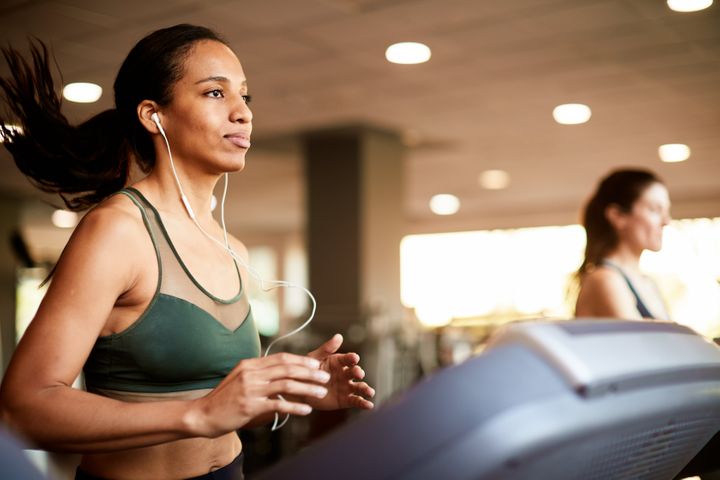
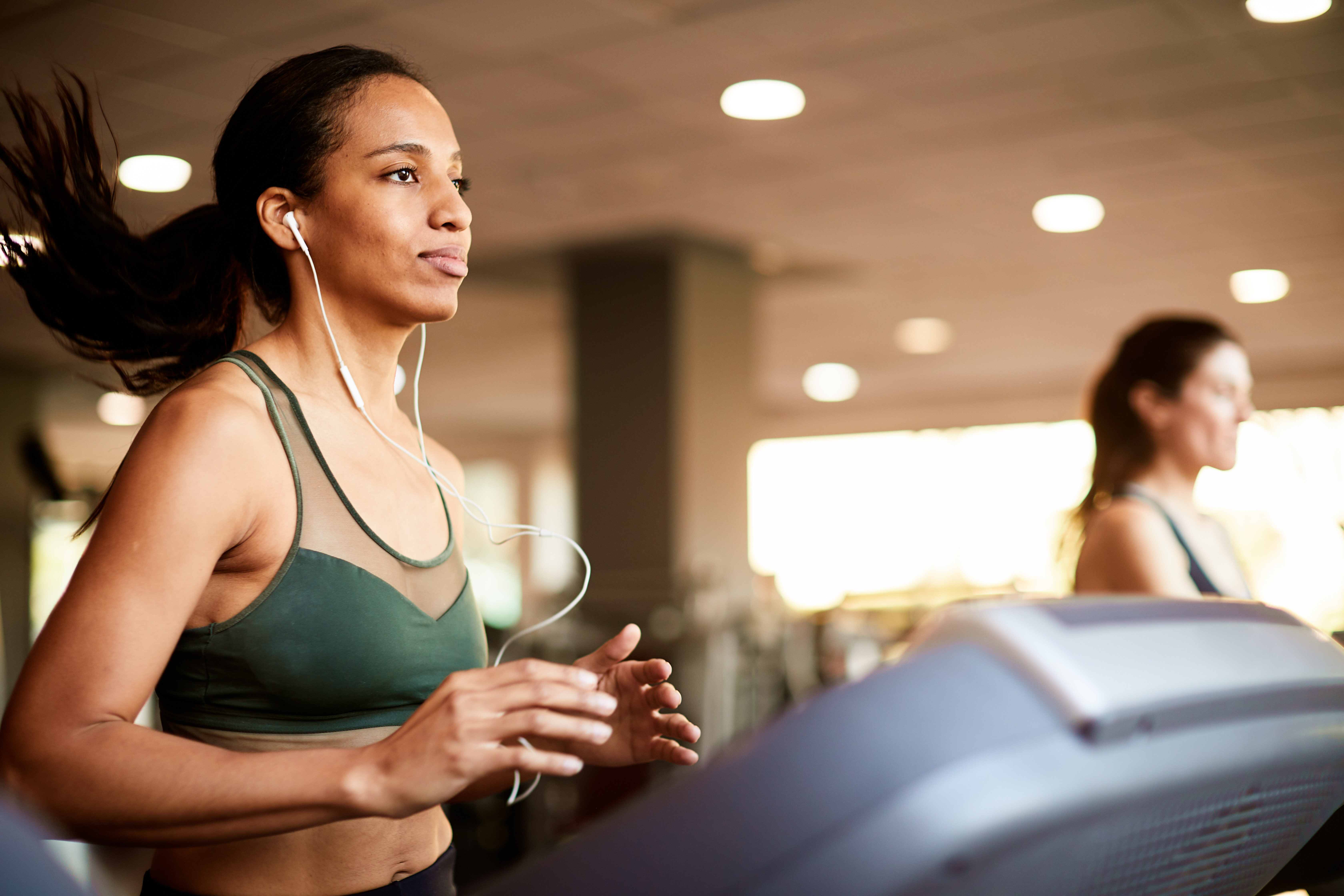
Your body’s movement naturally matches a song’s rhythm, which can help you stick to a specific pace.
There’s a reason your foot starts tapping or your shoulders start moving as soon as a song comes on. According to Joy Allen, the chair of music therapy and director of the music and health institute at Berklee College of Music in Boston, this is because of rhythmic entrainment, which is an “unconscious reaction — that’s what we call the entrainment.”
“Our body’s going to [move] in time with that sound or that rhythm,” she says.
So, when it comes to exercise, your body automatically falls in line with the tempo of the music “because of the way that our brains are connected with rhythm,” Allen says.
Advertisement
When picking music for a workout, like when going for a walk or run, for example, you’ll want to choose a tempo that is close to your natural stride. “Go [with] what seems comfortable for you and play around with different songs,” she says.
You can use music to increase your pace, too.
If you’re looking for an added challenge, pick a song with a pace that is a little quicker than your average running or walking stride, this should help you move faster throughout your workout.
You can start with a song with a slower tempo and gradually increase your speed by picking songs with faster beats, which is ideal if you’re looking to improve your walking or running pace, according to Kaplan.
“It primes the person to an outside cue,” she says. It “helps your muscles activate in their walking pattern.”
Tempura via Getty Images
Music can help distract you from boredom during a workout.
Advertisement
It’s motivating.
How often has someone walked into the gym, realised they forgot their headphones, and then had a not-so-great workout — or even left the gym altogether? Allen pointed out this is a common occurrence: There is a major reason why music is integral to so many people’s workouts.
The music you listen to during a workout helps with motivation, and there are several things behind that motivation.
First, you probably want to hear your favorite song on your exercise playlist, which may keep you going for longer. Second, if you put on music that’s unexpected (like if you put on reggaeton instead of your regular pop soundtrack), you will be interested in hearing what comes next in the song, which may also keep you moving longer than usual.
“If you’re always listening to the same stuff, sometimes that’s great [but] sometimes we have fatigue from it — we know what to expect and what’s coming, so it can be a little less motivating,” Allen says.
And music is distracting.
No one wants to focus on their tough workout as they’re in it. If anything, they want to not think about it. As you sing along to lyrics or are reminded of music-induced memories, songs let your mind wander throughout an exercise regimen, so you don’t have to stand (or sit) there and think about how hard your workout is.
Advertisement
Music keeps you from getting bored during a workout, too, which can happen when you’re doing something kind of mundane like walking on a treadmill, Allen noted. Music activates the brain by giving your mind something else to think about.
“It captures your attention… ‘oh, here’s something I’m listening to,’ so I’m not attending to what could be an uncomfortable experience with the exercise, it gives me something else to focus on,” Allen says.
You’ll reap even more benefits when you pick your music.
According to Kaplan, when someone chooses the music they’re listening to, they’ll have better results, whether working out or doing something like meditation.
A recent study led by the Department of Kinesiology at Samford University in Alabama stated, “if the music played over the speakers is not preferred by the individual giving effort, performance may suffer. Thus, coaches and athletes should consider individual music preferences when attempting to optimise performance and training.”
This further speaks to the motivation you feel when working out to music you enjoy.
Additionally, Kaplan says you might notice you’re in a better mood when working out to music you select, which may make you feel like you enjoyed your workout more. And that’s a win-win.
Advertisement
This may mean you’ll be more likely to work out again that week, which is a great way to hit your fitness goals.
Move celebrates exercise in all its forms, with accessible features encouraging you to add movement into your day – because it’s not just good for the body, but the mind, too. We get it: workouts can be a bit of a slog, but there are ways you can move more without dreading it. Whether you love hikes, bike rides, YouTube workouts or hula hoop routines, exercise should be something to enjoy.
We hope you love the products we recommend! All of them were independently selected by our editors. Just so you know, HuffPost UK may collect a share of sales or other compensation from the links on this page if you decide to shop from them. Oh, and FYI — prices are accurate and items in stock as of time of publication.
Picture this: it’s the Christmas break and you’ve finished work or studies for the holidays – or maybe just the weekend. It’s finally snowing (yep, we might get actually get a White Christmas this year) and you’re sprawled out at one end of the sofa enjoying a festive movie marathon with your BFF or partner curled up on the other, with no intention of moving for hours, unless it’s to dip your hand into a new chocolate selection box.
Advertisement
Perfection? Almost. There’s just one thing missing – an Oodie (or two).
If you’ve not heard of Oodie – aka “the world’s leading wearable blanket” – it’s the ultimate wardrobe must-have this winter. Ok, ok, so it might not be high fashion, but as our heating bills skyrocket, there’s a reason this brilliant hybrid of fleece, blanket, jumper and dressing gown is proving quite so popular.
Essentially, it’s a wearable hug, and perfect for anyone looking for a practical and comfy way to keep snug and warm this winter. And here’s the best part: Oodie is currently offering shoppers the chance to buy an Oodie for you and your favourite person – in the form of the discounted Oodie Twin Pack.
An Oodie comes in just one, oversized size – based on a 6XL – which not only makes for the ultimate comfort and coverage, but also super simple shopping.
Advertisement
It boasts an insulating sherpa fleece lining, as well as an ultra soft exterior of Toastyek flannel fleece, and it’s this magic combo that will give you the warm and fuzzies. This design also features a giant front pocket to protect your hands from the chill, not to mention store your valuables and snacks, and an all important hood to keep your head and neck protected from any draughts. It’s also cruelty free and machine washable, making light work of laundry day.
The Oodie is available in over 40 colourways, including a variety of patterns from foodie to pet prints, tie dye, even your starsign – as well as plain block colours if that’s more your thing.
Not all patterns are included in the deal, fyi, so do double check before you buy. But whether you wear your Oodie to run errands, on a duvet day, working from home, or on winter walks, it’s the one. And now’s your chance to buy two!
Oodie twin pack
The Oodie Twin Pack has been reduced from £178 to just £98, meaning you’ll be spending just £44 per Oodie in this deal. A single Oodie usually retails for £89 (or £69 on sale) so you’re practically getting two for the price of one here.
Advertisement
What we also love about this bundle is that you can select two different Oodie designs – allowing you to mix or match depending on your vibe. Personally, we’re going for pizzas and koalas in our bundle, but that’s how we roll.
The deal coincides with Oodie’s Holiday Sale, with select other items on site reduced by £25, as well as great deals on family bundles and six-pack sets if you want to co-ordinate your entire friendship group or family, including your pets. The Kid’s Oodie is also on sale for just £52 in the run up to Christmas!
Fans of the brand can also shop its weighted blanket to warm the cockles this season, as well as the Oodie Robe, pyjamas, hair wraps, slippers and more. As always, these deals won’t last forever, so move quickly to bag a bargain.
The word, defined as “an extended period of instability and insecurity”, is one of the several terms on the 2022 list which has seen increasing usage due to the ongoing crises in the UK and across the world.
Advertisement
The dictionary said it chose the word as it “sums up quite succinctly just how truly awful 2022 has been for so many people”.
Six words on Collins’ list of 10 words of the year are new to CollinsDictionary.com, including “permacrisis”, despite being first noted in academic contexts from the 1970s.
Another word on the list which has contributed to the feeling of “permacrisis” is “partygate”, referring to the scandal over social gatherings held in defiance of public health restrictions and which contributed to an extended period of political instability.
“Kyiv” has also been added after the city became a symbol of Ukraine’s stand against Russian aggression as well as “warm bank”, which describes a heated building such as a library or place of worship where people who cannot afford to heat their own homes may go.
Advertisement
The personal impact of the ongoing crises has also influenced the list with the addition of “quiet quitting” – the act of doing one’s basic duties at work and no more, either by way of protest or to improve work/life balance, as well as “vibe shift” which relates to a “significant change in the prevailing atmosphere or culture”.
The historic moment of the Queen’s death in September has also been marked as “Carolean” is added to the lexicon, signifying the end of the second Elizabethan era and the beginning of the reign of King Charles.
“Lawfare”, which is the strategic use of law to intimidate or hinder an opponent, is also included as well as the more unusual term “splooting” relating to animals stretching themselves out in order to cool down – a phenomenon seen frequently during this summer’s intense heat.
Rounding off the list is “sportswashing”, a word for how organisations or countries use sports promotion to enhance reputations or distract from controversial activities or policies, which has seen increased use in the year of the upcoming Fifa World Cup in Qatar.
Alex Beecroft, managing director of Collins Learning, said: “Language can be a mirror to what is going on in society and the wider world and this year has thrown up challenge after challenge.
Advertisement
“It is understandable that people may feel, after living through upheaval caused by Brexit, the pandemic, severe weather, the war in Ukraine, political instability, the energy squeeze and the cost-of-living crisis, that we are living in an ongoing state of uncertainty and worry; “permacrisis” sums up quite succinctly just how truly awful 2022 has been for many people.
“Our list this year reflects the state of the world right now – not much good news, although, with the determination of the Ukrainian people reflected by the inclusion of “Kyiv”, and the dawn of the new “Carolean” age in the UK, there are rays of hope.”
The lexicographers at Collins Dictionary monitor their 18-billion-word database and a range of media sources, including social media, to create the annual list of new and notable words that reflect our ever-evolving language and the preoccupations of those who use it.
Last year’s word of the year was “NFT” (short for non-fungible token) – which entered the mainstream after millions were spent on the most sought-after images and videos.
When you’re pregnant, levels of worry can ramp up to never-before-seen levels.
Much of those nine months can be spent worrying obsessively about miscarriage, whether you’re eating or doing the right things to keep your baby healthy, whether your baby is moving enough, and the impending birth.
It’s a lot. So it’s perhaps no surprise then that one in 10 women will struggle with pregnancy anxiety, which can begin to rule their lives.
Advertisement
It’s the subject of Break Free From Maternal Anxiety, a new book penned by three NHS clinical psychologists: Dr Fiona Challacombe, Dr Catherine Green and Dr Victoria Bream.
The trio use cognitive behaviour therapy (CBT) techniques to explore how women can cope with persistent and distressing worries about pregnancy and becoming a mother. Here are some of the things we learned from it.
1. Pretty much every mum-to-be will feel anxious at some point during their pregnancy
If you’re pregnant and feeling anxious, know you’re not alone.
From worries about whether your baby is moving enough to how you’ll cope with the birth (and all of the uncertainty that surrounds that), pretty much every mum-to-be on the planet will experience anxious thoughts at some point.
“They aren’t pleasant or comfortable and they certainly aren’t spoken about enough,” write the authors, “but they are a near universal part of pregnancy and parenthood.”
Advertisement
In fact, research has shown that 100% of new mothers experience intrusive, unwanted thoughts about something bad happening to their newborn in the first weeks after birth.
If you have the odd worry here and there, you probably don’t need to read a book on pregnancy anxiety. But if worries seem to crop up daily and they’re stopping you from doing things, read on.
2. ‘Problematic worry’ is something to watch out for
There’s a difference between the odd anxious thought and problematic worry, where you get stuck in repeated loops of negative anxious thinking that feel hard to stop, control or turn away from.
It’s one of the most common problems in pregnancy and postnatally, according to the book, with about 8% of women experiencing it.
The authors share the story of one mum, Hestia, who was 32 weeks pregnant and constantly worrying about every decision she made about her baby. Some worries she had included: ‘What if I haven’t included everything on my birth plan?’ and ‘What if lose my job when I am on maternity leave?’.
Advertisement
While some people might have these kinds of thoughts and move on, she would find it difficult to move her attention to other things and would become irritable, unable to concentrate on work or reading books and then she became reluctant to leave her house.
When anxiety starts to impact your day-to-day life, it’s time to seek help. As Dr Fiona Challacombe explains: “The perinatal period is a time of big changes, emotionally, physically and socially, so it’s often assumed that anxiety is a normal part of this.
“However, when anxiety persists and is having an impact on your daily life and functioning then it is likely to be an anxiety problem.”
3. Tackling worry isn’t about what you worry about, but the way you think about it.
One of the things the book is keen to convey is that rather than trying to tackle the worry itself, you need to focus on solutions which tackle the way that worry works.
A strategy the authors advise is to ask yourself whether the worry you are having is actually important – ie. will anyone else care about this tomorrow? Or will you care it about it on your deathbed?
Advertisement
If it isn’t important – and you firmly believe that – they recommend trying to continue with what you are doing, and if your worries come back, to treat them as white noise in the background.
If it is an important worry, then they recommend defining what the problem is that underlies the worry – and then generating as many solutions as possible for that problem.
4. Setting a ‘worry-free zone’ or planning a time to worry could help
Another way to tackle worry is to set a worry zone, say the authors. This is basically where you make a conscious decision to put your worries to one side for a set time in the day.
One idea they suggest is that whenever you have a snack, you can “try to focus away from worry and enjoy every second of your crisps or chocolate”.
It’s a well-used technique in CBT for worry problems, they add, and as you get more practice, you can try to increase the worry-free zones and take control.
Advertisement
It sounds weird but the clinical psychologists also suggest planning a time when you will worry, and deliberately postponing worrying until that specific time.
“This is a useful strategy to free yourself from the relentless worrying, by setting a particular time when you can come back to worries you have noted in the day,” they say.
There are tonnes of strategies like this in the book, as well as advice on coping with intrusive thoughts and phobias.
Dr Fiona Challacombe says: “CBT is a very effective treatment for persistent anxiety and our own research trials show that it can be effective for maternal anxiety in various forms.
“We have seen many parents use the techniques described in the book to get control of and overcome their anxiety, with benefits to them and their families.”
Advertisement
Break Free from Maternal Anxiety: A Self-Help Guide for Pregnancy, Birth and the First Postnatal Year will be published October 27 by Cambridge University Press (£12.99).
Help and support:
Mind, open Monday to Friday, 9am-6pm on 0300 123 3393.
Samaritans offers a listening service which is open 24 hours a day, on 116 123 (UK and ROI – this number is FREE to call and will not appear on your phone bill).
CALM (the Campaign Against Living Miserably) offer a helpline open 5pm-midnight, 365 days a year, on 0800 58 58 58, and a webchat service.
The Mix is a free support service for people under 25. Call 0808 808 4994 or email help@themix.org.uk
Rethink Mental Illness offers practical help through its advice line which can be reached on 0808 801 0525 (Monday to Friday 10am-4pm). More info can be found on rethink.org.
Once you get to a certain age as a woman, you will know that menopause is around the corner.
And with that, comes the symptoms. Hot flushes are all but synonymous with the menopause, even though not all women experience them. And you’ll probably think there are a handful more, too. Well, you’re wrong.
Doctors report there are actually 62 different symptoms of menopause that women present with. That’s despite the biggest study yet into menopause awareness finding most women associate it with just five symptoms.
Advertisement
Hygiene and health company Essity surveyed 5,000 women pre-menopause, in peri, or post menopause – and found even women who are at the end of their journey remain relatively clueless about what they have been through
While 40% of women going through or having gone through the menopause have visited their GP to get help with symptoms, two thirds of women didn’t know menopause decreases sex drive and a whopping 74% didn’t realise it could be linked with weight gain.
Meanwhile, only 1% of women surveyed were aware it can cause changes in their vagina and how often they pee.
Menopause specialist Dr Naomi Potter reveals that tinnitus, UTIs, weaker bones and a change in body odour also feature in the list of menopause symptoms.
Advertisement
And worryingly, there’s a lack of knowledge of when it all kicks in, she says.
“Women believe they can’t experience symptoms in their forties because they’re not old enough, or their symptoms aren’t menopausal – when in fact if they’re over 45, it’s likely they are,” Potter says.
A spokesperson for Essity said: “[These] findings tell us that it’s a heavily misunderstood subject and the taboo surrounding it means women aren’t accessing the information and advice that could really help them.”
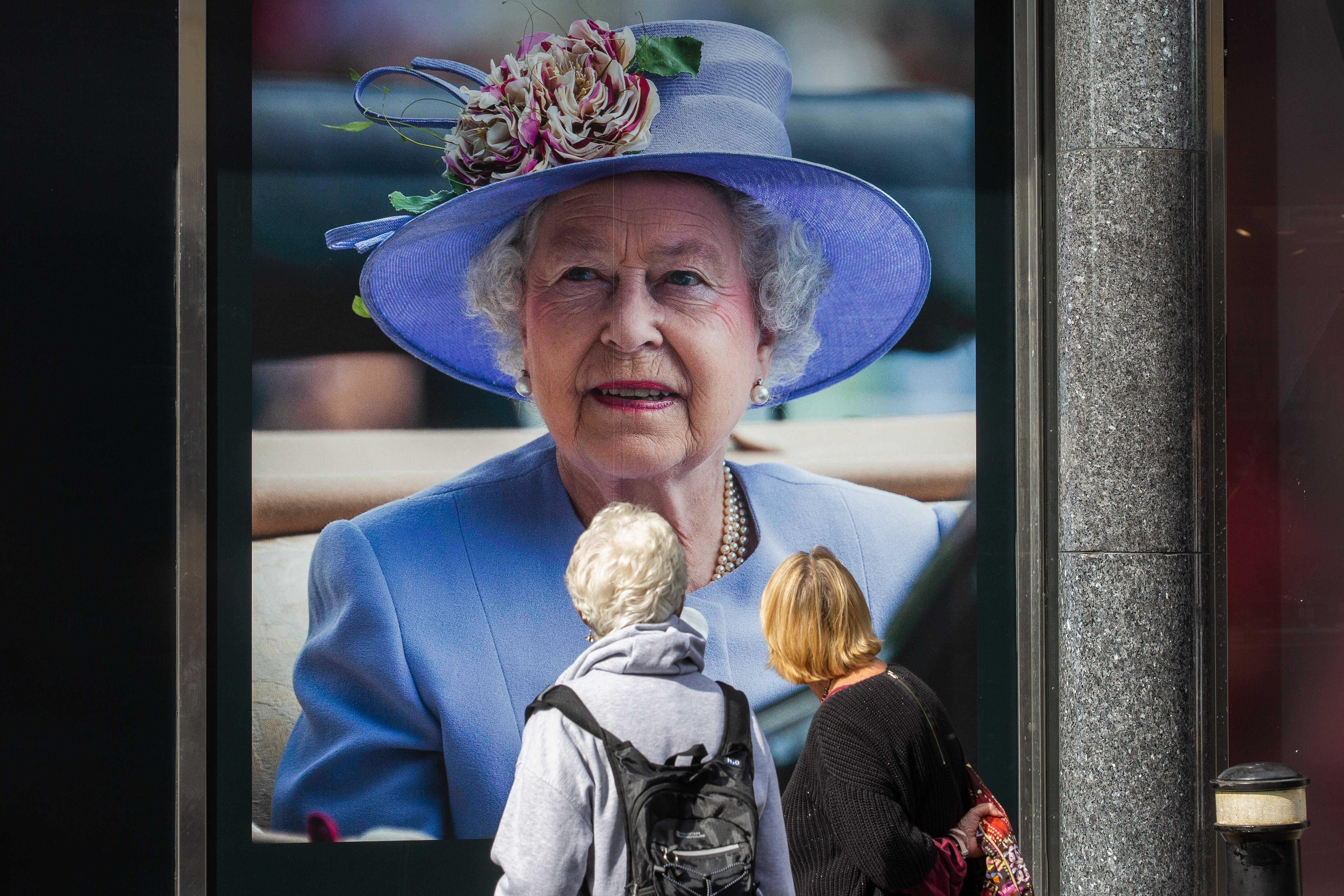
The death of the Queen has been felt by millions of people around the world – but for those grieving their own private losses during this time, it’s bringing up a lot of complicated emotions.
For Anne-Marie Brownlee, 40, from Coventry, reliving the major moments in the Queen’s life these past few days has left her drawing parallels with the loss of her late husband, who died suddenly and unexpectedly on November 1, 2021.
Advertisement
Brownlee was waking up to celebrate their daughter’s second birthday when she discovered her husband John had passed away, right next to her in bed. It later transpired he’d died from an incredibly rare, underlying lung condition.
Recently, she’s been overwhelmed by a renewed sense of loss in the run up to John’s birthday. And now the Queen’s death has left her experiencing those waves of grief all over again.
“When something like this happens – and it’s such a widespread loss – you can’t help but be brought back to the reality of your situation,” she says.
Anne-Marie Brownlee
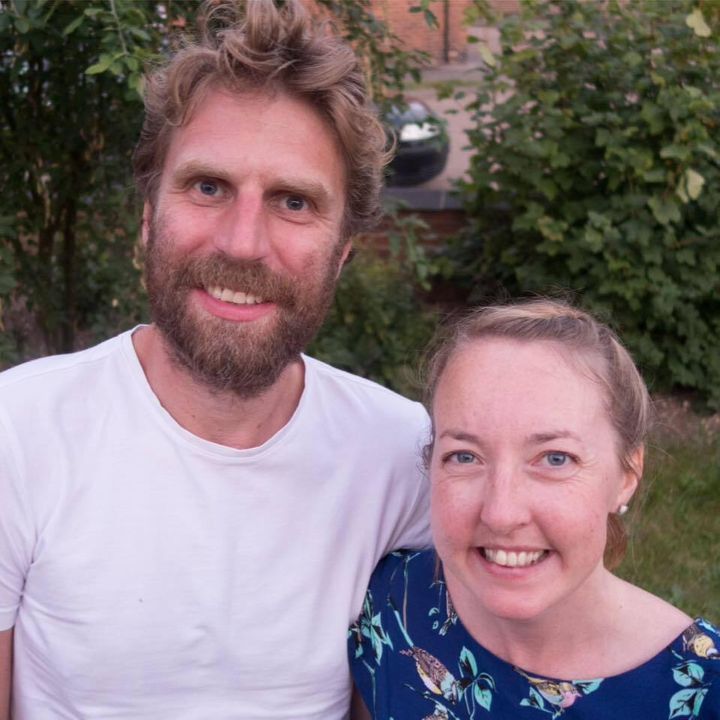
John and Anne-Marie Brownlee
Advertisement
Brownlee experienced the Queen as a quiet constant in her life, from watching her yearly speech on Christmas Day to celebrating the big Jubilee jamborees.
But so was John, who she met when she was just 15. “Throughout all of my adult life he’s been by my side, so there’s a direct comparison in that sense – all those big moments he’s been with me, like the Queen has,” she explains.
“Realising that she died and losing her has just brought back to the surface those feelings of loss and that renewed remembrance of all the things that we’ll miss in the future. All those upcoming big milestones that he’ll never be part of, like she’ll never be part of – and having to accept that all over again.”
While she’s avoided most of the news coverage surrounding the Queen’s death – probably subconsciously so as not to get too upset, she notes – she did catch a documentary about Queen Elizabeth’s life one evening this week.
“When I was watching it, I did find myself tearing up through many of the parts, purely because it’s a loss, and then because I guess it’s going back in her life: seeing her get married and having children. It’s all things that happened in my life that I can relate to and then feel that sadness and the loss,” she says.
Advertisement
The 40-year-old, who works in internal communications, is no stranger to the strangeness of private grief during a period of nationwide mourning.
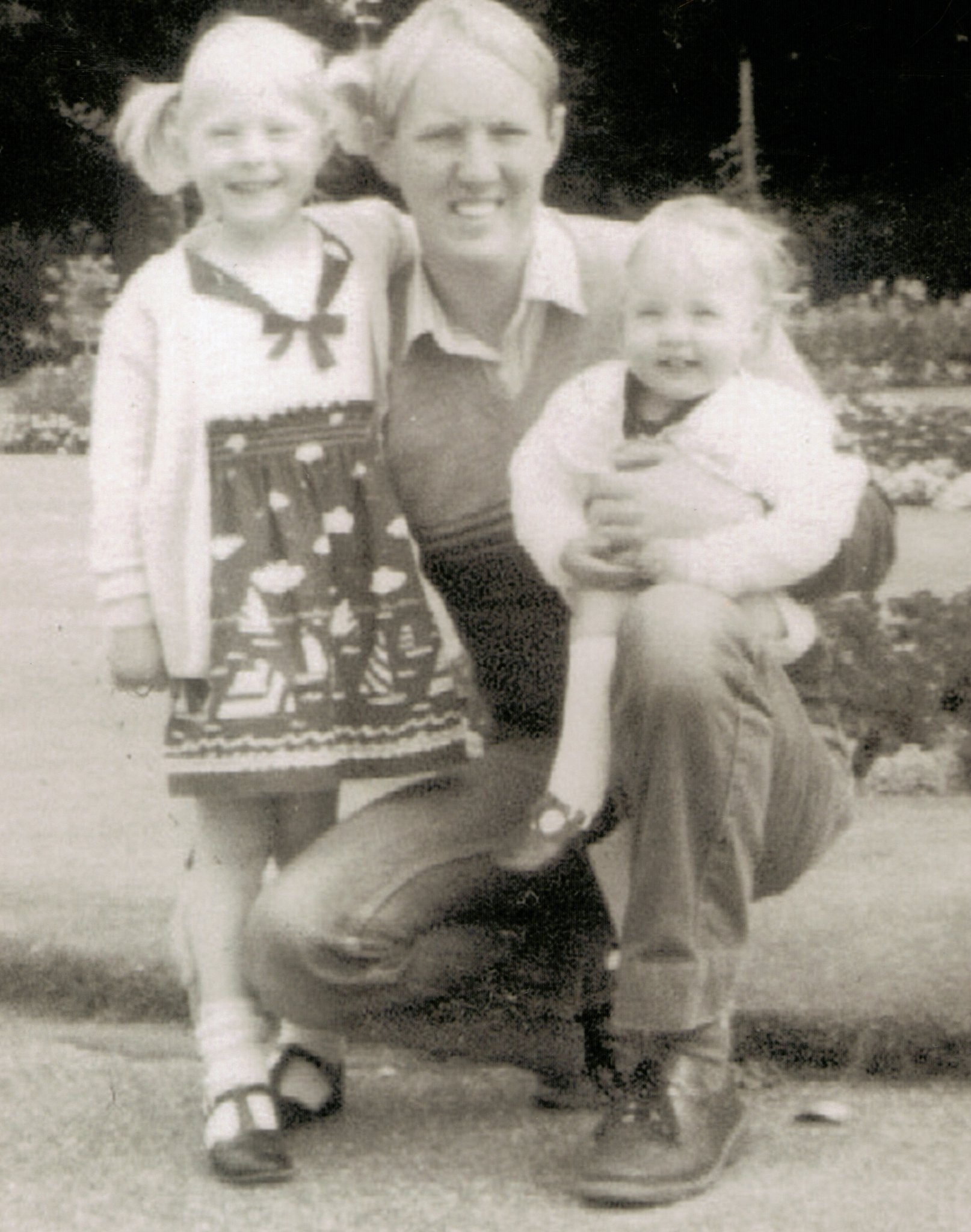
Her late partner lost his best friend in a freak motorcycle accident not long after 9/11, and she lost her own father the year that Diana, Princess of Wales, died.
The moment she found out Diana had died is etched on her brain because of the strong feelings already overwhelming her that day.
“We’d gone on a family holiday down to Devon. It was the first time going away without my dad,” she recalls.
“The day we were due to come home was the day Princess Diana died. I remember being in the car with my mum and I remember the radio stations were constantly full of the news, playing sad music. It was raining outside for the whole journey, and me and my mum were sobbing the whole way.”
Advertisement
Like recent days, it brought up all those old feelings of loss once more – particularly as her dad loved the monarchy, and was a big fan of Princess Diana. “It was just the darkest and most miserable day,” she says.
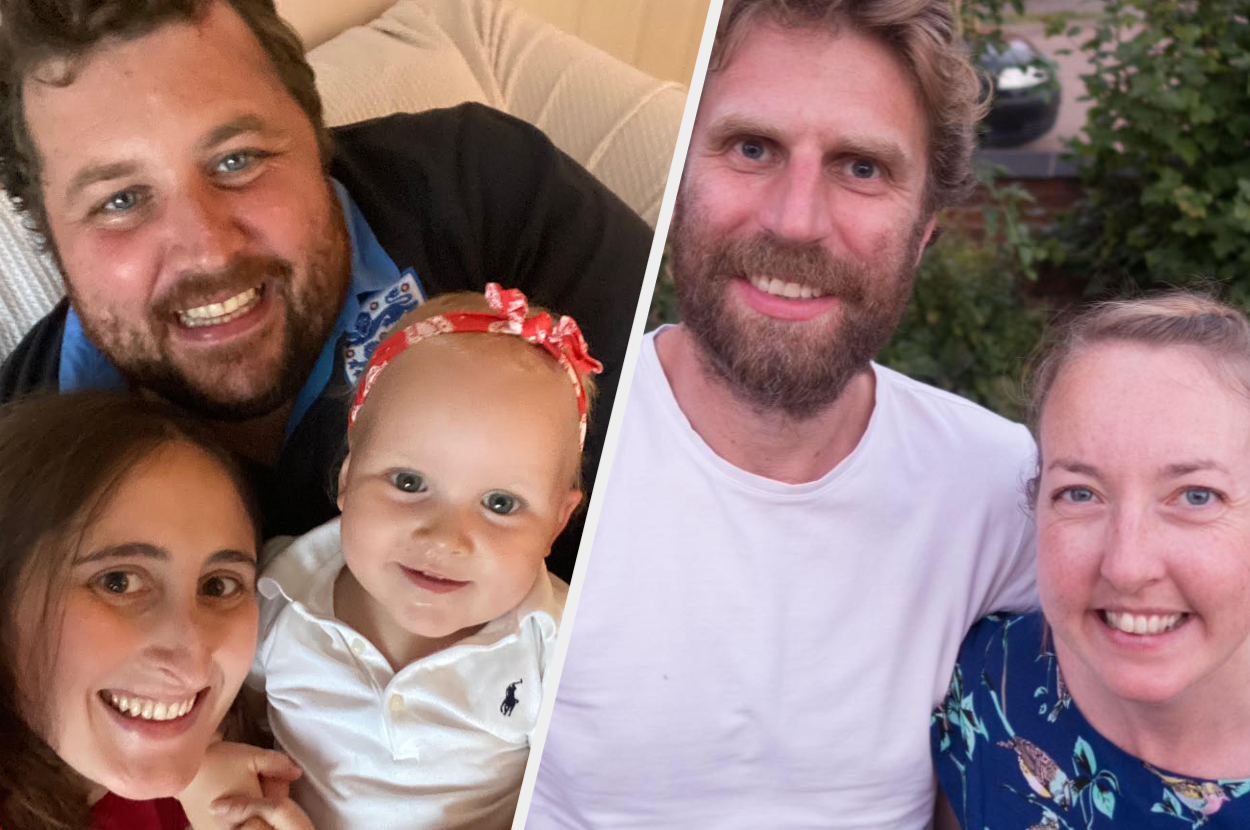
Headhunter James Coull, who is 40 and based in Northampton, has also found the past few weeks difficult, as he was preparing for the one-year anniversary of his wife’s death on September 14.
“Leading up to that, it’s been a whole month, really, of feeling anxious,” he says.
“The first everything is always new to you, you never know what to expect, and I suppose you look at a situation like the Queen – she’s 96. My wife was 32 and healthy…”
Coull’s wife Kathryn died suddenly and unexpectedly at home, while pregnant. James woke up to find out that not only had he lost the love of his life, but also their unborn daughter Florence Rose, at 32 weeks.
Advertisement
Recalling the moment, he tells HuffPost UK: “It wasn’t planned, I wasn’t expecting anything, it wasn’t like she had a terminal illness and you’ve got time to cope with it. It was just waking up and finding somebody dead in bed.”
He’s found the past few days particularly difficult, navigating his own feelings of intense grief, while seeing people around him mourning the loss of the Queen.
“It’s very different when you’re mourning for somebody you’ve never met before, somebody who’s more of a ‘figure’. Somebody who you’re well aware of who they are but you haven’t got any emotional, strong ties to that person,” he says.
“People make comments in the office or everyday life about being really sad that Queen Elizabeth has died, but they don’t know that person. It hits home a lot harder, doesn’t it, when it’s someone who’s so close to you: somebody that you’ve committed to spending the rest of your life with, somebody that you’ve made a joint decision to bring someone into the world with.
“I suppose you can’t really compare that to somebody who’s in the public eye. I think you pretty much accept that once family members or friends get into their 70s and 80s, you know it’s inevitable they’re going to pass one day.
Advertisement
“And I suppose you always prepare for it. But you never imagine you’re going to bury somebody younger than you.”
James Coull
Kathryn and James Coull
The news of the Queen’s death on September 8 was followed by an immediate outpouring of grief online, with many heartfelt memes suggesting she had been reunited with her late husband Prince Philip.
But Coull has really struggled with this as he questions his own thoughts and feelings around the afterlife.
“I understand why people do it – it’s a good feeling, it’s giving people hope that there is life after death, but you just don’t know do you?” he says. “Some people believe in that side of things, the spiritual side of things, and some people don’t.”
Advertisement
For others, like Brownlee, the idea of the Queen and Prince Philip together again has brought hope – and a sense of peace. She is comforted by the idea that sometime in the future she could also be reunited with John.
There’s no right or wrong way to grieve during this time – and everyone will experience loss in their own way. Vicky Anning, communications manager for charity Widowed and Young (WAY), says the Queen’s death has prompted “a whole range of emotions” among its members.
“Some people have found the chance to mourn along with the nation incredibly cathartic,” she explains, “while others have found the media coverage very triggering – reminding them of their own personal losses and bringing up difficult reminders of the early days of their own bereavement.”
Lauren Vivash, 36, from Essex, discovered her husband Robert had a brain tumour in 2019 – she was pregnant with their daughter at the time.
Robert had been having seizures which were attributed to a Grade II tumour. Despite surgery, it progressed quicker than expected and he died in June this year.
Advertisement
Lauren Vivash
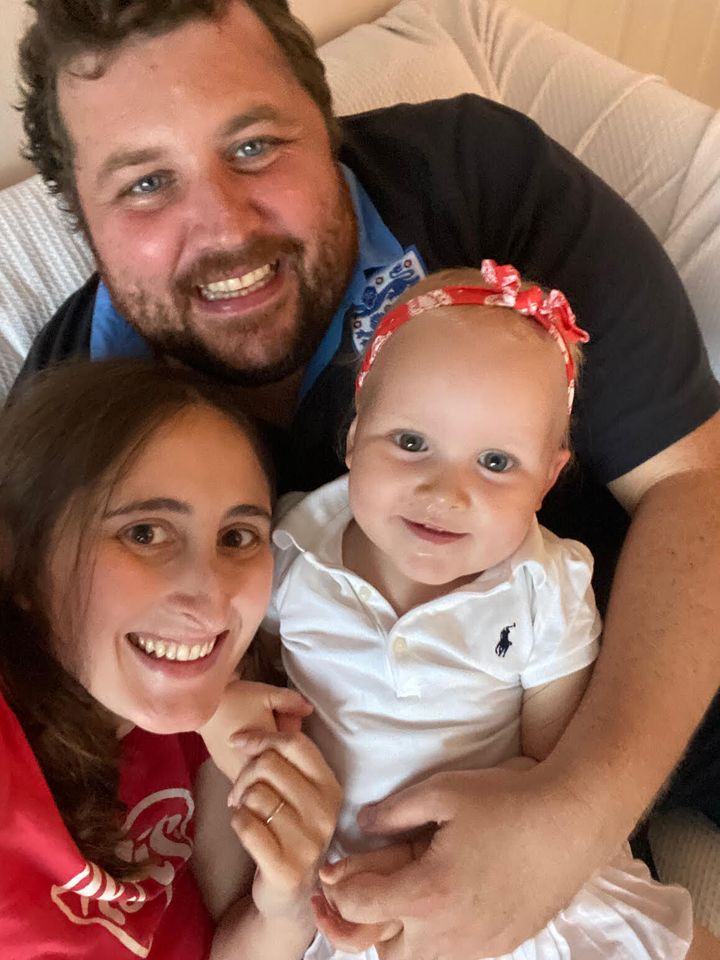
Rob and Lauren Vivash, and their baby daughter
The Queen’s death occurred just shy of 100 days after Robert’s death, yet Vivash found the process of grieving alongside the rest of the nation as “cathartic”, saying she no longer felt alone in her sadness.
“To begin with I found it really upsetting,” she recalls of hearing the news. “For that first night, I was crying the whole time. It just really hit me. I was like: this is a bit strange. I wasn’t brought up to be a big royalist or anything.”
But she admired the Queen, she says, adding “she was the most famous widow in the world”.
She recalls how her late husband had been very invested in the royal family and they’d watched lots of the coverage together when Prince Philip died. This left her feeling closer to the royals, too.
Vivash remembers seeing footage of the Queen sitting alone at her husband’s funeral and, knowing her own partner was ill, found some strength in that. “Obviously I hoped that he wouldn’t die but it gave me a sense of like: well, she’s shown how you can carry on after losing your husband,” she says.
Advertisement
Discovering the Queen had died, she says, “it’s almost like it gave me permission to grieve”.
There’s this expectation, she says, that after a funeral of a partner, friend or family member, you’re expected to move on. “People think grieving is linear and that it’s horrible that they die, but you get better and better. But it’s not the case at all,” she says.
At the moment that feels different. “I think because everyone is grieving, it just gives you that permission to be upset again and maybe gives people more of an idea. It’s not the same as losing your husband when he’s only 38, but it gives them an idea that it’s painful to lose someone.
“I think that’s why I found it cathartic.”
Lauren Vivash
Rob and Lauren Vivash
Despite dealing with her own raw feelings, Vivash will still be tuning in to watch the Queen’s funeral on September 19 – not only to witness history on her husband’s behalf, but also to support the royal family in their grief.
Sadly, some funerals originally set to happen on the same day are being postponed, after the last-minute Bank Holiday was announced.
And with wall-to-wall coverage of the royal funeral, Monday will undoubtedly be a difficult time for those experiencing their own recent loss.
Coull encourages anyone impacted to reach out to others who know what you’re going through – via support services and bereavement support charities – as talking can really help.
“The first month I felt like I was in a parallel world. I felt it was a dream I couldn’t wake up from. You don’t sleep, you don’t eat, you don’t function as a human being, you almost shut your brain down so you don’t think about things,” he recalls of the time shortly after Kathryn’s death.
“I don’t like to use the cliché that time is a healer, but it is. Things do get easier. You learn to live with things, you learn how to cope with things, you learn how to go back to your everyday life.
Advertisement
“The feelings are still there, maybe slightly suppressed, but you know that every day you spend being sad and grieving is a day gone. And you don’t know when your time is up.
“You have to find the inner strength to move forwards.”
Help and support:
Mind, open Monday to Friday, 9am-6pm on 0300 123 3393.
Samaritans offers a listening service which is open 24 hours a day, on 116 123 (UK and ROI – this number is FREE to call and will not appear on your phone bill).
CALM (the Campaign Against Living Miserably) offer a helpline open 5pm-midnight, 365 days a year, on 0800 58 58 58, and a webchat service.
The Mix is a free support service for people under 25. Call 0808 808 4994 or email help@themix.org.uk
Just like that, the last bank holiday of the season (until Christmas) has passed. Love Island has finished, we experienced two heatwaves, danced at Notting Hill Carnival and caught a tan at the beach. It looks like it’s time to slowly start putting your summer clothes away and get out your jumpers.
I know you don’t want to to think about winter just yet, so why don’t you use this time to start planning your holidays for next year?
Advertisement
It might feel too early, but if you start plotting your time now, you can get bag the best days and get 47 days off work by using only 19 days of annual leave. Imagine how you’d spend that time living your best life!
Want to find out how you can maximise your holidays next year? Keep reading.
Easter weekend 🐣
Easter Sunday falls on Sunday 9 April in 2023. If your employer closes on the weekends and bank holidays you can get a 10-day break using four days of annual leave.
Book off: April 3, 4, 5, 6
Get off: March 31 to April 10
May bank holiday 🌸
Ah, May how we love you for your multiple bank holidays. If you didn’t manage to get those days off in April then you’re in luck, because the May bank holiday is shortly after the Easter break. The first bank holiday is on May 1.
Book off: May 2, 3, 4, 5
Get off: April 31st to May 8th
The fun doesn’t stop there in May as we also have the late May bank holiday which falls on May 29.
Book off: May 30, 31, June 1, 2
Get off: May 29 to Sunday June 4
August bank holiday 🏖️
The August bank holiday is everyone’s favourite. It signifies the end of summer so we all want to make the most out of that weekend. And it’s the perfect time to book a little trip away. The 2023 August bank holiday falls on Monday 28.
Advertisement
Book off: August 29, 30, 31, September 1
Get off: August 26 to September 3
Christmas 🎄
Tis’ the season to be jolly by taking timing off to eat a dozen mince pies. Even those who don’t enjoy Christmas don’t want to work during that time. We’d all rather drink hot chocolate and snuggle up in bed. Christmas day falls on Monday 25 in 2023. You’ll also get a bank holiday on Boxing day (December 26) and New Year’s Day (January 1 2024)
If you’ve never had an orgasm, it’s easy to feel like your body is defective. But the reality is, there are many things that can contribute an inability to orgasm and plenty of ways to address it – it’s not hopeless!
According to Sadie Allison, a sexologist, author and founder of sex toy retailer TickleKitty, being “anorgasmic,” as it’s sometimes called, could be attributed to “inhibitions in the bedroom, cultural or religious beliefs that make it hard to mentally relax, medical conditions or taking medications, sexual hang-ups from past experiences, and relationship or intimacy issues.”
Advertisement
Past trauma, subconscious feelings of shame or fear, body discomfort, anxiety or even just lack of knowledge about anatomy can also be factors in anorgasmia.
“One of the main reasons, however, is a lack in education around sexual anatomy, arousal and response, pleasure and the clitoris,” Allison adds. “Unfortunately they don’t teach this important information in school. But the good news is, this is something that can be practiced and learned with success!”
But how exactly should you go about learning and practicing if you’ve never had an orgasm? Below, Allison and other sex therapists share their advice.
First, recognise that there’s nothing wrong with you
If you’ve never had an orgasm, it’s important to understand that you are not alone and there’s nothing wrong with you. This is a not-uncommon experience, especially for people with vulvas.
In fact, studies suggest that roughly 10% of women have never had an orgasm, and 50% do not experience orgasm during sexual intercourse.
Advertisement
“You are not broken,” says Kate Balestrieri, a sex therapist and founder of Modern Intimacy. “Orgasms and pleasure can be complex, layered, and unpredictable, especially if you have less experience with sex that you enjoy. Refrain from judging or shaming yourself if you have not yet experienced an orgasm.”
Try getting to know your body
“Most people will find their first orgasm through self pleasuring vs. with a partner,” says sex and relationship coach Keeley Rankin. “This is because being with a partner offers a whole new complex dynamic. And while potentially sexy and fun, for folks who are looking for an orgasm, it is typically more stress inducing.”
Instead, start with your own body, by yourself. Explore which zones are your hot spots and get comfortable masturbating.
“Choose a place where you feel you have privacy and make yourself comfortable,” advises Nazanin Moali, a sex therapist and host of the Sexology podcast.
She recommends building psychological arousal by reading or listening to sexually explicit or romantic content, whatever turns you on.
Advertisement
Miki Onigiri / EyeEm via Getty Images
Sex therapists recommend spending time by yourself getting to know your body.
“When you feel aroused, I recommend that you start with a body scan from head to toe and make a note of all the sensations in your body,” Moali says.
Consider gently massaging lotion all over your body. Take deep breaths in and out to release any tension.
“Start with touching and caressing your face and neck and explore different types of strokes,” she advises. “The goal for the first few times is to get to know different sensations in your body. Set the intention to get to know your body and explore it without putting any pressure. When you are ready, slowly move to your genital area and pay attention to the types of stroke that feel good.”
You can use your fingers or a vibrator or other sex toy in your exploration. Familiarise yourself with lots of different sensations.
Advertisement
Remove the focus on orgasm as the goal
“I initially take orgasm off the table as a goal,” says sex therapist and psychologist Megan Fleming. “The goal is getting back to the basics of giving and receiving pleasure. The pressure of having an orgasm as a goal is often a big part of what inhibits their arousal response.”
Rather than concentrating on having an orgasm, try to focus on the pleasure of arousal, connection with your body or your partner’s body, creativity and general enjoyment.
“Re-conceptualise your expectations for sex,” Balestrieri says. “So many people organise themselves around penetration and orgasm being the pinnacle and goal for pleasure. But that perpetuates a performative experience of sex and limits the countless other opportunities for pleasure that can increase the likelihood of an orgasm. Changing the goal from having an orgasm to experiencing pleasure and fun can paradoxically make orgasms more accessible.”
“There is no magic pill for finding an orgasm. It is often a deep dive into your own sexuality, emotional wounds, psychological blocks, beliefs, as well as learning new skills.”
– Keeley Rankin, sex and relationship coach
Get cliterate
“The sexual encounters we see depicted in film primarily depict penetrative sex,” says Zoë Ligon, a sex educator and founder of Spectrum Boutique. “And while some people can orgasm through penetration alone, the vast majority of people need external stimulation or external stimulation paired with internal stimulation in order to achieve orgasm. We as a culture ignore clitoral stimulation, as well as the time that is needed to build up arousal in order to achieve orgasm.”
Advertisement
She hopes society will continue to move away from penetrative intercourse as the standard definition of “sex” and seeks to educate people with vulvas and their partners about the importance of the clitoris – the small erogenous organ with highly sensitive nerve endings – in reaching orgasm.
“Become cliterate,” echoes Allison. “If you’re still learning where your clitoris is, or how to pleasure it, this is your starting point. The clitoris has about 8,000 nerve endings and is the main epicentre of orgasm creation. While there are other types of orgasms like G-spot, penetrative, anal, they are more advanced, so consider exploring those after you become your own clitoral expert.”
Advocate for your pleasure
When it comes to sex with a partner, good communication is crucial. Everyone is different, so don’t be shy in sharing how you like you like to be touched.
“Don’t be afraid to tell your partner what feels good and what doesn’t,” advises Kimberly Resnick Anderson, a sex therapist and assistant professor of psychiatry at UCLA School of Medicine. “You’d be surprised what a conversation about sexual preferences and fantasies can accomplish. If you are too embarrassed to talk to your partner about sex, you are missing out on an opportunity to increase your sexual satisfaction.”
Of course, the conversation can be uncomfortable, especially with a new partner, but having an open dialogue will bring you closer.
Advertisement
“Orgasm is about surrendering to the moment, to your body’s pleasure, and to another person,” says Jenni Skyler, a sex therapist and director of The Intimacy Institute. “If you are with a new partner, trust is still developing, and thus surrendering to a new person can be tricky.”
Whatever you do, don’t fake an orgasm, or stop doing it if you’ve already developed that habit.
“At times, women fake orgasms in an attempt to please their partner,” Moali says. “However, through this, you are also sending the wrong information to your partner about what works for you. Instead, focus on slowing down and getting curious about what types of touches feel good in your body. Spending more time engaging in foreplay will help you build enough arousal, thereby shortening the arousal gap between you and your partner.”
Mikhail Reshetnikov / EyeEm via Getty Images
Don’t be afraid to experiment with different sex toys, erotica and more.
Keep experimenting
Never stop trying new things, from techniques to toys. Resnick Anderson suggested vocalizing as a tip to facilitate orgasm.
“Research has shown that expressing sounds of pleasure during sex can increase capacity for orgasm,” she explains. “Women are also more likely to climax during coitus if they can control the speed, depth, and angle of penetration with positions like cowgirl or reverse cowgirl.”
Advertisement
Resnick Anderson also recommends trying different kinds of porn, like more female-friendly videos or erotic writing. Even something as simple as keeping your socks on might make you feel more comfortable and relaxed.
“Activate as many senses as possible,” she adds, noting that some people struggle to get out of their heads and into their bodies. “The more sensations one experiences at the same time, the easier it is to connect to your body. Tantalise your senses by engaging your hearing, vision, tastebuds, sense of smell, and sense of touch all at once. When our brains are busy listening, smelling, tasting, seeing, and touching, it’s easier to ignore intrusive or anxious thoughts.”
Invest in a new vibrator or other sex toys for solo or partnered sex. Try a lubricant. And pay attention to the different kinds of sensory experiences that give you pleasure, or even turn you on.
“Don’t limit yourself to what you think should turn you on, and instead give yourself permission to explore a full range of fantasies or erotic material, so you can learn what your body responds to,” Balestrieri says. “Refrain from judging yourself. Fantasies are just fantasies and do not say anything about your character. Often, fantasies give us access to an emotional or sensory experience that we can’t (and may not even want to) experience in real life. Think of fantasies and sex as play, and let yourself colour with vibrance.”
Seek professional help
If you’re concerned about your inability to orgasm, you may also consider seeking professional help.
“First and foremost, go to a sexual medicine specialist to ensure nothing physically going on – hormone issues, pelvic pain, tissue issues,” advises sex therapist and educator Nicoletta Heidegger. “Not just a regular [gynaecologist] or urologist – someone who has specialised training in sexual medicine and sexual functioning.”
Advertisement
If there are no discernible medical issues, she recommended then reaching out to a sex therapist, sex coach or sexological bodyworker to continue your journey.
There are also a number of apps, books other resources that might be useful. Heidegger recommended Come as You Are and Becoming Cliterate by Laurie Mintz. Ligon is a fan of Girls & Sex by Peggy Orenstein.
“Check out the app OMG Yes, Beducated, or Vanessa Marin’s Finishing school,” Heidegger says. “With many other topics like driving or changing a tire, we learn, and practice or take classes. There is no shame in this not coming naturally – pun intended. You may need practice, help, tools, education, and support, which is totally OK.”
It can also be helpful to talk to a mental health professional about any negative feelings or past experiences around sex.
“Address any shame you feel about sex,” Balestrieri says. “Shame – unless it’s part of your kink – is an inhibiting experience. It makes us feel small and unworthy, and when it comes to pleasure and the permission one gives themselves to feel pleasure, shame is a huge barrier to orgasm.”
Advertisement
Be patient
“I explain right away to my clients that this is often a long journey ― not to scare anyone, but to create realistic expectations for what they can expect,” Rankin said. “There is no magic pill for finding an orgasm. It is often a deep dive into your own sexuality, emotional wounds, psychological blocks, beliefs, as well as learning new skills.”
Patience is key. Be prepared to spend a lot of time with your body and try to remain relaxed and optimistic. Focus on the fun exploration and in-the-moment sensations.
“Stay positive and be patient,” Allison said. “Don’t be discouraged or feel something is wrong with you. Sometimes it could simply be a new rubbing technique or vibrator that surprises you with that special sensation, or even a new partner that brought that special something. Hang in there and enjoy as you explore and try new things. Remember, it’s a journey, not a race. And you’re so worth it!”
You’re reading First Thing, the HuffPost UK series helping to make your mornings happier and healthier.
If only there existed a wayback machine that could put you in bed at 10 pm last night, getting all the beauty rest you need. Instead, here you are the next morning, checking out a mirror that might as well be lit with a neon sign reading, “Look who’s tired.”
Advertisement
But all hope isn’t lost, especially if you follow these “fake it til you make it” tips from makeup experts who have been there, done that and still managed to look their best.
If you think your face can’t be fixed with mere cosmetics, experts say there’s hope for even the most tired face.
“Looking dull is a result of lack of sleep, lack of hydration or just life in general,” says Jamie Greenberg, makeup artist and founder of Jamie Makeup. “The right makeup, applied correctly, can help push your face toward what it looks like at its healthiest.”
Makeup artist Marco Campos agrees. “If used properly, makeup can really make you look like you’ve had a full week of the best sleep. With the right concealer, you basically can erase the tiredness around the eyes. A little brush up of the brows, a curl on the lash, and a hint of mascara will open and lift your eye right up.”
Advertisement
A full-face plan for looking well-rested
Remember that even though all you want to do is go lie down in the dark, brightness is your mantra for the day.
“The key is to accentuate features without looking heavy, keeping a fresh feeling to the skin and makeup,” says makeup artist Fiona Stiles. “Products with a soft sheen impart light to the face without it looking sparkly and too highlight-y, so the glow feels as though it’s emanating from you.”
Take a look at your palette and act accordingly.
“I stay away from using dark eyeliners and shadows on my eyes, and I lean into fresh colours and extra radiance to compensate for dull skin and puffy eyes,” Stiles says.
“Warmer colours like peaches and golds give the illusion of health,” says makeup artist Gregory Arlt. He also suggested thinking “upwards” with everything you do: “Applying mascara to just the upper lashes will bring a lift to the eyes, making them look more perky. Next, apply blush to the apples of the cheeks or just above. Adding it lower can drag down the face.”
If you’re running short on time, here’s a quick rundown of the most important areas:
Undereye: Makeup artist Jaleesa Jaikaran suggests starting with a peach-to-orange colour corrector to neutralise darkness.
Advertisement
“A little goes a long way, so use a little at a time, gently tapping the skin with a fluffy brush or fingertips,” Jaikaran says. “Let the colour corrector sit for a second and then go in with a full-coverage concealer to lift and brighten.”
“Don’t over-apply concealer,” says makeup artist Marco Campos. “Apply a small amount on the inner and outer corner of the eye and blend. Add a little more if needed, then gently set with a fine setting powder.”
Makeup artist Jamie Dorman remembered using eye makeup to look more awake in school.
“I used white liner on the inner rim of my eye and concealer that was lighter than my skin all around my eye, so I’d look more attentive,” Dorman says.
Lashes: “I always curl my lashes, because it’s the number one way to make you look more alert and peppy,” says makeup artist Sandy Ganzer. “It opens the eye, giving an instant refresh to your face.”
Colour matters here, too. “A dark mascara like Diorshow Black Out immediately makes dark circles less apparent and helps you look refreshed,” says makeup artist Melissa Murdick.
Advertisement
Cheeks:“Never underestimate the power of blush in the right colour,” Dorman saus. “It can seriously brighten a face and bring out your eyes.”
Lipstick: “Put a drop of bright lipstick on the bridge of the nose to give the face a brighter, more healthy look,” Arlt suggests.
DIY hacks
Even if you don’t have tons of fancy cosmetics, there are ways to energise your look on the cheap.
Ice, baby: “If you don’t have a cool jade roller or face mask to take down puffiness, just rub an ice cube under your eyes with clean hands,” Greenburg says.
Curl with cutlery: “In a pinch, you can heat the curve of a spoon with a blow dryer and very carefully press it gently to your lashes to get a curl,” Ganzer says.
Spoon me: “If you don’t have access to your favourite products, put metal spoons in the freezer for five to 10 minutes, then use them under your eyes to smooth out puffiness,” Jaikaran says.
Advertisement
Coffee (inside and out): “A DIY help for dark circles is to add a touch of water to crushed coffee beans, apply it as a paste, let it sit for seven minutes and then wash it off with cold water,” Jaikaran says.
Take it easy
Finally, remember that as tired as you are, less might be more when it comes to camouflaging fatigue. “The techniques don’t have to be drastic,” Campos says. “Small tweaks can really make you look more alert and ready to take on the day.”
And keep these words from Murdick in mind: “If you look tired, it’s OK. Don’t pick yourself apart or give it too much of your focus. We all have good days and off days, but you’re still beautiful, I promise.”
Below are some of the experts’ favourite makeup picks for your most tired days.
First Thing is a HuffPost UK Life series giving you tips and advice on how to enjoy your mornings. Whether you’re an early bird or night owl, starting your day off right will make for a happier and healthier day. We’ll be sharing exercise advice, nutrition guidance, as well as ideas on forming new habits. (And no, the answer to a productive morning isn’t just setting an alarm for 5am!)