There’s no “normal” amount of sex for couples to have, therapists told HuffPost UK previously. In fact, some research has found that only 26% of couples do the act once a week or more.
According to Prof Caroline F Pukall, a professor of psychology who was involved in a new paper on libido, “Sexual desire concerns are one of the most common reasons people seek sex or couples therapy, yet most research has focused on low desire itself or differences in desire between partner”.
Advertisement
Her research, published in the Journal of Sex and Martial Therapy, sought to “better understand how people personally think about and worry about their libido, including what makes them concerned and how those concerns vary across different relationship statuses, genders, and sexual orientations”.
The paper found that over half – 67.1% – of participants worried about their sex drive.
Why were these numbers so high?
The researchers looked at 1,317 respondents to a social media survey. Almost 80% of these were in a committed relationship.
They were asked questions like how often they engaged in sexual activity, how often they desired to do so, how high they percieved their libido to be, and whether they ever worried about their libido.
Advertisement
Almost 60% of the respondents said “yes” to the last question.
Some of the most common concerns included:
Worries about their libido being too low (47.5% of the worried group),
Worries about their libido being mismatched with their partners’ (42.4%)
Worries their sex drive was too high (7.6%).
Of those who worried about their low libido, most people said their biggest concern was not being able to meet their partners’ needs.
Nearly half of the people who responded said they missed how interested in sex they used to be.
Women were much more likely than men to say they were worried about thier sex drive.
Advertisement
Why did people say their sex drive changed?
People in relationships, especially relationships lasting a year or more, were likelier to report both lower libido and increased worry about their sex drive.
Common reasons given included mental health issues, stress, fatigue, parenting responsibilities, medications, and negative body image.
Age didn’t seem to affect how high people’s libido was, not did it seem linked to how worried they were about their sex drive.
Advertisement
Prof Pukall said this study might not be fully representative of most adults, as respondents reached the survey through a podcast about libido, so may be more interested in most in the topic – possibly due to their concerns.
Still, she said, “The biggest takeaway is that concerns about libido are extremely common, and many people worry about whether their desire is ‘normal’….
“Participants frequently described concerns about having lower desire than they wanted, changes in desire over time, or differences between their own desire and a partner’s.”
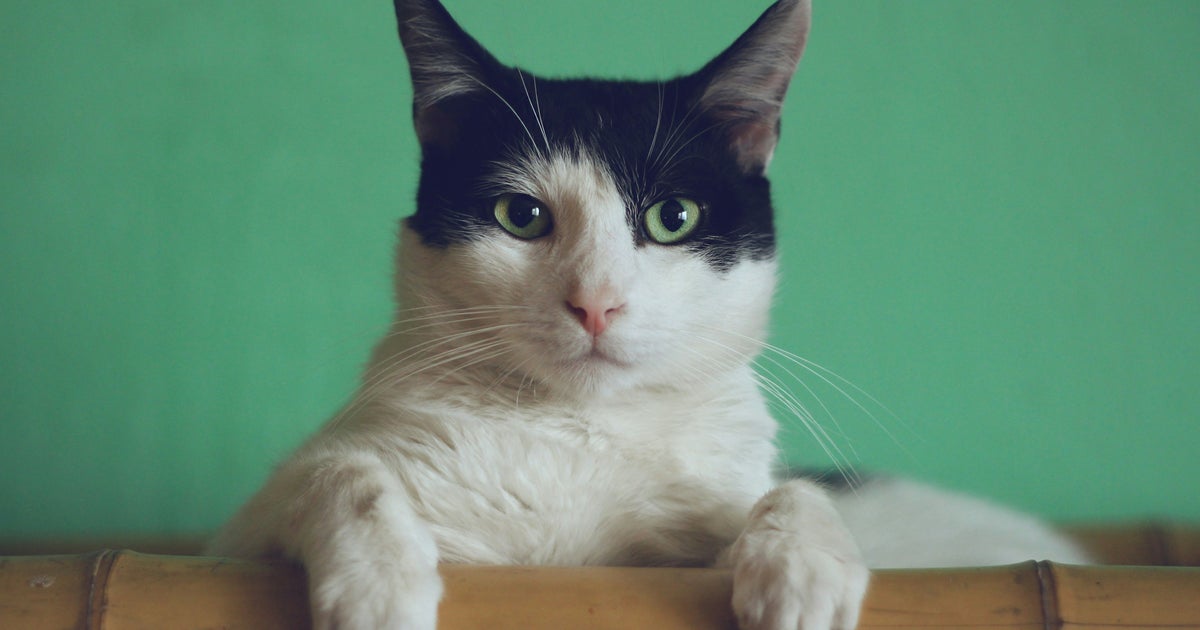
Owning a pet, be it a cat or a dog, has previously been linked to lower heart disease risk. This is especially true for cat owners aged between 40 and 64.
As if they don’t do enough for us already, researchers from the University of Bath, Auburn College of Veterinary Medicine in the US, and École Nationale Vétérinaire de Toulouse in France have said they might help us to age better too.
Advertisement
Why might cats help us to age better?
Their paper, published in the journal Biology Open, reads: “Pet cats may inform human ageing since humans and cats age similarly and they develop health challenges that mirror those observed in humans”.
Unlike a lot of lab animals, they added, cats tend to live long enough to develop age-related brain changes, like those seen in humans.
And, on the flip side, because they live a lot shorter lives than us, we can study their ageing at a much faster rate than we could in people.
Advertisement
The researchers used a biological model which looked at how multiple species age at a physical level.
They tracked 3,754 data points – like MRI (not CAT, sadly) scans, blood samples, and developmental milestones – gathered across human, cat, and other mammal species.
They found that cat and human brains seem to age remarkably similarly. Both species experience age-related neurodegeneration.
“It was interesting to see that cats show patterns of age-related brain atrophy similar to those observed in humans,” said PhD candidate Brier Rigby Dames, who was involved with the research.
“These findings add to growing evidence that companion animals can provide valuable insights into ageing.”
Advertisement
Cat owners are increasingly requesting more detailed pet scans
Speaking to the University of Bath, the study’s co-author, Dr Ryan Gibson, said that more and more pet owners are sending their cats in for increasingly detailed scans as they age.
This, he said, might provide an exciting opportunity.
“This expanded clinical access creates meaningful opportunities for translational research (research that bridges the gap between scientific findings and healthcare), improving our understanding of aging and neurologic disease in ways that can benefit both feline and human patients,” he said.
Advertisement
For her part, Brier Rigby Dames said: “There’s potential to develop large-scale veterinary health databases for companion animals, analogous to human health databases such as the UK Biobank.
“These kinds of resources could enhance our ability to study ageing and disease using real-world clinical and owner-reported data collected across species.”
Amid our full-blown obsession with protein, fibre hasn’t gotten nearly the recognition it deserves.
“Protein has certainly earned its place in the spotlight, but fibre deserves just as much attention,” registered dietitian Stefani Sassos, nutrition director at the Good Housekeeping Institute, told HuffPost. “Most Americans are likely already meeting their protein needs, while the vast majority fall short on fibre.”
Why is this nutrient so crucial? A fibre-rich diet offers a host of health benefits, like supporting healthy digestion and gut health, stabilising blood sugar levels, helping you feel full and satisfied, reducing LDL cholesterol and improving heart health.
“Not surprisingly, high-fibre diets are consistently linked with a lower risk of cardiometabolic diseases, like obesity, type 2 diabetes, cardiovascular disease, in addition to some cancers and overall mortality,” registered dietitian Tamar Samuels, co-founder of Culina Health, told HuffPost.
Fibre is protective against colorectal cancer for several reasons. One is because it bulks up stools by absorbing water, “allowing waste to pass through the colon more quickly and limiting carcinogen exposure to the colon lining,” registered dietitian Christina Fasulo of UCLA’s Health GI Nutrition Program told the university’s Health Newsroom.
Another, according to the Cancer Research UK website, is that “when fibre meets the bacteria that lives in the bowel, the bacteria make something called butyrate,” which “helps the cells in our bowel to stay healthy, so tumours are less likely to develop.”
In order to meet our dietary fibre goals, it’s important to be aware of which foods are actually high in fibre – because it’s not always the ones you assume. We asked dietitians to share which foods contain less fibre than many people realise.
Advertisement
Not all fibre is created equal
One quick but important note before we dive in: The foods mentioned below can still be beneficial components of a healthy, well-rounded diet. And they may even help contribute to overall fibre intake – just don’t rely on them alone to cover your fibre bases.
“I would never want people to think, ‘Oh it’s pointless [to eat] because it doesn’t have a lot [of fibre]’ because that is NOT true,” registered dietitian Dalina Soto, author of “The Latina Anti-Diet,” explained to HuffPost. “Any fruits or veggies, whether fresh, frozen or canned, are better than no fruits or veggies.”
Below, our nutrition experts identify foods that are relatively low in fibre and which ones can give you a bigger boost.
Advertisement
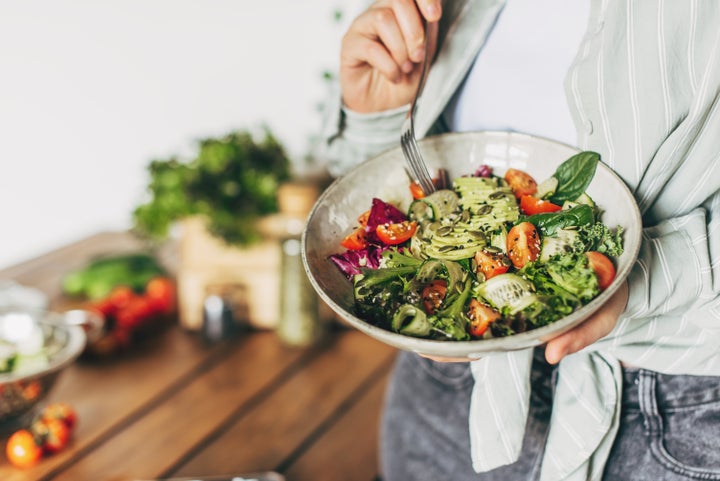
Kseniya Ovchinnikova via Getty Images
Leafy greens probably don’t contain as much fibre as you thought.
Lettuce And Other Leafy Greens
Leafy greens contain important vitamins, minerals and phytonutrients, making them nutritional powerhouses. But they aren’t nearly as rich in fibre as many people (this writer included!) think.
“Because salads are often associated with healthy eating, people sometimes assume lettuce is a major source of fibre. In reality, one cup of shredded romaine lettuce contains only about 1 gram of fibre,” Sassos told HuffPost.
Advertisement
“Lettuce can absolutely contribute to your daily intake, but you’ll get a much bigger fibre boost from ingredients like chickpeas, avocado or other vegetables added to the salad.”
Typically, foods that contain 3 grams of fibre or more per serving are considered a good source, registered dietitian Carly Leanza of Health Loft told HuffPost. “Lettuce like butter lettuce, iceberg or romaine contain less than 1 gram of fibre per serving.”
And while that isn’t a whole lot in a single serving, “it does add up if we have a big salad,” Soto noted.
Advertisement
To boost your fibre intake, consider cooking your greens. As Samuels pointed out, while one cup of raw spinach contains less than 1 gram of fibre, one cup of cooked spinach contains 4 grams of fibre. That’s because it takes several cups of raw spinach to make one cup of cooked spinach. Therefore, you’re getting more fibre for the same serving volume.
Celery
Rich in antioxidants and low in calories, celery is another veggie that seems like it would contain more fibre than it actually does. A medium-sized stalk has about half a gram of fibre, while there’s 1.6 grams in one cup chopped.
“People tend to overestimate both lettuce and celery’s fibre content potentially because they are crunchy and have a crunchy, stringy texture,” Leanza said. “People often think to have a big salad or snack on some celery to increase roughage. But if the focus is fibre, there are many other sources to turn to.”
Advertisement
Watermelon
One cup of watermelon contains less than a gram of fibre – just 0.6 grams per serving.
If you’re peeling your produce, you may be missing out on nutritional benefits, as there is usually a considerable amount of fibre (as well as vitamins, minerals and antioxidants) in the skin or peel, Soto pointed out.
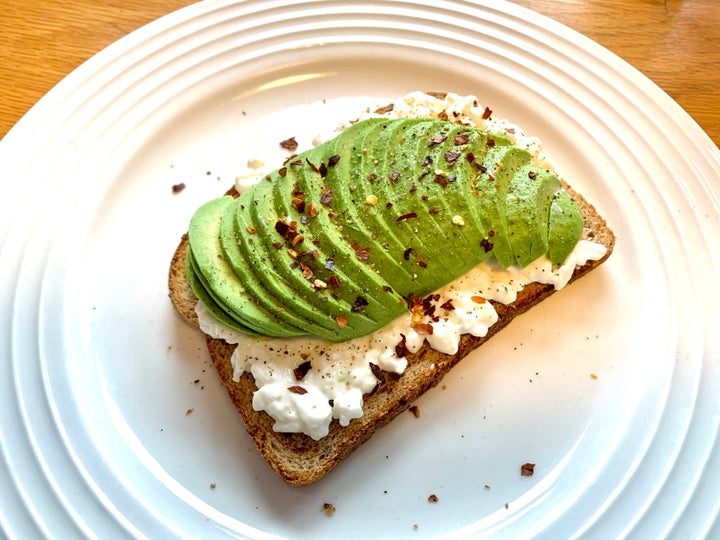
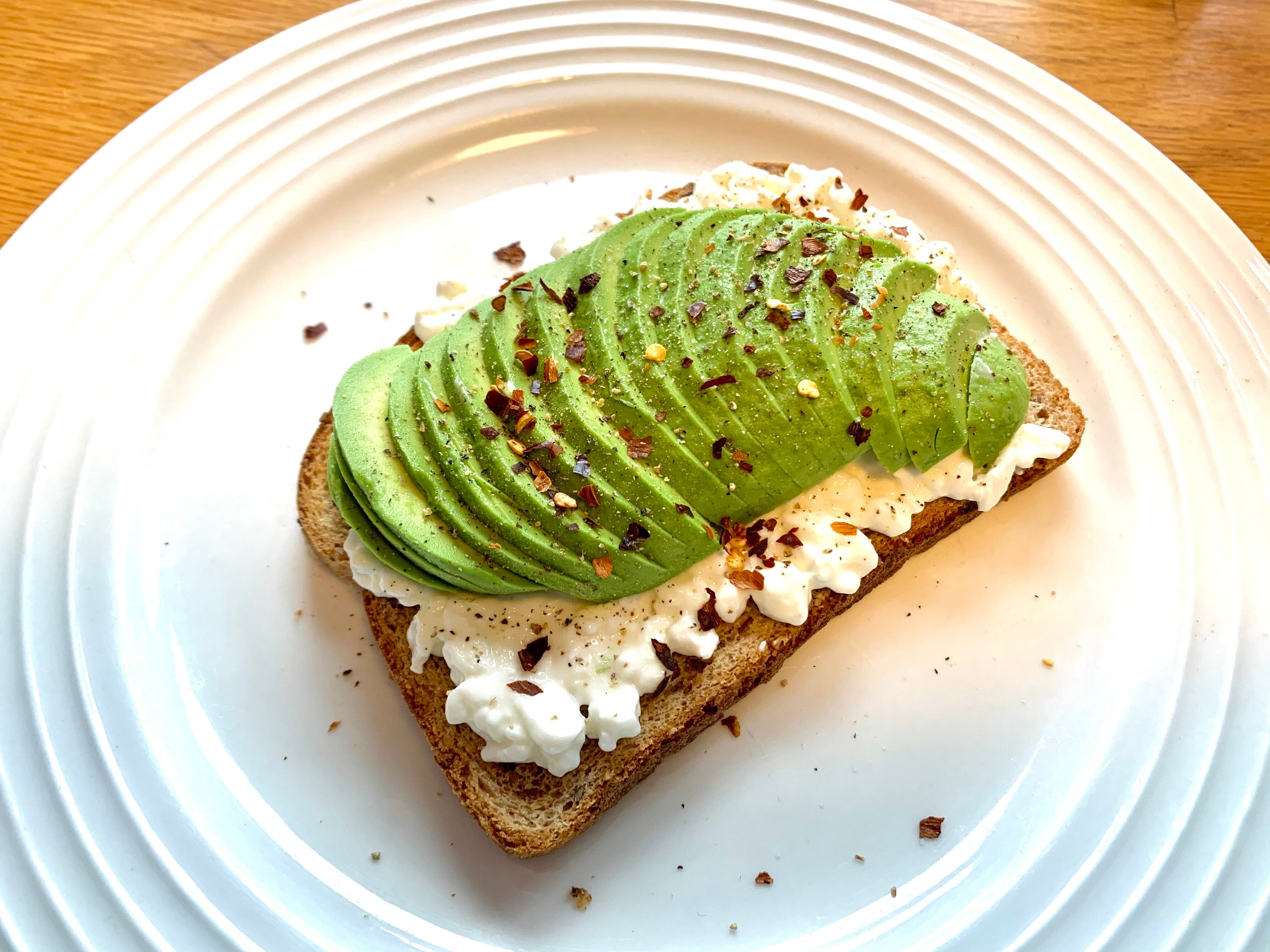
One of these toast toppings is high in fibre, and the other isn’t.
Advertisement
Cottage Cheese And Greek Yogurt
Both cottage cheese and greek yogurt are well-known for their health benefits, including their impressive protein content, calcium and other nutrients. But one thing they’re both missing entirely: fibre. That’s because only plant foods contain fibre – dairy and other animal products do not.
Sassos recommends pairing cottage cheese and greek yogurt with high-fibre foods such as raspberries, chia seeds and nuts to “create a more nutritionally complete snack,” she said.
High-Fibre Foods To Add To Your Diet
If you’re falling short on your fibre goals, consider incorporating more of these plant foods.
Avocados
“While they’re well known for their heart-healthy fats, many people don’t realise that one avocado provides roughly 10 grams of fibre (or even more depending on the size and variety),” Sassos said. “They’re an easy way to add both fibre and satisfying healthy fats to meals and snacks.”
Advertisement
Beans And Lentils
A cup of lentils or black beans, for example, contains a whopping 15 grams of fibre.
Legumes are “easy to add and [you] can create a lot of meals from them,” said Soto.
One cup of cooked split peas, another type of legume, has 16 grams of fibre. More peas, please!
Raspberries
With 8 grams of fibre per cup, Sassos called raspberries a “true fibre superstar.”
Other great sources: Quinoa (5 grams of fibre in one cup cooked), broccoli (5 grams in one cup cooked), pears (6 grams for a medium-sized one) and chia seeds (5 grams in one tablespoon).
Know that not all fibre is created equal, said Sassos. Whole food sources offer benefits that supplement forms do not.
“Fruits, vegetables, legumes, nuts, seeds and whole grains offer much more than fibre alone,” she explained. “They provide vitamins, minerals, antioxidants and other beneficial compounds that work together synergistically. That’s why getting fibre from whole foods whenever possible is ideal, rather than relying solely on powders or supplements.”
Advertisement
Eat a variety of fibre-rich foods to ensure you are getting adequate amounts of both kinds of fibre: soluble and insoluble. Soluble fibre dissolves in water and creates a gel-like substance in the gut that slows down digestion. Insoluble fibre does not dissolve in water and bulks up stools, making them easier to pass.
“Different high-fibre foods provide different types of fibre and beneficial nutrients,” Sassos said. “I encourage people to regularly rotate the fruits, vegetables, legumes, nuts, seeds and whole grains they eat.”
When increasing your fibre intake, do so gradually to prevent unpleasant gastrointestinal symptoms like gas and bloating, Samuels advised. Staying hydrated is important, too.
Advertisement
“Be sure to drink plenty of water to prevent constipation and help fibre do its thing,” she said. “A registered dietitian can help you come up with a sustainable and personalised plan for increasing fibre intake based on your unique needs.”
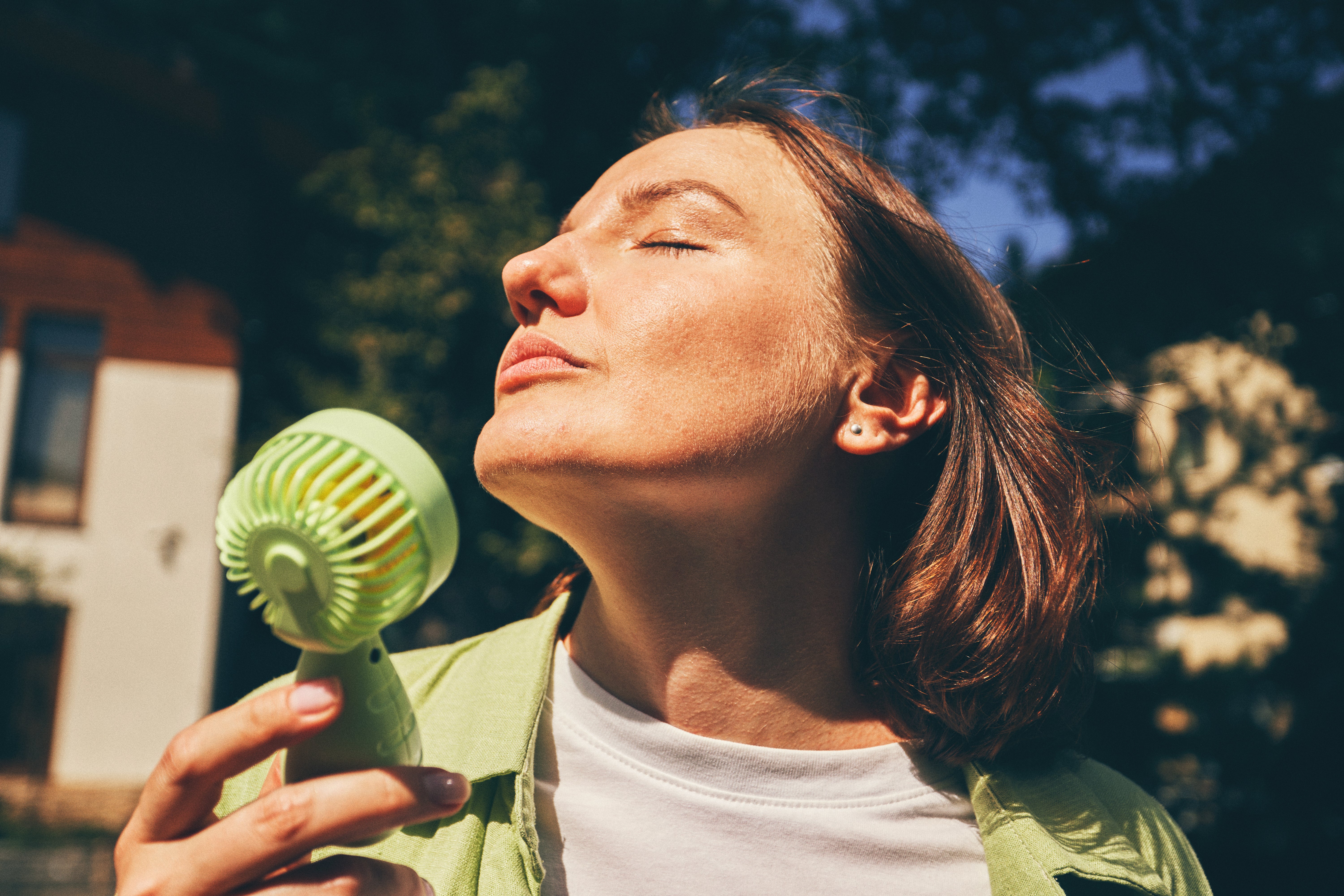
With record-breaking heat sweeping across the country and around the world, people are increasingly seeking ways to stay cool and turning to all kinds of tips, tricks and folk remedies to do it.
But how many of those heat-beating hacks are actually grounded in science?
HuffPost asked experts to weigh in on some of the most common old wives’ tales about surviving the heat, from damp sheets to cabbage leaves to yoghurt on windows.
Advertisement
The verdict? Some have truth to them, others don’t hold up to scrutiny, and a few could actually backfire depending on the conditions.
1. “Sleeping under a damp sheet cools you down.”
“The ‘Egyptian method’ involves sleeping under a damp sheet to cool down,” Dr. Swapnil Patel, vice chair of the department of medicine at Hackensack Meridian Jersey Shore University Medical Center, told HuffPost. “A damp towel can be used as an alternative.”
The cooling effect is the result of a simple evaporation process.
“A lightly damp sheet or cloth can cool through evaporation,” said Dr. Anthony T. Lagina, an associate professor in the department of emergency medicine at Wayne State University, Detroit Medical Center. “As water evaporates from the fabric, it pulls heat away from the skin. This works best in dry, well-ventilated conditions.”
Advertisement
Thus, the effectiveness of sleeping under a damp sheet is limited based on environment. And, the technique can in fact have the opposite effect in the wrong conditions.
“It works poorly in high humidity because water and sweat do not evaporate efficiently,” Lagina explained. “In humid conditions, a damp sheet may feel clammy, disrupt sleep or irritate skin.”
There are other ways to make your sleep environment safe in hot conditions, however.
“To deliver true peace of mind and comfort, I recommend focusing on proven environmental controls such as keeping your bedroom well-ventilated, utilizing lightweight, breathable bedding, taking a cool shower before bed and prioritizing consistent fluid replenishment throughout the day,” said Dr. Scott Braunstein, chief medical officer at Sollis Health.
Advertisement
2. “Smear yoghurt on your windows to keep the heat out.”
The idea behind putting yoghurt on windows – a tip that has circulated in the UK – is that the light-coloured yoghurt forms a thin film on the glass that reflects incoming solar radiation, so less heat passes through the window.
“Putting something reflective on your windows will help keep the sun out and cool your home,” said Anna Bershteyn, an associate professor in the department of population health at NYU Langone Health. “I would suggest a reflective window film, metallic foil or shades rather than yoghurt – that would be more effective and less messy.”
Lagina also advised against putting yoghurt on your windows to keep heat out in favour of more practical options. “It is not a reliable cooling strategy and creates sanitation concerns, including odor, bacterial or mold growth, insects and potential surface damage,” he said.
Advertisement
He also weighed in on a similar hack – putting wet towels or cloths on your windows.
“A wet towel or damp cloth over a window can provide only mild cooling if the air passing through it evaporates,” Lagina explained.
“In humid weather, this may simply add moisture indoors, making sweating less effective. Better home-cooling approaches include blocking direct sunlight with curtains or reflective shades, opening windows only when the outside air is cooler and using fans to move air across the skin.”
Ekaterina Goncharova via Getty Images
Weather authorities are warning of a “heat dome” across the U.S.
Advertisement
3. “Hot beverages cool you faster than cold ones.”
“Some studies have found that hot drinks and spicy foods increase sweating, which could be helpful in dry heat,” Bershteyn said. “Think deserts – where your sweat evaporates so fast that your skin is dry. If your sweat is dripping off of you – as it does in muggy, humid heat – more sweat won’t cool you any faster.”
When sweat evaporates, heat is removed from your body, but in humid conditions, drinking a hot beverage will instead probably just be uncomfortable and add heat initially.
“During heat stress, cool water or an electrolyte-containing drink is usually more practical,” Lagina said. “Moderate caffeine is generally acceptable for many adults, but excessive caffeine and alcohol should be avoided during extreme heat. Alcohol reduces judgment and can worsen dehydration and heat illness risk.”
Advertisement
Indeed, the type of beverage – hot or cold – that you consume makes a big difference.
“Cold water or targeted electrolyte solutions are consistently the better choice because they are refreshing, encourage people to consume a higher volume of fluids, and provide immediate physical relief from the heat,” Braunstein said.
“Also keep in mind that many hot drinks, such as coffee or tea, are caffeinated, and the caffeine both speeds up your metabolism increasing heat production, and acts as a diuretic contributing to fluid losses and dehydration.”
4. “Cooling your pulse points lowers your temperature more quickly.”
“Cooling the neck, armpits, groin, wrists and the backs of the knees can help, as major blood vessels are near the skin surface,” Lagina said. “Cool packs or wet towels can remove heat from blood and skin.”
Advertisement
Basically, you can quickly cool the body by cooling the parts where blood flows close to the skin.
“Applying cold can briefly cool circulating blood locally, which produces a perception of relief,” said dermatologist Dr. Brendan Camp. “However, this effect is modest and does not significantly lower overall core body temperature on its own. It is best understood as a sensory or comfort-based strategy rather than a true systemic cooling method. It works best when combined with airflow or general body cooling.”
Lagina similarly noted that this trick is “not magic,” as some situations require cooling across the fuller surface of the body.
“For serious overheating, broader cooling is better – a cool shower or bath; misting with a fan; cold, wet sheets; or cold-water immersion when safe and appropriate,” he said.
Advertisement
Pay attention to potential heatstroke symptoms, which require urgent medical attention.
“If you begin to experience symptoms such as dizziness, nausea, heavy sweating, muscle cramps or unusual fatigue, it is critically important to immediately seek medical care, most often at an urgent care or ER,” Braunstein said. “Heat-related illness is a spectrum that ranges from very mild to life-threatening, so time is truly of the essence.”
5. “Placing a cold cabbage leaf under your hat or on your body can cool you down.”
“Using cabbage leaves is a real folk remedy, for their cooling properties,” Patel said. “While more commonly studied for reducing pain and swelling in conditions like osteoarthritis, the cooling effect of the leaves, with their water content, is real.”
In the context of heat, cabbage leaves can provide a brief, localised cooling sensation, but experts say don’t get too excited about it.
Advertisement
“My mother has tried to treat quite a few of my childhood illnesses with cabbage leaves,” Bershteyn said. “Sadly, I’m not aware of any special cooling powers of cabbage leaves. But anything cold and wet on your head can feel nice.”
The effect is not long lasting, however. “It warms quickly, does not maintain consistent heat transfer and does not meaningfully affect core temperature,” Camp said. “It is not an effective or reliable cooling strategy from a physiologic standpoint.”
The cabbage leaf trick has historical precedent. Baseball legend Babe Ruth was known to place a cold cabbage leaf under his cap during games to stay cool in the sweltering summer heat.
Advertisement
“A cold cabbage leaf can cool by contact and moisture, just like any cold wet object,” Lagina said. “There is no special heat-related medical property in cabbage. A clean, damp cloth, a cooling towel, a chilled bandana or an ice pack wrapped in cloth is more practical and hygienic. Folk remedies should not delay standard cooling or emergency care.”
Uma Shankar sharma via Getty Images
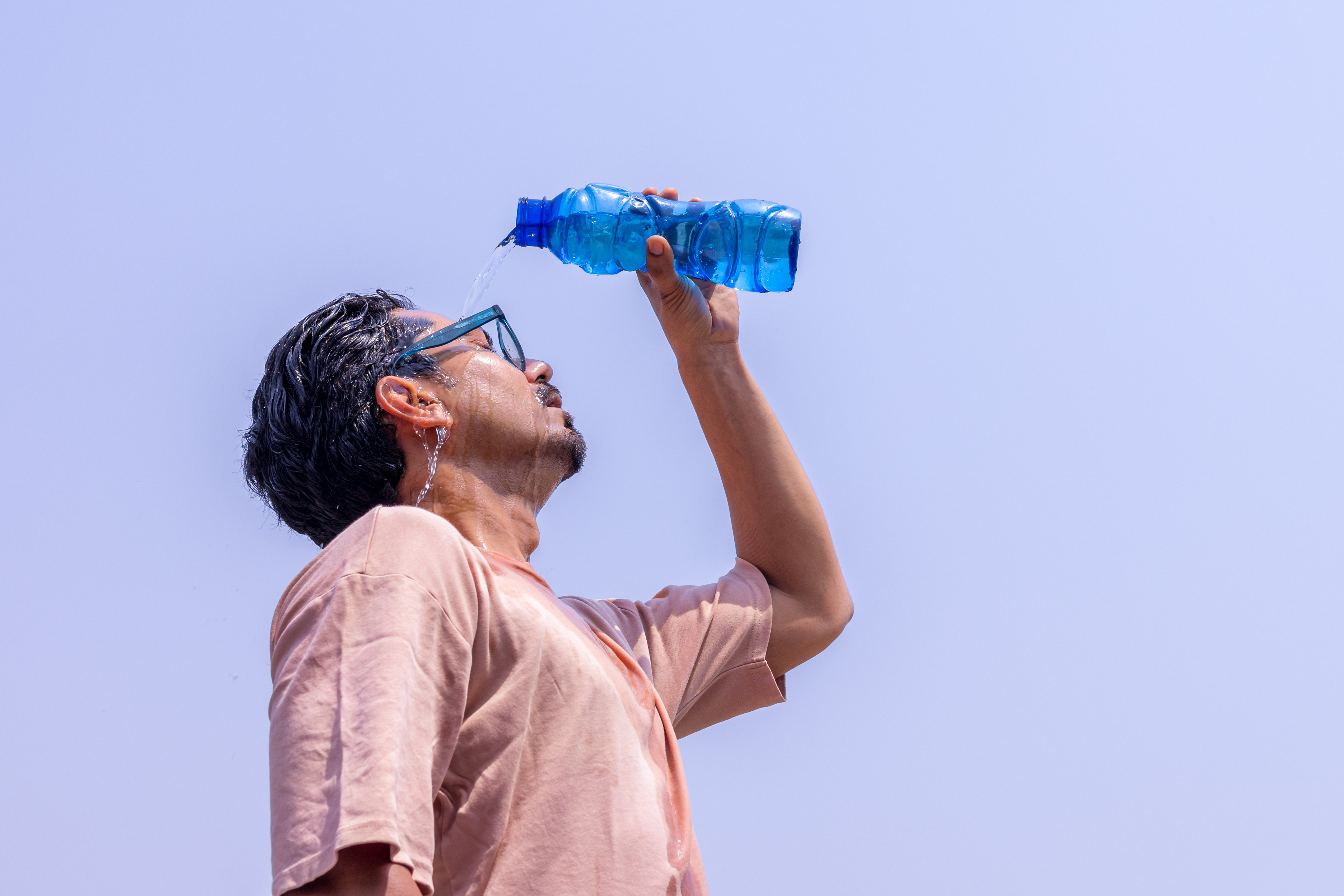
No folk remedy can replace the importance of hydration.
6. “Placing a bowl of ice in front of a fan works like air conditioning.”
Placing a bowl of ice in front of a fan is a popular TikTok hack for cooling down a room, but experts say the effect is more limited than most people expect.
Advertisement
“This can create a small area of cooler air for someone sitting close by, but it is not an effective way to cool an entire room,” Lagina said. “The ice absorbs heat as it melts, and then the effect stops. It may be useful for short-term personal comfort, especially with good airflow, but it should be paired with hydration, reduced activity, shade and access to air conditioning when possible.”
Bershteyn also noted that a bowl of ice in front of a fan probably won’t meaningfully cool a room.
“In fact, if the ice was made in a freezer in the same room, the heat coming from the back of the freezer would offset the cooling from the ice,” she said. “But if you sit directly in front of the ice, you might get a personal, chilled breeze.”
Here’s what experts actually recommend for staying safe in the heat.
“Many folk cooling methods work only when they improve evaporation, conduction, shade or airflow,” Lagina said. “They are not substitutes for air conditioning, hydration, rest and urgent medical care when heat illness is suspected.”
Advertisement
There are other important facts and precautions to keep in mind as you try to stay safe and cool in extreme heat.
“It takes several weeks for a body to adjust to heat, which is why the U.S. sees more heat-related deaths in the spring than in the summer,” Bershteyn said. “While scientists don’t yet know the exact best way to condition yourself for heat, one thing is clear: Being in good physical shape is a huge benefit.”
She recommended trying to stay physically fit in the springtime and all year-round to make those heatwave days easier to get through. Still, don’t assume that healthy athletes can’t fall victim to heat-related illness.
Advertisement
“Fitness does not eliminate risk,” Lagina said. “Athletes, outdoor workers, children, older adults, pregnant people and people with chronic health conditions are all vulnerable.”
The wrong combination of conditions and exertion can affect even the healthiest people. “We see healthy young adults and children develop heat exhaustion after prolonged sun exposure, strenuous activity or dehydration,” Braunstein said.
He noted that the best prevention is much simpler than those interesting at-home remedies.
“Stay hydrated before you feel thirsty, wear lightweight clothing, seek shade during the hottest part of the day and take breaks in air-conditioned spaces whenever possible,” Braunstein said.
Advertisement
Loose, thin, light-coloured clothing and hats can provide helpful protection, as can periodic cool showers and baths, misting fans, ice packs and damp cloths.
When you reach the peak heat of the day, take advantage of air conditioning and avoid strenuous activity. Drink plenty of water and keep your electrolytes replenished if you’re exercising or otherwise sweating a lot.
“Never leave children, older adults, vulnerable people or pets in parked cars,” Lagina said. “Check on older adults, children, outdoor workers, people living alone and anyone with chronic medical conditions. High humidity, poor airflow, dehydration and prolonged heat exposure all increase risk.”
Advertisement
Knowing how to recognize heat illness and act quickly is also incredibly important. Signs of heat exhaustion include heavy sweating, weakness, dizziness, headache, nausea, muscle cramps, cool or clammy skin and feeling faint.
“If these occur, move to shade or air conditioning, stop activity, loosen clothing, sip cool fluids if alert, and use cool, wet cloths, misting, fanning or a cool shower,” Lagina said.
Heatstroke is a more serious medical emergency with warning signs that include confusion, altered behavior, fainting, seizure, slurred speech, severe weakness, a very hot body or an inability to cool down.
Advertisement
If you suspect heatstroke, immediately call 999 and begin cooling while waiting for help by moving to a cooler place, removing excess clothing and applying cool water, fan mist, ice packs and/or cold, wet towels to your neck, armpits and groin.
“If symptoms like dizziness, vomiting, confusion, fainting or difficulty breathing develop or don’t quickly improve after cooling down and rehydrating, don’t rely on home remedies,” said Braunstein. “Early treatment can prevent progression to the life-threatening conditions that are on the far end of the clinical spectrum.”
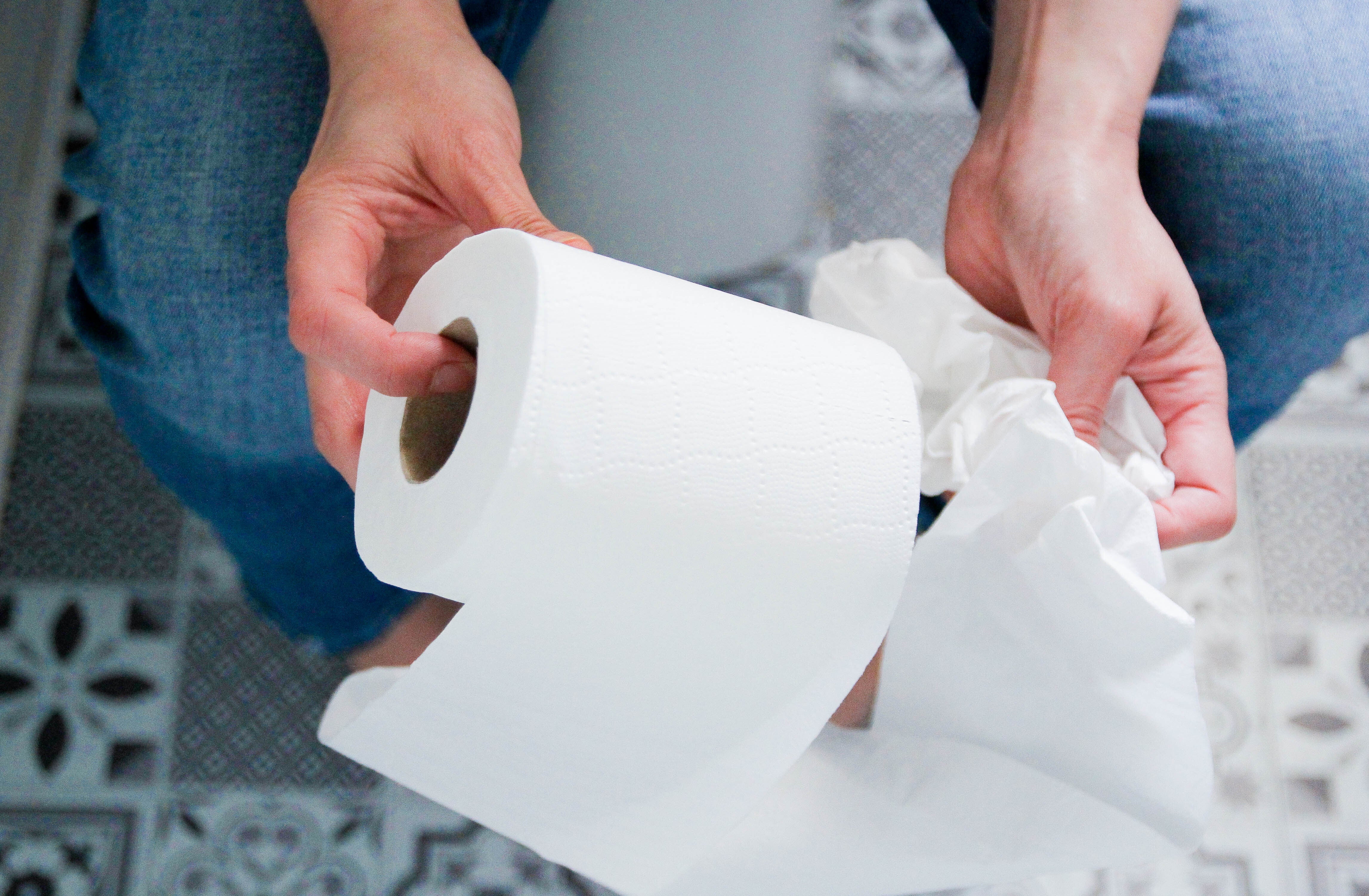
How long do you spend going for a poo? Two minutes? Seven minutes? 20 minutes? Well, it turns out there is a line between spending too long in the bathroom and having a quick and healthy bowel movement.
Spending too much time pooping can lead to health problems and can even be a sign that there’s something larger going on in your gastrointestinal tract.
Advertisement
Here’s what gastrointestinal doctors want you to know.
It should take no more than 5 minutes to have a bowel movement – and maybe even a little less.
Spending more than several moments on the toilet when you poop is too long, doctors say. Exactly how long is too long depends, but around five minutes (or a little less) is a good goal.
Dr. Melissa Hershman, an assistant professor of medicine in the division of gastroenterology and hepatology at Oregon Health and Sciences University, said “an appropriate time to spend on the toilet is no more than three minutes at a time”.
Leslie Waid, a nurse practitioner in gastroenterology at the University of Pittsburgh Medical Center, was a little more lenient with the time, but not by much. According to Waid, it shouldn’t take more than five to 10 minutes to have a bowel movement.
Advertisement
Dr. Valentine Millien, a gastroenterologist at Houston Methodist Hospital, said closer to five minutes is best.
“You should sit down, you should easily pass a bowel movement, feel empty, you get cleaned up and you leave,” Waid said.
“There shouldn’t be any straining or spending time sitting there waiting for stools to pass,” Waid noted.
Advertisement
Straining and excessive pushing motions can “create pelvic trauma, injury,” added Hershman.
For example, straining can cause hemorrhoids, Waid said.
“There are other things that can happen with straining, including anal fissures, and those are tears in the lining of the anal canal, and they can be very painful,” Waid said.
Straining on the toilet can also cause pelvic floor damage and weaken the pelvic floor muscles, Waid added.
“Really, after five minutes, and nothing is happening, we usually tell patients to leave and then wait again to get the urge, and then come back to the bathroom,” Millien noted.
Advertisement
Hopefully, when you return, you’ll be able to evacuate your bowels in just a couple of minutes.
Kinga Krzeminska via Getty Images
One way to spend less time in the bathroom? Stop bringing your phone in with you.
If you spend more than 5 or 10 minutes in the bathroom, there are things you can do to improve your bowel health
If straining and spending 5 or 10 minutes on the toilet is your norm, there are a few things you can do to reduce the time it takes you to poop.
Advertisement
First, positioning is important, said Waid, so stools like Squatty Potty can be helpful.
Millien agreed, “a lot of Asian countries and a lot of African countries, their toilet is actually, even if it’s a ceramic toilet, it’s usually lower to the ground, so that forces you to squat.”
When you squat, “you’re removing some of that pressure of the rectum, and actually allowing gravity to help you evacuate,” Millien said.
And, while it’s common to bring your smartphone everywhere (including in the bathroom), it’s a good idea not to. Research shows that people who bring their phone into the bathroom spend more time in the bathroom and have a higher risk of hemorrhoids, Millien said.
Advertisement
Tried-and-true lifestyle habits are also important for bowel regularity, such as drinking plenty of fluids and exercising, said Waid.
“Exercise is an excellent way to promote bowel motility. I often tell patients that your gut doesn’t move if you don’t,” said Hershman.
Your diet choices also impact your bowel movements. “It’s important to have adequate dietary fibre,” Waid noted. This includes fruits, vegetables, whole grains, certain cereals, oatmeal, chia seeds, beans, and more.
Advertisement
Fibre helps add bulk to stools and makes bowel movements easier to pass.
“If patients feel like they’re not eating enough fibre, or just need a little bit something more for regularity, they can add in a fibre supplement,” Waid said.
“We really want to target at least 25 grams of fibre per day,” said Hershman. For reference, one apple has about 4.5 grams of fibre, one cup of quinoa has 5 grams and one cup of lentils has 15.5 grams of fibre.
In some cases, bowel movement issues can be a sign of colorectal cancer
Rates of colorectal cancer are rising in younger adults, and the signs of colorectal cancer can overlap with some of the problems that come from straining while pooping, too.
Advertisement
“Blood in the toilet – the assumption used to be that this was all hemorrhoids, but it’s also important to talk to your physician,” said Millien.
More, if you notice a change in your bowels, like if you used to have regular bowel movements but are now having frequent constipation or diarrhea, you should also mention that to your doctor, she said.
“Because it could be a sign of inflammation in the colon, or it can be a sign of an obstruction in the colon,” added Millien.
Advertisement
“If there’s any concern in your bowel habits, if anything has changed in your bowel habits, any blood, don’t just minimise [it],” she added.
“A lot of young patients with colon cancer now are actually asymptomatic, other than just intermittent rectal bleeding,” Millien noted.
If you notice anything suspicious about how long it takes you to have a bowel movement, blood in the toilet or any concerning changes, talk to your physician, she stressed.
The three lions on the shirts of England’s football gear have become so strongly associated with the men’s national team that they’re nicknamed The Three Lions.
But why three – and why doesn’t the England team’s emblem match England’s non-football coat of arms exactly?
Why does the England football team’s shirt have three lions?
As we’ve said before, the crest was adopted by the Football Association when it was first founded.
But that’s because of a long, royal history of lions in England’s heraldry.
King Henry I had a lion on a red background on his coat of arms way back in the 12th century.
And when he married Adeliza of Louvain, whose father, Godfrey I, Count of Louvain, had a lion on his coat of arms, too, he added a second. That happened in 1121.
That meant King Henry I’s grandson, Henry II, was born with two lions on his coat of arms. But then he, too, married into a big-cat-coat-of-arms family: Eleanor of Aquitaine’s heraldic badge also contained a lion.
Advertisement
But, per the i Paper, it took Eleanor and Henry’s son, Richard the Lionheart, to combine the three lions into a single emblem.
That flag – three lions on a red background, or Gules, three lions passant guardant in pale or – was used by every Plantagenet king until the ascension of Edward III in 1327.
Advertisement
How is England’s football emblem different from the royal one?
The Football Association would have had to ask for permission to use the Three Lions emblem due to its royal associations. But it doesn’t exactly match the royal version.
Firstly, the colours are different – England’s football badge is blue and white, while the historic version was red and gold.
And the England football badge has 10 Tudor roses on it. “The reason for the specific amount of roses is unknown,” the BBC said.
Advertisement
England’s football badge also used to have a crown on top. But in 1949, that was removed so as to distinguish it from the England cricket team’s emblem.
The star above the lions is a relatively new addition, representing England’s 1966 World Cup win.
I don’t have hay fever, but based on how I react to walking outside on a hot day, I’d forgive you for believing I do.
For some reason, getting off the train into the sun, opening my door onto a ray-soaked street, and even leaving a tree’s shadow into a bright spot triggers a huge, eye-watering sneeze – and until now, I had no idea why.
It sounds like I’m experiencing a “photic sneeze reflex,” also known as “autosomal dominant compelling helio-ophthalmic outburst syndrome” (ACHOO syndrome – teehee).
What is a “photic sneeze reflex” or ACHOO syndrome?
An extract from Medical Genetics Summaries says that “Affected individuals report a ‘prickling sensation’ or sneezing in response to a bright light.”
It’s elicited by going from a darker area to an area of brighter light (like stepping into sunlight from indoors), or simply having a bright light shown to you.
Advertisement
This can be “uncontrollable.”
How common is it to sneeze at bright lights?
“About one in four individuals who already have a prickling sensation in their nose will sneeze in response to sunlight, but ‘pure’ photic sneezing is far less common,” Medical Genetics Summaries shared.
If one parent has the condition, their child has a 50% chance of developing it.
It happens because of a misfiring in a facial nerve that goes from your eyes to your nose. The constriction of your pupils as your eyes adjust to the light triggers the sneeze.
Advertisement
Is sneezing at bright lights dangerous?
It can be if you’re operating heavy machinery or driving: “for example, exiting a road tunnel on a bright day.”
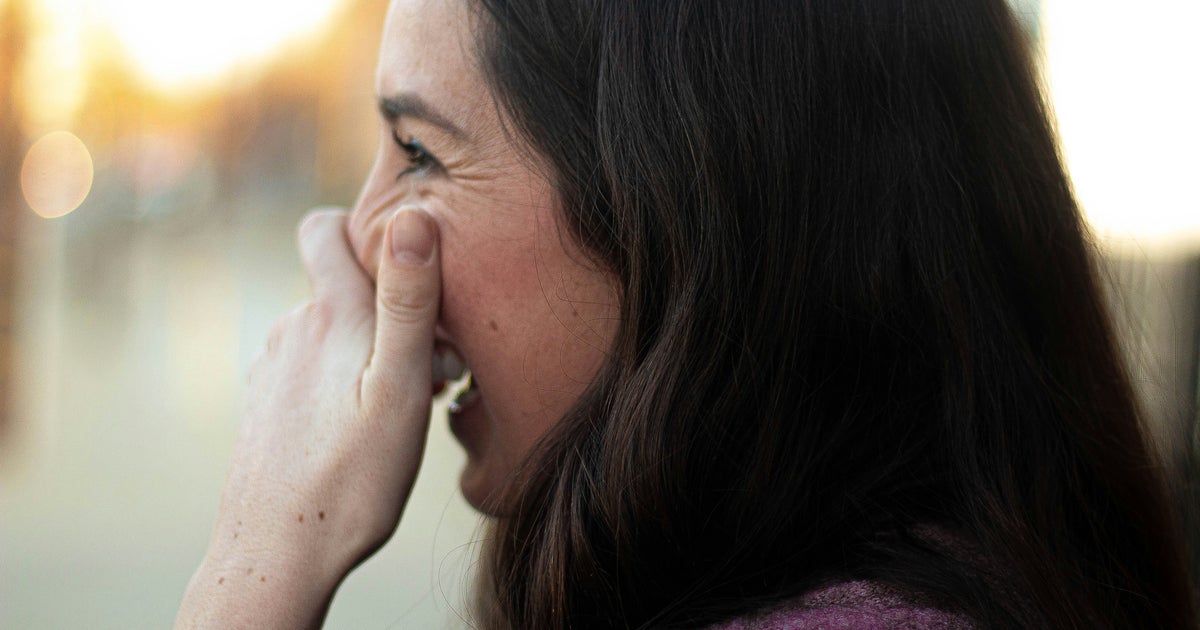
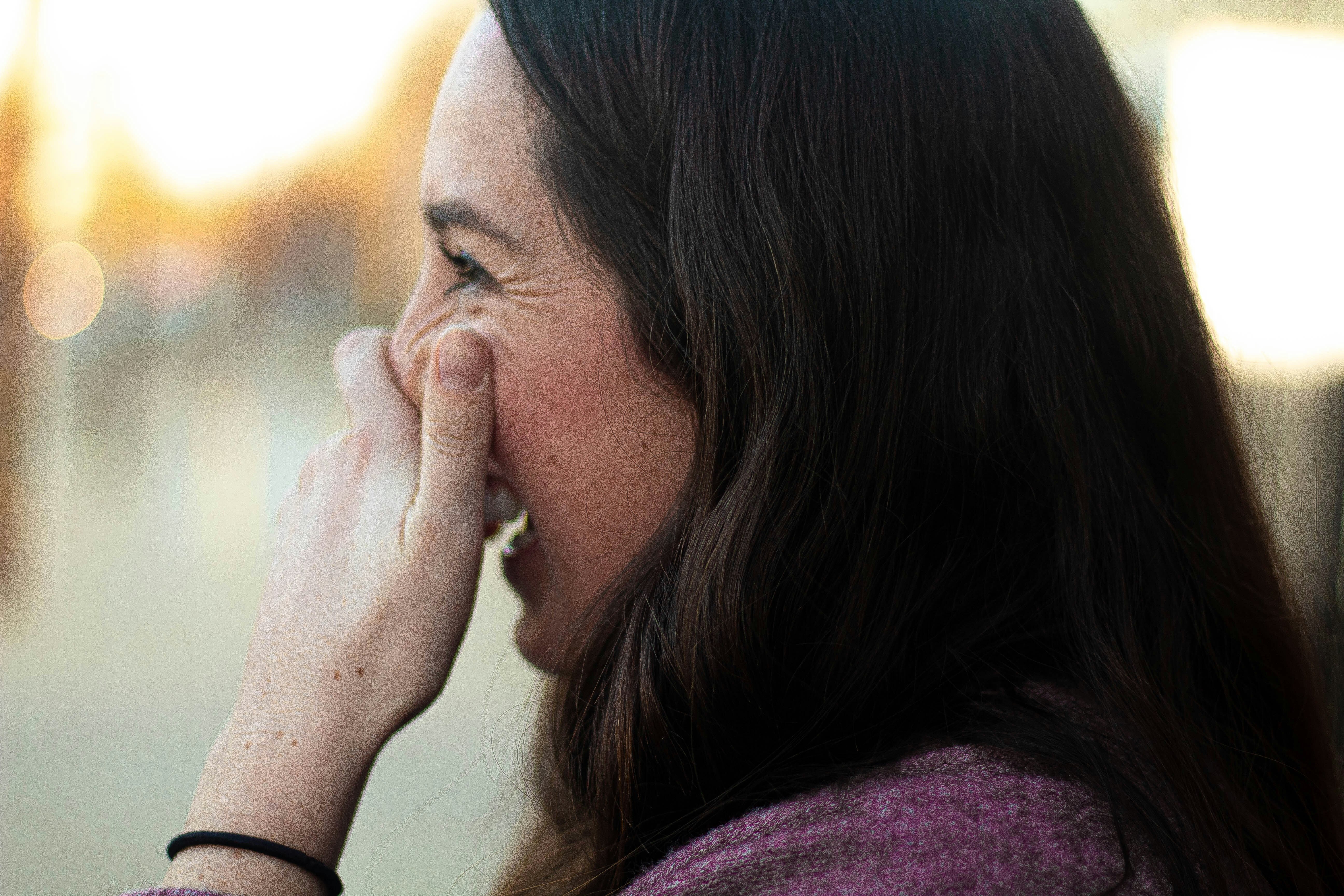
And the Cleveland Clinic recommends we “Use the ‘transverse philtral pressure technique,’ which involves applying pressure to the area between your nose and your lips.
Advertisement
“If you’re doing it right, it should look like you’re giving yourself a moustache with your finger,” they said. This may interrupt the sneezing signal.
I’m learning so much more about myself than I expected today…
We hope you love the products we recommend! All of them were independently selected by our editors. Just so you know, HuffPost UK may collect a share of sales or other compensation from the links on this page if you decide to shop from them. Oh, and FYI — prices are accurate and items in stock as of time of publication.
If there’s one thing I’m awful at doing (apart from laundry) it’s remembering to track my workouts. I got to the gym two to three times per week, but every time it simply slips my mind to write down what I’ve done.
It’s a trait I find myself endlessly ruminating over every time I remember, but obviously not enough to do anything about it.
That’s why, when I discovered Huawei had released a new fitness watch, I knew this could be my opportunity to change.
Now, I’ve tested fitness devices before, but none of them have ever quite worked for me.
I often find they prioritise active fitness over anything else, or gamify relaxing or sleeping so much that they end up having the opposite of the intended effect and stressing me out.
Fitness trackers also give me awful throwbacks to being scorned by the sternest of school sports teachers, which makes me avoidant and want to exercise even less.
And, I’m sorry, but I don’t need to know that I’ve not been sleeping enough for the whole week because I already know! I’m tired, godammit.
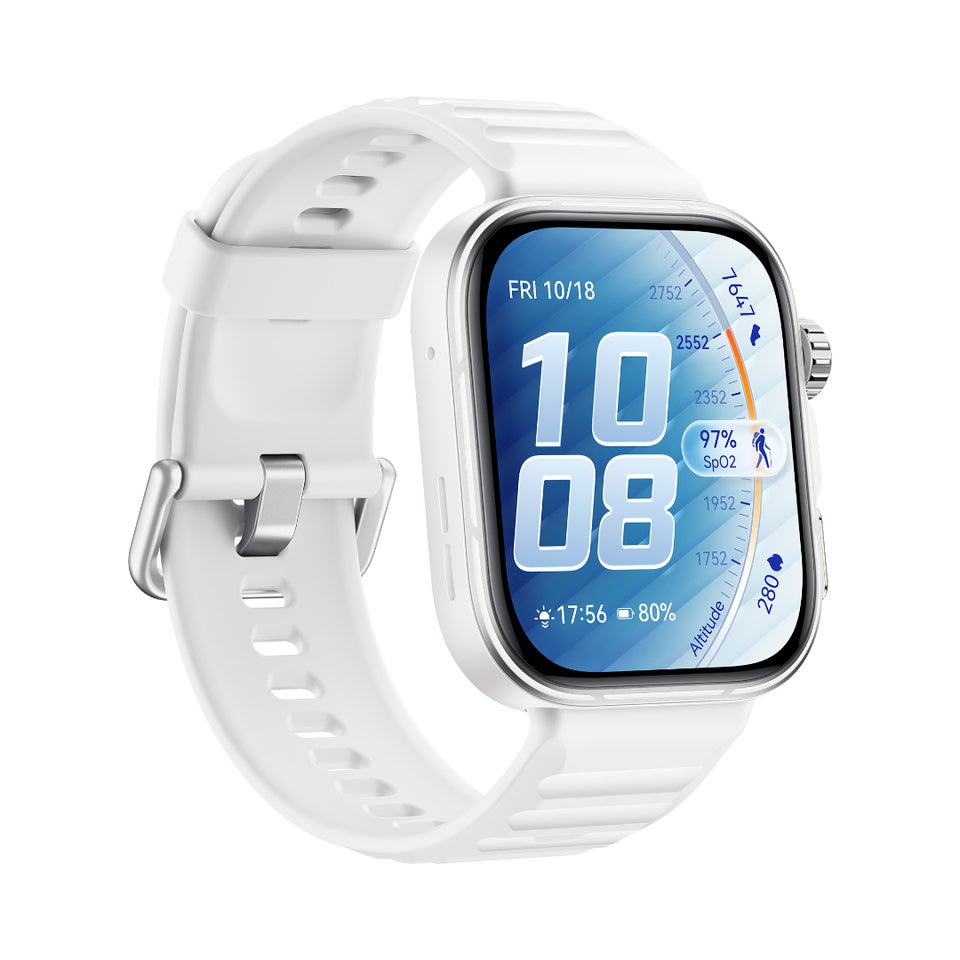
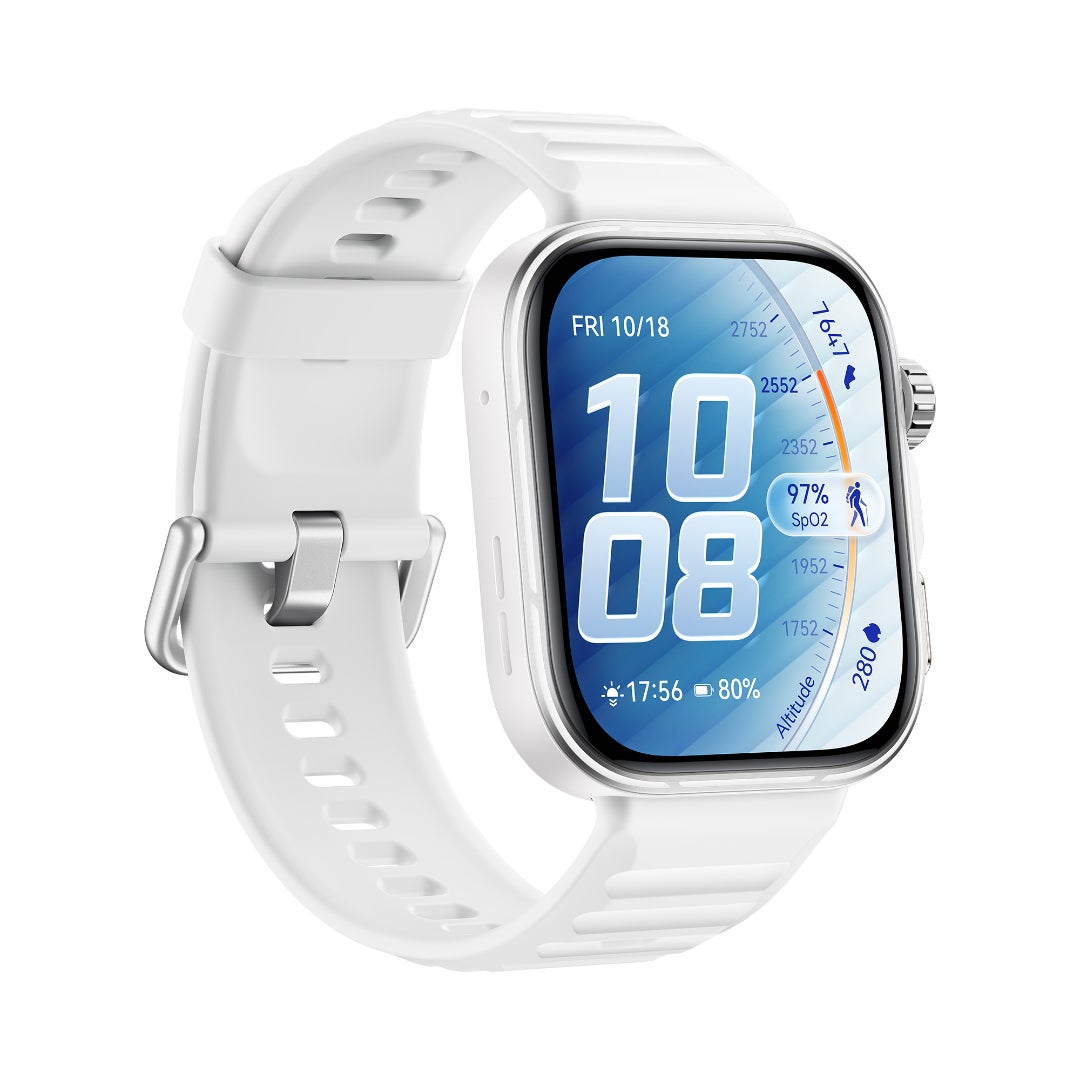
Considering the Huawei website promises that the Watch Fit 5 Pro blends style with ‘smart’, I had high hopes.
My review of the Huawei Watch Fit 5 Pro
Getting set up
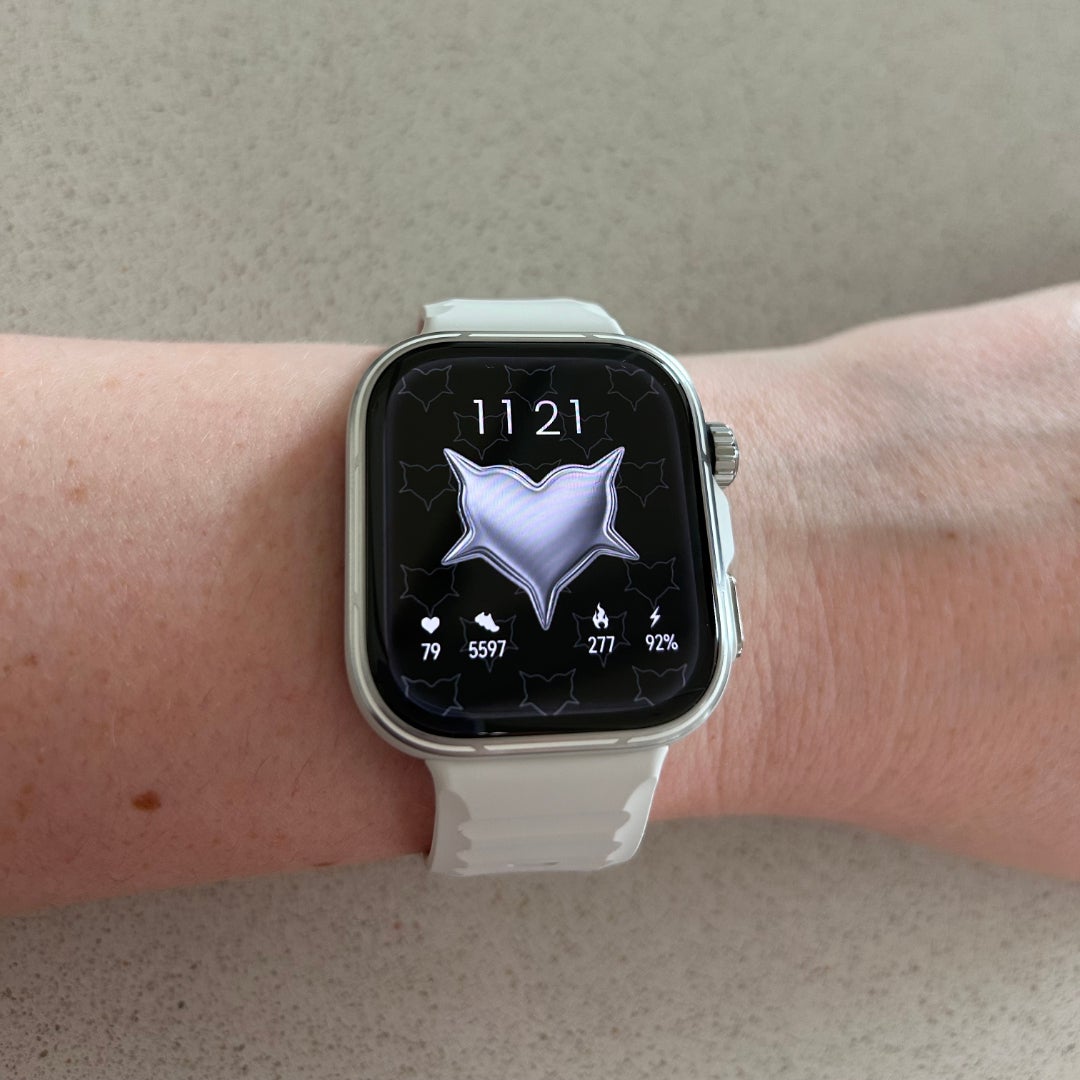
Although the watch comes in three colours: black, white, and orange, I went for the white because, well, it’s summer.
You can choose from a range of different coloured straps, including nylon and rubber options, but I went for a simple matchy matchy moment.
After all the boring stuff was out of the way, it was time to sync it with the Huawei Health app. You get three months of Huawei Health+ for free when you buy a watch, which gives you access to a range of workout masterclasses, personalised workout plans and nutritional analysis – or you can choose to stay on the free plan for fewer options.
Downloading the app also lets you customise your watch face – a feature I personally love because it means you can match your watchface to your outfit! I currently have mine on one with a spiky metallic silver heart on a black background to match my silver jewellery, but there are plenty of free and paid options available.
From the get go, it’ll ask for permissions to access your health data, including your heart rate, skin temperature, sleep data, and step count.
Once you’re all set up, you can completely personalise the kind of data you want your watch to give you – as well as other basic features you’d expect from a smart ring, like contactless payments, contact syncing so you can call or text, calendar syncing, timers, voice recording, and features.
Fitness monitoring
Just like other fitness devices, the Fit 5 Pro tracks your essential health data and allows you to set goals for movement and nutrition.
Personally, I’m not bothered about setting nutrition goals because I kind of CBA, crucially, and also I find it makes me obsessive about my eating habits.
However, I do need help tracking my workouts. As someone who goes to the gym two to three times a week, I often forget just where I’m up to with my strength training.
Also – and this might just being a woman at the gym – I find myself doubting whether I’m doing something right.
One thing about the Fit 5 Pro I love is that you can start a fitness training programme to help you keep on track, whether that’s running, golfing, strength training, yoga or pilates.
You’ll also have access to classes with personal trainers so you can check your form. or the watch can be connected with third-party apps like Fiit, Komoot, and URUNN, depending on the kind of exercise you enjoy.
The only downside of this is you’ll need to remember to turn the volume on your watch down, so it doesn’t blast your business to everyone in a five-mile vicinity (read: it’s loud).
If you’re already a pro or prefer to wing it, the watch lets you track any kind of workout you could possibly think of so you can keep an eye on your training times. There is truly an option for everything, down to the nichest of sports – think: belly dancing, hula hoop, bobsleigh, bungee jumping.
But for some of the more popular options like cycling (which I can’t say I do on the reg) it it loaded with state-of-the-art tracking that stops recording when you stop at a traffic light, or draws a custom run route in the shape of a lion (or trophy cup) to keep things interesting.
Fitness-life balance
But it’s not just exercise the watch keeps track of – it also prioritises living a holistically healthy life, which is what would make me more loyal to it in the long run.
As someone who exercises out of necessity, not for the love of the game, I’m not particularly interested in a watch or ring that bullies me into exercising five times a week – I more need something to keep me on track and to offer positive reinforcement throughout the day.
I’m yet to find a fitness tracker that does this better than Huawei. Rather than send me 50 alerts when I’ve not reached my step count, it sends a few notifications to encourage me to keep moving throughout my day.
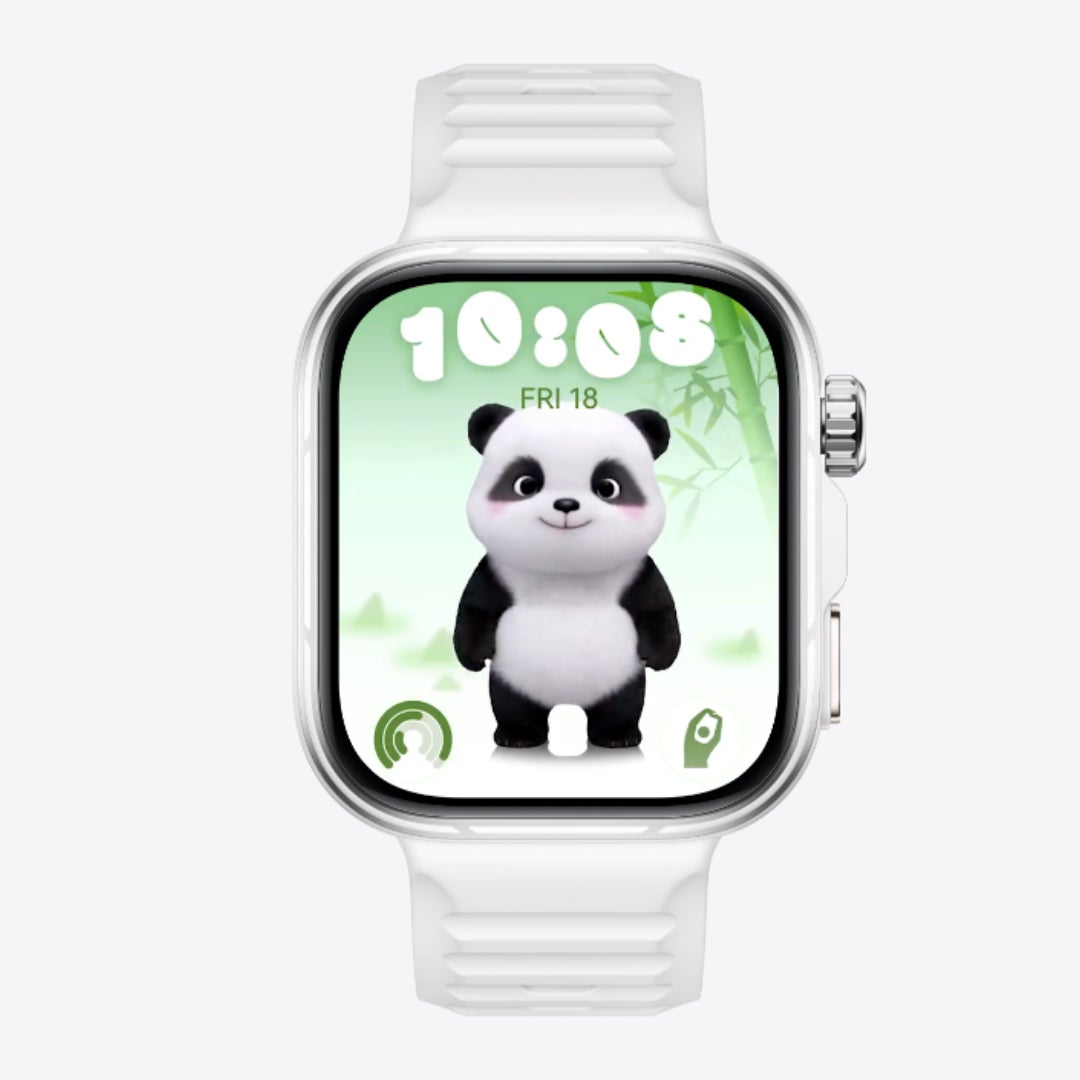
Plus, there’s even an option for a ‘mini workout’ where an adorable little panda leads you through a series of quick stretches and standing exercises to remind you to step away from your screen every now and again.
I get quite severe eye strain, and also work probably way too much, so this is a welcome feature to keep me grounded.
It doesn’t stop there, though: you can also listen to focus white noise music through the Huawei app, or ask it to run a quick meditation or breathing exercise with you.
One of my favourite features is that the watch tracks your mood throughout the day; while I have absolutely no idea what it bases this information off, it always makes me laugh when I look at the watch face and it tells me I’m in a ‘pleasant’ (or even ‘unpleasant’) mood. Because… thanks?
Of course, it’ll also track your sleep, including your breathing stability, how much deep sleep you get compared to light sleep, and you can listen to sleep music through the app.
Honestly, though, I’ve been sleeping better than ever now that the watch prompts me to walk that little bit extra.
It’ll even prompt you to be social: you can create groups with other Huawei watch users to hold yourself accountable, or share your statistics on social media.
Final verdict
Looks at your health more holistically than any other fitness tracker I’ve tried
Can sync to third party apps to deepen your training, and the Huawei app gives you a free trial to most of them
As customisable as you could like
The charge lasts for 10 days
It’s easy to set up
I love that it doesn’t pester you
The mini workout feature is really impressive
Easy to use interface
It’s social
The volume is quite loud
I wish the watch face was *slightly* less chunky
There are sooo many features it can be overwhelming
Rating: 4.7/5
Overall, this is the best fitness device I’ve tried. I don’t feel as though I’m being pestered by a perniciously petulant personal trainer who wants me to be the skinniest mini in the room.
Instead, the Huawei Fit 5 Pro encourages you to keep an eye on your holistic health, and encourages you rather than berates you when you’re behind on your goals.
There are no red marks or angry notifications telling you off, and there is plenty built into the app to teach you how to have a healthier lifestyle, whether that’s by exercising, winding down before bed, or taking a break from your desk in the middle of the day.
The fact the interface is easy to use and customisable means it would be suitable for anyone, from a 50+ year old, to a teenager. The price point is reasonable for what it is and, best of all, the charge lasts for up to 10 days, so you really never have to take it off (apart from when you’re having a bath or shower).
I’d recommend this to anyone, from those who are simply trying to level up their lifestyle and be more health-conscious, to hardcore cyclists and athletes.
“The height of rudeness is treating staff as though they are invisible, or worse, beneath you,” he shared with us.
Advertisement
“Snapping fingers, avoiding eye contact, or issuing demands without a ‘please’ or ‘thank you’ is quite beyond the pale”.
Hanson explained that includes leaving your room in a “reasonable” state for cleaning staff when you finish your stay. But what’s the etiquette when you’re still in there?
Here, we asked him whether we should vacate the area when it’s due a clean.
Should you leave your hotel room when cleaners come in?
The etiquette expert’s answer was pretty definitive: “You should vacate the room while it is being serviced. It is simply more considerate”.
Advertisement
He added, “Most housekeepers will wait until you are out and will always knock and announce themselves first.
“If you are inside and would like the room cleaned, answer promptly, greet them politely, and make your exit. Linger not.”
And, Hanson stressed, it’s important to leave your room in decent nick throughout your stay, rather than just rushing through it at the end.
Advertisement
“As I note in Rule Five of my Grand Etiquette Hotel Guide… ‘Housekeeping Is Not an Archaeological Activity.’ They are there to clean, not excavate,” he stated.
Anything else?
Yes – Hanson has a “golden rule” when it comes to hotel staff.
“If you wouldn’t speak that way to a colleague, don’t do so in a hotel simply because you are paying to be there. Good manners, one finds, are often quietly rewarded,” he said.
Advertisement
A hotel etiquette study commissioned by Hotels.com found that 90% of Brits think our hotel manners are pretty perfect.
But the same research also found that over a third of us have tried to sneak in an extra guest after booking, and about the same amount say they’ve snuck out breakfast buffet food to eat later.
It’s not just the UK, and it’s not just this month. Parts of France and Spain have experienced exceptionally high heat, while India has been battling a weeks-long, unbearably hot spell. The El Niño currently in place will probably bring very hot weather “nearly everywhere for June to August,” the UN said.
These warming trends have been growing for decades, and are expected to continue. So perhaps it’s no wonder people – especially younger people – are experiencing “climate grief”.
In a TikTok, UK poster Daisy said: “Climate grief is so crazy… the world I grew up in is just gone. I spend my summers bracing for hellish heat in a country that has no infrastructure for it.”
Advertisement
The comments were filled with people from the UK and across the world who agreed with the sentiment – “my kids have never experienced a snow day,” one reads. Other replies came from the US, Germany, Poland, the Netherlands, and more.”
Here, HuffPost UK spoke to 19-year-old German student Emilia Werth (who commented on Daisy’s video), Alison Kirkman from Greenpeace UK, and psychologist Dr Candice O’Neil about the phenomenon.
Advertisement
What is “climate grief”?
Dr O’Neil said, ”[Climate grief is] a deeply existential concern and links heavily with fears around mortality, death and dying – the ambiguity of all that we know about the world around us changing and evolving beyond our control.”
It’s “especially prevalent with younger generations who are thought to be more conscious and proactive about… our climate.”
Maybe you’ve begun to miss the sense of certainty that used to come with changing seasons and holidays, or are worried you’ll never experience the autumn and winter you loved as a child again.
Advertisement
Kirkman said that for her, “Summer swifts feel fewer where I live this year. I find myself searching for them, every day willing more to come, but lack of insects have seen some bird numbers plummet to record lows.
“Grass verges and hedgerows no longer buzz with clouds of butterflies and bees and wildflowers are increasingly absent – often shaded out by grasses and other dominant greenery as fertilisers seep into soils at field edges.
“For younger generations especially, there is a painful sense that parts of the natural world are being lost before they’ve had the chance to know them.”
Advertisement
Werth said she began feeling “climate grief” aged around 10.
“I was aware of climate change before, but realizing us humans are the direct cause of it deeply troubled me, I think. I often feel helpless,” she told HuffPost UK.
“I… feel like it doesn’t matter what I do as an individual, it will never be enough. In general, I feel a kind of Weltschmerz (pain for the world/what’s happening in the world).
“It makes me anxious to the point where I am terrified of… any kind of heat.”
How can we live with “climate grief”?
We asked environmental campaigning group Greenpeace how they handle “climate grief”.
Kirkman said: “Giving space to climate and nature grief matters because it can easily turn into numbness or despair. But it’s also a powerful reminder of the things we love and turning our grief into action is one of the best ways of finding hope again.”
“Nature will bounce back if we let it, so by speaking up together… we can turn our grief into the kind of pressure ministers can’t ignore.”
Dr O’Neil had similar advice.
“Seek to join online or in-person groups with a shared mission” to help the climate, she wrote.
“Other ways of coping might be discussing concerns in the hopes of educating and influencing friends and loved ones to adapt habits which keep us conscious and mindful of our climate.”
This can help you to reframe issues from ”‘I’m not doing enough to protect the climate’ to ‘I am actively working to protect the climate, my choices reflect my purpose-driven goal to live with an awareness and committed action towards this,’” she ended.