An ‘Unknown’ STI Is Doing The Rounds And It Affects Women Of Colour More

An STI which is virtually unknown to the public is likely to be found in Black, Asian and other minority women more frequently, according to new research.

While more common than other sexually transmitted infections such as gonorrhoea, the virus Trichomonas vaginalis (TV) is largely not known about to large swathes of people.

But new research shows that it is more common among ethnic minority women and can appear with common symptoms or asymptomatically.

Without treatment, the condition can have serious consequences, increasing the likelihood of HIV and pregnancy complications, which is why it’s important we get clued up on it.

The research, presented by Preventx at the British Association for Sexual Health and HIV annual conference, found that TV is also more common among heterosexual people. They studied 8,676 women from six English local authority areas who had completed remote STI tests.

While women of colour were most likely to be affected, Black women were particularly found to be at risk.

In the study, they found that 5.2% of women from Black, Caribbean and African heritage who had vaginal discharge – a common symptom of the infection – ended up testing positive for TV.

For all other women, the risk of having and displaying signs of the condition were 3.5%, with white women facing lower chances, at 3.4%.

Even in Black women who did not show any symptoms, the chances of TV remained higher among them, with a positivity rate more than twice as high as for white women. For Black women, this figure was eight times more likely, whereas for white women it was twice.

But it might not be genetic differences that predispose more women of colour to the condition than white women – it could be to do with levels of social deprivation.

For the first time, scientists also considered the relationship with poverty and rates of TV.

They found that the highest levels of TV were found in disadvantaged areas, with 5.9% of women in the most deprived neighbourhoods (in which women of colour are more likely to reside) testing positive for TV. In affluent areas, this number is at 1.4%.

Dr John White, medical director at Preventx and consultant physician in sexual health commented on the study, saying: “Trichomoniasis is a relatively unknown STI among the general population, but it can cause significant pain and discomfort. I know from the patients in my care that it can also cause a lot of emotional distress for the person infected too.

“Women, in particular, can remain infected for years – and their distressing symptoms are often misdiagnosed or dismissed. If untreated, TV can also increase the chance of acquiring HIV in at-risk communities, as well as cause complications in pregnancy.”

Scientists hope more research and testing is done to understand and treat the condition.

Dr White added: “Our new data shows worryingly high positivity rates, with certain communities more affected than others. As TV can easily be diagnosed with remote NAAT tests, it is vital that more high-quality TV testing is carried out across the UK, helping us to understand more about the distribution of this infection.

“This will allow us to address the consequences of undiagnosed TV and reduce transmission.”

What is TV and what are the symptoms?

TV can affect both men and women. According to the NHS, symptoms of trichomoniasis usually develop within a month of infection. However, up to half of all people will not develop any symptoms (though they can still pass the infection on to others).

The symptoms of trichomoniasis are similar to those of many other STIs so it can sometimes be difficult to diagnose.

Symptoms in women

Trichomoniasis in women can cause:
Share Button

We Love Pride, And So Do Our Kids

You’re never too young to go to Pride.

Don’t believe us? Ask mum-of-one Kate Everall, who’s taken her son since he was born, or mum-of-three Amie Jones, whose made wearing the family’s Pride-themed babygrow a rite of passage among her horde.

The fastest way to teach kids #LoveIsLove is by celebrating it in all forms from day one. Add in some rainbow flags, glitter and fun and they won’t question it one jot.

As writer Victoria Richards put it, explaining LGBTQ+ relationships to kids is actually very simple: “Try it: ‘Some men love men, some women love women and some people love both (or neither).’ Ta da.”

Pride is the perfect time to normalise queer love, to show kids that they don’t have to play “mums and dads” in the playground, and that they’ll be loved at home always, whoever they turn out to be. For LGBTQ+ parents, it’s also an opportunity for kids to see more families like their own.

We spoke to five families who enjoy Pride about what it means to them and their little ones.

‘Pride is a time to celebrate our queer family’

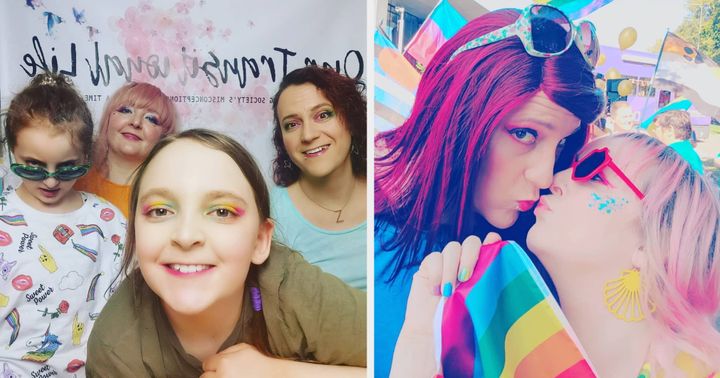
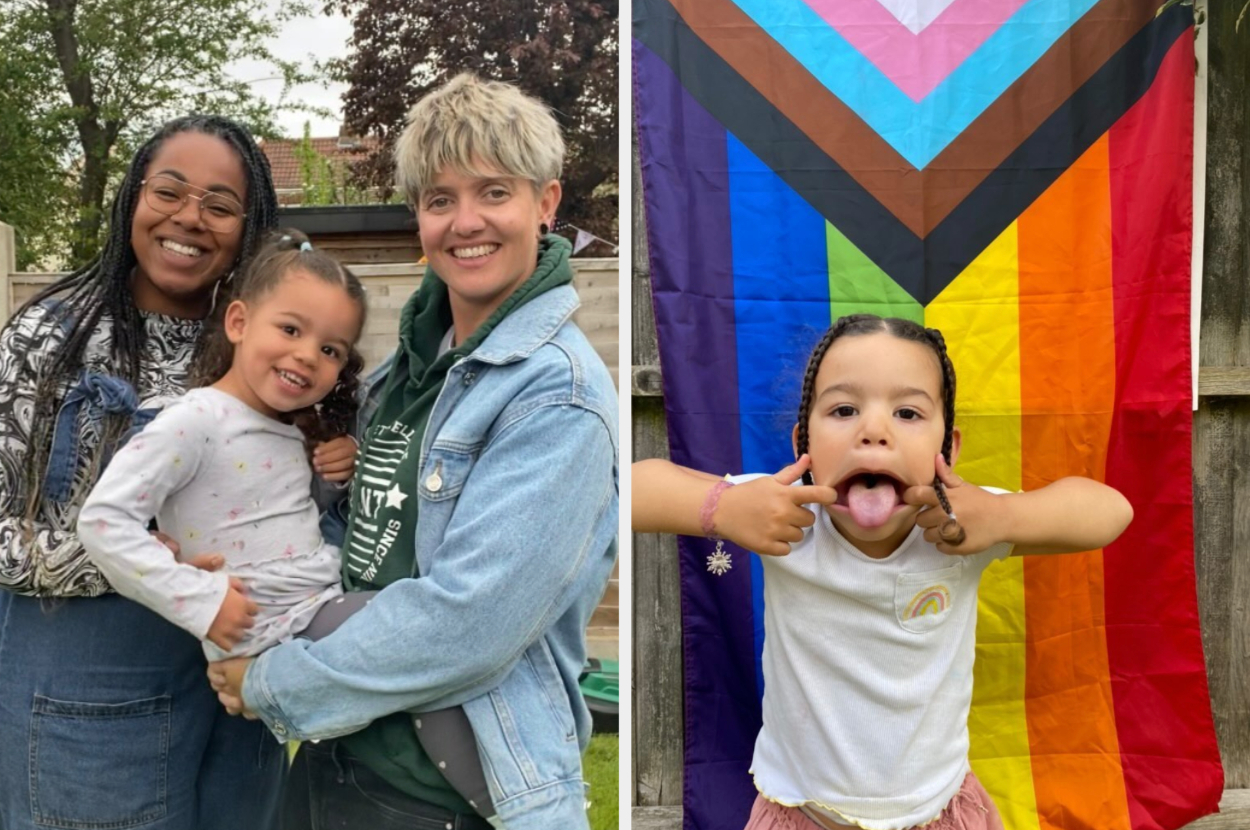
Kelly Allen with her wife, Zoey, and children George (12) and Molly (11).

“We take our children to Pride because we feel it’s integral to their future, and the future of other human beings, to be surrounded by a diverse community. We also feel Pride is a time to celebrate our queer family in a safe and fun way. It’s essential they are able to grow knowing they can be their true selves, and Pride is a time for us to really celebrate our diversity, amongst a community that accepts us for who we are.

“It’s become even more essential since Zoey came out as transgender, as the world can feel very bleak at times for the trans community. However, Pride gives us a chance to feel fully accepted and loved as the LGBTQ+ family we are.” – Kelly Allen, 40, who runs ourtransitionallife.com with her wife, Zoey

‘A great way to teach our boys what it means to be an ally.’

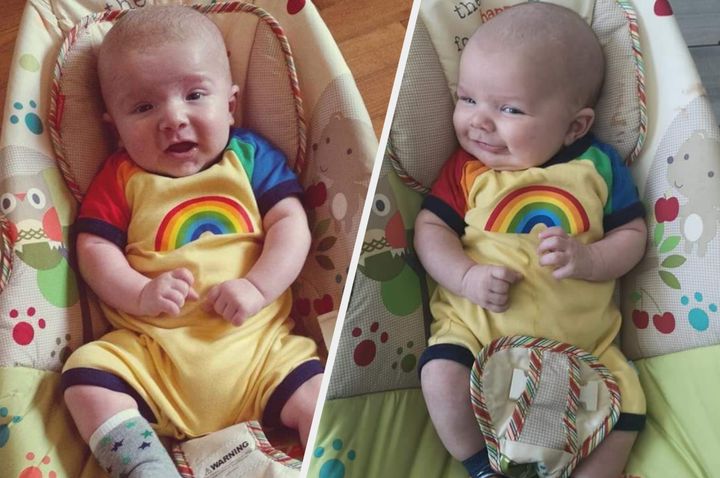
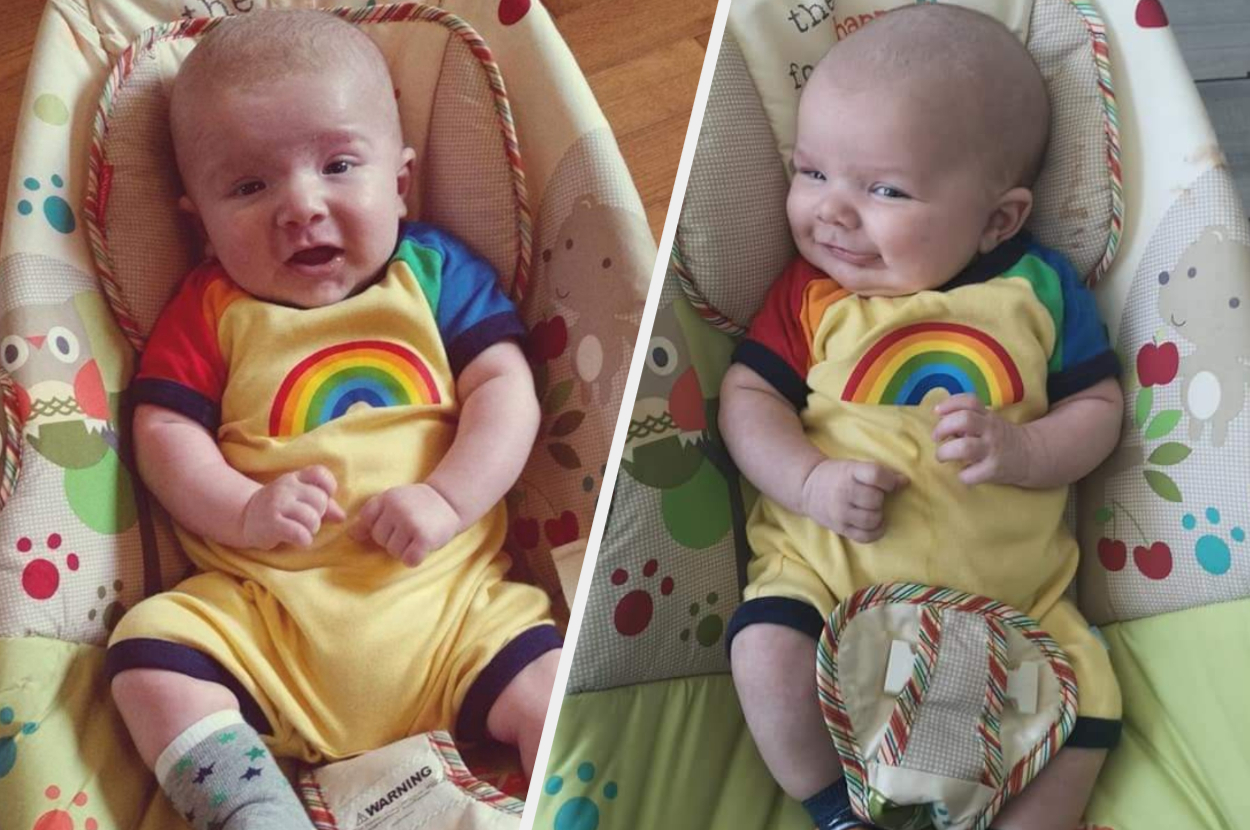
Amie Jones' two sons Dylan and Huw in the family Pride romper.

Amie Jones

Amie Jones’ two sons Dylan and Huw in the family Pride romper.

“We have taken our three boys to our local Pride event in Chester since they were very young – and we even have a Pride inspired outfit for them to wear. The photos show my oldest son Dylan (now seven years) and my youngest son Huw (now two years) in the same Pride romper! Unfortunately, I don’t have any photos of us actually at Pride, as we are always having too much fun!

“As founder of Kind Kids Book Club – the UK’s first children’s book club with a focus on nurturing social conscience and sharing inclusive stories – Pride is an important celebration for our family and a great way to teach our boys what it means to be an ally. They always love the day – the atmosphere is brilliant, everyone is so friendly and there’s so much to see and do!” – Amie Jones, 37, Bagillt, North Wales

‘There’s no one way to be a family.’

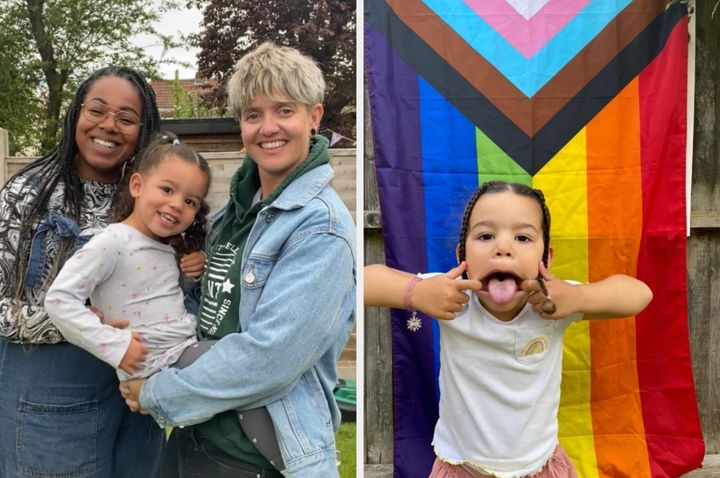
Caprice Fox with her wife, Holly and three-year-old daughter, Honey

Caprice Fox

Caprice Fox with her wife, Holly and three-year-old daughter, Honey

“We celebrate Pride month by attending our local Pride event and decorating at home. Pre-Covid we attended Pride as a family and they had Drag Queen Story Time, a children’s dance stage and a soft play area. We have diverse books out all year round, not just for one month, however we make a conscious effort to read these and encourage preschool to do the same!

“It is so importance for Honey to celebrate Pride and our family so that she realises just how diverse every family can be! There’s no one way to be a family and each one can look different, but it’s about showing that each one has something in common: love!” Caprice Fox, 32 from Bristol

‘I want him to grow up enriched.’

“Pride is incredibly important to us as a family, which is why when our son came along we would continue our tradition of attending Brighton Pride.

“For us, Pride means ‘community’. It’s a time we feel less isolated and othered;. It also gives us an opportunity to meet up with other LGBTQ families – and making friends along the way, so that our son doesn’t feel as isolated as we were when growing up.

“Our son is currently seven, and we’ve been attending Pride events and celebrations since he was born. For us, it’s important that he sees himself seen and represented in society, not to mention witnesses what other families look like. I want him to grow up enriched; knowing that there’s no one way to be a family and that your family is often more than just blood.” – Kate Everall, Brighton, founder of Lesbemums

‘She would ask me when pride was happening again’

Vicky Warren's daughter, Matilda, loves attending Pride.
Vicky Warren’s daughter, Matilda, loves attending Pride.

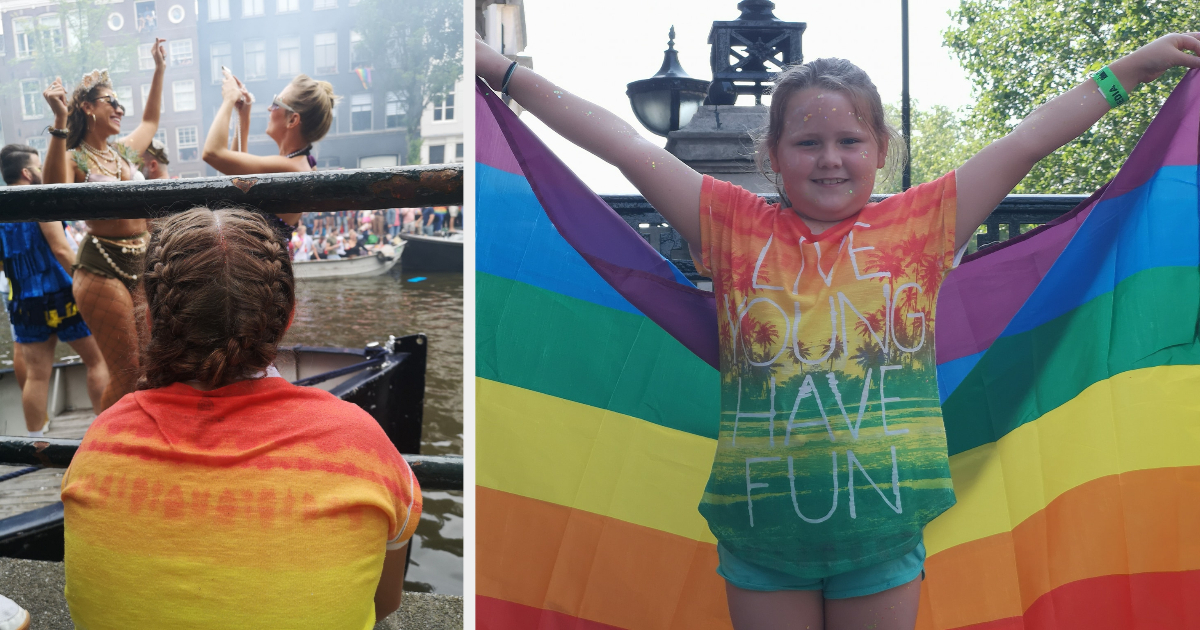
“I have taken my daughter to Pride In London, Canterbury Pride and Amsterdam Pride. All of these events are different and I wanted to show her how different people celebrate Pride.

“To me, Pride means supporting people with their life choices, I grew up in a time when it was taboo (I am 49). It was frowned upon and I remember that it was always a scandal when an actor or singer announced they were gay. People that were transitioning into the opposite sex were laughed at and ridiculed. I did not want any of my kids to grow up without understanding and supporting people’s choices.

“Matilda was about six years old when I first went to Pride in London. We went by accident, but then she would ask me when Pride was happening again. Then in 2019 we decided to fly out to Amsterdam early one morning and attend Amsterdam Pride. Instead of the parade going through the streets, it was all on the canals in the city. It was awesome, a complete game-changer for Pride.

“When she was little she loved the vibrance of pride, she loved meeting different people who dressed up for Pride. As she got older, she learned the history of Pride, she wanted to support everyone more. She has held a sign up before offering hugs to members of the LGBTQ community and I am so proud of her.” – Vicky Warren, 49, Kent, who runs the blog Miss Tilly And Me

Share Button

Deaf People Can Finally Access 999 Calls And It’s About Time

We don’t know why it’s taken so long, but deaf people will now have access to 999 emergency services.

Previously, you could only make audial calls for the police and ambulance or fire brigade, but today a new BSL-friendly new service is being launched.

People will be able to download and use an app to communicate to a BSL interpreter who will then relay the information to emergency services. Ofcom, the communications regulator, says that telephone and broadband companies are required to offer the free, 24/7 video call service for BSL users.

Until now, deaf people could only use a text messaging service to contact 999, but this only worked if you had registered in advance. So anyone who needed access but hadn’t registered had to find an alternative way to get help, which could be catastrophic in the case of an emergency.

Additionally, the text service operates only in English, meaning non-speakers might also struggle to communicate their situation and needs.

It’s been the result of a long campaign by deaf organisations and individuals, including the national hearing loss charity, RNID, and Sign Health, the deaf health charity, with many people shouting out their work on Twitter.

Ofcom estimates the provision could help save at least two lives every year and police forces across the country have been sharing links to the service.

The 999 BSL app comes as welcome news to the deaf community who finally have a service that caters to their needs in an urgent situation.

The Action Deafness charity is hosting parties for the Walsall, Worcester and Oxford Deaf communities on Friday 17 June to celebrate its launch.

The charity wrote on its website: “This is another major milestone in improving access for the estimated 90,000 Deaf people in the UK, following the recent historic decision by Parliament to recognise British Sign Language as a language of Great Britain for the first time.”

Annie Harris, advocacy officer at the RNID, told the Times: “Anyone needing the emergency services is facing a difficult, distressing and potentially life-threatening situation. Everyone must have timely and easy access to the emergency services and it’s brilliant news that deaf people will now have equal access to 999 in their first language.

“We’re proud to be part of this life-saving campaign and we hope this major step will be followed by increased deaf awareness among emergency services staff, so that deaf people facing an emergency can get the support they need.”

The British Sign Language (BSL) Act was passed into law on April 28 2022 after decades of campaigning by the deaf community.

Share Button

Love Island Had Its First Ebay Party And This Is What People Think About The Clothes

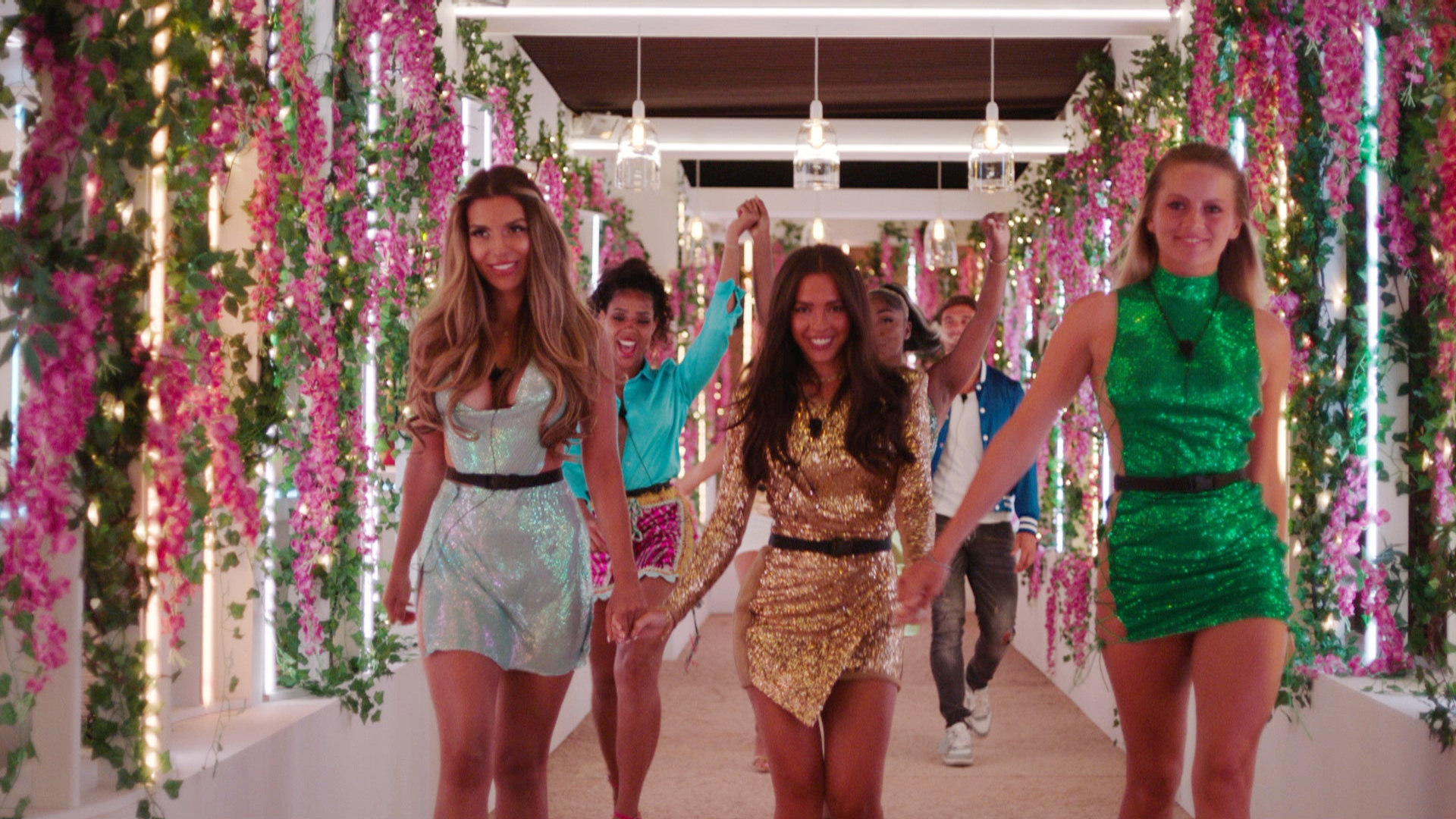
For the first time ever, Love Island has partnered with eBay in a bid to promote sustainable fashion. This season, islanders are wearing second-hand clothes, with a shared wardrobe situated in the new villa.

The new move highlights a tone shift for the show, considering it previously partnered with I Saw It First and alumni have gone on to be brand ambassadors for the likes of Boohoo, Pretty Little Thing and Asos.

The collaboration comes as research from eBay highlights that UK shoppers are becoming increasingly aware of fast fashion. A fifth (20%) of Brits say they buy more second-hand fashion compared to two years ago and on average, they reckon 16% of their wardrobes are made up of pre-loved clothes.

If done right, the partnership could really be a game-changer. Love Island is big business in the world of fashion, with online fashion sales growing by more than a tenth while the reality show ran last summer.

Though we’re all for sustainable fashion in theory, viewers have mixed opinions about the outfits this year. While some people are loving the eco-conscious clothes, others aren’t too impressed.

For me, it seems like the contestants don’t seem to have a sense of personal style compared to contestants from earlier seasons. Could this because they’re wearing clothes they don’t like?

Here’s what the public think about the new looks.

Some people think the outfits don’t look great

Others, however, are loving the eBay outfits

Though the show promotes sustainability, some have pointed out that the adverts don’t

Clearly it’s a start, but Love Island (and the rest of us) haven’t quite nailed perfect, sustainable fashion yet.

Share Button

This Is How Much Sleep You Actually Need (Spoiler: It’s Not 8 Hours)

How much sleep are you getting? Judging by how you’re feeling, you’d probably say ‘not enough’.

Many of us dealing with the drudgery of the day often don’t feel very well rested and are likely to wish for more snoozing time. But actually, we might be sleeping too much already, depending on our age.

The ideal amount isn’t actually eight hours for those over 38 years old, according to scientists who conducted a major new study.

The University of Cambridge and Shanghai’s Fudan University examined the sleeping habits of nearly 500,000 adults aged between 38 and 73 and found that the ideal amount of sleep may be seven hours.

Participants were tested on their cognitive abilities and asked about their sleeping patterns, wellbeing, and mental health.

Researchers also sourced brain-imaging and genetic data for up to 40,000 participants in the study to get a better insight into their wellbeing.

Interestingly, they found that getting too much sleep and not enough has the same consequences. While traditionally, we’re told to get eight hours, scientists found that this amount, or any more (or less than seven) have a negative effect on our bodies as we age.

They found that too much sleep and not enough both had a detrimental effect, causing mental health issues and ‘worse cognitive performance’.

The study also showed that being consistent is key, so getting six hours one day and then nine the next can still leave you feeling groggy and tired.

So, why exactly do we feel a brain fog when we wake up some mornings?

Researchers say that it could be due to slow-wave deep sleep being disrupted during shorter bouts of slumber. This means the brain doesn’t have enough time to clear out the toxins.

Not only is getting the right amount of sleep better for your overall wellbeing, it’s good for our memories. That’s because scientists found that the hippocampus – the memory centre – is also affected by a lack of or excess of sleep.

So the older you get, the more you might want to get into the routine of achieving seven hours a day. This also has the added benefit of decreasing the likelihood of illness.

Prof Barbara Sahakian from the University of Cambridge, one of the study’s authors, said: “Getting a good night’s sleep is important at all stages of life, but particularly as we age. Finding ways to sleep for older people could be crucial to helping them maintain good mental health and wellbeing and avoiding cognitive decline, particularly for patients with psychiatric disorders and dementia.”

The Sleep Foundation also has similar advice for the ideal slumber time, based on age group.

It suggests that older adults should aim for seven-eight. While the Cambridge study says to go for the lower number in that range, as long as you feel well-rested with the amount you currently get, then it’s all good.

Share Button

This Is How Much Debt Maternity Leave Is Putting Women In

Babies can come at the most surprising moments in life. And for many people, they arrive at a point where your personal finances aren’t at their strongest.

In fact, some women entering maternity leave are doing so without any savings at all.

Reduced pay during this time coupled with the costs of a newborn means many mums have to borrow money to get by. And some are being left in debt.

A study of parents by finance company Credit Karma found that a quarter of parents get into maternity leave without any money saved, while 26% of women get into debt while on their maternity leave.

The amount in borrowing has increased by £560 since 2018, the company says, taking the average borrowed per parent up to £2,800.

Those with student loans face the harshest outcomes as the interest rate on those loans remains seriously high while they are on leave and unable to pay it off.

Credit Karma said women with interest loans accrue an average of £1,770 loan interest in just six months of leave.

Given the cost of living crisis, which is seeing bills go up as never before, this paints a dire picture for new parents.

Akansha Nath, head of partnerships at Credit Karma UK said: “Women are often disadvantaged financially throughout their life, and the responsibility to give birth plays a huge role in this gender disparity.

“At a time when the cost of living is affecting most people, and every penny counts, it’s more important than ever that women take advantage of any support available to them.”

These debts, even if eventually paid off, can then follow women into life, affecting their credit score and therefore their ability to buy homes and other goods.

Credit Karma said maternity-affected credit scores can set women back an average £17,000 in interest over the course of their lifetimes.

If you are struggling with maternity debt, there are resources that can help.

Step Change has a benefit checker, as well as list of grants available to expectant parents. The website also offers free money management tools designed to help people with their finances, without judgement.

Share Button

Why ‘Super Worms’ Might Be The Answer To Our Plastic Waste

Worms are the last thing we want around us, but scientists reckon these special ‘superworms’ could actually be super helpful.

That’s because they have an amazing capacity to digest waste plastic. Think of what that could mean for our environmental woes – namely the amount of rubbish we throw out or attempt to recycle.

The larvae of the darkling beetle, dubbed superworms, are currently being used by people as food for pet reptiles.

But publishing their findings in the journal Microbial Genomics, scientists have found a new purpose for them, which could soon be available to customers.

Scientists at the University of Queensland in Australia say that the larvae, Zophobas morio, are able to break down polystyrene (found in lightweight plastics), at no harm to them.

In fact, these superworms can thrive on a diet of polystyrene. Dr Chris Rinke from the university’s School of Chemistry and Molecular Biosciences, said: “We found the superworms fed a diet of just polystyrene not only survived, but even had marginal weight gains.”

So how does it work, then? Dr Rinke says the creatures work away at the polystyrene and use it for energy.

“This suggests the worms can derive energy from the polystyrene, most likely with the help of their gut microbes,” he said.

“Superworms are like mini-recycling plants, shredding the polystyrene with their mouths and then feeding it to the bacteria in their gut.

“The breakdown products from this reaction can then be used by other microbes to create high-value compounds such as bioplastics.”

To get these results, the scientists fed the worms different diets over three weeks, with some eating bran (the outer layer of cereal grain), others fasting and some on polystyrene.

But don’t fret, this advancement doesn’t mean we’re going to get our individual worm plants to break down our plastic takeaway containers and such (think how chaotic that could be).

Instead, the scientists are looking to replicate the enzyme the creatures use so it can be reproduced at scale for recycling. Then, plastic would be mechanically shredded and treated with the enzyme to help degrade it.

Co-author of the research, PhD candidate Jiarui Sun, said further testing needs to be done as they intend to grow the gut bacteria in the lab and examine its breakdown of the plastic.

Sun added: “We can then look into how we can upscale this process to a level required for an entire recycling plant. Our team is very excited to push the science to make it happen.”

If we can prevent these plastic materials going to landfills with a little help from our wormy friends, then why not?

Share Button

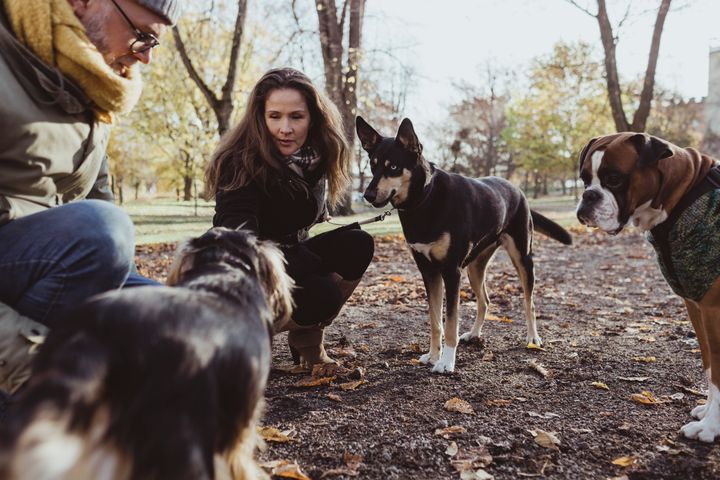
The Rudest Mistakes Dog Owners Make At The Park

Going to the park with a dog is a great way to help your pet socialise, exercise and get some fresh air. But not every canine knows how to behave there.

The same goes for humans. In fact, there are several rude boo boos that dog owners display in this setting.

“Etiquette is all about being mindful of other people, which certainly applies to the dog park,” Nick Leighton, an etiquette expert and co-host of the Were You Raised by Wolves? podcast, tells HuffPost.

To help make the dog park a safe and enjoyable setting for everyone, HuffPost asked Leighton and other etiquette experts to share the faux pas they’ve observed – and their advice for avoiding these missteps. Here are eight of the rudest things you can do at the dog park.

Not cleaning up after your dog

“The rules about picking up after your pet aren’t suspended in a dog park,” Leighton noted.

When your dog goes, it’s your responsibility to clean it up, and there’s little excuse for failing to do so.

“Most parks are well-supplied with waste pickup bags and plenty of trash cans, so please do your part,” says Camp Bow Wow animal health and behaviour consultant Erin Askeland.

Failing to pay attention to your dog

“Be sure to pay attention to your dog at all times,” Leighton advises.

Keep a close eye on what your pup is doing and resist the urge to tune out. Stay vigilant and keep your leash handy in case the two of you need to make an early exit.

“In addition to monitoring your dog’s behaviour, it’s common courtesy to be sociable with the other pup parents, complimenting them on the cuteness of their canine companion and making pleasant conversation,” said Thomas P. Farley, aka Mister Manners. “To let one’s dog roam free while you catch up on email, disengaging with everyone in the enclosure – including your pet – is a no-no.”

If you’re distracted on your phone, you’ll also miss out on the opportunity to “engage with your dog, practice recall, ensure play is appropriate, provide breaks in play, and monitor your dog’s body language,” Askeland notes.

Anna Belova / 500px via Getty Images

Bringing small children

Avoid bringing young children who need constant supervision to the dog park, if possible, as their presence will make it difficult to monitor your dog.

“You don’t know the other dogs and need to keep your focus on your own dog,” Askeland said. “Adding small children is dangerous to the child and the dogs in the park.”

Toddlers and babies may also be at risk of harm from rowdy dogs, especially if there are animals present who are unfamiliar with little kids.

Not intervening when necessary

“While at the dog park, people should ensure their dog is interacting with other dogs in an appropriate manner,” says animal behaviorist and consultant Kate Mornement. “Dogs that are aggressive or reactive towards other dogs should not be taken to dog parks. Try to ensure your dog and the other dog it interacts with are having a good time. If your dog is playing too rough with another dog, it’s best to intervene and call your dog away.”

Don’t allow your dog to bully other dogs or steal and shred up their toys. Look out for any aggressive, dangerous behaviour.

“Dog parks are wonderful places for well-behaved and socialised dogs who enjoy the company of other dogs,” Mornement says. “However, not all dogs are well-behaved or socialised and this can cause problems at the dog park.”

Leaving gates open

“In some ways, dog runs can be for canines what Las Vegas is for humans: For these lucky pups, what happens on the dog run stays in the dog run!” Farley says. “Being off-leash, doggies excitedly embrace the rare sensation of liberation. But while dogs will let down their guards, their humans should not. Being aware of securing the dog-run gate while coming and going is rule number one.”

Pay attention to the gates at fenced-in dog parks. Many of these have double-gated entrances to prevent off-leash dogs from escaping. Pause before you open a gate, especially if you notice lots of dogs hanging around the area, and look out for any pets trying to make a hasty exit. Be sure to properly close and latch any gates behind you as well.

Don't feed other dogs without permission from their owners.

Maskot via Getty Images

Don’t feed other dogs without permission from their owners.

Giving food to other dogs

“Don’t give food to other dogs at the park,” Askeland advises. “You don’t know the other dogs and whether or not they can have food you may offer.”

On a similar note, don’t bring your own human food to snack on in this space. In addition to potentially endangering other dogs, you probably won’t enjoy being swarmed by pups looking for a snack.

Bringing an unvaccinated dog

Don’t go to the dog park with a canine that is unvaccinated, sick or under 4 months old. In addition to being vulnerable, they might also put other pets at risk. Only bring your dog if they are up to date with their shots and any other requirements the park may have in place.

“Make sure your pup is vaccinated and protected against fleas, ticks and other parasites,” Askeland said. “This helps keep other pups safe too.”

Forcing an uncomfortable dog to go to the park

“Dogs that are fearful and nervous around unfamiliar dogs should also not be taken to dog parks,” Mornement said. “This is because these dogs are not enjoying the dog park environment and this can make their behaviour worse.”

Make sure your dog’s behaviour is appropriate for a dog park before you take them to one.

“This is not the place to test whether your dog enjoys playing with other dogs or a place to help a dog learn to play,” Askeland says. “If you’ve recently added a dog to your home, you should wait until your dog has adjusted to his/her home and you have gotten to know your dog and his/her body language and normal interactions before deciding whether the dog park is the right place to visit.”

That way, you can watch your dog’s body language at the park and remove them if they’re showing signs that they aren’t comfortable.

“Understand that not all dogs are great with a dog park, and it’s OK if your dog does not go to a dog park,” Askeland adds.

Share Button

Kim Kardashian Says She’d Consider Eating Poo To Look Younger

“I’ll try anything,” the beauty and reality TV mogul told The New York Times in a recent interview about her new skin care line.

“If you told me that I literally had to eat poop every single day and I would look younger, I might. I just might.”

The new line, SKKN by Kim, is a nine-product skin routine mirroring her own elaborate regimen: cleanser, toner, exfoliator, hyaluronic acid serum, vitamin C serum, face cream, eye cream, oil drops and night oil. The brand launches next month and joins her existing makeup and shapewear lines, KKW Beauty and Skims.

The nine items come to an eye-popping total of $630, which Kim told the Times was necessary in order to include the ingredients she wanted.

She said she uses the products on her neck and décolletage all the way “down to my nipples.”

The Times clarified that, as yet, “excrement is not one of the ingredients in Ms. Kardashian’s new skin care line”.

Share Button

5 Common Morning Habits That Actually Ruin Your Sleep

You’re reading First Thing, the HuffPost UK series helping to make your mornings happier and healthier.

Getting enough sleep is critical for physical and emotional well-being, but so many people fall short. The US Centers for Disease Control and Prevention estimates that a whopping one in three Americans don’t get enough sleep on a regular basis. (For reference: adults should be aiming for at least seven hours.)

Of course, many factors go into a person’s ability to get sufficient rest, from work and family schedules to sleep hygiene.

With that in mind, here are five common mistakes a lot of people make in the morning that affect their ability to fall asleep – and stay asleep – later on:

1. You’re drinking too much caffeine

Obvious? Sure. But drinking too much caffeine in the morning can throw your entire sleep routine off track.

In general, most healthy adults can safely have up to 400mg of caffeine a day. That’s the equivalent of roughly four cups of brewed coffee or two energy drinks, if that’s your thing. Remember, though: caffeine levels in energy drinks can vary widely, and there are serious concerns about their potential impact on the body.

The effects from caffeine generally kick in within 15 minutes and peak about an hour later.

“Six hours after caffeine is consumed, half of it is still in your body,” according to the Cleveland Clinic. “It can take up to 10 hours to completely clear caffeine from your bloodstream.”

That means you can absolutely have a few cups of coffee in the morning and still be feeling them by dinnertime.

Also, keep in mind that some people are particularly sensitive to caffeine. So try cutting back for a bit to see how that affects your ability to get sufficient ZZZs.

2. You’re waking up at totally different times every day

Sleeping in when you can is glorious, yes. But it can also take a toll on your broader sleep patterns. Many sleep experts suggest that people set a standard wake time and stick with it to the best of their ability, even on the weekends.

Why? If you sleep for a few extra hours on a Sunday, for example, you might not be tired again until much later than usual – which means your bedtime is thrown off and you’re likely to be pretty darn tired when you wake up early for work on Monday.

An irregular sleep schedule can also increase your risk of what experts call “social jet lag” – basically, the discrepancy between your body’s natural sleep schedule (i.e., circadian rhythm) and your social schedule, which throws off the midpoint of your sleep and has been linked to health issues such as increased inflammation and higher risk of depression.

On the other hand, there can be benefits to catching up on sleep during the weekends, especially if you have a big sleep debt. To the extent it’s possible, however, try not to make it a regular thing.

3. You’re not exposing yourself to natural light

Sleep is governed by our circadian rhythms (which also influence everything from hormone regulation to body temperature). And the sun’s cycle has a huge impact on those rhythms day to day.

Your body’s circadian clock is most sensitive to light starting about two hours before your usual bedtime and lasting throughout the night up until about one hour before your usual wake time, per the CDC.

“Exposure to light during these times will affect when your body naturally gets sleepy and is ready to fall asleep,” the CDC says.

What all of this means is that exposing yourself to plenty of bright light in the morning can help shift your bedtime earlier; by the evening, you’re more likely to be sleepy and primed for rest.

If you're waking up on the wrong side of the bed, your morning routine might be to blame.

blackCAT via Getty Images

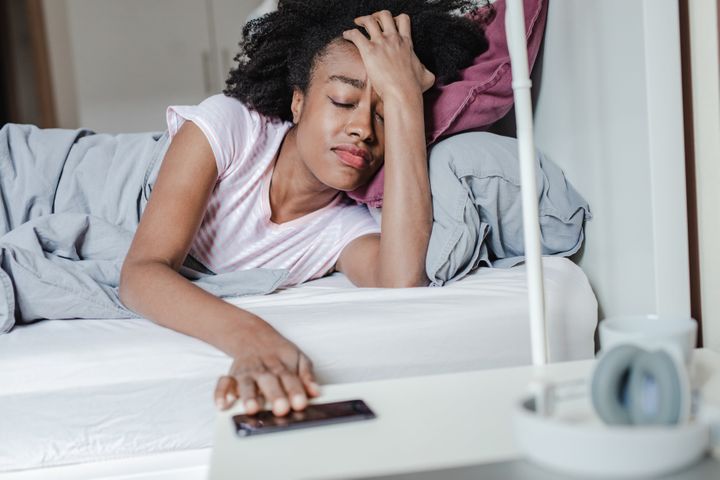
If you’re waking up on the wrong side of the bed, your morning routine might be to blame.

4. You’re not making a to-do list

Creating a to-do list is one of the most powerful things you can do to stay on track throughout the day. It can also be an effective way to combat anxiety that often creeps up at bedtime and makes it hard to fall asleep.

Not all to-do lists are created equal, though. First and foremost, it’s a good idea to write it down.

“When you try to manage your to-do list in your head, you’re likely to forget items,” HuffPost senior reporter Kelsey Borresen previously wrote. “Jotting it down on paper (or digitally in your Notes or other mobile app, if you prefer) gives you something concrete to refer to when your brain feels like mush.”

Also, make sure it’s realistic. Try to focus on three to five things you can actually accomplish, experts say. It’s a plan, not a wish list.

5. You’re glued to your phone

Checking your phone immediately after waking means you’re letting someone else dictate what’s on your mind first thing. And that can set the tone for the rest of the day – right up until your bedtime.

“If we wake up and we check our phone and there’s an email from our boss that says, ‘we need to talk,’ or there’s an email from a client who’s like, ‘Hey, can I call you later?’ we can go straight from our slumber into panic mode, where your heart is racing,” Susie Moore, a life coach and author of “Let It Be Easy: Simple Ways To Stop Stressing And Start Living,” previously told HuffPost.

At that point, it can be a lot more difficult to return to a calm “intentional” state, Moore said, which can have ripple effects. So do yourself a favor and set the tone for the day by using an alarm clock rather than relying on your phone to wake you up. And try your best to make sure the time when you wake up and before you go to bed is phone-free.

First Thing is a series on HuffPost UK Life giving you tips and advice on how to enjoy your mornings. Whether you’re an early bird or night owl, starting your day off right will make for a happier and healthier day. We’ll be sharing exercise advice, nutrition guidance, as well as ideas on forming new habits. (And no, the answer to a productive morning isn’t just setting an alarm for 5am!)

Share Button