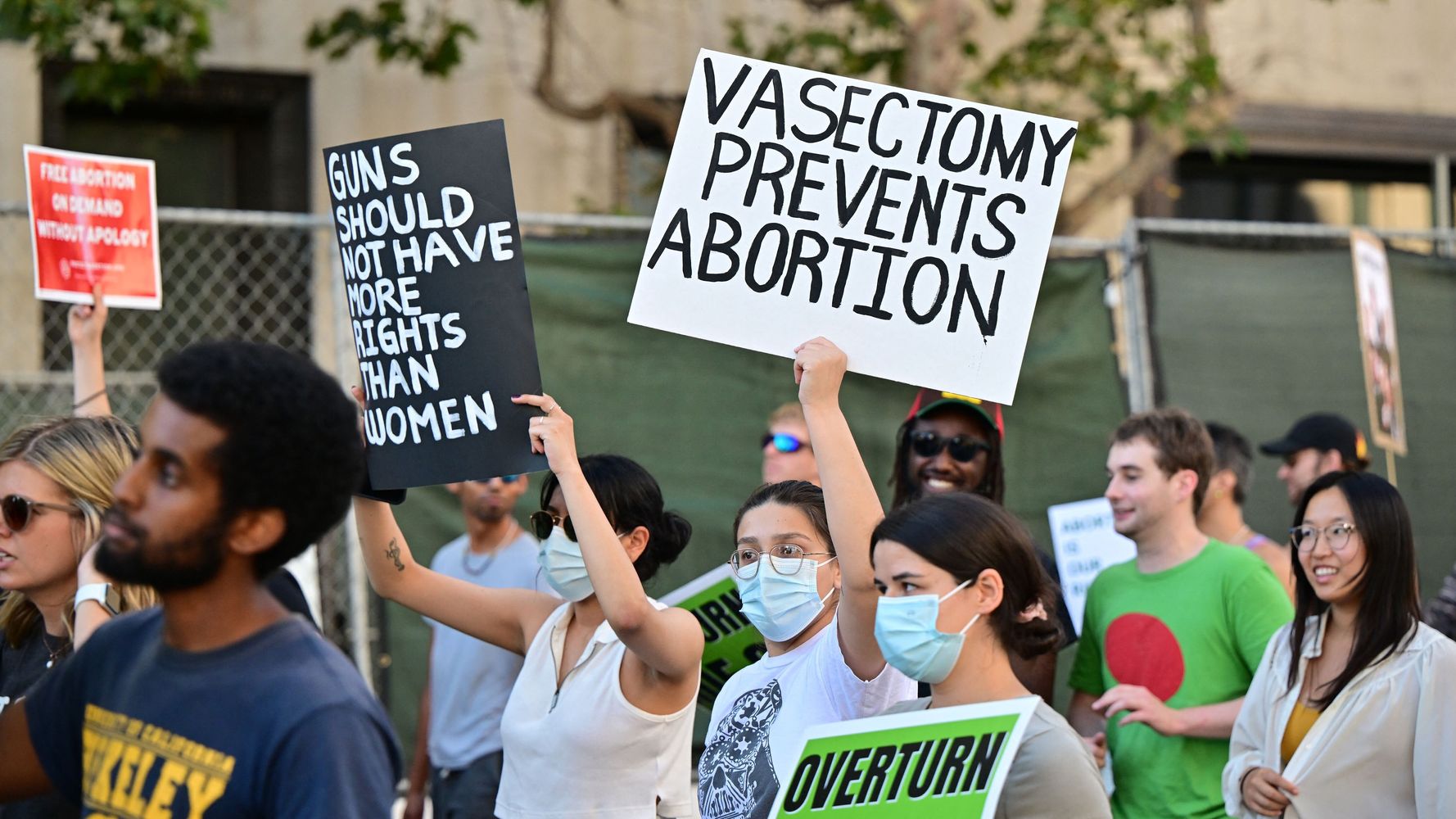
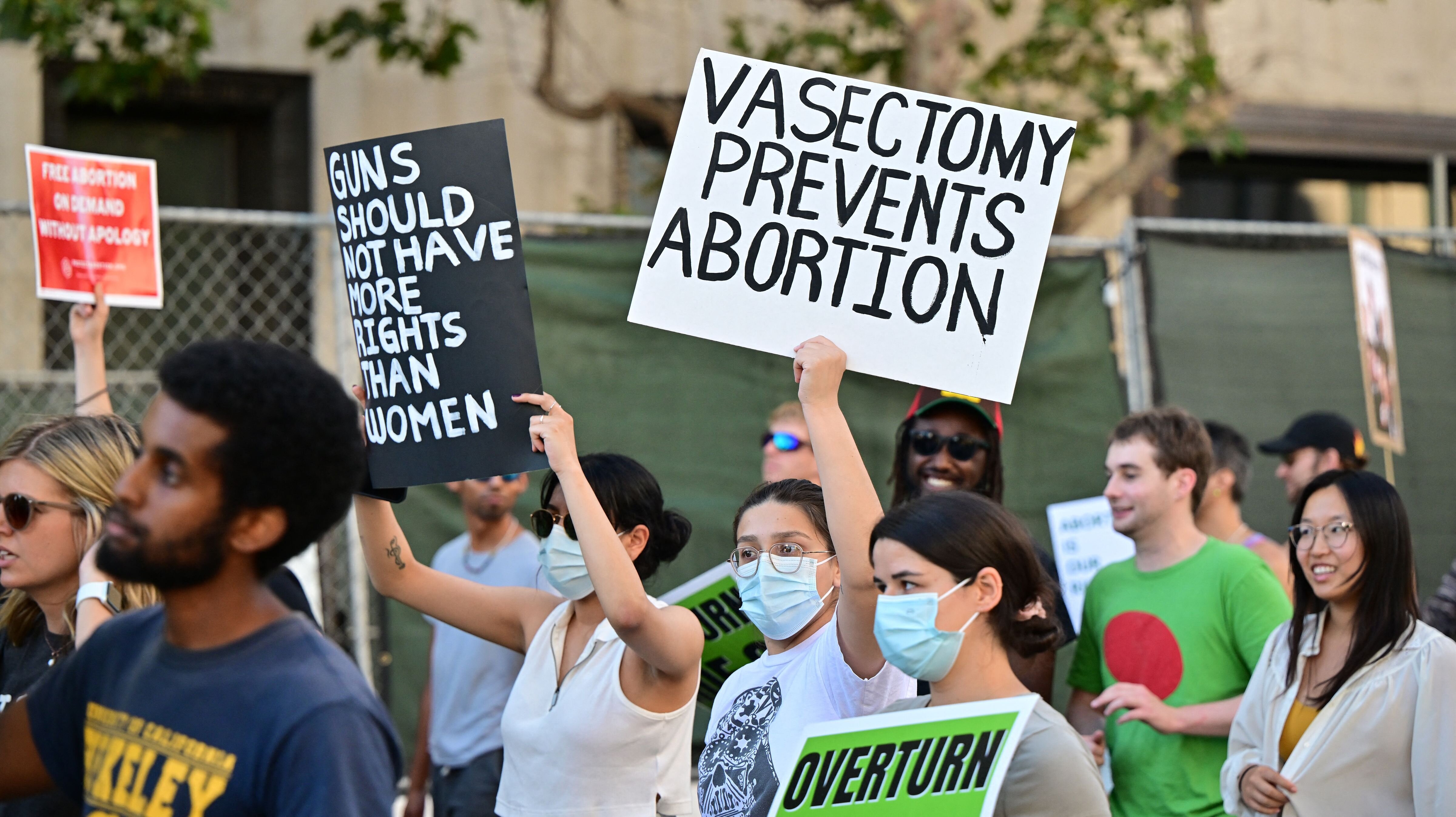
Since news of the overturning of Roe V Wade broke on Friday, ending the constitutional right to abortion in the US after almost half a century, abortion rights activists have galvanised, and social media efforts have amplified.
You may have seen posts alluding to the fact that a woman can only foster one full pregnancy a year, while a man can impregnate multiple people in a day, should he have the opportunity. And the solution often suggested: vasectomy, the surgical procedure that cuts or seals the tubes that carry a man’s sperm.
Advertisement
Amid so much anger around the policing of women’s bodies, the impulse to suggest that men’s bodies should also be policed is understandable.
In a world of reduced abortion access, where women are left either to manage birth control or carry their babies to full term, people are once again suggesting we shift the onus to men in the form of mandatory vasectomies.
You wanna know what prevents abortions? Vasectomies.
— 🖕🏻Aunt Crabby Calls Bullshit 🖕🏻 (@DearAuntCrabby) June 25, 2022
In fact, this view has been circulating on social media for a while now. And while many people are probably not being literal in their calls for vasectomies, it speaks to the widespread rage over moves to control bodily autonomy.
However, many people are pointing out the flaws in the argument.
Vasectomies aren’t an ‘alternative’ to abortion
This suggestion has basic logistical failings, as PHD researcher Georgia Grainger, from the Centre for the Social History of Health and Healthcare in Glasgow, has pointed out in a Twitter thread.
As a historian of vasectomies, Grainger, aka @sniphist on Twitter, stresses that the procedure is not an alternative to abortion.
This is because women will still need terminations, she says, both of wanted and unwanted pregnancies, regardless of vasectomies and other forms of birth control.
Nor are vasectomies a failsafe form of birth control – and when in rare cases they do fail, it’s not usually obvious until the pregnancy is identified, she says.
Advertisement
If the pregnancy is a wanted pregnancy but is either ectopic or otherwise not viable or dangerous, then a vasectomy explicitly cannot prevent that – they were wanting to be pregnant, it’s a biological mishap and needs to be treated with abortion.
If it’s caused by failed birth control, then… Vasectomies can fail too! It’s unlikely but absolutely possible. Sometimes the vas deferens heals itself years later. And there’s no way to know, unlike a split condom or missed Pill, so no Plan B.
In her thread, Grainger also highlights that even if someone had insisted they’d had the surgery, could you trust that they really had?
Especially, in the case of abusive relationships or sexual assault, why would someone who doesn’t respect consent take up an invasive surgery for the benefit of someone else?
Forced sterilisations are deeply problematic
Grainger stresses this important historical point. Forced sterilisations have been trialled as several points during history and they enforce eugenics, she says. The policy has predominantly been targeted at minority groups to stop them from procreating.
Advertisement
In US history, indigenous Americans, Black and Latinx people, incarcerated peoples, and poor communities endured forced sterilisations.
These groups were targeted throughout the 20th century, with nearly 70,000 people forcibly sterilised (and not just men, an overwhelming amount were working-class women of colour).
If you think a “mandatory vasectomy til men prove they can be a father” is even a fun thought experiment, I recommend you go and read up on eugenics. Plus, that inevitably becomes “mandatory IUDs for women” too, which again, has happened in recent US history.
Germany also has a history of coercive sterilisation, having sterilised disabled people, institutionalised people, and even alcoholics. In Nazi Germany, the Hereditary Health Court also known as the Genetic Health Court, was a court that decided whether people should be forcibly sterilised.
Grainger is not the only one to point out these troubling historical precedents.
i am BEGGING other white people to stop talking about mandatory vasectomies as if Black and Indigenous peoples haven’t been subjected to centuries of involuntary sterilization. there are other ways to discuss contraception and pregnancy prevention that don’t invoke eugenics.
forced sterilization of cis-men would ultimately impact Black and brown men the most as all of these restrictions always target the most vulnerable of our population
hi this is called eugenics! what is so hard for people to understand about this? BODILY AUTONOMY FOR EVERYONE, NOT PUNISHMENT. pic.twitter.com/kLZomQGkQB
— Elly Belle 🔮 (famously not a woman) (@literElly) June 26, 2022
Bodily autonomy for all, not some
People have also pointed out that if we want better rights and autonomy for women and people who can get pregnant, this has to mean protecting these rights for everybody
Do we really want men to face the same bodily scrutiny applied to women – and for men who chose not to go through the procedure to be vilified?
Advertisement
Nor does the vasectomy vs abortion binary do much for trans and nonbinary people who also need access to abortions, and are often excluded from discussions of these human rights.
The pro-choice movement is all about bodily autonomy and protecting everyone’s right to make decisions about their own bodies
As the debate continues, Grainger’s insights have gone viral on Twitter, amassing more than 75,000 likes.
But, as she pointed out in her own thread, she is still pro-vasectomy, as long as they’re for the right reasons and for people who genuinely want them.
Ultimately, we shouldn’t pit vasectomies against abortions, she says. Abortions will always be needed, whether because the pregnancy is failing, the pregnant person is at risk, because there wasn’t consent to the sex in the first place, or simply because the pregnant person doesn’t want children.
Advertisement
So next time you see calls for mandatory vasectomies or are temped to make one yourself, remember that it’s not as straightforward as it seems.
People who are at highest risk of catching the monkeypox virus will soon be offered a vaccine in an effort to reduce transmission.
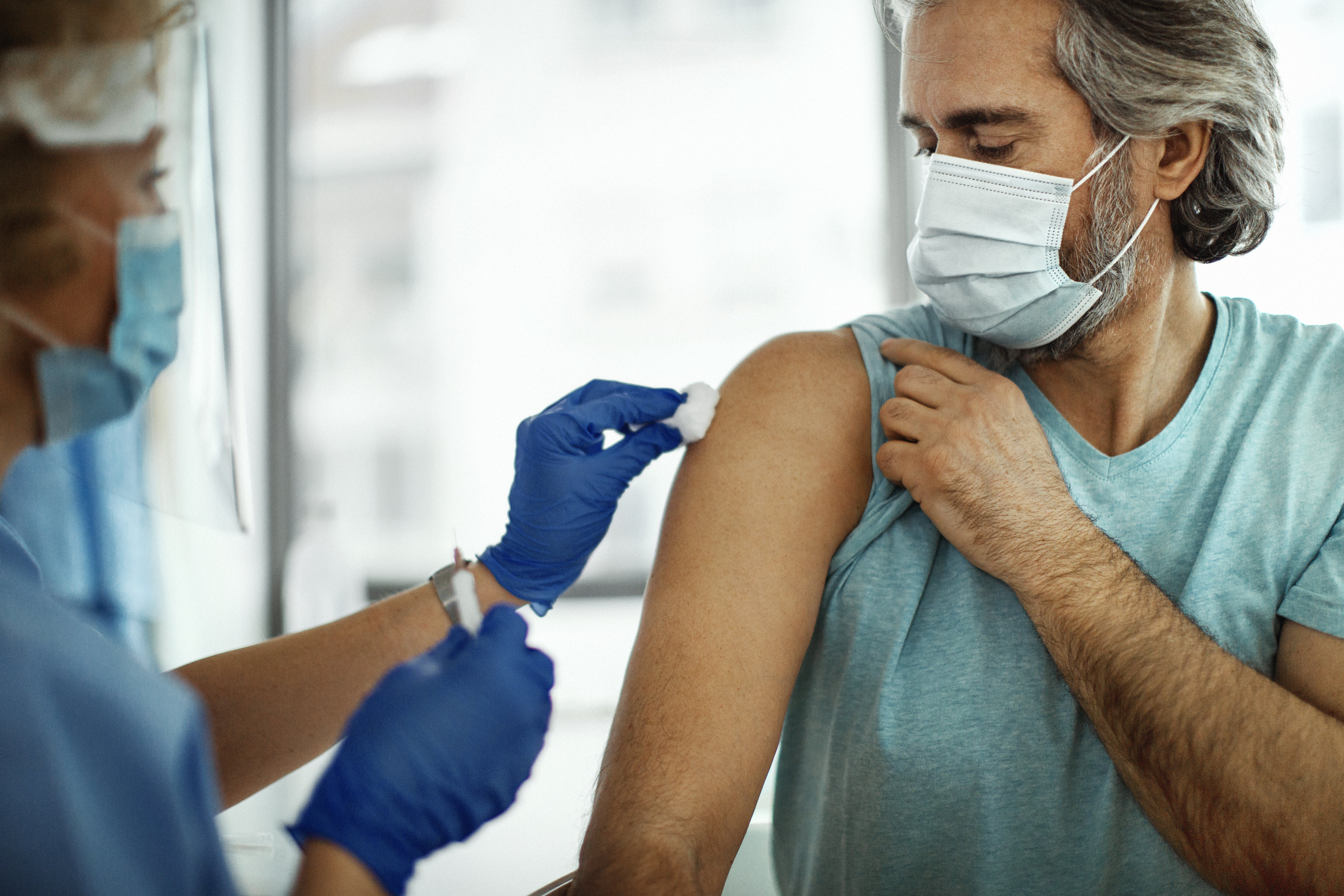
The UK’s Health Security Agency (UKHSA) has revealed that some men who have sex with men will soon be offered the Imvanex jab – originally designed to treat smallpox – to curb the largest recent outbreak outside of Africa.
The World Health Organisation (WHO) believes that the outbreak stemmed from sexual activity by men at raves in Spain and Belgium.
More than 99% of the current 793 reported UK cases are among men, most of whom identify as gay or bisexual.
Anyone – regardless of sexual orientation – is at risk of contracting the virus if they are in close contact with someone infected with monkeypox, or infected clothing or bedsheets.
Advertisement
But, men who have sex with men and who have multiple partners are considered at the highest risk – this includes those who take part in group sex, or go to venues where sex occurs on the premises – due to the origins of this particular outbreak.
The agency said data suggests there are higher levels of transmission “within, but not exclusive to, the sexual networks of gay, bisexual and other men who have sex with men”.
UKHSA’s head of immunisation Dr Mary Ramsay said: “By expanding the vaccine offer to those at higher risk, we hope to break chains of transmission and help contain the outbreak.”
Is this the first group to be offered the vaccine?
No – vaccines were offered to health workers who look after monkeypox patients as well as cleaners disinfecting areas which may have been exposed to the virus.
Close contacts of confirmed cases were also offered the vaccine.
NHS England will soon provide more details about how those who are eligible can receive a jab, although people are advised not to approach the NHS until contacted.
Advertisement
Vaccines have never been used in Africa to impact monkeypox, even though it is endemic in some countries.
It’s also worth noting that this vaccine is not designed specifically for monkeypox. Although Imvanex was used to eradicate smallpox worldwide, it has been found to be 85% effective against this current virus.
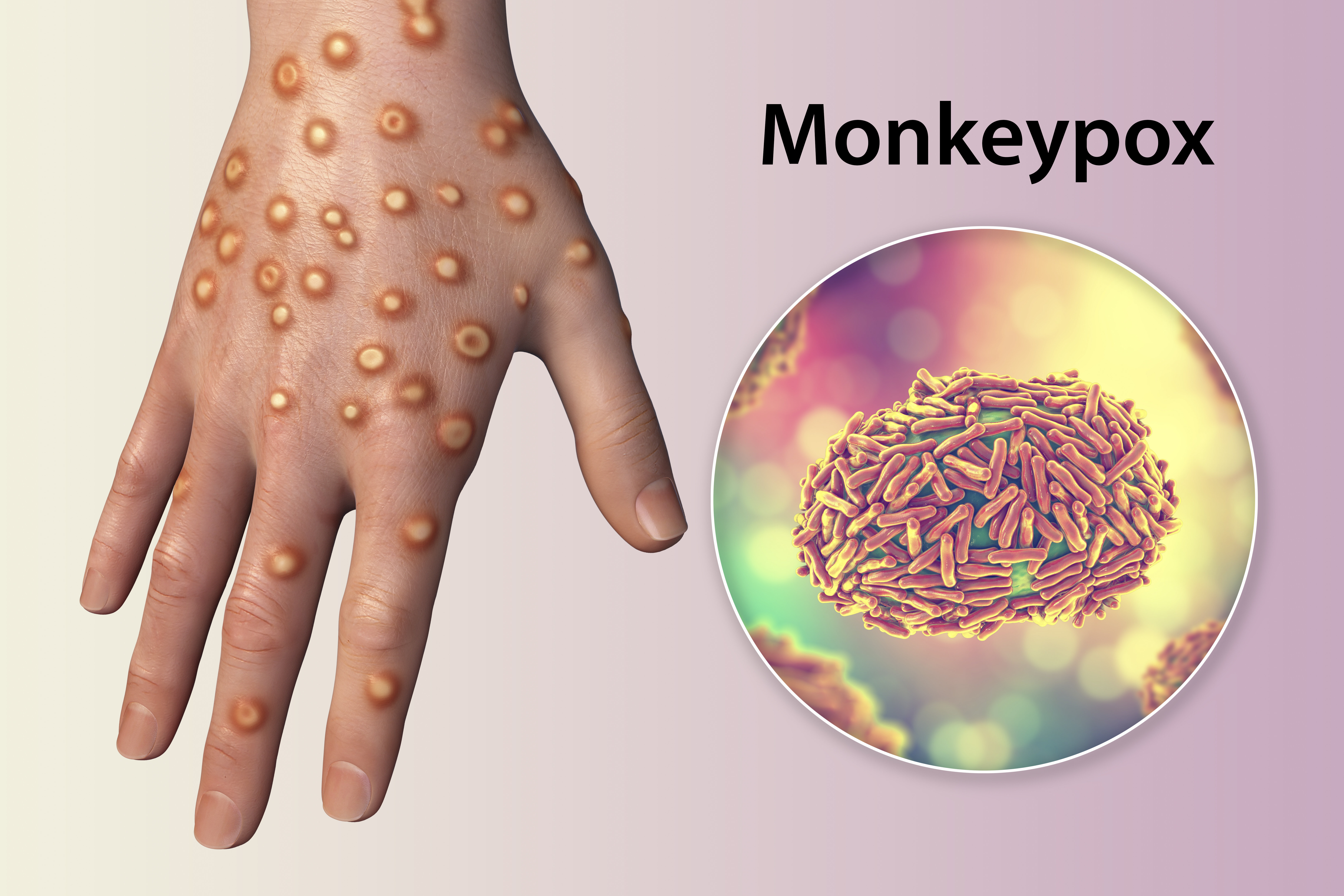
KATERYNA KON/SCIENCE PHOTO LIBRARY via Getty Images
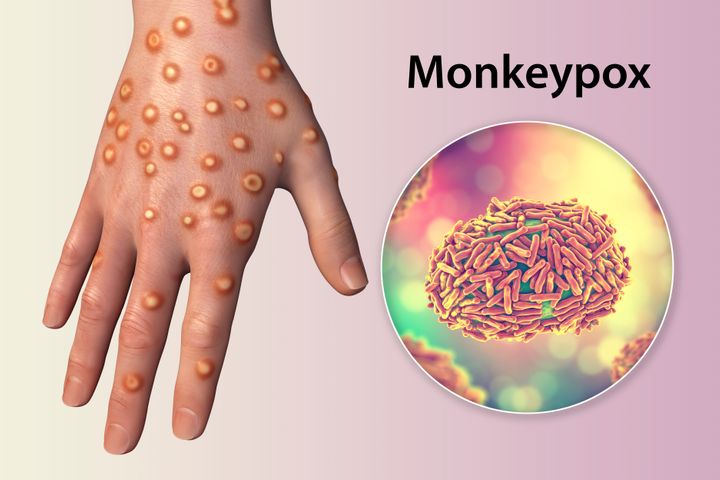
Hand of a patient with monkeypox infection and close-up view of monkeypox virus particles, computer illustration
Does this news mean there’s cause for concern?
Well, it’s unclear at the moment.
No deaths outside of Africa have yet been reported from this outbreak, although confirmed cases have suffered from fever, swollen glands and a rash which develops into fluid-filled lumps.
There are currently 793 cases in the UK out of more than 2,100 cases around the world – far lower numbers compared to when the Covid vaccine rollout first began.
Advertisement
However, the Joint Committee on Vaccinations and Immunisations (JCVI) supported the decision to start handing out the smallpox vaccine. This panel advised the government to start its vaccination programme for Covid last year.
The WHO has described the outbreak outside of the continent as “unusual and concerning”, and is considering declaring it a global emergency.
Dr Ramsay warned: “Although most cases are mild, severe illness can occur in some people, so it is important we use the available vaccine to target groups where spread is ongoing.”
Professor Paul Hunter from University of East Anglia’s school of medicine also told Sky News that vaccination was “the right thing to do”.
He added: “What we have seen with monkeypox is a significant and continuing increase of the second wave despite control measures having been in place for a few weeks.
Advertisement
“So it is certainly looking like the current strategy of ring vaccination is not working.
“This is probably down to difficulties in identifying cases and their contacts rapidly enough, possibly due to stigma.”
He suggested that “we should be ready to start offering the vaccine to female sex workers” as well, because the virus does not discriminate by sexual orientation or sex.
You’ll have to do a PCR test similar to the Covid test. For monkeypox, it involves three swabs, two for the skin, and a throat swab.
You are still allowed to travel on public transport if you suspect you’ve caught the virus, but wear a mask and cover any lesions.
If you need to isolate, do not share a bathroom if you can avoid it and isolate in one room. Make sure not to share bedding or towels, avoid contact with your pets and have no sexual contact.
Try to avoid other communal spaces, too, such as the kitchen.
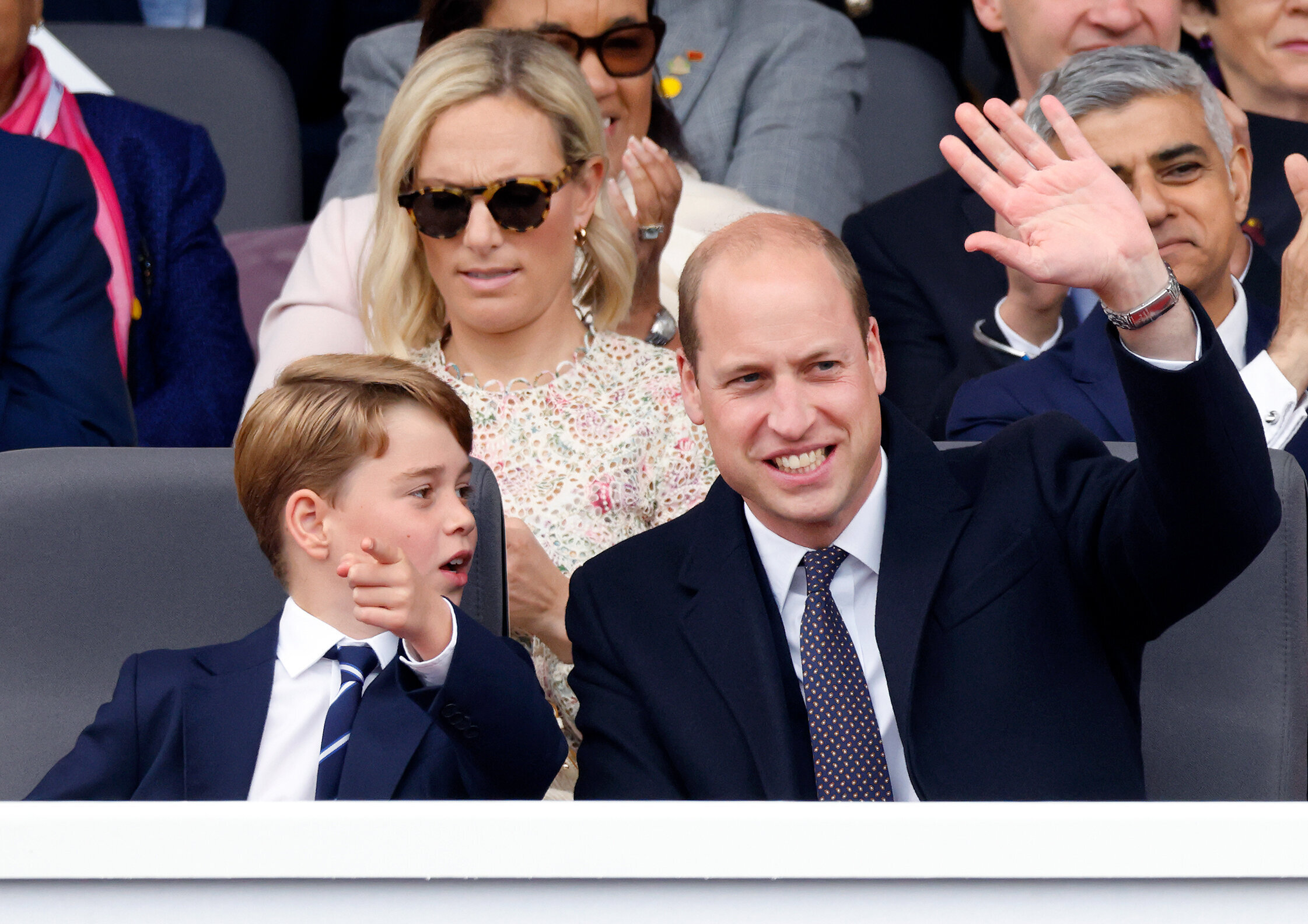
This is probably not a question Prince William is asking himself as enters his fifth decade. But the Duke of Cambridge’s birthday has got us thinking about milestone ages, and why some of us place so much significance on certain numbers.
For women, approaching ‘The Big Four O’ often means discussions of fertility and the biological clock intensify (whether or not you want children and even though a woman doesn’t suddenly wake up on her birthday unable to conceive).
Advertisement
But what’s at the forefront of men’s minds as they approach this age? We asked a bunch of guys aged 39 and over to find out.
‘I get a lot of stick for being single still’
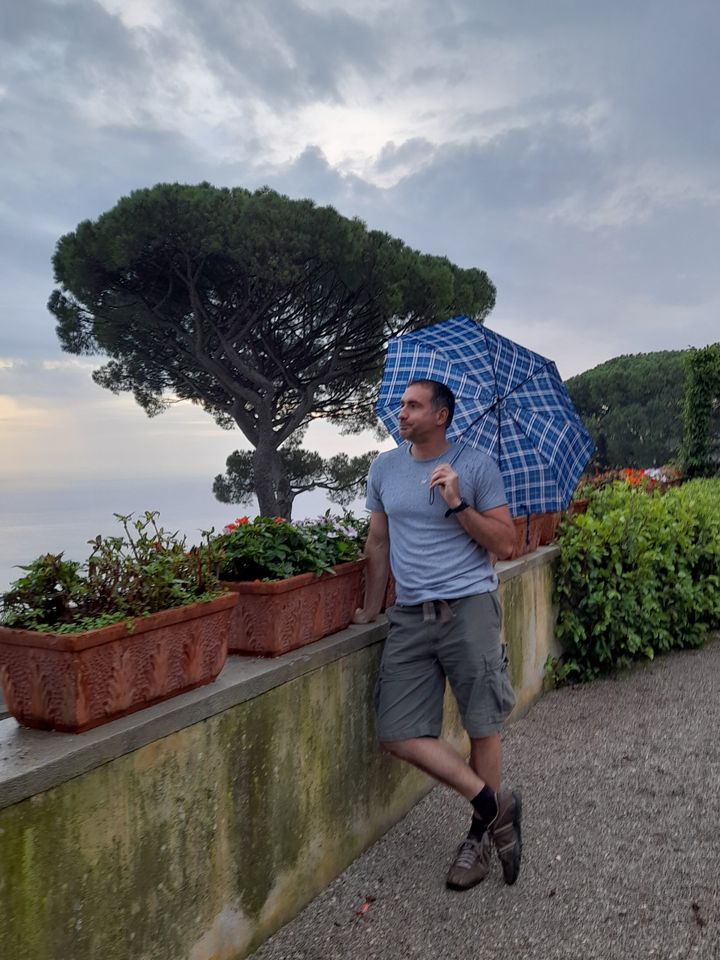
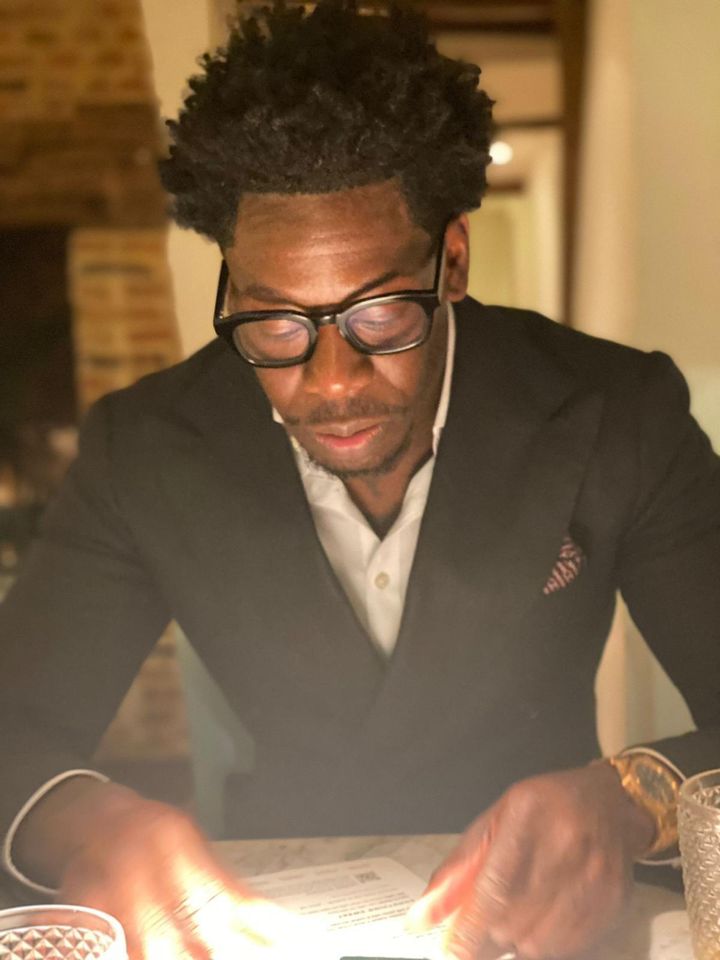
“I’m almost 40, single, with no permanent long-term job. I still love travelling and exploring and totally lack any sort of plan. But I’m kind of okay with that.
“At 40, you’re expected to have job security, a demonstration of some sort of career progression, where you’ve ended up with a bigger salary, a nicer suit and a nicer house.
Advertisement
“I get a lot of stick for being single still. All my friends are in marriages or second marriages in some cases, people say: ‘you’re not going to get sorted are you?’ Every now and then, you do question your life choices. There are always going to be periods in a 12 month calendar where you’re going to have a couple of phases of self-doubt, where you might question the way you’ve done things. You might feel a bit sorry for yourself and have a bit of a pity party. But on the whole I’m quite content with where things are – I’ve seen a lot of the world, I’ve met a lot of great people. I’ve been very, very fortunate in that sense.” – Stephen Boyd, 39, Lincolnshire
‘I was fine with turning 40, but turning 41 hit me hard’
Peter McKerry
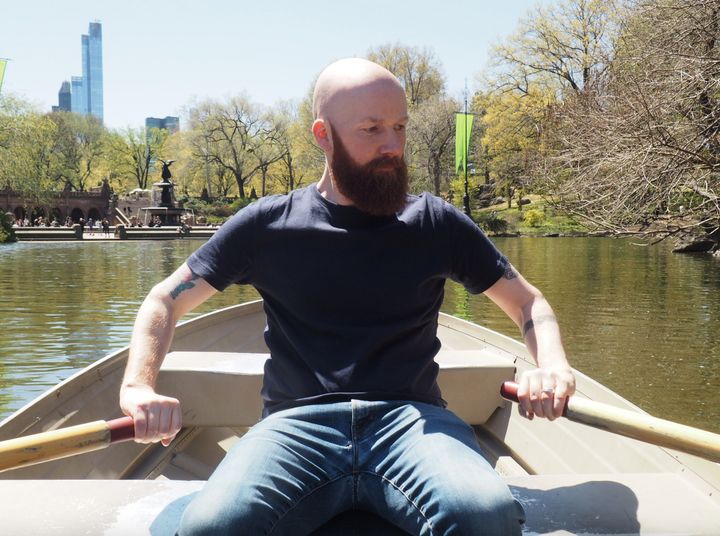
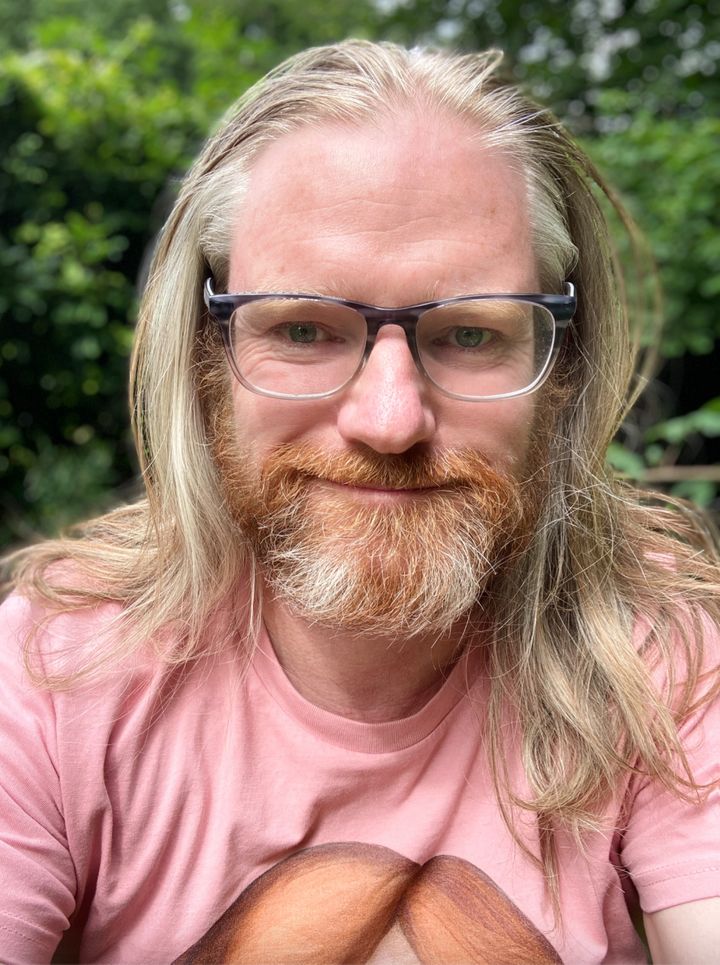
“Turning 40 didn’t phase me, but when I turned 41 I began to obsess over the fact that my life was in a type of descent towards the inevitable end, and that my best experiences were behind me. I was also worried that if I had a child I’d have a limited amount of time to be in their life. My dad was 53 when I was born and I was teased about it at school, so I didn’t want to be an ‘old dad’.
“As it turned out I was 43 when my daughter was born so I beat him by 10 years! Now my life is all about watching her grow and develop (she’ll be three in August) and it has given me joy but also anxiety. I’m trying to live in the moment now because I don’t want to have more regrets than I already do, and I want my daughter to have the happiest and most secure childhood I can give her. So now I don’t obsess as much over my age or my past as I have a real focus on ensuring Flora is happy and loved.” – Peter McKerry, 45, Westcliff-on-Sea
‘Men get more of a free pass’
Andy Dewar
Advertisement
“I turn 44 this week and love it. I think 30 was more of hurdle for me psychologically, as it was the age where I felt you needed to knuckle down to some responsibilities and achievements personally and professionally, as well as resenting the fact I was no longer young and carefree. So by your 40s, you can enjoy all the new challenges and opportunities that come your way.
“There’s far more pressure on women at all ages but particularly 40s to have a great career and be a mum, I think. As far as media and peer pressure goes, men get more of a free pass. I’m lucky in the sense family and friends have never had any great competition between us to do well, some days are a grind, some days are easy. If you set yourself targets you lose sight of what’s important, which in my case is just trying to enjoy whatever it is I’m doing.” –Andy Dewar, 44, Hamilton, Scotland
‘I haven’t altered anything’
Michael Charles Grant
“I felt perfectly fine [approaching 40], with no pre-conceived thoughts of 40 being an issue and prohibiting me from what I can do physically and mentally. I look younger than my age so perhaps that played a fact in my mindset.
Has anything about being 40 surprised me? No not at all, why should it? I haven’t altered anything about my lifestyle to encompass my age or felt as if I had needed to.” – Michael Charles Grant, 40, Hertfordshire
Advertisement
‘Turning 40 made me re-evaluate my health and fitness’
″40… oh, that sounds old. Well, that was the thinking I had when I was in my mid 30s and heading towards 40. Society slots you into a category when your age starts with a four. I had just had my twin boys Alex and Lewis a few months before and dealing with them was really taxing on the mind and body. It was then also that I decided that ‘Dad Bod’ wasn’t something I liked and that I needed to do something about it. General fitness levels were poor and I found myself struggling with day to day tasks in dealing with two newborns. So I said to myself ‘Paul, you’re now 40, you’ve got the twins to think about, you don’t want two young boisterous boys growing up with a dad that can’t keep up… time to get into shape.’ It was a ‘If I don’t do this now, I never will’, moment.
“I’m in better shape now that I was in my 20s and 30s. Confident in how I look, with loads of energy for playing with the twins. My change in physique also motivated my wife to get back to the gym too, plus it has brought us closer with shared interest in fitness and just being better for our sons. Also, more body confident = more intimacy too.” – Paul McCaw, 46, Belfast Northern Ireland
‘Every decade has got better for me.’
Stu McKinlay
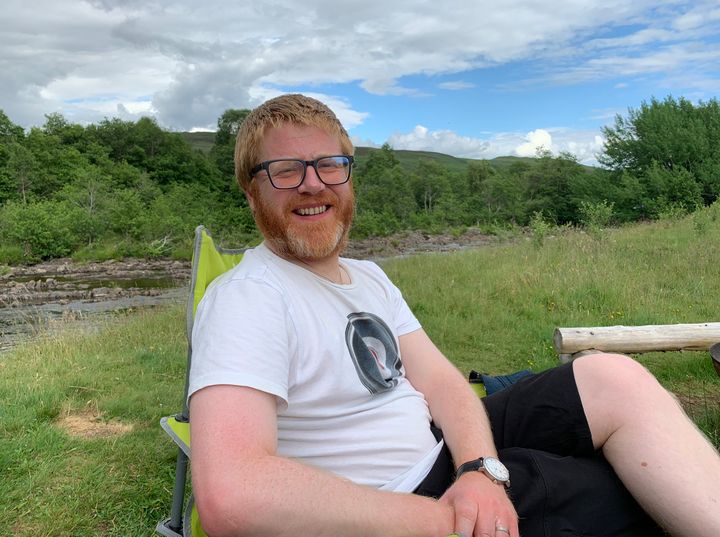
“Every decade has got better for me so – despite the birthday itself not feeling like a big deal – I was really excited that my 40s would continue that trend.
Advertisement
“My 30s were where I started to put into action the stuff that I had discovered in my 20s. I left my really great job in the public service (which I totally loved) to start my own business in brewing. My wife and I started the business, had three kids, and then moved our business and family from New Zealand to UK. It was busy beyond belief, but we were both doing things we loved. Coming up for seven years into my 40s and despite the clusterfucks of Brexit and Covid, I’m having the time of my life!
“While there’s immense privilege in being a man – and that’s something far too few men understand – I think there’s a lot of pressure on men to achieve certain things by certain ages. I’m constantly aware of how, at certain stage in my life, I feel like I’ve still not grown up. And I wonder if my parents felt the same. I do remember my dad telling me that he didn’t actually feel safe and comfortable in his life until he was in his 50s. I totally get that. I guess a part of it is kids growing up and releasing that weight of expectation around looking after them.” – Stu McKinlay, 46, London
You’re reading Move, the nudge we need to get active, however makes us happiest and healthiest.
What time do you work out? Depending on your gender, the optimal timing could be different.
Advertisement
For women, the best time for exercise may be evenings whereas for men it is mornings, according to a new US study.
Previous research into this area of fitness research has predominantly focused on men. But the new study shows that women burn more fat during morning exercise whereas their counterparts do the same in the evenings.
Advertisement
The factors that differentiate the sexes are likely to be hormonal differences. biological clocks and sleep-wake cycles, the authors said.
The study from Skidmore College, New York State looked at 56 people (30 men and 26 women, all healthy between 25-55) over the course of 12 weeks.
Advertisement
They were monitored during fitness programmes which included sprinting, stretching, resistance and endurance training.
One group worked out for an hour, before 8:30 while the other between 6pm and 8pm. Both ate a specially designed meal plan.
Researchers looked at everyone’s blood pressure and body fat during the 12 weeks, also taking into consider their strength, flexibility, and aerobic power.
The good news is that all who took part in the study saw better overall health, regardless of when they exercised. So whether you’re a morning person or an evening person, keeping moving is the way.
Advertisement
“The best time for exercise is the best time you can do it and fit it into your schedule,” said Dr Paul Arcerio, the study’s lead author and professor of health and human physiological sciences at Skidmore College.
The differences may result from women being more likely to store abdominal fat than men, which coupled with the body’s internal rhythm. Researchers want to study the two more to find what exactly causes the optimal times to vary.
But there’s a bit more to it, said the authors, who stressed the ideal times can also vary for men and women, depending on the kind of training they do.
Based on the study’s results, if women want to reduce their blood pressure and lose fat around the middle of their body, they should stick to mornings.
But if they are trying to do strength training, particularly targeting their upper body, as well as improving mood and food intake, evening exercise may be best.
In comparison, men were found to be less sensitive to timing and were able to improve fitness regardless of timing. But, Dr Arcerio added: “Evening exercise was found to be ideal for men interested in improving heart and metabolic health, as well as emotional wellbeing.”
Move celebrates exercise in all its forms, with accessible features encouraging you to add movement into your day – because it’s not just good for the body, but the mind, too. We get it: workouts can be a bit of a slog, but there are ways you can move more without dreading it. Whether you love hikes, bike rides, YouTube workouts or hula hoop routines, exercise should be something to enjoy.
I’ve always found it endearing the way men pay homage to the mothers and matriarchs in their lives. We love songs like Tupac’s Dear Mama” and Bill Withers’ “Grandma’s Hands.” We witness the robust relationship between Kanye West and his late mother, Donda, who was undoubtedly his biggest fan, in the documentary Jeen-Yuhs: A Kanye Trilogy. We heard the gut-wrenching cries of George Floyd calling out for his mother moments before his death in 2020.
Black motherhood has often been centered in the analysis of the Black family — and for Black men, the maternal connection is vital, political and liberating. These affirmations are dedicated to women whose labor and love are far-reaching and priceless. The vocal appreciation is always welcomed, especially when the work of mothers has often been overlooked.
Advertisement
“My mother is a force of nature. If she wants to get something done, it’s getting done. I think that’s been pretty evident in the course of her journey,” said Sulaiman Rashid, a 20-year-old college student in Washington, DC, whose mother raised four kids. “My siblings and I have different career paths, but we are all grounded in the desire to create change, and that stems from my mom’s passion to help and to serve others and to aid in the betterment of the world.”
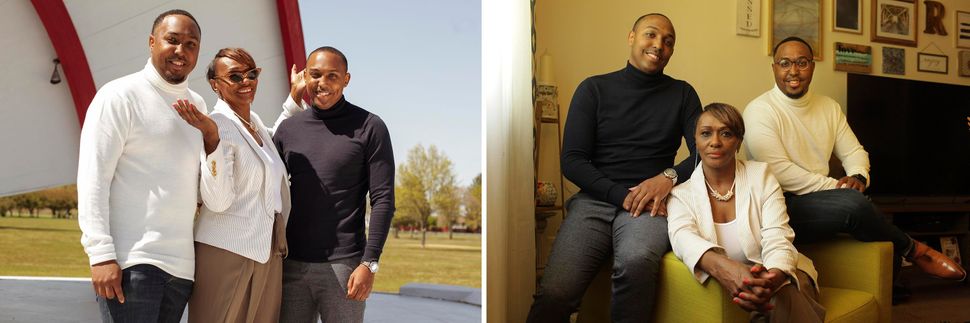
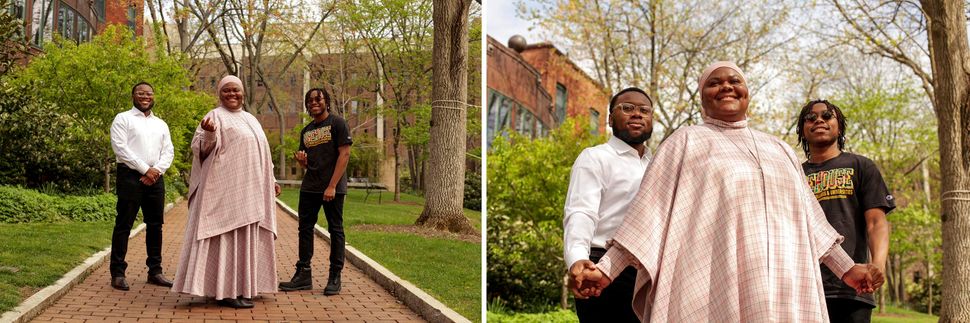
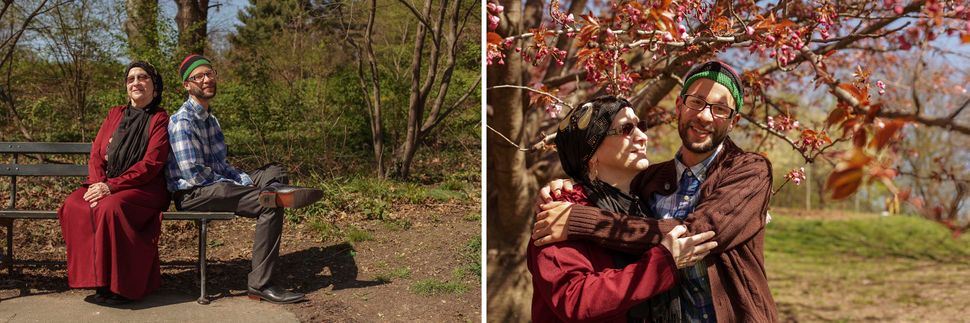
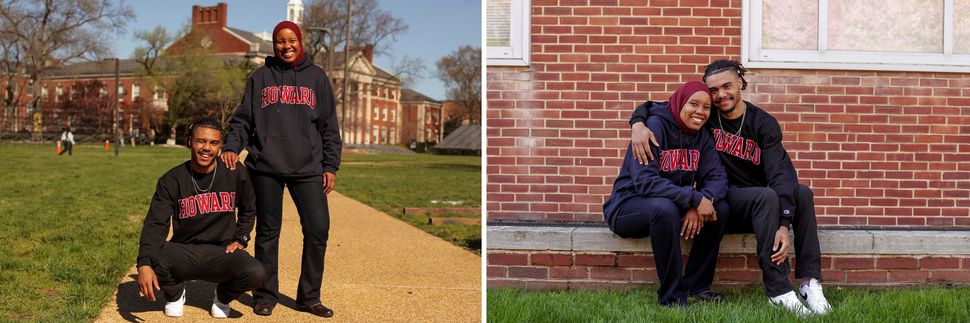
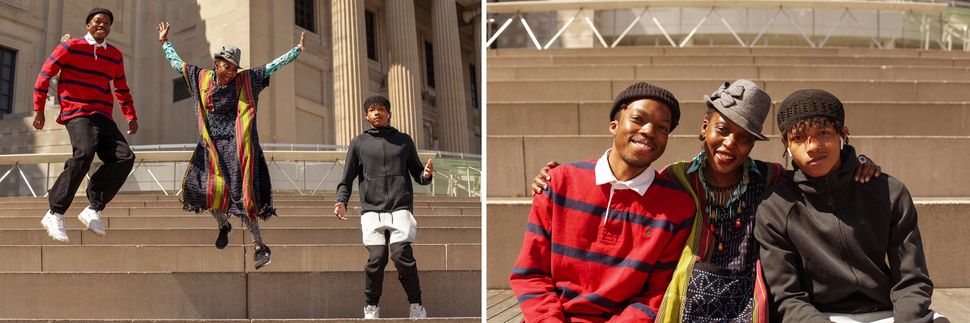
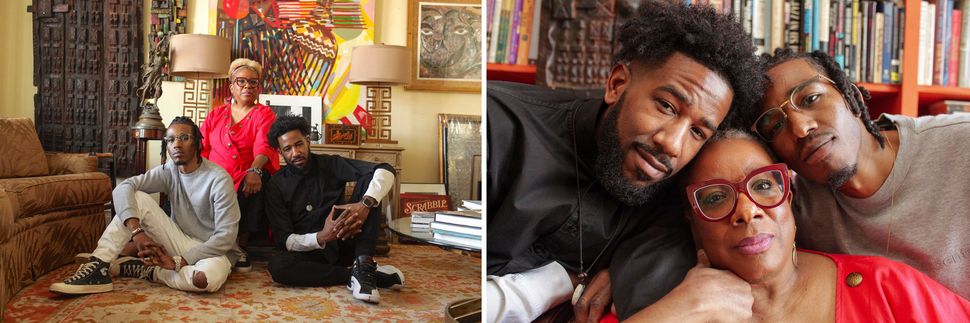
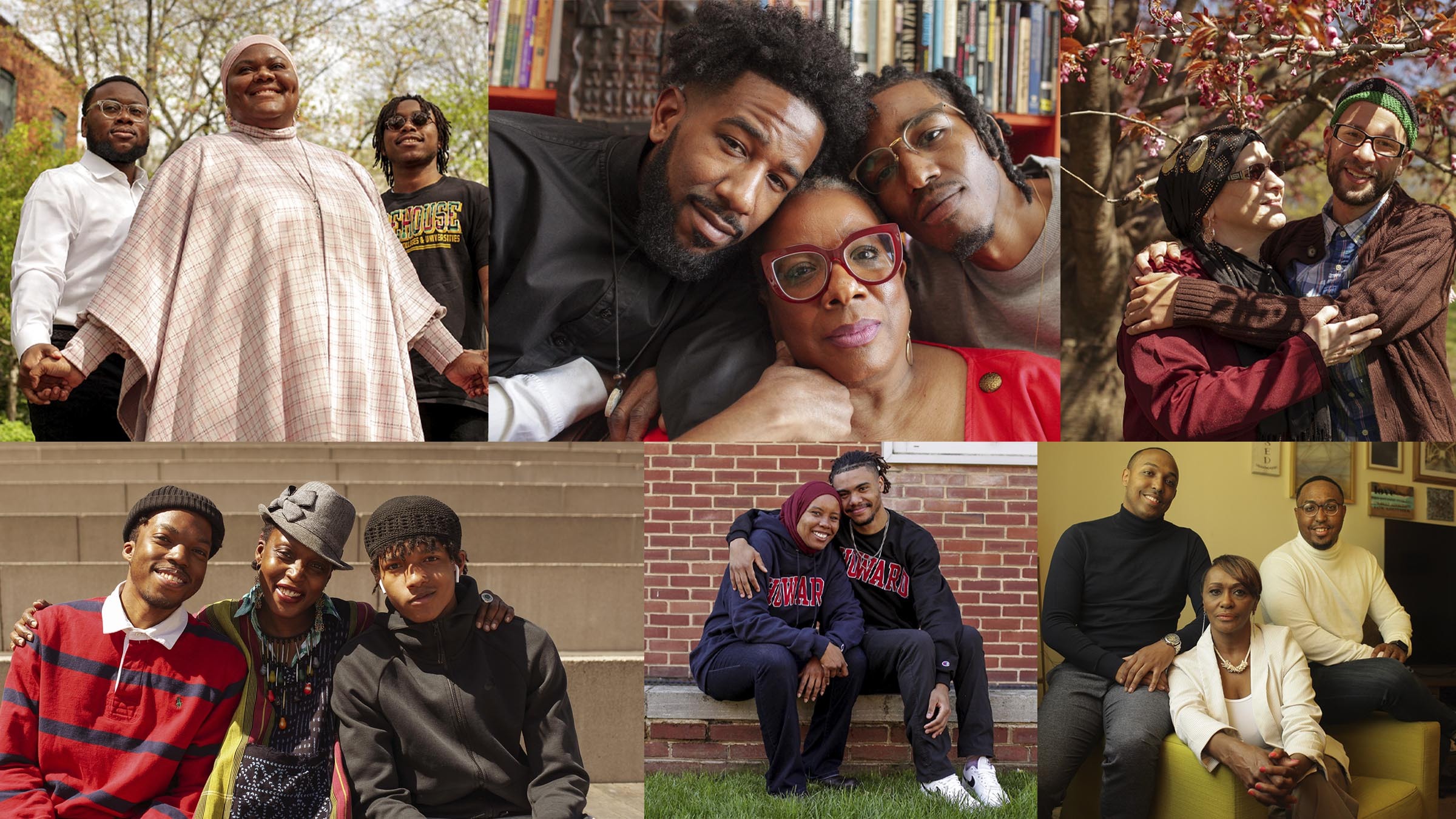
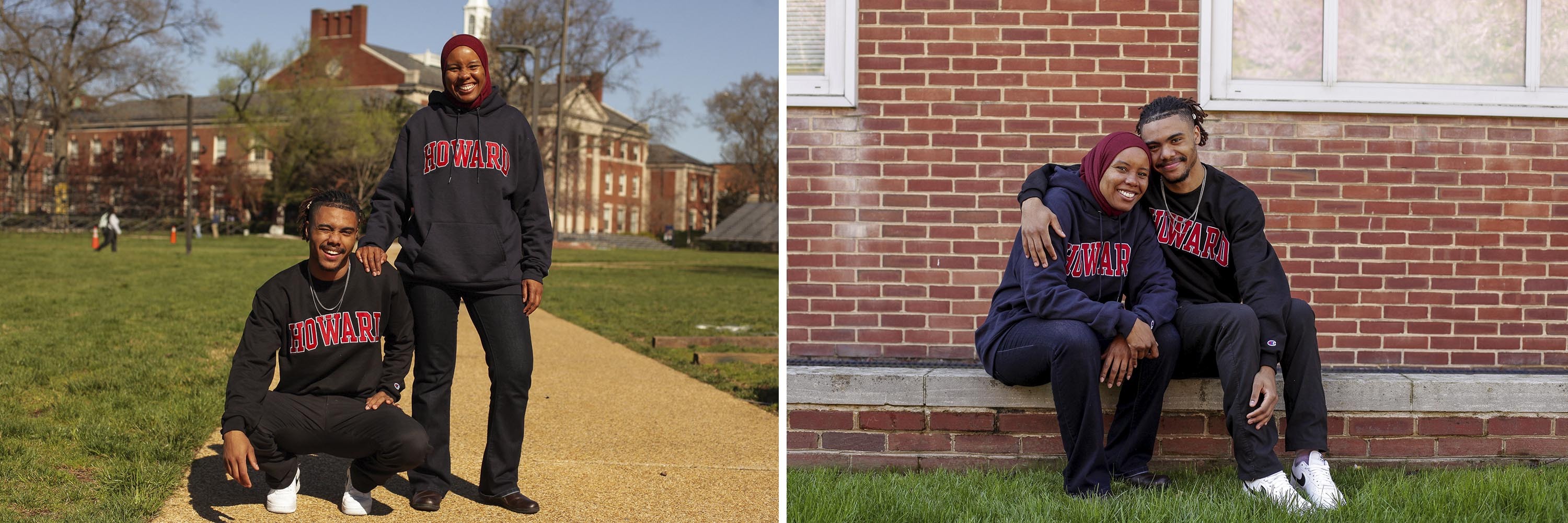
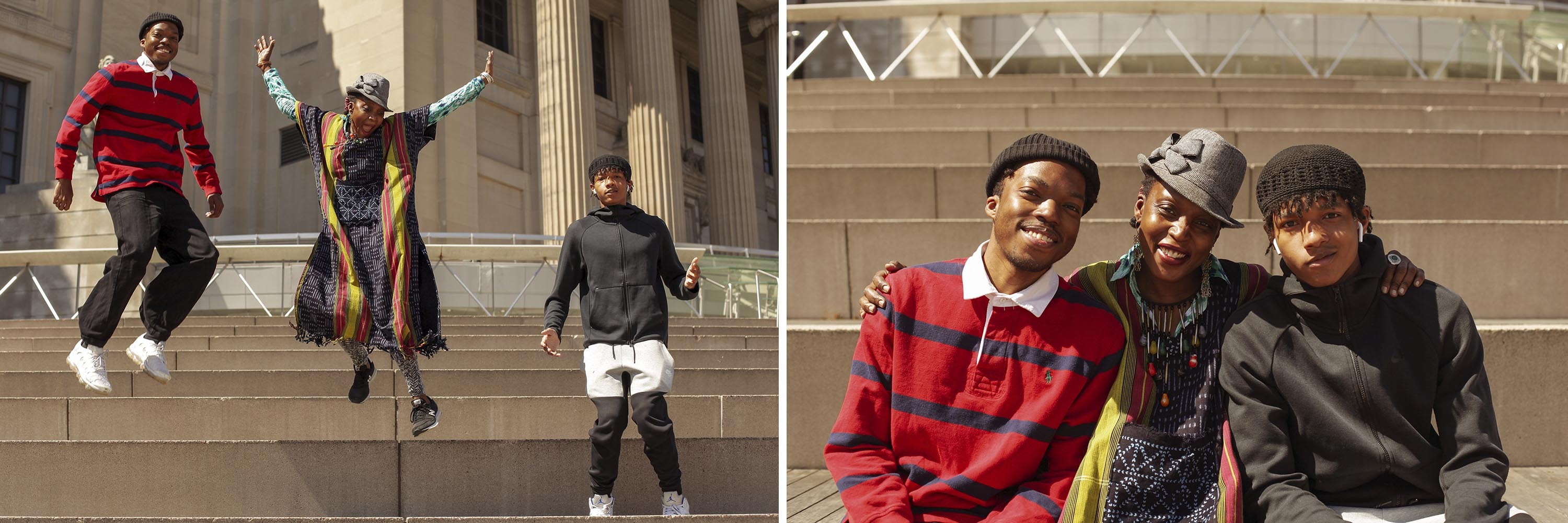
I wanted to explore the relationships between sons and their mothers. In this series of portraits, I photographed families and asked the sons to share some perspectives of the role their mothers had in their lives. From guidance on love, career and education to artistic inspiration and global travel, we see an expansive view of the strong bonds between Black sons and their mothers.
Advertisement
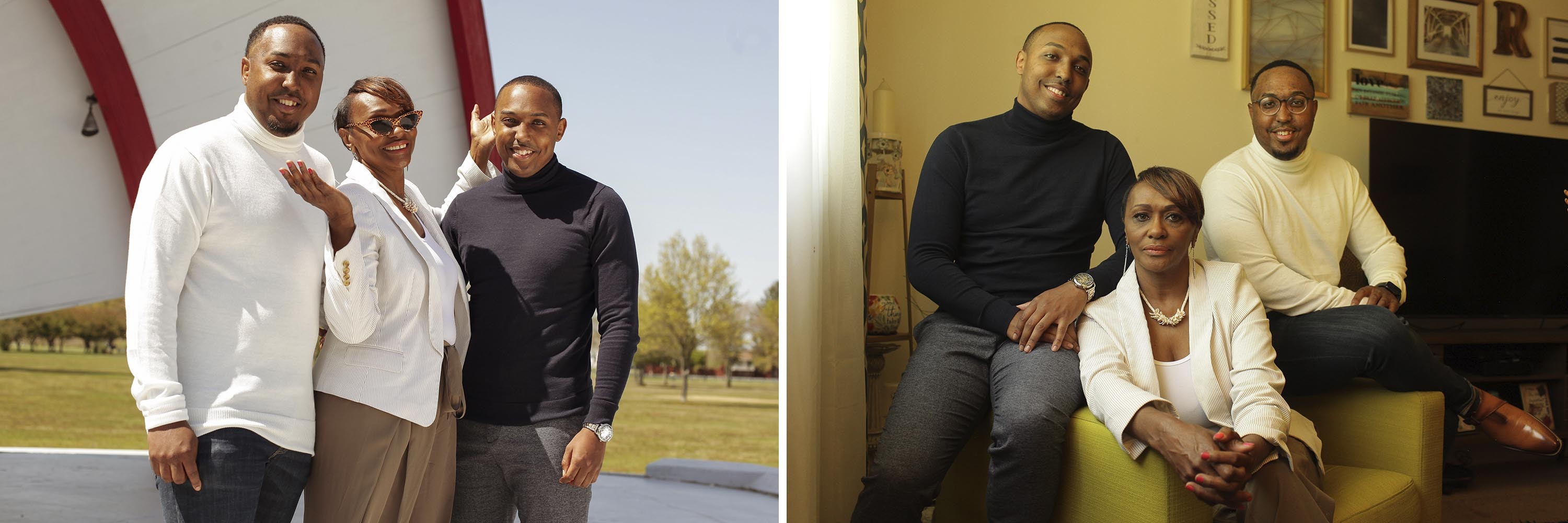
Diane Redfern
Sons: Christopher and Charles Tarpley
Advertisement
Laylah Amatullah Barrayn
My mother, commonly known as Lady D, is a resilient and confident mother. She has a jazzy personality and is a strong woman of faith. She raised my brother and I to become the gentlemen we are today. – Charles
My mother’s favourite saying is “I’m gonna tell you what God loves … the truth.” This is what I admire about my mother the most, her love of God. She has such a strong will to never give up no matter how tough things may be raising twins. – Chris
Tamara Redfern
Sons: Yaseen Ellison and Mujahid Ellison
Laylah Amatullah Barrayn
My mother has always been a source of light in my life. Across time and space – from my earliest memories in the US to years later and continents away – this has rung true. The continuum of joy and love surrounding my mother could not be summarised by a discrete moment. How would I describe my mother, who first showed me the magic and vibrancy of life? Who taught me firm confidence in my ability to grow, adapt, achieve and inspire?
I realise I don’t have to isolate any single experience to highlight who she is when everyone who encounters her is liberated by her grace and kindness, and when all spaces she walks through are automatically elevated by her presence. It is no wonder Allah says heaven lies at the feet of the mothers. I love you, Mom. – Yaseen
When I think of my mother, my thoughts often associate her with the moon. Her radiant, smiling face is akin to the light of the moon on a clear night sky. Her sound judgment and listening ear have served as a therapy to the many problems I’ve come to her with over the years. Her belief and willingness to lend a helping hand to me, unwavering, in times when I felt all was lost. Time after time, failure after failure, my mother has always been by my side. The best person to have around when sharing good news, as her pure, bona fide joy for you can be experienced by anyone who has interacted with her. The funny thing is my mother has taught me virtually everything I need to survive and thrive on my own, but hates it when I’m not around. There’s no better feeling than being capable of being alone but still having someone who never wants you to be alone. She’s my light and my guidance; my mother is my moon. I love you, Mom. – Mujahid
Aisha Hassan
Son: Bilal Hassan
Laylah Amatullah Barrayn
Ummi is very special to me; she means the world to me. She is my friend, travel buddy and confidant. I love being around her. She raised me into the young man that I am today. She is generous, caring, loving and not afraid to speak her mind. She was literally my first teacher. I was homeschooled from kindergarten to sixth grade by her and my father, who has since passed away. Back then, we didn’t have all of the home-schooling resources that exist today. Now, homeschooling is this big thing with programmes that you can do online. She created an amazing curriculum for us. She was extremely resourceful in making sure that we had an optimal learning experience. We did so much with very little. We had so much fun on our extended learning library trips. She is a genius. I could never repay her for how much she has poured into me. – Bilal
Jamilah Rashid
Advertisement
Son: Sulaiman Rashid
Laylah Amatullah Barrayn
My mother is a force of nature. If she wants to get something done, it’s getting done. I think that’s been pretty evident in the course of her journey. My siblings and I have different career paths, but we are all grounded in the desire to create change, and that stems from my mom’s passion to help and to serve others and to aid in the betterment of the world. I love her because she gave that to me. I can’t describe all the ways and reasons why I love her. As I grow into a man, I hope that my need for her doesn’t wane or fade. When I was younger, I needed her to read me bedtime stories, and what I need from her now is guidance in selecting a companion and partner. She did a really great job, and I’d be very blessed to find someone like her. I’m grateful to her every single day for who she is as a mother, wife and a person. – Sulaiman
Adama Delphine Fawundu
Sons: Amal Buford, Kofi Buford and Che Buford (not pictured)
Laylah Amatullah Barrayn
My mom set the standard and laid the foundation. She’s always been so driven and always accomplishes what she sets her mind to. There are so many roles that a mother can fulfil: a provider, a protector, a friend, an inspiration. She does it all. Some of my most fond memories are of us getting up really early and riding the subway to school. Even though it was the crowded subway, it felt like just us; it was so warm. We would have some of the best conversations. We would talk about anything and everything. We would read together; we would do math problems together. I love thinking about those times. It makes me nostalgic. You don’t realise how important that is, and I don’t ever want to take that for granted. It’s never been a question as to whether my brothers and I were her priority. She would drop us off and then have to go work her own job. It’s a job within a job. I’m older and I live on my own; I’m independent, but my mother is still my biggest inspiration. – Amal
My mother introduced me to so much. The knowledge and experiences that she imparted on me shattered the limitations that would otherwise be present in my life. It’s the reason why my creativity flourishes. We’ve traveled together. She took me to Sierra Leone, New Orleans, Phoenix, so many places. When we travel, we have fun, but we also learn about the land, the monuments, the historical connections. Our travels showed me the beauty of different cultures and that there are many ways of living. I love my mother. She always supported me. – Kofi
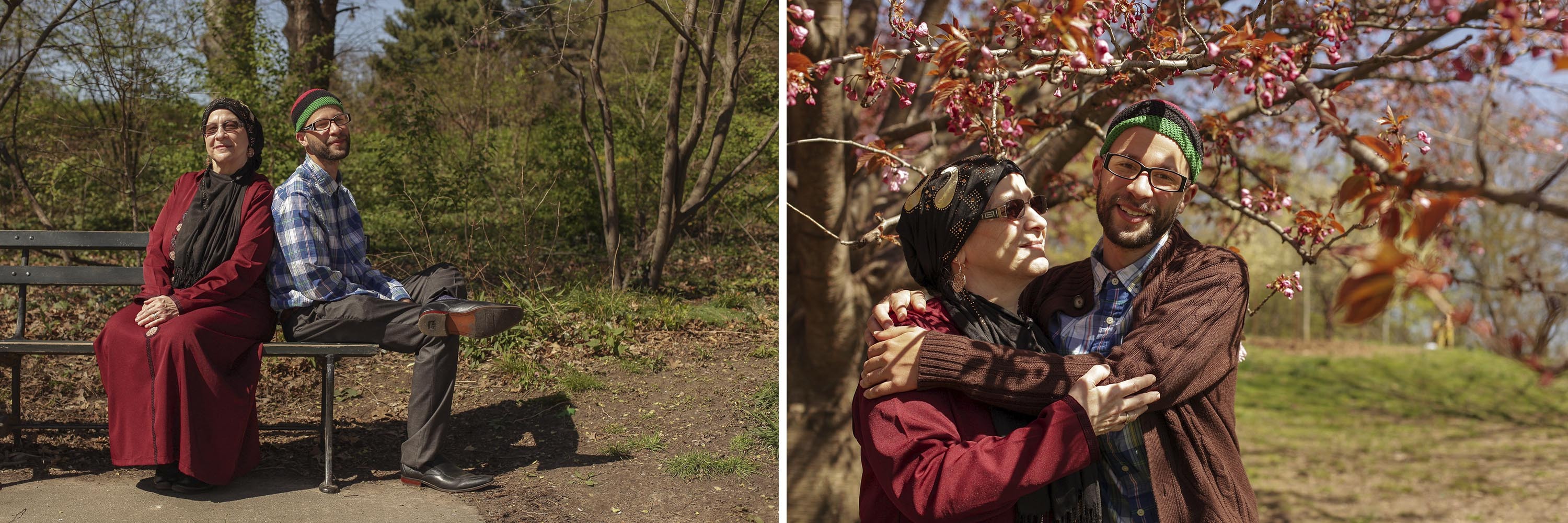
Karen D. Taylor
Sons: Chenzira Taylor Lewis and Siyaka Taylor Lewis
Laylah Amatullah Barrayn
I have always been enamoured by my mother’s unadulterated focus and ability to create as an artist. It’s always helped me to see her not only as a mum, but also as an artist and creative in her own right. And it’s been inspiring to see her flourish throughout my life in her different creative identities. She always encouraged my autonomy and inquisitiveness and aided my creative spirit. Her determination demonstrated that my dreams and creative endeavours are attainable. ― Chenzira
I see my mother as a community pillar, a preservationist of Blackness and Black culture and Black excellence. She is a preserver of the relic, an educator, a nurturer, a policer of integrity. I love the uniqueness of who she is, her quirks, her silliness, her strength and intelligence. She is very New York to the core; she is an intellectual, a scholar with the grit of the jazz nightlife scene. Most definitely a music snob, jazz and blues head, creatively impulsive, loving, laid back and full of big laughs. At the core, she is serene. She is literally the perfect yin and yang of creativity and strong love. – Siyaka
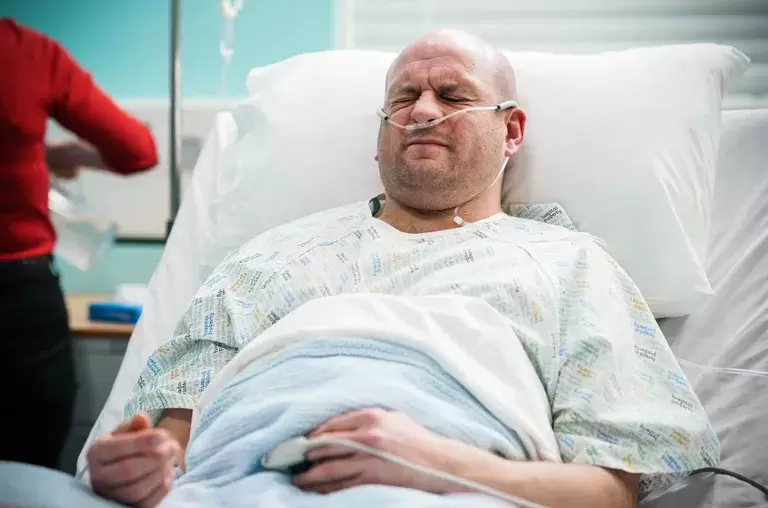
If you’re watching EastEnders, you’ll see that Stuart Highway has been struggling with breast cancer.
Creators of the long-standing TV show wanted to shine a spotlight on male breast cancer and actor Ricky Champ, who plays Stuart, has been consulting with real-life victims to gain insight into the role.
Advertisement
Before the storyline kicked off, Champ met with Doug Harper, 61, from London, who was diagnosed with the condition in 2011.
Just before Christmas, Harper felt a lump on his left nipple which he presumed was a cyst and continued to ignore ‘as blokes do’, he says.
Advertisement
After showing the nipple to a GP, they sent him to hospital and ran tests on Harper, sadly confirming that it was cancer.
“As soon as I showed the nipple to the GP, their demeanour changed immediately and they booked an urgent appointment at the hospital for it to be checked out,” Harper tells HuffPost UK.
Advertisement
“Being told I had breast cancer was a scary and confusing time, not only for me, but also for my friends and family. But everyone was so supportive, some even made light hearted comments about the news to lift the gloom, something they knew I would appreciate.“
Just like Stuart on the soap, one of the reasons Harper felt confused was because he didn’t think it could be breast cancer as it’s not spoken about as much in men as women.
When the oncologist told him he had cancer he says he doesn’t remember anything else apart from asking if he was going to die – he was told hopefully that wouldn’t be the case.
Since having chemotherapy treatment, Harper has become passionate about raising awareness of the condition and informing people that it can happen to anyone, regardless of gender. He is also part of a male cancer support group that he attends monthly.
Advertisement
So when EastEnders came to him to ask about his experience, Harper was glad for the opportunity.
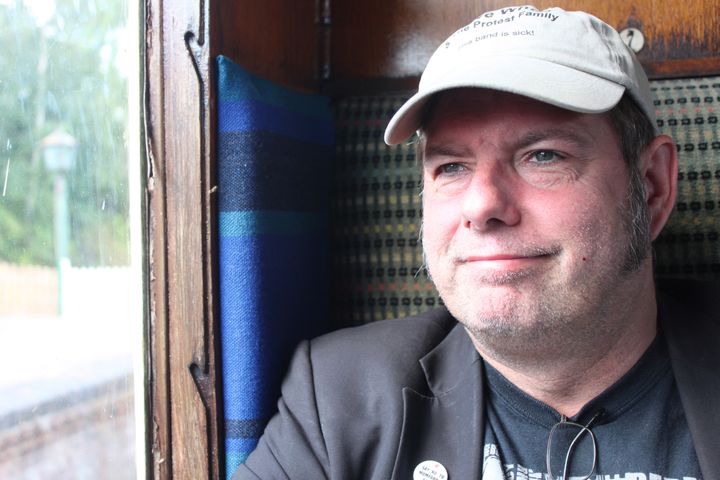
Doug Harper
Doug has been consulting Eastenders actor Ricky Champ for the storyline
He tells HuffPost: “Ricky was brilliant. While he’s been playing the part, he’s identified the problems that men with breast cancer can get, he just really embraced it. He came along to our group support meeting, and it was uplifting because we need more publicity for men with breast cancer.
“The storyline was really subtle, Stuart’s experience of first getting diagnosed was very similar to ours, being in denial, not thinking it was happening and the shock that comes with it.”
Harper mentions that the soap accurately showed how alienating the condition can be as Stuart is handed two leaflets of support for breast cancer patients – but in both, women are pictured.
Doug has set up a male group support for cancer patients
Harper, who has since had chemotherapy, is in a band called Steve White & the Protest Family and has written a song about encouraging people to ‘check their moobs’.
He hopes more men will check themselves, saying: “Just know that men can get it. So, check your nipples, check under your arms. And if anything looks different, it could be a cyst or what looks like a cyst on your nipple, it could be a rash, an inverted nipple, or something else under your arms, if you see it, go straight to your doctor.”
He has also been working with Macmillan Cancer support. The charity’s strategic advisor for treatment, Dany Bell, who has more than 30 years’ experience working as a cancer nurse, added: “Nearly 400 men are diagnosed with breast cancer every year in the UK. But we know it’s still not something that is widely recognised or known by many people.
“Storylines like Stuart’s in TV shows like EastEnders play such a vital role in helping to raise awareness and to make more people aware of the signs of breast cancer in both men and women. Early diagnosis can improve – and even save lives – and we hope this important plot will get more men regularly check their own chests and reaching out for help, if needed.”
If you’re living with cancer and need to speak to people, about the big things and small things, you can contact Macmillan Cancer Support.
Women are “delaying” motherhood, or so the headlines would lead you to believe. And yet it takes two to tango if you’re hoping to conceive naturally.
When ONS data released earlier this year revealed a record number of women do not have children by the time they reach 30, the debate that ensued was a little skewed, to say the least.
Advertisement
Radio hosts questioned whether it was careers, the cost of living, or a desire for post-pandemic fun that was motivating women to have children later in life. The role of men in all this barely got a look-in.
But the chat did spark an interesting conversation with a friend of mine who, despite his impending 30th birthday, revealed that nobody had ever asked him about his views on fatherhood. Ever.
Advertisement
And actually, it might benefit us all if guys talked about this stuff, too.
Though there is one scientific study into male attitudes on fatherhood that’s periodically bandied around, we seldom hear men talking about this topic in the media – or even everyday life.
Advertisement
So to redress the balance, I asked a bunch of guys under 30 to share their feelings about parenthood. Here’s what they had to say:
“Being a father is just very exciting. It’s not about having that title, but rather being proud to do the things involved, have that responsibility of caring and loving for a child. We knew there would never be a ‘perfect time’, and given we were settled and agreed on having them down the line, we didn’t want to put it off any longer. It’s still bloody terrifying, but good things usually are.” – Ben Rogers (a new father), 29, South London
“I’m getting married next year and I think some family will expect us to have children soon. Personally, I’d rather wait five or six years and travel/enjoy married life first.” – Miles, 29, Hertfordshire
“As a 23-year-old with a business that will soon be turning over six figures, the thought of having a child is something that I’ve mentally delayed even thinking about until my mid-thirties as my friends that have children have had their careers put on hold and are now struggling financially.” – Ted Lawlor, 23, South London
Advertisement
“To be comfortable being a dad I’d need 1) to genuinely be very much in love with the woman, and expect to happily spend the rest of my life with her 2) have a house with enough room and 3) be generally financially stable enough given childcare costs. Due to my financial situation, I was living with my parents until my mid 20s, I think it is very hard to think about having children when living in your parents’ house.” – Sam, 27, Surrey
“I definitely want to be a father one day. The newly born period doesn’t appeal – sleepless nights, nappies etc – but when they can walk and talk I think it would be great fun being a dad! I would have had no issue being a young dad if it had happened.” – Jack, 29, London
“The thought of having children right now whilst I’m not settled down is a scary thought. I feel like it’s a huge responsibility that I’m not ready for yet! I want to make my stamp on the world before I bring my children into it and that’s my main focus.” – Harry Portch, 23, Reading
“Honestly? I haven’t thought about it much yet. Maybe one day, but I don’t feel the urgency yet or anything.” – Elliot, 28, Newcastle
“I’m not sure I want to be a father. But my partner is almost a decade older than me, and it means we’re grappling with a biological clock long before I expected to. We’re sensitive people who like their quiet, and worry about being consumed by childcare and regretting it. We both grew up in tense, angry households and are wary of either losing our peace or inflicting our own stress on any children. We also hate the idea of having kids out of custom or expectation when we’re unsure if it’s for us. But the prospect of missing our chance to do it biologically – especially when all her friends are having kids – is difficult, too.” – Joe, 27, London
“I’m 24 with a very stable career in the medical industry and a girlfriend that I adore, so for me, I cannot wait to have a child! My girlfriend and I have a plan to save money specifically with the child in mind so that we’re fully prepared for the magical moment.” – Jake Hanley, 24, Kent
“The earlier I have kids, the longer I’ll be around for them and my grandkids, but the cost of living and housing means this is being pushed down the road. It’s an increasingly unrealistic reality to enjoy seeing kids and grandkids grow up through life.” – Jonny Abbott, 23, Oxfordshire
“I’m equally as terrified of not having kids as I am of having kids. Knowing men who are involuntarily childless, the pain they have gone through is indescribable. Public broodiness in men is very stigmatised so I’m not surprised men aren’t willing to talk about it. I hope that changes.” – Freddie, 27, London
*Some surnames have been omitted to offer anonymity
For those yet to watch the clip, Rock made a joke at the expense of Smith’s wife, Jada Pinkett Smith, when he said he was “looking forward to seeing GI Jane 2”.
Advertisement
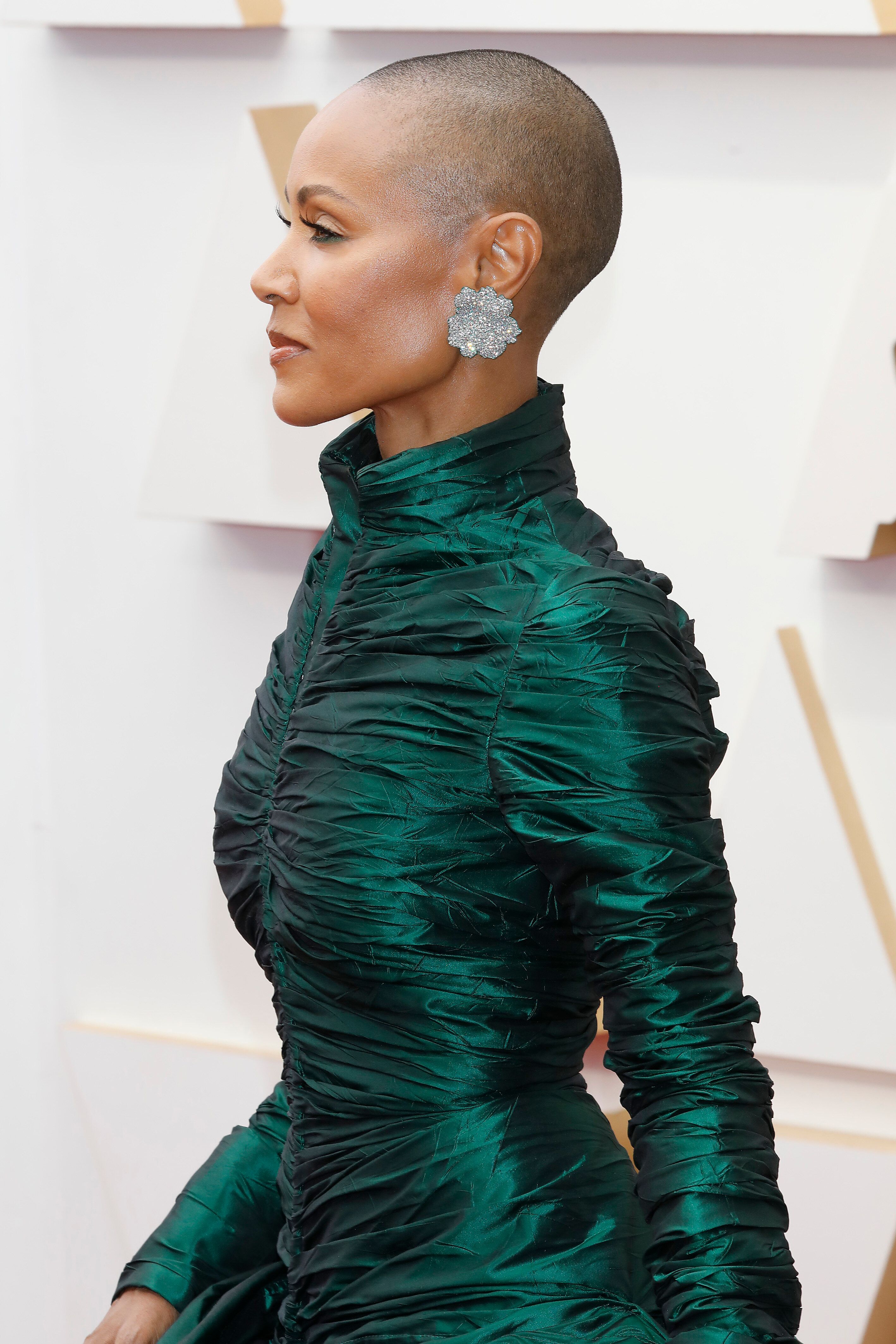
Rock was apparently referencing the actress’ shaved head, which is a result of the hair loss condition, alopecia. Seconds later, Smith climbed onto the stage, slapped Rock and said: “Keep my wife’s name out of your fucking mouth.”
Some have excused Smith’s actions, saying he was simply “defending his wife’s honour” – but that phrase in itself has left others feeling uncomfortable.
Advertisement
Most of us will agree that there’s other ways to stand up for someone you love without resulting to physical violence. But it also raises the question: do women still need their “honour” defended by a man?
Do women need a man to defend their honor in the 21st century? #no
— Dr. Very Happy White Lady (@HappyWhiteLady) March 28, 2022
Plenty of people have praised the actor for stepping in to “defend” his wife.
Slightly confused as to why Will Smith is coming over as the bad boy in all this. I should be so lucky to have a man defend my honour. Chris Rock is a douche.
I don’t think Will Smith did anything wrong. If someone made a distasteful joke about my medical condition in front of him I would hope my husband would defend my honour.
But others have highlighted that Jada Pinkett Smith is a grown woman and perfectly capable of defending herself if she chooses to.
Future Publishing via Getty Images
Jada Pinkett Smith arrives on the red carpet before the 2022 Oscars ceremony.
Will Smith “defending” his wife, who is quite capable of defending herself. Noone checking to see if Chris Rock was ok after being hit. The slap already becoming a ‘meme’. There is so much wrong with this, on so many levels.
Can we also consider the fact Jada Smith is her own person, not ‘my wife’, and does not need some idiot to defend her honour. It was a bad joke at an awards show – not a physical attack. Grow the F up. And stop pretending your hurt is about her #WillSmith
Reinforces oldest narrative in world – that violence is the way to “defend honour” & woman’s “honour” is the preserve of man. Rock’s “joke” may have been in poor taste, but Smith could have used winner’s speech 2 call that out with dignity. Applauding assault condones. #WillSmith
So Will Smith physically assaults Chris Rock to defend ‘his wife’s honour’ or something like that. What is this, 1930?? Haven’t we had enough of hyper masculine violence already? Anyone else see the line connecting that assault to Putin beating up a defenseless country?
Later in the evening, Smith won the Best Actor award for his portrayal of Richard Williams, the father of Venus and Serena Williams, in the biopic King Richard.
In his acceptance speech, he apologised to the Academy and his fellow nominees for his behaviour, adding: “I look like the crazy father, just like what they said about Richard Williams. But love will make you do crazy things.”
But his words only sparked further criticism.
Advertisement
I mainly tweet about books so you might wonder why I’m so angry about the Will Smith Oscar assault, but his acceptance speech reads like the excuses given to every victim of DV: love makes us do crazy things. It’s because I love that I hit. And he gets a standing ovation?! FFS
Will Smith trying to spin a narrative of “love will make you do crazy things.” No. Unchecked toxic masculinity and a lack of accountability will make you do/say crazy things. (True for Chris Rock, too). #Oscars
But one thing is clear: the headlines this morning are all focused on Chris Rock and Will Smith. The woman at the heart of this story, Jada Pinkett Smith, has been erased in all the drama.
And you know who’s left dealing with the emotional fallout of both the hurtful joke and the unacceptable punch? Jada Pinkett Smith. Thinking of her today.
For a decade, Rachel Thompson thought she’d had a fairly positive sex life. If someone had asked her if she’d ever experienced rape or sexual assault, she would have answered with a resounding: “No, I’ve been very lucky”. But in 2017, as the #MeToo movement reached its peak, the journalist started to reflect on past encounters.
One incident, when she was 19, continued to play on her mind. A guy she’d been seeing at university suggested they explore the woods together. He told her to lie down on a mound of moss. Before she knew what was happening, he’d straddled her body, sitting on her chest. The weight of him meant she couldn’t breathe. She panicked but told herself: “It’ll be over soon.” He ejaculated on her without saying a word, and they left.
Advertisement
“When I was 19, I didn’t see my experience as anything out of the ordinary,” she says. “No words sprang to mind in the aftermath of the experience – I simply had no vocabulary to express it.”
Reflecting on that night planted the seed for Thompson’s book, Rough, which explores sexual violence in the bedroom and the systems of oppression that enable it. A common theme is the suppression of one’s own trauma. Before writing the book, Thompson referred to her own experience as “bad sex” or “a grey area”, but she no longer uses those terms.
Advertisement
“That grey area did not stay a grey area for me,” she says. “I realised and came to terms earlier this year, right before my book was due, that actually, this was a sexual assault. It was pretty fucked up and it was really scary.”
Thompson has spoken to 50 women and non-binary people for the book, focusing on experiences of sexual violation that we find hard to talk about, because they don’t fit into the traditional boxes of “rape” or “violence”.
Advertisement
There’s issues like stealthing (the non-consensual removal of a condom during sex), cyberflashing (the sending of unsolicited dick pics) and non-consensual strangulation, which is a far cry from the consensual choking practised by some members of the BDSM community, with saftey precautions and safe words in place. There’s also the encounters we don’t have the words for, the moments that make women – and it is overwhelmingly women – feel a bit weird.
Catherine is among those who shared her experience with Thompson. She and a man were about to have sex for the second time. He said he didn’t have another condom, she said she didn’t have one either. He got up and said actually, he had one in the bathroom.
“In hindsight, he clearly picked our used condom out of the bin, rinsed it and reused it,” she says. “I vaguely noticed something was up at the time, but dismissed the suspicion/was too drunk to care, but thinking back that’s obviously what he did. Thinking back on the night it’s also clear that he was sober while I, although consenting, was very drunk.”
Catherine describes this encounter as something that made her “uncomfortable” during sex.
Advertisement
Abigail, another of the book’s interviewees, shares her experience of non-consensual choking. She met a guy on a dating app and everything was going great, until he unexpectedly put his hands on her throat and hit parts of her body. The experience left her confused.
“I’ve been sexually assaulted before and I was once dragged into a dark driveway by a man trying to rape me, in my head I didn’t feel like the two experiences – stranger in an alleyway and an attractive man on Bumble who texted me the next morning telling me how nice a time he had – were the same,” she says.
Abigail went on a second date with the man and asked him not to choke her again. He didn’t, but soon afterwards they lost touch. She says it took her a few months to recognise what had happened to her as sexual assault.
Supplied
Rachel Thompson, author of Rough.
Thompson wanted to write the book “primarily for people who have experienced things that they just didn’t quite know how to put into words”. But she is clear that she doesn’t want to police the language women use on this topic either, or ban phrases such as “grey area” or “bad sex”.
“These are really personal experiences and our route to coming to terms with them and finding the words is a really personal journey,” she says. “You’re the person in charge of what you get to call your lived experiences and I don’t think we should allow anybody else to impose words or definitions on those experiences.”
Some campaigners remain concerned we don’t have the language to properly describe such encounters, and that women are being conditioned to dismiss incidences of violence.
“If you’ve learned that your sex life must include violence, it’s incredibly hard to unpick why a violent assault felt so wrong,” Fiona MacKenzie, founder of the campaign group We Can’t Consent to This, tells HuffPost UK.
“It’s so normal to blame yourself for something awful that’s been done to you – and monstrously hard when the culture says you should smile and say you enjoyed it.
“Women also see what happens when others speak out against this – we get called prudes, virgins, vanilla, sex-negative… for campaigning on this. There is no shortage of perpetrators who want women to write off being assaulted as ‘just a crap shag’.”
The campaign group has heard from hundreds of women who’ve been violently assaulted in (until then) consensual sex.
Advertisement
“Most of them have been strangled,” says MacKenzie. “Violence against women is widespread, normalised. Society’s only just begun to push back on that in recent decades,” she adds. “We should be very suspicious of anyone telling us that violence is actually liberating. There don’t need to be grey areas – the default should be that men doing violence to women is unacceptable.”
Alexandre Panier via Getty Images/EyeEm
Where is it coming from?
Porn is often blamed for the increase of violence in the bedroom and it certainly plays a part. Acts like choking, spitting and slapping are frequently shown, without any discussion on safe words and boundaries.
Such practices have been appropriated from the BDSM community, but do not reflect it; once in the mainstream, the key pillars of safety and consent are ignored. Such acts require deep trust, which is certainly difficult to establish on a first date and impossible to establish without an explicit conversation.
But porn is only part of the picture, says Thompson.
“It’s part of a landscape that also has a lack of sex education, and a lack of understanding about how consent functions, and how we should be seeking consent and negotiating consent for every individual sex act that takes place within a sexual interaction,” she says.
Brits in particular are alarmingly prudish about discussing what we do and don’t like in the bedroom, Thompson adds – and this is preventing us from establishing consent.
In the book, she hears from the anonymous sex educator @lalalaletmeexplain, who tells of one couple’s miscommunication around choking. Months into their relationship, the man asked the woman why she enjoys choking so much. She replied: “I don’t, to be honest, I do it because I thought you liked it.”
“People are getting these ideas, maybe from watching porn, and they think: ‘Oh, this is just what everyone’s doing now,’” says Thompson. “By not having the communication in those relationships and those sexual encounters, we’re not talking about what we want and what we don’t want.”
MacKenzie points out that images of sexual violence are not consigned to porn, or niche parts of the internet. She directs us to several Instagram hashtags, where images of young women with a hand around their neck are accessible in a few clicks. “Young women tell us that as tweens they learned that being strangled is an expression of passion,” she says. HuffPost UK approached Instagram for comment on this and will update with any response received.
Advertisement
When asking why this is happening, we also can’t forget that sex does not exist in a vacuum. Thompson’s book explores fatphobia, biphobia, white supremacy and transphobia – and how current systems of oppression impact our sexual experiences. It’s complex and endemic – and far too important to try to summarise in one article. But it’s clear that sex can never be an equaliser when it exists in a world of power imbalance.
What needs to happen?
On a macro level, we need systemic change to bring about sexual equality. There’s no quick-fix, but one thing that might help, is elevating all experiences of sexual violence.
“The #MeToo movement was founded by a black woman called Tarana Burke and I think she’s often erased,” says Thompson. “When the#MeToo movement exploded into public consciousness, it focused primarily on privileged white women. And that’s not to say that their stories are not valid or not worth listening to, but I think that we have to be so wary of the stories that we place at the forefront of these movements that we say speak for all survivors, because they don’t necessarily reflect all survivors.”
On a micro level, MacKenzie would like to see greater regulations of sexually violent images on social media. “We’re asking for the Online Safety Bill currently being considered by parliament to ensure that platforms stop normalising the violent assault of women – particularly those that welcome child users,” she says.
We Can’t Consent To This has already campaigned to make the use of non-fatal strangulation punishable by law as part of the 2021 Domestic Abuse Act. MacKenzie wants to see the law working in practice. “Women must be able to report choking and asphyxiation to police, and be taken seriously and not be blamed for these assaults,” she says. “We’d hope to see a significant increase in prosecutions for these assaults.”
Above all, both women want others to recognise the problems with these so-called “grey areas” of sex, and recognise that anything which makes an individual feel uncomfortable or unsafe is not “grey” at all.
The #MeToo movement may have prompted Thompson’s reflection and acknowledgment of assault, but now she thinks action is needed.
“It really raised people’s awareness about the extent of sexual violence and how widespread it is in all levels of society, but I think that we need more than awareness now,” she says, “we need action: tangible, individual change.”
If you’re watching a film or TV show and see a young woman dressed all in black with a grungy hairstyle and a resting bitch face, be warned – she’s probably a feminist character written by a man.
Such is the single dimension of some women characters on screen and in fiction, often written by men. And TikTokkers are exposing the lazy writing.
Female creators on the video-sharing app are acting out all the unrealistic ways women are often characterised: sexy, seductive, clumsy, and whimsical, their looks and tics a cue to their inner soul.
Advertisement
Actor and content creator Caitlin Reilly was among the first to the trend, satirising how a woman in sci-fi films is often depicted: you know, the geeky scientist who probably wears glasses and keeps her hair in a tight ponytail, and is so dedicated to her work, she has no time for love or a social life.
Reilly’s breakout video, which includes such lines as “I’m a woman and a scientist, I can’t be both good at my job and nice”, has been watched more than a million times.
Advertisement
She has also mocked action movies for the way they paint women; helpless, emotional, forgetful. “I forgot the box of things that are very special to me, I have to go back”, and the hysterical mum shouting “please find my daughter,” are lines that have seriously tickled her Instagram followers, too.
Over on TikTok, the trend has blown up in recent days, soundtracked by Portishead, as young women ridicule the way they’re written into fiction in the most mundane scenarios, from having breakfast to going to sleep, from putting on their makeup to taking it off, from reading to dating to chewing gum.
In one clip, a woman experiencing a break-up sits wistfully, wearing just a top – many of these portrayals are trouser-less – as she licks ice cream seductively off a spoon. Ice cream is a big thing in the land of the male gaze, it seems.
Advertisement
In fact, many of these #writtenbymen clips are tagged #malegaze, spreading feminist theory about the problems with women being depicted from a masculine and heterosexual (indeed sexual) perspective to a new generation.
You’ll see what we mean when you check out others videos tagged into the trend. And while you’re watching them, please remember no woman in history has ever taken off her glasses to realise that she was beautiful all along.
She was “all that” already – without the nerd-to-hottie makeover by a man.